07/09/2026
Buying a used car: the complete guide for 2026

Written By David Ross

Buying a used car need not be a minefield if you know what the pitfalls are and how to avoid them. Most problems are avoidable with a bit of preparation before you go anywhere near a car.
There are two golden rules when it comes to buying a used car.
The first is to be open-minded. Obviously you'll have a budget and a good idea of what you want, but if something else crops up in top-notch condition at a bargain price, don't dismiss it out of hand.
The second is to trust your instincts. If a gut feeling tells you there is something not quite right about the car or the seller, walk away. Don't be browbeaten into buying something that's giving you bad vibes.
What to look for when buying a used car
Key things to check when buying a used car — before and during your viewing, as well as ahead of handing any money over include:
First impressions matter
Always trust your first impressions when you go to view a car. If the dealership cannot be bothered to clean the car and present it properly, they will likely have the same attitude to its servicing and maintenance. If there are any warning lights on the dashboard, walk away — never be taken in by promises to 'sort that out' before collection.
It's not just the car itself, but also the dealership and the salesperson. If your instincts are telling you 'no' for whatever reason, leave. Remember, if anything goes wrong with the car, these are the people you will be dealing with.
Check online reviews
Before you book a viewing, check online reviews of the dealer you're planning to visit. Larger dealers are usually listed on Trustpilot, while Auto Trader shows ratings and reviews alongside each car. If there are too many negative reviews, move on.
Is it a good price?
So many things affect used car values that you're unlikely to find two identical models at exactly the same price. One of the best ways to get a realistic sense of what you should pay is to search classified adverts for the type of car you want. Even if you're not ready to buy yet, it gives you a useful benchmark.
Check the history
A vehicle history check will show if there is outstanding finance against the car, whether it has been written off and whether it appears on the stolen vehicle register. Remember, it is illegal for someone to sell a car that has outstanding finance on it without disclosing this.
You can also check some basics for free, such as verifying the car's identity and MOT history or if recalls have been issued via UK government websites.
Get an inspection
If you're not confident assessing a car yourself, get a professional to inspect it. Any legitimate private seller will have no problem with this. Organisations such as the RAC and AA offer vehicle inspections, starting at around £150, which is money well spent if it reveals a problem before you commit.
Take a test drive, but check you're insured
A test drive is always worthwhile. Dealers should have demonstrator insurance that covers you, but ask about it beforehand. For private sales, contact your insurer to confirm you're covered or arrange temporary cover for the day.
Check all the paperwork
Don't hand over money until you're satisfied you have all the relevant documents. The V5C logbook is the most important, as it identifies the registered keeper. You'll also want a valid MOT certificate, the service history and vehicle handbook are well worth having.
Check for upcoming major service intervals. Some engines need a cambelt replacement every four to five years and — combined with a water pump — that bill can be in excess of £750, so it's worth knowing where you stand before you buy.
Don't forget to tax and insure it
Used cars have not been sold with valid VED car tax since 2014, so you'll need to tax the car before driving it. You'll also need to arrange insurance before you drive away. It's your responsibility as the new registered keeper to have all of this in place to be road legal. Check how much car tax you'll pay in our VED guide.
When is the best time to buy a used car?
The best time to buy a used car is usually November or February.
March and September plate changes have traditionally been the busiest months for new car registrations, which pushes large volumes of part-exchanges onto the used market. This makes spring the most expensive time to buy a used car, as demand is high and supply has just been refreshed.
The September plate change feeds a large number of used cars to the market. Unless these cars sell quickly, in the six or so weeks between the plate change and the end of October, they tend to sit and depreciate. Leftover stock tends to reach its lowest price by November, when better-capitalised dealers stock up for the new year. Smaller dealers often follow in December, which means prices can edge back up by Christmas.
In January, there's less of a flood of part-exchanges than there used to be, but if the weather is reasonable demand can still be strong, pushing prices up until the market softens in mid-February ahead of the March rush.
Buying from a main dealer
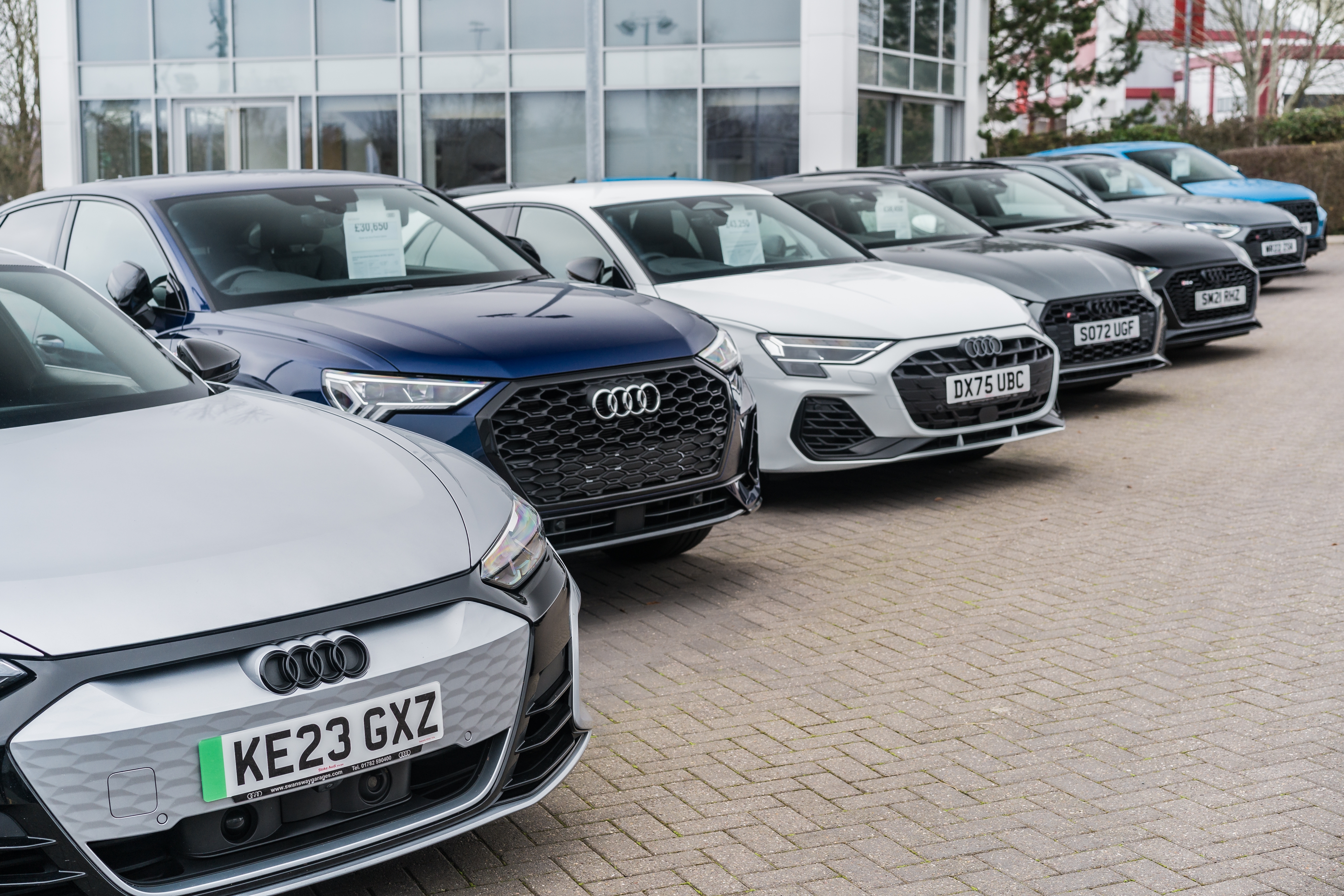
For many buyers, a franchised dealer is the first port of call for a nearly new or approved used car. You tend to pay more than you would elsewhere, but you get more in return. Typically a 12-month warranty, roadside assistance and a car prepared to the manufacturer's standard are included in the price.
It's not always easy to get a significant discount, particularly on an in-demand model, but on the basis that 3-5% profit is better than no profit at all, many dealers will negotiate, especially towards the end of a month. The 'that's the lowest I can go' line is rarely as final as it sounds.
Where you want to part-exchange your existing car, franchised dealers almost always offer better allowances than car supermarkets. But focus on the total cost to switch, not just the part-exchange figure in isolation.
What's an approved used car?
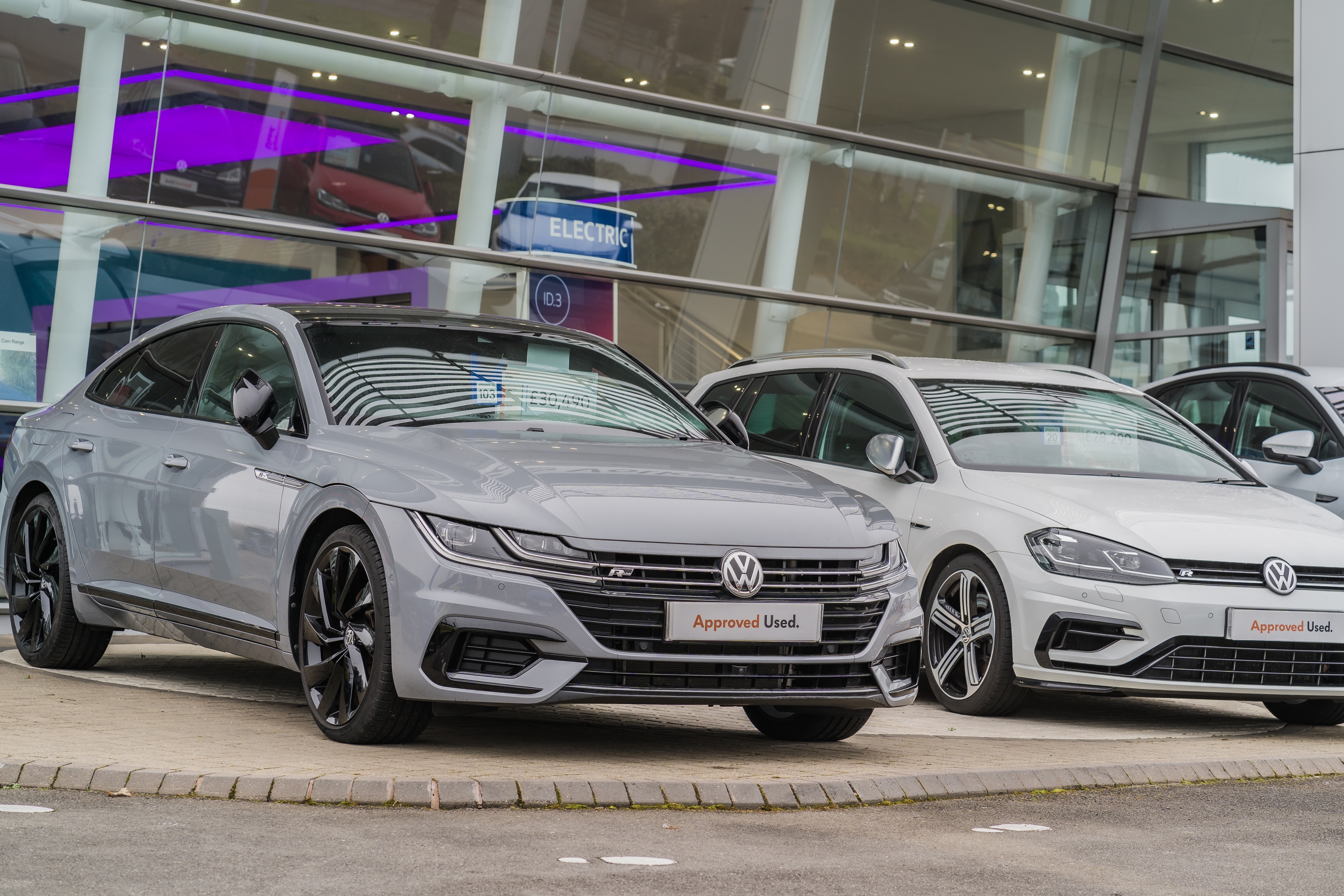
Most franchised dealers offer approved used schemes backed by the manufacturer. Within the Volkswagen Group, these include Volkswagen Das WeltAuto, Audi Approved Used, Skoda Approved Used, SEAT Approved Used and Cupra Approved, all offering consistent preparation standards, multi-point inspections and manufacturer-backed warranties rather than a simple insured product.
Where the warranty is manufacturer-backed rather than just an insured warranty, approved used cars offer real peace of mind, though that does tend to be reflected in the price.
It's worth shopping around before deciding. Once you have a sense of prices at car supermarkets, paying a visit to a franchised dealer is often worthwhile. They have been known to match or beat car supermarket prices, and if their asking price, including a manufacturer-backed warranty, is only a few hundred pounds more, the franchised dealer often represents the better deal overall.
Is buying a used car online safe?
Buying a car online has become increasingly common and most manufacturers and dealers now offer some form of online sales with delivery included. That means you can buy the car you want and have it delivered to your door without visiting a showroom.
It's not for everyone. Many buyers, reasonably, prefer to see a car in person before committing, no matter how well-photographed the listing is. But for buyers who know exactly what they want, online purchasing is a practical and well-protected option.
Online car buying: the key rules
Finding a used car online is straightforward, with dealer sites and marketplaces allowing you to filter by price, age, fuel type, gearbox and mileage. Once you've found the right car, you'll typically place a small deposit to secure it, provide some personal details and complete a finance application, if needed. Delivery usually takes 10-15 business days, though it can be sooner.
The advantages
Online car sales are protected by the Consumer Contracts Regulations 2013, which gives you a 14-day cooling-off period. You can return the car for a full refund with no questions asked and unlike the Consumer Rights Act, the car doesn't need to be faulty. Most dealers will also consider a part-exchange, with an online valuation arranged before delivery.
The risks
Be careful when buying online from an unfamiliar dealer. Scam sites can be professionally designed and convincing. If prices look too good to be true, verify the business independently before placing any deposit. Also bear in mind that online purchases don't include a test drive and cooling-off periods typically come with conditions, including mileage limits and condition requirements that may affect your refund if exceeded.
One practical point: if you use finance and later cancel, the finance agreement and the car purchase are two separate contracts. You'll need to unwind both independently.
Buying from an independent dealer
There are thousands of independent used car dealers across the UK and many offer good cars at competitive prices. The challenge is that quality varies considerably and price is not a reliable guide as to which is which.
Before you visit, check whether the dealer is a member of the SMMT, Motor Codes, the British Independent Motor Traders Association, or holds AA or RAC accreditation. Membership of any of these doesn't guarantee good service, but it gives you somewhere to direct a complaint if things go wrong.
Always view the car at the dealer's premises. If they suggest meeting elsewhere or bringing the car to your address, that's a warning sign. Run a history check before you go, even if the dealer says they've already done one. Also check the MOT history beforehand — it gives a useful picture of work carried out and whether the mileage stacks up against what's in the advert.
Take a test drive of at least 30 minutes and use the kind of roads you will normally drive on — an honest dealer will be happy to allow this. If any faults come up during the drive, a straightforward dealer will fix them within the agreed price.
When it comes to paying, use a credit card or bank transfer rather than cash where possible. If a dealer tries to charge a fee for paying by card, consider using it for a small deposit — even that gives you greater protection if a problem emerges later.
Make sure all documentation comes with the car before you sign anything. If the dealer says they'll send the service history on, insist it's present before payment. A good dealer will also be prepared to put the car through a fresh MOT so it's sold with a full 12 months. If they refuse, that's worth noting.
Buying from a car supermarket
Car supermarkets offer more vehicles and more choice than most traditional dealers, with competitive prices and the ability to buy and drive away the same day. Most stock is relatively recent, typically three to four years old, a large proportion of which comes from ex-rental or fleet sources with complete service histories.
The advantages
Large choice of popular makes and models.
Prices are often competitive against equivalent cars at franchised dealers.
A refundable deposit can hold a car before you visit.
Part-exchange values can be given on the spot.
Finance can be arranged while you wait.
The limitations
Advertised prices are usually non-negotiable.
Part-exchange allowances are typically at the lower end of the market.
Finance deals through car supermarkets are often less competitive than going directly to an independent lender, so check the APR carefully and ask for a full cost breakdown.
Preparation standards are often superficial, so inspect closely for scratches, scuffs and dents and insist any remedial work is included in the agreed price.
Aftersales support once you've driven away can be limited.
If you're looking for a specific model, a rare car or anything outside mainstream volume sellers, a car supermarket is unlikely to have it.
Is it wise to buy from a home trader?
Home traders are often viewed with suspicion, but a legitimate trader operating openly from their own home is bound by the same consumer protection laws as any dealer with a large premises. The key word is their own home. If they're operating from rented accommodation, your legal recourse is significantly weaker.
Make sure they invite you inside the house, which confirms it's genuinely theirs. And if they're evasive, aggressive or bad-tempered in any way, make a polite excuse and leave.
Never buy a car from someone who wants to meet in a car park or lay-by, or who offers to bring the car round to you. Always run a history and finance check, look for details that independently confirms the mileage. A digital service history printout from a franchise dealer is harder to falsify than a stamped book. If it seems too good to be true, it usually is.
Tips for buying a used car privately
Private sales can offer lower prices and a less pressured environment than buying from a dealer. But the legal protections are significantly weaker and the consequences of getting it wrong are harder to resolve.
Carry out a vehicle history check before going to view. Only ever view a car at the seller's home address and confirm that address matches the V5C. Arrange to see the car in daylight. If it's raining, ask to drive to a forecourt where you can inspect the bodywork properly, as water hides paint repairs.
If you're not confident assessing the car, the AA and RAC offer pre-purchase inspections for a fee. Any legitimate seller will agree to this without hesitation.
Check that the vehicle registration number and the Vehicle Identification Number (VIN) both tally with the paperwork. The VIN should be stamped into the metalwork or on a fixed plate, not a sticker, as stickers can be replaced.
For a test drive, check your insurance covers you to drive other vehicles, or arrange cover for the day. Don't assume you are covered — driving uninsured is a criminal offence.
Don't be afraid to negotiate. Private sellers will typically have factored some room into the asking price and having checked similar cars beforehand you should have a clear sense of where the price should be. Agree any work needed in writing before paying.
Bank transfer is safer than cash. When you agree a price, get a receipt. If a fault emerges within 30 days, you may have a claim under the Misrepresentation Act if the car was materially different from how it was described.
What is good mileage on a used car?
The UK average is around 12,000 miles a year, so a five-year-old car with 60,000 on the clock is perfectly normal. High mileage is not automatically a problem. A well-maintained motorway car at 100,000 miles will often be a better buy than a neglected urban car at 40,000. Focus on service history and condition alongside the number itself.
It's also worth checking what warranty coverage applies to the car you're considering. Within the Volkswagen Group, Skoda, Volkswagen, Audi, SEAT and Cupra all offer manufacturer-backed warranties with genuine-parts servicing, which can make a meaningful difference to running costs and parts availability over time.
Insuring your used car
Insurance is a legal requirement before you drive. With running costs still a concern for many buyers, it's worth shopping around rather than accepting the first quote or automatically renewing with the same insurer.
Some practical ways to reduce your premium. Add a named driver with more experience, adjust your agreed mileage to the minimum that realistically covers your use and consider paying annually rather than monthly, as monthly payments typically carry a higher effective cost. A telematics or black box policy can work well for lower-mileage or less experienced drivers.
It's worth getting insurance quotes before you finalise which car to buy rather than after. Premiums vary significantly between models and it's a useful factor when choosing between otherwise similar options.
What are your rights when buying a used car?
If you bought your car from a dealer, whether franchised or independent, you're covered by the Consumer Rights Act 2015. The car must be of satisfactory quality, fit for purpose and as described. For a used car, satisfactory quality means appropriate for its age and mileage — it's not expected to be perfect, but it should be roadworthy and free from significant undisclosed faults.
If a fault emerges within the first 30 days, you have the right to reject the car for a full refund. Between 30 days and six months, the dealer has one opportunity to repair or replace. If they can't, you can seek a refund or price reduction. After six months, the burden of proof shifts to you to show the fault was present at the point of sale.
If you bought online, the Consumer Contracts Regulations apply on top of this, giving you a 14-day cancellation right regardless of fault.
When buying privately, the protections are much more limited. The seller must have the right to sell the car, meaning it's not stolen or subject to undisclosed finance, and it must be as described. Beyond that, the buyer takes on most of the risk, which is why thorough checks before buying matter considerably more in a private sale than anywhere else.
Long before you're at the stage of negotiating a deal on a used car, you need to be as sure as possible that you're looking at the best one you can find that's within your budget. Before you go and look at the car:
Read online reviews about the dealer selling the car — be sure to have the correct location if they have multiple sites
Is the price comparable with cars of the same specification and similar mileage for sale at other dealers?
Check online for the car's MOT history and any recalls it has been subjected to.
Once you are at the dealer's premises:
Check the car over thoroughly for any defects and issues. If there are and they've left them present for customers to see, it may be indicative of them not being willing to remedy issues with the car before selling it, so walk away
Take the car on a test drive, ideally on roads you're familiar with, which involve urban and higher speed routes — make sure you are insured beforehand, though
Check all of the car's physical and digital documents, including its V5C logbook and service history
If that's all good then you can:
Pay for your own detailed vehicle history check
Arrange for an independent mechanical inspection of the car
Assuming there's nothing to worry about there, you can then agree on a deal.
It depends how you intend to pay for the car in question. If you're looking to pay for it in full — either immediately, possibly with a bank loan, or over time on Hire Purchase (HP), then a nearly new car is more likely to represent the cheaper option overall. However, be sure to compare the Annual Percent Rate (APR) of the nearly new car you're considering and its brand new equivalent as there may be incentives on the latter which reduce its cost overall. Also remember that a nearly new car will not only have less of its manufacturer's warranty remaining, it will also be closer to needing its first service.
Lower APR rates are generally always the norm when paying for a brand new car via a Personal Contract Purchase (PCP) or Personal Contract Hire (PCH, also known as leasing) agreement than they are on a used one. That's assuming a PCH deal is even available on a nearly new example. Again, though, it's vital to check in advance of agreeing either way.
It can vary due to a range of factors, but broadly speaking there are better used car deals to be had in February and November.
February's useful because dealers are keen to create space for fresh trade-ins when people buy new cars in March with the latest registration plates. There's a similar pattern in August ahead of the September plate change, but it isn't usually as influential on used prices as the February bout.
November can be a good time as that's when many households are beginning to focus on spending for Christmas, causing demand for used cars to fall and their prices to tumble. If you can strike then, do so.
'Bad' in terms of are prices of used cars higher at certain periods? Yes, there are.
March and September often result in less substantial used car offers as dealers are typically flooded with stock after new car buyers have been in to trade-in the previous models. Used car demand is strong enough that despite having higher levels of stock available, discounts don't usually need to be too generous to shift the cars.
Curiously, used car dealers often cite the period between Christmas and New Year as a time when there's an uplift in trade, during which discounts are thinner on the ground. Whether it's people treating themselves if feeling hard done by because of the gifts they receive or they're browsing used car classifieds due to it being cold outside and wishing to avoid visiting family members, don't expect any bargains.
More broadly, serious off-roading 4x4s and other cars with all-wheel drive, whether or not they're SUVs, tend to fetch stronger money in autumn and winter than they will in spring and summer. For sportier cars and convertibles, the opposite is often true.
You certainly have a greater degree of legal protection when buying from a dealer, along with a warranty period, which you don't get buying privately.
Good used car dealers will also spend more on the car preparing it for sale than private sellers are more inclined to, often because they have on-site facilities available to do so.
Used car dealers are typically also setup to be able to provide finance packages if buying the car outright isn't an option for you.
However, those factors also cost dealers money, meaning that an equivalent identical car will cost more than it will from a private seller.
Ultimately, if the price differential covers the cost of having an independent mechanical inspection and the cost of any necessary remedial work, the lack of a warranty and fewer legal obligations from a private seller can make the car more attractive and better value overall.
This is similarly a personal choice matter. Approved used cars are typically more expensive as they are backed by a more comprehensive warranty package, often for a full year's cover, with the cars in question being prepared and checked to a higher standard than a non-approved used car from the same dealer.
Essentially, you're paying more for the peace of mind and the claimed higher standards of customer service for going the approved used route. Whether those factors are worth paying a premium for is ultimately your call.