06/07/2026
Petrol vs diesel vs electric: Which is best for you?

Written By Tom Phillips
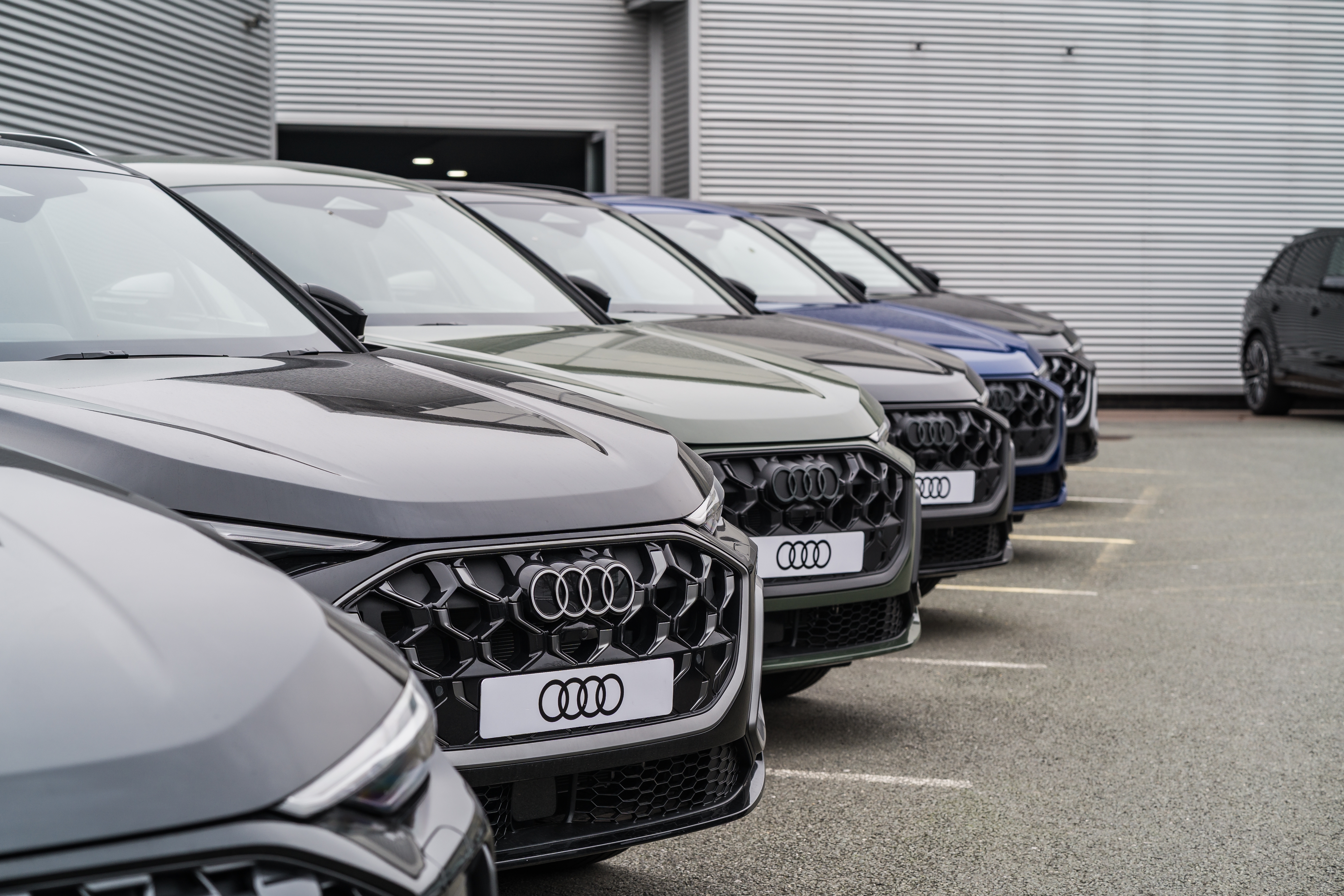
Choosing between petrol, diesel, hybrid or electric power for your new or used car can seem like an overly complicated challenge, encouraging you to stick with what you're familiar with. Doing that might ease away the hassle of making a choice, but it could also mean that you're missing out on a type of car that suits your needs best – one which could save you money in the long run.
In reality, it's not as complex a puzzle as it initially seems, essentially coming down to your answers to three questions:
How will you mostly drive it?
What’s your budget?
Where will it usually be parked when you're at home?
It’s important to take some time to carefully consider your responses. For example, do you really know how far you normally drive in a year? Do you have a private driveway or dedicated parking space at home where you could potentially plug a car in?
Decision fatigue is real and that’s before you add in your preferences about the car's body style, what equipment you want it to have, which brands you're considering and even your proximity to the nearest dealer for those marques. While each of those has a significant influence upon the car you eventually choose to buy, deciding between petrol, diesel, hybrid or electric is more fundamental, so it makes sense to decide which makes sense for you first before considering other factors.
Petrol: Broad appeal with universal ease of use
Petrol-fuelled models remain the most popular choice among people buying new cars, so naturally there are far more of them on the used market than the other options, enabling savvy customers to shop around and barter prices down.
They have a very broad appeal across all shapes and sizes of cars, from economical small models designed to excel in urban environments up to high-performance and ultra-luxury models, plus everything else in between. For shorter journeys, particularly those at lower speeds and in stop-start traffic, petrol-engined cars usually prove to be more economical than diesels, but not as efficient as hybrid and fully electric alternatives.
Further augmenting petrol cars' popularity is that the infrastructure is widespread and the processes for using it is both universally understood and relatively swift – providing there are no queues at the filling station, you can top up your tank, pay for it and be on your way again in well under five minutes. Unfortunately, the cost of that fuel has increased significantly in recent years due to Russia's invasion of Ukraine and the USA's conflict with Iran – even when they end, petrol prices may fall, but it's unlikely to return to pre-war levels.
Running a petrol-powered car also means you don't need to give consideration as to where you will park the car overnight – whether it's garaged, on a private driveway or on the street makes no difference.
Prices of new petrol-fuelled cars are usually less expensive than diesels and those with varying degrees of hybridisation, but the gap to EVs has narrowed significantly recently and – in some cases – has flipped the other way around. That trend is likely to continue in the years ahead as manufacturers recoup the cost of getting petrol engines through evermore stringent emissions regulations by increasing their retail prices.
Before the flat, standard rate of VED car tax kicks in from year two, first year rates are typically lower than for diesels, but higher than for hybrids and EVs. Don't forget to factor in the additional cost of the Expensive Car Supplement, payable in years two to six, if the petrol car costs £40,000 or more when new, inclusive of extra-cost options.
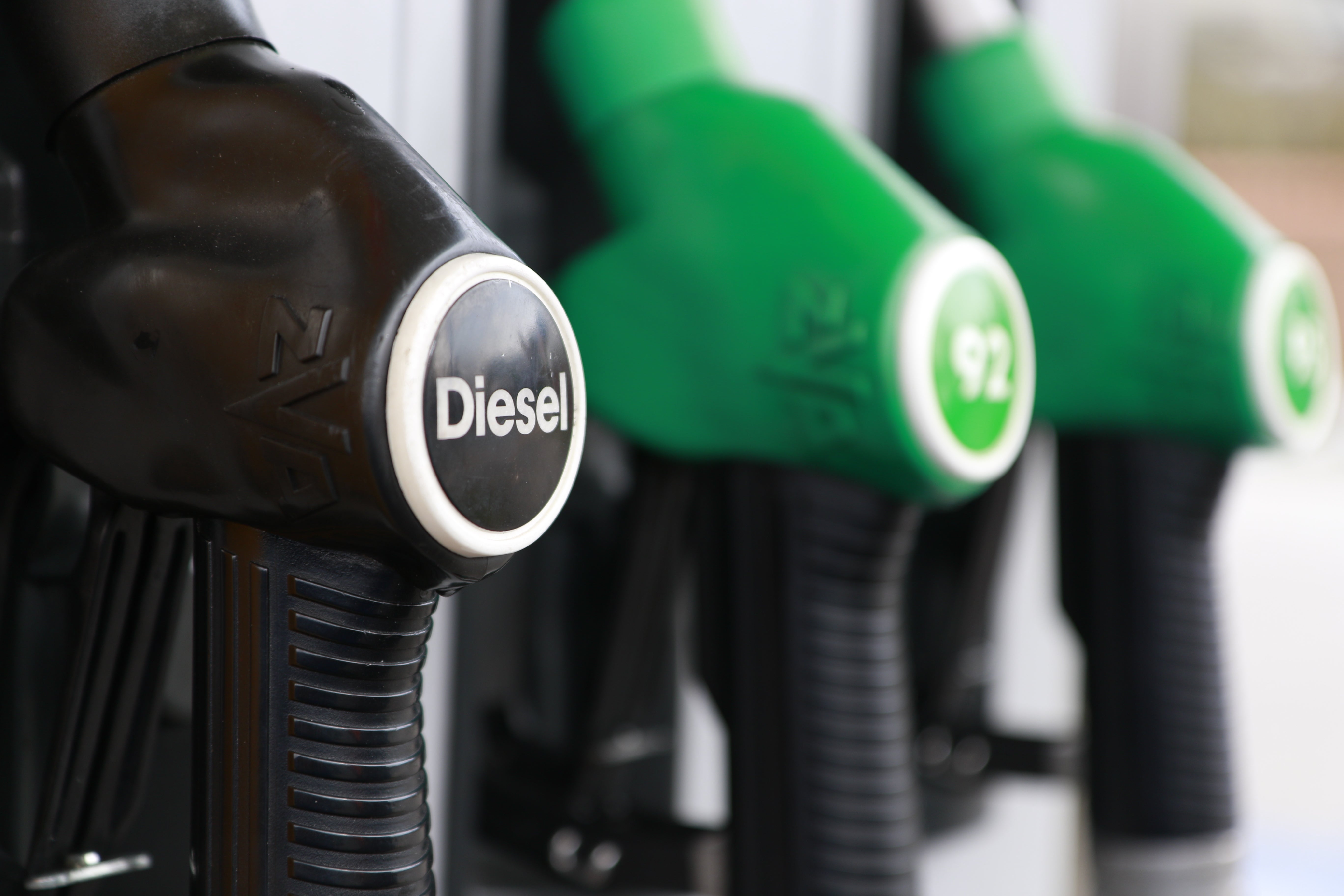
Diesel: More of a specialist tool, but simple to use
Demand for diesel-fuelled cars has tailed-off dramatically in recent years, making them the most niche choice among new car buyers. Plenty remain available on the used market as a result of their former popularity, but their values can vary wildly – small diesel hatchbacks have a limited number of would-be buyers, driving prices down, but large, seven-seater SUVs are still most sought-after when there's a diesel engine under the bonnet.
In fact, it's those big SUVs which are effectively shoring-up diesel demand among new cars, where consumers favour their deep reserves of torque, both for making light work of off-road driving and hauling along heavy trailers and horseboxes. The vast majority of cars on sale which are homologated to tow up to the maximum 3500kg capacity for braked trailers have diesel engines.
As a result, the assortment of new cars available in diesel guise has narrowed significantly in recent years and continues to become more restricted, particularly among small- and medium-sized cars. From July 2026, diesel-engined Volkswagen Golfs disappeared from UK price lists after 48 years of continuous availability. The upshot of declining demand is that most remaining diesels are expensive relative to all other propulsion types – and will continue to rise – with few of them now costing less than the £40,000 Expensive Car Supplement threshold, with high first-year VED costs also being commonplace.
Although diesels can be parked in garages, driveways and on the street without specific considerations being made, you might have to factor in that as most new examples are concentrated around much larger ranges of cars, available parking spaces could be at a premium.
While the convenience of refilling a car with diesel takes the same length of time as with a petrol-fuelled car, relying on a similar infrastructure, today's reality is many filling stations provide fewer pumps delivering the fuel. Many people find the smell of diesel fuel unpleasant, a point which becomes more apparent if there are no protective gloves available when you refill, transferring the scent to your steering wheel and gear level when you climb back in. Still, that might distract you from how expensive the fuel now is.
You will be in the car for a long time for a diesel to make the most sense, particularly when you are able to maintain the steady, higher speeds at which they are at their most fuel efficient. If your job or lifestyle mean you spend hours on end plying the UK's major trunk roads and motorways, a diesel-engined car could prove to be the most cost-effective, but you will need to be covering high annual mileages – typically around a minumum of 15,000 – to make them the most cost-effective choice.
If your journeys are mainly short, newer cars fitted with a Diesel Particulate Filter (DPF) in their exhaust system can suffer problems. DPFs are designed to capture and burn off harmful particulates resulting from the engine's combustion process, but low-mileage journeys tend not to generate the required heat causing them to be blocked with sooty deposits, which can be costly to remedy.
You will likely also face the additional hassle of replenishing your diesel car's AdBlue tank in order to ensure it complies with emissions regulations – choose to ignore your dashboard warnings and let the tank run dry and the car will prevent itself from starting. AdBlue refills are usually part of diesel cars' service schedules, but in many instances more will be required before the service is due.
Hybrid: One generic name for three technologies
'Hybrid' is often used as a catch-all term for cars which combine more than one propulsion method, but the truth is more nuanced than that, so it's important to understand the differences between them.
What's common to all hybridised cars is that they make use of both a combustion engine and at least one electric motor connected to a high-voltage battery in order to drive them. The determining factors as to which kind of hybrid is which are the size and capabilities of the motor and battery, plus how the latter component is charged up.
Mild hybrid: Can you feel the difference?
If you have bought a new petrol- or diesel-engined car in recent years, the chances are it is a mild hybrid, even if you didn't realise it. While that demonstrates how unobtrusive mild hybrid – or MHEV – technology is, it also reflects its limitations.
MHEV systems comprise of a small electric motor, often integrated between the engine and gearbox, with its energy reserves stored in a tiny battery, typically running a 48-volt electrical system. They make modest reductions in overall fuel consumption and CO2 emissions, with the electric motor supplementing the engine when accelerating or taking over when coasting or slowing down to a halt. If you think of it as a glorified stop-start system, you won't be too far wide of the mark, as they offer only tiny bursts of electric-only driving.
Positively, they require no adapting to in order to benefit from their fuel-saving qualities, otherwise with the same pros and cons as regular petrols and diesels. Charge is directed to the battery as the car decelerates, harvesting otherwise wasted kinetic energy and converting it into electricity. Where MHEVs are sold alongside non-hybridised models, they typically cost a few hundred pounds more to buy.
Self-charging hybrid: An appealing compromise
Self-charging – or full – hybrid technology is now mature and sophisticated, which is unsurprising when you consider that the first to be sold in the UK were launched back in 2000, with the arrival of the first Honda Insight and original Toyota Prius. Often shortened to HEV (for Hybrid Electric Vehicle), they usually pair a petrol engine with a more substantial electric motor and battery combination than MHEVs, operating at a much higher voltage.
To drive, HEVs are no more complicated than a conventional combustion-engined car and usually work at their most fuel efficient when the hybrid system is left in Auto mode, allowing the car's software to determine which combination of engine or motor power will perform the most economically at any given moment. Newer HEVs can also manage a handful of electrically powered miles at urban speeds without the engine firing into life at all.
Earlier hybrids gained an unfair reputation for being one-trick ponies, being frugal for urban driving but comparatively thirsty at motorway speeds. That wasn't completely accurate back then and most definitely isn't now, which is another reason why HEVs have increased in popularity at diesels' expensive, being as – if not more – economical at all speeds, as well as quieter and more refined.
What many aren't especially handy for is towing heavier trailers. Not because it technically isn't possible, it's more because manufacturers only homologate them to haul lighter loads in order to preserve their efficiency.
As HEVs don't require plugging in, recharging their batteries in a manner similar to MHEVs, they benefit from the same conveniences as petrol- and diesel-only models. They are more expensive to buy, though, both new and used.
Plug-in hybrid: Limited real-world benefits
In broad terms, plug-in hybrids – or PHEV for convenience's sake – work in an almost identical manner to HEV alternatives, except their battery capacities are much larger still, enabling far longer spells of electric-only driving, with their efficiency potential maximised when they are charged by plugging them in. If you have nowhere at home to install a domestic wallbox to recharge it, their benefits are difficult to access.
Most PHEVs allow you to choose when to use your electricity stored in the battery. These modes typically include options to:
Drive it in electric mode until the 'plug-in charge' has run out
Use the electricity with the engine in hybrid mode
Save the 'plug-in charge' until you reach a Clean Air Zone
Use the engine to recharge the battery fully – note that this is particularly fuel inefficient as the engine is also driving the car
With the battery zapped-up to 100% many PHEVs are capable of being driven over 50 miles on battery power alone, with the Omoda 9 leading the field with an officially claimed electric driving range of 93 miles. While that sounds impressive, they aren't as energy efficiency as fully electric cars as they are additionally hauling around an engine, gearbox and potentially a full tank of fuel. If you're planning on buying a PHEV to drive it primarily on battery power alone, an EV is likely to suit you better.
Similarly, when the battery's only operating with minimal charge, they use more fuel than a regular HEV thanks to the heavier battery and extra cabling. What they do provide is a way of easing range anxiety for car buyers who fear they could be left stranded in an EV if they can't find anywhere to charge it up.
PHEV high-voltage batteries can also reduce boot space compared with non-PHEV versions of the same car. It's typically nestled beneath the boot floor, which may have also been elevated to house the enlarged pack.
PHEVs are usually the most expensive propulsion types to buy, so you are far more likely to be north of the £40k Expensive Car Supplement threshold by choosing one. As of 2025, the VED car tax break they previously enjoyed disappeared and while PHEVs with longer electric ranges can still provide Benefit-in-Kind (BiK) advantages for company car drivers, that too will be erased from the 2028/29 financial year.
Electric: Could be an easier switch than you're expecting
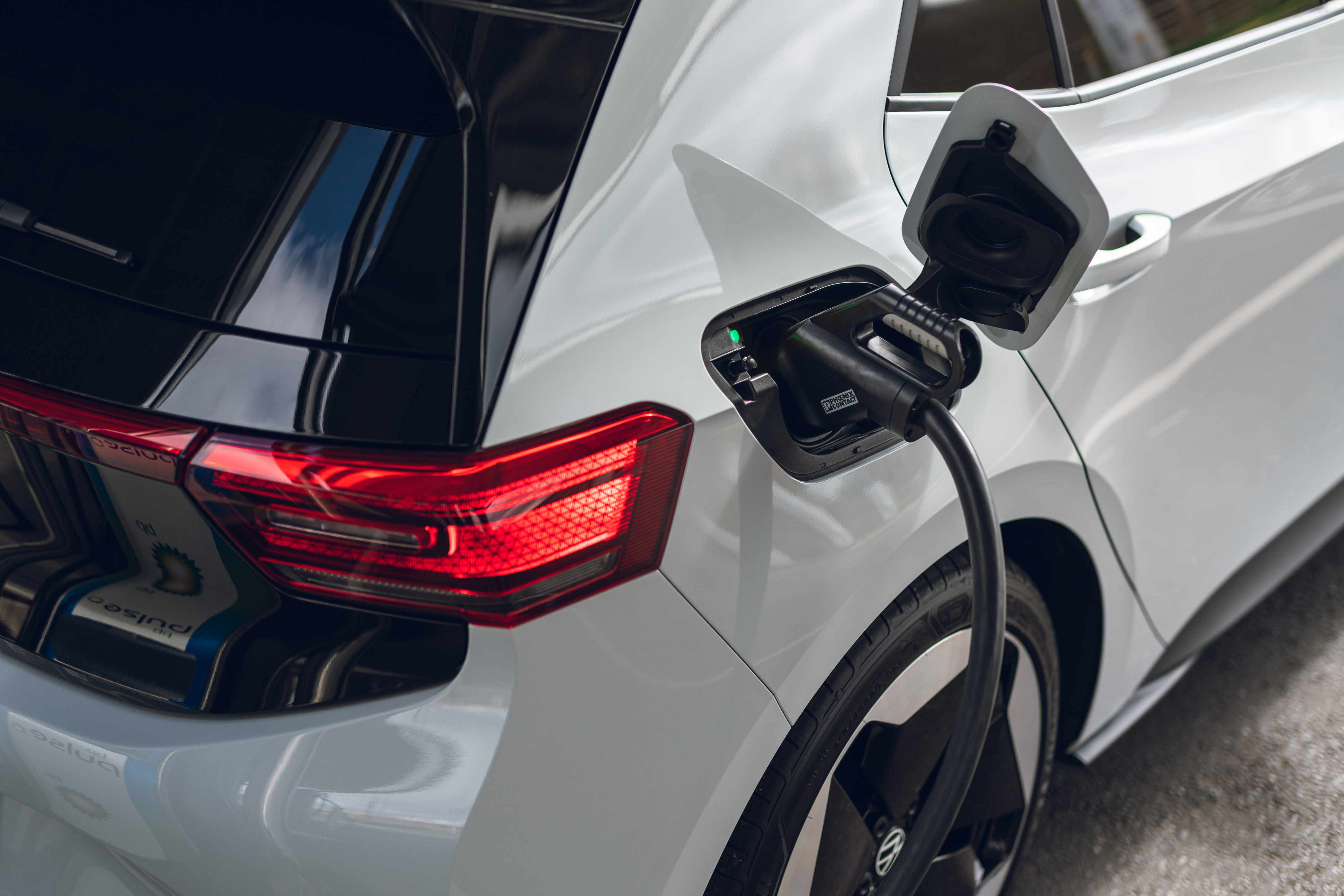
Before all other considerations when it comes to an electric car, the ability to charge it at home – in a garage, on a private driveway or a designated parking space – using a dedicated wallbox charger is the main one. If that's not possible, you won't be able to maximise the benefits of switching to an EV as those are the elements required to potentially access the cheapest rates of power via energy suppliers' electric car-specific tariffs.
Yes, you can regularly replenish the battery at rapid and ultra-rapid public charging stations, but it's not something we recommend due to the relative expense of doing so and because there's a greater risk of more rapidly degrading the battery's potential capacity, known as its State of Health (SoH). Checking the SoH is especially important when buying a pre-owned EV.
Assuming you're good to go for home charging, the reality is most people can already make an electric car work for them with ease and immediately reap the benefits of doing so. For starters, on a cost-per-mile basis, electricity is significantly cheaper than petrol or diesel, with most new EVs now capable of being driven a minimum of 200 miles on a single charge – most people don't even cover a tenth of that distance daily. That said, some of the older versions of the Nissan Leaf and Renault Zoe might struggle to travel 100 miles in one go, which is okay for an inexpensive used EV mainly intended urban driving, but not much more.
Range anxiety is something that can be overcome with experience and in practice is rarely an issue anyway, meaning the likelihood of being left stranded by the roadside are remote. Your State of Charge (SoC), showing the percentage of electricity in the battery, is permanently displayed on the dashboard, with increasingly impossible to ignore warnings flashing when you're down to your last 20% and below.
Yes, longer journeys may require a little more forward thinking, giving consideration to where an en route recharge might be required if the overall journey is longer than the EV's range, but this rarely proves problematic, with ever-increasing numbers of public charging points. Remember, after 150-200 miles of driving over three to four hours, taking a break is a wise idea – your car could be having its energy reserves topped up while you are. While it takes longer than filling up a petrol or diesel tank, it's not as inconvenient as naysayers would have you believe.
For similar reasons to hybrids, EVs haven't traditionally been great tow cars and while that's not going to change overnight, the best-performing new, large electric SUVs can now tow the same 3500kg braked trailer loads as diesel-engined SUVs. Expect the assortment of choice among that type of car to grow over the next few years.
Driving an electric car doesn't really take much adjusting to, as by and large they are little different from refined, quiet automatic petrol-powered models. Their performance is generally excellent, with strong acceleration thanks to the way electric motors generate maximum torque as soon as you dab the accelerator. Yes, they are usually much less energy efficient when motorway driving than they are around town, but more recent EVs are geared to take higher speeds into account.
As well as the low cost of energy to run them, maintenance of EVs is also usually less expensive and with longer service intervals due to them having far fewer moving parts. Their brakes are typically smaller and lighter, wearing out at a much slower rate than on combustion-engined cars because the electric motor takes on a greater role when it comes to slowing them down.
It's this regenerative braking where EVs differ most from more conventional cars, but even then the differences are small. easy to adapt to and usually adjustable to your preferences. Many allow you to vary the degree of this regeneration – middling settings are similar to engine braking degrees of speed reduction, but can be dialled down to none at all or be so pronounced that you can drive almost entirely with the accelerator pedal, similar to how dodgem cars operate.
Since 2025, VED car tax on electric cars is the same price as any other drive type after the first year, but those initial 12 months are at a much lower rate. The same date saw the Expensive Car Supplement also applicable to EVs, but with a £10k higher price threshold at £50,000. That's especially good news because new electric cars are becoming ever cheaper, partly because of the technology becoming more mature and less expensive to manufacture, but the government is lending a helping hand with its Electric Car Grant (ECG).
Applicable to certain electric models costing under £42,000, the ECG offers two levels of discount: Band 1 lops £3750 from the price of a new EV, while Band 2 trims £1500 away, with no complicated forms to fill in to access the grant. Many EVs which don't receive the ECG are instead offered with significant manufacturer discounts instead to help them remain competitive on price. The result is that many new electric cars are barely more expensive than petrol cars, with several being significantly less costly.
Used EVs are still currently inexpensive as the early technology was treated with suspicion, causing their resale values to plummet. Now there are signs that residuals for electric cars are beginning to firm-up and even rise as more people realise how easily they can fit into their lives. Grab a bargain while you still can.
Stories in the mass media about regular electric car fires are just that – stories. Yes, when the high-voltage battery is damaged or punctured, the fire which might result is likely to be severe and burn for a long time, but the chances of an EV bursting into flames remain minimal compared with combustion-engined cars.
Batteries are also proving to be far longer-lived than doubters suggested. Most are covered by an eight-year/100,000-mile warranty, guaranteeing a 70% SoH at the end of that period. In reality, most battery packs will outlive the cars they're fitted to, later being repurposed for domestic energy storage systems.
What this means for you?
Whether petrol, diesel, hybrid or electric is best for you is a question you can answer once you've figured out which suits your needs and prameters.
Given the driving range capabilities of new electric cars, they can already suit the majority of people already, providing that you can charge them at home for the least expensive supply of energy.
Providing you don't regularly tow heavy loads, if an EV isn't going to be convenient for domestic charging, then a self-charging hybrid makes for a more sensible and efficient all-roader than a plug-in hybrid alternative.
The tide of electrification is washing in, though. If your next new car is petrol- or diesel-only, the likelihood is the one after that won't be. They will be banned from being sold new from 2030, with HEVs and PHEVs set to go the same way by 2035.
However, if EV sales rise quickly in the years before that, many manufacturers may abandon production of cars fitted with combustion engines sooner than the law requires.
Yes, however, the result can change depending on where you charge your EV and how many miles you drive. If you can charge your electric car at home, then your cost per mile will be significantly lower than a combustion-engined alternative, even without switching to an EV-friendly tariff. If you charge using public DC fast chargers at ten times the cost, then the maths doesn’t add up as well.
It’s also worth factoring in that electric cars have fewer moving parts and less brake wear, so servicing should work out cheaper, reducing the running costs of an EV.
No it doesn't. This is a common misconception, likely due to the fact that in order to make the most of a PHEV you do have to charge the battery up frequently in order to maximise the electric-only driving range.
Once that 'plug-in charge' has dwindled away to nothing, that doesn't mean the battery is empty, making it run the same way a conventional petrol or diesel car would. Instead, it retains a small percentage of charge and operates like a conventional self-charging hybrid. The downside, as we've mentioned above, is that when driven like that PHEVs aren't as fuel efficient as HEVs due to the extra weight they are carrying.
Short journeys aren’t the ideal conditions for a diesel car as they don’t give the diesel particulate filter (DPF) in the exhaust a chance to warm up, allowing the soot they’ve collected to be burnt off.
Over time, this can lead to warning lights on the dashboard that a blockage has been sensed. Often this can be cleared by going for a decent motorway drive, but, if not, can cause the car to go into limp home mode, and require a trip to the garage to get the DPF force regenerated.
VED is now charged at £10 for the first year and £200 a year after that for new electric cars. If your EV first hit the road from 1 April 2017 and 31 March 2026, it costs £200 a year, while for those registered from 1 March 2001 to 31 March 2017 it’s £20.
There’s also the Expensive Car Supplement to consider. So if your EV cost £50,000 or more and was registered on or after 1 April 2025, you need to pay an additional rate – currently £440 – for five years, starting from the second year of tax. That threshold is £10,000 higher than for petrol, diesel and hybrid cars.
Just as a petrol engine becomes less powerful and less efficient with age, and your smartphone that once lasted days on a charge dies after a morning just around upgrade time, electric car batteries also degrade over time.
Current estimates, which include a mix of home and rapid charging, state that an EV battery will degrade by 2.3% per year. That means an EV battery designed to last well over a decade and a six-figure mileage is likely to still offer around 75% of its original power after 10 years on the road.
When buying a used EV, you generally get a State of Health (SoH) certificate, which tells you the percentage of degradation it has experienced, so you know how the range will be impacted.
EV batteries are generally warrantied for eight years or 100,000 miles, whichever comes sooner, for added peace of mind.