Skoda Enyaq Review

Written By Phil Hall
- 2021
- SUV
- Electric
What we love
Comfortable ride
Huge boot and family-friendly cabin
Strong value against closely related rivals
Things to consider
Designed for comfort over sportiness
No seven-seat option
Choose the battery size that suits your mileage
The DRIVE take on the Skoda Enyaq, is it the right car for you?
The Skoda Enyaq is one of the easiest electric SUVs to recommend if you want a family car that does everything well. It's roomy, comfortable, easy to drive and priced keenly enough that it undercuts most of the cars it shares its mechanicals with. That's right, the Skoda Enyaq is closely related to the Volkswagen ID.4 and Audi Q4 e-tron, yet it’s more practical and better value than either.
The car was facelifted in 2025, which brought some very significant and useful updates. There is now more power, more range and more standard equipment. The Enyaq is perhaps not the most exciting EV in its class, but if your priorities are comfort, space, ease of use and value for money, then this car is hard to beat.
The Skoda Enyaq in more detail
The Enyaq was Skoda’s first electric car, but it’s undoubtedly a Skoda through and through, because it does all those things that the firm’s cars have traditionally done well. It competes with other all-electric mid-sized five-seater family SUVs, but it sits towards the bigger end of the scale on size, yet towards the lower end of the scale on price. Marry that with huge space and practicality, a comfortable and relaxing driving experience, and thoughtful design, and hey presto, you have that traditional Skoda appeal, and an excellent family car to boot.
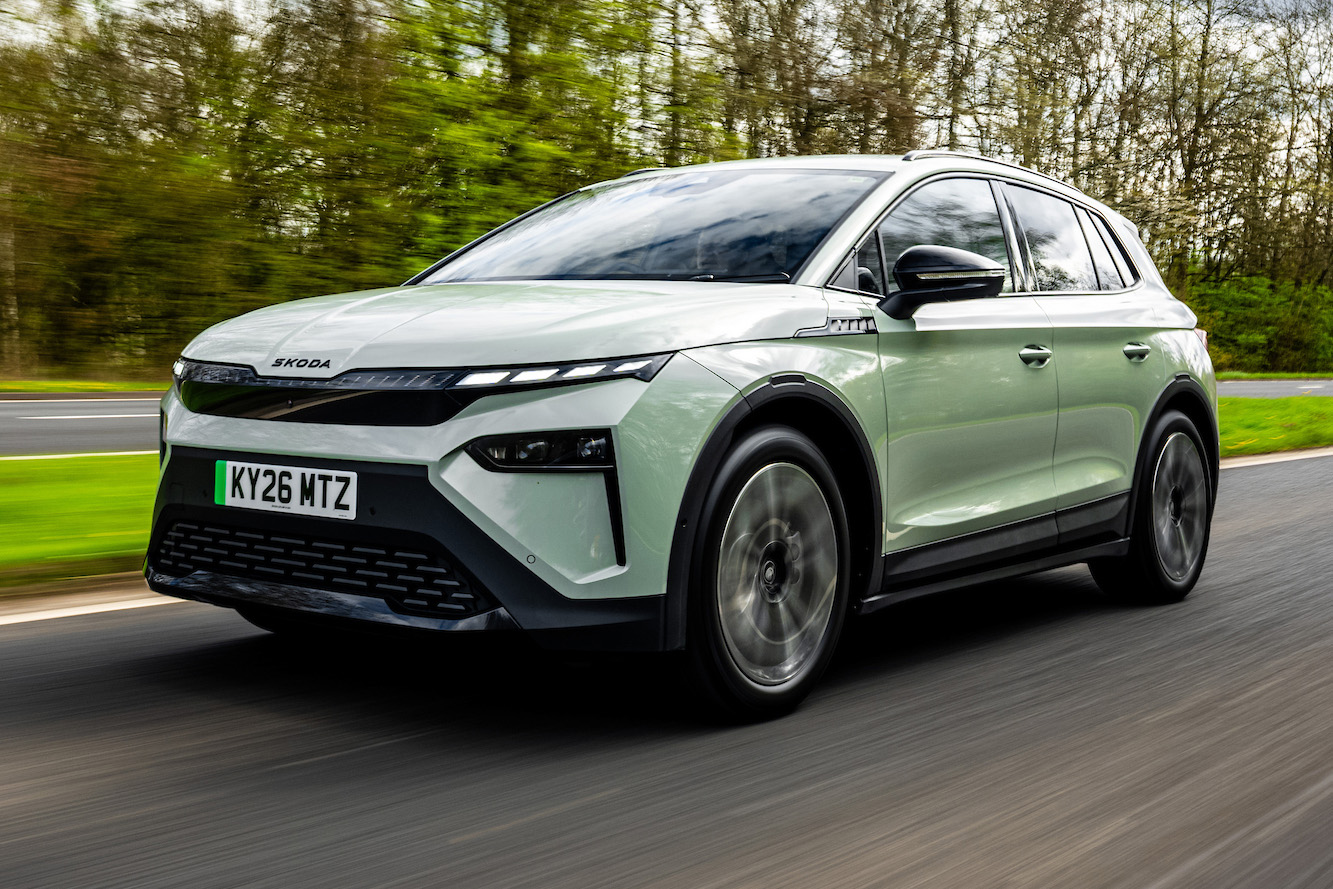
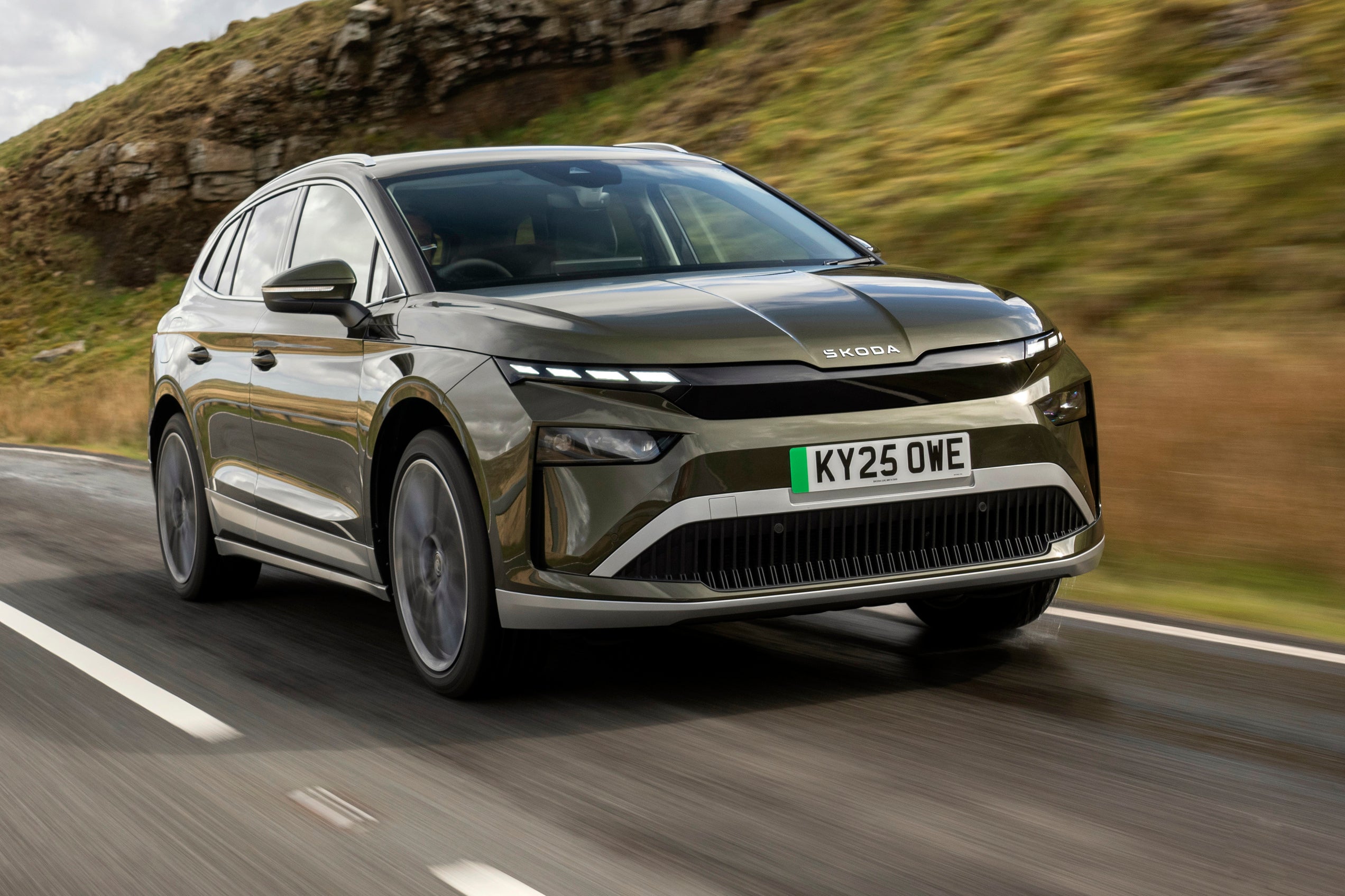
The 2025 facelift has kept the core recipe intact while tidying up most of the car’s weaker areas, of which there weren’t many. Externally, the Enyaq now adopts Skoda’s latest ‘Modern Solid’ design language, which gives it a cleaner and slightly more assertive front end. The changes are not radical, but they do make the car look fresher and more upmarket. Improved aerodynamics also helps efficiency.
Under the skin, the range has been rationalised around two main battery choices. The Skoda Enyaq 60 uses a 63kWh battery and is now a more convincing entry point to the range than some earlier versions, which had a more limited range. Above that sits the Enyaq 85, which gives the car the kind of official range that makes long-distance family use feel realistic rather than optimistic. Higher up the range, there are four-wheel drive and vRS versions, but for most buyers, the rear-wheel-drive 60 and 85 will be the ones to go for.
The Skoda Enyaq is immensely practical, with massive passenger space and a huge boot. If you fancy sacrificing a bit of that for more style, then a Coupe version of the Enyaq is also available, although we’ve written a separate review of that car. The cabin feels strong on quality, too, and there’s enough kit to make it also feel luxurious. On the road, the focus is on keeping life as easy and relaxed as possible, with smooth, eager performance, a comfortable ride, responsive controls and excellent refinement.
There are flashier electric SUVs, and there are cheaper electric crossovers, but the Skoda Enyaq sits in a very useful middle ground. It’s easy to recommend to buyers who want one car to cover a lot of bases, because it’s one of the best all-rounders in the electric family SUV market.
If you want something faster, then take a look at our Skoda Enyaq vRS review, while you might also be interested in our Skoda Enyaq Coupe review.
What's the best Skoda Enyaq trim and battery option?
For most buyers, the best option in the regular Skoda Enyaq range is the 85 in SEL trim. The entry-level trim has enough luxury kit to still feel luxurious, and although the loftier trims do add some desirable items of equipment, you pay a lot more for them. The larger battery makes the Enyaq feel like a more complete long-distance family EV, and the official range advantage over the 60 is meaningful enough to justify the extra outlay if you regularly travel chunky distances.
The 60 is not a poor choice. In fact, it looks stronger than ever now that even the entry-level version offers a respectable official range and a healthy 204PS. If you mainly do shorter trips, school runs, commuting and the odd longer journey with charging stops planned in advance, an Enyaq 60 in SE L trim makes plenty of sense. However, if you upgrade to the 85, you not only get superior range, but you also get the stronger 286PS motor for more effortless performance.
What’s the price of the Skoda Enyaq?
The regular Skoda Enyaq SUV starts from £38,020 in SE L 60 form (once you’ve factored in the government’s £1500 Electric Car Grant, for which this version and a couple of others qualify), rising to £52,470 for the range-topping vRS version. The cheapest version of the higher-range, higher-powered 85 version is the SE L at £42,060, and that’s the one we think will suit most buyers. The SportLine versions sit in the high forties in terms of price, which we don’t think is worth the extra.
Edition trim is a tricky one: when combined with the 60 powertrain, the price hike over SEL isn’t huge, and many will consider it worth the extra. Combined with the 85 powertrain, though, the price hike is much greater for some reason, and we’d rather have the extra range and power than the extra kit.
The pricing positions the Skoda Enyaq well in the class. It’s certainly not the cheapest car in the class, but it's cheaper than many, and with the amount of quality, kit and comfort you’re getting, it easily feels worth what you pay.
Alternatives to the Skoda Enyaq
The most obvious alternatives are the ones that are closely related to the Skoda Enyaq underneath. The Volkswagen ID.4 is mechanically very similar, but the Enyaq makes a better case for practicality and value. The Audi Q4 e-tron has a more premium badge and a more stylish cabin, but it's harder to justify the price unless you particularly want the badge and image.
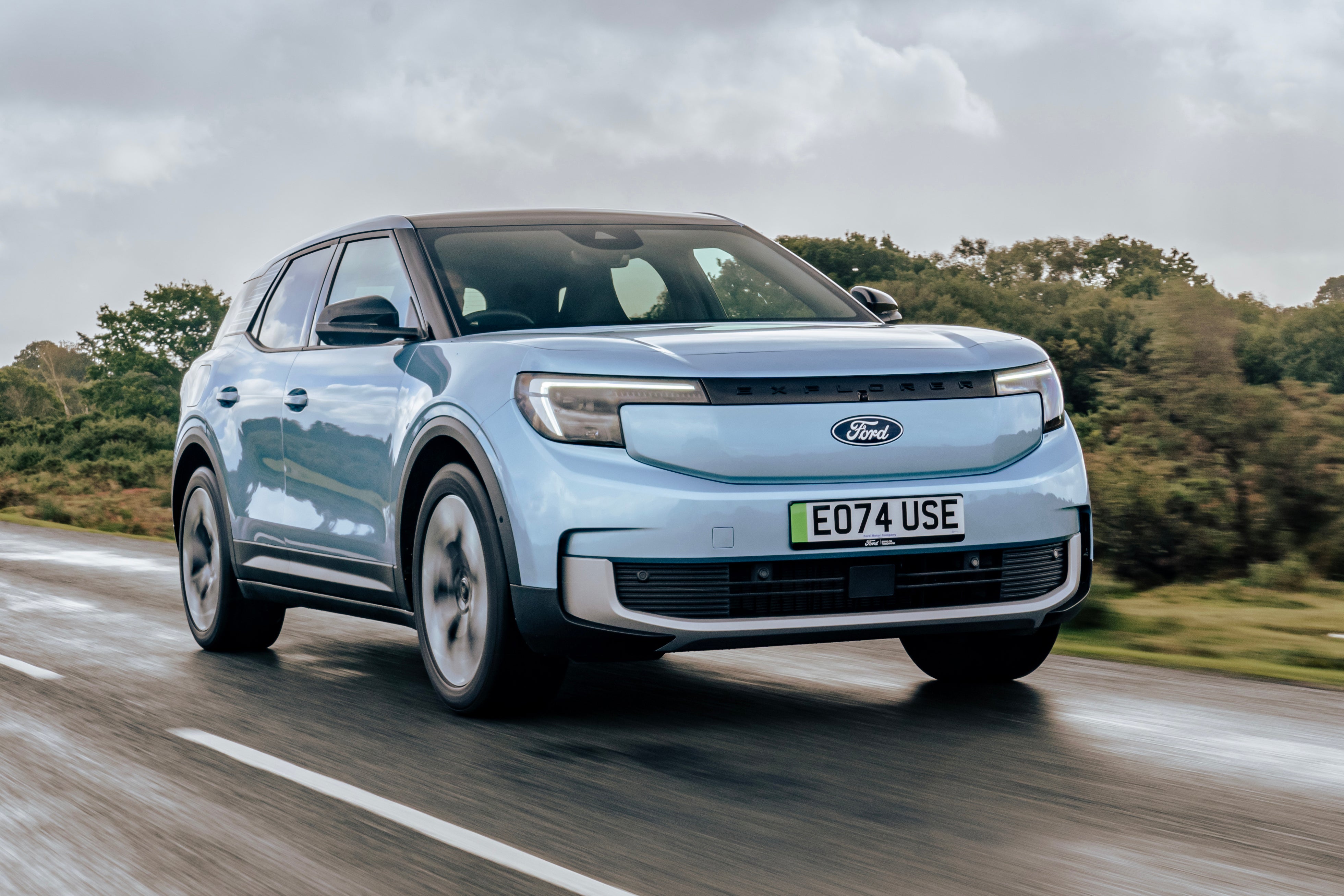
The smaller Skoda Elroq is also worth serious consideration. It's cheaper, easier to place on the road, and still spacious enough for plenty of households. If you don't need the Enyaq’s extra boot space, the Elroq may be the smarter buy. There’s also the Ford Explorer and Ford Capri, both of which run on the same mechanicals despite wearing a Ford badge.
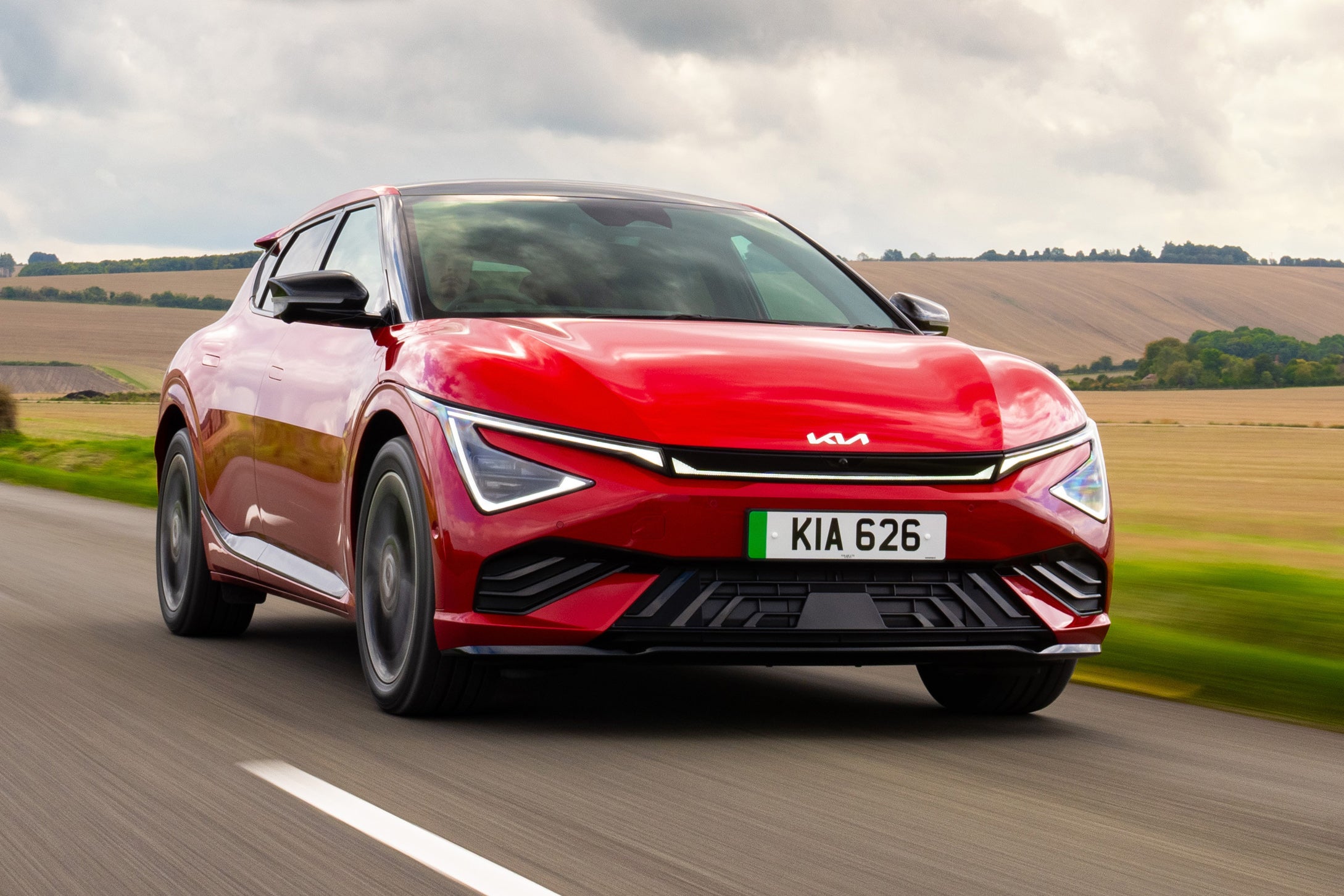
Elsewhere, the Kia EV6 and Hyundai Ioniq 5 are strong alternatives if you want faster charging and a more distinctive design. A Tesla Model Y offers good efficiency and a handy Supercharger network, though not everyone will get on with the minimalist cabin and slightly shonky cabin quality. The Renault Scenic E-Tech is another sensible family EV, as is the Nissan Ariya.
What's the interior like in the Skoda Enyaq?
The Skoda Enyaq’s cabin is one of its biggest strengths. It feels airy, thoughtfully laid out and genuinely family-friendly, with loads of space for people and luggage.
Skoda Enyaq boot space and practicality
If practicality is a priority, the Skoda Enyaq earns itself a place on your shortlist very quickly. The regular SUV has a 585-litre boot (the Coupe version has only a little less at 570 litres), which is excellent for this class, and that expands to 1,710 litres with the rear seats folded. More importantly, the space is easy to use, being wide, square and level.
Passenger space is another huge strong point. Both headroom and legroom are incredibly generous, with space for tall adults to stretch out, and the rear bench is wide enough that three people can sit across it in relative comfort. The flat floor really helps with foot space, too, and the large windows give a light and airy open-plan feel.
Up front, the driving position is easy to settle into and visibility is generally good for a car of this size. You don’t sit quite as high as you might expect in an SUV of this size, but there's plenty of adjustment, including lumbar adjustment on every version. Skoda’s usual collection of ‘Simply Clever’ features are present and correct, too, such as umbrellas hidden in the doors and an ice scraper hidden under the fuel filler flap.
There are perhaps a couple of slight omissions. The rear bench doesn’t slide to allow you to balance the space available between rear legroom and boot space, and there’s no seven-seat option offered (we reckon there’s space, because we’ve seen seven seats crammed into much smaller cars). However, those looking for a roomy five-seater will find the Enyaq very difficult to beat.
Skoda Enyaq dimensions
The standard Skoda Enyaq measures 4,658mm long, 1,879mm wide (not including door mirrors) and 1,622mm high, with a 2,766mm wheelbase. That makes it a substantial family SUV, but not an intimidating one. It's large enough to deliver excellent cabin and boot space, yet still easier to manoeuvre than some larger seven-seat alternatives.
Tech and infotainment in the Skoda Enyaq
Every Skoda Enyaq gets pretty much the same infotainment arrangement, which includes a 13.0-inch touchscreen, built-in navigation, a 5.0-inch digital instrument screen, wireless smartphone connectivity, DAB radio and USB-C ports front and rear. The only differences as you move up the trim-level hierarchy are that SportLine and vRS cars also have an upgraded Canton sound system and a head-up display.
It looks good, with smart fonts and slick graphics, and the system responds quickly to jabs of the finger. It’s certainly not perfect, though. Its position on top of that dashboard means that it attracts reflections on a sunny day, and like so many cars these days, too many functions have to be accessed and operated through the touchscreen - including the climate controls, which is a particular bugbear of ours - making the whole interface feel too complicated and cluttered.
Materials available on the Skoda Enyaq
If you’re worried about the Skoda Enyaq feeling bargain-basement inside when compared to competitors, then don’t. The materials on show are as lustrous and as substantial-feeling as anything else in the class: the surfaces in your eyeline are squidgy and tactile, while even the harder surfaces hidden lower down in the cabin look smart and sophisticated. This delivers a pleasantly high-class environment.
It’s an interesting one, too. The car is offered with a variety of interior themes called ‘design selections’. The standard one on SE L and Edition cars is called Loft, which uses a mixture of fabric and artificial leather on the seats and dashboard. If you’re prepared to pay extra, you can alternatively choose from a variety of optional interior finishes. Lodge has a funky two-tone design with fabric made from recycled bottles and fishing nets, while Lounge uses artificial leather and microsuede. Then there are the Suite finishes, with leather in either black or deep brown.
SportLine and vRS models get their own sportier interior treatments, with darker finishes and more aggressive-looking seats. They look good, but the more restrained interior treatments arguably suit the Enyaq’s calm, family-oriented character better.
What's the Skoda Enyaq like to drive?
The Skoda Enyaq’s greatest strength on the road is its smooth and relaxed nature, with a supple, comfortable ride, excellent refinement and easy performance. It’s precisely what most family-car buyers will be after.
Skoda Enyaq range and performance
The mainstream Skoda Enyaq line-up centres around two main rear-wheel-drive battery versions, plus higher-performance all-wheel-drive models further up the range. The Enyaq 60 uses a 63kWh gross battery (59kWh of which is usable) and a 204PS motor (this was a more modest 179PS before the 2025 facelift, which you should bear in mind if buying used). Official range is up to 269 miles in SE L trim and 268 miles in Edition trim, with 0-60mph taking 7.8 seconds in both cases.
Above that sits the Enyaq 85, with the larger 82kWh gross battery (77kWh usable) and a 286PS rear-mounted motor (prior to the 2025 facelift, this version was called the 80 and had a 204PS motor). In SE L and Edition trims, it offers up to 359 miles according to official figures, while that drops to 354 miles in SportLine trim due to its bigger wheels. In all versions, the 0-60mph dash drops to 6.5 seconds.
Both powertrains feel perfectly adequate on the road, with performance that’s keen and eager at all times, without tailing off too much at higher motorway speeds. The 85 does feel a good bit keener than the 60 in most situations, though, and that, combined with its superior range, means it’s the one we think most drivers will prefer.
You can also choose the SportLine 85x, which adds a second motor to the front axle for four-wheel drive, but it still has an identical 286PS and identical acceleration figures, so it’s more about enhanced wet-weather traction than any enhancement in performance. Your range drops to 334 miles, though.
At the top of the range sits the vRS, which also has four-wheel drive, but this time with a significant upgrade in power to 340PS, dropping the 0-60mph time to 5.2 seconds. It has a slightly larger battery at 84kWh, giving it an official range of up to 344 miles.
Performance data
| Model | Engine/battery size | Power | 0-62mph | Range/MPG |
|---|---|---|---|---|
Enyaq 60 | 63 kWh | 204PS | 7.8 seconds | Up to 269 miles |
Enyaq 85 | 82 kWh | 286PS | 6.5 seconds | Up to 359 miles |
Enyaq 85x 4x4 | 82 kWh | 286PS | 6.5 seconds | Up to 334 miles |
Enyaq vRS 4x4 | 84 kWh | 340PS | 5.2 seconds | Up to 344 miles |
Skoda Enyaq driving and refinement
The Skoda Enyaq has a generally calm and relaxed character that suits a family car exceptionally well. Its greatest asset is its high level of comfort. At any speed and on any sort of road, the pliant suspension does a brilliant job of smoothing over bumps and ruts, keeping those inside feeling serene. That relaxed nature is helped further by the car’s excellent refinement: the all-electric powertrain is predictably quiet, and road noise and wind noise are shut out really effectively, too.
The handling impresses, too. It’s not the most involving car you’ll ever drive, sure, but you really wouldn’t expect that of a large family SUV anyway. More importantly, there’s enough control in the suspension to keep the car feeling tidy when negotiating a set of bends, and to keep the body from feeling floaty and bouncy on an undulating road. Grip and traction are plentiful, no matter how many driven wheels your Enyaq has, and although steering can feel a bit artificial at times, it’s at least responsive and predictable. The turning circle is also surprisingly tight, which helps with low-speed manoeuvres, as does the standard fitment of front- and rear parking sensors, and a reversing camera.
It’s generally just a very easy and relaxing car to drive, with light controls and instant responses. And despite the Enyaq’s size, it’s in no way intimidating: we’ve driven it on tiny roads in the highlands of Scotland, and we weren’t wincing every time we met a motorhome coming the other way.
How safe is the Skoda Enyaq?
The Skoda Enyaq scored a full five stars in Euro NCAP testing, with particularly strong adult and child occupant scores, and all versions come with a healthy spread of safety kit.
Standard equipment includes front, side and curtain airbags, a central interaction airbag, lane assist functions, emergency steering support, adaptive cruise control, blind-spot detection, traffic sign recognition, front- and rear parking sensors and a rear-view camera. Isofix child seat tethering points are fitted to the outer rear seats and the front passenger seat.
Running costs: What it's like to live with a Skoda Enyaq
The Skoda Enyaq should be a relatively painless EV to own. Fuel costs should be low if you can charge at home, and insurance costs are sensible.
Skoda Enyaq charging times and costs
Charging at home will be the most affordable way to run your Skoda Enyaq. Hook it up to a regular 7kW home wallbox charger, and the 60 will take around nine hours to replenish completely, while the larger-battery versions will take more like twelve hours. If you pay for your domestic electricity at the UK’s national average rate, this full charge will cost you around £17 for the 60 and around £22 for the others. However, if you do the smart thing and get yourself on a variable power tariff that allows you to charge your car overnight on heavily discounted off-peak electricity, then you’ll more likely pay around a third of that for the same charge.
Early Enyaqs had slightly rubbish maximum DC rapid charging speeds of around 50kW or thereabouts, but that was improved greatly with the 2025 upgrades. The Enyaq 60 can now charge at up to 165kW, while the rest support 175kW charging. That means the 60 can take on a 10% to 80% top-up in around 24 minutes, while the others take around 28 minutes. Charging this way will cost way more, though (often over three times more than a home charge), so we wouldn’t rely on this on a regular basis.
Skoda Enyaq warranty and servicing
The Enyaq is covered by Skoda’s standard new-car warranty arrangement, which gives you two years of unlimited-mileage cover, followed by a third year up to a mileage limit of 60,000 miles. There's also a three-year paint warranty and a 12-year body protection warranty.
For the battery, Skoda provides an eight-year or 100,000-mile high-voltage battery warranty. If the battery loses more than 70% of its usable capacity within that period, it’ll be repaired or replaced for free.
Servicing is straightforward, with a fixed inspection regime of every 24 months, with recommended work including pollen filter and brake fluid changes at that point. That should help keep routine ownership fairly predictable.
Skoda Enyaq insurance groups
Insurance groups for the Skoda Enyaq SUV run from group 27E for an SE L 60 to group 39E for the vRS. The Enyaq 85 versions that most buyers choose sit in either groups 32 or 34 depending on trim level, while the 85x sits quite a bit higher in group 37 despite having no extra power or performance. That spread is fairly reasonable by modern EV standards, particularly for the mainstream versions that most buyers will consider.
How much does it cost to tax a Skoda Enyaq?
Electric cars are no longer exempt from VED road tax like they once were, and most versions of the Enyaq are now liable for the £200-per-year annual flat rate of tax. That currently applies to all but the range-topping vRS version, which is the only Enyaq with a list price of more than £50,000, which saddles it with liability for higher-rate tax payments. These will add another £440 to your annual tax bill for a two-year period between years two and six of the car’s life.
Be careful, though, because that’s not the full extent of the story. Although the vRS is the only version to bust that £50,000 barrier on paper, a few of the SportLine versions get pretty close, and the list price calculations for tax purposes must include any optional extras fitted. And, there are plenty of those on offer that could easily tip your car over the threshold.
What trims are available with the Skoda Enyaq?
The Skoda Enyaq range starts with SE L, and then moves on to Edition, and then SportLine, with the vRS sitting separately at the top of the range.
Despite being the entry point, SE L trim doesn't feel in any way sparse. Standard kit includes 19-inch alloy wheels, LED exterior lights, electrically adjustable door mirrors, heated front seats, a heated steering wheel, predictive adaptive cruise control, three-zone climate control, wireless phone charging, keyless entry, a rear-view camera, front- and rear parking sensors and an electric tailgate with virtual pedal. For many buyers, this is all the Enyaq they will ever need.
Edition trim adds some desirable upgrades, including full LED Matrix headlights, electric driver’s seat adjustment with massage, rear side airbags and rear window blinds. The upgrade is pretty affordable when combined with the 60 powertrain, and definitely worth having, but for some reason we can’t fathom, the upgrade is a lot more expensive when paired with the 85 powertrain, and so it isn’t worth it.
SportLine, as the name suggests, gets larger 20-inch wheels, sportier exterior detailing with illuminated elements, and the racier interior treatment, and there’s more luxury kit besides. This includes an upgraded Canton sound system, a head-up display, and a 360-degree camera system.
To that, the vRS adds its own styling treatment inside and out, a powered front passenger seat with massage function, and Dynamic Chassis Control adaptive suspension.
Ask the Drive experts: common questions
How much does the Skoda Enyaq cost?
What is the maximum range of the Skoda Enyaq?
Is the Skoda Enyaq bigger than the Skoda Elroq?
Is the Skoda Enyaq available with seven seats?
Get our latest advice, news and offers
Keep me updated by email with the latest advice, news and offers from Drive.
.jpg)
.jpg)