10/09/2026
Car buying scams and frauds: how to avoid being ripped off in 2026

Written By David Ross

If you read stories about scam victims and think 'that will never happen to me', you have something in common with those who've been preyed upon by fraudsters — that was exactly how they used to think, too.
As alert and astute as we all can be, a sophisticated fraudster can potentially take any of us into their confidence — and to our considerable detriment.
Many scams are built around car buying and selling. Cars are easily obtained, straightforward to misrepresent and — by their nature — easy to move from place to place.
Clichéd it may be, it's important to remember when buying a used car is that if something seems too good to be true, it probably is. The Metropolitan Police's advice is to 'not let the excitement of buying or selling a vehicle compromise your safety or that of your money' — wise words.
Not all scams are based on barely believable offers that are easy to spot. This guide focuses on the more plausible ones which might not ordinarily raise suspicion and are becoming increasingly commonplace. For each, we've outlined what they are, how they work and what to look out for to avoid being caught out.
The virtual vehicle scam
One of the most common types of fraud, the virtual vehicle scam gets its name from the fact that the car being advertised isn't actually for sale — the advert has been cloned from a legitimate source.
How does the virtual vehicle scam work?
An online advert lures would-be buyers with an in-demand make and model, attractively low mileage and a slightly below-average asking price. Scammers have learned that obviously too-good-to-be-true pricing raises suspicion, so the discount is kept modest.
Adverts Are usually copied from a genuine listing, using a car that is HPI clear, but the seller asks interested parties to contact them directly by email, bypassing the safe messaging systems offered by most classified websites.
The scammer presents the appearance of a dealer operation, yet the phone number goes straight to voicemail and a personal email address is provided instead. Once email contact has been established, they attempt to extract a large deposit before the buyer has had a chance to view the car. Payment is requested in a way that hands over debit or credit card details, giving them access to your funds.
What are the consequences?
Anything from a small holding deposit to the full purchase price — potentially thousands of pounds — can be taken. Once the scammer has your card details, the money goes and the car never arrives, because it was never theirs to sell.
How to avoid the virtual vehicle scam
Be wary of any car being sold with an associated story, typically about leaving the country imminently as the reason for the attractive price.
Never transfer money to anyone, however plausible they seem, without having seen the car in person first.
Ask yourself whether you would offer a complete stranger a discounted price and request half the money up front? In all likelihood you wouldn't, so why are they?
Unless you know the seller personally, never buy a car advertised as being sold from overseas — this is a common way of preventing a viewing.
Buying through a manufacturer-backed approved used scheme, such as Volkswagen Das WeltAuto or Audi Approved Used, removes most of this risk — the stock is verified, the seller is accountable and the transaction happens through established channels.
The fake mileage scam
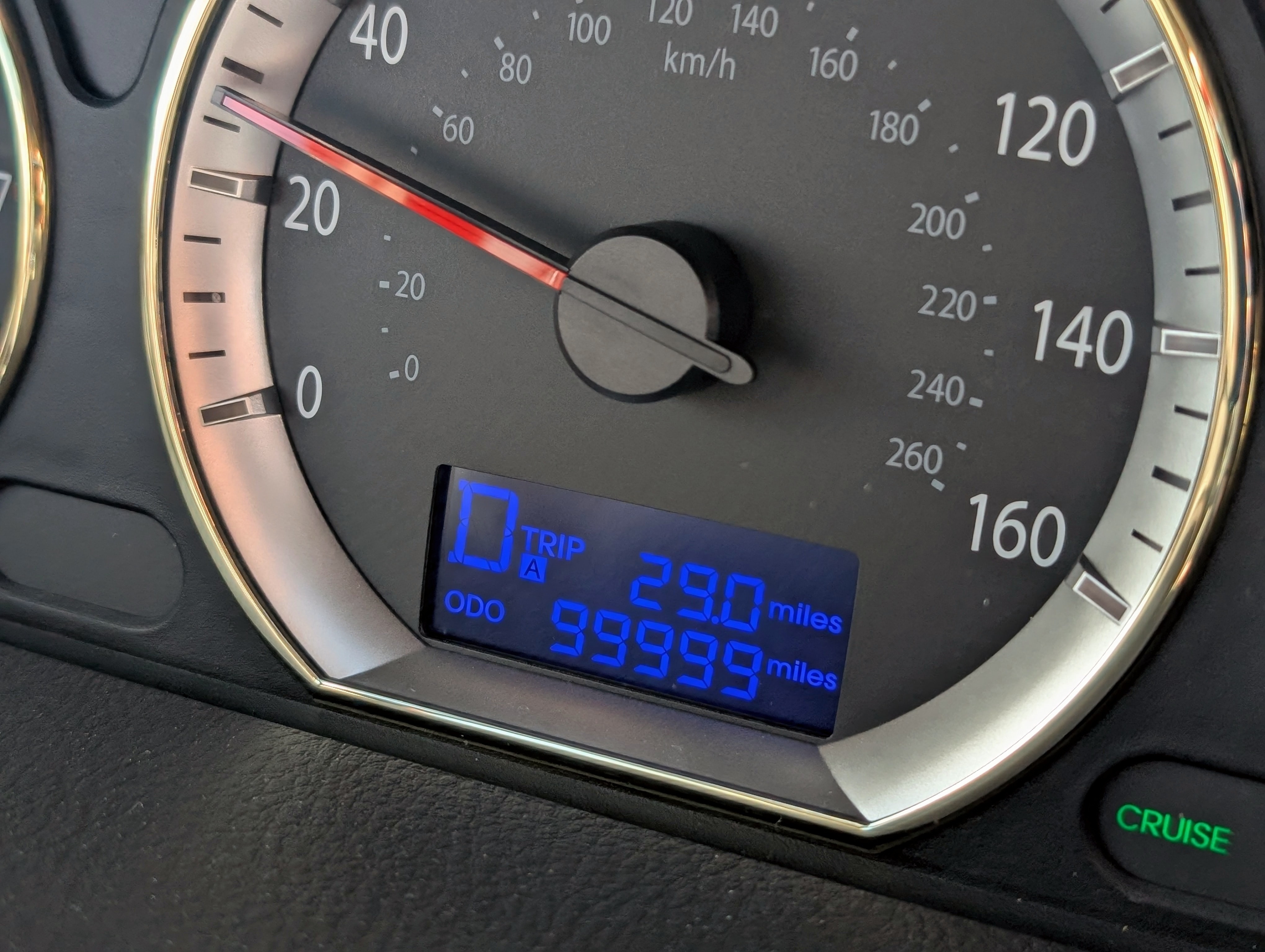
'Clocking' is the term given to the illegal act of falsifying a car's total accumulated mileage so that it looks like it's led a much easier life than it really has and increase its value in the process — it's one of the oldest tricks in the book.
Modern cars are considerably harder to clock than older ones, yet the number of vehicles with mileage discrepancies is rising. Under the UK Consumer Protection from Unfair Trading regulations, a seller who fails to check that the mileage they're advertising is accurate is also breaking the law.
How does the fake mileage scam work?
In bygone days, a car's instrument binnacle was removed to physically access and alter the odometer reading. With modern cars, it's done by connecting a laptop to the car via a cable. The car is then sold under false pretences, often supported by falsified documents designed to suggest a shorter, cleaner service and MOT history. Some sellers even replace pedal rubbers and gear knobs with less-worn items, as these are tell-tale signs of a car's true use.
What are the consequences?
A clocked car will inevitably be hiding problems associated with higher mileage that may not present themselves until some time after purchase. It's also likely that dashboard warning lights will have been switched off or even removed during the clocking process.
An HPI check using the car's registration number should flag mileage discrepancies. Any car with a genuine full service history will have consistent mileages stamped throughout the book.
How to avoid buying a clocked car
Run an HPI check and treat any mileage inconsistencies seriously — vague explanations from a seller are not good enough.
Check the car itself for wear consistent with the claimed mileage — a heavily worn steering wheel, gear knob and pedals on a supposedly low-mileage car are a warning sign, as are suspiciously new replacements.
Buy from a reputable, established dealer — a franchised or manufacturer-approved outlet is extremely unlikely to risk its reputation for a marginal gain on one car.
Consider a professional inspection from the AA or RAC — around £150 is modest against the potential cost of buying a problem car.
If you believe you've bought a clocked car, contact Citizens Advice — you are entitled to a full refund.
The 'I have a buyer waiting' scam
Also known as vehicle matching fraud, this one targets sellers rather than buyers. A legitimate seller who has placed an advert for their car will be contacted by someone claiming to have an interested buyer ready and waiting. They offer to match buyer with seller for a finder's fee, typically £80 to £100, reassuring you that the money will be refunded if the sale doesn't go through, making it sound like a risk-free arrangement.
The buyer, of course, does not exist. Once the fraudster has the fee, they disappear.
How does the 'I have a buyer waiting' scam work?
By exploiting the natural eagerness of a seller to complete a sale, the cold caller makes the supposed buyer sound convincing, inventing plausible details to support the story. The approach mimics classic high-pressure sales technique — charming the seller into parting with what seems like a modest sum to secure a larger transaction.
At its peak, vehicle matching scams cost British consumers an estimated £3m a year. A police crackdown reduced its prevalence but the scam has not been eradicated, and variants of it continue to circulate.
What are the consequences?
Beyond the direct financial loss, the scammer also gains access to your bank details, raising the risk of further fraud. Your details may also be passed on or sold to other criminal parties.
How to avoid the 'I have a buyer waiting' scam
Never send money to anyone who has cold-called you.
Do not give credit or debit card details to unsolicited callers under any circumstances.
Ask yourself why a genuine buyer would use a vehicle matching service rather than simply searching for the car themselves.
If you feel pressured during a call, put the phone down and block the number
If you are targeted, record as many details as possible about the caller and company and report them to Report Fraud.
The shady buyer scam
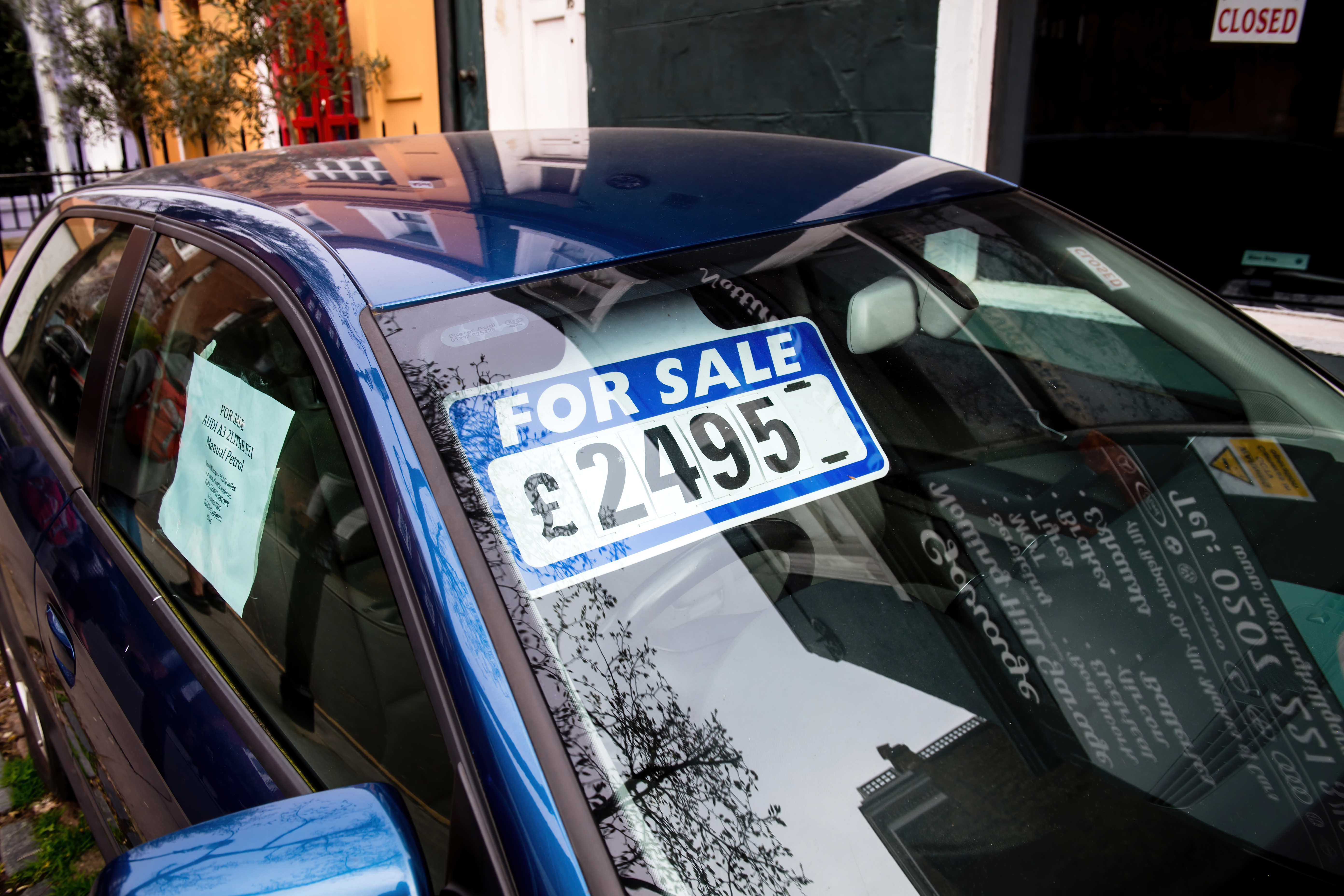
This one targets sellers directly. The most common version involves a fake overpayment — a less common but more damaging variant involves a payment dispute after the car has been collected.
How does the shady buyer scam work?
A buyer contacts you claiming to want the car urgently and proposes paying via an online transfer service. They typically claim to be working abroad and explain that a courier will collect the car on their behalf.
The money is transferred — usually from a stolen card or fraudulent account — and you're then contacted to be told there has been an accidental overpayment. You're asked to refund the difference. Once you do, the original payment is reversed, leaving you out of pocket for the amount you sent back.
In a less common variant, the fraudulent buyer collects the car and transfers payment, then immediately raises a dispute with the payment service claiming the car was never received. In some cases, the seller loses both the car and the money.
How to avoid the shady buyer scam
PayPal advises never to refund a payment to someone you don't know following an alleged overpayment — the same advice applies across all transfer services.
The Metropolitan Police and major banks advise against large transfers for goods with anyone you have not met. Do not deal with anyone who claims, for whatever reason, they cannot come to view the car — being abroad or mid-house-move are common excuses.
Ask yourself why would anyone buy a car as expensive as this without viewing it? Cancel any transaction immediately if an overpayment is claimed.
The dealer posing as a private seller scam
Dealers and private sellers operate under different legal obligations. A dealer must disclose known faults and provide at minimum a three-month warranty. A private seller has no such obligations, though they cannot actively misrepresent the car. Some unscrupulous dealers exploit this gap by presenting themselves as private individuals selling a personal car.
How does the dealer-as-private-seller scam work?
A dishonest dealer will typically avoid meeting at a business premises, suggesting a neutral location such as a supermarket car park instead. If a seller is unwilling to show you the car at their home address — where a private seller's car would logically be — that warrants a direct question and healthy skepticism.
A history check may not flag a dealer as a previous registered keeper, but careful questioning about the car's history and service record will often expose inconsistencies. An old but effective test is to phone up, opening with 'I'm calling about the car for sale'. A private seller will almost certainly have only one, whereas a dealer will ask which one you mean. Dishonest dealers may even maintain separate phones for each vehicle to avoid this.
What are the consequences?
If a fault emerges after purchase and the seller turns out to be an undisclosed trader, you will have reduced legal recourse compared with a verified dealer transaction. Pursuing a refund or repair can involve a protracted dispute.
How to avoid the dealer-as-private-seller scam
Ask detailed questions about the car's history — how long they have owned it, why they are selling, when it was last MOTed and serviced, the condition of the tyres. A genuine private seller will know the answers readily.
When viewing, check that the last registered keeper matches the person selling, at the address shown on the V5C.
If the seller claims to be selling on behalf of a friend or relative, ask to speak to that person directly and establish why they are not handling the sale themselves.
The cloned car scam
As modern cars have become more resistant to crude identity changes, criminals have adapted. Cloning — applying the identity of a legitimate vehicle to a stolen one — has become one of the most common methods.
How does the cloned car scam work?
By swapping the number plates, registration document and Vehicle Identification Number (VIN) plates, criminals attempt to pass off stolen cars as legitimate vehicles with clean histories.
Cloning is also used where a car has significant outstanding finance or large unpaid fines that the seller wishes to conceal.
A more extreme version is the cut-and-shut — a car constructed from two or more separate vehicles, usually to hide severe accident damage. Not only is this illegal, it is dangerous. A cut-and-shut will not perform as intended in a collision and the structural integrity cannot be relied upon.
What are the consequences?
If you buy a cloned car, you lose both the vehicle and your money. The police will seize it as stolen property and recovering your funds through your insurer is likely to be a lengthy and uncertain process.
How to avoid buying a cloned car
Run a full car history check and verify all details including colour, engine size and date of first registration against what is shown on the car.
The car should be at the address listed on the V5C or logbook — the seller should be able to provide photo ID confirming they are the registered keeper at that address.
Check for signs of tampering with number plates, the V5C, VIN plate and service history.
Look for signs of a cut-and-shut — uneven panel gaps, mismatched paint shades and an asking price noticeably below market value
If your number plates are stolen, report it to the police on 101 immediately.
If you begin receiving penalty charge notices for locations you have not visited, notify the DVLA and return the notices with a written explanation.
The fraudulent licence renewal scam
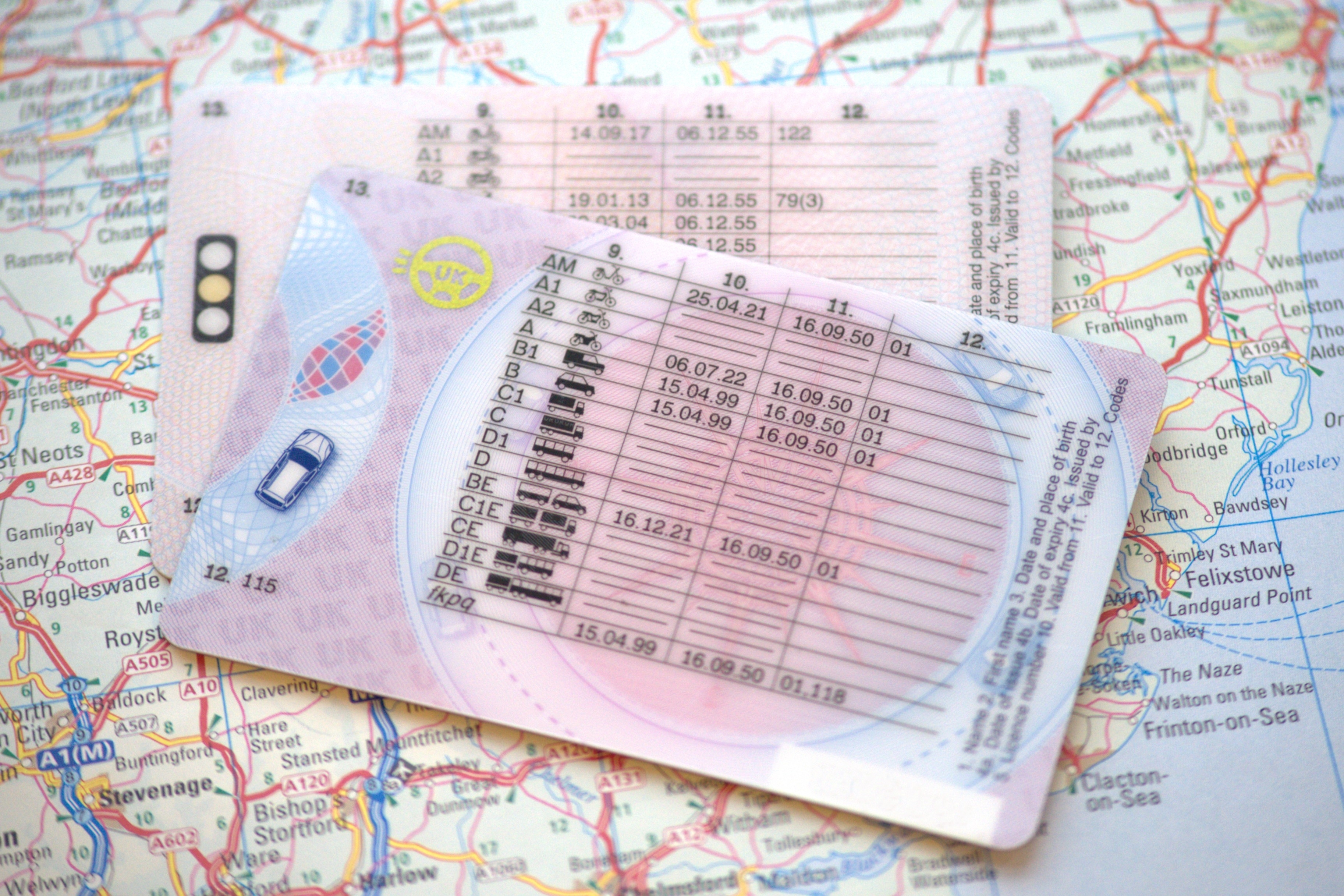
The DVLA requires photocard licence holders to renew every 10 years for a £14 online fee — £21.50 at a Post Office including paperwork checking — or face a fine of up to £1000.
Online renewal is done via the official DVLA website, but fraudsters exploit this by creating convincing fake sites whose purpose is to extract money and personal information.
How does the licence renewal scam work?
The person looking to renew is directed to an online form asking for a wide range of personal details — many irrelevant to the task but designed to lend the scam an air of legitimacy. Among the information requested are passport numbers, national insurance numbers, phone numbers and home addresses.
A card payment is taken after which the scammer then emails to claim the payment has been rejected and requests a bank account and sort code details to process it instead.
What are the consequences?
Beyond losing the initial payment and not receiving a licence, the scammer now has everything needed to clone your identity. If you also hand over bank details, your account is at serious risk. At best this means a lost payment and reapplying through proper channels. At worst, identity theft, an emptied bank account and potentially criminal activity carried out in your name.
This scam also applies to VED Car Tax renewals and is often linked to broader fraud operations targeting visa applications and other official services.
How to avoid the licence renewal scam
Renew your licence in person at a Post Office where possible — your form, photograph and payment are all handled securely.
If renewing online, use only the official DVLA service the Post Office website.
Be wary of any website that asks for information clearly unrelated to the task at hand.
Never enter bank account details online or via email in response to a claimed failed payment.
If something feels wrong, call the DVLA directly — a legitimate service will always be reachable by phone.
The Crash for Cash Scam
Crash for cash fraud costs the insurance industry more than £300m a year in the UK. Those costs feed directly into rising premiums for every driver. It is now the most common form of motoring insurance fraud, with organised gangs targeting private motorists as well as commercial vehicles.
How does crash for cash work?
You are driving along when a car overtakes, pulls in ahead and slows down. The car in front of them then brakes sharply, causing them to perform an emergency stop and you, unable to react in time, run into the back of them. The lead car then drives off as if nothing has happened.
What appears to be an unfortunate accident has in fact been staged. When a vehicle collides with the rear of another, the driver of the following car is typically considered at fault. Staging the accident places the blame on you, despite it being deliberately engineered.
Common variations include a car pulling out ahead of you and then braking sharply, or a driver stopping suddenly at a pedestrian crossing or junction when the road is clear.
A related version is the flash for cash scam. While waiting to pull out of a junction, a driver flashes their lights to 'wave you out', then accelerates and collides with you. They then deny ever signalling or confirm that they did but meant it in a way to ensure that you'd seen them so didn't pull out.
It is worth remembering that legally, flashed headlights carry no defined meaning and confer no right of way.
What are the consequences of the crash for cash scam?
Organised crash for cash gangs target drivers they identify as likely to be insured and less likely to challenge them — older drivers, parents with children in the car and drivers of well-maintained newer vehicles.
The real financial damage comes through the subsequent insurance claim. Criminals make exaggerated claims for vehicle damage, personal injury, replacement vehicle hire and loss of earnings. A successful scam can net between £20,000 and £40,000. For the victim, the consequences are a lost no-claims discount and a higher premium at renewal.
How to protect yourself against crash for cash
Fit a dashcam — footage is frequently decisive in demonstrating that an accident was staged and a basic unit costs as little as £20.
If you are involved in a suspicious accident, call the police, do not admit liability and gather witness details and contact information from any other drivers with dashcam footage.
Be alert to cars driving erratically around you, particularly those that accelerate and slow unpredictably.
Maintain a safe following distance at all times — if someone ahead brakes suddenly, you need room to stop.
Also be wary of drivers or passengers paying unusual attention to the vehicle behind them

How to protect yourself when buying a used car
Scammers are using increasingly sophisticated methods, and even cautious buyers can be caught out. These are the steps worth following on every used car purchase:
1. If it seems too good to be true, it probably is
This is the golden rule. A below-market price is rarely down to the seller's generosity. Ask yourself whether you would offer your own car to a stranger for less than it is worth — and if not, why are they?
2. Do your homework
Knowing the market is the only reliable way to identify when something is off. Once you know what you need and what you can spend, look widely — online and at dealerships — to establish what comparable cars are actually selling for. Cars of similar type, age and mileage will sit within a consistent price bracket. If something falls significantly outside that, find out why before proceeding.
3. Know your rights
The Consumer Rights Act 2015 requires any dealer or trader to provide clear, honest information about a car before sale. It must be fit for purpose and of satisfactory quality. It also gives you the statutory right to reject a used car within 30 days of purchase from a trader if a fault is found.
The Misrepresentation Act 1967 requires private sellers to describe accurately what they are selling. If they have not, you can make a claim against them. Be alert to traders who present as private sellers to avoid these obligations.
4. Never buy sight unseen
The aim of many fraudsters is to extract money before you have seen the car — because the car does not exist. The rule is straightforward: never buy a car, place a deposit, or send any money without having seen the vehicle in person. For private sales, always insist on viewing at the seller's home address, where the car should be registered.
5. Study the paperwork
With the car in front of you, carry out proper document checks regardless of any excuse a seller offers for incomplete paperwork. All cars should have a watermarked V5C document matching both the registration number and the VIN, which is usually visible at the base of the windscreen. The V5C should show the car registered to the seller's address. If it does not, ask why.
6. Check the service history carefully
A used car should come with two keys and a fully stamped service history, along with the owner's manual. Be particularly wary of unusual gaps in the service record, which can indicate mileage tampering. Ensure any car over three years old has a valid MOT.
7. Pay for a history check
A vehicle history check costs less than a round of drinks and can be the most valuable money you spend in the buying process. It searches DVLA, police and Association of British Insurers (ABI) records to confirm whether a car has been stolen, written off or has outstanding finance against it.
Outstanding finance is not automatically a deal-breaker if the seller discloses it openly and a price can be agreed that accounts for it — but always speak to the finance company directly before proceeding.
8. Arrange a mechanical inspection
Any legitimate private seller will agree to a professional inspection without hesitation. For around £150, organisations such as the AA or RAC will assess the car's mechanical condition and provide a same-day report. Do not be pressured by claims that the car is about to sell to someone else — that urgency is a technique, not a fact.
9. Take a test drive
Always insist on a test drive before committing. Take a variety of road types and speeds and listen carefully for any rattles, knocking or unusual noises. If you are not confident in your own assessment, bring someone with more mechanical knowledge. At the very least, go for an extended run with the seller present and use the time to look and listen carefully.
10. Be careful about how you pay
For private sales, cash at the point of exchange remains the most straightforward method — though for obvious reasons, do not announce to a seller you have not met that you will be arriving with a large amount of cash. Bank transfer arranged in person, or conducted together at a branch, is a sensible alternative.
For dealer purchases, finance has the practical advantage of making both the dealer and the finance company jointly liable if something goes wrong with the car after purchase.
Where can you check a car's MOT and mileage history?
You can access a useful amount of background information on any car for free. By entering the registration number on the DVLA's vehicle enquiry service, you can check the car's MOT history, including the mileage recorded at each test, whether the vehicle is currently taxed and whether it's subject to a Statutory Off Road Notice (SORN). Any SORNed vehicle should not be on the road.
If you can get the registration number before visiting, checking this online first can save a wasted journey. If the registration is obscured in the advert's photographs, ask the seller for it — reluctance to provide it should set alarm bells ringing.
You can also submit a V888 request form to the DVLA to obtain information about a vehicle's registered keeper history, which helps build a fuller picture of a car's background.
Organised criminals involved in such scams are — unfortunately — experts in conning intelligent, switched-on people who never think they'll fall for such a setup. In other words, anyone can become a victim of a car-buying scam, but you can minimise the risks by:
Keeping in mind that if something seems too good to be true, it probably is
Being suspicious of used cars being a bit too cheap compared with others for sale
Avoiding buying cars that are not being sold from the business's premises or where the private seller lives
Never transferring money for a car before seeing it in person
Never pay a substantial percentage of the car's price in advance of completing the deal — a nominal small deposit is enough
Walking away if the car doesn't match the condition described or shown in the advert
Leaving promptly if the V5C logbook has a different name and address for the keeper to the person you're dealing with or where you're looking at the car
Paying for a detailed vehicle history check on the car before buying it
Arranging an independent mechanical inspection of the car before buying it
Over the past three or four decades when cars switched from having physical mileage recorders in their instrument panels to digital ones, it's also theoretically easier for criminals to reduce the mileage of a vehicle.
But, it's also much easier to check whether a car's been 'clocked' than it used to be, thanks to detailed car history checking services that you'll pay for, plus free online methods of tracking mileage changes such as looking at the car's MOT history.
Plus older, common sense methods of checking a car over are still valid — if a car genuinely has a low mileage, its interior will still look in excellent condition. That means you can be alert to checking for:
Shiny, worn smooth steering wheels and gearknobs
Worn pedal rubbers
Worn, torn and saggy upholstery, especially on the driver's seat
Threadbare carpets — remember to check under the floor mats
Heavy degrees of stone-chipping on the front bumper and leading edge of the bonnet
Yes, you should. The car you're looking at might be a good example of the kind you're hoping to buy, but ask yourself why a trader who has their own car lot would be pretending to be a private seller if everything was above board?
Private car sales are essentially sold as seen, with very little legal comeback for the buyer and no warranty if it starts to prove troublesome as soon as you have it. Cars sold by traders will come with at least a short warranty period plus they are legally bound to a greater degree than private sellers, giving you a greater degree of protection.
That is often how flashed headlights are used in the UK, typically at crossroad junctions or along single-track roads, but legally there is no meaning to the flashing of main or high-beam headlights. If in either of those situations you were flashed by the driver facing you and you moved forwards only to spot that also had, resulting in a collision, you would unfortunately discover that the other party's insurers would successfully argue that their flicker of main beam had no legal or responsibility bearing.
In some instances, the flashing of headlights can result in a prosecution — particularly when they are used to signal to other motorists that a police speed trap is close to the direction they're heading towards. If you are seen by another police officer doing this, be fully prepared for them to take a very dim view on the matter.