20/07/2026
What is ABS and how does it work?

Written By Andrew Brady
ABS brakes are one of the most important safety features fitted to modern cars. If you’ve ever had to slam on the brakes and make an emergency stop in wet weather, you’ll know how frightening it can be – but at least you can stamp on the pedal as hard as possible while knowing the chances of the car going into a scary skid are minimised.
That’s because your car will most likely be fitted with ABS. ABS is short for the German Antiblockiersystem, which conveniently – and happily – translates as Anti-lock Braking System. It's a technology designed to help you not only stop more safely in the case of an emergency, but it also allows you to steer at the same time, meaning it's possible to turn the wheel and potentially avoid a nasty accident.
But how exactly do ABS brakes work, who invented them, how do you know if your car has them and what are the disadvantages of ABS brakes? Keep reading to find out.
Does my car have ABS?
From 2004, all new cars sold in the UK have ABS brakes as standard, but many older cars had the technology fitted from the late 1970s onwards.
If your car was built before 2004, the easiest way to find out if it has ABS brakes is to find a quiet road and relive your learner driver days by performing an emergency stop. If your car has ABS it will stop without locking its wheels and skidding, but if there isn't your wheels will lock and you'll slide to a halt in a cloud of tyre smoke.
What is ABS?
ABS stops your car from locking up its wheels if you brake hard to make an emergency stop, meaning you can steer around obstacles rather than careering into them.
Without ABS, your wheels will lock if you brake hard and the car will skid, irrespective of what way the front wheels are pointing, unless you repeatedly release some brake pressure to allow the wheels to spin again, before pressing the pedal again. That's known as cadence braking – ABS does a similar thing, albeit at a far greater frequency and automatically.
How does ABS work?
Cars with ABS have sensors on each wheel that measure their rotation speed, whether accelerating or decelerating. These sensors were pioneered in ABS but are now used by a variety of different car safety systems, including traction control and stability control.
Stamp on your brake pedal and these sensors detect locking wheels. The split-second locking is detected, the sensor sends a message to the ABS control module, which counteracts the lock by rapidly increasing and decreasing pressure on that brake – essentially turning them on and off multiple times per second, which is why you feel a pulsing sensation through the brake pedal.
The pulsing brakes mean the wheels continue to turn as the car slows, giving you a greater chance of successfully steering around impending collisions.
When does ABS activate?
Generally, in emergency situations. A classic example would be you're driving down the motorway, you look to the left to read a road sign, but when your eyes turn back to the road a car has stopped dead in front of you and you instinctively slam the brake pedal as hard as you can.
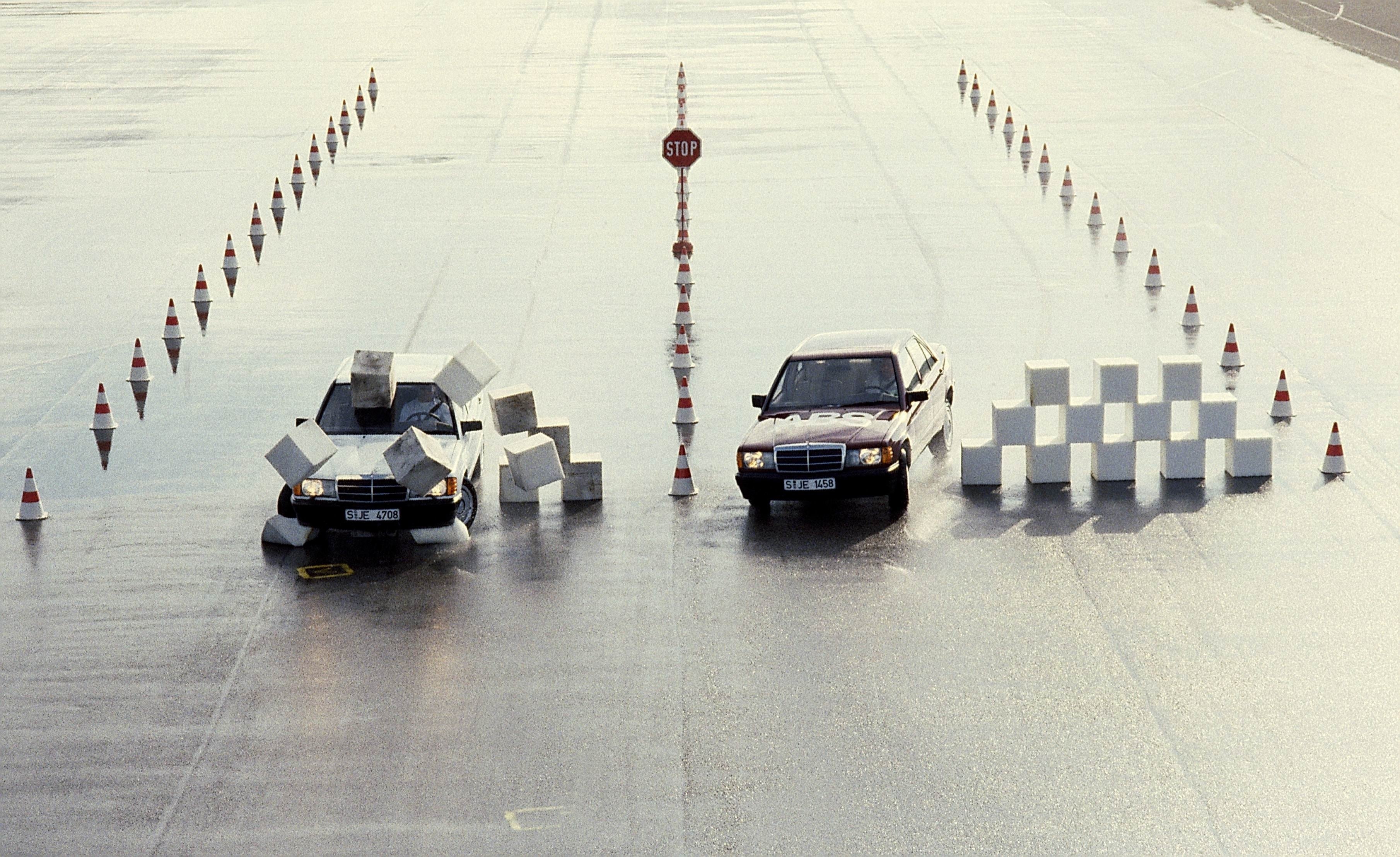
In a car with no ABS, you'll lock the wheels, steering will be impossible and you're more likely to collide with the vehicle ahead. ABS allows you to slow and steer, without needing any advanced driving skills.
When does ABS work best?
Anti-lock brakes work at their best on dry roads, where their pulsing on and off shortens braking distances. They should also be very good in the rain, but on ice they're less effective – particularly if you car hasn't got winter tyres fitted. In these conditions, the grip levels are so low that it's impossible to put any sort of braking force into the tyre.
In snow, you'll actually be better off without ABS in some situations because locked wheels can bite through the snow into the road surface beneath. A build up of snow in front of the tyres also helps slow your car down, but ABS reduces the likelihood of that accumulation.
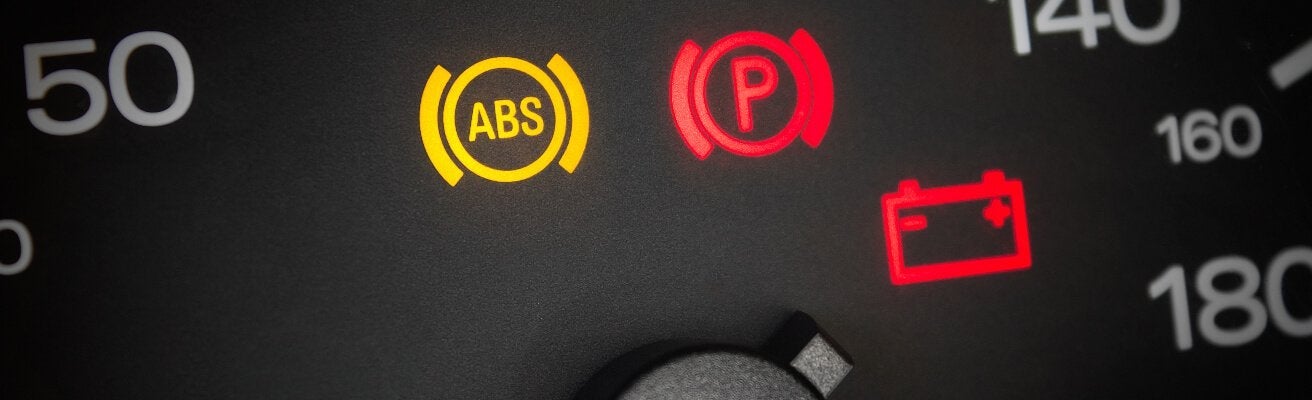
What does the ABS light on my dashboard signal?
If your ABS light flashes on – it will usually simply be the letters 'ABS' – it means there is something wrong with the system. It could be the brakes themselves, their sensors or the control unit – although it's worth checking you car's handbook for a specific explanation.
An illuminated ABS light is an automatic fail on your MOT, but quite apart from that it could mean there is something seriously wrong with your brakes which should be investigated by a mechanic.
Because your ABS brakes form part of your car's other safety features – its stability control and traction control – if they're not working as the should, your car's other systems may also be affected.
The history of ABS
ABS brakes were originally developed for aeroplanes in the 1950s by British tyre manufacturer, Dunlop, as a way to give pilots more control when landing and to avoid flat-spotting and tyre blowouts.
By 1966 the technology had filtered down to cars, more specifically the Jenson FF grand tourer. It used a hydraulic ABS system, but it wasn't until 1978 that we saw the first electrical ABS system from Bosch – the type that is still fitted to modern cars – as an option on the original Mercedes-Benz S-Class.
Yes, all modern cars have ABS brakes as standard. ABS became a legal requirement in all new passenger cars from 2004.
ABS stands for Anti-lock Braking System in English, but the initials were originally derived from the German Antiblockiersystem, which literally translates as anti-lock system.
Before ABS became commonplace – both as a technology and terminology – some manufacturers marketed their systems as ALB, based directly on the English meaning.
ABS brakes are one of the most useful features you can have fitted to you car, making it easy to keep control of your vehicle under heavy braking even when the road is wet.