01/07/2026
Fastest cars in the world 2026
Written By Mark Nichol
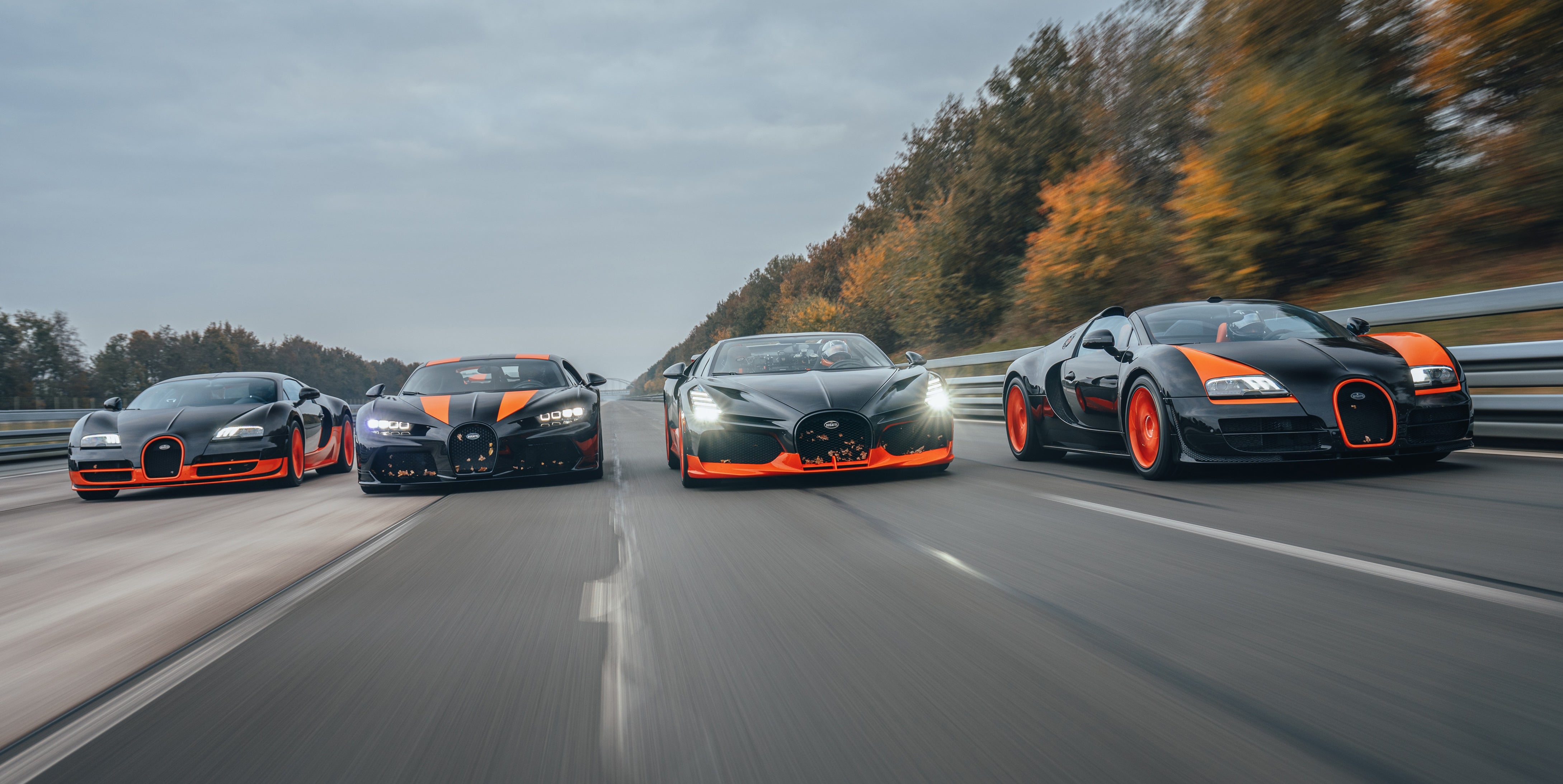
The battle to go faster and faster shows no signs of, well... slowing down. But here's the problem when it comes to listing the fastest cars in the world: 'fastest' can mean different things depending on how it's measured and who does the measuring.
Here we're looking at those with the highest top speeds, but even this is fraught with accuracy issues. Some cars have independently verified two-way averages for their top speeds recorded, while others are based on one-off test runs, relying purely on manufacturers' claims or even theoretical simulations.
So keep things clear, we're splitting this run-down of the fastest cars in the world into two sections. First, we'll run through the Top 5 Fastest Verified Cars. These are road-legal production cars that have recorded independently verified top speed, preferably using the two-way average method.
Then we'll get into some Honourable Mentions – cars with headline-grabbing claims, one-way runs or which are electronically limited to stop them reaching their theoretical maxima. These are undoubtedly very fast cars, we just can't be absolutely sure how fast they are. Yet.
1. Yangwang U9 Xtreme
Year launched: 2025
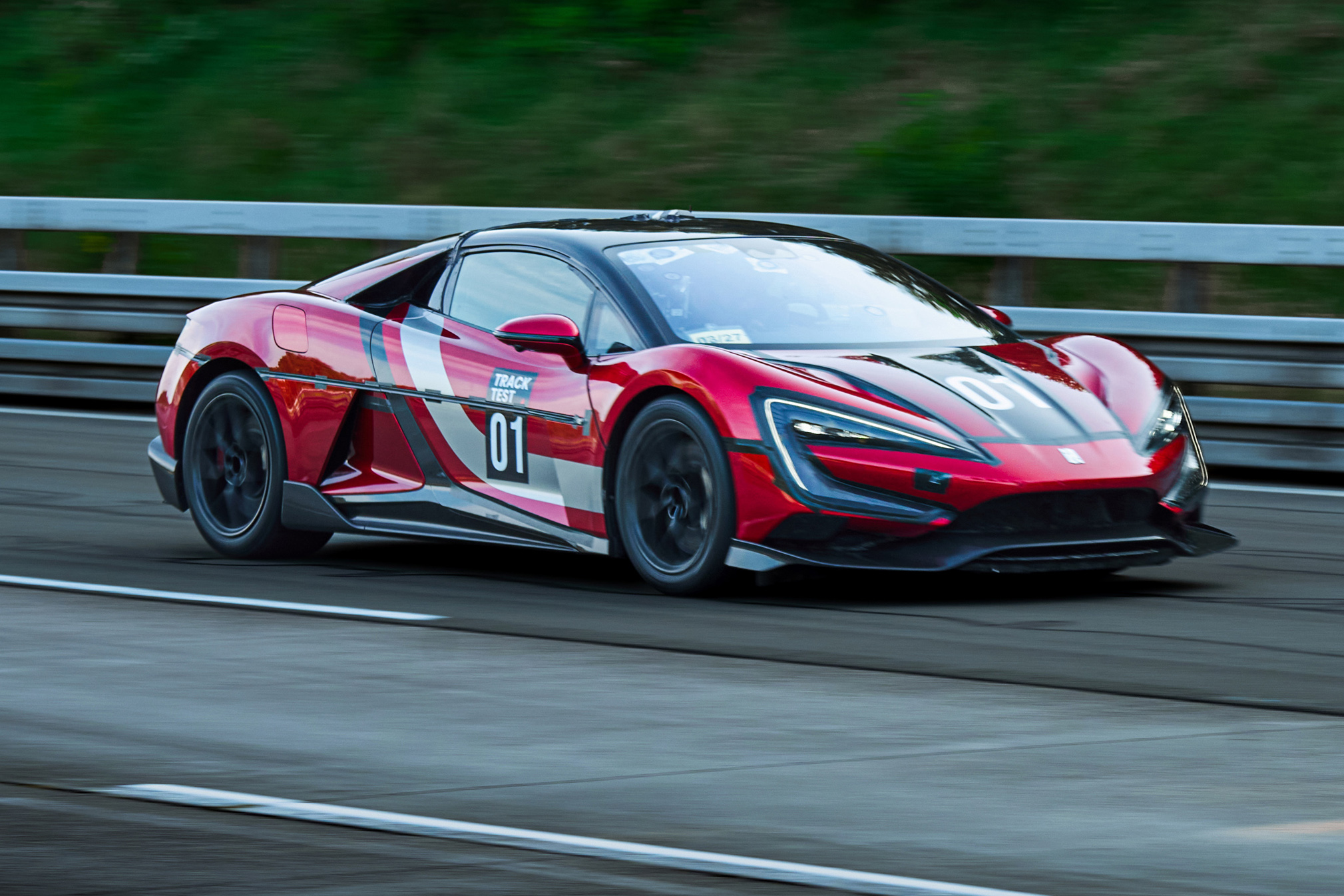
The newest ultra-mega-hypercar on the block is the all-electric Yangwang U9 Xtreme. For the uninitiated, Yangwang is the luxury sub-brand of BYD which sits above Denza in the corporate hierarchy. In September 2025 it recorded an astonishing top speed of 308.4mph at a test track in Germany, making it the fastest production car ever recorded.
Yangwang has confirmed that 30 units of the U9 Xtreme will be made, each with four high-speed motors that spin at up to 30,000rpm and produce a frankly face-melting combined output of 3000PS. That’s three Bugatti Veyrons, basically.
You can buy a standard Yangwang U9 supercar for less than £200,000, but the Xtreme model will be rather a lot more – although so far an official price has yet to be confirmed.
2. Bugatti Chiron Super Sport 300+
Year launched: 2019
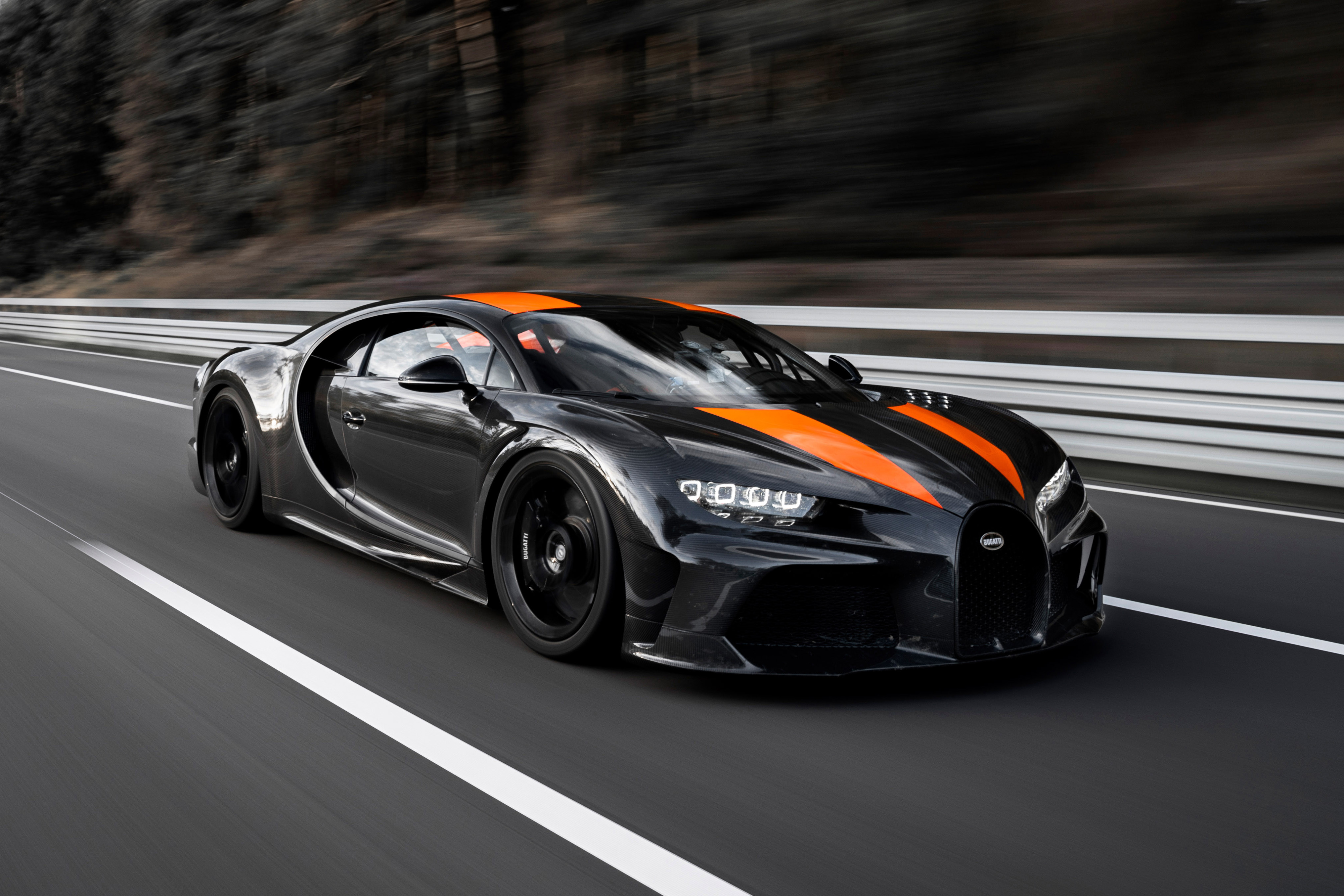
No list of the world's fastest cars is complete without a Bugatti or two. The 'standard' Bugatti Chiron, like the Veyron before it, is a mind-blowing piece of engineering, but that doesn't mean it can't be bettered.
The Buagtti Chiron Super Sport 300+ was a special version of the already special Chiron Super Sport, built to commemorate it becoming the first hypercar to crack 300mph in 2019, with a recorded speed of 304.773mph. That run remains one of the fastest ever achieved by a production-based car, putting the Chiron Super Sport 300+ second in our list. The production car's top speed is electronically capped at 273mph.
As well as a 1600PS version of the Chiron's quad-turbo, 8.0-litre W16 engine, the Super Sport 300+ received a longer, aerodynamically optimised body and extensive weight-saving measures. A total of 30 were built and all sold for £3.1m each.
3. SSC Tuatara
Year launched: 2020
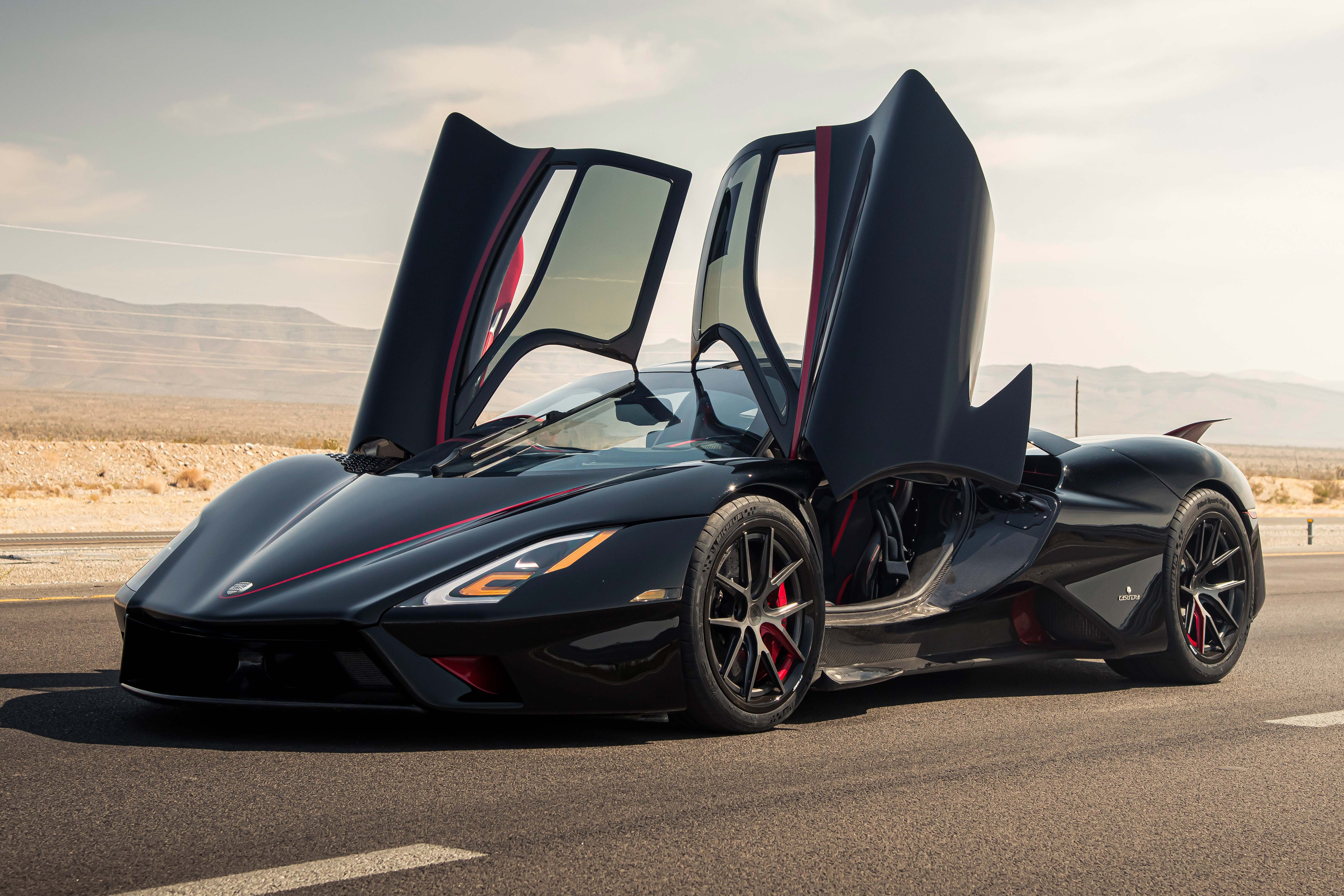
SSC is a name you may not have heard of, yet the North American outfit held the Guinness World Record for the fastest production car for three years in the mid-2000s with its Ultimate Aero model.
Fast-forward to more recent times and the SSC Tuatara. It's a 1750PS hypercar using a highly tuned 5.9-litre twin-turbo V8 engine. SSC got into some controversy in 2020 by claiming a production car speed record at an incredible 316mph, only for the claims to be dropped amidst issues with the data-logging side of things.
Not to be deterred, SSC had another crack with the Tuatara in early 2021, using specialist measuring gear monitored by engineers. The data they provided showed the Tuatara hit 286mph and averaged 282.9mph across both runs – enough to reclaim the production car speed record from the Koenigsegg Agera RS, which had held it since 2017.
In 2022, it managed 295mph on a one-way run. Further attempts were planned as SSC looked to crack the 300mph barrier. The Washington-built Tuatara is said to cost around £1.63m, with 100 examples made, not all of which were pre-sold.
4. Bugatti W16 Mistral
Year unveiled: 2022
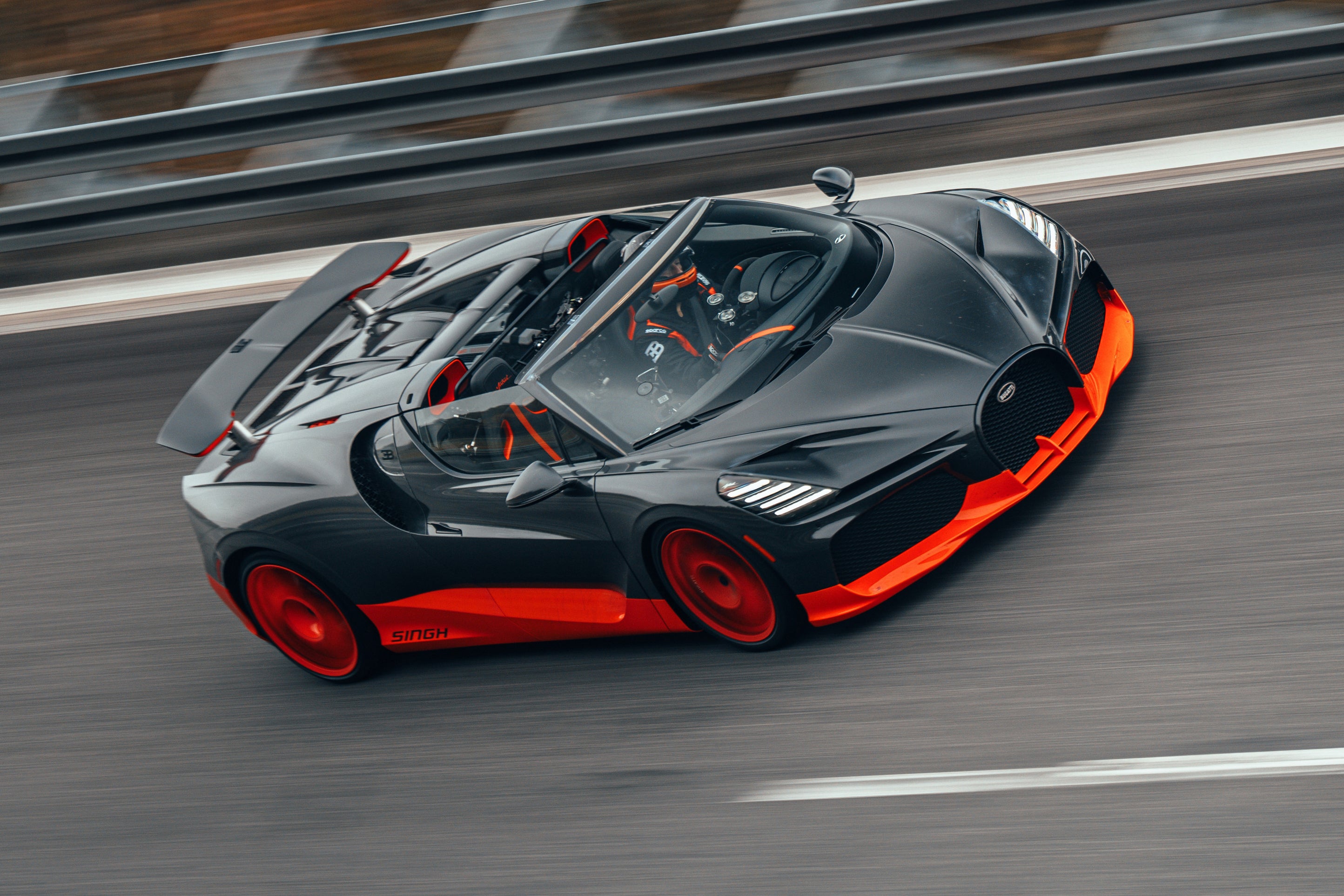
Another Bugatti to land a spot in our list is the W16 Mistral, the fastest roofless road car ever made. In November 2024, a Bugatti W16 Mistral clocked a verified 282.04mph at the Papenburg test track in Northern Germany.
It’s not the first time we’ve received a car from Bugatti that’ll naturally mould your hair. In 2012, Bugatti built the then fastest roofless car, the Veyron Grand Sport Vitesse, which reached an average top speed of 254.04mph.
Suitably named after a southerly French wind, the Mistral doesn’t share a single carbon fibre body panel with the Chiron, although it does use the same carbon tub, suspension, brakes and gearbox. To help hit its monstrous top speed is the 1600PS engine from the Chiron Super Sport.
Plans to retire the glorious W16, an engine that had been pushing Bugatti up the top speed ranks since 2005, were well in motion, making the Mistral the last car to house all 8.0 litres of it.
Unfortunately, even if you have a spare £4.2m (before tax) gathering dust in your savings account, Bugatti has already sold all 99 cars.
5. Rimac Nevera
Year launched: 2021
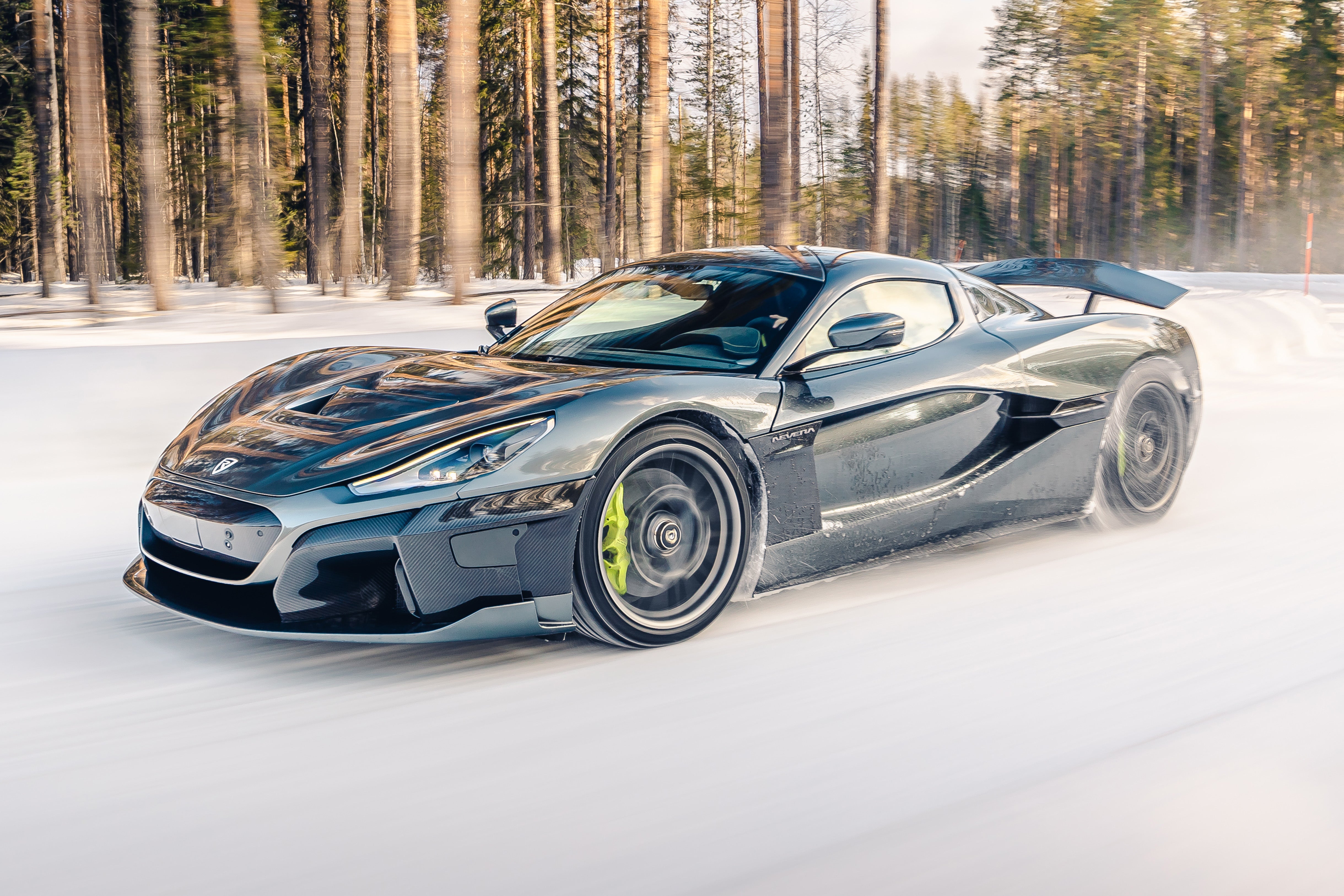
The Nevera is built by Croatian company Rimac, which jointly owns Bugatti through the Bugatti Rimac venture with Porsche. Its an electric hypercar capable of 258mph flat-out, putting it right up there with the quickest petrol-powered alternatives.
The Nevera puts out a combined 1900PS from four electric motors, each powering an individual wheel, helping it to accelerate from 0-62mph in under two seconds and cover a quarter-mile from a standstill in 8.6 seconds. Of course, we know EVs can be lightning-fast away from the line, but to stop the Nevera's acceleration tailing off, Rimac uses two single-speed transmissions.
There's more technical innovation in the Rimac Nevera than just raw speed, with extremely clever torque vectoring and a chunky 120kWh battery, which is claimed to give a driving range of up to 304 miles. It also has the most powerful regenerative braking of any EV, capable of up to 300kW of power.
Priced from £1.72m, 150 examples were set to be produced, but Rimac is having a tough time selling them all. Company founder Mate Rimac reckons this is down to well-heeled hypercar buyers preferring combustion-powered vehicles when spending seven-figure sums.
Honourable mentions
These cars haven’t been fully verified under the same strict conditions as the models above, but they're too significant to ignore – and are seriously fast.
1. Koenigsegg Jesko Absolut
Year launched: 2019
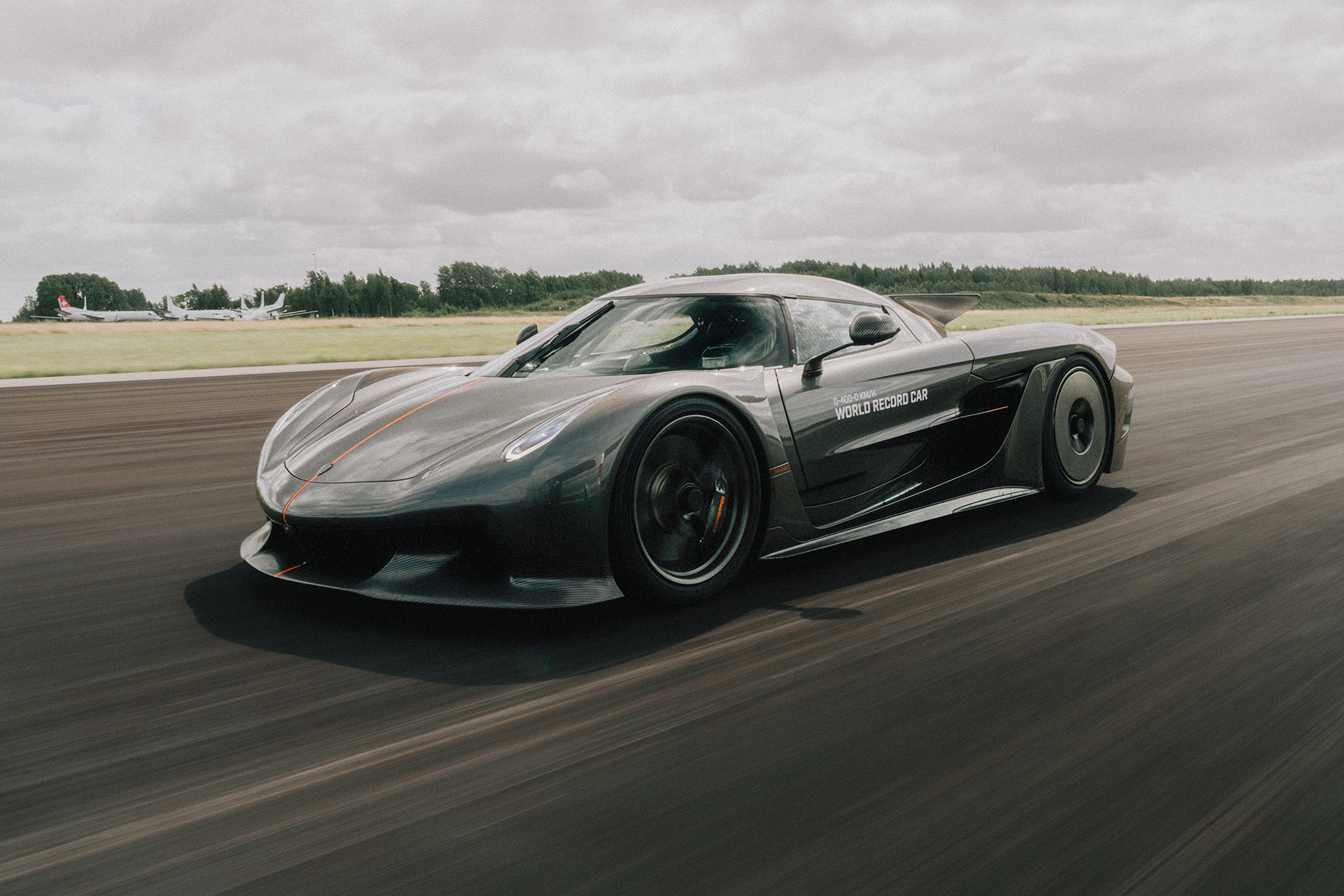
The car most likely to challenge for the outright top-speed crown comes with a caveat: like the Venom F5 mentioned below, its top speed is theoretical for now and based on calculations. Still, legendary Swedish hypercar maker Koenigsegg is so confident its Jesko Absolut will deliver that it vows never to make a faster series production road car than this.
The Jesko Absolut is powered by a twin-turbo V8 engine, which generates 'a minimum of 1600PS' using special E85 ethanol-petrol fuel. The company boss describes it as a 'land-based rocket-ship determined to reach unheard-of speed in record-setting pace.'
How fast exactly? Well, Koenigsegg's own target was 310mph, but the company's simulations suggest that it will go even faster than that thanks to the Jesko Absolut's super slippery, low-drag body.
The issue will be finding a long and straight enough strip of asphalt to get it up there. Still, it surpassed 311mph during a chassis dyno test in 2024 before hitting the rev limiter in ninth gear, meaning it’s got even more in it.
2. Hennessey Venom F5
Year launched: 2017
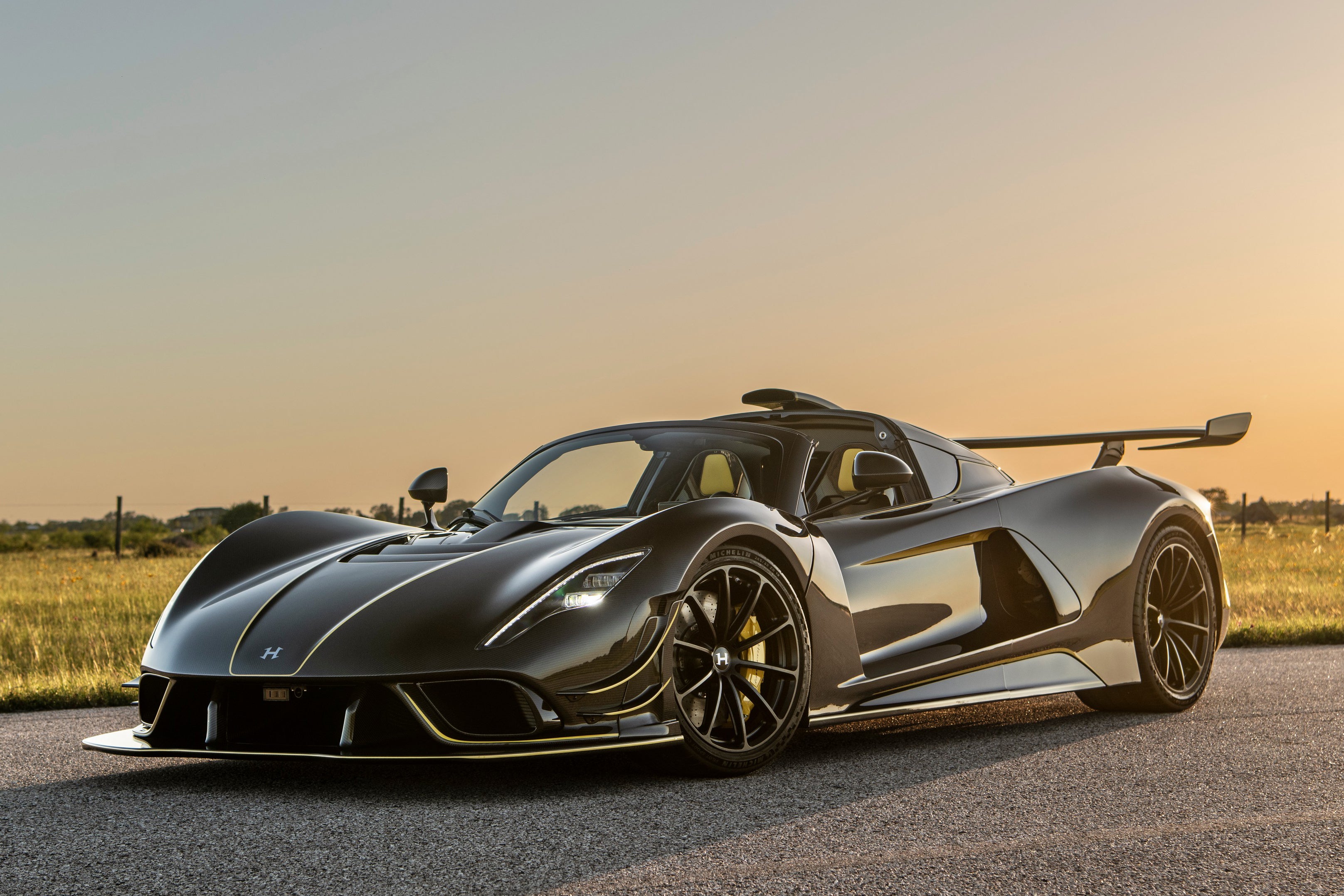
Hennessey has spent the last 30 years modifying everything from Dodge Vipers to Ferraris to pickup trucks, but it’s also twice dabbled in full vehicle production. First was the Lotus-derived 2011 Venom GT, capable of 270mph, and more recently with the super-quick Hennesset Venom F5.
The Venom F5 is not a Lotus Elise modified out of all recognition. Instead, it's a bespoke, carbon-bodied hypercar with an in-house platform and a 6.6-litre twin-turbo V8, producing with more than 1800PS. An upgraded Hennessey Venom F5 Evolution revealed in 2025 was launched with claims of 2031PS. With a kerb weight of just 1380kg performance should be unhinged.
Like the Koenigsegg Jesko Absolut, Hennessey is yet to attempt a full top-speed run, although it almost did 222mph over the half mile. Still, Hennessey is hopeful the Venom F5 will reach or exceed 311mph. And we believe them. In fact, on paper it's one of the few cars with a realistic shot at challenging for the outright top-speed crown. After all, it will do 0-186mph in just 8.4 seconds. All 24 made were also sold for an eye-watering £2.03m.
3. Bugatti Bolide
Year unveiled: 2023
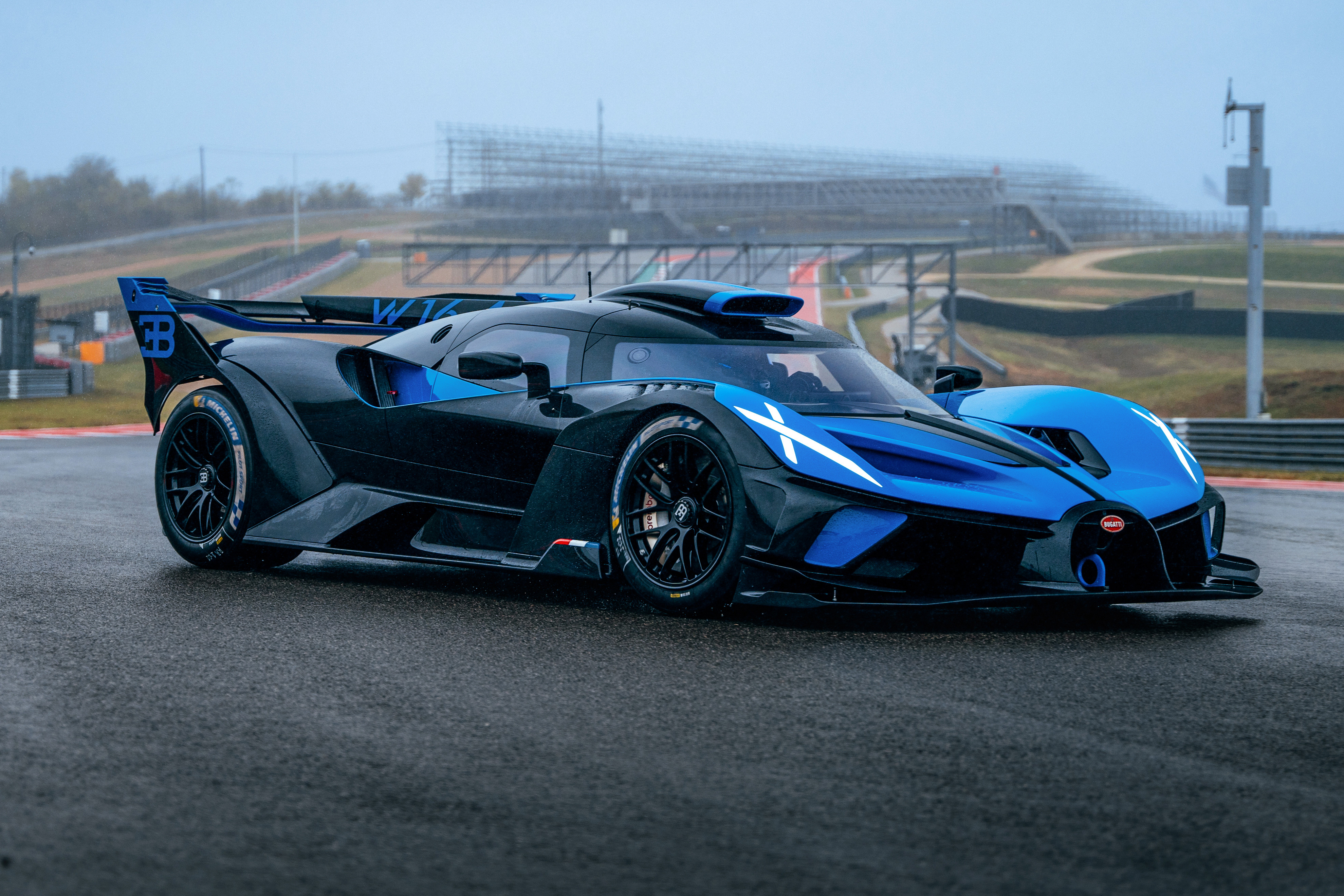
The Bugatti Bolide is proof that even its maker thinks the Chiron is a bit sensible. Originally revealed as a wild design study, the Bolide made production with remarkably few compromises and quickly became one of the most extreme track cars ever created.
Like the Chiron Super Sport and W16 Mistral, it uses Bugatti's legendary quad-turbocharged 8.0-litre W16 engine. In the Bolide it produces 1600PS, while extensive use of lightweight materials helps keep kerb weight to around 1450kg – remarkably low by Bugatti’s porky standards.
Bugatti has never officially attempted a top-speed run with the Bolide, but engineering simulations suggest it could approach the 300mph barrier under the right conditions. The problem is that the Bolide was designed primarily for circuit driving rather than record-setting speed attempts, making it one of the biggest 'what ifs?' in the hypercar world.
Production is limited to just 40, each costing around £3.5m before taxes and options. Not bad for something that looks like it escaped from Le Mans after dark.
4. Koenigsegg CC850
Year launched: 2024
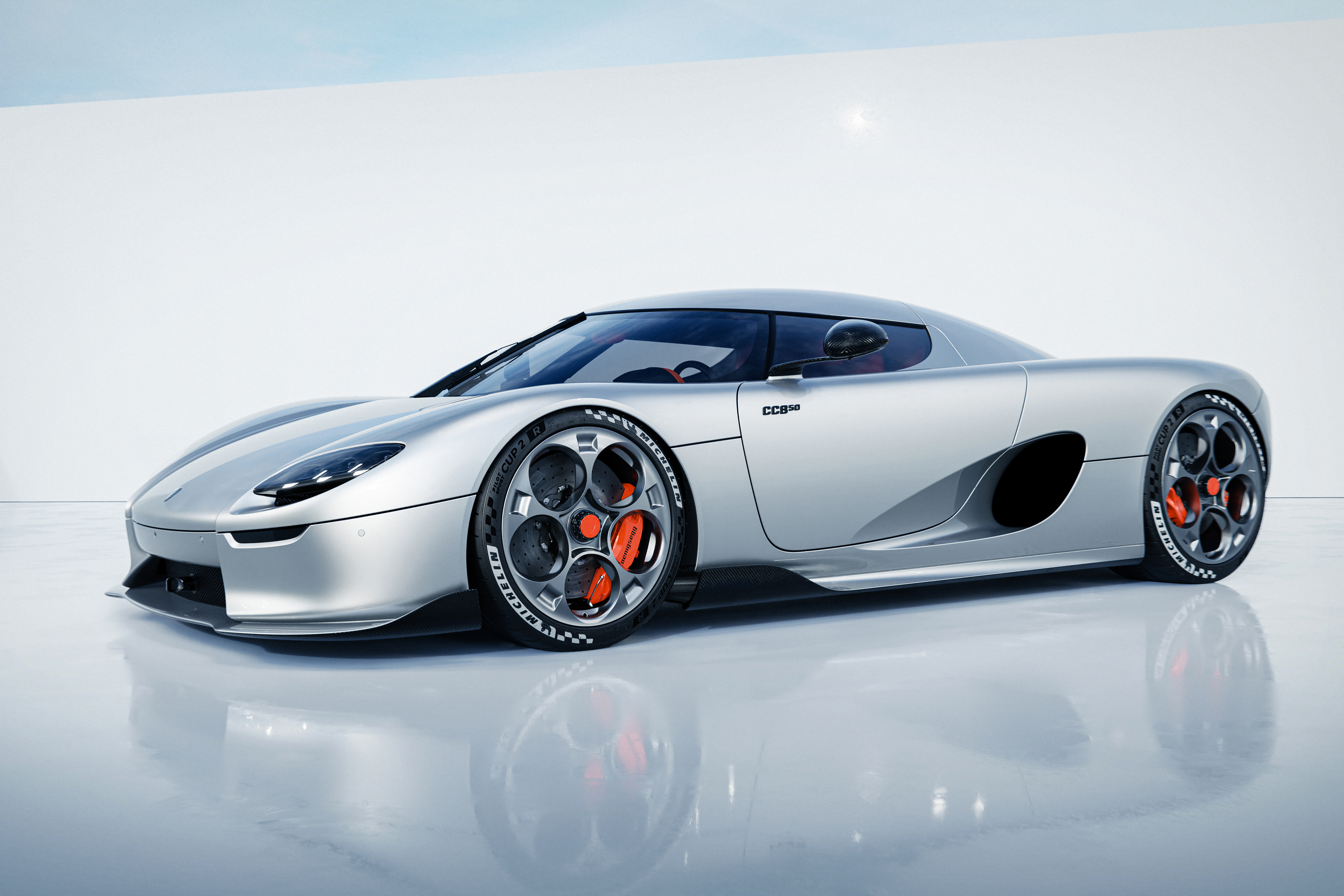
The Koenigsegg CC850 is one of the most unusual hypercars ever built. Created to celebrate both Koenigsegg's 20th anniversary as a car manufacturer and founder Christian von Koenigsegg's 50th birthday, it combines retro styling inspired by the original CC8S with some of the most advanced engineering on the planet.
Power comes from a twin-turbocharged 5.0-litre V8 producing up to 1385PS when on E85 ethanol-based fuel, while a clever transmission system can operate as either a nine-speed automatic or a six-speed manual, complete with a clutch pedal. It's the sort of engineering madness that only Koenigsegg would attempt.
Originally limited to 50 cars, demand was so strong that Koenigsegg increased production to 70 – unsurprisingly, every one was snapped up almost immediately.
Unlike the Jesko Absolut, the CC850 hasn't been designed solely to chase outright speed records. However, it shares much of its mechanical package with Koenigsegg's other hypercars and has a claimed top speed of more than 280mph. That means it has the potential to trouble some of the fastest cars ever built should the company decide to put it to the test.
5. Hennessey Venom GT
Year launched: 2014
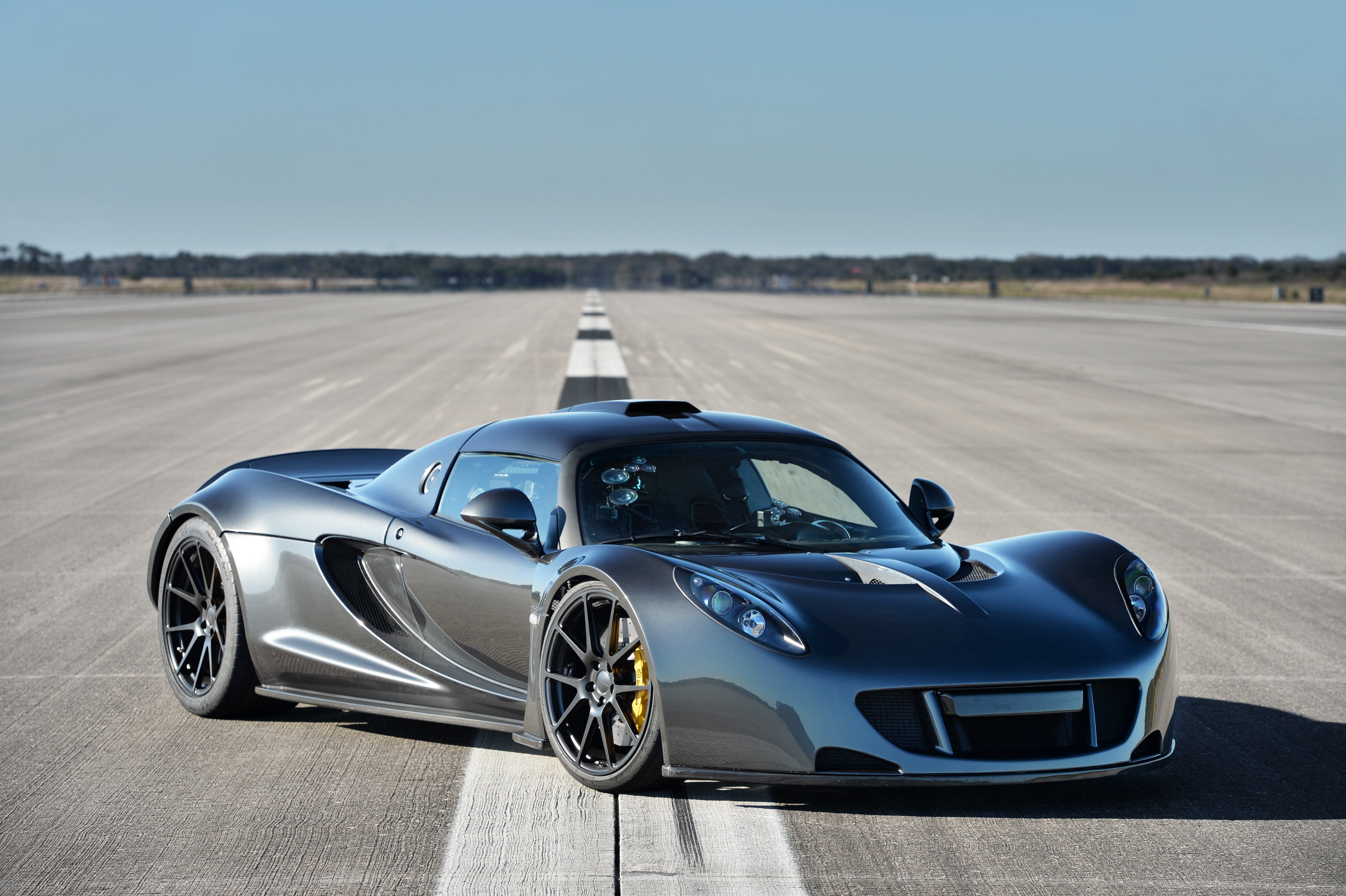
The Hennessey Venom GT was the American firm’s first serious step into the world of complete car production. Based on a heavily modified Lotus Exige chassis, it swapped that car’s modest four-cylinder engine for a 7.0-litre twin-turbocharged V8 producing 1244PS, while keeping the kerb weight down to roughly the same figure in kilograms. That gave it one of the best power-to-weight ratios of any car of its era, and instantly turned the Venom GT into a Bugatti-baiting contender.
In 2014, Hennessey took the Venom GT to NASA’s Kennedy Space Center in Florida, where it clocked 270.49mph – faster than the Bugatti Veyron Super Sport. However, because the attempt was only a single run (the runway wasn’t long enough for a two-way pass), it was ineligible for Guinness World Record recognition. Even so, the Venom GT proved that Hennessey could compete with the world’s top hypercar builders on raw speed.
Production numbers were tiny: just 13 cars left Hennessey’s facility between 2011 and 2017, with coupe and roadster versions offered to a handful of wealthy buyers. Its extreme rarity, outrageous speed and the fact it laid the groundwork for the bespoke Venom F5, mean the Venom GT is remembered as both a world-class engineering statement and the launchpad for Hennessey’s hypercar ambitions.
Just slipping off this list is the Bugatti Tourbillon, which has a higher claimed speed of 277mph. But it hasn't proved it yet, while the Venom GT has at least demonstrated its potential with a 270.49mph run.
A brief history of speed
The pursuit of top speed has long captivated performance car brands and continues to this day, even as the motoring world shifts into the electric age. Typical sports cars and supercars just don't cut it anymore, so it's up to multi-million-pound hypercars to continue pushing the boundaries of what's possible in terms of speed.
A hundred years ago, the race to build the fastest car had taken them from being barely faster than horses to climbing well over 100mph in around two decades. By the 1950s Aston Martin was breaching 150mph with its DB4 GT, while the Ferrari F40 had ventured above the 200mph barrier in the 1980s.
Getting cars to go faster than that became more and more difficult until the celebrated racing firm McLaren came along to blow everything else out of the water. In 1998, the iconic McLaren F1 up to its 243mph top speed at the Ehra-Lessien proving ground in Germany – well more than what anybody else could manage at the time. Its two-way average was clocked at 240mph.
Even when Bugatti's incredible – and incredibly expensive to make – Veyron landed on the scene in 2005, its top speed was 'only' 13mph more than the McLaren F1's, at 253mph. But Bugatti didn't rest on its laurels, coming out with the Veyron Super Sport in 2010, which cracked 267mph.
Since then, there have been all manner of cars – some from companies you might never have heard of – that claim to be even faster still. Bugatti itself replaced the Veyron with the even quicker Chiron, shifting the target to a nice and round: 300mph.
Although Bugatti did smash 300mph in 2019 with a near-production Chiron Super Sport 300+ prototype, customer cars were electronically limited to 273mph. Bugatti maintained that the car was capable of exceeding 300mph, but all customer cars were delivered with the limiter in place, meaning no owner has officially replicated the record-breaking run.