16/07/2026
How much does it cost to get a tyre repaired?
Written By Andrew Brady
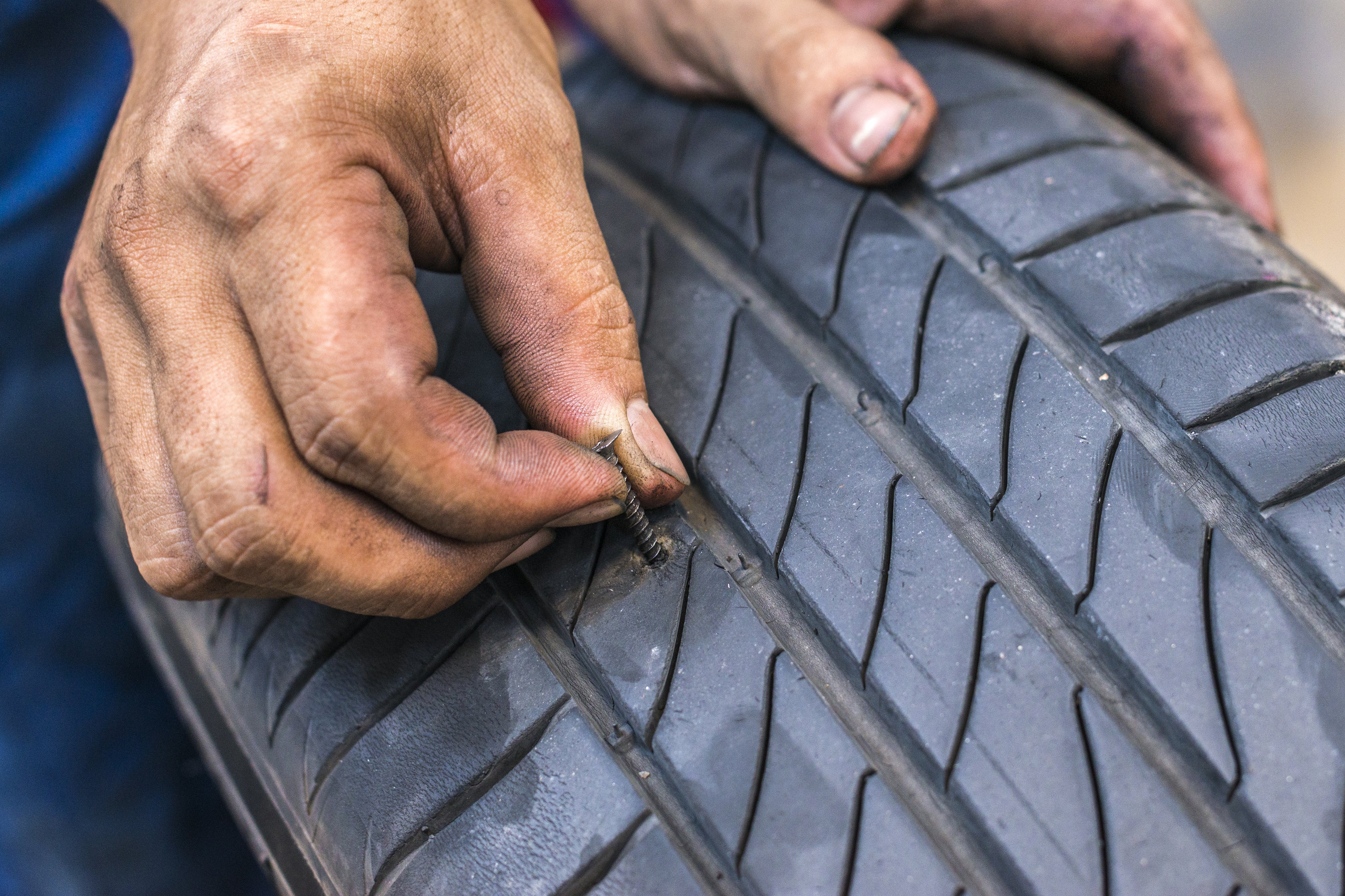
Discovering a flat tyre is a frustrating experience, whether you're heading to work, picking up the kids or just going out for a few groceries – punctures are always an inconvenience.
Punctures are one of the most common problems motorists face, but getting one needn't mean the affected tyre requires replacing. In many cases, a professional repair can restore the tyre’s integrity and keep you safely on the road, saving both time and money.
In this guide, we’ll walk you through how tyre repairs work, when a repair is possible and what it’s likely to cost would be based on prices from major UK providers. We’ll also explain the strict safety rules that apply to repairs, so you know what to expect when you take your car in.
How much does a tyre repair cost?
Most tyre repair services are offered for a fixed price, regardless of the tyre size, although prices may vary depending on whether the repair is carried out at a garage or via a mobile service. The prices below are shown as a guide and may vary depending on the nature of the repair and if it is a mobile or on-site service.
Formula One Autocentres: £22
Halfords: £25
National Tyres: £25
Kwik Fit: £29.95
Mobile services usually cost more – typically between £35 and £45, depending on your location and provider. Independent garages often charge between £20 and £30 for a standard repair.
How did my tyre get flat?
The most common cause of a flat tyre is a puncture, often from nails, screws or glass picked up on the road. Some punctures result in immediate deflation, while others may cause a slow loss of air over hours or days.
However, punctures aren’t the only culprit. Tyres can also deflate due to sidewall damage from kerbing or road debris, impact damage from hitting a pothole, valve or bead failure where the tyre meets the rim or aging tyres with perishing rubber or cracked sidewalls.
It's very important to check the tyre thoroughly or have it inspected by a professional to determine the cause and whether it's safe to repair.
How can I get my tyre repaired?
Most national chains and independent garages offer puncture repair services, and they're often available on a walk-in basis – failing that, you can book an appointment. Many also provide mobile repairs, ideal if your vehicle isn’t safe to drive.
Once the tyre is removed, the technician will inspect it both internally and externally to assess whether it can be safely repaired according to British Standard BS AU 159.
Not all tyres can legally be repaired. For the technician to attempt a repair, the damage must meet the following criteria:
The puncture is in the central three-quarters of the tread
The tread depth is above the legal minimum of 1.6mm
There’s no damage to the sidewall, bead or shoulder
The tyre has no exposed cords, cuts, bulges or cracks
The tyre has not already been repaired in the same area
If these conditions are met, the repair process involves removing and cleaning the tyre, sealing the puncture from the inside with a rubber patch and plug, then rebalancing, refitting and reinflating the it. Such repairs usually take around 30 minutes.
Why can’t my tyre be repaired?
Not all punctured tyres are suitable for repair. There are strict legal limits in place, and for good reason – a faulty tyre could serious compromise your vehicle's safety.
A tyre can't be repaired if:
The puncture is in or near the sidewall or shoulder
The tyre has structural damage or signs of internal failure
The tread is below 1.6mm in depth
There are multiple punctures or signs of ageing
The tyre has been driven on while flat, damaging the sidewall
It's a run-flat tyre, which many providers will not repair
If any of these conditions apply, a replacement is the only safe and legal option.
Rather than being a hole in a tyre which develops very gradually, it's one where the air is only escaping at a very slow rate. This is often because whatever has punctured it – such as a nail or screw – is still stuck in the tyre, helping to seal up the hole it created.
If you drive a reasonably new car from the past decade, it will most likely be fitted with a Tyre Pressure Monitoring System (TPMS for short). When the sensors in the tyre valves pick up on a change in tyre pressure, they will ping a notification on one of your car's displays, although it won't necessarily indicate which one has triggered it. TPMS sensors are also sensitive to changes in temperature, so warnings could be caused by very hot or cold weather.
Other telltale signs that one of your tyres might be punctured:
Your car feels different to drive, perhaps with heavier steering or the ride quality feeling harsher than usual.
It may feel as though it's gently steering itself to the edge or middle of the road when you're driving in a straight line.
Going around corners, you car may require you to steer more than usual in order to make it go where you intended.
The faster you go, the more you can feel vibrations through the car, anything from gentle trembling to noisy shuddering.
No. Car tyres are have to deal with higher stresses and pressures than your childhood bike did, so forget any notions of prising it off the rim with a couple of tablespoons before patching it up with a rubber plaster.
All repairs must be done in accordance with British Standard AU159, meaning only trained and qualified repairers can undertake the work, should they consider the tyre suitable in the first place.
What you can do yourself is use an emergency tyre repair kit which inflates the tyre with the self-sealing mousse. However, these are intended only to be used for short journeys to a place where you can have it repaired properly.