16/07/2026
What are my parking rights?

Written By Phil Hall
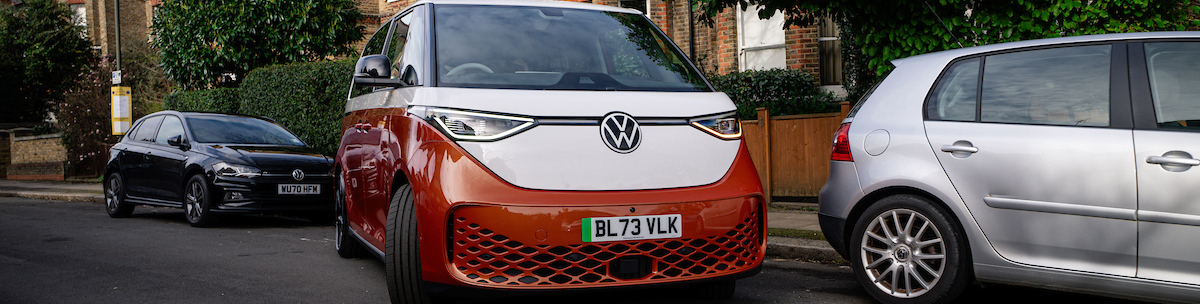
It's now common for households to have two or more cars while also having insufficient off-street or designated parking spaces for them. So, whether you want to know where you can park or if it's legal for your neighbour to park over your dropped kerb, we've compiled a few answers to clear up parking queries as well as provide you with a free PCN appeal letter template.
We've all been there. You come home after a long day of work only to find someone's nicked that last parking space on your street. Certain areas have to put up with more parking nuisances than others. If you live near a railway station that's used by commuters or are close to a school, you'll often find that parking issues can cause real friction.
This is made worse if you're without a driveway or a designated parking space. Your neighbours might kindly leave the spot outside your house free for you, but this isn't a legal right.
As ridiculous as it may seem, you could also be issued a Penalty Charge Notice – or PCN – for parking across your own dropped kerb.
It's important to remember – for the most part – that drivers can park in any street, providing they comply with parking regulations and do not cause obstructions.
You will definitely be parked illegally in the marked zones directly outside schools, on the zig-zag lines adjacent to pedestrian crossings and in designated bays you don't have a permit for.
Can I park alongside a dropped kerb?
This is one area that always causes controversy. Dropped kerbs are lowered sections of the pavement edge which allow easier access to the road for wheelchair users, pushchairs and the visually impaired. Dropped kerbs are also often found outside of businesses and private residences for vehicle access.
The Highway Code's Rule 243 states that you should 'not stop or park where the kerb has been lowered to help wheelchair users and powered mobility vehicles, or where it would obstruct cyclists except when forced to do so by stationary traffic.'
Parking a vehicle fully or partially alongside a dropped kerb is classed as an obstruction and either the police or local council can enforce the contravention. Based on the resources a particular authority has in dealing with this, attention will usually be focused on offences which impede people with disabilities.
Complaints can be made to the local police via the non-emergency 101 number, although it's usually better to contact the local council first. Action from the council can only occur if the it's the occupier of the premises involved who has complained.
If the problem persists, the council can mark a white line below the dropped curb. However, the markings aren't enforceable by police or councils – they're only an advisory area as where not to park.
As ridiculous as it may seem, you can be issued a PCN for parking alongside your own dropped kerb. To avoid this happening, contact your local council with the make, model, registration number of your vehicle and confirmation that you reside at the property.
Can someone park on my driveway?
This is an unhelpfully grey area. Rule 243 of the Highway Code states: 'Do not stop or park in front of an entrance to a property except when forced to do so by stationary traffic.'
However, if you can still get in and out of your driveway and the blocking car is fully taxed, insured, isn't causing a complete obstruction and is not in breach of any parking restrictions, the police cannot take any action. Ultimately, this will come down to whether your local council or police are willing to act based on their available resources and what the parking situation in your area is.
If the vehicle has been without VED car tax for at least one month and left in the same location for a significant amount of time it can be classed as abandoned and therefore removed. You can report those instances online.
Pavement parking
'You must not stop or park partially or wholly on the pavement in London, and should not do so elsewhere unless signs permit it,' according to Rule 244 of the Highway Code.
It is also an offence under section 72 of the Highways Act (1835) to drive onto the pavement, even if you aren't intending to park.
This is enforced by the police, although leniency is often allowed if there isn't a lot of space for parking and the road would become too narrow without cars being parked partially on kerbs or pavements.
Local authorities and the police have the power to remove a vehicle if it's causing an obstruction or has been abandoned. A vehicle can only be illegally parked if there are parking restrictions operating in the area, including Highway Code, Rule 238: 'Double yellow lines indicate a prohibition of waiting at any time even if there are no upright signs.'
Can a trader park vehicles on the road to sell them?
Under the Clean Neighbourhoods and Environment Act 2005 (part two) it's an offence both to park vehicles on the street in order to sell them and in order to carry out necessary repairs for a business.
Section 3 stipulates that for a trader to be considered running a vehicle sales business from the street, 'there must be two or more vehicles on the same street, no more than 500 metres apart, acting as part of a business for the offence to be committed'.
Section 4 states that it's an offence to carry out 'restricted works' to vehicles on a road as part of a business. Note that this is not applicable to vehicles which have broken down or had an accident, as long as it's repaired or removed within 72 hours.
Free parking PCN appeal template letter
Receiving a Penalty Charge Notice (PCN) rarely feels fair, particularly if you genuinely believe you parked legally or there were extentuating circumstances involved. If you knowingly parked on freshly painted, bright double-yellow lines then you're most likely wasting everyone's time trying to argue you shouldn't have received a PCN.
So how can you appeal against a PCN you feel has been issued unfairly? The notice itself will advise about where to send your appeal, but knowing how to phrase it when few of us are well-versed in legalese can prove daunting and put people off doing so. Here we can help.
The text below is a straightforward and to-the-point template letter for appealing PCNs. All you need to do is copy the text into a word processing app on your computer or phone and [replace the sections in square brackets] with your relevant details.
Remember to only give accurate, factual information which is relevant to your appeal as this will speed up the process.
[Insert your full address]
[Insert council name and address as referenced on the PCN]
[Insert the date you are writing your appeal letter]
Dear Sir or Madam,
Parking Ticket Number: [Insert PCN reference number]
Vehicle Registration Number: [Insert your car's registration number]
Date of Fine: [Insert fine date that appears on the PCN]
I am challenging the above Penalty Charge Notice.
On [insert relevant date] I received a parking ticket for [insert the offence code and official reason for its issue as stated exactly as stated on the PCN]. However, I believe that [choose the relevant option from: the fine was wrongly issued / there were mitigating circumstances as to why I was parked where I was / there were mitigating circumstances as to why I was parked for the length of time I was]. Therefore, I am submitting an appeal against the Penalt Charge Notice for the following reason(s):
[Choose from the following list and expand where necessary]
[I wasn’t driving the vehicle at the time and therefore am not liable for the fine.]
[My car had been stolen on [insert date] and therefore I wasn’t driving the vehicle at the time and date of the alleged contravention. Please find enclosed correspondence from the police as proof of the theft being reported.]
[The alleged contravention did not happen as I was not parked inappropriately / did not park there over the allotted time limit. Please find enclosed evidence to prove this was the case.]
[The signage was not clear so I wasn’t able to determine what the parking restrictions were / that there were any parking restrictions. Please find enclosed evidence to show this.]
[Explain any mitigating circumstances for why you were parked where you were / for the length of time you were, referencing any relevant evidence enclosed.]
[I made an honest mistake and I simply can’t afford to pay the fine at this time. Please find enclosed proof of my current financial situation as evidence that I don’t have the funds to be able to pay the Penalty Charge Notice.]
[Include any other reasons to support the appeal including as much evidence as possible.]
Yours faithfully,
[Insert your signature]
[Insert your printed name]
Although the private driveway to your home benefits from the dropped kerb being there, it isn't exclusively yours.
Just as the public road outside your house, assuming there are no restrictions, could be parked on by other motorists, dropped kerbs are there for the benefit of pedestrians, people with pushchairs plus wheelchair and mobilty scooter users.
There are several which include, but are not limited to:
Parking signage being obscured by a vegetation or other vehicles, although providing evidence of such circumstances could prove impossible should you return to the scene to take photographs.
The traffic warden may have made a mistake such as entering the wrong vehicle registration number when checking for an online payment or not seeing a valid parking ticket or blue badge on display. Showing proof of the online purchase or your printed ticket will be useful evidence.
You may have bought a valid parking ticket which blew from your dashboard as you closed the car door – again, your printed ticket will be useful to submit with your appeal.
You had already sold the car and its new owner was responsible for the parking transgression. Here you will be able to illustrate the change of the date of keeper online as evidence.
Not all of the relevant information was printed on the ticket – here again, you would need to submit the ticket as evidence to illustrate this.
There's no set answer to this because it depends on the circumstances involved. For instance, if there's a hedge which is growing out into the road, parking closer to the kerb may well scratch your paintwork, but equally, you don't want to be so far away from it as to risk being struck by passing vehicles.
Ordinarily, we would suggest parking as near to the kerb as you can without rubbing either your tyre sidewall or wheel against it. Around 15cm or 6 inches should be fine as that distance gives enough room to steer in and out of the space without touching the kerb and should also mean that protrusions from the car, such as door mirrors, aren't obstructing pedestrians on the path.
Some areas do encourage people parking partially on the path in order for an appropriately wide channel to remain on the road for passing vehicles. Unless it's specifically marked out to do so, parking fully on a path is illegal and deeply selfish.