20/07/2026
What is ESP on a car?

Written By Phil Hall
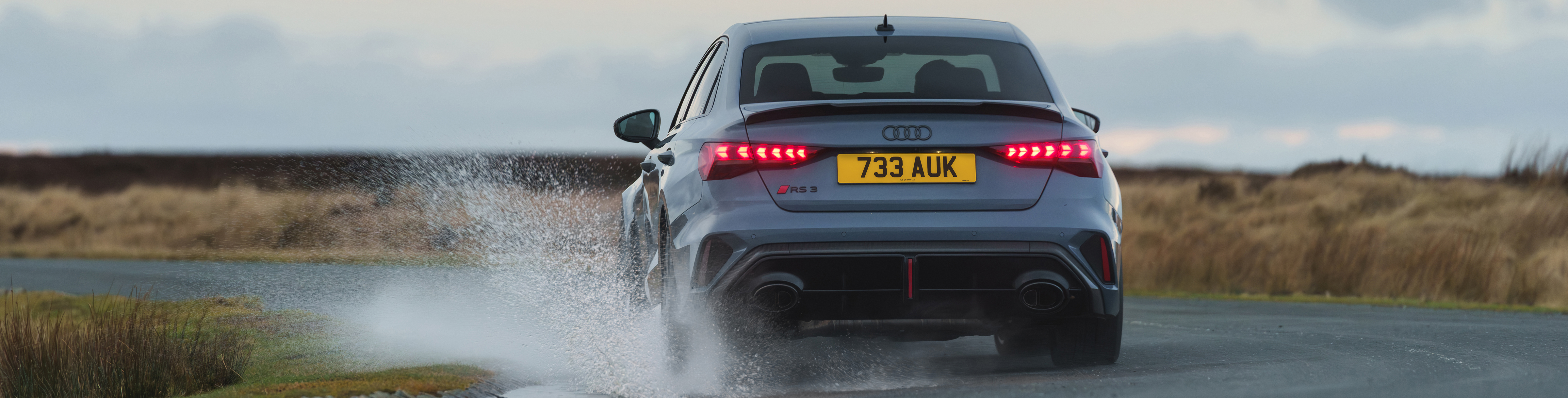
Electronic Stability Program – usually initialised to ESP – is a safety system that’s designed to help you keep control of your car during evasive manoeuvres, such as swerving to avoid obstacles in the road at high speeds.
It became a mandatory requirement on cars sold in the EU and UK from November 2014 and it’s been credited with saving thousands of lives since. But what exactly is ESP, how important is it, how does it work, what does the ESP light mean on your dashboard and should you ever turn your ESP off? Keep reading for the answer to all these questions.
What is ESP on a car?
ESP is one name for a range of electronic driver aids which perform similar roles. In broad terms, ESP uses sensors to decide whether the car’s direction of travel corresponds with the driver's steering inputs – if it doesn’t ESP automatically brings everything back under control in fractions of a second.
How important is ESP in a car?
ESP is very important – in 2019 research carried out by Bloomberg Philanthropies found that of all vehicle safety features, electronic stability control is the most important factor in crash avoidance because it reduces deaths in loss-of-control collisions by 38% compared with cars without the technology.
Separately, research carried out by Loughborough University back in 2007 analysed more than 10,000 road traffic incidents (RTIs) and found that cars fitted with ESP were 27% less likely to be involved in single-vehicle accidents – those are the type which are most commonly attributed to driver error.
ESP or ESC: what is the difference?
There’s no difference between ESP and ESC – Electronic Stability Control – as they are one and the same. The disparity can be traced back to when ESP (which we’ll stick with for simplicity's sake) was trademarked under a range of names by different car manufacturers.
In truth, it’s called lots of different things. BMW uses the acronym DSC (Dynamic Stability Control), Honda went for VSA (Vehicle Stability Assist), while Porsche coins it PSM (Porsche Stability Control).
.jpg)
Is traction control the same as ESP?
No, traction control is not the same thing as ESP. It is usually controlled by your car's ESP but it serves a different purpose. Instead of stopping your car from sliding or spinning in corners, traction control is – as its name implies – designed to give your car’s driven wheels more traction under power.
For instance, if you’re joining a roundabout and you spot a gap in traffic, accelerating from a standstill to make it, you risk misjudging it – the engine’s power overawes the grip of the tyres, they spin and you go nowhere quickly.
Do the same thing with traction control activated and it will intervene, either by reducing engine power or by braking spinning wheels to send the power to the wheel that does have grip – the idea is to meter out power, making the most of the grip available. It’s particularly effective on wet roads.
That said, there are times when traction control isn’t so great particularly when you do want your wheels to spin, such as if you’re trying to dislodge the car from snow. Pressing the ESP button on most mainstream cars turns off the traction control – not the ESP itself – allowing your car’s driven wheels to spin freely, giving you the momentum needed to break free.
How does ESP work?
ESP works like a safety net that constantly monitors your driving. A computer records signals from various sensors – for parameters including wheel speed and yaw angle – 25 times per second to ensure that your steering inputs correspond with the actual direction the car is travelling in.
If the two don’t align, ESP acts automatically and independently by pulsing the corresponding brakes to forcefully counteract the slide and bring the car back under your control. It can also reduce engine torque to counter a power-induced slide. All this happens so quickly and subtly you’ll struggle to notice it working.
What other functions does ESP make possible?
ESP's sensors and control unit makes a vast array of new functions possible. ESP’s ability to activate the brakes means more and more modern cars come with a hill-hold function that will hold the car on the brakes while you engage the clutch.
Hydraulic Brake Assist (HBA) is another safety feature made possible by ESP. Even in emergencies, studies have found you often fail to apply the brakes as hard as possible. HBA solves this by monitoring how hard and how suddenly you stomp on the pedal and, if it detects an emergency stop, applies maximum pressure.
Rollover Mitigation, meanwhile, uses the ESP’s sensors – for paramters including yaw – to detect when a car is going to tip over and pulses the brakes on individual wheels to stop it.
Even your car’s Tyre Pressure Monitoring System (TPMS) exists thanks to ESP. It uses the ESPs sensors to monitor the rotational speeds of your wheels to detect the additional drag of a puncture.
ESP warning light
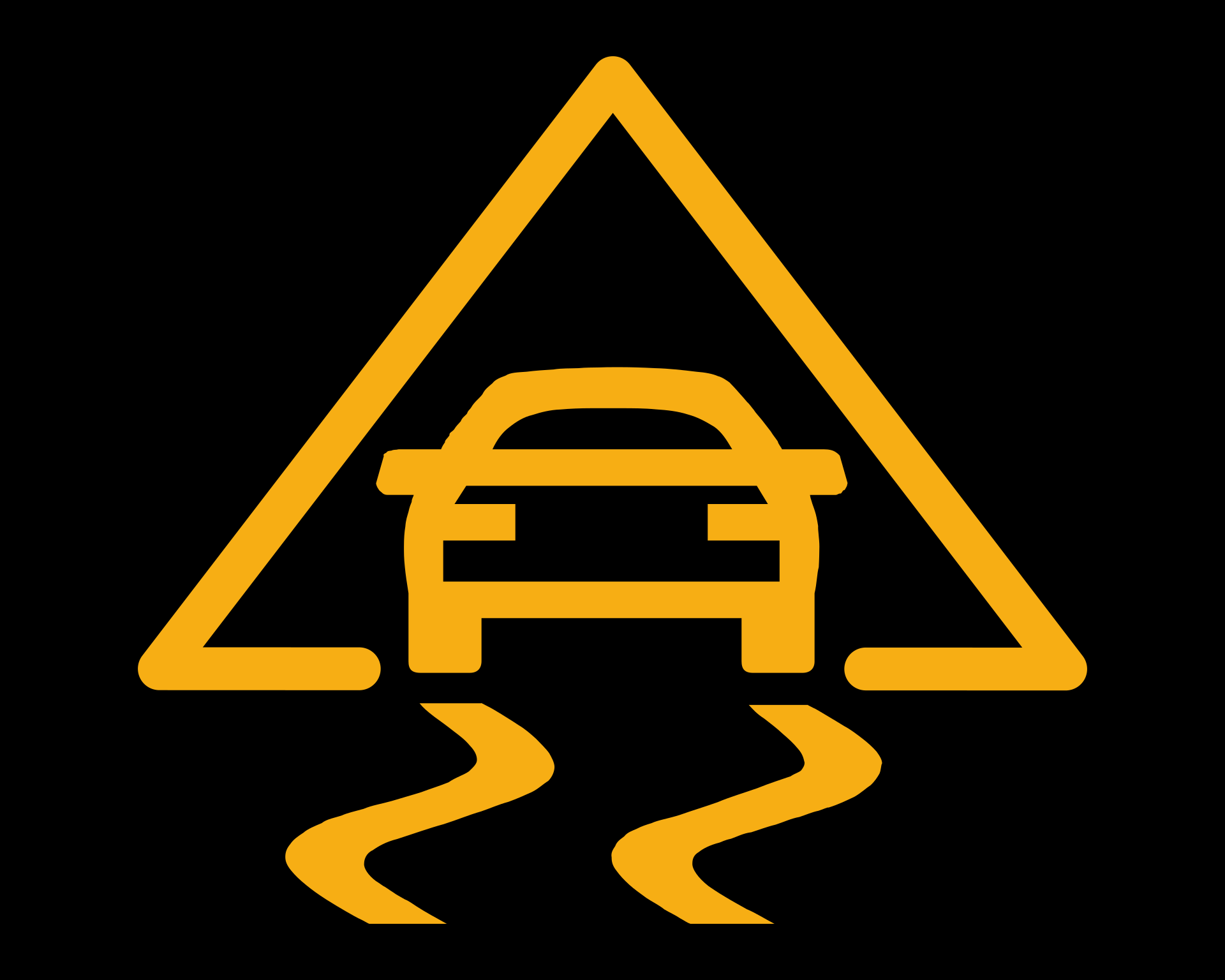
You’ll probably not even notice your ESP until you see the ESP warning light flash up on your dashboard – it will either flicker on and off or come on and stay on, but what does that mean?
Flickering ESP light
A flickering ESP light while you're driving indicates that the the system has been activated. It can be a split second activation and – as you’re concentrating on driving – you’ll likely miss that it illuminated.
That said, you might feel it. Essentially, it’s stopping you losing control of the car so you may feel the car move beneath you before the ESP cuts in – cutting engine power and juggling brake pressure – to bring the car back into line. It happens so quickly, it’s almost imperceptible.
Constantly illuminated ESP light
This means that the system is inoperative – either because you have switched it off, usually by pressing and holding a button with the matching symbol, or because there is a fault with the system.
Even when you do switch the system off in some cars – most Volkswagens for example – it’s not actually off. Instead, the parameters within which it operates have simply been loosened to free up more corner performance on track, for instance. On other cars, the system turns off when you select particular driving modes – so you don’t have to press the ESP button.
A faulty ESP system doesn’t make your car dangerous, but if your car’s fitted with such an effective safety system it would be foolish not to have it fully operational. Even professional racing driving instructors keep the system engaged on the road.
ESP is important in a car. It’s a proven safety device that’s reassuring to have if you’ll be using your car to ferry about your family and loved ones. There are very rare examples when it doesn’t make sense, though, for example, if you’ll purely use your car on track it could restrict its performance. As a general rule when driving on the road, there are many positives to having ESP on and no negatives.
Yes, it is safe to drive with ESP light on but we wouldn’t recommend it. If your ESP light is on it means you’ve switched it off or there’s a fault with the system and it’s not operating correctly. As a result, it won’t be able to stop your spinning like it would do if it was operational. While not necessarily dangerous, it does mean an important safety feature isn’t working, it’s prudent to get it fixed if there’s a fault and we’d advise keeping the system switched on.
When the ESP light comes on in your car it could mean one of two things. If it flickers, your car’s ESP has had reason to activate likely due to a sudden manoeuvre or quick cornering. If the light stays solidly on, it means there’s a fault with the system and you should have it looked as soon as possible.