Audi R8 (2015-2024) Review

Written By Dan Powell
- 2015
- Performance
- Petrol
What we love
Magnificent naturally aspirated V10
Surprisingly easy to live with day to day
Supercar pace with strong Audi build quality
Things to consider
Set up to balance performance with everyday usability
Running costs reflect its supercar performance
Early cars can miss some desirable equipment
The DRIVE take on the Audi R8, is it the right car for you?
The final Audi R8 is exotic and seriously fast but hangs on to the usability that most supercars abandon the moment you leave the dealership. It's not the last word in steering feel or track-day sharpness, and it doesn't pretend to be the most extreme thing in its class, but it blends pace, theatre and everyday civility in a way very few rivals can match. If you want a supercar you can actually use without feeling you’re always making excuses for it, the R8 still makes a very strong case.
The Audi R8 in more detail
By the time this second-generation R8 arrived, Audi no longer had to prove it could build a credible supercar. The first car had already done that. What this model needed to do was evolve the formula without losing the qualities that made the R8 so appealing in the first place.
That meant keeping the everyday friendliness, the superb visibility, the carefully judged ergonomics and the sense that this was still a supercar built by a company that understood ordinary road cars. It also meant turning up the drama, just by enough to make sure the car still felt special in a market full of ever more focused and flamboyant rivals.
The result was a remarkably complete machine. The second-generation R8 feels more serious, faster and more mature than the car before it, but it never becomes intimidating. The V10 is a huge part of that appeal. In an era where many fast cars moved to turbos, downsizing and electrification, the R8 doubled down on a naturally aspirated ten-cylinder engine that feels special simply because it exists.
That matters even more now. Audi no longer builds new R8 models for the UK and the car has moved into heritage status rather than simply becoming an older member of a current range. There's also no direct successor in Audi’s line-up, which leaves this final R8 to stand on its own merits as a used supercar, which suits it rather well. It still feels like something genuinely special: immensely fast, beautifully engineered and far easier to live with than most cars with this sort of performance.
What's the best Audi R8 trim and engine option?
For most used buyers, the sweet spot is the post-2019 R8 V10 Performance if budget stretches that far, because it gives you the sharper facelifted car, stronger standard equipment and the fullest expression of the V10 engine.
That said, a regular V10 quattro is often the smarter buy in the real world. It already has more performance than most owners will ever fully use, it keeps the all-weather security that suits the R8’s broad personality and it can feel the more rounded road car.
Rear-wheel-drive versions add a different flavour and a little more attitude, but the quattro cars remain the most natural fit for the R8’s all-round supercar brief.
What’s the price of the Audi R8?
Used Audi R8 prices now start from around £57,000 for early second-generation cars, while later facelifted versions, Performance models and especially low-mileage examples sit much higher.
There's enough spread in the market to be selective, which matters because options and model-year changes make a difference here. Facelifted cars are generally the ones to aim for if budget allows, but a well-kept earlier car with the right specification can still make a lot of sense.
For many buyers, the best value sits in the middle of the range rather than at either extreme.
Alternatives to the Audi R8
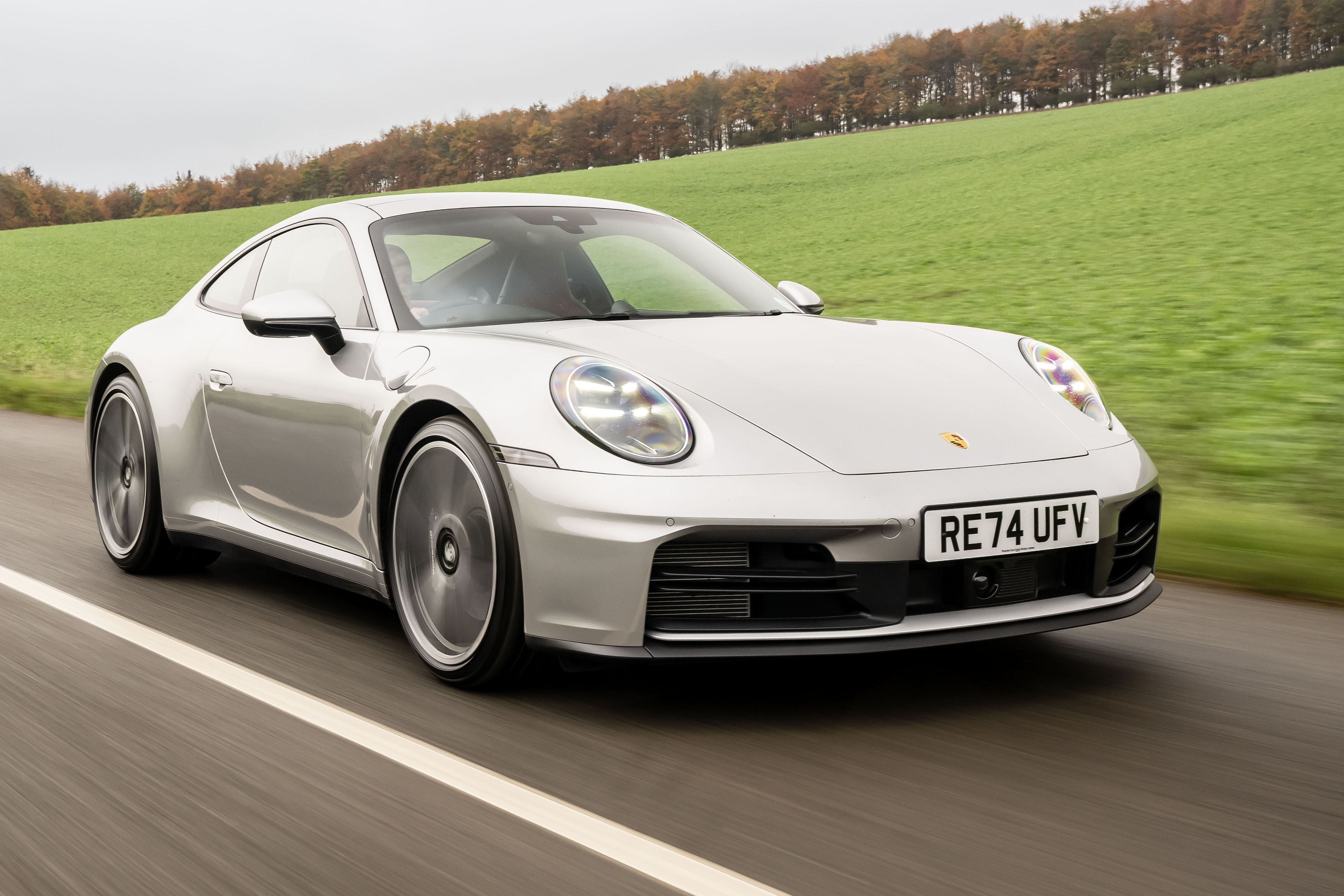
The Porsche 911 is an obvious alternative if you want a faster-witted and more involving sports car with a slightly less exotic image, while the McLaren 570S is the one to look at if ultimate sharpness and drama matter most.
The Honda NSX offered a very different hybrid take on the supercar theme, and the Lamborghini Huracan inevitably sits close by in spirit because of its shared V10 relationship with the Audi. The R8’s strength is that it feels like the most complete and easiest to use of the lot.
What's the interior like in the Audi R8?
The Audi R8’s cabin remains one of its biggest selling points. It feels special without feeling theatrical for the sake of it, and the quality is a long way beyond what many rivals offered.
Audi R8 boot space and practicality
This isn't a practical car in any conventional sense, but the Audi R8 is still easier to live with than many supercars. Up front, there's enough room for two adults to get comfortable, and the driving position is excellent.
There's useful storage behind the seats for soft bags and coats, which helps more than you might expect. The front boot is small at 112 litres, so you won’t be taking much luggage with you, but this was never meant to be a grand tourer.
What matters more is that the R8 doesn't make ordinary use unnecessarily difficult. Visibility is good by supercar standards, the cabin isn't cramped and the controls are straightforward. That all helps make it far easier to use than some of its more temperamental rivals.
Audi R8 dimensions
The Audi R8 measures 4,429mm long, 2,037mm wide and 1,236mm high. That makes it low and wide in the way a supercar should be, but it's still compact enough to feel less intimidating on British roads than some alternatives.
In practice, the visibility and the way the car responds at low speed make it easier to place than you might expect.
Tech and infotainment in the Audi R8
The R8’s technology is refreshingly driver-focused. There's no large centre touchscreen dominating the dashboard. Instead, most functions are centred around Audi’s Virtual Cockpit digital driver display.
That gives the cabin a cleaner and more focused feel than many rivals, and it helps the R8 avoid feeling overcomplicated. Post-2019 cars are the ones to seek out because the Virtual Cockpit became standard across the range and the steering wheel controls were improved.
Materials available on the Audi R8
Material quality is extremely strong. The leather, trim finishes, switchgear and general fit and finish all feel worthy of the price tag, and the R8 still has one of the most solid-feeling cabins of any supercar from this period.
This is one of the reasons it still works so well as a used exotic. The R8 feels built with real care, not simply assembled around the engine and the badge.
What's the Audi R8 like to drive?
The R8 is best understood as a devastatingly fast and surprisingly civilised supercar rather than a knife-edge track special. Its brilliance lies in how approachable it remains even when the numbers are anything but modest.
Audi R8 range and performance
The big story here is simple: the R8’s 5.2-litre naturally aspirated V10 is one of the great engines of the modern era.
Early cars came in 540PS and 610PS forms, while the 2019 update lifted outputs to 570PS and 620PS for the Performance model. Rear-wheel-drive versions were added later, offering a slightly different character and a purer mechanical feel, but every R8 shares the same basic appeal: huge power, instant response and a soaring top end that no turbocharged replacement could really replicate.
The seven-speed S tronic automatic gearbox suits the car well. It's quick, intuitive and far better matched to the R8’s broad abilities than a more old-fashioned manual would have been at this stage of the car’s life.
Performance data
| Model | Engine/battery size | Power | 0-62mph | Range/MPG |
|---|---|---|---|---|
R8 V10 quattro | 5.2-litre V10 petrol automatic | 540PS | 3.5 seconds | Around 24mpg |
R8 V10 Performance quattro | 5.2-litre V10 petrol automatic | 620PS | 3.1 seconds | Around 22mpg |
R8 V10 RWD | 5.2-litre V10 petrol automatic | 570PS | 3.7 seconds | Around 23mpg |
Audi R8 driving and refinement
The R8’s brilliance isn't just about speed, it's about how accessible that speed feels. Around town, the controls are light enough, visibility is genuinely decent and the ride is far more forgiving than many supercar buyers will expect. For better or worse, you could almost forget you’re in a supercar.
Out on a fast road, the car feels secure, composed and immensely rapid. The V10 builds in a wonderfully linear way and the quattro system in the all-wheel-drive cars gives the R8 huge confidence and traction.
That same security is also why some drivers will still prefer a 911 or McLaren when the road gets more demanding. The Audi is devastatingly effective, but it's not always the most delicate or most talkative thing at the limit. It majors more on confidence and composure than on endless adjustability.
Refinement is strong by supercar standards. There's noise, obviously, and the V10 is never far from the foreground, but the R8 is quieter, calmer and more comfortable than many cars in this part of the market.
How safe is the Audi R8?
Audi never submitted the R8 for testing by independent safety organisation Euro NCAP, which isn't unusual in this part of the market.
It has the expected mix of airbags, stability systems and strong underlying structure, though it does miss some of the more advanced active safety systems now common in more modern ordinary performance cars. As ever, check the specification of individual used examples carefully.
Running costs: What it's like to live with a Audi R8
The R8 is never going to be a cheap car to run. Fuel, tyres, servicing and insurance costs will be considerable, and all come with the territory.
The difference is that the Audi backs those costs up with a level of usability that many supercars do not. If you’re going to spend this sort of money, there's at least some comfort in the fact the R8 can feel like a normal car when you need it to.
Audi R8 fuel economy
Fuel economy is exactly what you would expect from a naturally aspirated V10 supercar: heavy. The official numbers are not disastrous on paper for something with this sort of performance, but real-world results will depend enormously on how you drive it. Don’t expect much in advance of 20mpg, even if you really try to keep things conservative.
Use the engine properly and the R8 will reward you with one of the great soundtracks in modern motoring, but it won’t do your wallet any favours in the process.
Audi R8 warranty and servicing
Any remaining manufacturer warranty will depend on the age of the car, but Audi Approved Used examples remain the most reassuring place to start.
Audi Approved Used currently includes a minimum of a one-year Audi Warranty, one year of roadside assistance and a 30-day exchange plan, which adds useful reassurance on a used high-performance Audi.
On cars like this, condition and history matter more than almost anything else. A specialist inspection and a full record of servicing and consumables are well worth prioritising.
Audi R8 insurance groups
Insurance, unsurprisingly, sits at the top end of the scale, and all versions live firmly in specialist-supercar territory.
This isn't a car that rewards casual assumptions on insurance, so it's worth getting quotes lined up properly before you commit.
How much does it cost to tax a Audi R8?
For most Audi R8s registered on or after 1 April 2017, the standard annual VED rate is now £200, or £17.50 a month by Direct Debit.
However, because the R8’s original list price was well over £40,000, it also pays the Expensive Car Supplement for five years from the second licence. That takes the annual bill to £640, or £56 a month by Direct Debit during that period.
Cars registered before April 2017 are taxed using a different method, and can be even pricier – expect to pay £790 a year.
What trims are available with the Audi R8?
Given its supercar status, it won’t surprise you to hear that all versions of the Audi R8 are well-equipped as standard.
Luxury features, like LED headlights, 19-inch aluminium wheels, metallic paint and leather seats are fitted as standard. The cabin features leather heated sports seats with electric adjustment (as standard) along with automatic air conditioning and a fully digital instrument display.
However, if you want height-adjustable seats, you'll need to buy the V10 Plus model, which also adds bucket sport seats and stainless steel pedals. Cruise control is also added, but strangely there is no adaptive cruise control option.
Range-topping models get some notable exterior upgrades, with a carbon fibre front spoiler and a large fixed rear spoiler replacing the hydraulic adjustable system used on the ‘standard’ R8. V10 Plus models also get ceramic brakes, in place of the steel discs used in the entry-level model.
The R8 was given a comprehensive update in 2019, with Audi’s virtual cockpit system fitted as standard. The V10 Plus was also rebranded as V10 Performance and given 20-inch wheels and a new multifunction steering wheel with a built-in starter button.
Over the years Audi has launched a number of special editions for the R8, with most getting 20-inch wheels and a multitude of aerodynamic tweaks to sharpen the styling and race track performance.
The most exclusive edition of the R8 is the 10 Plus Selection 24h, which was commissioned to celebrate the R8 LMS GT3 car’s 300th victory. Just 24 examples were built, with each features an exclusive tricolour paint finish and track-focused interior.
Rear-wheel-drive models were added to the R8 range in 2019. These can be identified by the larger front grille and rear diffuser. The side blades (the bits of coloured bodywork that sit behind the door and window) are also finished in a glossy mythos black, while the bottom blade is painted in the colour of the vehicle.
Ask the Drive experts: common questions
Is the Audi R8 still on sale new in the UK?
Is there a direct replacement for the Audi R8?
Is the Audi R8 still worth buying?
Which Audi R8 is best?
Get our latest advice, news and offers
Keep me updated by email with the latest advice, news and offers from Drive.
.jpg)