BMW 5 Series Review

Written By Ivan Aistrop
- 2023
- Saloon
- Petrol mild hybrid, plug-in hybrid
What we love
Excellent blend of comfort and handling
Superb interior quality
Strong plug-in hybrid options
Things to consider
Too many functions rely on touch controls
Some of BMW’s cabin gimmicks feel unnecessary
No diesel option in the current saloon range
The DRIVE take on the BMW 5 Series, is it the right car for you?
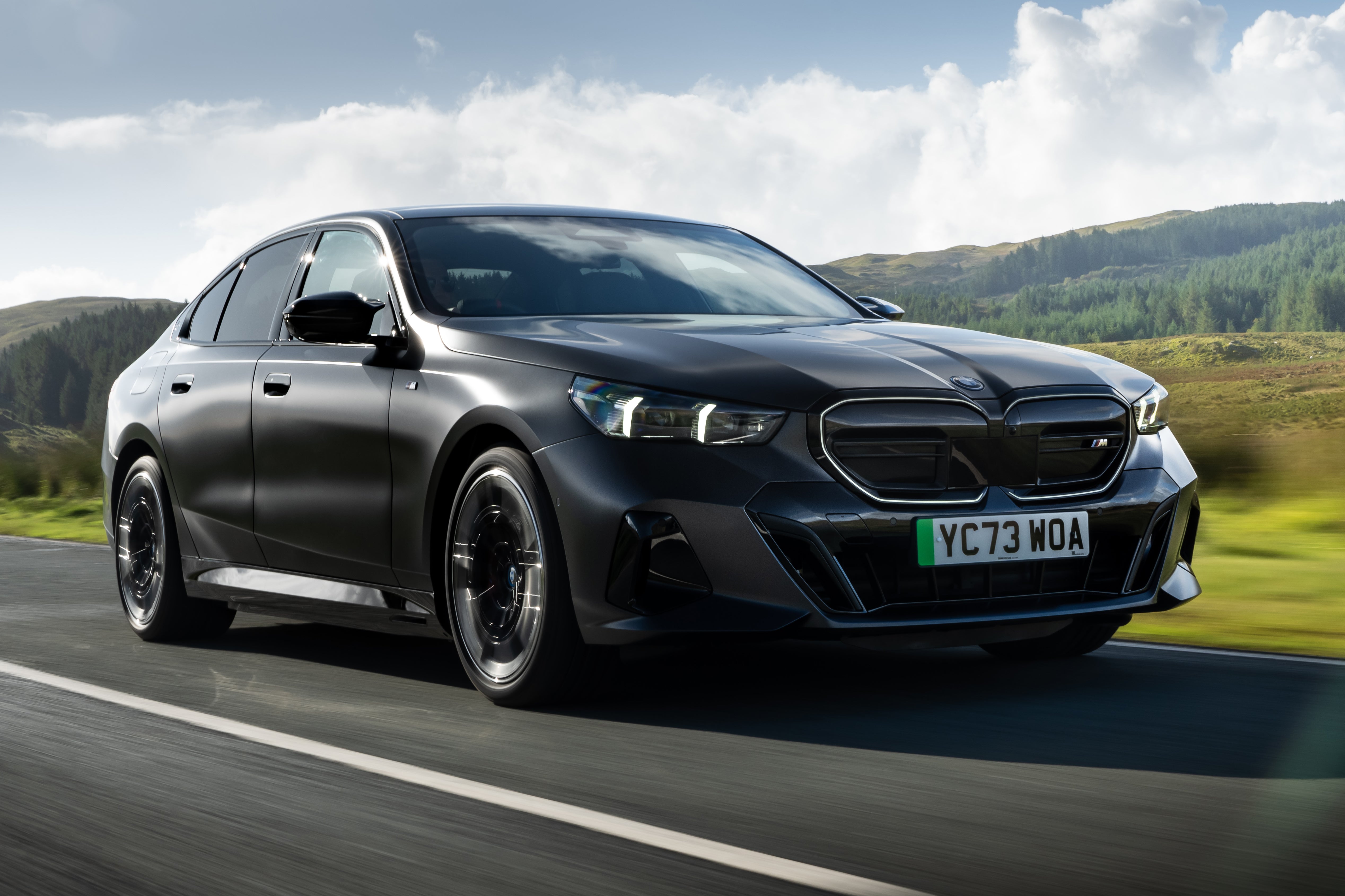
The BMW 5 Series is one of the easiest executive saloons to recommend if you want a big, refined four-door that feels special every time you get in. It majoThe BMW 5 Series still feels like the driver’s choice in this class, even though it has become a bigger, more digital and more luxurious car than ever. It has all the space, polish and executive-car presence buyers expect, but it also retains a sharper, more satisfying feel from behind the wheel than most direct rivals. The latest Mercedes-Benz E-Class is arguably the more comfort-led cruiser, but the BMW strikes a sweeter balance between long-distance refinement and driver appeal. If you want a premium saloon that feels properly modern without giving up the qualities that made the 5 Series such a mainstay in the first place, this is one of the best cars in the class.
The BMW 5 Series in more detail
The 5 Series has always been one of the key cars in BMW’s range, and that has not changed just because SUVs now dominate the market. This is still a hugely important executive saloon, and the latest version has had to evolve carefully to keep its place.
That evolution has been fairly dramatic in some respects. The new car is bigger than before, much more digital inside and now sits alongside the all-electric i5 as part of the same broader model family. That could easily have diluted the traditional 5 Series recipe. Happily, it has not.
Browse used BMW 5 Series for sale →
BMW has resisted the temptation to turn the combustion-engined 5 Series into something anonymous. It still feels like a proper large executive saloon with rear-wheel-drive roots, a strong sense of balance and the sort of cabin quality buyers in this class demand. At the same time, it has embraced the current need for electrification through mild-hybrid and plug-in hybrid powertrains, both of which make a lot of sense in this type of car.
The current saloon line-up is also pleasingly simple. There is the 520i as the straightforward petrol mild hybrid, then the 530e and 550e xDrive as the two plug-in hybrids. That does mean there is no diesel option in the current UK 5 Series saloon range, which will matter to some high-mileage buyers, especially now that Audi still offers the new A6 with diesel power.
The result is a car that feels broader in ability than ever. It can be a sensible company car, a comfortable long-distance motorway tool or a genuinely brisk driver’s car depending on which version you choose. That spread of talents is exactly why the 5 Series still matters.
What's the best BMW 5 Series trim and engine option?
The smart money is on the 530e in M Sport trim. It is the version that best balances performance, efficiency and cost, and it is also likely to make the most sense for the widest range of buyers.
The 520i remains a very good starting point. It has enough power, a lower entry price and avoids the extra complexity and weight of a plug-in hybrid system. If you are a private buyer doing mixed mileage and you cannot charge at home, it is still a very reasonable choice.
The 530e, though, is the version that feels best aligned with how many modern executive cars are used. It has enough electric range to cover a lot of commuting and day-to-day driving without burning fuel, yet still feels like a proper 5 Series on longer trips. It is brisk enough, refined enough and more financially rational than the 550e for most buyers.
The 550e xDrive is hugely impressive, but it is also difficult to justify unless you specifically want the extra shove. It is fast in a way that can feel faintly absurd in a big executive saloon, and it backs that up with genuine sophistication, but it is very expensive. For most buyers, the 530e hits the sweet spot.
As for trim, M Sport already gives you the right look and a strong equipment list. M Sport Pro adds visual garnish, but unless you really want the extra styling details, the standard M Sport is easier to justify.
What’s the price of the BMW 5 Series?
The BMW 5 Series range currently starts at £53,835 for the 520i M Sport Saloon and rises to £77,730 for the 550e xDrive M Sport Saloon. That is a broad spread, but it reflects how different these cars are in character as much as in price. There are also plenty of used BMW 5 Series for sale for considerably less.
At the lower end, the 520i feels expensive but fair for what it is. This is a large, premium executive saloon with a beautifully finished cabin, a lot of technology and the sort of polish buyers expect from a BMW at this level. It does not feel like a stripped-out entry car.
The 530e climbs another step, but it is easier to justify than the list price might first suggest. If you can make use of the electric running, it gives you a lot of what makes the 550e appealing while keeping a firmer grip on costs.
The 550e is a much harder sell on rational grounds. It is a deeply impressive car, but once you reach the high-£70,000 mark you are into territory where buyers start to expect something genuinely special, and where a lot of people will simply start looking at other kinds of car altogether.
In short, the 5 Series makes good sense in the middle of the range. Push too far upwards and it becomes a more emotional purchase than a rational one.
Alternatives to the BMW 5 Series
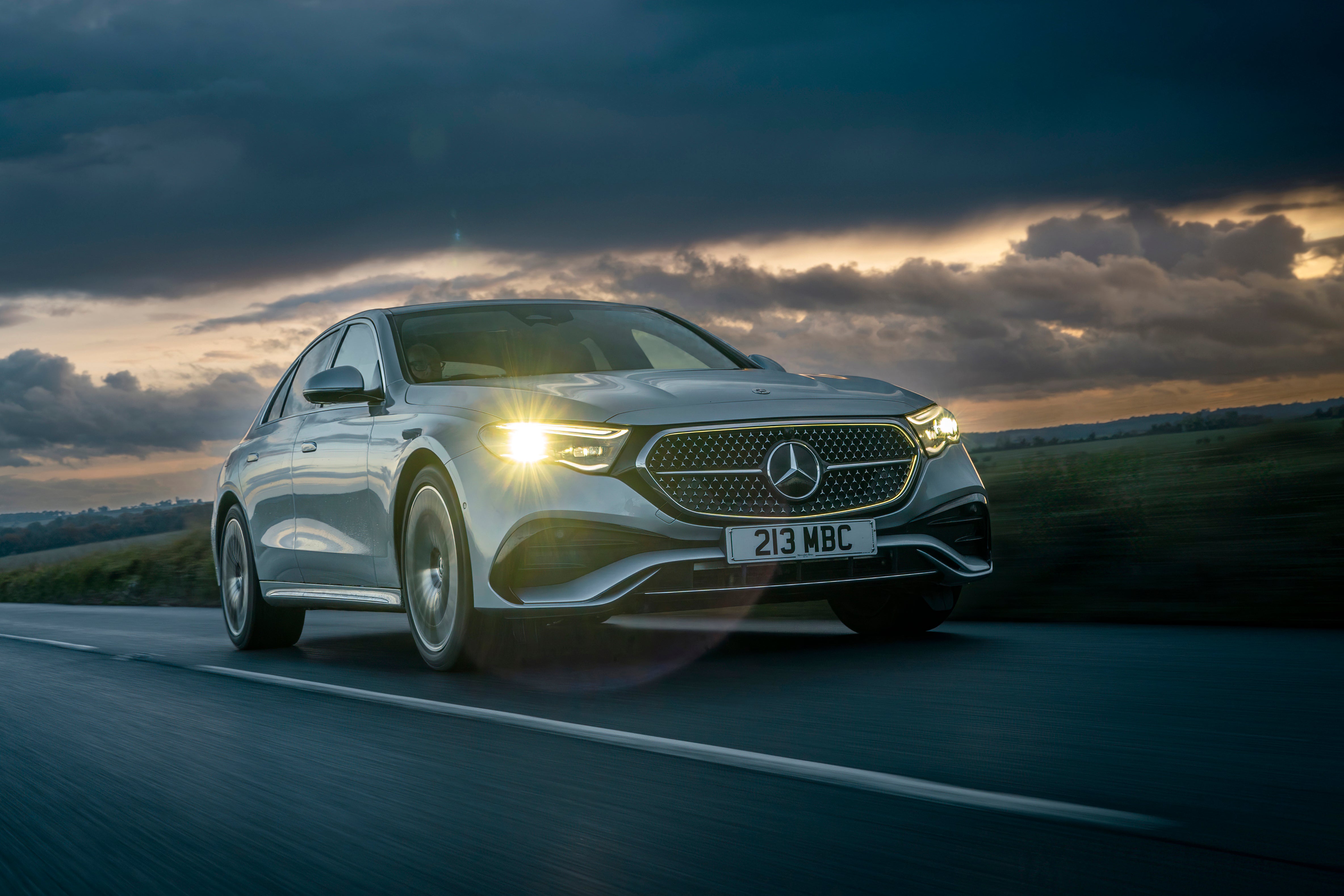
The most obvious rival is the Mercedes-Benz E-Class. It is the more comfort-led and overtly luxurious alternative, with a cabin that feels more theatrical and a generally softer, more soothing character on the move. If you want the more traditional executive-car waft, the Mercedes still makes a very strong case.
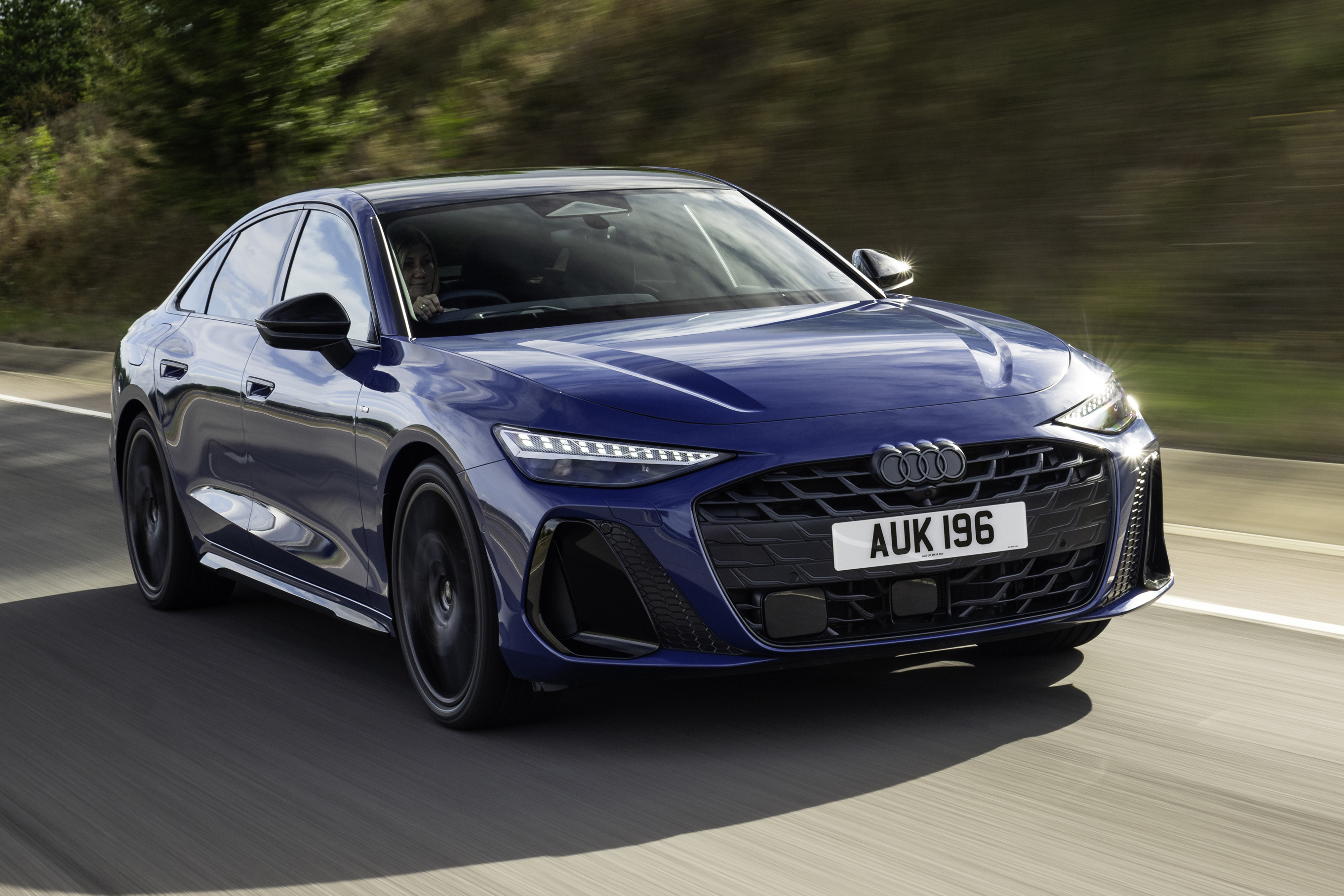
Audi now has a new A6, and it needs to be taken seriously here. It still does not feel as naturally satisfying to drive as the BMW, but it remains a very polished executive car and the availability of a diesel option is a real advantage. BMW no longer offers a diesel 5 Series saloon in the UK, while Audi still gives high-mileage buyers a convincing diesel alternative.
The Lexus ES is worth a look if you want something more left-field and less German. It offers plenty of comfort and strong hybrid efficiency, though it does not have the same depth of driver appeal as the BMW.
In today’s market, though, the real fight is still between the BMW, Mercedes-Benz and Audi. Of those, the BMW remains the keen driver’s choice.
What's the interior like in the BMW 5 Series?
The BMW 5 Series has one of the best cabins in the class. It feels expensive, spacious and extremely well put together, even if BMW’s determination to digitise everything is not always an unqualified success.
BMW 5 Series boot space and practicality
This is a big car, and it feels it inside. Front-seat space is generous, the driving position is excellent and there is enough adjustment to suit a very wide range of drivers. Visibility is decent for something of this size, and once you are settled in, the 5 Series feels appropriately substantial and reassuring.
Rear-seat space is strong as well. Legroom is generous enough for tall adults, and headroom is perfectly acceptable too. The rear bench is really best for two adults rather than three, because the cabin is not especially broad and the middle seat is narrower and less comfortable. Even so, this is still a very accommodating rear cabin by executive-saloon standards.
Boot space stands at 520 litres, and crucially BMW has managed to preserve that figure across the combustion-engined and plug-in hybrid models. That is a genuine advantage, because many rivals lose useful practicality in PHEV form. The shape of the opening is still constrained by the saloon body style, so bulky loads are not as easy to handle as they would be in an estate, but as saloon boots go it is a strong showing.
The rear seats split 40:20:40 as standard, which helps, although the pass-through and boot opening are not especially generous for awkward long items. If load space matters above all else, the Touring is still the better answer. For a saloon, though, the 5 Series is usefully practical.
BMW 5 Series dimensions
The BMW 5 Series measures 5,060mm long, 1,900mm wide and 1,515mm high, with a 2,995mm wheelbase. That makes it a very large saloon by modern standards, and larger than some buyers might expect.
The upside is strong cabin space, lots of rear legroom and real road presence. The downside is that it can feel a bit more cumbersome in tighter town driving than the badge might suggest. It is not difficult to place, but it is undeniably a big car now.
Tech and infotainment in the BMW 5 Series
BMW’s latest curved-display setup looks excellent. It combines a 14.9-inch central screen with a 12.3-inch instrument display, and the overall presentation is slick, modern and suitably high-end.
The infotainment system itself is packed with features and, once you learn your way around it, works well enough. BMW deserves some credit for retaining the rotary controller on the centre console, because it remains much easier to use on the move than a touchscreen alone. The shortcut buttons around it also help.
The problem is that BMW has still moved too many everyday functions into digital controls. The Interaction Bar looks clever, but it is also part of the wider trend of replacing intuitive physical controls with things that look impressive on a showroom floor and are less satisfying on the move.
That said, the core hardware is very good. The screens are sharp, the graphics are excellent and the standard equipment list is strong. The harman kardon sound system, smartphone integration and charging provision all add to the sense that this is a properly modern executive cabin.
Materials available on the BMW 5 Series
BMW has nailed the material quality here. The 5 Series feels richly trimmed, with an excellent mix of textures and finishes, and a standard of build that is difficult to fault.
This is one of those cabins where nearly every touchpoint reassures you that the money has gone somewhere worthwhile. The upholstery, trim finishes and switchgear all feel appropriately expensive, and while some rivals can match it in places, very few clearly beat it.
The interior design is also more tasteful than some recent BMW cabins have been. It has enough visual flair to feel modern, but it does not rely entirely on gimmickry to make an impression. The end result is a cabin that feels special every time you get in.
What's the BMW 5 Series like to drive?
This remains the 5 Series’ biggest trump card. It still feels more satisfying to drive than most direct rivals, even though it has become bigger, heavier and more comfort-focused than earlier generations.
BMW 5 Series range and performance
The current range starts with the 520i, which uses a 2.0-litre turbo petrol mild hybrid producing 208PS. That is enough for 0-62mph in 7.5 seconds, which is perfectly adequate for a car of this type. It is the most straightforward choice in the range and should suit many private buyers just fine.
Next is the 530e plug-in hybrid. This combines the same basic 2.0-litre petrol engine with an electric motor for a combined 299PS. BMW quotes 0-62mph in 6.3 seconds and an electric range of up to 63 miles. That makes it the most rounded drivetrain in the line-up.
At the top sits the 550e xDrive. Here, the plug-in hybrid system is paired with a 3.0-litre six-cylinder petrol engine to produce 489PS and 700Nm. That is enough for 0-62mph in 4.43 seconds, which is extremely quick by any sane executive-saloon standard.
The basic truth is that none of these cars feels underpowered. The 520i is enough, the 530e is the sweet spot, and the 550e is gloriously excessive.
Performance data
| Model | Engine/battery size | Power | 0-62mph | Range/MPG |
|---|---|---|---|---|
520i | 2.0-litre petrol | 208PS | 7.5 seconds | Up to 49.6mpg |
530e | 2.0-litre plug-in hybrid | 299PS | 6.3 seconds | Up to 63 miles EV range |
550e xDrive | 3.0-litre plug-in hybrid | 489PS | 4.3sec | Up to 50 miles EV range |
BMW 5 Series driving and refinement
The 5 Series still balances comfort and control better than most rivals. The versions driven so far, equipped with adaptive suspension, have felt superbly judged, combining a cosseting ride with body control that flatters the car’s size and weight.
This is not a light, delicate sports saloon. It is far too big and heavy for that. But it is impressively agile for what it is, and it flows down a road with a precision and confidence that many large executive cars simply do not manage. There is still enough steering accuracy and enough response to make it satisfying, even if outright feedback is not class-leading.
The optional rear-wheel steering fitted to higher-spec cars helps too, making the car feel more manageable at low speed and more settled at higher speed. It is one of those systems that fades into the background when it works well, and here it does.
Refinement is another strength. Wind and road noise are very well suppressed, and the plug-in hybrid system in the 550e is especially smooth in the way it blends engine and electric power. If you switch off BMW’s synthetic IconicSounds nonsense, the car becomes a wonderfully quiet long-distance companion.
One caveat remains: the broader range still needs full testing on standard passive suspension. The adaptive setup has been excellent, but it would be wrong to pretend that automatically tells you everything about every version in the line-up.
How safe is the BMW 5 Series?
The BMW 5 Series achieved a five-star Euro NCAP rating in 2023, with strong scores for adult occupant protection, child occupant protection and vulnerable road-user protection.
Standard safety equipment is generous. Automatic emergency braking, lane-departure warning and correction, adaptive LED headlights, adaptive cruise control, rear cross-traffic alert and a broad suite of stability and braking systems are all part of the package.
BMW also offers more advanced driver-assistance functionality through the optional packages, including improved lane support and smartphone-based parking functions. Overall, the 5 Series feels every inch the modern premium executive car in safety terms.
Running costs: What it's like to live with a BMW 5 Series
A BMW 5 Series is never going to be a cheap car to buy or insure, but the drivetrain choices mean it can make more financial sense than its size and badge might imply.
BMW 5 Series fuel economy
The 520i’s official economy figure of up to 49.6mpg is strong for a petrol executive saloon of this size. That makes it a more rational proposition than buyers might expect, especially if plug-in hybrid charging does not fit their life.
The plug-in hybrids are more use-case dependent. The 530e can officially cover up to 63 miles on electric power, while the 550e manages up to 50 miles. Those are meaningful figures, and if you can charge regularly, both versions can slash fuel use on shorter journeys.
As ever with PHEVs, the official combined economy figures flatter reality. They only make sense if you keep the battery charged and actually use the electric range. If you do, the 530e in particular can be very cost-effective. If you do not, the extra weight quickly makes itself felt in fuel consumption.
BMW 5 Series warranty and servicing
BMW covers the 5 Series with a three-year, unlimited-mileage warranty, which is about par for the premium class. It is not a standout offering, but neither is it a weak one in this part of the market.
Routine servicing is unlikely to be cheap, but BMW’s standing in ownership surveys has generally been stronger than some premium rivals, which should give buyers some reassurance.
BMW 5 Series insurance groups
Insurance groups are predictably high. The 520i sits in group 35, the 530e falls into groups 39 to 40 depending on trim, and the 550e xDrive is group 44.
None of that is outrageous for a car of this type, but it is still something buyers should budget for carefully. The plug-in hybrids, in particular, are not the sort of cars you insure on a shoestring.
How much does it cost to tax a BMW 5 Series?
For 2026 to 2027, the standard annual VED rate after the first year is £200. Because every current 5 Series saloon sits above the £40,000 threshold, all versions also attract the Expensive Car Supplement.
That means an extra £440 a year for five years from the start of the second licence, leaving most buyers looking at £640 a year during that period.
This applies to the plug-in hybrids as well as the petrol model. They are not zero-emission cars, so they do not qualify for the separate EV threshold.
What trims are available with the BMW 5 Series?
The regular 5 Series saloon range is currently built around M Sport and M Sport Pro.
M Sport is the entry point, but it does not feel sparse. You get 19-inch alloy wheels, heated front sports seats, a leather steering wheel, dual-zone climate control, the Interaction Bar, parking assistance with a reversing camera, power-folding mirrors and the full curved-display cabin setup.
M Sport Pro adds 20-inch wheels and a number of additional styling details, but it is not a night-and-day transformation. For many buyers, the standard M Sport will look and feel sufficient.
As usual with BMW, the real trap is the options list. It is very easy to push the price up with extra packs and features, so disciplined buying matters more than trim choice alone.
Ask the Drive experts: common questions
Is the BMW 5 Series a good executive car?
Which BMW 5 Series engine is best?
Is the BMW 5 Series better than the Mercedes-Benz E-Class?
Does the BMW 5 Series have a big boot?
Get our latest advice, news and offers
Keep me updated by email with the latest advice, news and offers from Drive.
.jpg)