BMW i5 Review

Written By Antony Ingram
- 2023
- Saloon
- Electric
What we love
Superb cabin quality and long-distance comfort
Strong performance even in the standard BMW i5
Fast charging and a convincing real-world range story
Things to consider
Boot is smaller than some executive-car alternatives
Steering is accurate but not especially communicative
Tax and insurance costs are now substantial
The DRIVE take on the Bmw I5, is it the right car for you?
The BMW i5 is one of those cars that makes the shift to electric power feel less like a compromise and more like a straightforward upgrade. It keeps the core values that have long made the BMW 5 Series such a dependable executive-car choice – comfort, composure, quality and understated pace – but overlays them with the refinement and instant response of a modern EV. That does not mean it is flawless. The boot is not especially generous by class standards, the cabin technology takes a bit of learning and the price puts the BMW i5 firmly into serious-money territory. But as an all-electric executive saloon that can cover long distances in real comfort, the BMW i5 is one of the most complete cars of its type.
The Bmw I5 in more detail
The BMW 5 Series has always had a particular role in the BMW line-up. It is the point where the brand’s sporty pretensions and executive-car duties tend to meet most convincingly. Smaller BMWs can sometimes feel a little too focused on style or driver appeal, while larger ones drift closer to luxury-limo territory. The BMW 5 Series has traditionally landed in the sweet spot.
That is why the BMW i5 matters. This is not some niche electric side project. It is the battery-powered version of one of BMW’s most important cars, and it needs to feel like a proper BMW 5 Series first and an EV second.
Browse used BMW i5s for sale →
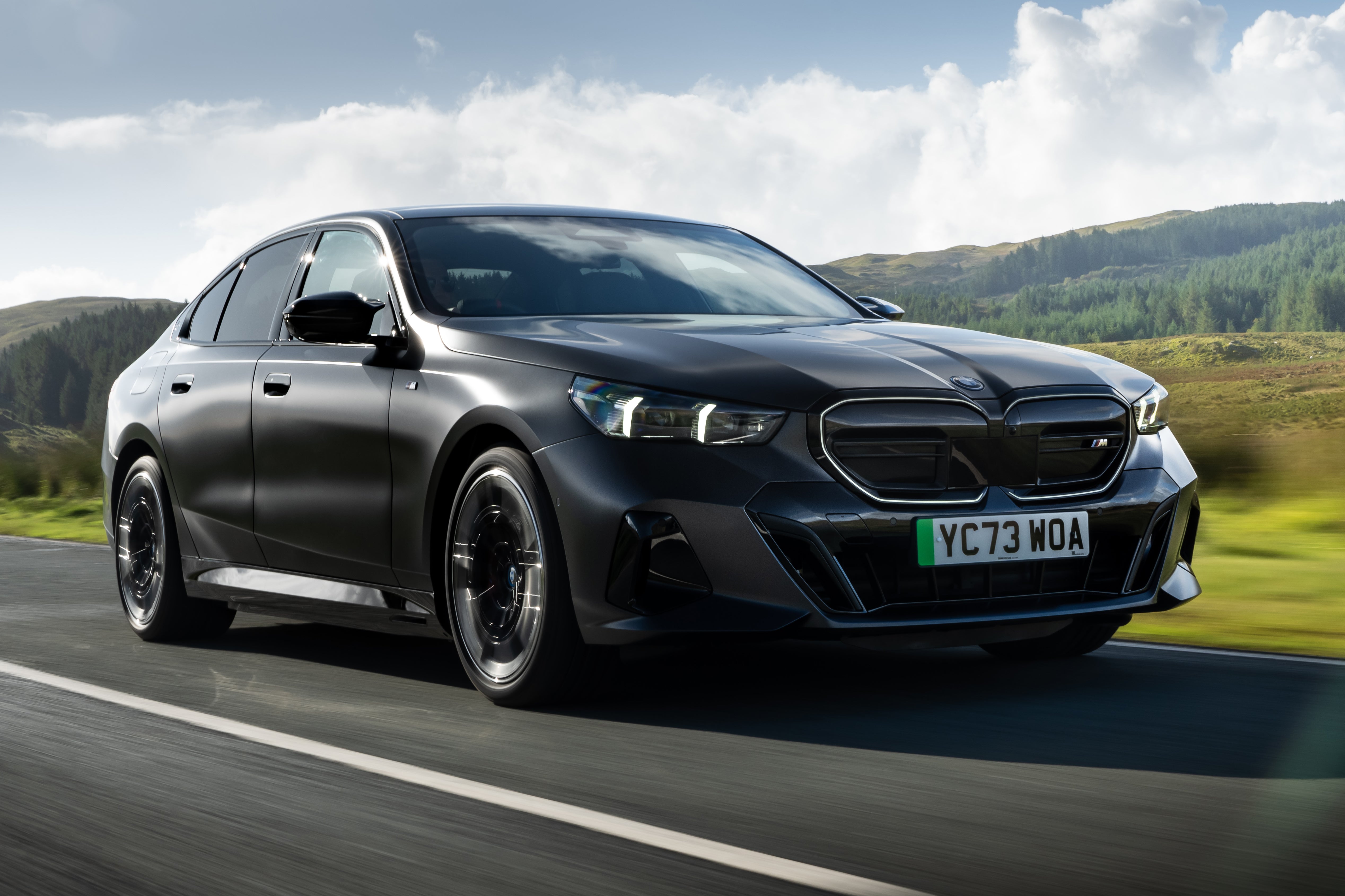
Broadly, it does. The BMW i5 is large, stately and deeply accomplished. It carries its size with an easy confidence and feels expensive in all the ways buyers in this class will care about. It is also very clearly a BMW, in that it still aims for a degree of driver engagement rather than simply isolating you from the road entirely.
That said, the BMW i5 is not trying to be a four-door sports car. Its main job is to make high-speed, high-mileage electric motoring feel easy, polished and reassuring. In that respect it is an impressive success. The standard rear-wheel-drive BMW i5 eDrive40 already has more than enough pace, and its official range is strong enough that it should not trigger range anxiety in the way earlier executive EVs often did.
The result is a car that feels mature rather than experimental. That matters in this market, because executive-car buyers tend to be less interested in electric novelty for its own sake and more interested in whether a car fits into their working and personal lives without fuss.
The BMW i5’s core appeal is that it mostly does exactly that.
What's the best Bmw I5 trim and battery option?
For most buyers, the best BMW i5 is the BMW i5 eDrive40 in M Sport trim.
The BMW i5 eDrive40 is the heart of the range. It gives you 340PS, rear-wheel drive and all the pace most executive-car buyers could reasonably want, while also delivering the strongest range figures in the line-up. It is quick enough to feel properly premium and properly modern, but it does not ask you to swallow the huge price and range sacrifice that comes with the BMW i5 M60 xDrive.
As for trim, BMW has broadened the range beyond the original M Sport-only launch position. Sport Edition is now the entry point, followed by M Sport and M Sport Pro, while the BMW i5 M60 xDrive sits above them as the performance flagship.
Sport Edition makes a lot of sense if comfort is your priority. It has a softer setup than the sportier-looking models and still comes with plenty of luxury kit. But M Sport is likely to be the sweet spot for most private buyers because it gives the BMW i5 the sharper visual edge buyers in this segment often expect without piling on quite as much cost as M Sport Pro or M60.
The BMW i5 M60 xDrive is undeniably impressive, but it is a difficult car to justify rationally unless you simply want the most powerful BMW i5 available.
In simple terms, Sport Edition is the comfort-led one, M Sport is the sweet spot, M Sport Pro is the sharper-looking one and M60 xDrive is the performance flagship.
What’s the price of the Bmw I5?
The BMW i5 saloon currently starts at £67,795 for the BMW i5 eDrive40 Sport Edition. From there, the range rises through the BMW i5 eDrive40 trims before topping out at £97,845 for the BMW i5 M60 xDrive. There are also plenty of used BMW i5s for sale for considerably less.
That still makes the BMW i5 a very expensive executive car, even allowing for the fact that EVs in this class tend not to come cheap. It is positioned exactly where BMW wants it to be: above mainstream alternatives, directly against the Mercedes-Benz EQE and Audi’s larger electric models, and not all that far away from more overtly sporting EVs such as the Porsche Taycan.
The good news is that the BMW i5 mostly feels worth that money once you spend time with it. The bad news is that it no longer benefits from the tax exemptions that once made expensive EVs look a little easier to swallow.
In other words, this is a premium electric saloon with the pricing to match. It is not a bargain. It is just a very polished product.
Alternatives to the Bmw I5
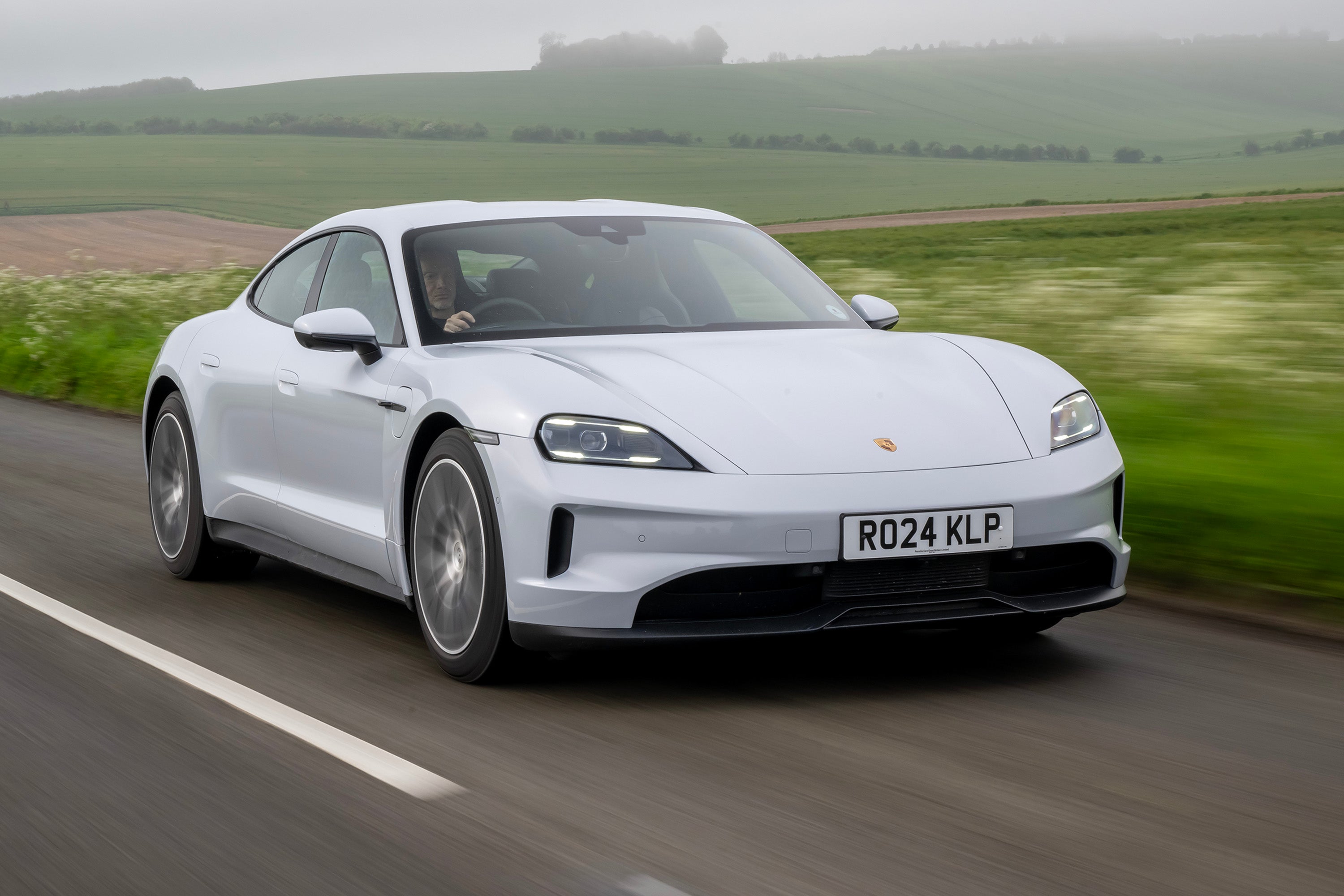
The Porsche Taycan remains one of the BMW i5’s key alternatives if outright driver appeal matters as much as executive-car polish. It feels lower, more focused and more special from behind the wheel, though it is usually less practical and significantly more expensive once specified sensibly.
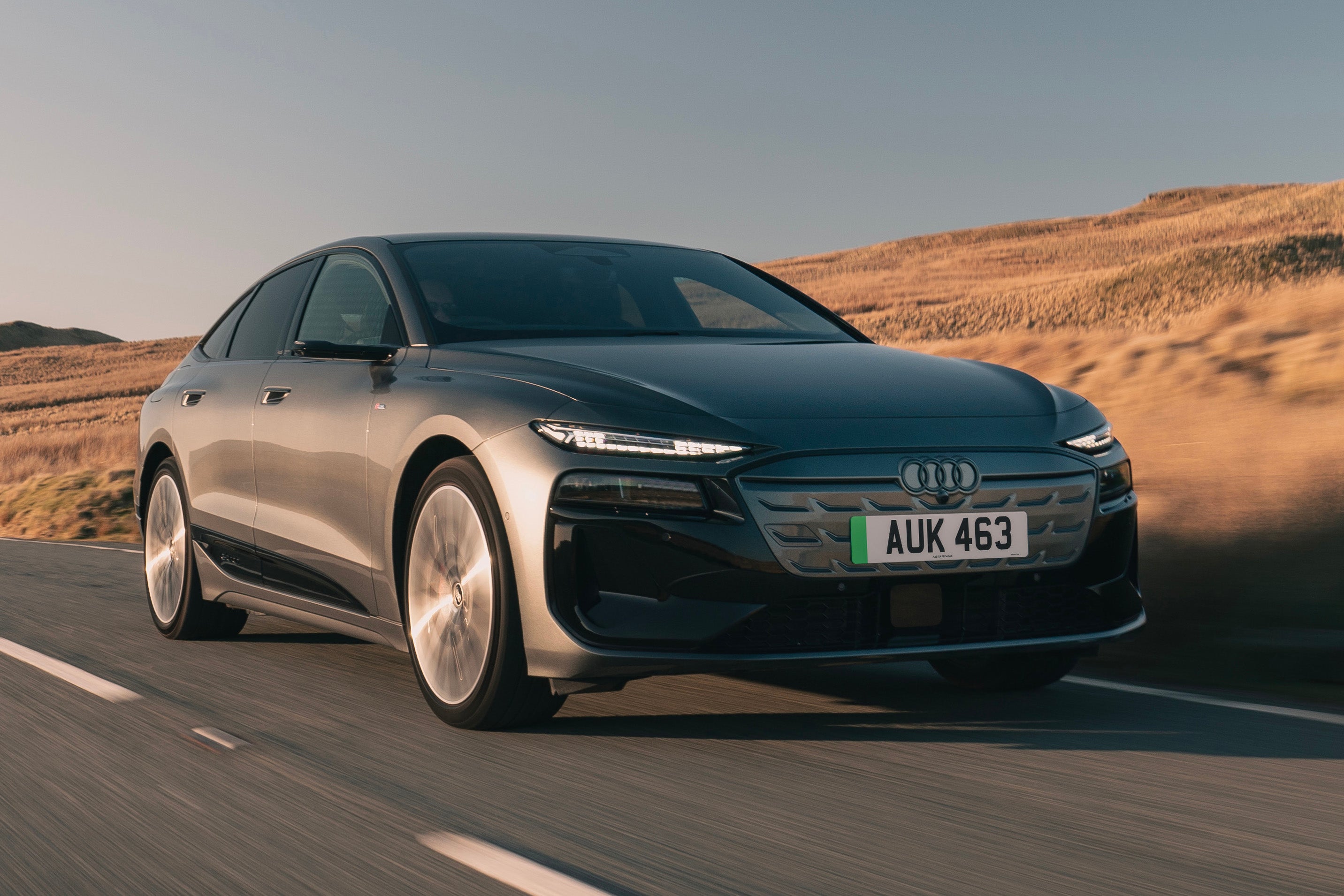
The Audi A6 e-tron is another obvious rival for buyers who want a more contemporary-feeling electric executive car. It promises a strong mix of range, technology and Audi’s usual polish, and is likely to sit high on many BMW i5 shopping lists.
The Mercedes-Benz EQE is still the BMW i5’s clearest traditional rival because it aims at exactly the same buyer. It is highly refined, full of technology and offers strong range, though its rounded styling remains more divisive than the BMW i5’s more conventional shape.
Beyond those three, the Tesla Model S still exists in theory as an electric executive alternative, but it no longer feels like the natural benchmark it once did. The BMW i5 is richer inside, more polished in its manners and more convincing as a premium object
What's the interior like in the Bmw I5?
The cabin is one of the BMW i5’s strongest suits. It feels expensive, modern and genuinely special without tipping too far into gimmickry.
Bmw I5 boot space and practicality
The seats feel straight out of the larger car and are outstandingly comfortable, although the sportier i5 does place you lower than its grander sibling. There’s plenty of adjustment in the seat and steering wheel, and with adjustable bolsters, it has a sporty feel, too.
You sit behind a large, curved screen similar to that in many current BMWs. Here it incorporates a 12.3-inch driver display and a 14.9-inch touchscreen, with further controls including the rotating, crystalline iDrive dial on the broad centre console. It’s ergonomically sound and certainly looks and feels the part.
BMW’s Veganza artificial leather feels just as good as the real stuff, too, with a soft and high-quality finish. Back-seat passengers have it good, too; the long wheelbase of the car means plenty of rear legroom, and taller folks shouldn’t struggle for headroom, either.
Whether in the front or back, the BMW i5 is a spacious car. The 5 Series hasn’t been a cramped car for quite a while now, but in expanding the latest car in every direction, BMW has certainly found more rear legroom, and the dashboard layout seems to make the cabin feel more inviting and airy, even if the actual driving environment is no bigger than before.
Where the i5 loses a little to its predecessor, albeit not by much, is in boot space. The combustion-powered 5 Series gets a 520-litre boot, 10 litres down on the previous car (no doubt a result of that sloping design at the rear), but the i5’s big battery pack reduces that further to 490 litres. Still big, then, but if you’re concerned about losing space for whatever it is you carry, an i5 Touring estate is also available.
Bmw I5 dimensions
The BMW i5 measures 5,060mm long, 1,900mm wide & 1,515mm high.
That makes it a big car in every sense, and you feel that from behind the wheel. The BMW i5 has genuine road presence and a lot of metal around you, though it does not feel unwieldy once you are moving thanks to excellent visibility aids and a well-judged driving position.
The benefit of those dimensions is obvious in the cabin, which feels airy and substantial in a way many smaller EVs do not.
Tech and infotainment in the Bmw I5
All BMW i5s get a large, curved display screen that incorporates both a 12.3-inch display ahead of the driver, and a wide 14.9-inch touchscreen for the infotainment. It looks fantastic, as these wide screens often do, avoiding any “floating iPad” accusations, but it also works well, and comes bundled with Apple CarPlay and Android Auto integration as standard.
It will certainly take an owner a little time to fully decipher everything. Air conditioning controls have permanent shortcuts at the lower edge of the screen and they’re simple enough to deal with, and you can pull down a shortcut menu from the top for commonly-used features. Naturally, you can also spin the iDrive dial on the centre console, with its own shortcut buttons positioned nearby.
There’s just a lot to go through, so it’d be worth experimenting with at a standstill first. If you’re parked, you can also watch YouTube, if you’ve bought the right data package, and the screen’s excellent resolution means it should look pretty good, too. For the driver, the i5’s large head-up display is also top-notch for clarity.
Materials available on the Bmw I5
This is a real highlight of the BMW i5. BMW’s recent models have been class-leading in this area and the i5 is no exception. The interior has the warm, inviting nature you typically get from Mercedes, with the kind of fit and finish accuracy and solidity we’ve come to expect from Audi.
It’s similarly impressive on the outside, too, with one curious exception: reflections in the flat sides betray how the perimeter of each door seems to curve in slightly before the shutline. Audi definitely still has the edge on precision panelwork, it seems.
What's the Bmw I5 like to drive?
The BMW 5-series has always struck an impressive balance between ride and handling, and with an all-new platform and electric power, that hasn’t changed here. With one or two exceptions, it’s very impressive in every area you’d expect of an executive saloon, with a sporty and dynamic focus.
Bmw I5 range and performance
BMW keeps things simple with the i5 lineup. There’s a single 83.9kWh battery pack, with 81.2kWh of usable capacity. There’s a little more variety in the motors. Both the eDrive40 and the M60 xDrive get a 340PS electric motor on the rear axle, but the M60 adds a 261PS motor for the front wheels, too. That gets you a combined 601PS in total, and of course, all-wheel drive.
The single-motor eDrive40 finds excellent traction (helped by sophisticated electronics to minimise wheel spin) to accelerate from 0-62mph in 6.0 seconds, while top speed is capped at 120mph, presumably to preserve range even on derestricted German autobahns. The M60 is quicker still, with a supercar-style 0-62mph of 3.8 seconds, and a raised 142mph limiter.
The M60 really throws you back in your seat under hard acceleration (and gets even quicker with a tug of the Boost paddle behind the steering wheel) but even the eDrive40 is still very brisk. Thankfully, the brakes are up to the task of slowing them both down again, with a relatively firm pedal action that does a good job of hiding the fact that the braking system is mostly slowing you down with the motor’s regenerative effect, at least initially.
With one battery size and two different power outputs, it’s the less powerful of the two BMW i5s that naturally goes a little further on a charge. The i5 eDrive40 has a WLTP-rated range of 354 miles, while its more powerful M60 counterpart can do only 315 miles in comparison. We’d expect real-world range to be a touch lower: BMW claims efficiency of 3.8 miles per kilowatt hour for the eDrive40 and 3.4 mi/kWh for the M60, figures that heavier-footed drivers may struggle to attain.
The i5’s regenerative braking is quite effective, but does vary according to where the car thinks it should be deployed: it’ll tend to coast on a motorway, but if a slower speed limit is coming up, or the car detects other traffic in front, it’ll deploy more regeneration to slow you down for it.
Performance data
| Model | Engine/battery size | Power | 0-62mph | Range/MPG |
|---|---|---|---|---|
eDrive40 | 81.2kWh usable | 340PS | 6.0 seconds | Up to 356 miles |
M60 xDrive | 81.2kWh usable | 601PS | 3.8 seconds | Up to 315 miles |
Bmw I5 driving and refinement
The BMW i5 does a very good job of disguising its size and weight. It turns in positively, grips strongly and feels more agile than a 2.2-tonne electric saloon really has any right to.
There is also a pleasing consistency to the way the BMW i5 behaves. It does not feel like a car that is constantly trying to remind you how much performance it has in reserve. Instead, it flows down the road with a calm, well-controlled feel that suits its executive brief very well.
The steering is accurate and direct, but there is not a huge amount of feel coming back through the wheel. That means the BMW i5 is satisfying to guide quickly, though not quite as communicative as the best BMWs of old.
What impresses more is the way the BMW i5 keeps its body under control. Direction changes are tidy, traction is strong and the car resists the sense of bulk that can afflict big electric saloons. Even brisk roundabout transitions and quick lane changes are handled with confidence.
Ride comfort is strong overall. Even M Sport versions with larger wheels do a respectable job of filtering out the worst road imperfections, and the car’s body control is impressive. The softer Sport Edition trim may prove to be the one to have for buyers who prioritise comfort above all else.
The BMW i5 also has a very polished braking setup for an EV. The pedal feels more natural than in a lot of regenerative systems, and BMW has done a good job of making the transition between regen and friction braking feel intuitive.
Refinement is another major strength. The BMW i5 is very quiet at a cruise, with low wind noise, little tyre roar and only occasional suspension thuds over rougher sections of road. That gives it the sort of relaxed long-distance character an executive EV really needs.
If there is a weakness here, it is simply that the BMW i5 never feels as playfully interactive as the badge and drivetrain layout might lead some enthusiasts to hope. It is more of a very polished high-speed GT than a sports saloon in EV form. For most buyers, that will be exactly the right balance.
How safe is the Bmw I5?
The BMW i5, as part of the latest BMW 5 Series range, earned a full five-star Euro NCAP rating in 2023.
That is backed up by a generous standard equipment list and BMW’s usual spread of modern assistance systems. Adult occupant protection was rated at 89%, child occupant protection at 85% and vulnerable road user protection at 86%.
In other words, the BMW i5 looks reassuringly strong here, even if some of the more advanced assistance packages remain costly options.
Running costs: What it's like to live with a Bmw I5
Running costs are reasonable by expensive EV standards, but the days of large electric saloons feeling lightly taxed and cheap to keep are over.
Bmw I5 charging times and costs
The official WLTP range is up to 356 miles for the BMW i5 eDrive40 and up to 315 miles for the BMW i5 M60 xDrive.
Those are strong figures for a car of this size and performance, and they make the BMW i5 feel genuinely usable as a long-distance EV rather than simply a high-end commuter car.
Charging performance is strong too. Both versions support DC charging at up to 205kW, which allows a 10-80% charge in around 30 minutes under ideal conditions. BMW also quotes a useful range gain in just 10 minutes at a high-power charger.
AC charging is 11kW as standard, with 22kW support available in some cases. That gives the BMW i5 a very convincing charging story overall.
Bmw I5 warranty and servicing
BMW provides a three-year unlimited-mileage warranty on its electric cars. The high-voltage battery is covered for eight years or 100,000 miles, whichever comes first, including protection against excessive capacity loss.
BMW’s servicing approach is less about a fixed old-school interval and more about condition-based monitoring and service plans. For EVs, BMW Service Inclusive covers the service vehicle check, microfilter and brake fluid up to the car’s fifth birthday with no mileage restriction.
That means the BMW i5 should be relatively straightforward to maintain, even if routine BMW dealer care is unlikely to be especially cheap outside service-plan cover.
Bmw I5 insurance groups
Insurance groups are high, as you would expect. The BMW i5 eDrive40 sits in group 43, while the BMW i5 M60 xDrive is group 49.
That means no version of the BMW i5 will be cheap to insure, and buyers should budget accordingly.
How much does it cost to tax a Bmw I5?
The BMW i5 now pays the standard annual VED rate after year one, which is £200 for zero-emission cars.
Because the BMW i5’s list price is well above the £50,000 threshold that now applies to electric cars, it also attracts the Expensive Car Supplement. Under the current 2026 rates, that adds £440 a year in years two to six, taking the total annual VED bill to £640 during that period.
That is a meaningful ownership cost and one buyers should not ignore.
What trims are available with the Bmw I5?
The BMW i5 saloon line-up consists of Sport Edition, M Sport, M Sport Pro and M60 xDrive.
Sport Edition is the comfort-led entry point. It sacrifices some of the visual aggression of the sportier cars, but it still gets plenty of luxury kit and may well be the better choice for buyers who prioritise ride comfort.
M Sport is likely to be the volume seller. It adds the sharper styling, sport seats, larger wheels and the stronger visual identity most BMW buyers in this class will expect.
M Sport Pro adds extra visual drama and equipment, including BMW’s illuminated grille treatment and additional styling details.
M60 xDrive sits at the top as the performance flagship, bringing the extra motor, huge power output, more focused chassis hardware and a richer standard specification.
In simple terms, Sport Edition is the comfort one, M Sport is the sweet spot, M Sport Pro is the sharper-looking one and M60 xDrive is the fast one.
Ask the Drive experts: common questions
Is the BMW i5 a good electric executive car?
Which BMW i5 is best?
What is the range of the BMW i5?
Does the BMW i5 get the Expensive Car Supplement?
Get our latest advice, news and offers
Keep me updated by email with the latest advice, news and offers from Drive.
.jpg)