Mercedes-Benz B-Class Review

Written By Andrew Brady
- 2019
- MPV
- Petrol mild hybrid, diesel
What we love
Spacious, family-friendly cabin
More practical than most compact SUVs
Excellent infotainment and smart interior design
Things to consider
Looks sensible rather than desirable
No seven-seat option
Some rivals ride more softly
The DRIVE take on the Mercedes-Benz B Class, is it the right car for you?
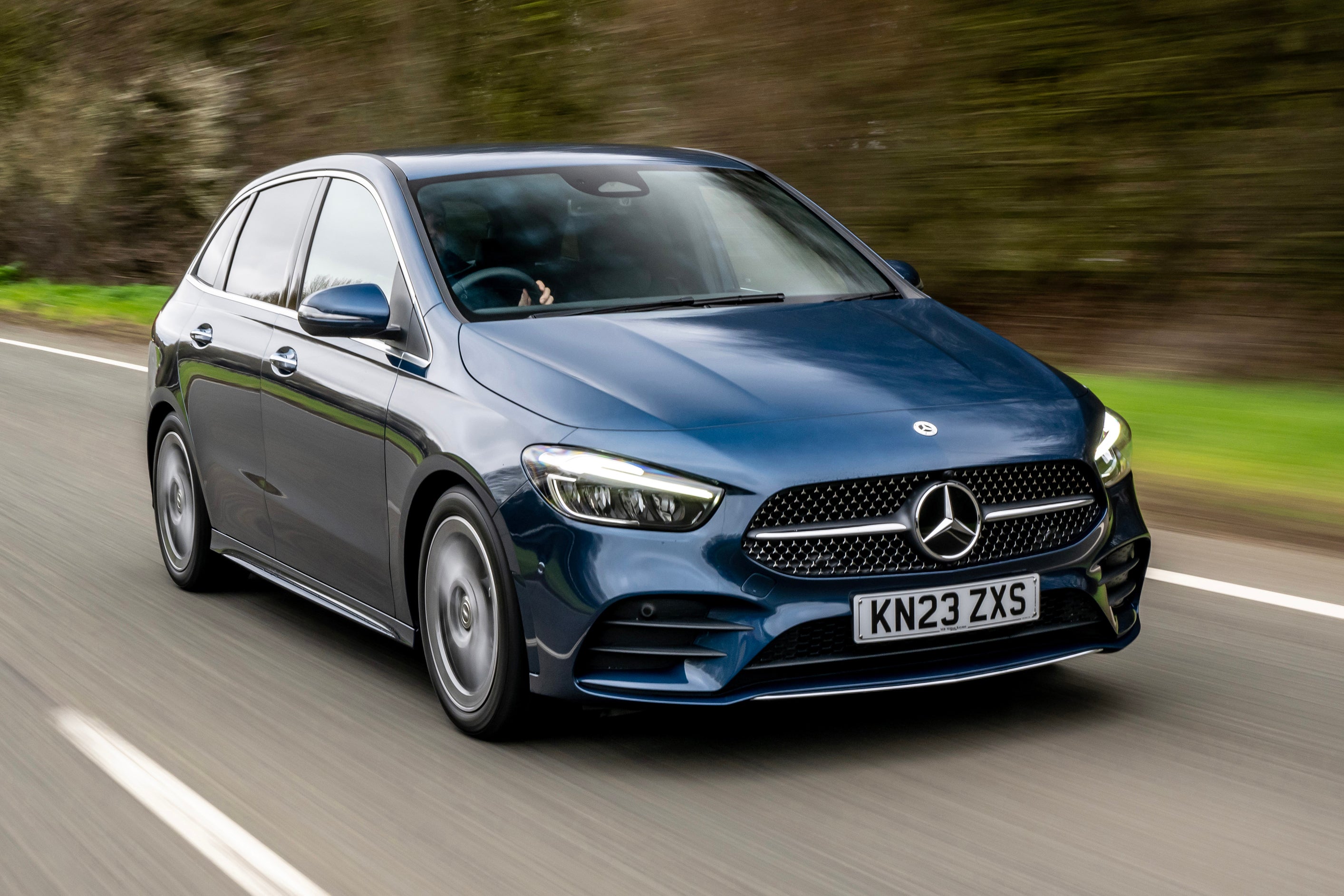
The Mercedes-Benz B-Class is one of the few cars left that still takes the compact MPV brief seriously, and that is exactly why it makes so much sense. It gives you more usable cabin space than most similarly sized hatchbacks and SUVs, along with easy access, a big boot and a genuinely family-friendly rear cabin. It is not especially exciting to look at and it will not tempt buyers who want SUV image, but if your priorities are comfort, practicality and premium feel, the B-Class remains a very smart choice. It is particularly easy to recommend to buyers who have outgrown an A-Class or want more space than a GLA can offer without moving to a much larger car.
The Mercedes-Benz B Class in more detail
The compact MPV is no longer fashionable. SUVs have taken over as the default family car, and most brands have quietly walked away from tall five-seat people carriers in the process. The Mercedes-Benz B-Class is one of the few hold-outs, and that alone gives it a clear purpose.
Its job is straightforward. The B-Class is designed to carry five people and their luggage in comfort while taking up no more road space than necessary. In a market full of cars trying to look adventurous, sporty or coupe-like, the Mercedes takes the less glamorous but often more useful route. It prioritises headroom, access, rear-seat comfort and boot space instead.
This third-generation car is closely related to the A-Class underneath, which is good news. It borrows the same broad design language, much of the same technology and the same overall sense of polish, but wraps it all in a taller, boxier body that is simply easier to live with. The raised seating position helps visibility and makes getting in and out less of a drop-and-climb exercise than it is in a conventional hatchback. Families, older buyers and anyone regularly loading children into the back will notice the benefit straight away.
The current line-up is simpler than it once was. Earlier in its life the B-Class was offered with a wider spread of petrol, diesel and plug-in hybrid engines, but the current UK range has been reduced to two. There is the B 200 petrol mild hybrid and the B 200 d diesel, both front-wheel drive and both automatic. That may sound limiting, but in reality it covers the main use cases well. The petrol makes sense for lower-mileage drivers and town use, while the diesel is the stronger long-distance family car.
On the move, the B-Class feels reassuringly solid and easy to drive. It is not sporty and does not pretend to be, but it is settled on the motorway, tidy enough through bends and more comfortable than the equivalent A-Class. Buyers who want something fun to drive are looking in the wrong showroom section. Buyers who want calm, capable and roomy transport will understand it immediately.
The B-Class also still makes a strong case against the premium SUV alternatives that now dominate this part of the market. A GLA may look more fashionable, but the B-Class uses its space more honestly. It is the better family tool, and for plenty of buyers that will matter more than image.
What's the best Mercedes-Benz B Class trim and engine option?
The sweet spot of the range is the B 200 d Sport Executive. That might not be the flashiest version, but it is the one that best suits the car’s character. The 152PS diesel has enough shove to make the B-Class feel effortless with a family on board, and the official 55.4mpg figure gives it a clear running-cost advantage if you do regular long trips. It is also the version that stays closest to the B-Class brief, combining strong economy with the more comfort-focused Sport Executive trim.
That trim matters because Sport Executive sits on 17-inch wheels rather than the larger AMG Line rims, and in a car like this the smaller wheels are no bad thing. They help ride comfort, they look less try-hard and they keep you safely below the £40,000 Expensive Car Supplement threshold. You still get plenty of equipment, including the twin 10.25-inch screens, heated seats, keyless entry, climate control, sat-nav and a powered tailgate, so it never feels basic.
If you mainly do shorter trips and spend more time around town, the B 200 petrol is the easier recommendation. It is quieter at low speeds, still reasonably economical and also available in the same sensible Sport Executive trim. Either way, the best B-Class is the one that leans into what the car does best rather than trying to make it feel sportier than it really is.
What’s the price of the Mercedes-Benz B Class?
The current Mercedes-Benz B-Class range starts at £36,235 for the B 200 Sport Executive and rises to £44,590 for the B 200 d AMG Line Premium Plus. That gives it a relatively broad spread for what is now quite a niche family car, but the logic is straightforward. At the lower end, the B-Class is a roomy premium alternative to mainstream family hatchbacks and smaller SUVs. At the upper end, it starts to edge into the sort of money that makes you think harder about whether you really need all the extra trim and equipment.
The most convincing cars sit near the bottom of the range. Both Sport Executive versions come in comfortably below the current £40,000 threshold for the Expensive Car Supplement, which makes them easier to recommend than some of the AMG Line Premium and Premium Plus models. Once you push into the low-£40,000s, the B-Class starts to look costly for something that is, at heart, a practical five-seat people carrier.
Mercedes does make a decent case for the extra money with the richer infotainment, stronger interior ambience and useful family-friendly kit. It just pays to be selective. The B-Class is a sensible car, and the most sensible versions are the ones that stack up best financially as well.
Alternatives to the Mercedes-Benz B Class
The closest rival is the BMW 2 Series Active Tourer. Like the B-Class, it is a premium-branded compact MPV in all but name, and it offers the same broad promise of raised seating, a roomy cabin and family practicality in a relatively compact package. The BMW is a bit more polished to drive and arguably looks fresher inside and out, but the Mercedes counters with a more distinctive infotainment system and an even clearer focus on comfort and ease of use.
If you are tempted by an SUV instead, the obvious in-house alternative is the Mercedes-Benz GLA. It gives you the more fashionable look many buyers want, but it is not as usefully packaged as the B-Class. The B feels more honest about its purpose and makes better use of its footprint.
The GLB is worth a look if you need more space again, especially as it offers a seven-seat option that the B-Class cannot match. The trade-off is size and cost, because it feels like a step up into a more substantial car rather than a direct alternative.
Outside the premium brands, there are van-based MPVs and a shrinking number of mainstream family cars trying to cover similar ground, but very few deliver the same blend of premium badge appeal, compact exterior size and proper family usability. That is what keeps the B-Class relevant.
What's the interior like in the Mercedes-Benz B Class?
The Mercedes-Benz B-Class may look conservative on the outside, but the interior is one of the car’s strongest selling points. It feels modern, airy and thoughtfully designed, with more visual interest than you might expect from such a practical family car.
Mercedes-Benz B Class boot space and practicality
Space is the reason the B-Class exists, and it does not disappoint. You notice the difference as soon as you climb in. The front seats are positioned higher than in an A-Class, which gives you an easier step-in, a better view out and a more relaxed seating position. There is plenty of room to stretch out up front, and the tall roofline gives the cabin a light, airy feel that many family SUVs still do not match.
The rear seats are even more impressive. There is noticeably more headroom and legroom than you get in a conventional family hatchback, and the raised bench makes the back seats feel more welcoming than the usual knees-up arrangement. Teenagers and taller adults will appreciate the extra support and the easier access. The middle rear seat is still the least comfortable spot, as it always is in a five-seater, but the B-Class is wide and tall enough that a fifth passenger does not feel especially short-changed.
Boot space is excellent for the size of the car. Petrol versions have 455 litres with the seats in place, while the diesel offers 445 litres. Either way, that is enough to make the B-Class more useful than most compact SUVs and many family hatchbacks. Fold the rear seats and capacity rises to 1,540 litres in the petrol and 1,530 litres in the diesel. The rear bench splits 40:20:40, which adds useful versatility when carrying a mix of passengers and longer items.
All of that means the B-Class does exactly what a compact MPV should. It gives you more cabin and luggage flexibility than a hatchback without forcing you into something bulky outside. For many families, that is the sweet spot.
Mercedes-Benz B Class dimensions
The Mercedes-Benz B-Class measures 4,419mm long, 1,796mm wide and 1,562mm high. That makes it compact enough to manage easily in town and in car parks, yet tall enough to free up the cabin space that defines the car.
It is closely related to the A-Class, and its length and width are very similar, but the extra height transforms the interior. In many situations, it uses its footprint more effectively than a regular hatchback and more effectively than an equivalently sized SUV as well.
Tech and infotainment in the Mercedes-Benz B Class
The B-Class has one of the most appealing tech setups in this part of the market. The twin-screen dashboard still looks smart and upmarket, and since the 2022 facelift both 10.25-inch displays are standard across the range. That gives even the lower-spec cars a strong sense of modernity.
Mercedes’ MBUX infotainment system remains one of the better systems around once you get used to it. The graphics are clear, the layout is slick and the voice control is more useful than most. The augmented-reality navigation available higher up the range is not just a party piece either. In busy junctions and unfamiliar places it genuinely helps you pick the right turn.
Wireless phone charging is now standard, and Apple CarPlay and Android Auto are included. There is enough configurability in the digital instrument display to keep keener owners happy, but the basics are straightforward enough for family buyers who simply want it to work.
The only caveat is that there is quite a lot going on at first glance. The B-Class is not difficult to use once familiar, but it is more tech-heavy than some simpler mainstream alternatives. For most buyers, the premium feel will make that worthwhile.
Materials available on the Mercedes-Benz B Class
One of the B-Class’s strengths is that it does not feel like a compromise car inside. Mercedes has not treated it as the dull practical one in the range. Even the lower trims get ARTICO man-made leather upholstery, heated front seats and a cabin design that feels properly premium.
Sport Executive cars look neat and restrained, while AMG Line versions add more visual drama with sports seats, AMG detailing and larger wheels outside. Premium and Premium Plus versions build on that with richer lighting, extra tech and a more upmarket feel.
Material quality is strong overall. The soft-touch areas and metal-effect details do a good job of justifying the badge, and the full-width display gives the dashboard a more expensive appearance than many direct rivals. The main caveat is that some examples can develop the odd creak over bumps, which slightly chips away at the impression of solidity. Overall, though, the B-Class still feels more premium than most compact family cars.
What's the Mercedes-Benz B Class like to drive?
The B-Class drives exactly as a car like this should. It is calm, predictable and confidence-inspiring, prioritising comfort and security over excitement. That suits the brief perfectly.
Mercedes-Benz B Class range and performance
The current UK B-Class range has been simplified to two engines. The B 200 uses a 1.3-litre four-cylinder petrol mild hybrid with 179PS, while the B 200 d uses a 2.0-litre four-cylinder diesel with 152PS. Both drive the front wheels, and both are automatic.
The petrol manages 0-62mph in 8.0 seconds, which is more than enough for the job. It feels brisk rather than quick, and it suits buyers who mainly use the car for mixed family duties, town driving and shorter runs. The diesel is fractionally slower on paper at 8.1 seconds, but its extra torque makes it feel more effortless when fully loaded or cruising long distances.
Neither engine turns the B-Class into something genuinely quick, but that is not the point. What matters is that both are strong enough to stop the car feeling strained, and both fit the B-Class’s relaxed, grown-up character well.
Performance data
| Model | Engine/battery size | Power | 0-62mph | Range/MPG |
|---|---|---|---|---|
B 200 | 1.3-litre | 179PS | 8.0 seconds | Up to 46.4mpg |
B 200 d | 2.0-litre | 152PS | 8.1 seconds | Up to 55.4mpg |
Mercedes-Benz B Class driving and refinement
Despite its tall body, the B-Class does not feel awkward or cumbersome on the move. Body control is tidy enough, steering is light and accurate, and it feels secure rather than soft or floaty. You are unlikely to be pressing on particularly hard in a B-Class, but when the road gets twisty it stays composed and predictable.
Ride comfort is one of its main strengths. Mercedes has softened it off compared with the A-Class, and the result is a more compliant, more family-friendly setup. It is not as pillowy as some old-school MPVs or French comfort specialists, but it deals with poor surfaces well and settles down nicely on longer journeys. Sport Executive cars are the best of the bunch here, because the smaller wheels help them breathe with the road a little better than the AMG Line versions.
Refinement is good without being exceptional. At motorway speeds the B-Class feels stable and relaxed, and wind noise is kept under control by the smooth, slippery shape. Road noise is generally well managed too, although bigger-wheel AMG Line cars are not quite as hushed as the Sport.
The engines are not the quietest when extended, and under hard acceleration you hear more from them than you do in some rivals. In normal family use, though, both settle down well, and the automatic gearboxes help keep everything smooth and unobtrusive. The diesel in particular feels well suited to the car’s easy-going, long-distance nature.
How safe is the Mercedes-Benz B Class?
The B-Class comes with a healthy level of safety kit, including autonomous emergency braking, lane-keeping assistance, attention assist, speed limit assist and multiple airbags. Parking support is also strong, especially once you move above the entry trim.
The B-Class achieved a five-star Euro NCAP safety rating when it was tested in 2019, with strong results for adult and child occupant protection. As with many cars of this era, that rating is now officially marked expired because Euro NCAP’s testing standards have moved on. Even so, the underlying result was strong, and the B-Class remains well equipped with the sort of driver-assistance systems family buyers will want.
Running costs: What it's like to live with a Mercedes-Benz B Class
The B-Class should be cheaper to run than an equivalent premium SUV, and that remains one of its strongest practical arguments. It is not a bargain-basement family car, but it is reasonably efficient and more financially sensible than the badge might suggest if you choose carefully.
Mercedes-Benz B Class fuel economy
The diesel is the economy champion. Depending on trim, the B 200 d returns 51.4 to 55.4mpg officially, which is very respectable for a roomy family car with an automatic gearbox. If you do regular motorway miles or longer family trips, it makes a lot of sense.
The B 200 petrol is not bad either, returning 43.5 to 46.4mpg depending on trim. That is enough to keep it competitive for lower-mileage drivers and those who want something quieter and simpler around town.
Real-world figures will always depend on how and where you drive. Even so, the B-Class’s slippery shape and modest weight help both engines deliver decent efficiency, and both should use less fuel than an equivalent premium SUV.
Mercedes-Benz B Class warranty and servicing
Mercedes provides a three-year new-car warranty, along with a three-year paintwork warranty and 30 years of anti-corrosion cover. That is a respectable package rather than a class-leading one, but it is in line with what many premium brands still offer.
The first service is normally due after one year or 15,500 miles, whichever comes first. After that, the car follows Mercedes’ usual service schedule. For family buyers doing modest mileage, that should make running the B-Class straightforward, though routine dealer servicing is unlikely to be especially cheap by mainstream standards.
Mercedes-Benz B Class insurance groups
The current B-Class range sits in insurance group 23, regardless of whether you choose the B 200 petrol or B 200 d diesel. That is not extreme by premium-car standards, but it is high enough to be worth factoring into your budget if you are moving up from a mainstream family hatchback.
The good news is that the latest line-up is simpler than the old wider B-Class range, and there are no unexpectedly costly performance derivatives to trip over. Still, it is a Mercedes, so sensible quote shopping remains important.
How much does it cost to tax a Mercedes-Benz B Class?
For 2026 to 2027, the standard annual VED rate after the first year is £200 for petrol and diesel cars like the B-Class. The bigger question is whether your chosen car falls above the £40,000 Expensive Car Supplement threshold.
The good news is that both Sport Executive models sit below that line, so they avoid the surcharge. Some AMG Line Premium and Premium Plus versions do not. If the car’s list price when new is above £40,000, you will pay an extra £440 a year for five years from the start of the second licence. That can make a noticeable difference to the ownership costs of higher-spec cars.
What trims are available with the Mercedes-Benz B Class?
The current B-Class range is built around four trim levels: Sport Executive, AMG Line Executive, AMG Line Premium and AMG Line Premium Plus.
Sport Executive is the sensible starting point and, for many buyers, the best choice. Standard equipment includes twin 10.25-inch displays, heated front seats, ARTICO upholstery, climate control, a powered tailgate, privacy glass, keyless entry comfort package, sat-nav, a parking package with 180-degree camera and 17-inch alloy wheels. It already feels generously equipped, which is why it is so easy to recommend.
AMG Line Executive adds the sportier visual treatment. That means AMG body styling, larger wheels, sports seats and a more assertive look inside and out. It is the version for buyers who want the B-Class to feel a bit less overtly sensible, although the lower Sport trim still suits the car’s comfort-first character better.
AMG Line Premium builds on that with more luxury-focused features, including a better sound system, ambient lighting and a richer digital setup. It is a more indulgent version of the same basic idea, though by this point you are getting close to the price where the B-Class starts to look expensive for what it is.
AMG Line Premium Plus sits at the top and throws everything at it. MULTIBEAM LED headlamps, panoramic roof, 360-degree camera, head-up display, augmented-reality navigation, upgraded audio and 19-inch wheels all feature. It is undeniably impressive, but it is also the point where the B-Class risks wandering away from its strongest value argument. For most buyers, Sport Executive or AMG Line Executive will make more sense.
Ask the Drive experts: common questions
Is the Mercedes-Benz B-Class an SUV?
What is the difference between the Mercedes-Benz A-Class and B-Class?
Does the Mercedes-Benz B-Class have seven seats?
Is the Mercedes-Benz B-Class a good family car?
Get our latest advice, news and offers
Keep me updated by email with the latest advice, news and offers from Drive.
.jpg)
.jpg)
.jpg)