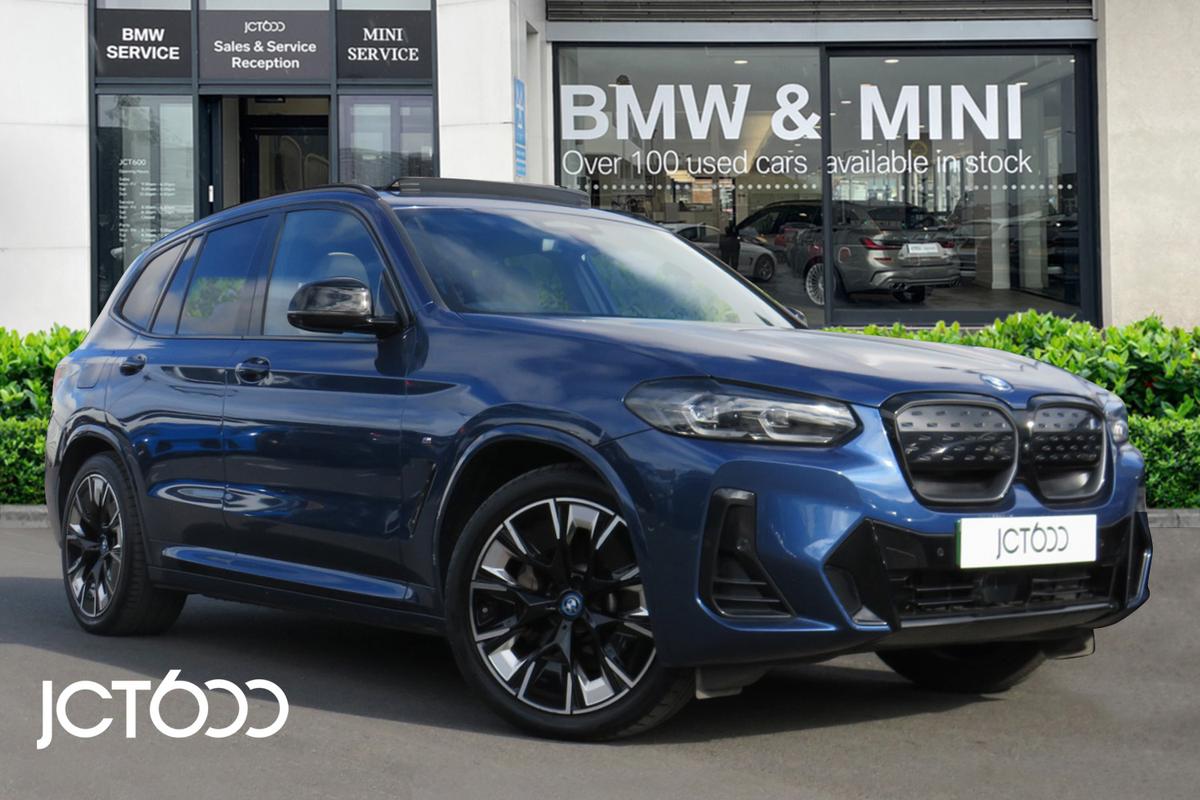
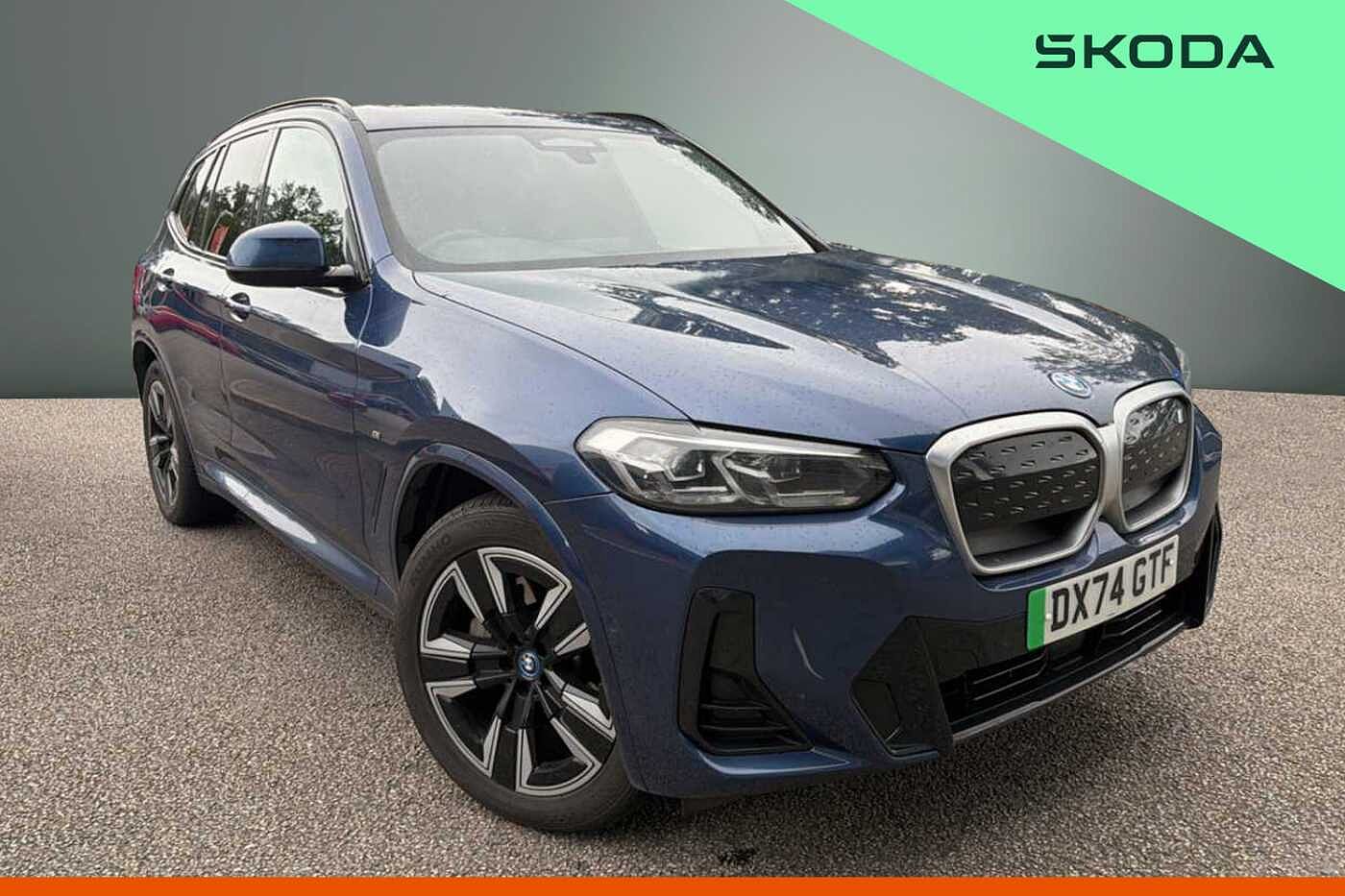
Used BMW iX3 for sale: everything you need to know
The BMW X3 has been a mainstay of the maker’s range for more than two decades now, with the first model making its debut in 2003. But the latest X3 is the first to include an all-electric model, the iX3, which has been around since 2021 and slots between the smaller iX1 and larger iX in BMW’s electric SUV lineup.
Unsurprisingly its below-the-radar styling and useful range, plus the appeal of the BMW badge, are making it quite popular, which is good for used car buyers too as iX3s are already becoming a familiar sight on the market. A simple range structure makes choosing the right iX3 pretty easy too.
The iX3 is BMW’s alternative to cars like the Audi Q8 e-Tron, Mercedes-Benz EQC, and Jaguar I-Pace, though unusually among recent BMWs the iX3 might be the most conventional of these premium models in terms of styling and cabin design. The Tesla Model Y can’t be ignored either.
Should you buy a BMW iX3?
The BMW X3 has been incredibly popular for the brand since its debut in 2003, and it’s no surprise that it’s one of the first models BMW chose to convert to electric power as it slowly works towards an all-electric range. The iX3 is just as accomplished an all-rounder as its combustion sibling, breaking very little new ground but doing everything to a very high standard.
In terms of styling it’s been made to look a little old-hat inside and out by more recent BMWs and more recent BMW electric vehicles too, but the X3’s now fairly straight-laced styling may be a positive for some buyers. The cabin doesn’t have the huge curved screens of the latest BMWs but again, its conventional layout will be more familiar to most drivers - and build quality and ergonomics are both excellent.
The iX3 is spacious too, with good leg and headroom front and back and a boot that’s actually a touch larger than the bigger BMW iX SUV. The fact the iX3 has a slightly older generation of touchscreen hardly matters either, as it’s quick and intuitive to use - and there are still tactile physical buttons for many interior functions.
On the road the iX3 is brisk but not as quick as some rivals, and unusually for the class, BMW hasn’t offered an all-wheel drive model. It handles well though, and the ride quality is acceptable provided you resist using Sport mode on the adaptive suspension, which can feel quite harsh.
Alternatives to the iX3 include the Audi e-Tron, Mercedes-Benz EQC, and Jaguar I-Pace, while the Tesla Model Y, despite lacking the image of these more storied brand, is still a great product in its own right. If your budget can stretch then a used BMW iX is also worth a look, provided you can also live with its styling.
A BMW iX3 not for you? We've got 1000s of used cars for sale to suit all budgets and needs
What’s the best used BMW iX3 model to buy?
With only one powertrain and a couple of trim levels there’s not much choosing you can do here, so we’d say buy whatever iX3 you like the look of and best suits your budget. Opting for higher trim levels gives you a few extra items of equipment but doesn’t fundamentally change the experience.
Used BMW iX3 range and performance
BMW iX3: The iX3’s sole drivetrain option is a single motor, rear-wheel drive model making 286PS for a 6.8-second 0-62mph time. The car’s battery pack has 74.3kWh of usable capacity, for 290-292 miles of range. With up to 150kW DC fast charging, BMW also says it’ll top up from 10-80% in around half an hour.
What used BMW iX3 trim levels are available?
As the iX3 is itself a derivative of the BMW X3, it’s no surprise to find that BMW only offers a couple of trim lines, and both are quite similar in terms of their basic equipment. M Sport trim is the default, while M Sport Pro adds a handful of extra mainly visual features for its extra outlay.
The BMW iX3 M Sport comes with a set of 19-inch alloy wheels, an M body kit, shadowline exterior trim, leather seats, an M steering wheel, adaptive LED headlights and LED tail lights, an automatic tailgate, panoramic glass sunroof, three-zone climate control, adaptive suspension, and a heat pump.
The BMW iX3 M Sport Pro upgrades to 20-inch alloys, even more high-gloss black exterior trim, M sport seat belts, blue stitching for the black leather trim, plus all the equipment found on the M Sport.
Used BMW iX3 dimensions and boot size
The BMW iX3’s dimensions are:
The BMW iX3’s boot size is:
Used BMW iX3 road tax
The original BMW iX3 has a useful advantage over many newer electric SUVs when it comes to road tax. Although electric cars have been subject to Vehicle Excise Duty (VED) since April 2025, all examples of the first-generation iX3 were registered before that date.
That means you'll pay £200 a year to tax one, without worrying about the expensive-car supplement, despite the iX3 costing well over £40,000 when new.
The newer-generation iX3 is a different story. Models registered from April 2025 with an original list price exceeding £50,000 attract an additional £440 a year during the second to sixth years of registration, bringing the annual bill to £640.
Our guide to car road tax explains how the rules for electric vehicles have changed.
How much is it to insure a BMW iX3?
With only a couple of iX3 variants there’s only a small spread of insurance group ratings, with all models falling between groups 44 and 45. This is towards the upper end of the 50 group scale, but naturally a little less than the larger and more powerful BMW iX, as well as being less than group 50 rivals like the Mercedes-Benz EQC.
Read our full BMW iX3 review