BMW iX3 Review

Written By Matt Robinson
- 2026
- SUV
- Electric
What we love
Exceptional electric range
Comfortable and rewarding to drive
Outstanding rapid-charging performance
Things to consider
Too few physical controls
Options can become expensive
Some cabin technology feels overdone
The DRIVE take on the Bmw Ix3, is it the right car for you?
The BMW iX3 is one of the most complete electric family SUVs on sale. It combines outstanding range and charging performance with a spacious cabin, excellent comfort and the kind of handling that makes it feel like a proper BMW rather than just another large electric SUV.
The technology-heavy interior won’t suit everyone, and some drivers will miss the physical controls and rotary iDrive controller found in older BMWs. It’s not cheap, either, particularly once you start adding options. Those reservations don’t undermine the wider package, though. Few premium electric SUVs combine long-distance ability, rapid charging, practicality, refinement and driver appeal as convincingly as the iX3.
The Bmw Ix3 in more detail
The latest BMW iX3 is much more significant than its familiar name suggests. The previous model was closely related to the combustion-engined X3, but this second-generation car is the first production BMW built around the company’s latest Neue Klasse electric architecture.
Neue Klasse translates as “new class”, recalling the family of saloons that helped transform BMW during the 1960s. There’s little else that feels retrospective. The iX3 introduces BMW’s sixth-generation electric drivetrain technology, an 800-volt electrical architecture, a new approach to battery packaging and a completely different cabin interface.
Browse used BMW iX3 models for sale →
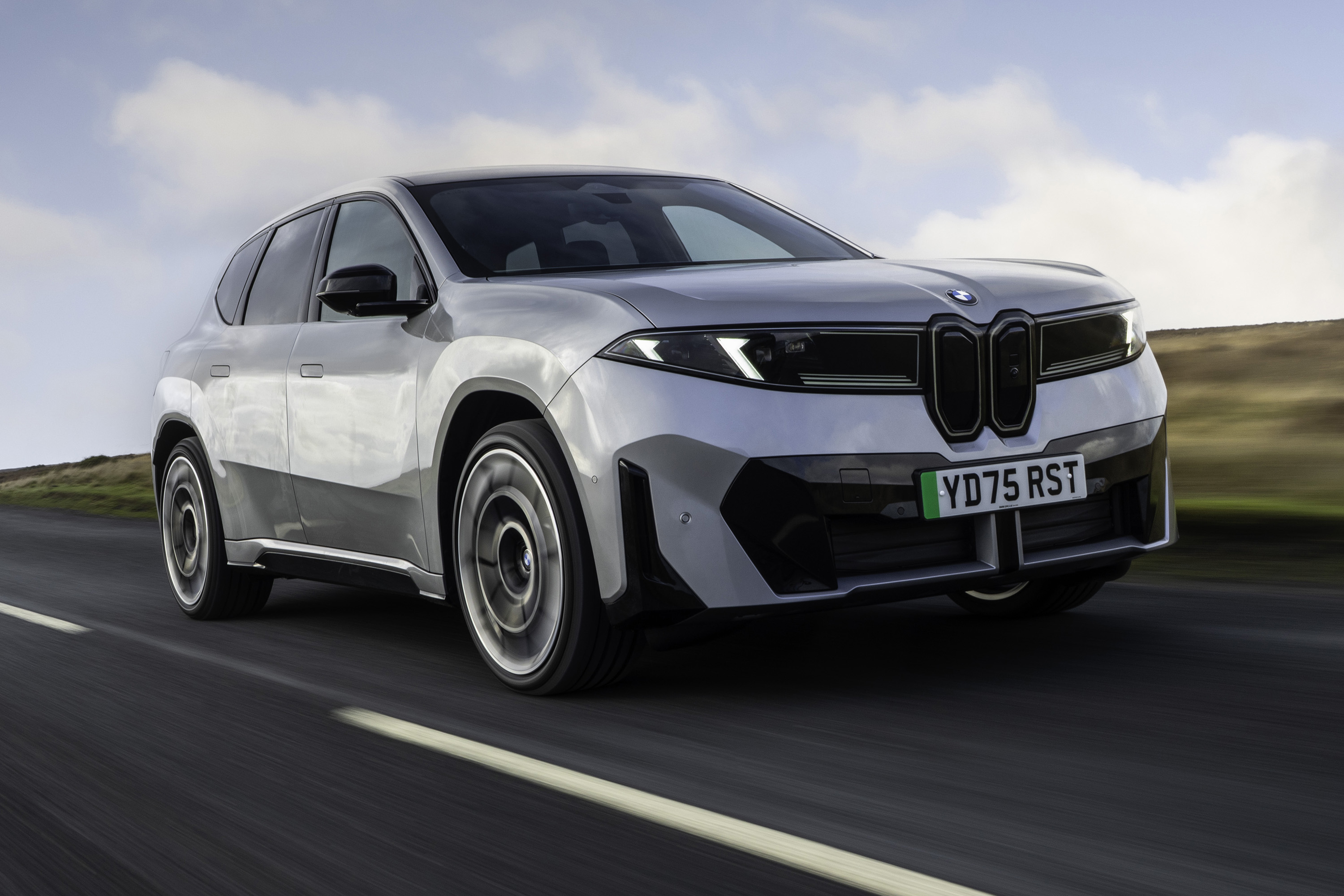
The exterior is relatively restrained by recent BMW standards. Its surfaces are clean and the kidney grille has been reinterpreted rather than simply enlarged, helping it look distinctive without becoming unnecessarily aggressive.
Inside, the changes are more dramatic. BMW Panoramic Vision projects information across the lower edge of the windscreen from one side of the cabin to the other, while a large 17.9-inch central touchscreen deals with most infotainment and vehicle functions. There’s no conventional instrument cluster and the familiar rotary iDrive controller has disappeared.
Underneath, the dedicated electric platform supports an 800-volt architecture and some exceptional charging speeds. The iX3 50 xDrive can accept up to 400kW, while the iX3 40 reaches 300kW. Both can charge from 10–80% in as little as 21 minutes under ideal conditions.
The rear-wheel-drive iX3 40 uses an 82.6kWh battery and produces 320PS, while the twin-motor 50 xDrive gets a much larger 108.7kWh battery and 469PS.
BMW markets the range as up to 395 miles for the iX3 40 and 500 miles for the 50 xDrive. Its latest detailed technical data gives configuration-dependent figures of 331–392 miles and 420–495 miles respectively, so wheel and equipment choice matter.
The headline numbers are impressive, but so are the basics. The iX3 is comfortable, spacious and practical, while retaining enough rear-biased agility to feel recognisably like a BMW.
What's the best Bmw Ix3 trim and battery option?
For most buyers, the iX3 40 makes the strongest case, particularly now that it significantly undercuts the 50 xDrive. Its 320PS output is hardly modest, 0–62mph takes just 5.9 seconds and BMW quotes around 395 miles of range. It also weighs roughly 200kg less than the twin-motor 50 xDrive, which helps both efficiency and agility.
The 50 xDrive is the version for buyers who regularly cover very long distances or specifically want four-wheel drive. Its 108.7kWh battery enables BMW’s headline 500-mile range, while 469PS cuts the 0–62mph time to 4.9 seconds. Its 400kW peak charging rate is also 100kW higher than the 40’s.
As for trim, the standard car already comes generously equipped. M Sport adds the styling treatment many BMW buyers will want, while M Sport Pro mainly adds further visual and equipment upgrades rather than changing the fundamentals.
The iX3 40 M Sport therefore looks like a particularly convincing balance of price, performance, range and desirability, but the standard 40 is the value choice.
What’s the price of the Bmw Ix3?
The BMW iX3 starts at £53,250 for the rear-wheel-drive iX3 40 in standard trim. That’s considerably less than the £58,755 launch price of the original 50 xDrive and means the range now has a much more accessible entry point.
The iX3 40 M Sport costs £55,740 and M Sport Pro £57,240, while the iX3 50 xDrive starts at £60,655, with M Sport at £63,155 and M Sport Pro at £64,655 before options. There are also some used BMW iX3 models for sale for less.
That’s competitive for a premium electric SUV with this much range and charging capability, but the options list can quickly push prices higher. Larger wheels, comfort equipment, upgraded driver-assistance systems and charging upgrades can all add significantly to the final bill.
Alternatives to the Bmw Ix3
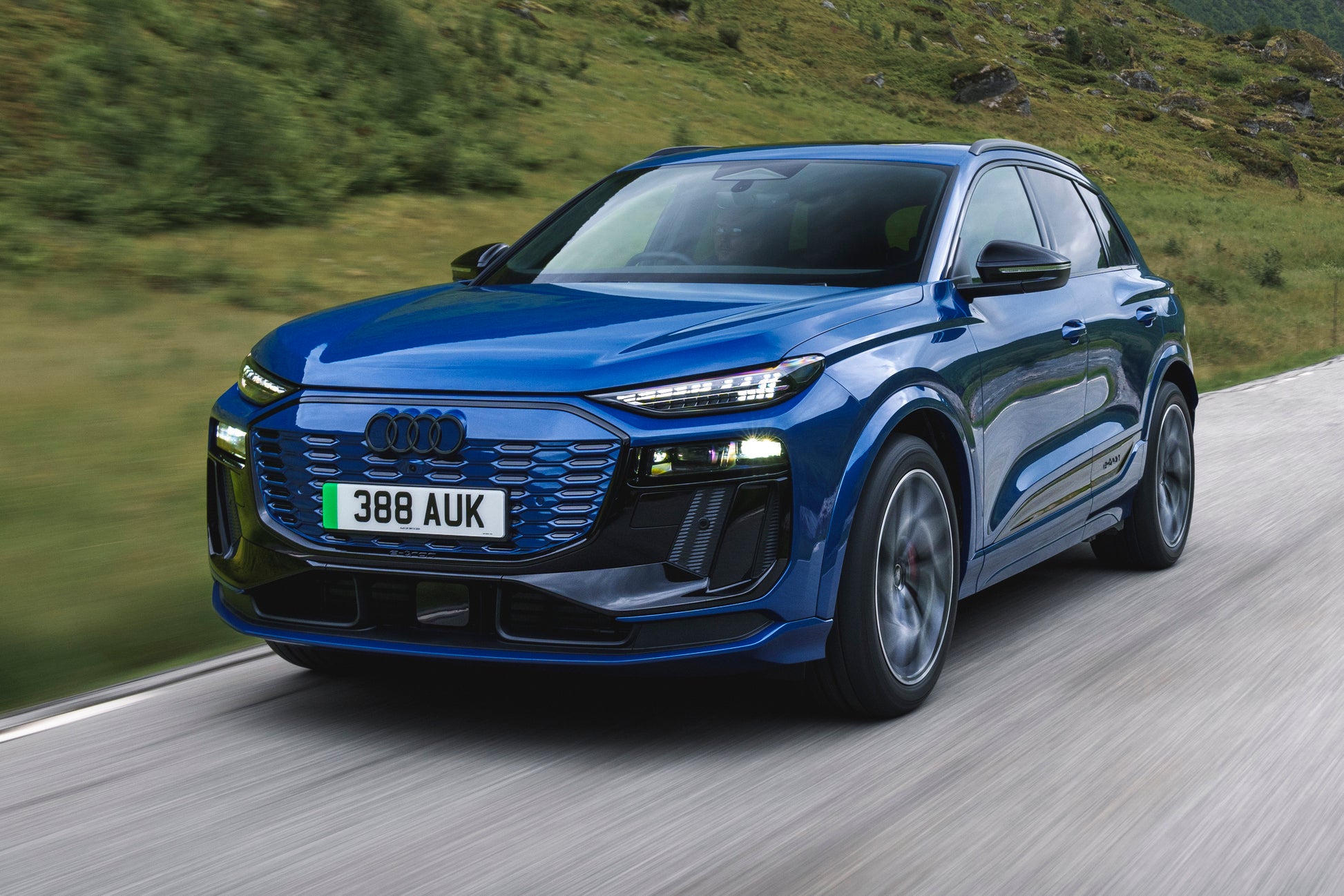
The Audi Q6 e-tron is one of the iX3’s closest alternatives. It’s comfortable, refined and available in several different powertrain configurations, although even its longest-range versions can’t quite match the BMW’s headline range.
The Mercedes-Benz GLC with EQ Technology is another direct rival. It also uses an advanced high-voltage electrical architecture and combines rapid charging with a long official range, while placing more emphasis on cabin theatre and refinement.
The Volvo EX60 offers a similarly modern electric platform, understated Scandinavian styling and a broad choice of power outputs. Some versions can exceed 500 miles officially, putting it firmly in the same long-distance EV conversation.
The Porsche Macan Electric is another obvious choice if handling matters, although prices can rise very quickly once options are added.
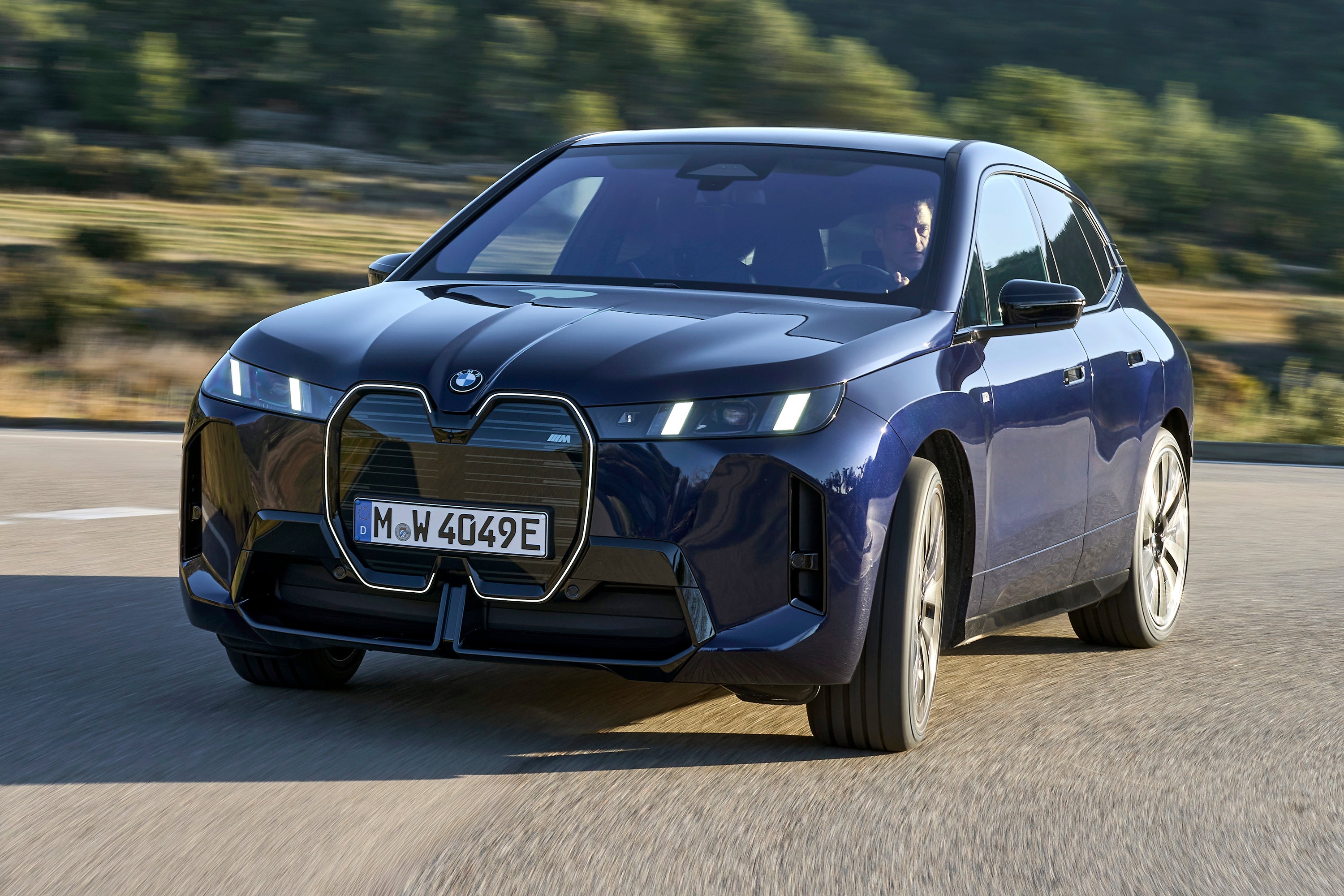
BMW’s own iX is larger, softer and more luxurious, but the iX3 is newer, more efficient and easier to place on British roads.
What's the interior like in the Bmw Ix3?
The BMW iX3 has one of the most distinctive cabins in the class. It combines excellent passenger space and convincing material quality with BMW’s completely new Panoramic iDrive interface. There’s no traditional instrument cluster. Instead, Panoramic Vision projects information across the lower windscreen, while a 17.9-inch touchscreen handles most infotainment and vehicle functions. It looks futuristic and works well once you’re familiar with it, although the lack of BMW’s old rotary iDrive controller and the reliance on touch controls won’t please everyone.
Passenger space is generous and the dedicated electric platform gives the rear a completely flat floor.
Bmw Ix3 boot space and practicality
The BMW iX3 is a properly practical five-seat family SUV. Its dedicated electric platform creates a flat cabin floor, generous rear legroom and plenty of headroom, while its relatively upright body avoids the compromises you’ll find in sleeker coupe-style SUVs.
Adults can sit comfortably in the back and the absence of a transmission tunnel makes the centre position more usable than it is in many combustion-engined or plug-in hybrid SUVs.
The main rear boot holds 520 litres with the seats up. Fold the 40:20:40-split rear backrests and capacity rises to 1,750 litres. There’s also a 58-litre compartment beneath the bonnet, which is large enough to keep charging cables and smaller loose items out of the main luggage area. The boot itself is broad and relatively square, without the steeply sloping tailgate that can restrict the usefulness of some electric SUVs.
The iX3 can also tow up to 2,000kg with the optional towbar, making it suitable for a substantial caravan or braked trailer. Maximum nose weight is 80kg.
Cabin storage is generous, too. The open centre-console layout provides useful space for phones and smaller bags, while conventional door bins and covered storage deal with the usual family clutter.
Bmw Ix3 dimensions
The BMW iX3 measures 4,782mm long, 1,895mm wide and 1,635mm high, with a 2,897mm wheelbase. Width increases to 2,093mm including the mirrors.
Those dimensions put it firmly in the middle of the premium family-SUV class. It’s large enough to provide excellent passenger and luggage space without being as cumbersome as the BMW iX or one of BMW’s larger SUVs.
Both the iX3 40 and 50 xDrive have the same basic external dimensions, although their kerb weights differ substantially. BMW quotes around 2,160kg for the 40 and 2,360kg for the 50 xDrive.
Tech and infotainment in the Bmw Ix3
The iX3 was the first BMW to feature the company's Panoramic iDrive infotainment system, and it dominates the cabin experience.
The highlight is Panoramic Vision, which is a 40-inch display that allows information to be projected across the lower edge of the windscreen, spanning almost the full width of the cabin. It replaces the traditional instrument cluster and puts speed, range, navigation and configurable information high in the driver’s field of vision.
A separate 17.9-inch central touchscreen handles navigation, media, climate settings and most vehicle functions. It’s quick to respond and its main menus are reasonably easy to understand.
The lack of BMW’s rotary iDrive controller remains a shame. The touchscreen works well, but a physical controller is easier to operate over poor roads and demands less visual attention. The steering wheel mixes physical and touch-sensitive controls, while voice operation through BMW Intelligent Personal Assistant provides another way to access functions.
BMW’s built-in navigation is particularly useful in an EV. It can plan charging stops, take charger availability into account and precondition the battery automatically when a suitable rapid charger is selected as the destination.
An optional 3D head-up display can be added through the Technology Plus Package.
Materials available on the Bmw Ix3
The iX3’s cabin feels convincingly premium, but BMW has moved away from the traditional leather-and-gloss-black approach in many versions. Standard models use Econeer, a leather-free textile upholstery, while soft-touch materials cover most of the important contact areas.
M Sport switches to a darker combination of Veganza and M PerformTex, along with M-specific trim and ambient lighting. M Sport Pro builds on this with more supportive M Sport seats and additional M detailing. There are also optional Contemporary interior treatments and BMW Individual Merino leather for buyers who want a more traditional luxury finish.
Some harder plastics remain lower down, but they’re largely out of sight and don’t undermine the overall impression. The relatively restrained use of gloss-black trim should also help the cabin age better than some screen-heavy premium interiors.
What's the Bmw Ix3 like to drive?
The iX3 blends comfort and driver appeal more successfully than most electric SUVs. It’s composed and easy-going in normal driving but still feels responsive and well balanced when the road gets more interesting.
The lighter, rear-wheel-drive iX3 40 is particularly appealing because it sheds around 200kg compared with the 50 xDrive while still producing 320PS. The 50 xDrive is considerably more powerful and adds four-wheel-drive traction, but both versions feel properly engineered rather than simply fast.
Ride comfort is impressive overall, although the largest optional wheels inevitably introduce more road noise and firmness.
Bmw Ix3 range and performance
The current BMW iX3 range uses two battery sizes and two drivetrain layouts.
The iX3 40 uses an 82.6kWh battery and a single rear-mounted electric motor producing 320PS and 500Nm. It reaches 62mph in 5.9 seconds and has a maximum speed of 124mph. BMW markets its maximum range as around 395 miles, although the latest detailed UK technical data quotes 331–392 miles, depending on wheels and equipment.
The iX3 50 xDrive uses a much larger 108.7kWh battery and two electric motors, giving it four-wheel drive. Total output is 469PS and 645Nm, cutting 0–62mph to 4.9 seconds, with a 130mph top speed.
Again, BMW markets a headline range of up to 500 miles, while its latest detailed figures span 420–495 miles depending on specification.
The 40 weighs around 2,160kg compared with roughly 2,360kg for the 50 xDrive. That 200kg difference is significant and helps explain why the less powerful model doesn’t feel like a budget version on the road.
Performance data
| Model | Engine/battery size | Power | 0-62mph | Range/MPG |
|---|---|---|---|---|
iX3 40 | 82.6kWh, rear-wheel drive | 320PS | 5.9 seconds | Up to 392 miles |
iX3 50 xDrive | 108.7kWh, four-wheel drive | 469PS | 4.9 seconds | Up to 495 miles |
Bmw Ix3 driving and refinement
Despite weighing well over two tonnes, the iX3 doesn’t feel cumbersome in normal driving. The steering is well weighted, predictable and accurate, making it easy to place the car on the road.
The 50 xDrive’s rear motor is more powerful than the front unit, giving the four-wheel-drive car a distinctly rear-biased feel. It turns into bends more keenly than many large electric SUVs and doesn’t simply rely on huge grip to disguise its weight.
The lighter iX3 40 takes that idea further. Removing the front motor and fitting the smaller battery cuts roughly 200kg, while its 320PS output is still more than enough for brisk road driving. Recent UK testing suggests it loses surprisingly little of the 50’s everyday performance while feeling lighter and more natural.
Ride quality is another strength. Even cars on large wheels remain reasonably composed, although 22-inch wheels generate more road noise and a busier ride than the standard 20-inch set-up.
Several regenerative-braking settings are available, including a one-pedal mode capable of bringing the car to a complete stop. An adaptive setting uses navigation, traffic and camera information to vary the amount of regeneration automatically. That works well most of the time, although on winding roads it can sometimes alter the level of deceleration more often than you’d expect.
Overall, the iX3 manages the difficult trick of feeling relaxed and refined without becoming detached or uninvolving.
How safe is the Bmw Ix3?
The BMW iX3 achieved five stars from independent safety organisation Euro NCAP in 2026. It scored 73% for Safe Driving, 83% for Crash Avoidance, 86% for Crash Protection and 95% for Post Crash Safety. Euro NCAP praised its autonomous emergency braking performance and driver monitoring, while the iX3 scored full points in the side-impact tests. Its safety systems can also warn occupants about opening a door into the path of an approaching cyclist.
Standard equipment includes adaptive cruise control, lane assistance, automatic emergency braking, speed-limit assistance and driver monitoring.
Running costs: What it's like to live with a Bmw Ix3
The iX3 is expensive to buy and insure, but its excellent efficiency, very long range and exceptional rapid-charging performance should make it one of the easier premium EVs to live with.
Bmw Ix3 charging times and costs
Charging performance is one of the iX3’s standout features. The 50 xDrive can accept up to 400kW DC, allowing a 10–80% charge in as little as 21 minutes. Under ideal conditions, BMW says a 10-minute charging stop can add as much as 231 miles of WLTP range.
The iX3 40 peaks at 300kW but still completes the same 10–80% charge in 21 minutes thanks to its smaller battery. Ten minutes can add roughly 147–187 miles.
Both cars charge at 11kW AC as standard, with 22kW available optionally. At 11kW, a full charge takes around 8 hours 15 minutes for the 40 and 11 hours for the 50 xDrive.
At the average electricity rate of 26.32p/kWh (late 2026), filling the usable battery from empty would cost roughly £22 for the iX3 40 and £29 for the 50 xDrive, before charging losses. A cheap overnight EV tariff could reduce those figures dramatically.
Most UK home wallboxes are limited to around 7kW, so charging from empty at home will take longer than BMW’s 11kW figures suggest.
Bmw Ix3 warranty and servicing
BMW covers the iX3 with a three-year, unlimited-mileage warranty, including BMW Roadside Assistance. The high-voltage battery gets separate protection for eight years or 100,000 miles, whichever comes first, covering manufacturing faults and excessive capacity loss subject to BMW’s warranty conditions.
BMW’s electric cars require scheduled servicing every two years, rather than according to mileage. The work is considerably simpler than on a combustion-engined model and typically includes a vehicle check, cabin microfilter and brake fluid where required.
BMW also offers a five-year Service Inclusive package for the iX3, currently priced from £650.
Bmw Ix3 insurance groups
The iX3 is a premium car, but the introduction of the iX3 40 means insurance groups start at 39 of 50, while the more powerful 50 xDrive sits in groups 43–44, depending on trim. That’s expensive in absolute terms, but fairly typical for a premium electric SUV with this level of performance, value and repair complexity.
As always, actual premiums will vary much more according to the driver, location and insurer than the group number alone.
How much does it cost to tax a Bmw Ix3?
For 2026 to 2027, the standard annual VED rate after the first year is £200.
Electric cars use a £50,000 threshold for the Expensive Car Supplement. Every current BMW iX3 has a list price above that threshold, so all versions attract the additional £440 annual charge for five years from the start of the second licence. That leaves owners paying £640 a year during the supplement period.
What trims are available with the Bmw Ix3?
The BMW iX3 is offered in standard, M Sport and M Sport Pro forms, with broadly the same hierarchy applying to both the rear-wheel-drive 40 and four-wheel-drive 50 xDrive.
The standard iX3 is already generously equipped. It gets 20-inch alloy wheels, LED headlights, an automatic tailgate, heated and electrically adjustable front seats, wireless phone charging, dual-zone climate control, Comfort Access through BMW Digital Key Plus and the full Panoramic iDrive system. Upholstery is BMW’s leather-free Econeer material. There’s little sense that this is a deliberately stripped-back entry model.
M Sport is likely to be the most popular version. It adds 20-inch M alloy wheels, more aggressive front and rear styling, M Sport brakes with blue callipers, a sports steering wheel, M-specific interior detailing, ambient lighting and Veganza/M PerformTex upholstery. The changes are mostly visual, so it doesn’t fundamentally alter what makes the iX3 good.
M Sport Pro adds the most overtly sporting treatment. It brings upgraded M Sport seats, red brake callipers, an M-specific steering wheel, black exterior mirror caps and rear detailing, BMW Iconic Glow and Adaptive LED headlights.
Ask the Drive experts: common questions
Is the BMW iX3 a good electric SUV?
How far can the BMW iX3 travel on a charge?
How big is the BMW iX3 boot?
Can the BMW iX3 tow?
Get our latest advice, news and offers
Keep me updated by email with the latest advice, news and offers from Drive.