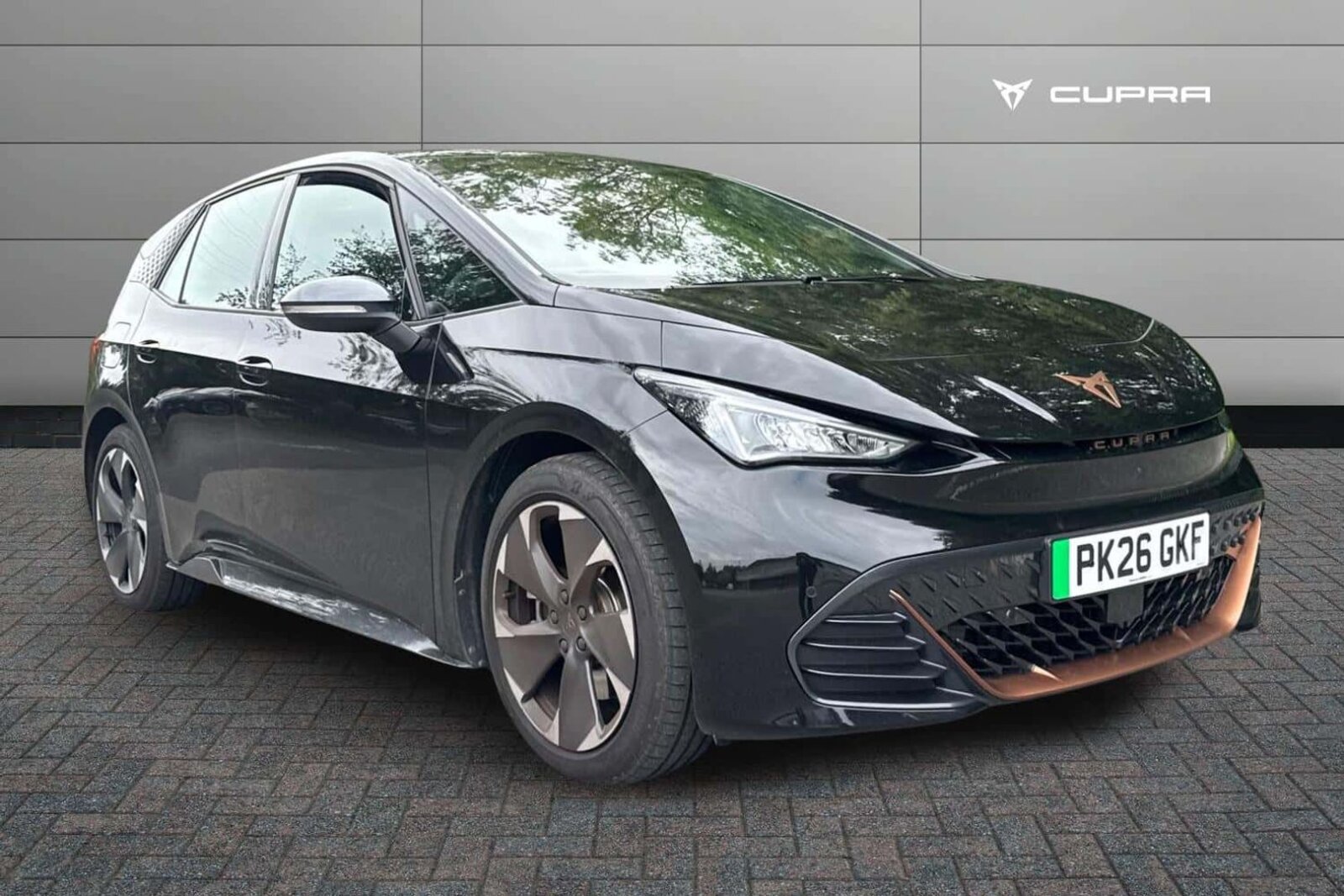
Used Cupra Born for sale: everything you need to know
Very few brands have yet tackled the concept of a hot hatchback with their electric models, but the Cupra Born gets closer than most. It doesn’t offer the outright performance of the petrol-powered Cupra Leon, but it’s certainly got a sportier bent than the VW ID.3 with which it shares most of its underpinnings.
The Born arrived in 2021 and remains one of the more enjoyable EVs to drive, while the earliest models have now begun to depreciate to a point where a Born just a few years old looks like very good value. With a practical cabin and a decent range, you don’t need to be an enthusiastic driver for the Born to make sense either.
The Volkswagen ID.3 is the Born’s closest relation, while other similarly-sized EV alternatives include the Kia Niro EV and Citroen e-C4.
Should you buy a Cupra Born?
If you’ve been waiting for mainstream EVs to get interesting to drive in more than just straight line acceleration before you take the plunge, then the Cupra Born might be the car to change your mind. It’s not as entertaining as a good hot hatchback, or even as much as a relatively average hot hatch, but it’s quick enough and agile enough to be more engaging than most of its rivals.
The Born is rear-wheel drive (all models use a single motor at the rear). In the past this might have meant even more entertaining handling but Cupra’s engineers have perhaps wisely reined things in, so instead you just get the other rear-drive benefit, steering that doesn’t have all that electric torque tugging away at it every time you leave a junction.
For a heavy car the Born’s sports suspension copes well, and it doesn’t compromise too much on ride quality either. There’s a sport mode to change the car’s drive characteristics and the feel of the brakes is better than a lot of EVs too. It’s a natural-feeling car to drive, quickly or slowly.
The interior has a sporty look and feel, and while you’ll find some hard plastics, you’ll be more impressed by the ample cabin space. The boot’s bigger than that of a Volkswagen Golf, too, though there’s no ‘frunk’ for even more luggage space up front. Running costs are naturally low and with up to 135kW charging, a 10-80% top-up for the 77kWh battery pack takes under 40 minutes.
If you’re still not quite sold on the Born, then the Volkswagen ID.3 is largely the same car, with different styling and a less sporty attitude. If you’re looking primarily for a hot hatchback then the Abarth 500e may hit the spot, though it’s smaller and less practical than the Born, while the MG4 is a good option if you want an EV that’s entertaining to drive and goes a decent distance on a charge - though it lacks the style of the Born. Nearly-new Born money will get an older Tesla Model 3, for greater performance and a more high-tech feel.
What’s the best used Cupra Born model to buy?
As per our full review of the Cupra Born, we’ve so far driven the 58kWh model with the 204PS motor, a combination we reckon will suit most buyers, with strong performance and a realistic range of at least 200 miles in good conditions. It’s not a whole lot slower than the models with the more powerful motor, though if you do need to travel a little further between charges, then the 77kWh, 230PS model is your only option.
All Cupra Borns are well-equipped, with LED headlights, adaptive cruise control and a parking camera offered in the V1 base model. The smaller wheels of the V1 may be the best option to maximise ride quality, though there’s no doubt the larger wheels of the V2 and V3 help accentuate the Born’s hot-hatch style looks.
Used Cupra Born range and performance
Cupra Born 58kWh 204PS: The Born range kicks off with a 204PS electric motor supplied by a 58kWh battery, for a 0-62mph time of 7.3 seconds and a WLTP range of 222.5 to 259.1 miles.
Cupra Born 58kWh 230PS: With the same battery pack size but more power, the 230PS model actually goes just a little further on a charge, at 224.3 to 260.4 miles, while the 0-62mph time drops to 6.6 seconds.
Cupra Born 77kWh 230PS: This time the motor stays the same but the battery increases. The extra weight means slightly slower acceleration at 7.0 seconds to 62mph, but range extends to 305.7-340.5 miles depending on conditions.
What used Cupra Born trim levels are available?
Like other Cupra models the Born has a simple hierarchy of equipment levels, in this case split between V1, V2 and V3 trims. In common with many electric cars the basic level of equipment is already high, going some way to justify the pricing, while each jump in trim also gives the Born a sportier feel with larger alloy wheels.
The Cupra Born V1 is the starting point of the range, with 18-inch alloy wheels, LED headlights, auto wipers, a 12-inch infotainment screen and 5.3-inch driver display, sports seats, sports suspension, a rear-view camera, different driving modes, and adaptive cruise control.
The Cupra Born V2 builds on the V1’s equipment with 19-inch alloys, a heated leather-trimmed steering wheel, heated front seats, heated washer nozzles, privacy glass, and a head-up display.
The Cupra Born V3 keeps the V2’s kit and adds 20-inch alloy wheels, Dinamica (artificial suede) seat trim, and 12-way electric seat adjustment for the driver and front passenger, with lumbar adjustment and a massage function.
Used Cupra Born dimensions and boot size
The Cupra Born’s dimensions are:
The Cupra Born’s boot size is:
Used Cupra Born road tax
For the time being at least, the Cupra Born is like all other electric cars in that VED or ‘road tax’ is currently free, even for models that cost over £40,000 brand new, which attracts a surcharge in combustion-powered vehicles.
How much is it to insure a Cupra Born?
There’s a fairly narrow spread of insurance groups on the Born, from group 25 (out of 50) for a V1 with the 58kWh battery pack and 204PS motor, to group 28 for a V3 with the 230PS motor and either battery pack. That’s a touch more than the groups 19-27 of the similar (but less sporty) Volkswagen ID.3, and similar to the groups 21-31 of the petrol-powered Cupra Leon.