16/07/2026
How to jump start a car

Written By Andrew Brady
There's never a good time to discover your car's battery has gone flat, but it most cases the problem can be easily fixed by jump starting, allowing you to be on your way within a few minutes.
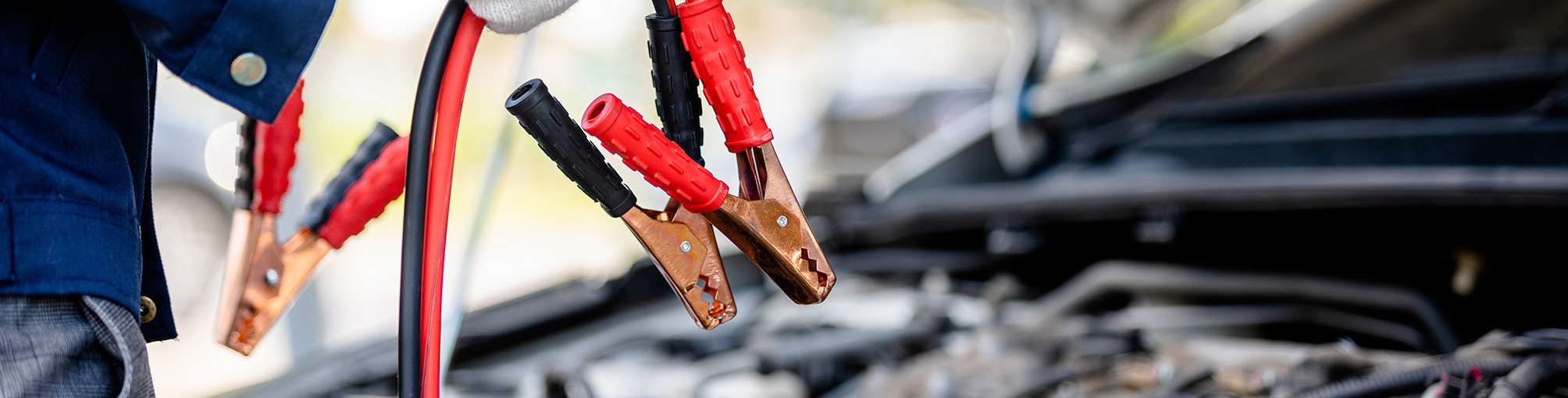
The traditional way to jump start a car is about as old as motoring itself: A pair of cables connect the healthy battery of one car to the flat one in another. Essentially, you're sending a sufficient amount of charge from the working battery to the flat one, enabling the starter motor to operate and crank the engine into life. Once the engine's sparked – and assuming there's nothing else wrong, such as a faulty alternator – it can then recharge its own battery.
The downside of this system is you need a set of jump leads, another healthy car and someone willing to help you out – not all of which you can always guarantee having at your disposal.
Your second option is to use a jump or booster pack. These are portable batteries that you can charge at home ready to hook up to the car's battery until it has enough power to start the engine. Jump packs used to be relatively unwieldy devices, but lithium-ion battery technology means they are now smaller, lighter and very portable.
Using leads to jump start a car in 10 easy steps:
Ensure the car with the healthy battery is positioned close enough to the one with the flat battery. Ignitions on both most be off and their parking brakes applied.
Connect the red positive – or live – jump lead's clamp to the flat battery's positive (+) terminal.
Connect the clamp at the other end of the same lead to the positive (+) terminal on the healthy battery.
Connect the black negative jump lead's clamp to the negative (–) terminal on the healthy battery, being careful not to touch the red positive lead's clamp.
The latest advice is NOT to connect the clamp at the opposite end of the negative lead to the flat battery's negative (–) terminal as this creates a fire risk. Instead, it is safer to attach it to an earthing point somewhere under the engine bay. This could be on the engine block itself, a piece of unpainted metal or a specifically labelled earthing point intended for this task.
Start the car with the working car's battery and let it run for a minute.
Gently build its engine revs to 2500rpm so that it can produce a strong electrical current to send to the flat battery.
Try starting the flat batteried car's engine.
No luck? Leave the other car's engine running for a few more minutes before trying step 8 again.
Once the flat batteried car's engine has started, leave it running while you remove the leads by reversing the attachment process.
Using a lithium-ion boster pack to jump start a car in 8 easy steps:
Make sure the car's ignition is turned off and its parking brake is applied.
Ensure that the booster pack is fully charged. If it isn't, plug it in to fully charge it before moving to step 3.
Connect the booster pack's supplied red positive lead clamp to the flat battery's positive (+) terminal.
Being sure not to touch the red connection with it, connect the booster pack's supplied black negative lead clamp to the flat battery's negative (–) terminal.
Switch on the booster pack.
Try starting the engine.
No joy? Many jump packs have a ‘boost’ button to deliver a stronger jolt of current. Press this, then repeat step 6.
Once the flat batteried car's engine has started, leave it running while you remove the leads by reversing the attachment process.
Which jump start method should I use?
Realistically, the days of needing to use a pair of jump leads connecting two cars together should be largely behind us. Yes, the process still works perfectly well, but the advent of lithium-ion jump packs means that there's a simplier, more convenient solution.
Using a booster pack reduces the risk of causing a fire or suffering such a severe electric shock, plus keeping it charged up means and in your boot means that if you ever end up with a flat battery, you can be on the road in a matter of minutes, without having to wait for the aid of another motorist and their car.
The only downside is that jump packs cost significantly more than jump leads, but when you're stranded on your own, late at night, you're unlikely to rue spending that extra money on one.
How do I jump start an electric car?
You will need to jump start an electric car if its batteries are entirely drained. Electric cars have two batteries – one that powers the electric motors and another 12-volt battery for ancillary systems like the lights, infotainment and wipers, just as you'd find in an a combustion-engined model.
You may find that the high-voltage drive battery won't recharge unless the 12-volt battery has been jump-started as it also powers the electronics which control it.
Jump-starting an EV is not really any different to a conventional petrol or diesel car – in theory, at least. In reality, it can be a bit trickier because the location of the 12-volt battery can be hidden away and more awkward to access.
There are a few rules to remember if you're jump starting an EV:
You'll need a petrol or diesel car's battery as your power source if you don't have a fully charged jump pack available.
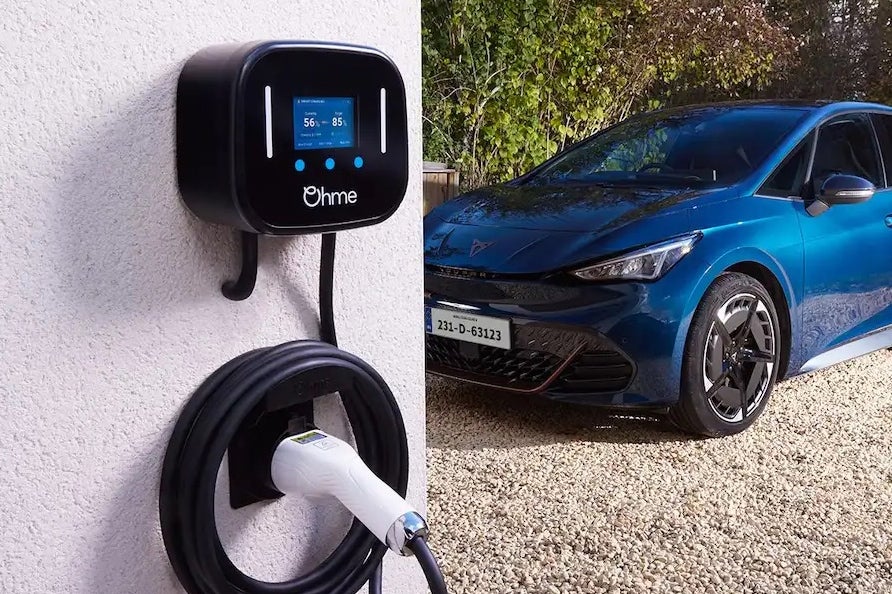
It shouldn't be plugged in ready to have its drive battery charged when the 12-volt is being jumped. Doing so may cause irreparable damage to the EV's electronics which can be incredibly expensive to remedy.
It should take less than five minutes to jump start a car following the steps outlined above.
If you turn the key nothing happens, your battery is most likely flat. If there's some charge left in the battery, your car's engine may turn but not crank into life. Dim headlights are a clear giveaway that your battery is weak.
When jump-starting a car with either jump leads or jump pack, connect the red positive leads first and the black negative leads second.