06/07/2026
Mild, full or plug-in hybrid? How to choose the right type for you

Written By Mark Nichol
Hybrid cars have become the middle ground between combustion engined models and fully electric vehicles. All hybrids combine electric power with a traditional combustion engine, but they do so to various degrees. The aim is always the same, though: improve fuel economy and reduce carbon dioxide (CO2) emissions.
Because they all have 'hybrid' in their name it’s easy to get confused about the types, especially when manufacturers' terminology further blurs the boundaries. Some never need charging, while others can be plugged in and operate similar to fully electric car much of the time.
If you're trying to decide which type of hybrid is right for you, this guide explains the key differences in uncomplicated terms, helping you to figure out what you actually need.
Mild hybrids: Petrol and diesel cars with a tiny electrical helping hand
If you've driven any modern petrol or diesel car over the last few years, there's a good chance you've already experienced a mild hybrid without even realising it. A Mild Hybrid Electric Vehicle (MHEV) uses a small battery and electric motor to support the combustion engine.
The important word here is 'support'. Unlike other hybrid systems, the electric motor can’t usually drive the car on its own for other than short bursts. Instead, it assists the engine during acceleration, recovers energy when slowing down and helps improve the stop-start system. With an MHEV the engine automatically cuts off when you’re slowing down or coasting at motorway speeds, rather than when you're sat motionless in traffic, starting it up again the moment the engine is needed.
What are the benefits of a mild hybrid?
From the driver's seat, a mild hybrid feels identical to a conventional petrol or diesel car. It can’t be plugged in and there are no specific hybrid driving modes to switch between. Unlike the other types of hybrid, MHEVs can be fitted a manual gearbox, although these are few and far between in 2026.
The benefits tend to be modest rather than transformative. Depending on the vehicle and your driving style, an MHEV may improve fuel economy by a few miles per gallon compared with an equivalent non-hybrid model. Imagine being in the gym doing bench presses… a spotter giving you the odd helping hand when things get tough, that’s the mild hybrid bit. It’s that little bit of extra energy that can really help.
But if you're expecting significant fuel savings or meaningful electric-only driving, an MHEV probably won't deliver what you're looking for. It’s just a relatively simple and inexpensive technology to reduce fuel consumption and CO2 emissions.
Full hybrids: Self-charging, simple-to-run
For many buyers, a full hybrid is the sweet spot. Also referred to as a self-charging hybrids and Hybrid Electric Vehicles (HEVs), they have more powerful electric motors and larger batteries than MHEVs to maximise efficiency. Unlike an MHEV, a HEV can power itself using electricity alone for short periods – usually just a mile or two and mostly at lower speeds.
The engine, which is almost always petrol, joins in when more power is needed or when the battery needs replenishing. Crucially, you never need to plug the car in. The 'self-charging' happens mostly through regenerative braking – a system that captures energy that would ordinarily be lost, sending it back to the battery as electricity. The engine itself also acts as a generator, with all this all happening automatically, usually without you realising.
What are the benefits of a full hybrid?
A full hybrid offers some of the benefits of an electric car, but without requiring any changes to your routine. You still fill up at a petrol station and there's no worrying about cables or public charging.
The biggest advantages happen at low speeds. Town and city traffic is where combustion engines are at their least efficient – diesels especially – so having an electric motor to take on much of the workload, together with the ability to generate more to charge the battery as you slow down, significantly reduces fuel consumption.
A full hybrid will often seem quieter and smoother than a conventional petrol car at low speeds because when using battery power alone, the engine cuts out and a virtually silent electric motor powers the car. Clever software makes sure the car is at its most efficient without you having to do anything. HEVs almost always have automatic gearboxes, behaving very similarly to conventional petrols and diesels.
That said, at motorway speeds, the petrol engine does most of the work, so the hybrid system has its work cut out in order to improve overall fuel efficiency as well as compensating for the additional weight of its electric motor and battery pack. Newer hybrids do so with greater ease than their predecessors.
Plug-in hybrids: An electric car with an combustion engine safety net… In theory
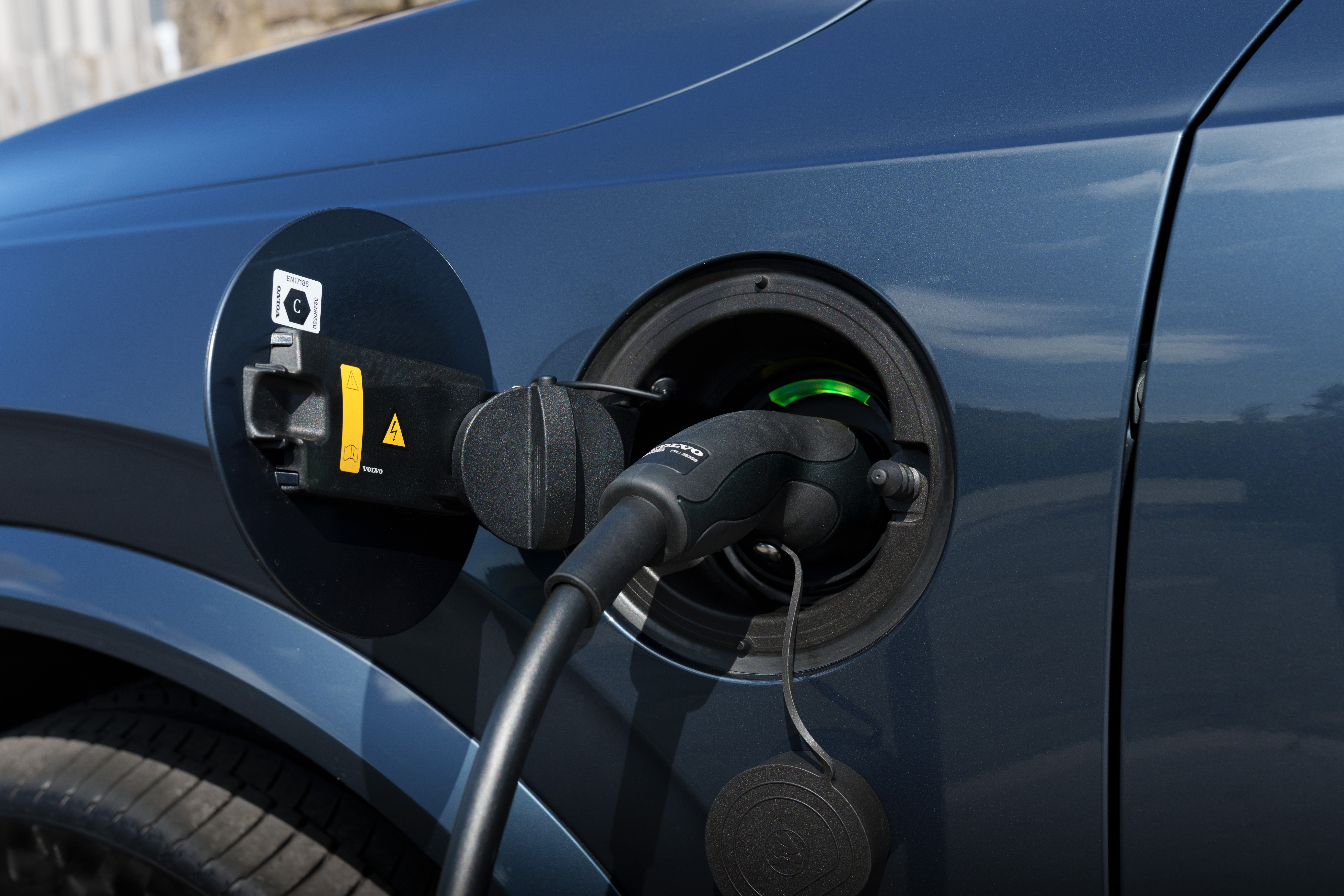
Plug-in hybrids take the concept a step further. Like HEVs, Plug-in Hybrid Electric Vehicles (PHEV) combine a combustion engine – usually petrol, with Mercedes-Benz continuing to also offer diesels – with an electric motor, but they use a much larger battery, which can be charged by plugging the car in.
This allows a plug-in hybrid to travel significantly further using electricity alone. Many of the latest PHEVs can cover 50-80 miles on electric power alone, before the engine needs to step in. That's enough to cover the several days of driving for many UK motorists without using a drop of fuel.
What are the benefits of a plug-in hybrid?
PHEVs can behave rather like electric cars most days, assuming your daily commute is well within the mileage range of a full battery. And on top of that, you get the ‘safety net’ of an engine for longer journeys. In theory, a lot of the time you can use the car without tapping into the fuel tank, making your fuel costs minuscule.
The catch, though, is that plug-in hybrids only make sense when they're actually being plugged in regularly. Plugging in a PHEV is not essential, so it’s tempting to drive it like a normal HEV, but due to the additional weight of the larger battery it won't be as fuel efficient as a comparable model. You wouldn't needlessly carry a boot full of bricks to add weight, so why by a PHEV if you're not going to plug it in?
Startlingly high officially fuel economy claims for PHEVs are gradually being phased out and replaced with figures which still might prove impossible to achieve. It all depends on how often you drive with the engine firing into life – hardly at all and a BMW 530e Saloon's 134mpg figure (down from its previous 470mpg claim) could be on, but if you rarely charge it or you usually drive for great distances, even half of that figure would be unlikely in the real world. That’s why it's important to be honest about both your charging and driving habits before choosing a PHEV.
Why do PHEVs make sense for company car drivers?
All that said, PHEVs occupy an interesting position in the company car market. For many years, Benefit-in-Kind (BiK) taxation has heavily favoured cars with low CO2 emissions. And owing to their favourable official fuel conumption results, the emissions ratings of all PHEVs are very low. Result? Very attractive company car tax rates – the sort that can make even the most inefficient car in real life still worth going for, although the lowest rates are given to those which can manage the greatest number of electrically driven miles.
To give you a rough working example, let’s say you’re a 20% rate taxpayer and choosing between three company cars, each with a £42,000 list price: a petrol mild hybrid Volkswagen Tiguan, a PHEV Skoda Kodiaq iV and an electric Volkswagen ID.4. Because of the CO2 emissions and electric driving range-based BiK system, the petrol car will cost you £2940 per year in tax, the PHEV £504 and the electric car just £336.
So you see, PHEVs are so much cheaper in BIK than regular petrol cars that it’s often worth taking the hit on the reduced fuel economy. It’s worth saying, though, that in our example here, both the petrol car and the PHEV are also subject to the £440-per-year Expensive Car Supplement, paid between years two and six of ownership. All cars over £40,000 attract it, except for EVs where the threshold is £50,000.
Note that the 2026-27 BiK rate of 4% rises to 5% in 2027-28 before leaping to 18% for all PHEVs in 2028-29, regardless of their electric driving range, so their attractiveness isn't likely to last much longer.
What this means for you
If you simply want a more efficient combustion-engined car with no lifestyle changes whatsoever, mild and self-charging hybrids will work well for you. The latter in particular offers meaningful fuel savings, particularly in urban driving, while remaining as easy to own as any conventional petrol vehicle.
A plug-in hybrid makes the strongest case when two conditions are met: first, if you have somewhere convenient to charge it and second, if your regular journeys fit comfortably within the car's electric-only range. In that case, a PHEV can dramatically reduce fuel usage while preserving long-distance flexibility, but an EV would likely perform most of what you want it to and cost significantly less to buy and run.
Not in the way they used to. The £10 annual VED discount for hybrid vehicles was abolished in 2025, meaning hybrids now pay the same standard VED car tax rate as conventional petrol and diesel cars after the first year.
However, plug-in hybrids can still benefit from lower first-year VED rates because their official CO2 emissions are often much lower than those of equivalent non-PHEV models.
The car will continue to operate much like a self-charging hybrid, but with worse fuel economy because your car is carrying the additional weight of a larger battery and extra cabling and an on-board charger to receive the electrical power. This is why regular charging is so important for PHEV efficiency.
PHEVs deliver their biggest benefits when they spend as much time as possible driving on battery power alone, but here they aren't as energy efficient as an electric car.
It varies by model, but many modern plug-in hybrids now offer between 50 and 80 miles of electric-only driving. Some models can achieve even more, but they’re generally much bigger and more expensive cars. Top of the list presently is the Omoda 9, capable of up to 93 miles of electric-only driving.
As with a fully electric car, a PHEV’s real-world range depends on your driving style – are you heavy-footed? – your speed and even the outside temperature.
In most cases, yes. The improvements aren’t dramatic, but mild hybrids can offer slightly better fuel economy, lower emissions and smoother stop-start operation than equivalent petrol and diesel models without MHEV technology.
The key thing to remember is that they're still fundamentally combustion-engined cars. If you're looking for significant electric driving capability, a full hybrid or plug-in hybrid will provide a much bigger step forward.