BMW i7 Review

Written By Ivan Aistrop
- 2022
- Saloon
- Electric
What we love
Outstanding comfort and refinement
A truly lavish cabin
Very strong range and charging for a car of this size
Things to consider
Prices are eye-watering
Boot space trails some rivals
Some of the rear-cabin tech feels more theatrical than essential
The DRIVE take on the BMW I7, is it the right car for you?
The BMW i7 is a luxury saloon for buyers who want maximum comfort, maximum theatre and zero tailpipe emissions. It takes the already extravagant 7 Series template and makes it even calmer and more effortless by switching to electric power. The result is one of the most refined cars on sale, with the kind of hushed, seamless progress that suits a flagship limo beautifully. It is expensive even by the standards of this class, and some of BMW’s more demonstrative tech features still feel like they are aimed as much at showing off as making life better. Even so, if you want a large electric limousine that feels opulent, modern and deeply accomplished, the i7 is one of the very best available.
The BMW I7 in more detail
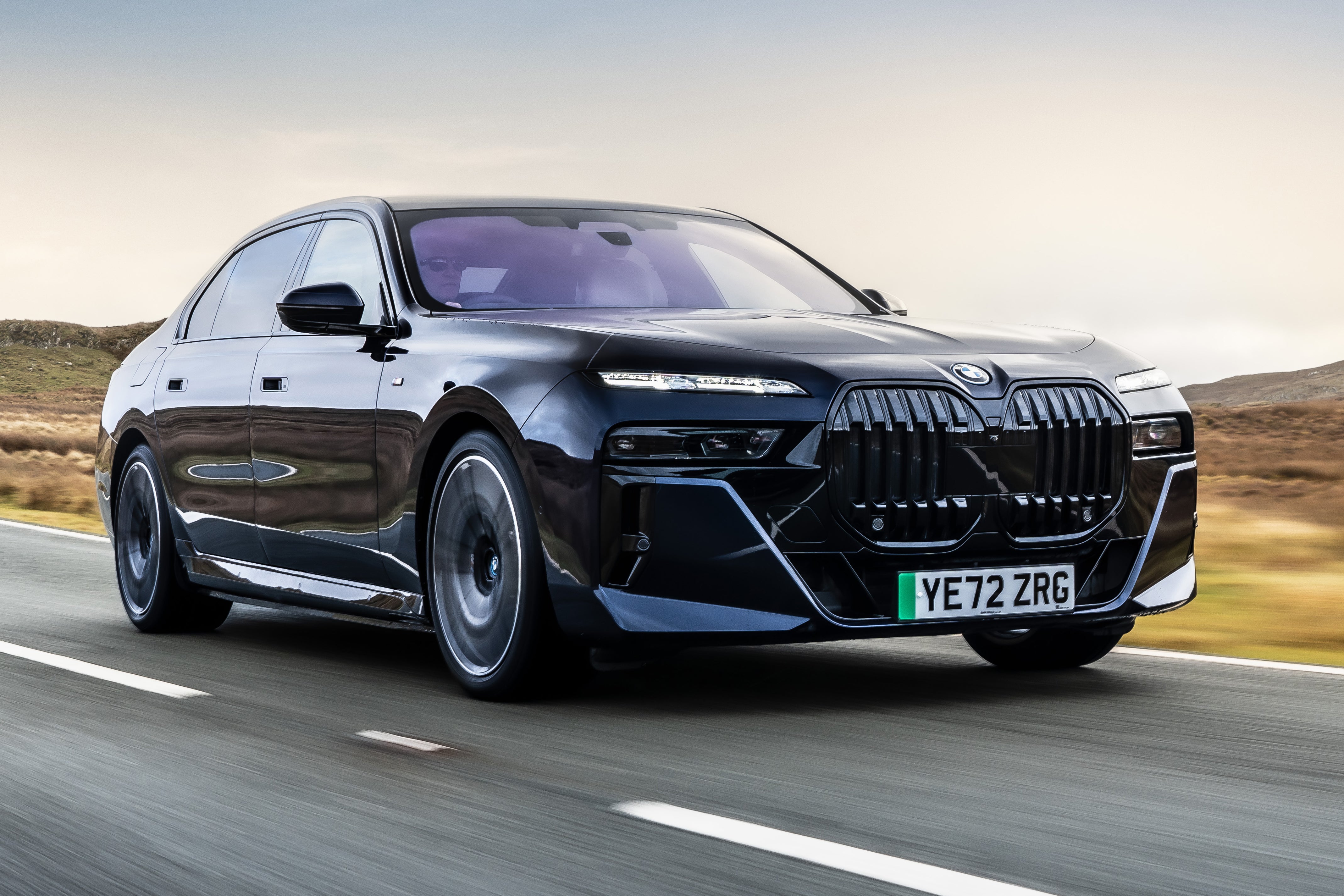
BMW has never taken the conservative route with the latest-generation 7 Series, and the i7 is no exception. This is not an electric luxury car that tries to disappear into the background. It is massive, bold and unapologetically imposing, and it wears its high-tech ambition very openly.
That will be part of the attraction for the right buyer. The i7 does not really chase the same quiet understatement as an Audi A8, and it is less traditional in flavour than a Mercedes-Benz S-Class. Instead, it presents luxury through scale, technology and visual drama. That means a lot of digital surfaces, a lot of ambient lighting and a lot of features designed to impress the moment you open the doors.
Beneath all of that, though, the i7 gets the fundamentals right. It is supremely comfortable, beautifully isolated from the outside world and very easy to cover distance in. Electric propulsion suits this kind of car naturally, because it adds the sort of silence and smoothness a flagship saloon has always chased.
The current UK line-up is now broader and stronger than the original launch range. The i7 50 xDrive is the entry point, the i7 60 xDrive M Sport is the long-range sweet spot, and the i7 M70 xDrive is the hugely powerful range-topper. All use the same latest-generation battery concept, but they deliver very different combinations of pace and range.
The i7 is therefore not just an electric 7 Series. It is arguably the version of the big BMW that makes the most immediate sense. If your driving life suits EV ownership, this is the calmer, quieter and more complete way to experience BMW’s flagship.
What's the best BMW I7 trim and battery option?
The smartest choice is the i7 60 xDrive M Sport. It offers the strongest blend of range, performance and flagship presence, and it feels like the point where the i7’s talents come together most convincingly.
The i7 50 xDrive looks tempting because it gets you into the range for less money, and in truth it is still a very fast and very luxurious thing. But in a car like this, range matters, and the 60 xDrive’s superior WLTP figure gives it a more relaxed and more convincing long-distance brief.
The M70 xDrive is an extraordinary machine, but it is also extravagance piled on extravagance. Its performance is outrageous, but most buyers looking for a car of this sort do not need their limousine to behave like a super-saloon.
Trim is a little more nuanced. The regular cars already feel special, but if you want the full audio-visual rear-cabin experience, BMW’s more expensive trim and option structure quickly becomes relevant. The danger is that the i7 can get very expensive very fast, so it pays to distinguish between genuine luxury and showroom theatre.
For most buyers, then, the i7 60 xDrive M Sport is the one that makes the strongest all-round case.
What’s the price of the BMW I7?
The BMW i7 range currently starts at £104,230 and rises to £164,420 for the i7 M70 xDrive. That is a vast spread, but it reflects just how far BMW is prepared to let buyers take the car into personalised flagship territory.
Even the entry-level i7 is a six-figure car, so there is no such thing as a cheap way into this range. That said, the standard car does not feel in any way compromised. The quality, comfort and sense of occasion are all there from the outset, which matters in a car this expensive.
The price climb becomes harder to defend once you get deeper into the range. More power, more standard kit and more visual drama all have their place, but the i7 is already doing the core luxury-car job brilliantly before you get anywhere near the top of the ladder.
The real financial trap is the options list. BMW offers a huge number of ways to make the i7 even more lavish, but not all of them materially improve the ownership experience. Some simply make the car feel even more dramatic and even more expensive.
That means disciplined buying is important. The i7 already feels special enough without every available indulgence.
Alternatives to the BMW I7
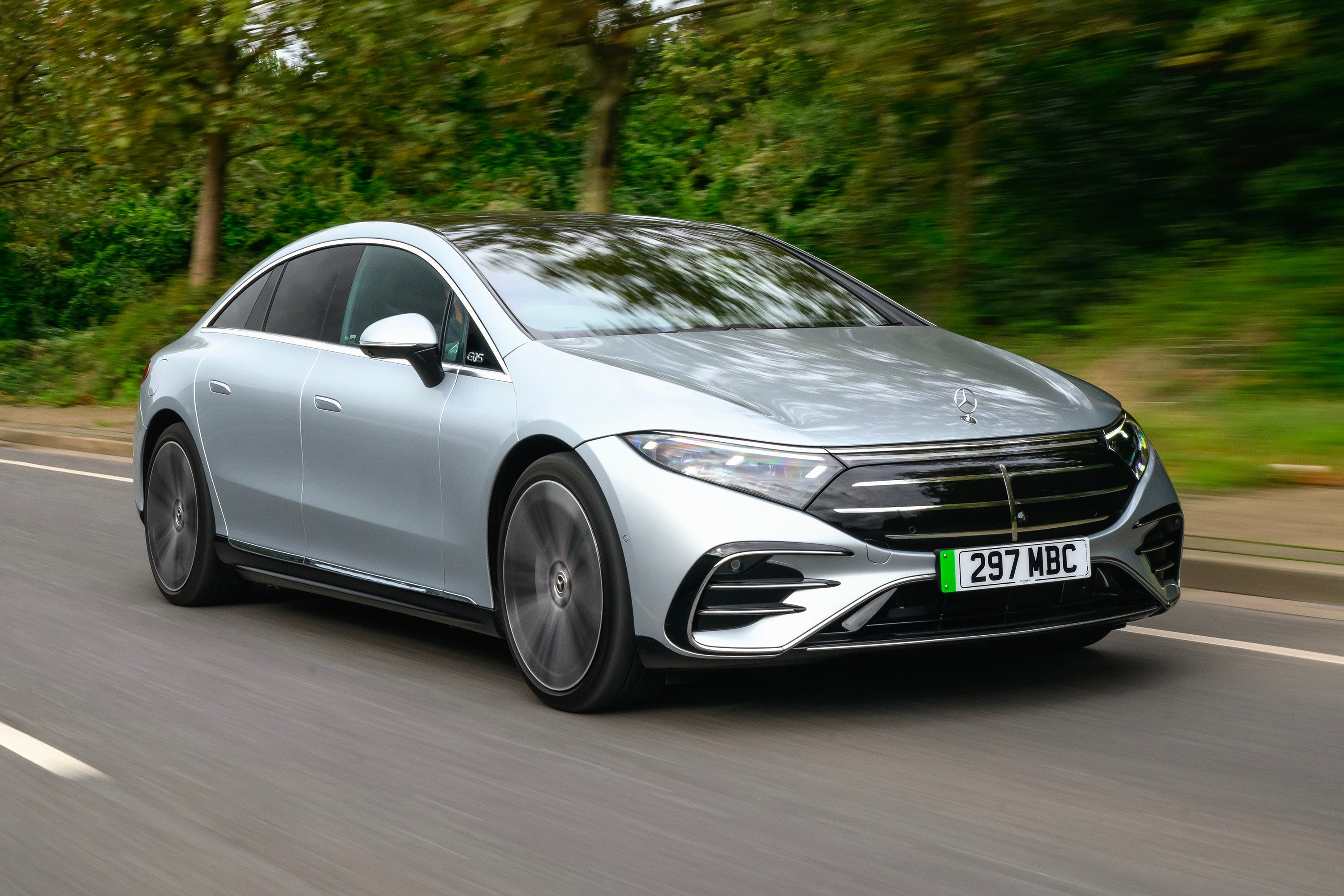
The most obvious rival is the Mercedes-Benz EQS. It takes a more overtly EV-led approach to luxury, with a more cab-forward shape, a stronger aerodynamic focus and an even more futuristic cabin feel. The BMW counters with greater visual presence and, for many buyers, a more convincing sense of traditional luxury.
The Mercedes-Benz S-Class is also impossible to ignore, even though it is not a full EV. If your priority is still the ultimate traditional limousine experience, the S-Class remains the benchmark for old-school waft and serenity.
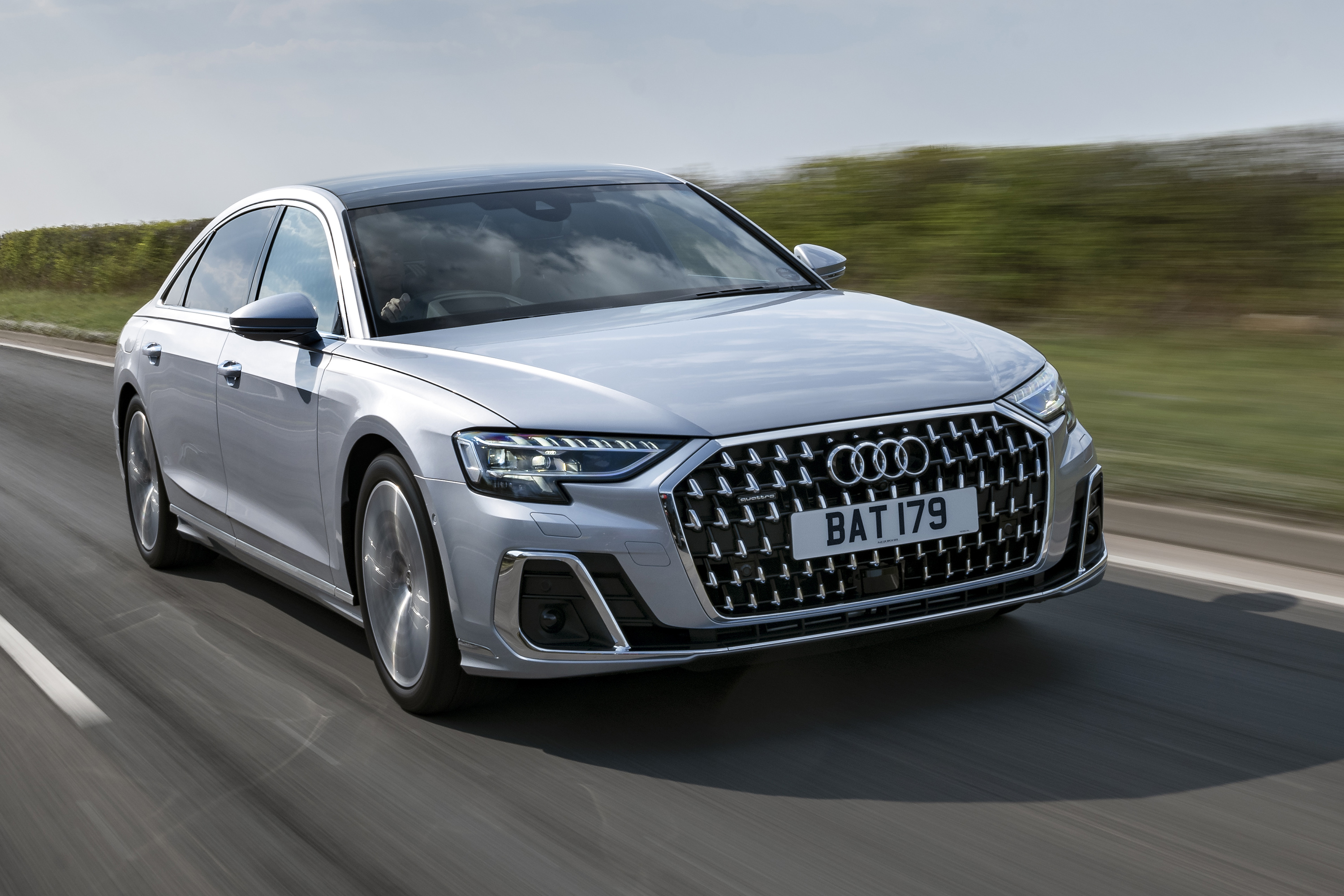
The Audi A8 is more restrained and more discreet, but it now feels less ambitious and less fresh than the BMW. It still has a beautifully judged cabin and huge long-distance ability, but the i7 is the more complete technological statement.
The Tesla Model S remains relevant on paper for range and performance, but it does not match the BMW for material quality, rear-seat luxury or true limousine feel. If that matters to you, the i7 is operating on a different level.
What's the interior like in the BMW I7?
The i7’s cabin is one of the main reasons to buy it. It is lavish, dramatic and full of engineering detail, even if not every flashy feature feels equally necessary.
BMW I7 boot space and practicality
This is still a luxury saloon first and foremost, so the rear compartment matters far more than the boot. Rear-seat space is enormous, and the i7 feels every inch the limousine from the back. Legroom is vast, headroom is generous despite the standard panoramic roof and the whole environment feels deeply indulgent.
The passenger-side rear seat can be turned into something close to an airline-style lounging chair in the right specification, which underlines what this car is really about. This is less a family saloon than a mobile executive lounge.
Up front, the driving position is excellent and the front seats are every bit as comfortable as you would hope. The i7 also feels slightly easier to place than its sheer size suggests, thanks to the camera systems and extensive assistance kit.
The weaker point is the boot. At 500 litres, it is perfectly usable, but it is not especially generous for a car this large and expensive. The saloon opening is relatively tight, there is no front boot and the fixed rear seatbacks limit flexibility. That makes the i7 less practical than some rivals if you often carry bulky luggage.
BMW I7 dimensions
The BMW i7 measures 5,391mm long, 1,950mm wide and 1,544mm high. It is one of the biggest cars on sale, and it looks it.
That scale is central to the i7’s identity. It has the sort of road presence buyers in this class expect, and it feels every inch the flagship from the outside. The trade-off is obvious enough in tighter urban spaces, but nobody buys an i7 because they want something compact.
Tech and infotainment in the BMW I7
The i7 is loaded with technology, and BMW does not try to play it down. Up front, you get the curved twin-screen display, augmented-reality head-up display and the full digital presentation BMW now majors on. The graphics are excellent, the system is packed with functionality and the rotary controller still makes day-to-day use easier than it would otherwise be.
The rear-cabin tech is what really defines the i7, though. The optional 31.3-inch Theatre Screen that folds down from the roof is one of the most dramatic features fitted to any production car, and the door-mounted touchscreens that control various rear functions reinforce the sense that this is a limousine built for occupants as much as for drivers.
Some of it undeniably strays into showpiece territory. That is not automatically a criticism, because part of the point of a car like this is to feel extraordinary. But it does mean some buyers will find parts of the i7 more impressive than genuinely useful.
Even so, the depth of engineering is hard to argue with. The i7 feels like a technology flagship in a way few rivals quite match.
Materials available on the BMW I7
Material quality is superb. The BMW i7 feels richly finished, reassuringly expensive and impressively solid in the way a six-figure BMW ought to.
BMW has gone for a more contemporary sort of luxury than some rivals. The i7 feels less country-house traditionalism and more high-end modern lounge, with lots of polished surfaces, dramatic lighting and carefully integrated trim. Whether that is exactly your taste is a separate question, but it is convincingly executed.
The detailing is strong throughout, from the seat upholstery to the switchgear and the way the doors close. Everything about the i7 is designed to reinforce the sense that this is the very top of the BMW range.
What's the BMW I7 like to drive?
The BMW i7’s greatest strength may be how naturally the electric powertrain fits the big 7 Series body. This is a car whose entire dynamic character benefits from silence, smoothness and instant shove.
BMW I7 range and performance
The current UK BMW i7 range is built around three electric drivetrains. The i7 50 xDrive is the entry point, the i7 60 xDrive M Sport is the longest-range version and the i7 M70 xDrive is the performance flagship.
The 50 xDrive already offers serious pace, with 455PS and 0-62mph in 5.5 seconds, while also delivering a WLTP range of 401 to 451 miles depending on specification. The 60 xDrive M Sport remains the key long-range model, with 544PS, 0-62mph in 4.8 seconds and up to 451 miles of range. The M70 xDrive is the opposite end of the scale, trading some range for immense output and a 0-62mph time of just 3.7 seconds.
In real life, no buyer should expect to reproduce the headline WLTP numbers all the time. Even so, the i7’s range and performance figures are seriously impressive for something this large and this luxurious.
Performance data
| Model | Engine/battery size | Power | 0-62mph | Range/MPG |
|---|---|---|---|---|
i7 50 xDrive | 112.5kWh battery, automatic, four-wheel drive | 455PS | 5.5 seconds | up to 451 miles |
i7 60 xDrive M Sport | 112.5kWh battery, automatic, four-wheel drive | 5.4 seconds | 4.8 seconds | up to 451 miles |
i7 M70 xDrive | 112.5kWh battery, automatic, four-wheel drive | 659PS | 3.7 seconds | up to 426 miles |
BMW I7 driving and refinement
This is where the i7 really excels. It is extraordinarily quiet, wonderfully smooth and deeply relaxing in a way that suits a flagship saloon perfectly.
The standard air suspension on the regular versions is excellent. It isolates occupants from rough surfaces with real authority and gives the i7 the sort of expensive, settled gait that buyers in this class expect. It is also much tidier in corners than something this size has any right to be, which has long been a BMW trademark.
The faster versions with Executive Drive Pro add yet more chassis sophistication, but the standard setup is already good enough that you never feel short-changed. What matters more is that the i7 manages to combine a truly plush ride with an unusual degree of body control and driver confidence.
Electric propulsion adds another layer of polish. There is no engine noise, no gearchange interruption and no vibration to disturb the calm. You simply gather speed in a huge, near-silent surge. The performance can be startling, but the experience remains remarkably undramatic.
BMW’s synthetic sound effects are optional in every meaningful sense. Some buyers will find them amusing. Many will switch them off quickly. The i7 is a better car when it lets the silence do the talking.
How safe is the BMW I7?
The i7 comes with an extensive suite of standard safety and driver-assistance systems, including lane support, rear cross-traffic warning, brake intervention and BMW’s wider Driving Assistant package. Higher trims and option packs add even more advanced assistance and automation.
I could not verify a separate Euro NCAP listing specifically for the i7 itself. The closely related current 7 Series family is built around a strong safety offering, but I would avoid claiming a stand-alone i7 Euro NCAP result without a directly verifiable source.
What is clear is that the i7 feels every inch the modern flagship in this area. The amount of active safety and support technology on board is substantial.
Running costs: What it's like to live with a BMW I7
The i7 is expensive to buy, but as with many EVs its ownership story depends heavily on how and where you charge it.
BMW I7 charging times and costs
The BMW i7’s latest battery and charging setup is one of its biggest strengths. BMW now quotes DC charging at up to 250kW, with a 10 to 80 per cent charge possible in as little as 28 minutes under ideal conditions.
That means the i7 is much better suited to long-distance use than many people might expect. Given access to a suitably powerful charger, top-ups can be short enough to fit neatly into a coffee stop rather than a prolonged break.
At home, the picture is more conventional. The battery is large, so full overnight charging still takes time, but that is exactly how most owners will use a car like this. Plug in at home, start with a full battery and let the range cushion do the rest.
The cost side is entirely tariff dependent. Home charging can make the i7 surprisingly reasonable per mile for a car of this size and ability. Heavy reliance on public rapid charging will always be costlier, but the car’s long range helps reduce how often you need it.
BMW I7 warranty and servicing
BMW covers the i7 with a three-year, unlimited-mileage warranty. That is acceptable at this end of the market, though no one would call it class-leading.
As an EV, the i7 should avoid some of the routine mechanical maintenance associated with a combustion-engined limo, but it is still a highly complex, highly valuable luxury car. Nobody should expect ownership to be cheap just because there is no petrol engine.
BMW I7 insurance groups
All versions of the BMW i7 sit in insurance group 50. That is the highest group available, and it reflects both the value of the car and the likely repair costs involved.
In other words, the i7 is exactly as expensive to insure as you would expect a six-figure electric limousine to be.
How much does it cost to tax a BMW I7?
For 2026 to 2027, EVs pay the standard annual VED rate after the first year. And because every i7 sits well above the current £50,000 Expensive Car Supplement threshold for electric cars, all versions will also attract the extra charge during the surcharge period.
That means buyers should budget for the annual standard rate plus the £440 Expensive Car Supplement for five years from the start of the second licence. In practical terms, this is not a car that escapes the tax sting just because it is electric.
What trims are available with the BMW I7?
The BMW i7 range is now built around the i7 50 xDrive, i7 60 xDrive M Sport and i7 M70 xDrive, with further differentiation coming through options and equipment rather than a long conventional trim ladder.
Even the standard car feels lavishly equipped. You get the visual drama, the luxury-cabin essentials and the big-screen BMW experience from the outset, so there is no sense of buying a cut-rate flagship.
The 60 xDrive M Sport adds a more assertive look and the strongest all-round blend of range and pace. The M70 xDrive then takes the i7 into overt performance-limo territory, with the kind of pace that borders on absurd.
As with the 7 Series, the real danger is the options list. BMW gives you endless ways to make the i7 feel even more theatrical and personal, but the car is already special enough before you start adding everything.
Ask the Drive experts: common questions
Is the BMW i7 a good luxury EV?
Which BMW i7 is best?
Does the BMW i7 charge quickly?
Is the BMW i7 practical?
Get our latest advice, news and offers
Keep me updated by email with the latest advice, news and offers from Drive.
.jpg)