Mercedes-Benz S-Class Review

Written By David Ross
- 2020
- Saloon
- Diesel mild hybrid, petrol mild hybrid and petrol plug-in hybrid
What we love
Outstanding comfort and refinement
Luxurious cabin with exceptional rear-seat space
Long electric range from the plug-in hybrids
Things to consider
Plug-in hybrids lose considerable boot space
BMW 7 Series is more rewarding to drive
Understated styling will not suit everyone
The DRIVE take on the Mercedes Benz S Class, is it the right car for you?
The Mercedes-Benz S-Class remains the luxury saloon to beat if comfort, refinement and rear-seat accommodation matter more than sporting handling or attention-grabbing design.
Its interior is beautifully appointed, its air suspension deals calmly with poor roads and every engine delivers the effortless performance expected from a six-figure flagship. Long-wheelbase models are especially impressive for rear passengers, while the plug-in hybrids can complete many daily journeys without starting their petrol engines.
A BMW 7 Series is more engaging from behind the wheel, and the PHEV’s small boot is a surprising compromise. Even so, few cars make long journeys feel as easy as the S-Class.
The Mercedes Benz S Class in more detail
The Mercedes-Benz S-Class has spent decades setting the standard for large luxury saloons.
BMW and Audi have repeatedly tried to wrestle away its crown, while the rise of the Range Rover, BMW X7 and other high-end SUVs has made the traditional limousine less fashionable than it once was. Yet the S-Class continues to occupy a distinctive position.
It is more discreet than most luxury SUVs, less ostentatious than a Bentley Flying Spur and more focused on comfort than a Porsche Panamera. For buyers who want to travel in exceptional comfort without making an unnecessarily loud statement, that restraint remains part of the appeal.
The S-Class is also an important car for Mercedes-Benz. New safety, suspension and infotainment technology often appears here first before filtering into more affordable models.
That gives it a sense of technical authority, although the complexity can occasionally threaten to overshadow its simpler strengths. Beneath the digital displays and extensive assistance systems is a large saloon that rides beautifully, isolates its passengers from the outside world and makes motorway journeys feel almost effortless.
The current generation arrived in 2020 and has since been refreshed with revised styling, updated engines and newer infotainment technology.
The present UK range is long-wheelbase only and begins with the S 350 d, a six-cylinder diesel with mild-hybrid assistance. The S 500 uses a similarly smooth six-cylinder petrol engine, while the S 450 e and S 580 e combine petrol power with a large rechargeable battery.
The diesel remains the natural choice for buyers covering substantial motorway mileages, but the S 450 e is the most rounded version for anyone able to charge regularly. Its electric range is long enough to cover many commutes and local journeys, yet the petrol engine removes the need to plan longer trips around charging stops.
The faster S 580 e provides more performance than most owners will ever need. It is impressively quick, but the S 450 e already feels effortless and costs less.
The fully electric EQS is covered separately in our Mercedes-Benz EQS review. The more opulent Mercedes-Maybach S-Class and the performance-focused Mercedes-AMG S 63 also sit outside the scope of this review.
What's the best Mercedes Benz S Class trim and engine option?
The S 450 e Long AMG Line Premium is the best all-round Mercedes-Benz S-Class.
Its 435PS plug-in hybrid system provides strong, near-silent performance and an official equivalent electric range of up to 68 miles. That is enough for many owners to complete their routine journeys without using petrol, provided they can charge at home or work.
AMG Line Premium already contains the comfort, safety and technology expected from a flagship Mercedes, so there is little need to move further up the range unless rear-seat luxury is the priority.
High-mileage drivers without regular charging access should choose the S 350 d. Its six-cylinder diesel is exceptionally refined, has ample performance and returns up to 44.2mpg.
Premium Plus Executive is the most appealing specification for buyers who expect to spend more time in the back than behind the wheel.
What’s the price of the Mercedes Benz S Class?
The Mercedes-Benz S-Class starts at £103,450, with the exact price depending on engine and specification.
The S 450 e costs from around £111,690, while the S 500 begins at approximately £116,020. Higher Premium Plus and Executive models move beyond £120,000, with the most expensive regular versions approaching £129,000.
That places the S-Class close to the BMW 7 Series and well above conventional executive saloons such as the Mercedes E-Class.
Used examples offer much better value, but specification varies considerably. Buyers should check which comfort, assistance and rear-seat packages are fitted rather than relying on the trim name alone.
Alternatives to the Mercedes Benz S Class
The BMW 7 Series is the strongest direct rival. It feels more controlled through bends and more rewarding from behind the wheel, although its design and cabin technology are more visually assertive than the Mercedes’.
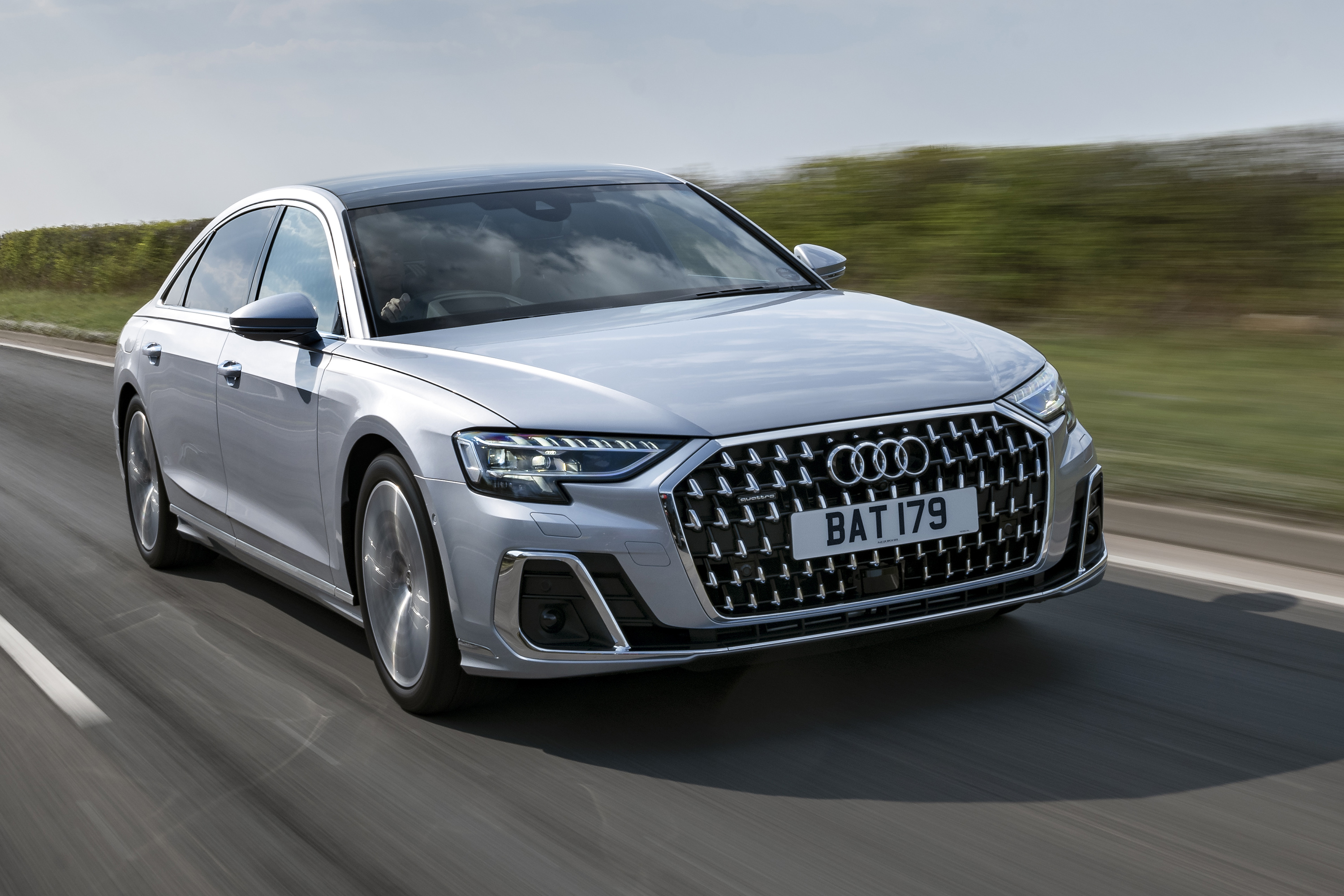
The Audi A8 is understated, comfortable and beautifully assembled. Its cabin is less theatrical than the S-Class’s and the model range is now more limited.
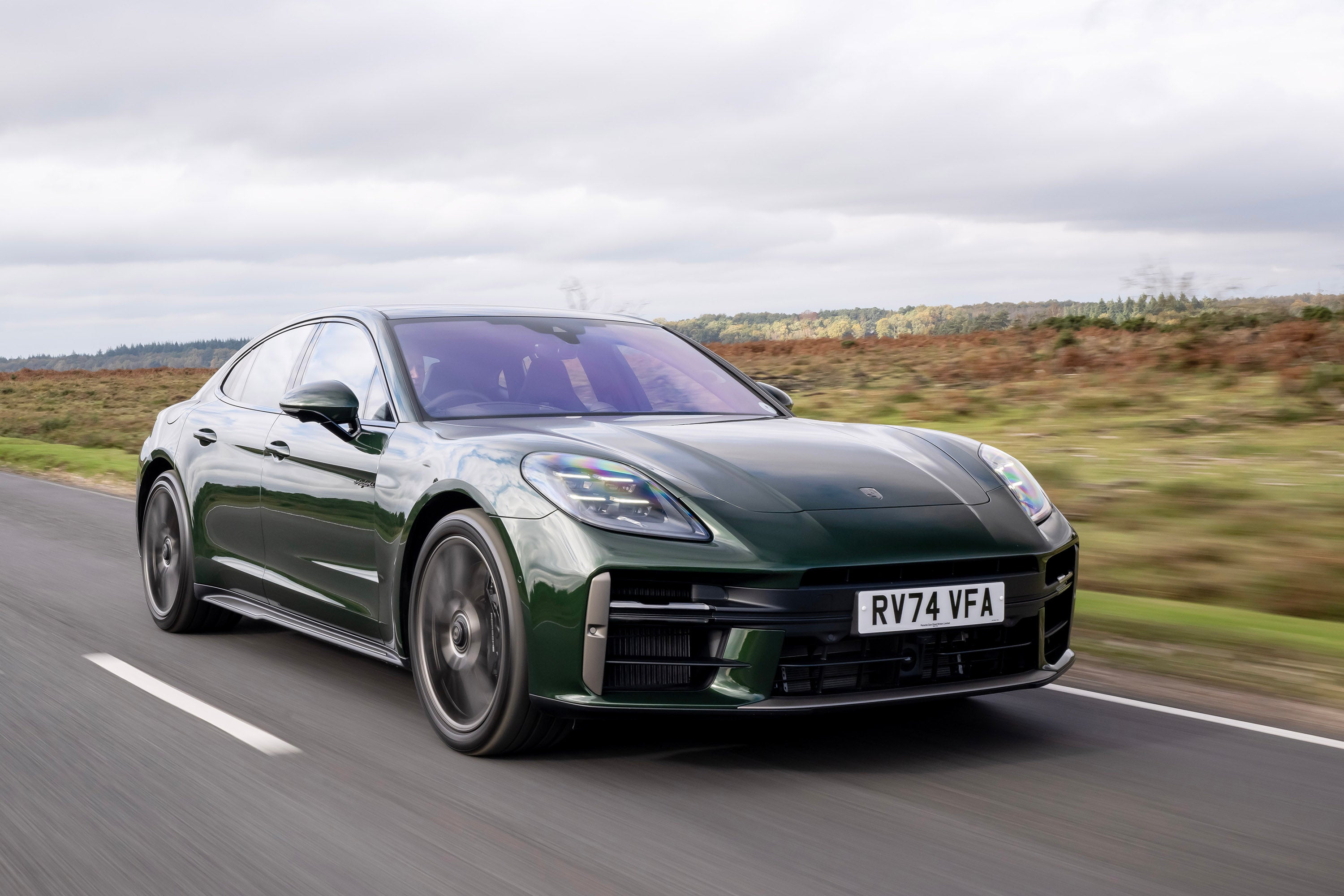
The Porsche Panamera is the best option for drivers who want a luxury car with genuine sporting ability. It is less spacious in the rear and never feels quite as restful.
The Range Rover provides a higher driving position, greater versatility and proper off-road capability. The S-Class is more discreet, quieter at speed and easier to enjoy from the rear seats.
What's the interior like in the Mercedes Benz S Class?
If you want comfort and style, you've come to the right place. We'd go so far as to say the Mercedes S-Class has the best interior of any car on the market.
Mercedes Benz S Class boot space and practicality
There’s loads of space inside, especially for those fortunate to be sat in the back of the long-wheelbase versions. Wide opening doors make it easy to get in and out, and once ensconced, the controls are all simple to use.
The dashboard layout, with its digital screens, might not be everyone’s cup of tea, but the functions are fairly straightforward once you’ve worked your way through all the settings and menus.
Boot space is huge at 540-550 litres in regular models. It’s not so great in the PHEV versions, at 350 litres – and even less in the sporty S63 with its 305 litres. However, you’ll get the golf bags, tailored luggage and Knightsbridge shopping in there with ease.
Driving assistance systems all contribute to practicality, making it fairly easy to park for a car that’s 5.2 metres in length (or 5.3 metres for the long-wheelbase version). So while practicality is not a priority for the Mercedes S-Class, it does put a tick in that box.
Mercedes Benz S Class dimensions
The long-wheelbase S-Class measures 5,304mm long, 1,921mm wide and 1,503mm high, increasing to 2,123mm across the mirrors.
Its length is the greatest challenge in tight car parks, while the rear doors need plenty of room to open fully. Cameras, sensors and rear-wheel steering make it easier to manoeuvre than the dimensions suggest, but it remains a very large saloon.
Tech and infotainment in the Mercedes Benz S Class
Infotainment is hugely important in the latest Mercedes S-Class. As well as the 12.3-inch 3D digital panel for the instrument cluster, there’s a seven-inch tablet in the rear seats that can control audio, navigation and seat functions.
Then there’s the big 12.8-inch portrait-oriented touchscreen that rises out of the centre console. It’s now very much the heart of the car, with the ability to do everything from change the DAB radio station to stream a business podcast, facilitate a conference call or adjust the vehicle settings.
Mercedes even throws in a one-year subscription to Zync, a platform that allows you to watch movies or sport, play games and check the news, although only while parked, of course.
You can talk to it, too, using “Hey Mercedes” to access various functions, or suggest setting changes based on how you feel.
There’s the ability to create a profile that is then shared with a Mercedes Me app or account, allowing you to jump into another Mercedes car and have everything just the way you want it.
Plus, it all connects to an app that you can use to lock or unlock the car, check on where it is if you forgot where you parked, or have a look at the charging status of the hybrid model. The Mercedes S-Class truly has entered the digital world.
Materials available on the Mercedes Benz S Class
As you would expect, the quality and finish in the Mercedes S-Class are top drawer, with the finest woods, leathers and metals. Even the plastics feel posh.
It’s all extremely well put-together, the electrical items operate smoothly and quietly, and everything you touch has a premium feel. The infotainment screen can be a bit glitchy at times, though.
The design brings the Mercedes S-Class into the modern era, with clean lines and surfaces, plus a combination of the latest materials and old-school leather. There are some slightly tacky surfaces, but in general everything seems a step beyond premium, if not quite up to Bentley standards.
The sense of luxury that surrounds you when you climb inside is obvious, with loads of space, sumptuous seats to sink into, and plenty of tech to keep you connected and entertained.
Plus, go for high-spec seats and you can recline, to give the feeling you are thousands of feet in the air, living the good life – which Mercedes S-Class owners are probably accustomed to anyway.
What's the Mercedes Benz S Class like to drive?
Comfort, stability and refinement define the S-Class driving experience. It is more accomplished than entertaining, but few cars are better suited to covering long distances.
Mercedes Benz S Class range and performance
The S 350d provides all the performance most owners will need. Its six-cylinder diesel produces 650Nm of torque, so the car accelerates without needing to rev hard. The engine remains exceptionally smooth and subdued, avoiding the vibration and coarse soundtrack associated with many smaller diesels.
The S500 is considerably quicker. Its 449PS petrol engine produces strong, effortless acceleration and works particularly well with the four-wheel-drive system. It is beautifully refined, though its official 33.7mpg means it is best suited to owners who value smoothness and performance above fuel costs.
The S 450e combines a 326PS petrol engine with a 163PS electric motor for a total of 435PS. The electric motor provides immediate response at low speeds, allowing the S-Class to move away in near silence. When greater performance is requested, the petrol engine joins smoothly and without disrupting the calm atmosphere.
The S 580 e increases combined output to 585PS. Its 4.4-second 0-62mph time is remarkable for a car of this size, but the performance feels more like an abundant reserve than something the driver is encouraged to use.
Every engine is paired with Mercedes’ nine-speed automatic gearbox. It changes ratios smoothly in ordinary driving and rarely draws attention to itself, which is exactly how a transmission in a luxury saloon should behave.
Performance data
| Model | Engine/battery size | Power | 0-62mph | Range/MPG |
|---|---|---|---|---|
S 350 d Long 4Matic | 3.0-litre | 313PS plus 23PS assistance | 5.4 seconds | Up to 44.2mpg |
S 500 Long 4Matic | 3.0-litre | 449PS plus 23PS assistance | 4.5 seconds | Up to 33.7mpg |
S 450 e Long | 3.0-litre | 435PS | 5.7 seconds | Up to 68 electric miles |
S 580 e Long 4Matic | 3.0-litre | 585PS | 4.4 seconds | Up to 62 equivalent electric miles |
Mercedes Benz S Class driving and refinement
The engineers have done a fine job of keeping the handling and ride quality smooth and serene, as it should be. It can feel a bit soft at times, but switch things into one of the Sport modes and it all tightens up.
Mercedes’ clever Magic Ride system scans the road ahead to prime the suspension, soaking up any impending bumps so passengers won’t spill their champagne. It’s quick, but not the most dynamic car – as is expected for a luxury limousine.
How safe is the Mercedes Benz S Class?
Mercedes has always put safety high on its priority list, so its flagship comes packed with the latest devices and assistance systems.
Some models are fitted with Digital Light headlights that shine up to 650m ahead of you, and can even beam messages onto the road.
The Driving Assistance Package is standard across all models and includes blind-spot assistance, active brake assist, active cruise control, emergency stop, traffic sign recognition and pre-collision protection.
Running costs: What it's like to live with a Mercedes Benz S Class
The S-Class is expensive to insure, service and tax, but the diesel is economical on long journeys and the plug-in hybrids can use very little petrol when charged regularly.
Mercedes Benz S Class fuel economy
The S350 d returns an official 44.2mpg, making it the best choice for drivers covering substantial motorway mileages.
The S500 manages 33.7mpg. It may approach that figure during a gentle long-distance journey, but frequent urban use or hard acceleration will reduce it significantly.
The S450e has an official WLTP electric range of up to 67 miles and the S580e manages 60 miles on the WLTP cycle.
Temperature, speed, wheel size and climate-control use will affect the distance achieved in practice, but both models can cover a useful proportion of everyday journeys without starting the engine.
The plug-in hybrids have a 21.96kWh usable battery and support 11kW AC charging. A full charge takes approximately two hours and 15 minutes. DC charging peaks at 60kW, allowing a 10 to 80 per cent charge in around 20 minutes.
Mercedes Benz S Class warranty and servicing
The S-Class has a three-year manufacturer warranty, three-year paint cover and 30-year anti-corrosion protection, subject to Mercedes’ terms. Separate warranty conditions apply to the plug-in hybrid batteries.
Mercedes Benz S Class insurance groups
Every current S-Class sits in insurance group 50. Its high purchase price, strong performance and expensive technology result in substantial premiums. Cameras, digital headlights, bodywork and assistance sensors can also make accident repairs costly.
How much does it cost to tax a Mercedes Benz S Class?
Mercedes S-Class models will costs the standard £200 a year to tax. However, given that all models cost more than £40,000, the annual VED rate for five years, from the second time the car is taxed, will actually be £640 due to the extra £440 for the expensive car supplement.
What trims are available with the Mercedes Benz S Class?
AMG Line Premium is the starting point for the regular range and already comes with an extensive specification.
Equipment includes leather upholstery, heated electrically adjustable seats, soft-close doors, keyless entry, a powered bootlid, digital instruments, a large central touchscreen, wireless smartphone integration and a comprehensive driver-assistance package.
AMG Line Premium Plus adds larger alloy wheels, more advanced lighting, an augmented-reality head-up display, upgraded audio and additional seat functions.
Executive versions focus on rear passengers. Depending on the derivative, equipment can include electrically adjustable rear seats, luxury head restraints, powered blinds, rear entertainment screens, a removable tablet and a chauffeur function that allows the front passenger seat to be controlled from the back.
AMG Line Premium provides everything most owner-drivers need. Premium Plus Executive makes the strongest case for anyone buying the S-Class primarily as a chauffeur-driven car.
Ask the Drive experts: common questions
Which Mercedes-Benz S-Class is best?
How big is the Mercedes-Benz S-Class boot?
How far can the Mercedes-Benz S-Class plug-in hybrid travel on electricity?
Is the Mercedes-Benz S-Class better than the BMW 7 Series?
Get our latest advice, news and offers
Keep me updated by email with the latest advice, news and offers from Drive.
.jpg)
.jpg)
.jpg)