BMW 7 Series Review

Written By Al Suttie
- 2022
- Saloon
- Plug-in hybrid
What we love
Effortless comfort and refinement
Seriously impressive plug-in hybrid performance
A genuinely standout cabin
Things to consider
Styling will not appeal to everyone
Some of the rear-cabin tech feels more like theatre than necessity
Mercedes-Benz S-Class is still the softer, more traditional limo
The DRIVE take on the Bmw 7 Series, is it the right car for you?
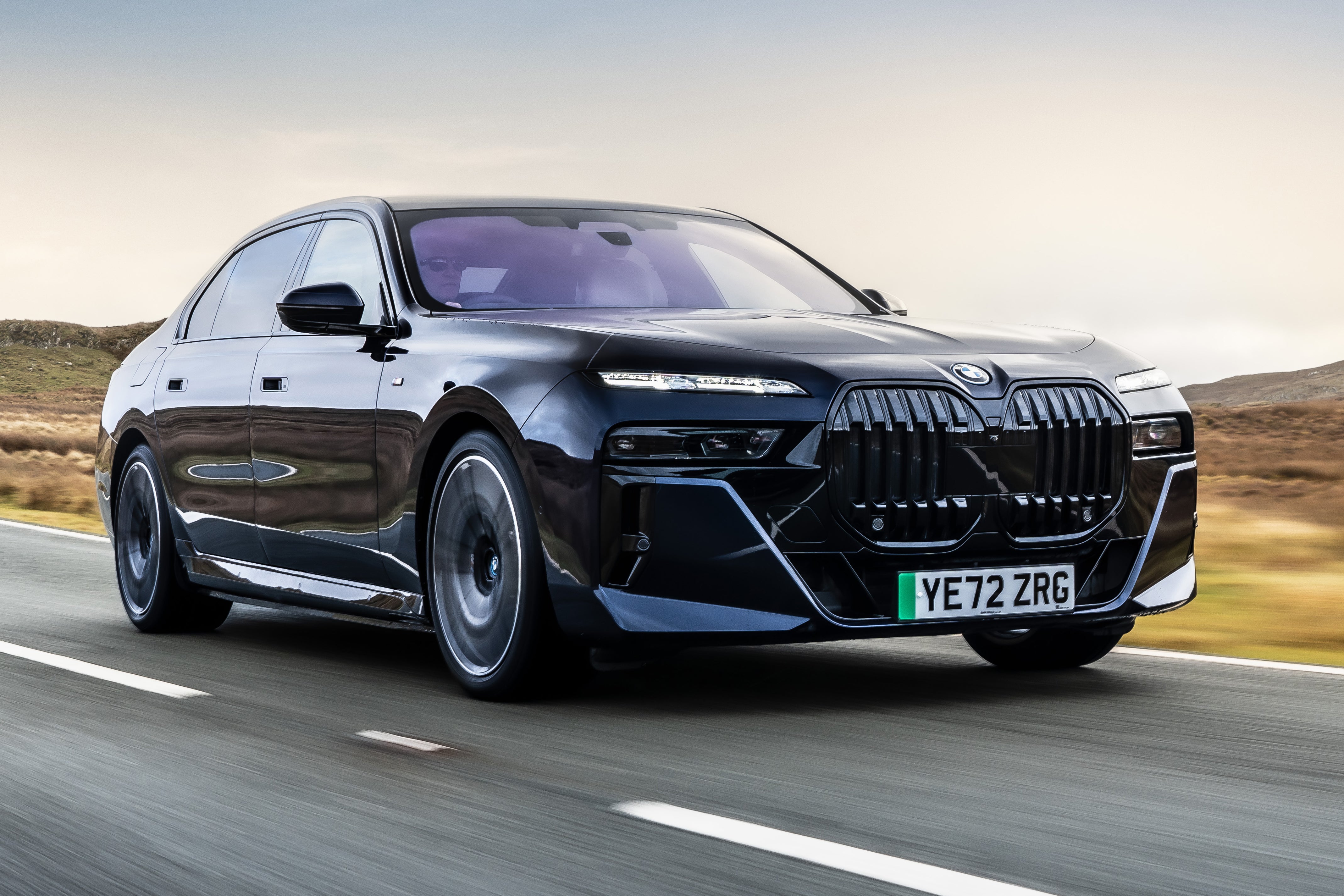
The BMW 7 Series is for buyers who want their flagship car to make a statement. It does not take the discreet, old-money route of an Audi A8, nor does it lean quite as fully into traditional limousine waft as the Mercedes-Benz S-Class. Instead, it combines lavish comfort with bold styling, huge digital ambition and a surprisingly engaging feel from behind the wheel for something this large. If you want understated, look elsewhere. If you want a range-topper that feels modern, indulgent and a little extrovert, the 7 Series makes a very strong case.
The Bmw 7 Series in more detail
BMW has spent years pushing the 7 Series away from the slightly reserved character luxury saloons used to default to. The latest car takes that further than ever. It is bigger, more visually assertive and much more explicit in the way it showcases technology.
That approach will split opinion, but at least it gives the 7 Series a very clear identity. This is not a car that fades quietly into the background. The styling is monolithic and deliberately attention-grabbing, the interior is packed with displays and digital tricks, and the whole thing feels like BMW’s vision of modern luxury rather than a copy of what anyone else is doing.
Underneath all of that, though, the fundamentals remain exactly where they should be. The 7 Series is spacious, quiet, sumptuously appointed and wonderfully easy to cover distance in. It has the kind of long-wheelbase composure and seat comfort buyers expect in a car of this type, and the plug-in hybrid drivetrain suits the brief well.
The current UK range is centred on plug-in hybrid petrol power. The 750e xDrive is the main model, while the M760e xDrive is the faster, more aggressive version for buyers who want their limousine to have an unusually hard punch. The i7 remains the all-electric sister car rather than a trim level of this car, and is best covered separately.
That leaves the 7 Series in an interesting place. It is still a chauffeur-grade limousine if that is how you want to use it, but it is also one of the few cars in this class that still seems keen to involve the driver. That dual personality has long been a BMW strength, and the latest 7 Series still delivers it.
What's the best Bmw 7 Series trim and engine option?
The 750e xDrive is the one to have. It gives you all the performance most buyers could reasonably want, a properly convincing plug-in hybrid setup and the same sense of occasion as the more expensive M760e.
There is no shortage of appeal in the M760e xDrive. It is hugely powerful, unexpectedly fast for something this large and more overtly sporting in the way it presents itself. But unless you specifically want the extra pace and the more aggressive image, the 750e is the more rounded choice.
Trim is really a matter of whether you want to lean into the car’s luxury side or its sportier side. Excellence trim suits the 7 Series particularly well because it plays to the car’s limousine character and feels more in keeping with what a big flagship BMW ought to be. M Sport adds useful attitude, but the 7 is arguably more convincing when it is allowed to be lavish rather than trying to look too athletic.
Put simply, the 750e xDrive in Excellence trim is the version that best captures what the current 7 Series does well.
What’s the price of the Bmw 7 Series?
The BMW 7 Series starts at £93,305 in the current UK range, and it does not take much effort to push it well into six-figure territory once you start moving up trims and dipping into the options list.
That is obviously serious money, but the 7 Series does at least feel like a serious car in return. This is not one of those premium models where the price runs far ahead of the substance. The cabin, engineering, standard equipment and sheer sense of occasion all make it clear where the money has gone.
The bigger trap is the options list. BMW gives buyers plenty of opportunity to turn the 7 Series into an even more lavish personal statement, but it is also very easy to spend heavily on features that are more spectacular than necessary. The Theatre Screen is the obvious example. It is undeniably impressive, but it is also a luxury rather than a need.
The sensible view is that the 7 Series already feels suitably special before you start adding every available indulgence. The danger lies in treating the options list as compulsory when it really is not.
Alternatives to the Bmw 7 Series
The Mercedes-Benz S-Class remains the default benchmark here. It is softer-edged, more traditional and still the clearest choice if you want a limousine that majors on waft, serenity and old-school luxury.
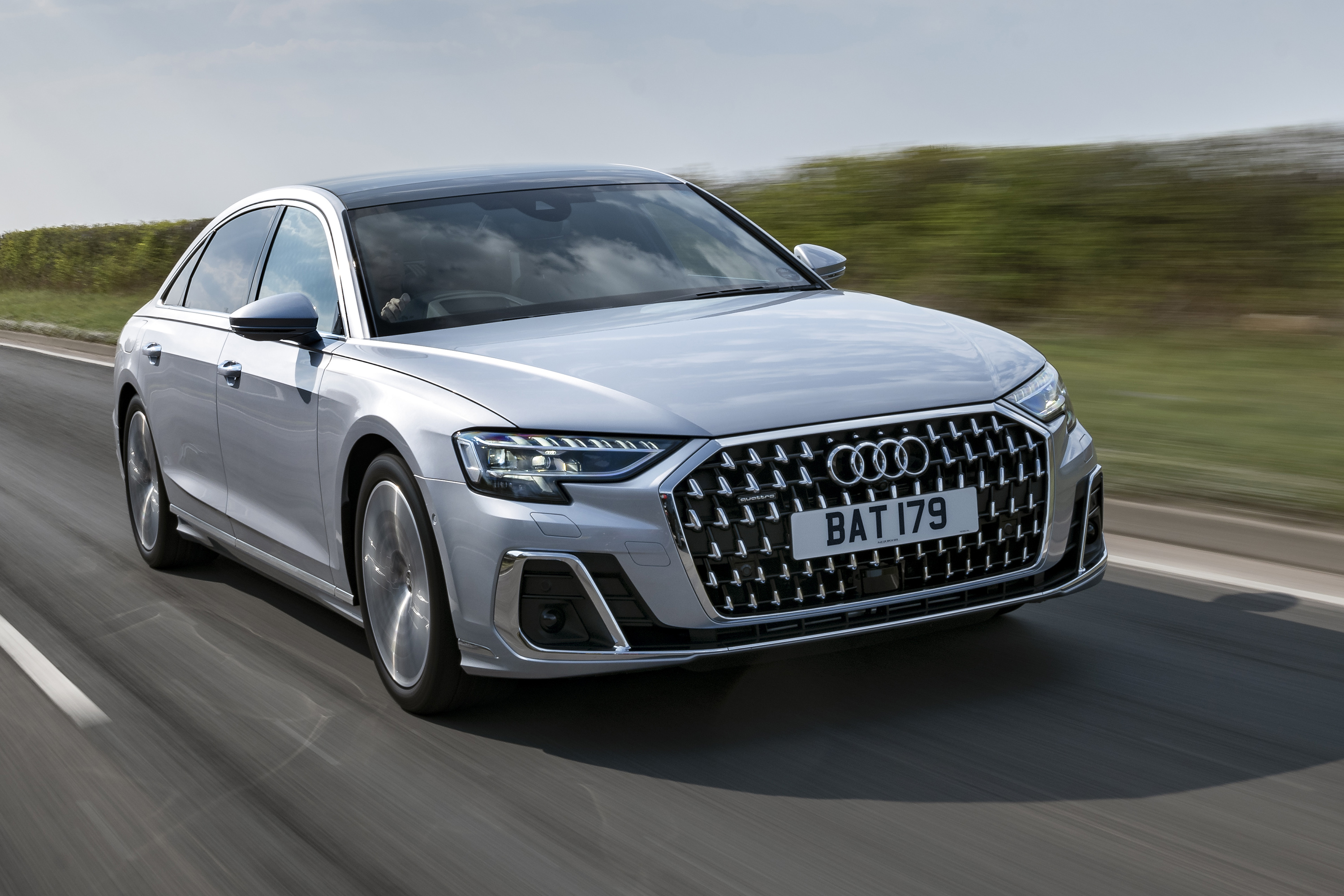
The Audi A8 is the more understated option. It is beautifully made, highly polished and considerably less showy than the BMW, although it no longer feels quite as fresh or as ambitious inside.
The Maserati Quattroporte is the more left-field alternative if you care about style and sense of occasion above all else, but it does not have the same breadth of ability or tech depth as the BMW.
Then there is BMW’s own i7. If you want the same visual drama and much of the same cabin experience, but with full electric power, it is the obvious in-house alternative. The 7 Series plug-in hybrid still makes more sense for buyers who want the reassurance of engine-backed long-distance range.
What's the interior like in the Bmw 7 Series?
The 7 Series cabin is where BMW most clearly shows its hand. This is a car designed to impress, and few interiors in the class feel more dramatic.
Bmw 7 Series boot space and practicality
This is a flagship saloon first, so the cabin naturally takes priority over the boot. Rear-seat space is vast, and in the right specification the 7 Series feels every inch the limousine. There is loads of room for adults in the back, the seats are deeply cushioned and the overall sense of space is excellent.
The rear compartment is also where BMW’s more theatrical side comes through most strongly. The available Theatre Screen, the touchscreens in the rear doors and the wider ambient-cabin treatment all add a lot of visual drama. Some buyers will love that. Others may find it a little overdone compared with the calmer restraint of an S-Class.
Up front, the 7 Series is every bit as indulgent. The seats are large and very comfortable, and the general feeling is one of big, expensive armchairs set in a highly digital environment. Visibility is not perfect for a car of this size, but the abundance of cameras and assistance systems helps compensate.
Boot space is a useful 525 litres. That is plenty for airport runs, business luggage or a long weekend away, even if it is not class-leading. It is a limousine boot rather than a load bay, which is exactly as expected.
Bmw 7 Series dimensions
The BMW 7 Series measures 5,391mm long, 1,950mm wide and 1,544mm high. In other words, it is huge.
You feel that on the road, but the car’s design also makes a virtue of it. The 7 Series has the sort of scale and presence a flagship saloon should have, and it looks every inch the range-topper. It is clearly not something you buy for discreet town use, but for many buyers that is part of the appeal.
Tech and infotainment in the Bmw 7 Series
BMW has gone all in here. The current 7 Series page highlights the BMW Theatre Screen, Dolby Atmos sound, rear-seat video streaming, Bluetooth connectivity for controllers and headphones, a wireless charging tray, video-call capability and extensive digital personalisation. BMW also details the rear-seat setup with the big 31.3-inch 8K screen and the optional Bowers & Wilkins Diamond surround-sound system. If you want your luxury saloon to feel like a rolling tech suite, the The 7 Series is packed with technology, and unlike some rivals it does not try to hide the fact. The curved-display setup up front looks superb, the Interaction Bar adds another visual layer to the cabin and the available augmented-reality head-up display underlines just how digital this car is.
BMW’s infotainment hardware is strong. The screens are sharp, the graphics are excellent and the rotary controller remains a useful counterpoint to the touchscreen-heavy interface. That means the system is more usable than it might otherwise be given just how much functionality is buried inside it.
The rear-cabin tech is what really marks the 7 Series out. The door-mounted touchscreens and optional Theatre Screen are extraordinary pieces of kit, even if they are also a very clear example of BMW leaning into showmanship as much as usefulness.
The result is a cabin that feels more like a luxury-tech lounge than a traditional saloon interior. Whether that is exactly what you want will depend on your taste, but there is no denying the sheer depth of engineering on display.
Materials available on the Bmw 7 Series
Material quality is as it should be in a flagship BMW: excellent. The leather, trim finishes and switchgear all feel expensive, and the car has the reassuring sense of solidity and craftsmanship buyers at this level demand.
BMW has gone for a richer, more contemporary ambience than some rivals. That means the 7 Series feels less stately-home traditionalism and more high-end designer apartment. It will not be to every taste, but it is executed convincingly.
The details matter here. The power-closing doors, the finely finished trim pieces and the overall sense that nearly everything has been carefully considered all help the 7 Series feel like the top of the BMW range.
What's the Bmw 7 Series like to drive?
The BMW 7 Series still manages something few big luxury cars can quite match. It is deeply comfortable, yet still willing to involve the driver more than you might expect.
Bmw 7 Series range and performance
The current UK range is based around two plug-in hybrid petrol models. The 750e xDrive combines a 3.0-litre six-cylinder turbo petrol engine with electric assistance for a combined 489PS. BMW quotes 0-62mph in 4.8 seconds and an electric range of up to 50 miles.
The M760e xDrive uses the same basic 3.0-litre six-cylinder plug-in hybrid formula, but output climbs to 571PS. That cuts the 0-62mph time to 4.3 seconds and still leaves it with up to 49 miles of electric running.
The key point is that neither car lacks performance. The 750e is already very quick by class standards, while the M760e borders on the absurd.
Performance data
| Model | Engine/battery size | Power | 0-62mph | Range/MPG |
|---|---|---|---|---|
750e xDrive | 3.0-litre | 489PS | 4.8 seconds | Up to 50 miles electric range |
M760e xDrive | 3.0-litre | 571PS | 4.3 seconds | Up to 49 miles electric range |
Bmw 7 Series driving and refinement
The BMW 7 Series has long had a more driver-focused edge than its main rivals, and that still comes through here. It is not that the car feels small or sports-saloon sharp, because it does not. It is still a huge, heavy flagship. What impresses is how neatly BMW disguises that.
The standard air suspension does a very good job of smoothing out poor roads, and the car settles into a calm, luxurious stride at motorway speeds. It is not quite as soft and pillowy as an S-Class, but it is close enough that only the most comfort-obsessed buyer is likely to mind.
What BMW adds is a little more control and a little more willingness to respond when the road turns more interesting. Rear-wheel steering helps enormously here, making the 7 Series feel tidier and more manageable at low speed while also improving stability at higher speed.
Refinement is excellent. The plug-in hybrid setup is beautifully integrated, the six-cylinder engine is smooth and subdued unless you really ask something of it, and wind and road noise are impressively well suppressed. In pure EV running, the 7 Series becomes even more hushed.
It is easy to place on a motorway, surprisingly manageable in town for something this size and unusually satisfying for a flagship saloon when the road gets more demanding. That balance remains one of its strongest selling points.
How safe is the Bmw 7 Series?
The BMW 7 Series comes with a wide spread of active and passive safety systems, including autonomous emergency braking, pedestrian and cyclist warning, lane-departure warning, speed-limit assistance and a substantial suite of driver aids.
BMW also fits active cruise control and lane support, while optional assistance upgrades bring even more intervention and automation into the mix. The overall safety package is entirely in keeping with what buyers would expect in a flagship car.
The current 7 Series also holds a five-star Euro NCAP rating, which reinforces the impression that this is not merely a showcase for gadgetry, but a genuinely well-engineered and well-protected car.
Running costs: What it's like to live with a Bmw 7 Series
A BMW 7 Series is never going to be a cheap thing to own, but the plug-in hybrid setup means it can be more efficient than you might expect if you use it properly.
Bmw 7 Series fuel economy
Official combined fuel-economy figures for the 7 Series are heavily shaped by the plug-in hybrid system, so they flatter reality in the usual PHEV way. What matters more is the electric range. With up to 50 miles available in the 750e and almost as much in the M760e, the 7 Series can handle a good amount of local running without the petrol engine waking up.
That makes it much easier to justify than older large PHEVs that offered only token electric capability. If you charge regularly and use the electric running properly, the 7 Series can be remarkably efficient in the context of what it is.
Ignore the charging cable, though, and the story changes quickly. This is still a very large, very heavy flagship, and it will use fuel accordingly once it is relying mainly on the six-cylinder engine.
Bmw 7 Series warranty and servicing
BMW covers the 7 Series with a three-year, unlimited-mileage warranty. The plug-in hybrid battery also receives additional cover, which is reassuring given the complexity and cost involved at this level.
Servicing will not be cheap, but that comes with the territory in this segment. Buyers at this level are unlikely to be shocked by the numbers, but they should still go in with their eyes open.
Bmw 7 Series insurance groups
Both the 750e xDrive and M760e xDrive sit in insurance group 50. That is the highest group available, and it tells you everything you need to know about where this car sits in ownership-cost terms.
No version of a 7 Series is going to be inexpensive to insure, even by premium standards.
How much does it cost to tax a Bmw 7 Series?
For 2026 to 2027, the standard annual VED rate after the first year is £200. Because every current 7 Series sits well above the £40,000 threshold, all versions also attract the Expensive Car Supplement.
That means an extra £440 a year for five years from the start of the second licence, leaving most owners looking at £640 a year during that period.
This applies to the plug-in hybrids as well. They are not zero-emission cars, so they do not qualify for the separate EV threshold.
What trims are available with the Bmw 7 Series?
The 750e xDrive is offered in Excellence and M Sport trims, while the M760e xDrive brings its own more performance-oriented M treatment.
Excellence trim is the more natural fit for the 7 Series. It gives the car the proper limousine feel, with the sort of visual and equipment emphasis buyers in this class will expect.
M Sport goes in a more assertive direction, with larger wheels and sportier detailing inside and out. It works well enough, but the 7 Series arguably makes more sense as a flagship than as a car trying too hard to look athletic.
The M760e, meanwhile, gets the full M Performance makeover. It is the choice for buyers who want their limousine to advertise its speed more clearly.
BMW also offers the usual deep options list, so there is huge scope to individualise the car. The danger is that it is very easy to turn an already expensive flagship into an eye-wateringly expensive one.
Ask the Drive experts: common questions
Is the BMW 7 Series a good luxury car?
Which BMW 7 Series is best?
Is the BMW 7 Series better than the Mercedes-Benz S-Class?
Does the BMW 7 Series have a big boot?
Get our latest advice, news and offers
Keep me updated by email with the latest advice, news and offers from Drive.
.jpg)
.jpg)