Mercedes-Benz EQB Review

Written By David Ross
- 2022
- SUV
- Electric
What we love
Seven seats fitted as standard
Excellent cabin quality and refinement
Useful space in five-seat mode
Things to consider
Third row is best suited to children
100kW rapid charging is slow for the class
High purchase price and insurance costs
The DRIVE take on the Mercedes Benz Eqb, is it the right car for you?
If you want a seven seat electric SUV, the Mercedes EQB is the only car you can buy this side of the £65,000 plus Kia EV9. It combines a 300-mile range with an exceptionally high quality cabin and superb refinement. On top of that, it even drives well and while the shape may not look that sporty, it does mean good space inside. Want a premium family electric SUV? Then look no further...
The Mercedes Benz Eqb in more detail
While there are seven-seat electric cars out there, they tend to be based on vans, like the massive Mercedes EQV - essentially the electric Mercedes V-Class. Of course if you don't want to look like you're doing airport runs, an SUV is likely to appeal a bit more.
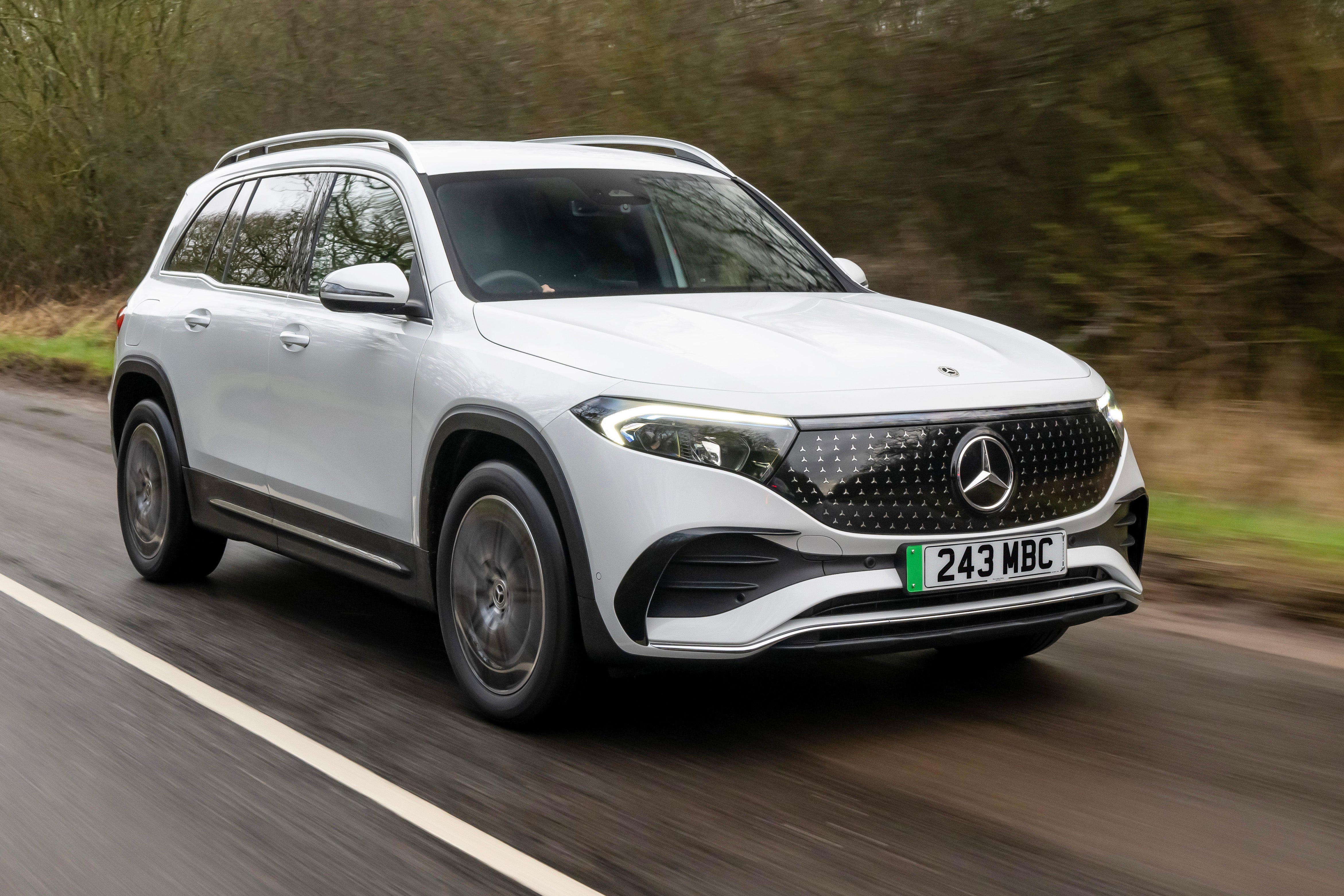
Step forward the Mercedes EQB. As the name suggests, this is the all-electric version of the Mercedes GLB - and a more practical choice than the smaller Mercedes EQA or the more sporty Mercedes EQC. So find out in our Mercedes EQB review whether this is a better choice than the five seat electric SUV alternatives like the Polestar 2 and Audi Q4 e-tron.
2024 saw the EQB get a bit of an update, with the most notable change the arrival of the EQB 250+, which replaces the EQB 250. It gets a larger 70.5kWh useable battery and sees the official range extend up to 321 miles. As well as this, there is also more powerful four-wheel drive EQB 300 and EQB 350, though they sacrifice a bit of range for performance, and both will do a claimed 266 miles on a single charge.
Indeed, the EQB isn't cheap. But then what electric car is? It starts at just over £52,000 for the Sport Executive model, but you'll want to spend a bit more for one of the AMG Line models with their sportier looks and a few more creature comforts.
Of course all models have seven seats as standard and that really makes the Mercedes EQB sit apart from rivals. They're best described as 'occasional seats' and even Mercedes says they're only designed for people up to 5ft4 in height. But kids will be happy back there and there are retractable head restraints plus a side window airbag that covers passengers in the third row. Of course with the extra seats up the boot is pretty much non-existent but fold them down into the floor and you have a usefully large and deep boot. The middle row slides too to extend this.
As far as refinement goes, the EQB is superb. It is of course silent thanks to the electric motor, but thankfully that silence isn't filled with road and wind noise. Instead the EQB moves serenely along, which is impressive given its boxy shape.
On the road it's rapid if you need it to be yet reassuring in corners. In fact it's one of the best handling electric SUVs we've tried. Of course its real forte is being a practical family car and here it excels. A full charge from a home wallbox will take around six hours and cost you £11 (ish).
Overall, the EQB makes a strong case for itself as the best electric SUV of the current Mercedes line-up. And even if you don't need the seven seats it feels more spacious than the EQA yet is cheaper than the EQC.
What's the best Mercedes Benz Eqb trim and battery option?
We'd suggest sticking with the less powerful EQB 250+ model - it has be best range of the three models and is more than quick enough if you're carting yourself and six passengers around.
The EQB 300 4Matic and the EQB 350 4Matic both have the same 250-mile range and 66.5kWh battery capacity but the EQB 350 is faster from 0-62mph, although keep doing that and the range will soon drop. We suggest the EQB AMG Line Premium is the sweet spot in the range and has everything you need for the money.
What’s the price of the Mercedes Benz Eqb?
The Mercedes-Benz EQB starts at £52,810 for the EQB 250+ Sport Executive.
The EQB 300 4Matic AMG Line Executive costs £55,320, while higher Premium and Premium Plus versions rise to £60,915.
That makes the EQB more expensive than many five-seat alternatives, including several versions of the Audi Q4 e-tron, Skoda Enyaq and Volkswagen ID.4.
Its seven-seat layout partly justifies the premium, particularly for families who need occasional access to a third row without moving to a much larger SUV.
Sport Executive makes the strongest financial case. The most expensive versions retain the same limited charging speed and child-sized rear seats.
Used examples can offer much better value. Early EQB 250 and EQB 300 models have depreciated heavily, although their official range is shorter than that of the latest 250+.
Alternatives to the Mercedes Benz Eqb
The Kia EV9 is a much larger seven-seat electric SUV. Its third row can accommodate adults, charging is much faster and its interior is considerably roomier. It is also more expensive and harder to manoeuvre.
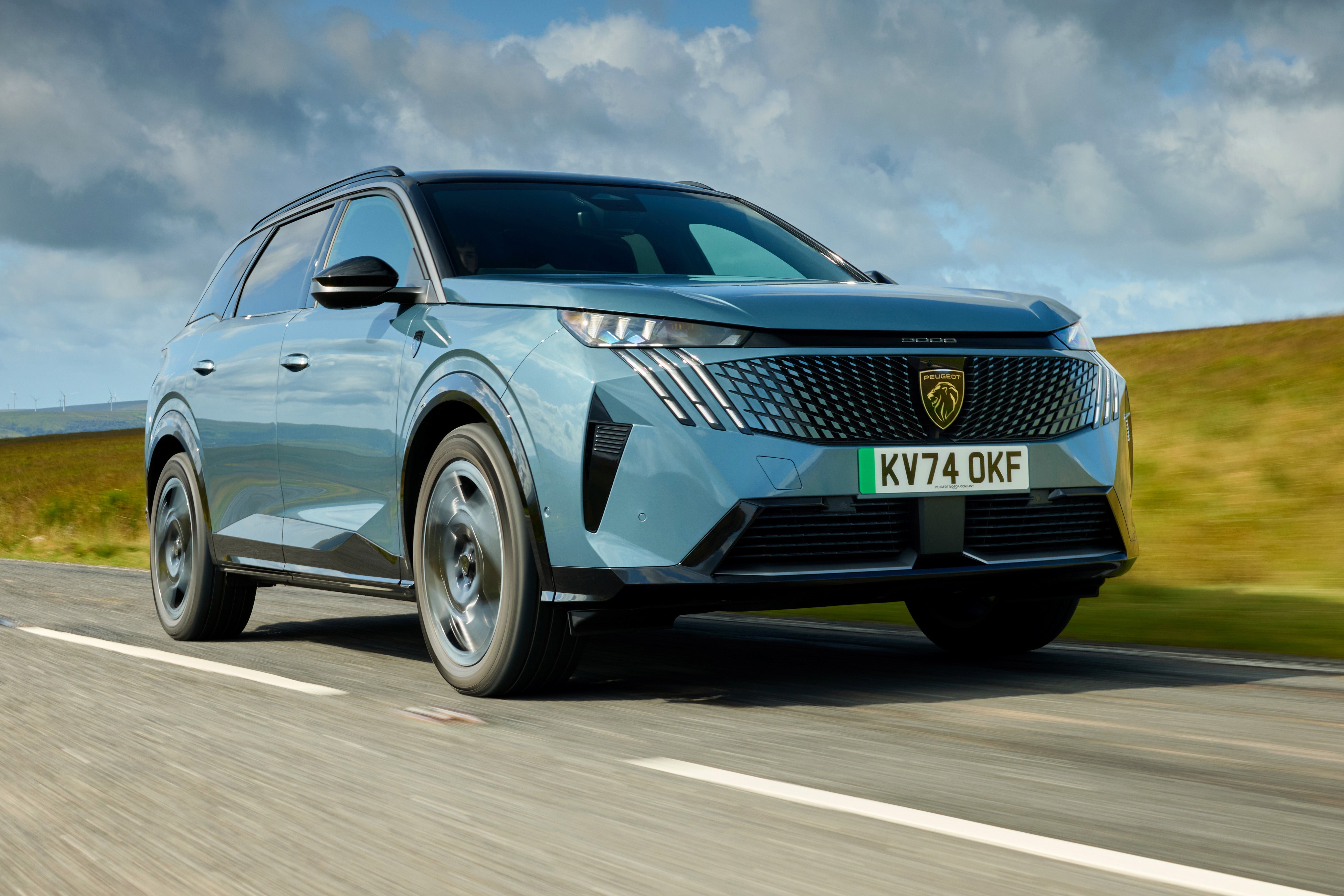
The Peugeot e-5008 provides seven seats in a newer electric package. It offers a longer maximum range and better charging performance, although its cabin does not feel as consistently upmarket as the Mercedes’.
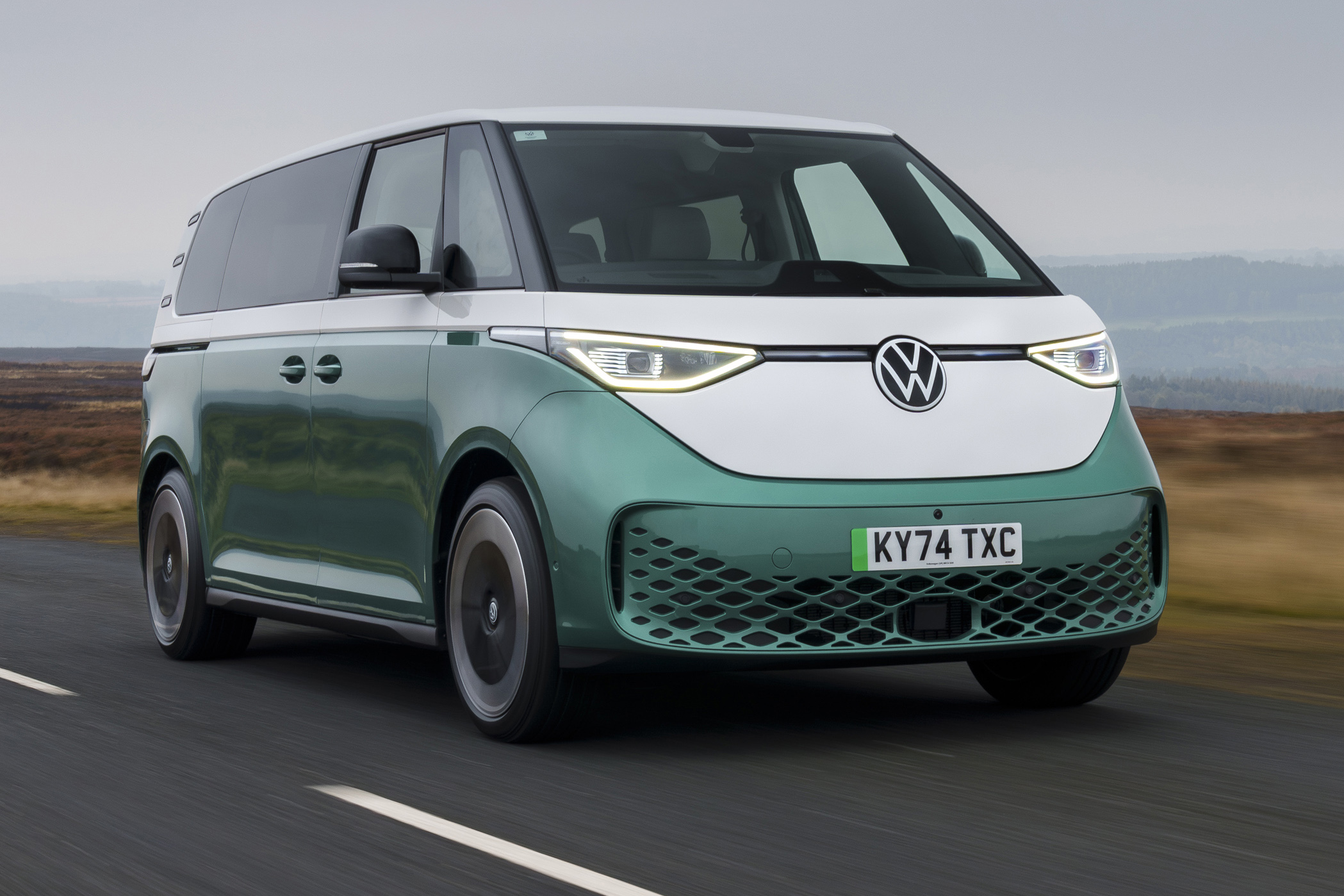
The Volkswagen ID. Buzz can carry up to seven people and provides far more interior space. Its van-like proportions make it less conventional and more cumbersome than the EQB.
The Audi Q4 e-tron is a five-seater, but its dedicated electric platform creates a larger boot and a more comfortable rear cabin. It also offers a broader choice of batteries and motors.
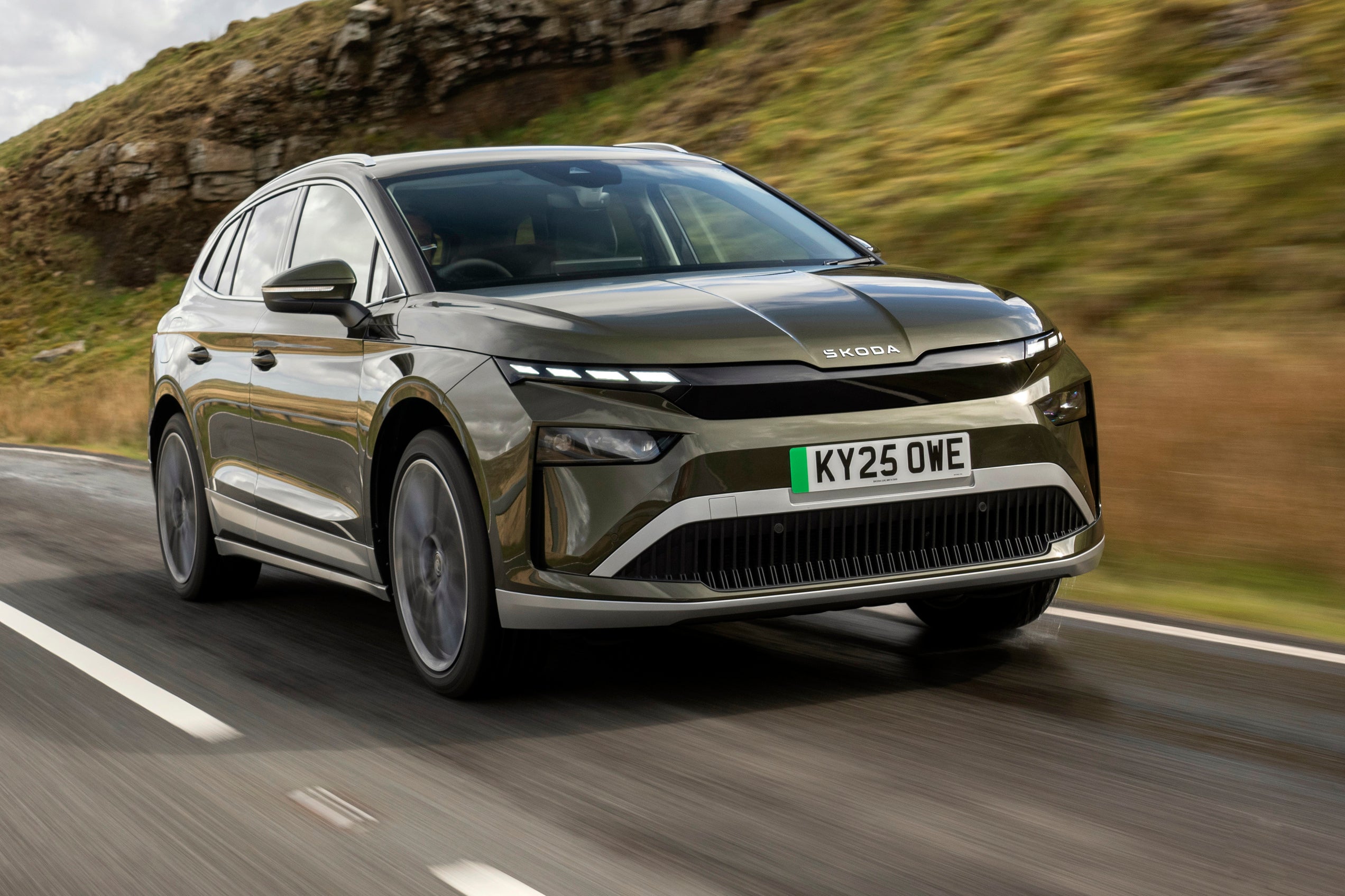
The Skoda Enyaq is spacious, comfortable and better value. It lacks the third row but is more practical for five people and their luggage.
What's the interior like in the Mercedes Benz Eqb?
The EQB has an attractive, spacious and well-built cabin. Its upright body provides generous headroom, while the standard third row gives it unusual flexibility for an electric SUV.
Mercedes Benz Eqb boot space and practicality
You get sports seats as standard on AMG Line models and there's lots of adjustment so you can easily find a good driving position whatever your build. There's also plenty of height and reach adjustment in the steering. You don't feel too perched up high but you do get that elevated driving position that means a good view out.
It certainly feels spacious, that rather unusual-for-a-modern-SUV square shape means a roomy feel inside and plenty of headroom too. We actually found it more spacious inside than the bigger EQC.
The design is another highlight here too. The latest Mercedes interiors are mightily impressive, combining a stylish modern look with a user-friendly layout. We really like the circular vents and the single screen that sits atop the dash. The gear selector is on a steering column which frees up space between the front seats.
With seven seats as standard, the EQB has one up on the competition. That said those seats tucked away at the back are really for occasional use only. Grandma isn't going to be too impressed if she's stuck back there all day. It's not that easy to clamber back there either, but at least younger kids will love it.
Mercedes says the rear row is designed for humans up to 1.65m which is 5ft4 in old money. In other words, don't expect a rugby playing teen who has had their Weetabix to fit back here. But they're very safe with retractable head restraints, seat belts with belt tensioners and force limiters on all outer seats plus a side window airbag that covers passengers in the third row.
At least you can drop the extra rear seats into the floor. And being based on the GLB, it's similarly practical too with a usefully shaped 465-litre boot in five-seat mode which will happily accommodate a pushchair and a kids scooter.
The backrests of the seats in the second row can be adjusted and the row also slides forward, so you can increase the boot length if need be. If you do use the rearmost seats, there’s practically no boot though.
And talking of the middle row, thanks to the squarer shape of the EQB, there's plenty of headroom and feels enjoyable spacious back here, something which is becoming increasingly rare with more coupe-styled SUVs.
Mercedes Benz Eqb dimensions
At 4,687mm long, the EQB is larger than the EQA but remains substantially shorter than full-size seven-seat electric SUVs such as the Kia EV9. Its 1,834mm body width increases to approximately 2,020mm with the mirrors extended. Narrow car parks, width restrictions and tight garages therefore require more care than its upright shape may suggest.
The EQB stands 1,667mm high. That creates the headroom needed for three rows without making the car feel excessively tall or van-like.
Its square body has practical benefits. The driver can judge the front corners reasonably well, while the large side windows improve visibility. Thick rear pillars and the extra head restraints restrict the view behind, making the reversing camera and parking sensors particularly useful.
Tech and infotainment in the Mercedes Benz Eqb
We're big fans of the latest Mercedes touchscreen system and layout. Across the dash there's a wide screen with the virtual dash at one side and the central infotainment display at the other. It helps add to the stylish and modern design.
The system itself is called MBUX and is very easy to use once you're familiar with it. Like most modern infotainment systems it takes a little getting used to, but once mastered, it proved simple to use. You get DAB radio and a hard disk navigation system as standard.
There are lots of menus and settings to play with, but if you're anything like us, you'll only ever use one or two functions. In other words, stick it on Radio 4 and leave it. It does also come with Apple CarPlay and Android Auto although disappointingly it has to be connected through a USB cable rather than working via Bluetooth.
MBUX works like Siri or Alexa (other voice AIs are available) so you can say things like 'hey Mercedes turn the heating up' and feel like an idiot. It's a nice touch although we doubt it's quicker than actually doing those things yourself.
The screen itself is a touchscreen that's responsive and easy to use, which is just as well as the touchpad that was on earlier models has been dropped for the facelifted Mercedes EQB.
One neat feature available on the EQB is a traffic light camera. If you stop close to a traffic light and can't quite see it, the camera will display it on the main screen for you. So no straining your neck to see it at those awkward junctions. It's part of the £1495 Driving Assistance Package. A wireless charging pad is also available as standard on the AMG Line Premium trim.
Materials available on the Mercedes Benz Eqb
Given the EQB is a premium SUV with a £50k price tag, we'd expect nothing less than a high quality finish inside. And indeed, the EQB feels suitably upmarket when you get behind the wheel. If this were a house it would be described by an estate agent as 'well appointed' and would most certainly have a Poggenpohl kitchen.
Every surface, from the doors, to the dash top and all the buttons and controls, offers a wonderfully tactile experience. There are no cheap plastics here but plenty of metal trim including a nice row of switches in the centre console for the air conditioning - something we much prefer to having it controlled through the touchscreen.
What's the Mercedes Benz Eqb like to drive?
The EQB is refined, composed and more agile than its upright shape suggests. It is not especially exciting, but feels secure and easy to control.
Mercedes Benz Eqb range and performance
The original EGB 250 had a 66.5kWh battery, but this has been replaced by a larger 70.5kWh that powers a motor to deliver drive to the front wheels. This produces 190PS and goes from 0-62mph in 8.9 seconds.
The four-wheel drive EQB 300 and EQB 350 both use the same 66.5kWh battery. In the EQB 300 this delivers 228PS and 370Nm of torque. On paper it covers 0-62mph in 7.7 seconds but it's the pace from a standstill which most impresses, however we found the rapid acceleration from around 30mph most useful for safe overtakes or joining fast flowing dual carriageways from short slip roads.
Go for the EQB 350 and power is upped to 292PS but with the same torque. It's quicker from 0-62mph, taking a mere 6.0 seconds, but we think the EQB 250+ has more than enough power for a family SUV. It certainly never feels wanting while three models are limited to 99mph.
The Mercedes EQB 250+ can cover up to 321 miles officially, though this depends on the trim as this is only possible on the entry-level Sport Executive with smaller 18-inch alloy wheels. On the larger 20-inch wheels that are on AMG Line cars, expect range to drop to a still competitive 300 miles.
The Mercedes EQB 300 and 350 can cover just over 250 miles on a single charge according to the official WLTP figures. Bear in mind though (and in this includes the 250+ as well) that range is dependent on various factors including the weather - those heated seats that keep your bum warm will also see the range drop - and of course your driving style. Keep overtaking people and those figures on the dash start to drop alarmingly quickly.
So while the EQB 350 may be enjoyably rapid, lots of accelerating will see the range quickly deplete. For maximum range, you want to have a gentle right foot and use the D- setting which maximises braking energy recuperation.
Performance data
| Model | Engine/battery size | Power | 0-62mph | Range/MPG |
|---|---|---|---|---|
EQB 250+ | 70.5kWh | 190PS | 8.9 seconds | Up to 321 miles |
EQB 300 4Matic | 66.5kWh | 231PS | 7.7 seconds | Up to 271 miles |
Mercedes Benz Eqb driving and refinement
Get past all the electric tech and assistance systems and you'll find the EQB actually very good to drive. Which isn't something we can say of all electric SUVs. The steering is nicely weighted, it corners extremely well and feels very capable.
True it's not the most fun thing to drive, this is still a family car after all, but for an SUV the EQB is impressive in its ability to handle corners with minimal fuss and without lots of lean. There's lots of front end grip, even in the wet, so it gives you plenty of reassurance which is surely what every parent wants when they have the family on board.
The steering has a nice weight to it and responds quickly to inputs so although it does feel artificial, that doesn't affect how well the EQB handles. It's certainly more engaging than a Volkswagen ID.4 and surprisingly feels more agile than an Audi e-tron.
With its single-speed gearbox, acceleration is smooth and linear while both models give strong pace. There are paddles on the steering wheel but rather than change gear, these control the regenerative braking assist, reusing energy that would otherwise be lost.
There are three settings with D- the most effective - switching to that sees the car brake dramatically when you come off the throttle. It takes a little getting used to but you can always use the adaptive mode which works with the nav and radar to automatically change the settings, braking more when you approach a junction or are slowing down behind another car.
How safe is the Mercedes Benz Eqb?
Euro NCAP awarded the Mercedes-Benz EQB five stars.
The rating is based on the closely related GLB’s 2019 assessment. Euro NCAP compared the structure and safety equipment of the two cars and carried out additional tests before extending the result to the EQB.
The original GLB scored 92 per cent for adult-occupant protection and 88 per cent for child-occupant protection.
The EQB includes autonomous emergency braking, lane-keeping assistance, speed-limit recognition and multiple airbags.
The third row receives retractable head restraints, three-point belts and side-window airbag protection.
Higher specifications and optional assistance packages add adaptive cruise control, enhanced lane guidance and further collision-avoidance functions.
The five-star rating is now listed as expired because it was achieved under an older testing protocol. It remains evidence of strong performance under the standards used at the time, but should not be compared directly with a car assessed under the latest rules.
Running costs: What it's like to live with a Mercedes Benz Eqb
The EQB can be inexpensive to charge at home, but its insurance, tax supplement and relatively slow public charging increase the overall cost of ownership.
Mercedes Benz Eqb charging times and costs
If you have access to a DC rapid charger, you can charge the Mercedes EQB to 80% in just half an hour. If you're at home, you can expect charge times from 6 hours 45 minutes (EQB 300 and EQB 350) to 7 hours 15 minutes (EQB 250+), though that's charging from 0-100%, so in most instances that time should drop quite a bit. If you're can't get to a wallbox (say for instance you're visiting the in laws) you can charge it from a 230V three-pin socket but this will take 30 hours. Looks like you might be staying for that extra cup of tea after all...
Mercedes Benz Eqb warranty and servicing
The EQB has a three-year manufacturer warranty with no mileage limit.
Its high-voltage battery is covered for eight years or 100,000 miles, subject to Mercedes-Benz’s warranty terms and capacity conditions.
Electric cars have fewer routine mechanical service items than petrol or diesel models, but the EQB still requires scheduled checks of its brakes, tyres, suspension, cooling systems and electrical components.
Mercedes Benz Eqb insurance groups
The lowest insurance group for the Mercedes EQB is 46, with the range topping out at 50 (the highest insurance group possible). While EVs do cost more on average to insure compared to a petrol or diesel car, it's still pretty high - the Audi Q4 e-tron starts in the low 30s for example.
How much does it cost to tax a Mercedes Benz Eqb?
From the second licence, the standard annual rate is £200. Zero-emission cars with an official list price above £50,000 attract the Expensive Car Supplement. Every current EQB exceeds that threshold.
The supplement is £440 a year for five years from the beginning of the second licence. At current rates, the annual total during that period is £640.
The calculation uses the official list price, including factory-fitted options, rather than the discounted amount a customer may pay.
What trims are available with the Mercedes Benz Eqb?
The EQB 250+ Sport Executive is the best choice.
It includes 18-inch alloy wheels, LED lighting, privacy glass, heated front seats, parking assistance, the twin-screen MBUX system and smartphone integration.
Its smaller wheels also provide the best official range, the most comfortable ride and the lowest road noise.
AMG Line Executive adds 20-inch wheels, more assertive body styling, Artico and Dinamica upholstery and a sports steering wheel.
AMG Line Premium adds adaptive damping, keyless entry, wireless phone charging, a 360-degree camera and upgraded interior trim.
AMG Line Premium Plus brings a panoramic glass roof, Burmester surround-sound system and head-up display.
The higher trims look and feel more distinctive, but their larger wheels reduce efficiency and comfort. They also make an already expensive car substantially dearer. Sport Executive offers all the equipment most families need and remains the most convincing version.
Ask the Drive experts: common questions
Is the Mercedes-Benz EQB a good electric SUV?
Which Mercedes-Benz EQB is best?
How far can the Mercedes-Benz EQB travel on a charge?
How quickly can the Mercedes-Benz EQB charge?
Does the Mercedes-Benz EQB have seven seats?
How practical is the Mercedes-Benz EQB?
Is the Mercedes-Benz EQB four-wheel drive?
Is the Mercedes-Benz EQB safe?
What warranty does the Mercedes-Benz EQB have?
Get our latest advice, news and offers
Keep me updated by email with the latest advice, news and offers from Drive.
.jpg)
.jpg)