Skoda Octavia vRS Review

Written By Phil Hall
- 2020
- Hatchback or estate
- Petrol
What we love
Genuinely quick, but still easy to live with every day
Much more practical than most hot hatch alternatives
One of the best all-round fast family cars on sale
Things to consider
Earlier versions offer a wider choice of engines
Performance is balanced with everyday usability
vRS specification comes with a price premium
The DRIVE take on the Skoda Octavia, is it the right car for you?
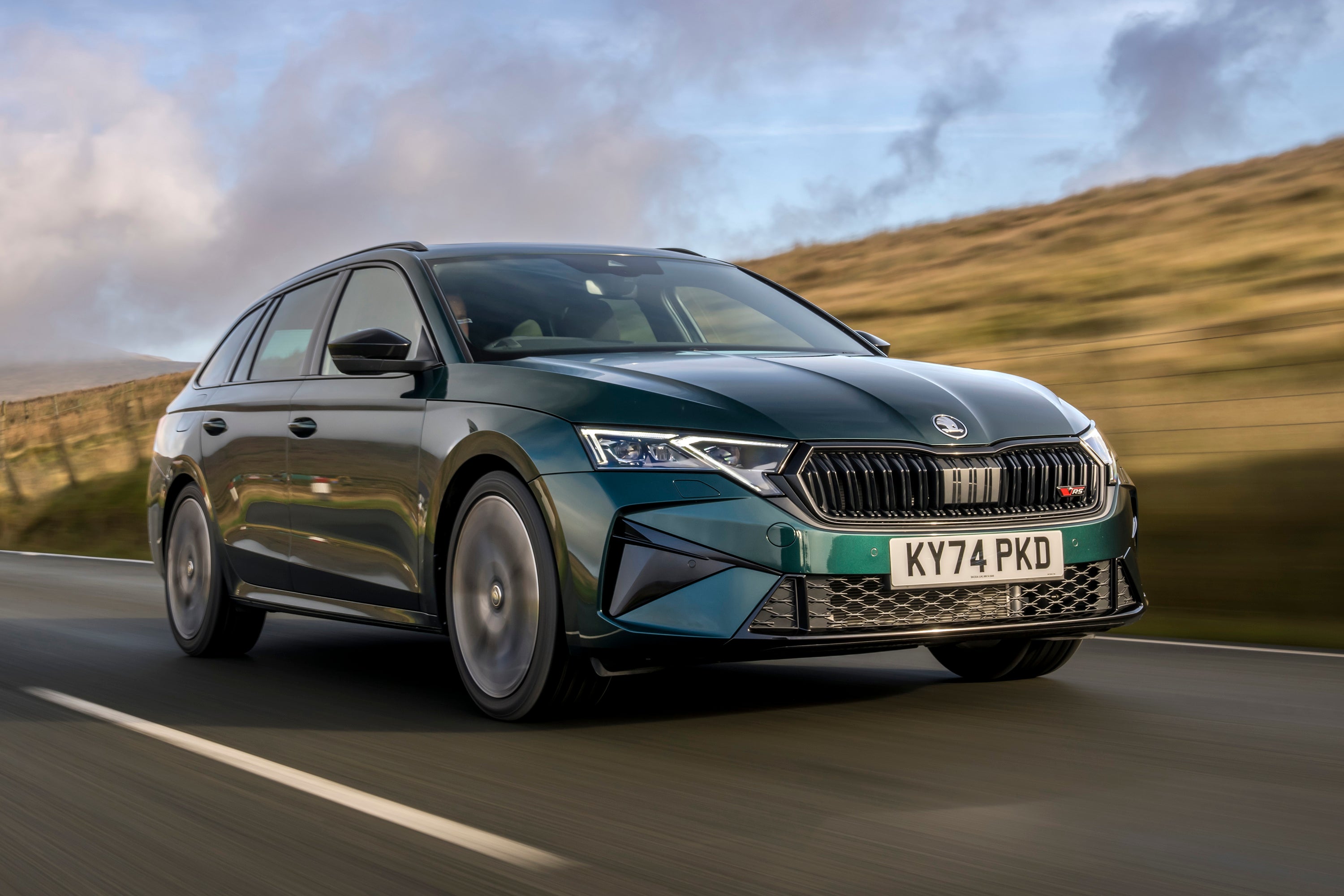
The Skoda Octavia vRS is the Swiss Army Knife of cars - a fantastic all-rounder, delivering big on both practicality and performance. It delivers all the pace most buyers will ever need, but the bigger selling point is how well it combines that performance with everyday usefulness. There’s lots of room for gangly adults in all of the seats, a massive boot in both hatch and estate forms, and enough long distance comfort to make it feel like a sensible car first and a fast one second. If you want a more playful hot hatch, a Volkswagen Golf GTI is the sharper choice. But if you want the broader-shouldered all-rounder that can take on family duties, motorway miles, and the odd entertaining back-road blast without fuss, the Octavia vRS makes more sense.
The Skoda Octavia in more detail
The Octavia vRS has always appealed to buyers who want performance without the compromises that usually come with it, and that is still at the core of its appeal now. The current car is based on the fourth-generation Octavia, launched in 2020 and updated in 2024. It was once offered with petrol-, diesel-, and even plug-in hybrid power, all with more than 200 horsepower under the bonnet, but the UK range has now been simplified to a single petrol powertrain. That means a 2.0-litre turbocharged petrol engine with 265hp, a seven-speed DSG automatic gearbox and front-wheel drive, available in both hatchback and estate forms. Officially, the hatch manages 0-62mph in 6.4 seconds and the estate is only fractionally behind, while top speed is 155mph.
Browse used Škoda Octavia vRS models for sale →
The Octavia vRS is usefully quick, then, but the point of this car is not outright drama. It’s the way it blends pace with real-world usability. A Golf GTI or Cupra Leon VZ may feel a little more eager, and if you’re buying used, the now-discontinued Hyundai i30 N and Honda Civic Type R are more mischievous again, but no rival offers the same space, boot capacity or discreet all-round competence. The Octavia vRS is the car for someone who wants one vehicle to do pretty much everything. It can cover family duties, tedious commutes, and long motorway runs, yet still have enough sparkle to feel special when the road opens up.
The facelifted car keeps that formula intact. It looks a little sharper, gets the latest version of Skoda’s infotainment system, and maintains the familiar vRS mix of sportier styling, lowered suspension and more generous standard equipment. Inside, it still majors on space and sensible touches rather than flashiness, which suits the car. There’s a reason why the Octavia vRS has enjoyed a loyal following among people who use their cars hard every day, and this one still feels engineered around that sort of buyer.
What's the best Skoda Octavia trim and engine option?
The answer to that question is now simpler than it used to be, because there is now only one vRS engine option. If you are buying a brand new Octavia vRS, you get the 2.0 TSI petrol engine with 265PS and the seven-speed DSG as standard, whether you choose the hatchback or the estate. The old diesel and plug-in-hybrid vRS versions are no longer part of the current UK new car line-up, which means there is less to think about, but also less scope to tailor the car to a particular use case.
That does not feel like a major loss for most buyers, though. This petrol engine suits the Octavia vRS very well. It’s strong enough to make the car feel properly brisk, smooth enough for sophisticated everyday driving, and it’s still capable of around 40mpg on paper. The biggest choice you have to make is on body style. The hatchback is the one to go for if you want the cleaner look and do not need maximum luggage space. The estate is the sweeter all-rounder, because it gives you even more carrying capacity for a relatively small price increase and does not feel noticeably less sharp to drive. For most Drive readers, we think the estate is the sensible sweet spot.
What’s the price of the Skoda Octavia?
The Skoda Octavia vRS hatch starts at £40,610 on the road, while the Octavia vRS estate starts at £41,715. That makes it more expensive than older Octavia vRS generations and means it no longer trades on budget performance car charm in quite the same way. Still, judged against what you get, the pricing is not unreasonable. A Volkswagen Golf GTI is more expensive, and an equivalent Cupra Leon VZ more expensive still, and once you factor in the Skoda’s extra space and stronger practicality, the Octavia vRS feels like a very solid buy. There are also plenty of used Škoda Octavia vRS models for sale for considerably less
Other than those two in-house rivals, there aren’t many others to do price comparisons with, as there are so few hot hatches left these days. There’s also the BMW M135i, but that’s the most expensive car of the lot.
Alternatives to the Skoda Octavia
The most obvious alternative is the Volkswagen Golf GTI. It uses closely related hardware, feels a bit more alert and polished from behind the wheel, and is the better choice if driver appeal matters more than outright space. The downside is that it is not as roomy or as useful, especially in the boot.
If practicality is the biggest priority, the regular Skoda Octavia range already does everything that the vRS does for less money. Buyers wanting pace with an estate body should also look at the Cupra Leon Estate, coming with a range of engine options including a 333PS petrol engine with four-wheel drive, while those willing to sacrifice some boot space for a more overtly sporty feel, and aren’t afraid to buy used, may prefer a Hyundai i30 N or Honda Civic Type R (these are no longer available as brand new cars).
What's the interior like in the Skoda Octavia?
The Octavia vRS has an interior that suits its brief perfectly. It is roomy, sensible and easy to live with, but the vRS-specific details stop it feeling too plain. Space is the headline act, especially in the back and in the boot, while the driving position is good and the cabin still feels more mature than many obvious hot hatch alternatives.
Skoda Octavia boot space and practicality
Practicality is clearly one of the Octavia vRS’s biggest strengths and one of the most compelling reasons to choose it over a more conventional hot hatch. The hatchback offers 600 litres of boot space, while the estate stretches that to 640 litres. Fold the rear seats, and cargo space the hatch rises to 1555 litres, while the estate expands to 1700 litres. Those are very impressive numbers, and they comfortably outgun a Golf GTI.
That roominess is not limited to the luggage area, either. Rear passenger space is a huge strong point, too, with plentiful legroom and headroom, allowing even tall adults to stretch out. The estate is the one to choose if you regularly carry bulky loads, dogs or holiday gear, but even the hatch is far more capacious than most quick hatchbacks. Roof rails are standard as well, meaning it's easy to fit roof bars as well.
Up front, the driving position is low enough to feel sporty without impinging on comfort or visibility, and there’s lots of adjustment to help you get comfortable at the wheel. Skoda’s usual practical touches help as well, with plenty of storage and some genuinely clever features that really do help make family life that little bit easier. This is one of the few fast cars in this price bracket that feels as though it has been designed around proper family use rather than showroom appeal.
Skoda Octavia dimensions
The current Octavia vRS is 4,698mm long and 1,829mm wide without mirrors, or 2,003mm wide including them. The hatchback is around 1,455mm tall, while the estate is around 1,453mm tall (SportLine and vRS models sit 15mm lower than regular Octavias if you’re interested). That makes it one of the bigger hatchbacks and that extra footprint is how it offers more rear space and boot capacity than rivals like the Golf GTI.
Tech and infotainment in the Skoda Octavia
The current Octavia range uses Skoda’s latest infotainment setup, and the vRS is no different. There’s a 13.0-inch touchscreen in the middle of the dashboard, and a 10.25-inch digital instrument screen behind the steering wheel known as ‘Virtual Cockpit.
Standard equipment for the system includes DAB radio, Bluetooth, navigation, wireless SmartLink for Apple CarPlay and Android Auto, wireless phone charging, multiple USB-C ports and an eight-speaker audio system. That means it has all the essentials buyers expect at this price.
The usability of the system is decent rather than class-leading. Like a lot of cars these days, the Octavia requires you to use touchscreen controls for too many functions, which is more distracting than using physical buttons and dials. As such, the screen can look cluttered with on-screen icons, and some of those icons have a rather ambiguous design, making it even less obvious which one you need. Things get easier over time as you get more familiar with the system, but some rivals have more intuitive interfaces.
Having said all that, the screen looks crisp and modern, and it’s mounted high enough on the dashboard for it to be easy to read and reach. The digital instruments are also clear, too, and you can configure a variety of different layouts. If you are moving into the Octavia from an older Skoda, the cabin will feel like a meaningful step forward in terms of tech.
Materials available on the Skoda Octavia
The Octavia vRS gets its own interior trim treatment rather than simply borrowing the standard Octavia’s cabin unchanged. You get sports seats with fabric upholstery, carbon-effect decorative inserts, black headlining and the usual vRS-specific detailing. The overall effect is understated rather than flashy, which suits the car well. It’s nowhere near as extroverted as some rivals, which many buyers will like.
Importantly, the quality of the plastics used feels really good, giving a high-class and substantial feel to the Octavia’s interior. This is a posher-feeling car than you might expect.
What's the Skoda Octavia like to drive?
The Octavia vRS is quick, composed and easy to get along with. It’s certainly not the wild child of the fast-family-car class, but that is part of its appeal. The best way to think of it is as a rapid all-rounder rather than a hard-edged hot hatch.
Skoda Octavia range and performance
There is now just one engine offered in the vRS: a 2.0-litre turbocharged petrol producing 265PS and 370Nm of torque, paired with a DSG automatic gearbox. Officially, the Octavia vRS hatch reaches 62mph in 6.4 seconds, while the estate takes 6.5 seconds, and both can go on to reach 155mph flat out if you happen to have an airport runway at your disposal.
Those numbers only tell you so much, though. The Octavia vRS is fast enough to feel properly brisk, especially in everyday overtaking and when joining the motorway, and the pace will definitely raise a smile when you’re feeling in the mood. It’s not the rip-snorting, uncompromising performance car that some hot hatches are, but then again, it’s not trying to be. It majors on easy pace rather than pure freneticism.
The DSG gearbox suits that character. It keeps the car effortless in traffic and relaxed on longer runs, staying smooth and responsive at all times. Some keen drivers may miss a manual gearbox option, but the vRS’s is a powertrain that fits the car’s all-round remit very well.
Performance data
| Model | Engine/battery size | Power | 0-62mph | Range/MPG |
|---|---|---|---|---|
2.0 TSI vRS Hatchback | 2.0-litre | 265PS | 6.4 seconds | Up to 40.8mpg |
2.0 TSI vRS Estate | 2.0-litre | 265PS | 6.5 seconds | Up to 40.4mpg |
Skoda Octavia driving and refinement
The Skoda Octavia vRS is the guilt-free hot hatch. It's a brilliant family car not just because it's hugely spacious for its size, but because it is also quiet and comfortable. It's a hot hatch with a softer edge, but it's still a car that you can enjoy driving when the stars align and you find yourself in an empty car on a great road.
As such, the changes made to the Skoda Octavia vRS make it tauter and more engaging but don't give it a completely different character to the standard car. All models get a sports chassis that sits 15mm lower on 19-inch alloy wheels, quicker steering (2.13 turns lock-to-lock instead of 2.7), plus petrol cars come with an electronically controlled limited-slip differential (LSD).
The effect of these upgrades is to make the Octavia vRS more well-rounded than a Premiership-grade Nike Flight football – a proverbial jack-of-all-trades that's as happy stop-starting through town as it is cruising up the motorway or gobbling up the twists and turns of your favourite country road.
That quicker steering means the Skoda Octavia vRS feels keener in bends than the standard car, the stiffer suspension gives you more control and there's plenty of grip. Turn into a corner and you do get body roll – much more than you would in the far more focused Honda Civic Type R – but the Octavia vRS feels eager and controlled.
An option you might want to consider is Dynamic Chassis Control (DCC). These adjustable dampers allow you to choose between more control in corners or added comfort over bumps – either by choosing from one of the presets in the menu, or by selecting between a 15-stage slider on the infotainment screen.
The Skoda Octavia vRS is a relaxed cruiser and comes with adaptive cruise control as standard that can brake and accelerate the car for you. The seven-speed DSG automatic gearbox changes gears quickly and smoothly when you've found a good B road, while around town we haven't found it as hesitant as we have in pre-facelift cars.
The Skoda Octavia vRS's standard front and rear parking sensors also help allowing you to get close up to parked cars before warning you to stop, Thankfully Skoda's dropped the reversing camera from the options list and bundled it in as standard on the facelifted Octavia vRS.
Sure, it won't leave you sweaty-handed and hyper-engaged like a Honda Civic Type R but the majority of time, when you can't drive like you're on a mission, it's the Octavia vRS that you'd rather be in.
Refinement is one of the Octavia vRS' biggest strengths because it is one of the easiest hot hatches you could live with every day. Its light controls might not offer megaphone levels of communication, but feather-weight pedals and steering that offers little resistance in comfort mode make it a very relaxing car to drive in town and cover distances in.
By the same token, while the exhaust doesn't give the big-grin pops and gurgles offered by some rivals, it won't make you feel like a prat or become wearing. Skoda's tweaked the engine profile to give you a little bit more noise at start-up, but noise in general is very well hushed and at a cruise all you notice is the extra thrum created by the vRS larger 225-section tyres.
How safe is the Skoda Octavia?
This fourth-generation Skoda Octavia has undergone Euro NCAP crash-testing on a number of occasions, the last of which took place in 2025. The good news is that it achieved the full five-star rating, just like it had in both its previous tests. Despite its age and ever-increasing testing standards, the Octavia remains a strong performer in this important area, another reason it makes such a great family car.
The standard roster of safety kit on the Octavia vRS includes adaptive cruise control, blind spot monitoring, lane assist, front assist, turn assist, traffic sign recognition, driver fatigue alert, tyre pressure monitoring, cruise control with a speed limiter, and a generous airbag count: there are eight as standard, and another two available on the options list.
Running costs: What it's like to live with a Skoda Octavia
For a 265PS petrol performance car, the Octavia vRS should be reasonably affordable to run. Okay, so it’s not cheap by mainstream family car standards, but fuel economy is respectable given the level of power, and insurance isn’t outrageous. However, the £40,000-plus list price does have implications for VED road tax.
Skoda Octavia fuel economy
Official WLTP economy stands at up to 40.8mpg for the hatchback, and up to 40.4mpg for the estate. In context, that is a decent showing for a front-wheel-drive petrol performance car with this level of pace. It means the Octavia vRS should be easier to justify than older, thirstier fast family cars, or newer ones with crazier amounts of power.
Obviously, you should still expect real-world economy to dip if you use the performance regularly or do mostly short trips, but this is not an obviously extravagant car to run given what it offers.
Skoda Octavia warranty and servicing
Skoda’s new-car warranty stands at three years, made up of two years with unlimited mileage, plus a third year with a mileage car of up to 60,000 miles. You can extend cover to four years or 80,000 miles for £280, four years or 100,000 miles for £300, or five years or 100,000 miles for £575. Approved Used Skodas also come with a one-year warranty as standard.
You have two choices over how you deal with servicing. There’s a fixed regime of every year or 10,000 miles, which is recommended for low-mileage drivers who do mainly short journeys in urban areas, plus those who tow. Alternatively, there’s a flexible regime for higher-mileage drivers who do more motorway work. Under this arrangement, the car will let you know when it needs attention, and this can happen anywhere between 9,000 miles and 24,000 miles - or a maximum of 24 months - between services.
Skoda Octavia insurance groups
The current Octavia vRS hatchback and estate both sit in insurance group 27. That is not bargain-basement cheap, but it is lower than some more overtly performance-focused rivals, and reinforces the point that this is a fast family car with relatively sensible running costs, rather than an out-and-out performance weapon.
How much does it cost to tax a Skoda Octavia?
Because both the Octavia vRS hatchback and estate cost more than £40,000 when brand new, both are liable for the higher rate of VED road tax. So, on top of your regular flat rate of £200 per year, you pay an additional £440 per year for a five-year period between years two and six of the car’s life, meaning an annual outlay of £640. And that’s assuming the rate doesn’t go up again in that time, which it probably will. After that five-year period, your annual tax payments revert back to just the flat rate.
What trims are available with the Skoda Octavia?
The Octavia vRS stands as its own trim level at the top of the regular Octavia range. Standard vRS equipment includes 19-inch Elias anthracite alloy wheels, full LED Matrix headlights, vRS bumpers, black exhaust tailpipes and the vRS suspension, lowered by 15mm. Inside, you get the dedicated Octavia vRS cabin treatment with sports seats, carbon-effect trim and black headlining. Skoda also includes predictive adaptive cruise control with traffic jam assist, keyless entry and start, a handsfree electrically operated bootlid, a double-sided boot floor cover, blind-spot detection, a heated windscreen, dual-zone air-conditioning, front-and rear parking sensors, a rear-view camera, and some extra practical touches such as boot nets and a waste bin in the door. That is a strong standard package, and it means the Octavia vRS does not need to be loaded with options to feel complete.
Ask the Drive experts: common questions
How much does the Skoda Octavia vRS cost?
What engine does the Skoda Octavia vRS use?
How quick is the Skoda Octavia vRS?
How big is the Skoda Octavia vRS boot?
Get our latest advice, news and offers
Keep me updated by email with the latest advice, news and offers from Drive.
.jpg)