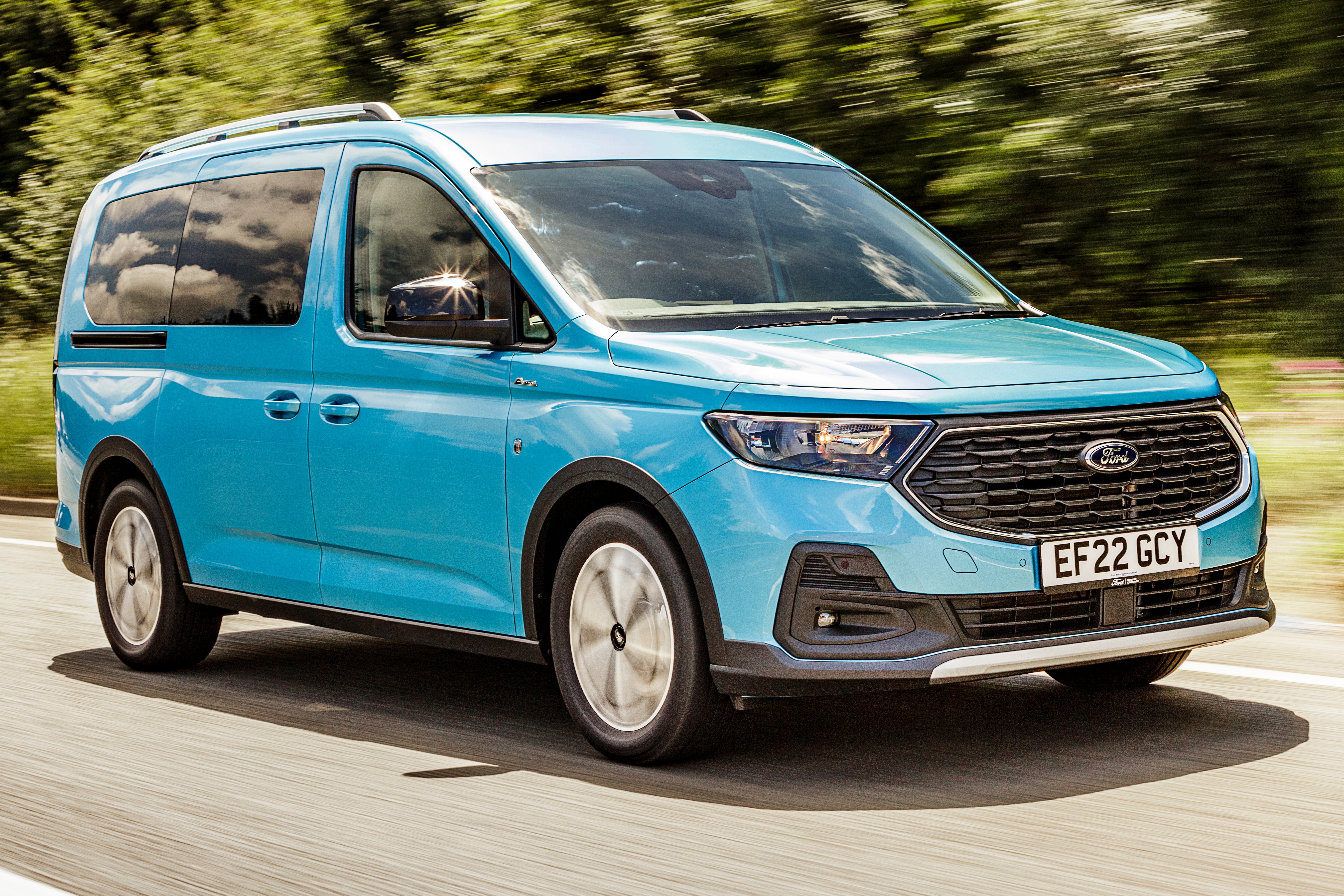
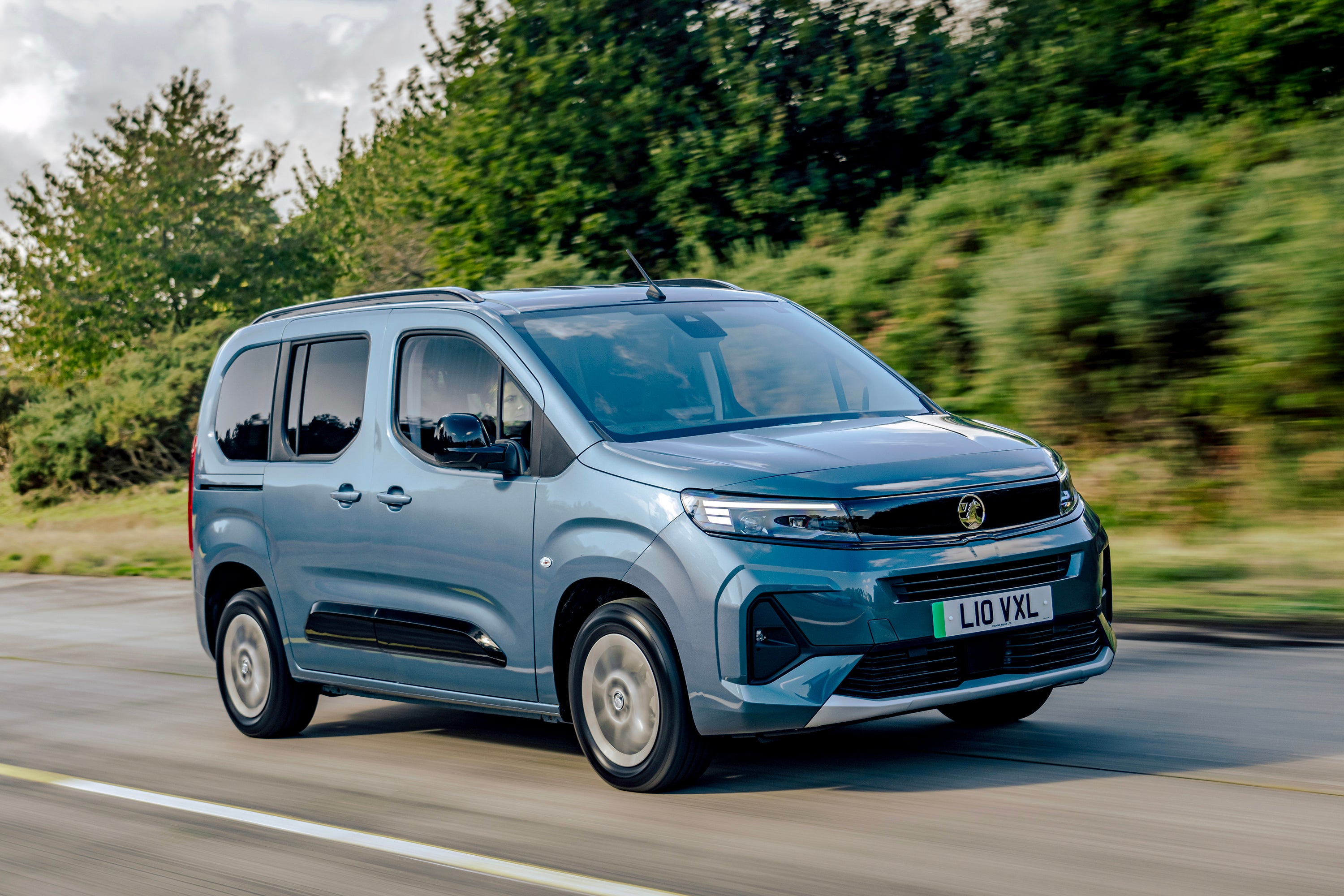
Vauxhall Combo Life Electric Review

Written By Ivan Aistrop
- 2021
- MPV
- EV
What we love
Enormous cabin and luggage space
Very flexible five-seat and seven-seat layouts
Easy, comfortable and unintimidating to drive
Things to consider
Real-world range is limited
Looks and feels van-based in places
Euro NCAP rating is old and has expired
The DRIVE take on the Vauxhall Combo Life, is it the right car for you?
The Vauxhall Combo Life Electric is for buyers who care much more about space, practicality and ease of use than styling, image or driving flair. It’s one of those rare cars that feels designed entirely around the needs of families with lots of people, lots of luggage and lots of everyday clutter.
That makes it a very convincing thing in the right context. If you need maximum usefulness in a footprint that’s still manageable on normal roads, few cars do the job better. The sliding side doors, high roof and boxy shape provide more genuinely usable space than you’ll find in most similarly sized SUVs.
The current version is also more capable than the original Combo-e Life. Its 52kWh battery provides up to 213 miles of official range, compared with 174 miles from the early 50kWh model, while the newer infotainment and regenerative-braking controls make it easier to live with.
The catch is that its real-world range remains modest, especially in cold weather or when the car is fully loaded. The Combo Life Electric is never going to feel as polished or fashionable as a more conventional passenger car, either.
Even so, buyers who value space and flexibility above everything else will find a lot to like.
The Vauxhall Combo Life in more detail
The Combo Life Electric is one of those cars that makes more sense the longer you spend around it. On paper, the idea of a van-based electric MPV might not sound especially glamorous, but glamour isn’t really the point.
What Vauxhall has done here is take the basic virtues of a compact van platform and turn them into something very useful for family life. The tall roof, boxy shape, sliding rear doors and sheer amount of cabin space all make the Combo Life Electric feel purpose-built for people who need function before fashion.
That means it occupies a slightly unusual place in today’s market. Most family buyers have drifted towards SUVs, even when an MPV might serve them better. The Combo Life Electric doesn’t try to disguise what it is, and in some ways that honesty is part of its appeal.
The current range was introduced as part of the 2024 facelift. It brought Vauxhall’s Vizor front-end treatment, Matrix LED headlights, a 10-inch touchscreen, a 10-inch digital instrument display and a new 52kWh battery. It was initially announced with up to 199 miles of range, although current UK homologation figures now run from 208 to 213 miles depending on body length and trim.
The regular passenger-car range is effectively electric-only. Vauxhall’s price guide lists diesel versions, but they’re restricted to conversions into wheelchair-accessible vehicles through approved converters rather than being part of the normal retail range.
Current buyers choose between Design and Ultimate trims, with a standard five-seat body or the longer seven-seat XL. The drivetrain is the same throughout: a 52kWh battery, 136PS electric motor and single-speed automatic transmission.
Used buyers will encounter the earlier Combo-e Life name. That version launched in 2021 with a 50kWh battery, 136PS, 260Nm and up to 174 miles of official range. It was initially sold exclusively in SE trim, with the standard-length body available with five or seven seats and XL models always having seven.
The motor output hasn’t changed, but the current specifications quote 270Nm rather than the earlier car’s 260Nm. The current model also has three regenerative-braking settings selected using steering-wheel paddles, replacing the simpler normal and B-mode arrangement used by the original car.
The challenge, of course, remains range. Even with the efficiency improvements, this isn’t a long-distance EV by current standards. But if your use is mostly local, suburban or school-run family life with predictable charging opportunities at home, the Combo Life Electric can still make a lot of sense.
What's the best Vauxhall Combo Life trim and battery option?
For most buyers, the sweet spot is the Combo Life Electric Design XL.
There is only one battery and motor setup, so the real decision is body style and trim. The XL is the version we would choose because the extra length and optional third row make it much more versatile for family duty, while still keeping the car shorter and less intimidating than many large SUVs.
Design is also the trim to target. It already gets most of what you need, including the 10-inch touchscreen, rear parking sensors, cruise control, Matrix LED headlights, folding front passenger seat, dual sliding side doors and a broad spread of safety kit.
Ultimate adds worthwhile extras such as dual-zone climate control, heated steering wheel, 180-degree reversing camera, darker rear glass and the more versatile three individual second-row seats, but the core value case is stronger in Design unless you know you will use those extras regularly.
What’s the price of the Vauxhall Combo Life?
The Vauxhall Combo Life Electric starts at £32,340 for the five-seat Design. Design XL costs £33,240. The five-seat Ultimate is £34,855, while the seven-seat Ultimate XL tops the range at £35,755.
Those are the official on-the-road prices before the Electric Car Grant. The current £1,500 grant reduces them to £30,840 for Design, £31,740 for Design XL, £33,355 for Ultimate and £34,255 for Ultimate XL. The grant is applied by the retailer to an eligible order rather than claimed separately by the customer.
The current pricing is a large part of the Combo Life Electric’s case. It isn’t cheap in the abstract, but when you consider the amount of space and flexibility on offer, it starts to look more reasonable.
This is also one of those cars where the used market matters a lot. Depreciation means nearly new and early examples can look extremely tempting if you want the packaging benefits without the new-car price.
Alternatives to the Vauxhall Combo Life
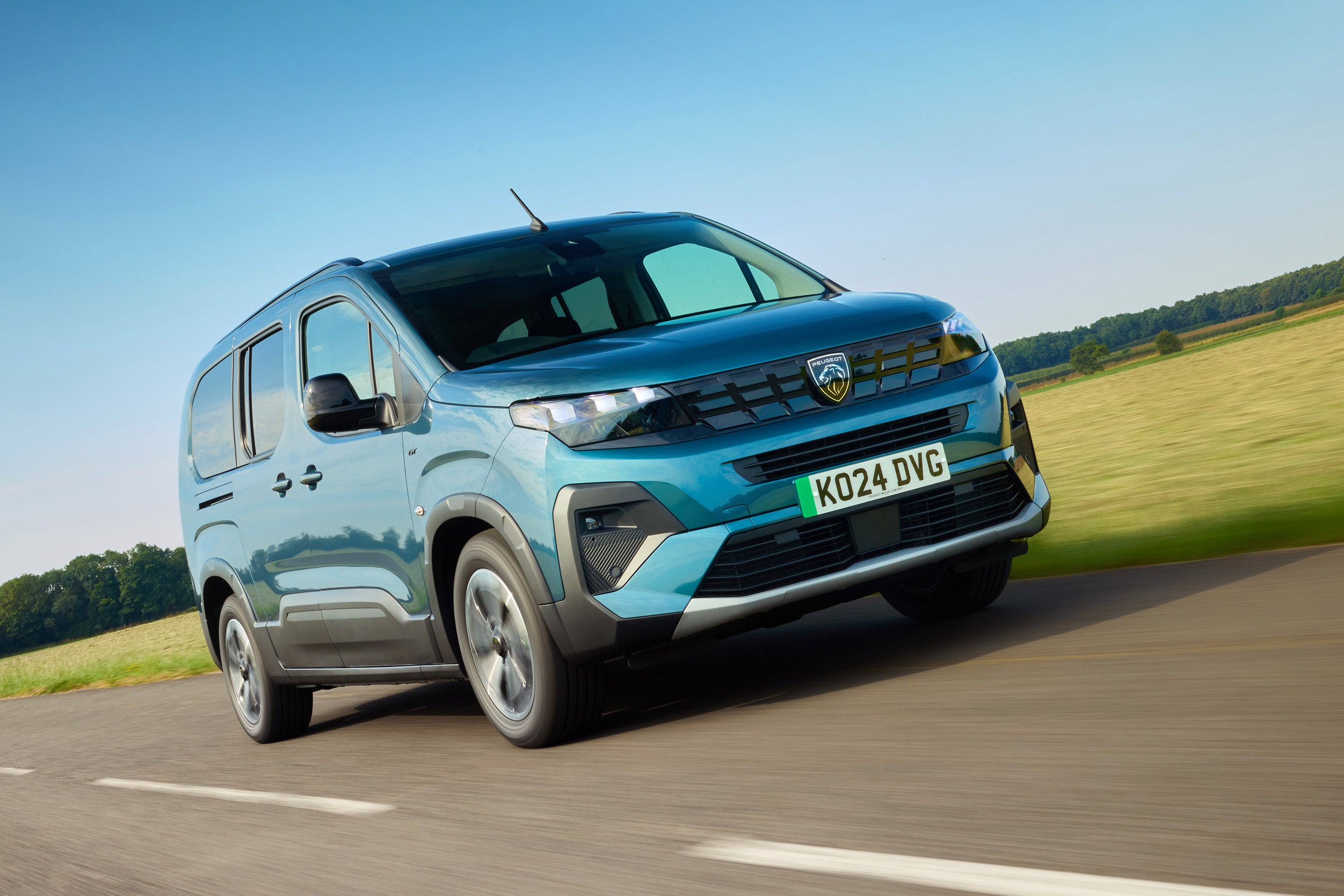
The most obvious alternatives are the Citroen e-Berlingo and Peugeot E-Rifter, because under the skin they are fundamentally the same vehicle with different styling and branding. If you like the Combo Life Electric in principle, you should look at all three and buy whichever offers the best deal.
Outside that trio, the Volkswagen Caddy and Ford Tourneo Connect are the key alternatives if you want another van-based family car, although they are not direct electric rivals in the same way.
There is also the Ford Tourneo Courier if you want something smaller, but if maximum interior room is the goal, the Combo Life Electric remains one of the strongest packaging-led choices around.
What's the interior like in the Vauxhall Combo Life?
The Combo Life Electric’s cabin is all about function first. That doesn’t mean it’s unpleasant, but you should expect durable practicality rather than a plush or luxurious atmosphere.
The tall windscreen and upright dashboard give an excellent view ahead, while the abundance of storage is more useful in daily family life than decorative stitching or elaborate trim.
Vauxhall Combo Life boot space and practicality
This is the whole reason to buy a Combo Life Electric, and it absolutely delivers. Even by the standards of family-focused MPVs, the space on offer is seriously impressive.
In the regular five-seat version, there is room for tall adults in every seat and loads of headroom thanks to the lofty roofline. The sliding side doors make access very easy, especially in tight car parks or when loading children.
The XL goes a step further by adding two removable third-row seats. These are more useful than the token extra chairs found in many seven-seat SUVs, and they help turn the Combo Life Electric into a proper people carrier rather than just a large hatchback with occasional-use seats.
Boot capacity is huge. The five-seat car offers 775 litres behind the second row to the glassline, while the XL gives 1,050 litres with the third row removed. Load to the roof and the numbers become bigger still, while folding the seats opens up an enormous cargo bay. Vauxhall quotes up to 4,414 litres to the roof in the regular car and 5,172 litres in the XL with the seats folded.
There are clever touches, too. The folding front passenger seat allows extra-long loads, and the independently opening rear window makes it easier to drop smaller items in without needing acres of space behind the car to lift the full tailgate.
Vauxhall Combo Life dimensions
The regular five-seat Combo Life Electric measures 4,410mm long, 2,107mm wide & 1,812mm high. The XL seven-seat version stretches to 4,760mm long, while width stays the same and height rises slightly to 1,818mm.
Those figures help explain why the Combo feels so usefully spacious inside. Even so, it still occupies less road than many large seven-seat SUVs, which is a major part of its appeal.
Tech and infotainment in the Vauxhall Combo Life
The 2024 facelift brought a more modern infotainment setup. Both current trims now get a 10-inch central touchscreen, and the software is simple enough to understand after a short familiarisation period.
Apple CarPlay and Android Auto are included, and the menu structure is clear enough, but the system is not perfect. Some transitions are a bit slow, and the screen can need a firmer prod than it really should.
Still, for a family workhorse like this, it covers the important bases. The bigger issue is not functionality so much as polish, because this is not the slickest infotainment system in the class.
Materials available on the Vauxhall Combo Life
The Combo Life Electric’s interior materials reflect its van roots. Most surfaces are hard-wearing rather than soft-touch, and there isn’t much in the way of visual glamour.
That said, it doesn’t feel badly made. The cabin feels solid and durable, and for the sort of hard family life this car is likely to face, that’s probably more valuable than a thin layer of showroom plushness.
Design has fabric upholstery, a polyurethane steering wheel and a fairly utilitarian finish. Ultimate’s heated leather steering wheel, alloy wheels and extra trim details lift the ambience slightly, but it still doesn’t feel like a conventional luxury MPV.
What's the Vauxhall Combo Life like to drive?
he good news is that the Combo Life Electric is much less clumsy than its shape and origins might suggest. It won’t fool anyone into thinking it’s a hatchback, but it’s easier and more comfortable than many buyers will expect. The quiet, immediate electric motor is particularly well suited to urban driving, where it makes this large and practical box feel simple to operate.
Vauxhall Combo Life range and performance
Every current Combo Life Electric uses a 52kWh battery and 136PS electric motor producing 270Nm. Vauxhall quotes 0–62mph in 11.7 seconds and a top speed of 82mph.
Official range varies according to body style and trim. The Design XL has the highest figure at 213 miles, followed by the five-seat Design at 211 miles, the five-seat Ultimate at 210 miles and Ultimate XL at 208 miles.
The earlier Combo-e Life used a 50kWh battery and the same 136PS motor, although torque was quoted at 260Nm. It managed up to 174 miles and took 11.2 seconds to reach 60mph rather than 62mph. Those cars are no longer available new but are common on the used market.
The facelift was initially advertised with a range of up to 199 miles. Subsequent specification and homologation changes have taken the highest current derivative to 213 miles, but the basic hardware remains closely related.
None of the versions is especially quick. However, the immediate response of the electric motor means the Combo feels lively enough from rest and perfectly adequate in urban and suburban use.
Its limited top speed and modest higher-speed acceleration underline that this is a practical family vehicle rather than a long-distance performance EV.
Performance data
| Model | Engine/battery size | Power | 0-62mph | Range/MPG |
|---|---|---|---|---|
Combo Life Electric | 52kWh | 136PS | 11.7 seconds | Up to 211 miles |
Combo Life Electric XL | 52kWh | 136PS | 11.7 seconds | Up to 213 miles |
Vauxhall Combo Life driving and refinement
The Combo Life Electric majors on comfort and ease of use. Its relatively soft suspension takes the edge off bumps and potholes better than you might expect from a van-based machine, and it generally feels settled around town.
The steering is very light, which helps with manoeuvring, although it’s also rather slow. That means bigger armfuls of lock than you might expect, but this suits the car’s practical brief rather than counting heavily against it.
There’s some body roll, but not as much as you might fear. The Combo doesn’t relish being hustled, yet it doesn’t fall apart when the road gets twistier than expected.
Current versions have light, medium and strong regenerative-braking settings, selected using paddles behind the steering wheel. That provides more flexibility than the original car’s two-mode setup, although the Combo still doesn’t offer the strongest one-pedal driving experience.
Refinement is good enough. Wind and road noise are present at higher speeds, but they aren’t especially intrusive, and the quiet electric powertrain helps the Combo feel more relaxed than a diesel van-based MPV would.
How safe is the Vauxhall Combo Life?
The Vauxhall Combo received four stars out of five from independent safety organisation Euro NCAP in 2018. The assessment was based primarily on tests of the closely related Peugeot Rifter, with Euro NCAP confirming that the results also applied to the Combo and subsequently to the Combo-e Life.
That result has now expired. That doesn’t necessarily mean the vehicle has become less safe, but testing standards have moved on far enough that the result is no longer directly comparable with newer cars. The facelifted Combo Life Electric hasn’t received a fresh passenger-car assessment.
Current standard safety equipment includes automatic emergency braking with pedestrian detection, lane-keeping assistance, forward-collision warning, speed-limit recognition, driver-attention monitoring, rear parking sensors and six airbags.
Ultimate adds a reversing camera, but adaptive cruise control is available only through the optional Drive Assist Pack, which also includes lane-positioning assistance and an upgraded emergency-braking system.
So the standard equipment is respectable, but the age of the crash-test result prevents the Combo Life Electric from having a class-leading modern safety story.
Running costs: What it's like to live with a Vauxhall Combo Life
Running costs can be appealing if you mostly charge at home, but the Combo Life Electric’s limited range means it’s best suited to buyers with predictable usage rather than heavy long-distance demand.
Its large frontal area, considerable interior volume and potential passenger load mean real-world efficiency is unlikely to match that of a lower, lighter electric hatchback.
Vauxhall Combo Life charging times and costs
The Combo Life Electric has a 7.4kW onboard AC charger as standard. An 11kW unit is available as a £300 option on both trims.
Vauxhall quotes 22 hours and 30 minutes for a 0–100% charge from a three-pin plug, six hours and 43 minutes from a 7kW home wallbox and four hours and 50 minutes from an 11kW supply when the optional onboard charger is fitted.
DC rapid charging peaks at 100kW, with a 0–80% charge taking around 30 minutes.
Those figures are reasonable for the battery size. Overnight home charging is the most natural fit, while the rapid-charging speed is sufficient for occasional longer trips without being especially impressive by current EV standards.
Charging costs depend heavily on the tariff. A cheap overnight home rate should make the Combo inexpensive to run, while relying regularly on premium-priced public rapid chargers can remove much of the financial benefit.
Vauxhall Combo Life warranty and servicing
Vauxhall covers the Combo Life Electric with a three-year vehicle warranty. The first year has no mileage limit, while years two and three are covered up to a total of 60,000 miles.
The battery is covered for eight years or 100,000 miles and is guaranteed to retain at least 70% of its original capacity during that period.
Servicing is required every 25,000 miles or two years, whichever comes first. There’s also an initial inspection at 12,500 miles or one year.
Vauxhall Combo Life insurance groups
Current insurance groups run from 21 to 23. Earlier SE and pre-facelift derivatives have different ratings, so used buyers should get a quotation for the precise body style, trim and registration year.
Those groups keep the Combo Life Electric in fairly manageable territory for something this practical and unusual, although personal circumstances will have a much greater impact on the actual premium.
How much does it cost to tax a Vauxhall Combo Life?
A new Vauxhall Combo Life Electric costs the current standard annual VED rate of £200.
The Expensive Car Supplement applies to zero-emission cars with an original list price of more than £50,000. Every current Combo Life Electric sits comfortably below that threshold, so none attracts the additional annual charge.
Earlier versions were also well below the relevant threshold when new, so used buyers shouldn’t need to worry about the supplement.
What trims are available with the Vauxhall Combo Life?
The current Combo Life Electric range consists of Design and Ultimate.
Design isn’t a bare-bones entry trim. It gets a 10-inch touchscreen, wireless Apple CarPlay and Android Auto, a 10-inch digital instrument display, manual air conditioning, three regenerative-braking settings, rear parking sensors, cruise control with a speed limiter, Matrix LED headlights, automatic lights and rain-sensitive wipers.
It also has a folding front passenger seat, two sliding side doors, electrically heated door mirrors and 16-inch steel wheels with hubcaps. The second row is a 60:40 split-folding bench.
Design XL adds two removable and sliding third-row seats, taking capacity to seven. Ultimate adds 16-inch alloy wheels, dual-zone climate control, a heated leather steering wheel, roof rails, electrically folding mirrors, electric rear windows, tinted rear glass and a 180-degree reversing camera. Its key practicality upgrade is the second row, where three individually folding seats replace the Design’s conventional bench. It also adds fold-down tables to the front-seat backs.
Adaptive cruise control remains optional, even on Ultimate. The £1,250 Drive Assist Pack adds adaptive cruise with stop-and-go functionality, lane positioning and upgraded emergency braking.
Used buyers will encounter several discontinued versions. The original Combo-e Life was sold exclusively in SE trim, with an 8-inch touchscreen, 50kWh battery and up to 174 miles of range.
Early standard-length models could have five or seven seats, whereas the current seven-seat car is always the longer XL. Later pre-facelift trim and option structures also differ from those of the current Design and Ultimate.
Ask the Drive experts: common questions
How much does the Vauxhall Combo Life Electric cost?
Is the Vauxhall Combo Life Electric available as a seven-seater?
Is the Vauxhall Combo Life Electric practical?
What is the best Vauxhall Combo Life Electric version?
Get our latest advice, news and offers
Keep me updated by email with the latest advice, news and offers from Drive.
.jpg)