Ford Tourneo Connect Review

Written By Al Suttie
- 2022
- MPV
- Petrol, diesel and petrol plug-in hybrid
What we love
Outstanding passenger and luggage space
Economical diesel and long-range plug-in hybrid
Sliding doors make family access easy
Things to consider
Infotainment and heater controls are frustrating
Some cabin materials feel utilitarian
Not as enjoyable to drive as the best Fords
The DRIVE take on the Ford Tourneo Connect, is it the right car for you?
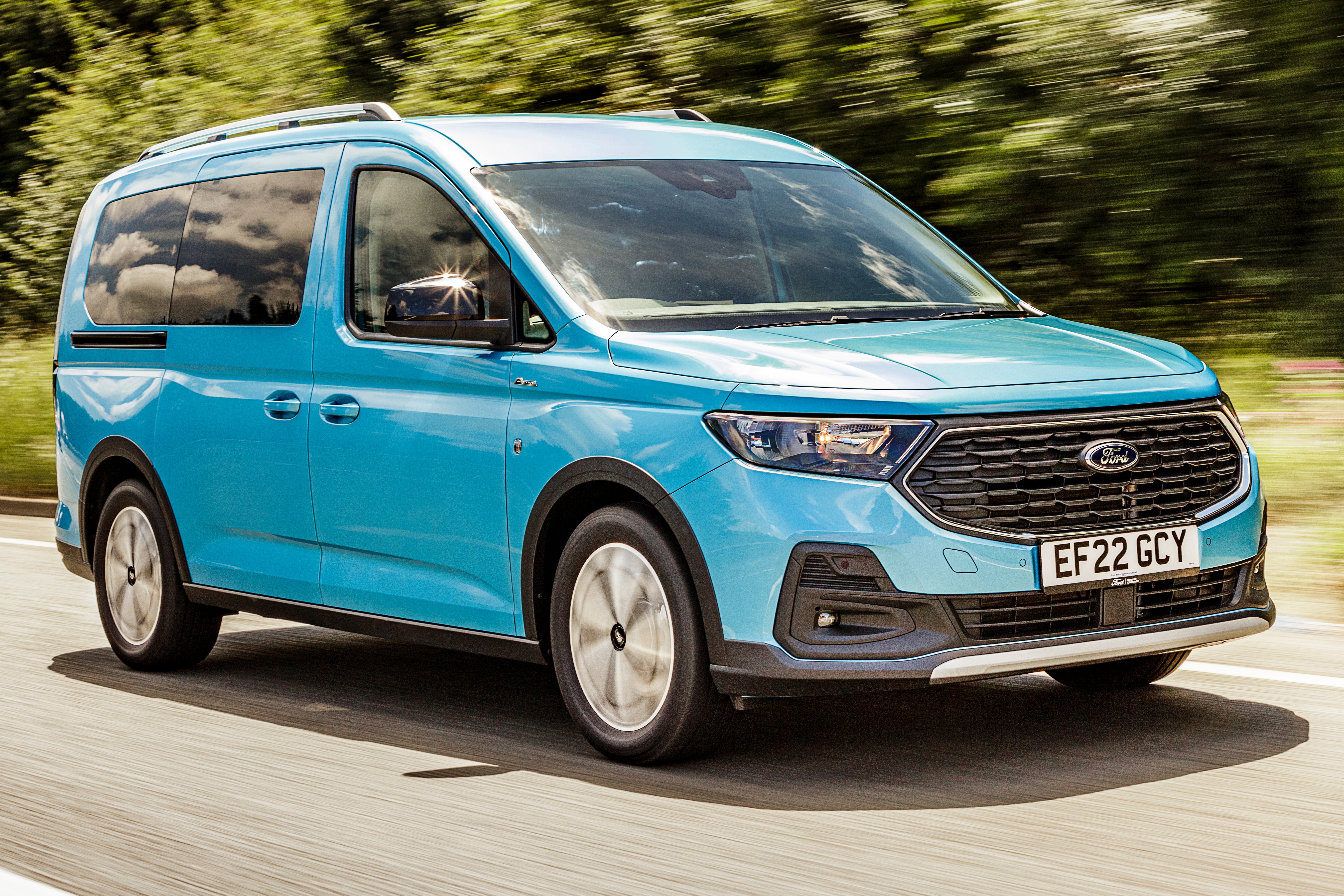
The Ford Tourneo Connect is one of the most practical family cars on sale. Its tall, square body provides considerably more passenger and luggage room than a conventional SUV, while twin sliding doors make it easy to load children in narrow parking spaces. The longer Grand Tourneo Connect adds two usable rear seats and enough flexibility to work as a genuine seven-seat family car. It is comfortable, economical and easy to drive, but the van-based cabin lacks polish and the infotainment system is unnecessarily awkward. Buyers who prioritise space and versatility over style or driving excitement will find few better choices.
The Ford Tourneo Connect in more detail
There are cars where a single vision is key to its identity, whether its outrageous performance in a supercar or off-road ability in a 4x4. With the Ford Tourneo Connect, and its longer wheelbase Grand sister, the key to its character is practicality. All else is subservient to this goal.
To achieve this ambition, Ford has chosen to base its MPV Tourneo Connect range on the same base as the Volkswagen Caddy van line-up. This is a good place to start as the boxy shape maximises interior space and twin sliding rear doors make for brilliant access in any situation.
We have seen van-based MPVs before, notably with the Citroen Berlingo that is a flag bearer for the breed, so the Tourneo Connect is not a new idea.
What is new is mixing bits of Ford and VW thinking together. In some cases, it’s a demonstration of two heads are better than one, but in other areas it has meant Ford compromising on talents that are usually standout ticks in its favour.
An example of this is the Tourneo Connect is not as good to drive as we might have hoped, even allowing for the fact it’s a van-derived MPV. Ford has a knack of making cars fun and lively while losing none of their everyday practical side. In this respect, the Tourneo Connect is decidedly more VW in its outlook than Ford.
On the other hand, Ford’s influence is clear in the specification of the car. Where VW pares its Caddy to the minimum acceptable level, Ford has kitted out the Tourneo Connect range in a way that is much like its Focus line. It’s also kept things simple with just two trim levels, though there are plenty of options you can add on.
As a result of this, the Ford Tourneo Connect ends up being considerably better value than its Volkswagen cousin. For some, the lure of the VW badge and its connection to the iconic bus and camper models might be a draw, but we’d rather have the money in our pocket.
What's the best Ford Tourneo Connect trim and engine option?
The Grand Tourneo Connect 2.0 EcoBlue Titanium is the best all-round version.
Its 122PS diesel engine has enough torque to carry a full complement of passengers without feeling strained, while official economy of up to 49.5mpg remains impressive for a large seven-seat MPV.
The Grand body adds genuinely useful third-row seating and much more luggage room than the shorter model. It is less convenient in tight urban spaces, but the additional versatility justifies its greater length for most family buyers.
Titanium already includes heated front seats, adaptive cruise control, front and rear parking sensors, a reversing camera and a 10-inch infotainment display.
The plug-in hybrid is the better choice for drivers who can charge regularly and complete most journeys within its electric range. It costs more, however, and the Grand Active PHEV exceeds the £40,000 Expensive Car Supplement threshold.
The short-wheelbase petrol makes sense for buyers who need five seats, cover a relatively low annual mileage and want to minimise the initial price.
What’s the price of the Ford Tourneo Connect?
The Ford Tourneo Connect starts at £33,840 for the short-wheelbase 115PS petrol Titanium.
The diesel Titanium costs £35,940, while the short-wheelbase plug-in hybrid is £37,740.
Grand Tourneo Connect prices begin at £35,040 for the petrol, rising to £38,940 for the PHEV in Titanium trim.
Active versions cost more, with the Grand Tourneo Connect Active PHEV priced at £40,740 before first-registration charges.
Most versions remain below the £40,000 Expensive Car Supplement threshold. The Grand Active PHEV sits above it, while factory options could also take a cheaper derivative beyond the limit.
Used examples offer useful savings, particularly earlier petrol and diesel models. The Grand does not always carry a substantial second-hand premium, making it attractive for buyers with enough space to accommodate the longer body.
Alternatives to the Ford Tourneo Connect
As well as the Ford Tourneo Connect, other van-based MPVs are offered by Volkswagen with its almost identical Caddy or there is the Citroen Berlingo. The French car has a smoother ride than the Ford or VW, but it’s not as well fitted out. Another very worthwhile MPV to consider is the Dacia Jogger that delivers strong value with seven seats and a surprisingly enjoyable drive.
The Volkswagen Multivan is larger, more luxurious and available with plug-in hybrid power. It is considerably more expensive and takes up more road space.
What's the interior like in the Ford Tourneo Connect?
The Tourneo Connect’s cabin is roomy, solid and easy to see out of, but its materials and infotainment reveal the vehicle’s commercial roots.
Ford Tourneo Connect boot space and practicality
The driver and front passenger sit very upright in the Ford Tourneo Connect, which is no bad thing as it gives a good posture and fine all-round vision. This latter point is further aided by the large glass area and square shape of the Ford that makes it easy to park.
Firm seat padding might feel a little unyielding at first, but it proves to offer lots of support and compliance on longer trips.
The middle row of seats in the shorter Ford Tourneo Connect don’t offer as much knee room as you might want for adults and these seats don’t slide back and forth. To have that ability, you need the Grand Tourneo Connect.
In the third row, there’s enough space for two adults, though the seats are set quite low to the floor and that means there’s not much support under the occupants’ thighs. Access to the third row also requires some athleticism.
The dash will be familiar to Volkswagen owners as it’s lifted from the Caddy, though Ford uses the larger 10-inch infotainment screen as standard in all Tourneo Connect versions. A downside to this, however, is the Ford is saddled with VW’s poor infotainment functionality and hard to use ventilation system with the odd slide controls at the base of the touchscreen’s surround.
Thanks to its high roof and square-rigged styling, the Ford Tourneo Connect can carry vast amounts of luggage and puts even large SUVs to shame in this respect.
The short wheelbase model in five-seat form can swallow 1213-litres of cargo and by tipping the rear seats down you can free up a massive 2556-litres. Only if you choose this Tourneo Connect as a seven-seater will you feel luggage space is in short supply.
Opt for the long wheelbase Grand Tourneo Connect and things get even bigger. It can hold from 1720-litres of bags as a five-seater all the way to a gargantuan 3105-litres with the rear seats all stowed flat.
The seats themselves are quite heavy to move, and the tailgate’s length when opening means you need a bit of space behind the Ford to do this safely. However, with it raised, there’s a low load sill and the tailgate works as a useful cover from the rain when packing in bags.
Ford Tourneo Connect dimensions
The standard Tourneo Connect is 4,500mm long, increasing to 4,515mm in Active trim. The Grand measures 4,853mm, or 4,868mm as an Active.
Both are 1,835mm wide and around 1,833 to 1,835mm high, extending to 2,100mm across the mirrors.
The short model has an 11.4-metre turning circle, while the Grand needs 12.1 metres. Parking sensors and a reversing camera help, but the longer body requires greater care in typical UK spaces.
Tech and infotainment in the Ford Tourneo Connect
If there is one area of the Tourneo Connect where we wish Ford had prevailed over Volkswagen, it’s the infotainment system. Rather than the usual, and excellent, SYNC 4 set-up found in most Fords, the Tourneo Connect has VW’s downright poor screen.
Ford tries to redeem this to some extent by fitting the larger 10-inch touchscreen as standard to all Tourneo Connects, but it cannot hide a system that is just not very easy to use.
The worst offenders here are the heating and stereo volume controls that might have worked brilliantly in a laboratory, but are very tricky to use while driving. We’d go as far as to say it’s too distracting to use these as the driver on the move, so best to ask the front seat passenger to deal with them.
However, you do get DAB radio, sat-nav, Apple CarPlay, Android Auto, and Bluetooth.
Materials available on the Ford Tourneo Connect
The van origins of the Ford Tourneo Connect are most obvious in the materials used for much of the cabin. They favour durability and easy cleaning over more attractive materials and finishes.
The only soft-touch material you’re going to find inside the Ford is on the armrests. A Dacia Jogger makes a much better fist of this type of thing and looks a more attractive place to sit as a result.
However, there is no doubting that Ford and VW have screwed the Tourneo Connect together very well as the large cabin is free from rattles. All of the seats can also be moved easily, which shows a good deal of thought has gone into this, even if they are quite heavy.
What's the Ford Tourneo Connect like to drive?
The Tourneo Connect is composed and predictable rather than entertaining. It handles more neatly than its tall shape suggests, although it lacks the sparkle associated with Ford’s best passenger cars.
Ford Tourneo Connect range and performance
The current range includes petrol, diesel and plug-in hybrid engines, all driving the front wheels through an automatic gearbox.
The 115PS petrol is adequate for local driving and lighter loads. It is smooth at low speeds and suits buyers covering modest annual mileages, but needs to work hard when the car is full or accelerating at motorway speeds.
The 122PS diesel is the strongest all-round combustion engine. It has more pulling power at low revs, feels less strained with passengers aboard and returns up to 50.8mpg in the short-wheelbase model. A faint diesel rumble is audible when accelerating, but the engine settles into the background at a steady cruise.
The 150PS plug-in hybrid combines a petrol engine with an electric motor and rechargeable battery. It offers up to 73 miles of equivalent electric range, enough to cover many school runs, commutes and shopping trips without starting the petrol engine when charged regularly.
None of the engines makes the Tourneo Connect particularly fast. The diesel and PHEV provide the strongest response when carrying a full load.
Performance data
| Model | Engine/battery size | Power | 0-62mph | Range/MPG |
|---|---|---|---|---|
1.5 EcoBoost | 1.5-litre | 115PS | 11.9 seconds | Up to 42.3mpg |
2.0 EcoBlue | 2.0-litre | 122PS | 11.2 seconds | Up to 50.8mpg |
1.5 EcoBoost PHEV | 1.5-litre | 150PS | Up to 73 miles |
Ford Tourneo Connect driving and refinement
The Tourneo Connect is based on the same broad platform family as several Volkswagen passenger cars, helping it feel more composed than an old-fashioned van.
Its steering is light enough for town but has sufficient accuracy to place the car confidently on faster roads. There is more feedback than expected from a tall MPV, although it does not have the lively responses associated with a Ford Focus or Puma.
Body lean is well controlled through ordinary bends. The Tourneo Connect remains stable in crosswinds and does not lurch excessively when changing direction, despite its height and large glass area.
Ride comfort is generally good. Longer dips and undulations are dealt with calmly, while smaller road imperfections are absorbed without too much disturbance. Sharper potholes can send a thud through the structure, especially with fewer passengers aboard. The Citroen Berlingo rides more softly, but the Ford feels better controlled on faster roads.
Motorway stability is a strength. The Tourneo Connect tracks securely and requires little correction from the steering, making it an easy car in which to cover long distances.
Refinement is respectable rather than exceptional. The boxy body creates noticeable wind noise around the windscreen pillars and door mirrors at higher speeds. Tyre noise is reasonably well contained, and the diesel becomes subdued once the automatic gearbox reaches its highest ratio.
The petrol engine is quieter when driven gently but becomes vocal when asked to accelerate with a full load. The PHEV provides the calmest low-speed experience when running electrically, although engine noise returns once the battery is depleted or stronger acceleration is required.
How safe is the Ford Tourneo Connect?
The current Ford Tourneo Connect received five stars from Euro NCAP under the 2021 test protocol.
The rating applies to right-hand-drive versions and covers petrol and diesel derivatives using the same vehicle structure.
Standard safety equipment includes autonomous emergency braking, lane-keeping assistance, driver-attention monitoring and front and rear parking sensors.
Current models also include adaptive cruise control, blind-spot assistance with cross-traffic alert and exit warning, plus a reversing camera.
Curtain airbags cover all seating rows, while an interaction airbag between the front occupants reduces the risk of them striking each other in a side impact.
Isofix child-seat mounting points are provided in the rear, although buyers should check the exact positions when several child seats need to be installed simultaneously.
Running costs: What it's like to live with a Ford Tourneo Connect
The diesel is economical on long journeys, while the PHEV can reduce fuel use substantially for owners able to charge it regularly.
Ford Tourneo Connect fuel economy
The 115PS petrol returns between 41.1 and 42.3mpg, depending on body length.
The 122PS diesel manages between 49.5 and 50.8mpg, making it the best option for drivers covering frequent motorway miles.
The PHEV has an official equivalent electric range of approximately 71 to 73 miles. Real-world range will vary with temperature, speed, passenger load and use of the climate control.
Official weighted economy assumes the battery is charged regularly and a large proportion of each journey is completed electrically.
Once the battery is depleted, the PHEV operates as a heavy petrol MPV and fuel use will increase considerably.
Owners without convenient home or workplace charging are better served by the diesel.
Ford Tourneo Connect warranty and servicing
The Tourneo Connect has a three-year or 100,000-mile manufacturer warranty, whichever comes first.
That higher mileage allowance reflects Ford’s classification of Tourneo models as commercial vehicles and is useful for high-mileage family or business users.
Ford Tourneo Connect insurance groups
Insurance ratings vary by engine, body length and trim.
Petrol models occupy groups 10 to 13. The short-wheelbase Titanium automatic sits in group 10, while higher-specification Active and seven-seat derivatives can rise to group 13.
Diesel models generally sit in groups 12 to 13, with Titanium versions typically in group 12 and Active derivatives reaching group 13.
The plug-in hybrids are rated more highly because of their additional power, battery and repair complexity. Current PHEV versions sit in groups 15 to 16, with Grand and Active derivatives generally at the upper end.
These remain relatively modest ratings for such a spacious family car, although the final premium will depend on the driver, location and usage.
How much does it cost to tax a Ford Tourneo Connect?
From the second licence, annual Vehicle Excise Duty is £200.
Most current Tourneo Connect models remain below the £40,000 Expensive Car Supplement threshold.
The Grand Tourneo Connect Active PHEV exceeds £40,000 before first-registration costs, so it attracts the additional £440 annual supplement for five years from the second year. That takes its annual total to £640 during the supplement period.
Factory options can also take a cheaper version beyond the threshold, so buyers should check the final official list price before ordering.
What trims are available with the Ford Tourneo Connect?
Titanium is the entry point to the current range and already includes a generous specification.
Standard equipment includes heated front seats, keyless start, power-folding heated mirrors, rear privacy glass, roof rails and the 10-inch infotainment touchscreen.
It also receives adaptive cruise control, blind-spot assistance, front and rear parking sensors and a reversing camera.
Active adds 17-inch alloy wheels, plastic wheelarch surrounds and a more rugged-looking front and rear design.
Inside, it brings model-specific upholstery, blue stitching and further decorative details.
The styling suggests additional off-road ability, but Active remains front-wheel drive and has no specialised all-terrain hardware.
Titanium is the best-value trim and already contains most of the equipment families need. Active is primarily an appearance upgrade.
Ask the Drive experts: common questions
Does the Ford Tourneo Connect have seven seats?
How big is the Ford Tourneo Connect’s boot?
Which Ford Tourneo Connect is best?
Is the Ford Tourneo Connect available as a hybrid?
Get our latest advice, news and offers
Keep me updated by email with the latest advice, news and offers from Drive.
.jpg)
.jpg)
.jpg)
.jpg)