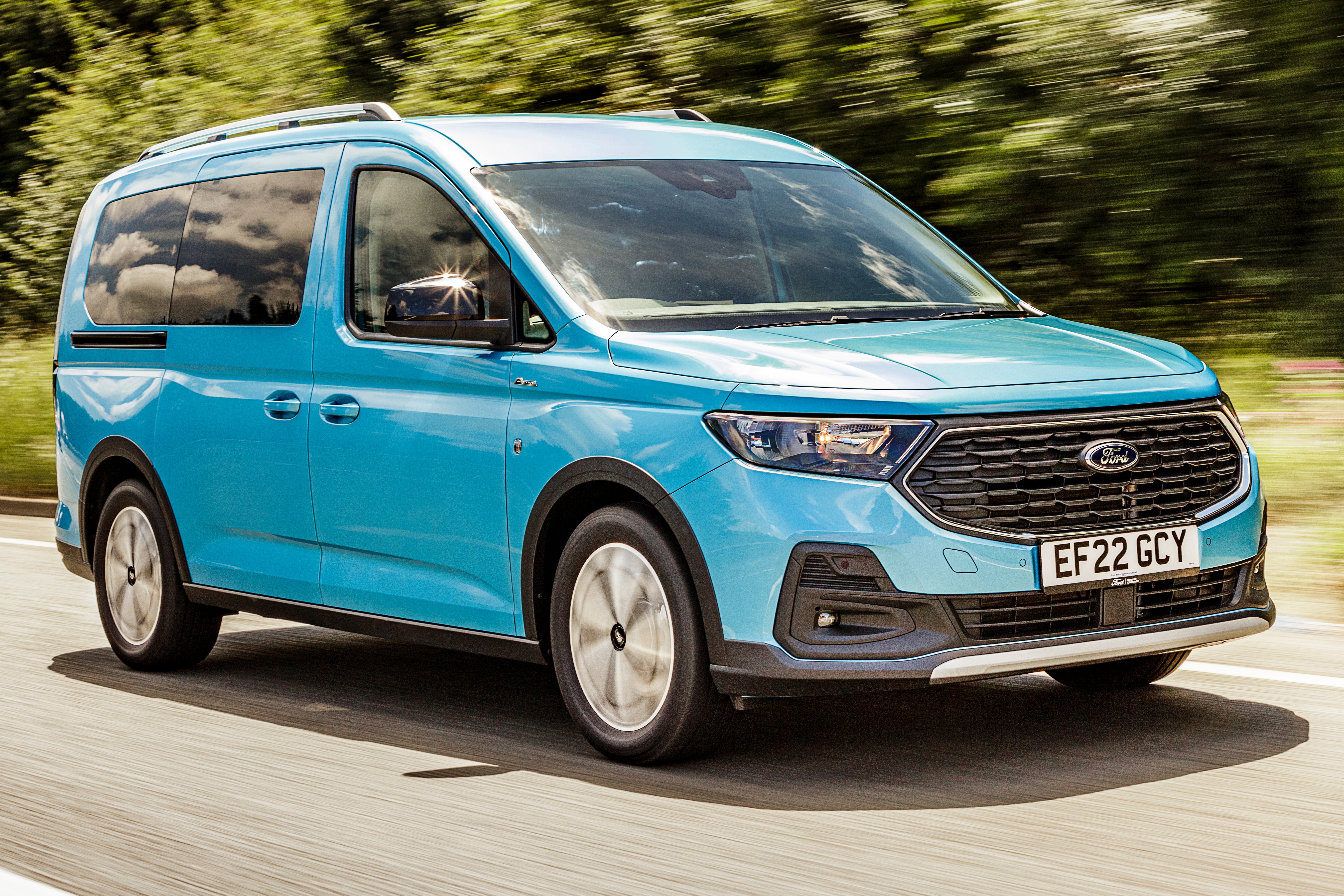
Ford Tourneo Courier Review

Written By Ivan Aistrop
- 2023
- MPV
- Petrol
What we love
Enormous boot and spacious passenger compartment
Sliding rear doors make access easy
Pleasant and surprisingly agile to drive
Things to consider
Cabin materials feel cheap
Petrol engine lacks performance when loaded
Used examples remain difficult to find
The DRIVE take on the Ford Tourneo Courier, is it the right car for you?
The Ford Tourneo Courier is one of the most practical compact family cars on sale.
Its upright body provides far more passenger and luggage room than most similarly priced SUVs, while sliding rear doors make life much easier in tight car parks. It is also more enjoyable to drive than its boxy styling suggests.
The interior is functional rather than inviting, and the 125PS petrol engine needs to be worked hard when the car is fully loaded. Buyers who care more about space, versatility and value than following SUV fashion will nevertheless find the Tourneo Courier difficult to beat.
The Ford Tourneo Courier in more detail
It’s no secret that MPVs are nowhere near as popular as they once were. SUVs have taken over as the family cars of choice for most buyers, because they deliver a lot more perceived style, along with enough practicality for family life.
However, for those who don’t really care about style and would prefer to have maximum practicality and versatility instead, an MPV still makes most sense. However, there’s a slight problem. The popularity - and therefore profitability - of MPVs has plummeted to such a low level that most manufacturers don’t bother to develop them as standalone models any more. That's why most of the MPVs left on the market today are based on their maker’s commercial vehicle offerings: these vans already have the boxy dimensions required, so it’s simply a case of removing bulkheads and loadbay linings, and fitting carpets, windows and seats instead.
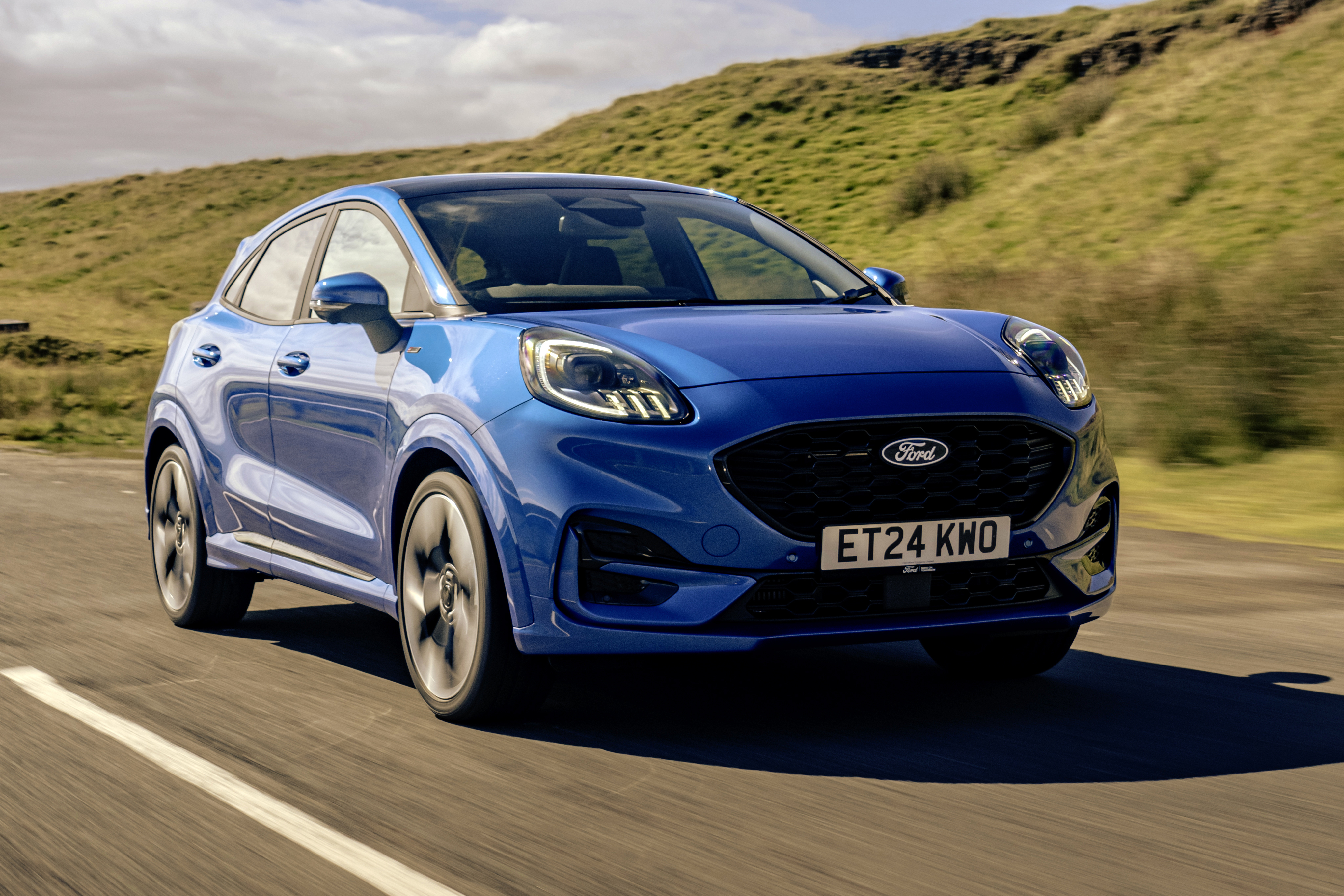
Enter the Ford Tourneo Courier. Ford offers a variety of such cars, based on its all-conquering range of Transit vans, and the Courier is the smallest of them. The Courier is a little different to the rest, though. While a joint development agreement with Volkswagen means that most Transit models are mechanically very similar underneath to the German firm’s equivalent commercial vehicle offering, the Courier is based on a Ford-only platform. And it’s the one that also underpins the Ford Puma SUV, so it’s great.
As a result, the Tourneo Courier drives with a verve that you might not expect given its boxy appearance. Okay, so you won’t be throwing in around like you’re on a rally stage, but it’s nevertheless a very cheerful and pleasant little thing to dart around in. The dinky 1.0-litre petrol engine will also please you with its refinement and its willingness, even if its power and performance levels are rather modest.
More important in a car like this, though, is practicality, and the Tourneo Courier has it in spades. The cabin is huge and can take five people in reasonable comfort, while the boot is simply huge. And with a vast variety of storage areas dotted around the cabin, you’ll never want for somewhere to put odds and ends.
Okay, so the cabin does feel decidedly van-like, with durable-but-dour plastics and a plain design, but everything is easy to use and you get a very decent amount of equipment provided as standard on every version, and all for a very tempting price.
Granted, the Ford Tourneo Courier is far from being the most fashionable car you can buy. It is, however, proof of what other attributes can come your way if you choose not to follow fashion.
What's the best Ford Tourneo Courier trim and engine option?
The Ford Tourneo Courier Titanium with the six-speed manual gearbox is the best all-round version.
Titanium includes the comfort, parking and cold-weather equipment most family buyers need without charging extra for Active’s largely cosmetic upgrades.
The manual gearbox also suits the 1.0-litre engine well. Its action is light and precise, while being able to select the right gear yourself helps when climbing a hill or carrying a full load.
The automatic is easier in heavy traffic, but costs £1,200 more, uses slightly more fuel and moves the car from insurance group 10E or 11E into group 13E.
Active looks more distinctive thanks to its larger wheels, plastic cladding and skid-plate-style trim. It remains front-wheel drive and gains no meaningful off-road ability, so it should be chosen for its appearance and added assistance features rather than extra capability.
What’s the price of the Ford Tourneo Courier?
The Ford Tourneo Courier starts at £28,490 on the road for a Titanium with the six-speed manual gearbox.
The Titanium automatic costs £29,690, while Active versions begin at the same price with the manual transmission.
The Active automatic tops the petrol range at £30,890.
Every version remains comfortably below the £40,000 Expensive Car Supplement threshold, even with a realistic selection of factory options.
The Tourneo Courier may initially seem expensive for something derived from a small van, but its price is comparable with many superminis and compact SUVs offering far less space.
Used examples remain scarce because the model sells in relatively small numbers. Nearly new cars may provide a modest saving, but limited supply helps support second-hand values.
Alternatives to the Ford Tourneo Courier
Perhaps one of the Tourneo Courier’s most direct rivals comes from in-house, because it’s not a whole lot smaller than the Tourneo Connect that sits just above it in Ford’s range. However, the two cars are very different, because while the Tourneo Courier shares its platform and many parts with the Ford Puma SUV, the larger Tourneo Connect is mechanically very similar to the Volkswagen Caddy underneath, and that’s thanks to a joint development partnership on the two vehicles. The Caddy itself is another rival, too.
Once upon a time, the Stellantis stable offered a whole bunch of rival vehicles in the form of the Citroen Berlingo, Peugeot Rifter, Vauxhall Combo Life, and so on. However, many of these vehicles are only offered as EVs, so although they will play rival when the electric version of the Courier arrives, they’re not directly comparable at the moment.
What's the interior like in the Ford Tourneo Courier?
The Tourneo Courier’s cabin is simple, durable and easy to understand. It lacks the visual polish of a similarly priced SUV, but compensates with excellent visibility, useful storage and generous passenger space.
Ford Tourneo Courier boot space and practicality
The dashboard design is very plain, with the central infotainment touchscreen at the top, and a handful of associated shortcut buttons, a volume knob and the start button just below. The steering wheel also has a small smattering of buttons, but other than that, there’s almost no other switchgear.
There’s a digital instrument panel behind the steering wheel that allows you to choose what information is displayed, and it works well. You have supportive front seats with plenty of manual adjustment to help you get comfortable, and the massive glass area surrounding you means that visibility is really good in every direction.
The bit that makes it feel really van-like, though, is all the storage dotted around. You have a big glovebox, enormous door bins, large storage shelves above the windscreen, and countless smaller nooks and crannies to stop odds and ends from rattling around the place.
Like we’ve said, the Tourneo Courier is mechanically related to the Ford Puma SUV, but it hides it extremely well. Predictably, it’s bigger than its sister car, but not by as much as you might think, because its chunky design makes it look absolutely enormous, both in pictures and in real life.
The front seats have bags of headroom and legroom as front seats always do, but move to the back seats, and you’ll find more headroom than any human being will ever need, and very reasonable legroom that’s generous enough for a six-footer to sit behind a driver of similar proportions without their knees touching the seats in front. Getting into those rear seats is also very simple thanks to the wide-opening sliding rear doors, which are especially handy in tight parking spaces.
Although very roomy, the rear seats aren’t as clever as they are in some rivals. They’re split 60/40 rather than being three individual chairs, and they don’t slide backwards and forwards to allow you to prioritise boot space or passenger space. However, the cabin is wide enough to accommodate three sets of shoulders across the rear bench - often not a given, even in big cars - and the middle seat is comfier than most: it’s softer and less perched up than normal, and there’s very decent foot space in front, too.
As you’d expect with any car derived from a van, the boot is simply huge. You get 570 litres of space underneath the load cover (that’s as much as you get in a BMW 5 Series Touring Estate), and if you keep piling your belongings up on top of that load cover - which you can, because it’s really solid) and load up to the ceiling, you can cram in a whopping 1188 litres of stuff in with the rear seats still in place. Fold those rear seats down and tumble them forward (which is easy, by the way) to travel in two-seat mode, and you have 2162 litres of loadspace. The sides of the boot also have a number of storage compartments for even more versatility.
Ford Tourneo Courier dimensions
The Tourneo Courier measures 4,337mm long, 1,791mm wide and 1,817mm high.
Its footprint is similar to that of a conventional family hatchback, despite the much taller body. A 10.5-metre turning circle and square shape make it easy to manoeuvre, while the sliding rear doors are especially useful in narrow parking spaces.
Tech and infotainment in the Ford Tourneo Courier
Both trim levels of the Tourneo Courier get the same SYNC 4 infotainment system, which brings together an 8.0-inch central touchscreen display, six speakers, Bluetooth, DAB, Apple CarPlay and Android Auto. The Active also comes with navigation, but if you want it on the Titanium, you have to add an option pack that also includes adaptive cruise control. However, the cruise control is actually more of a reason to add the pack than the nav is, because you can just use the smartphone integration to take route directions from your phone.
Touchscreens can often be a pain because they’re often way too overcomplicated, and too tricky to use as a result, especially on the move. The Courier’s isn’t too bad on that score, though. It has all the functionality you want, as mentioned before, but it’s not absolutely crammed with features, so it has a pleasantly simple feel. The graphics look good and are easy to read, the screen transitions are slick, the screen is sensitive, and the various menus are generally pretty easy to find your way around. It’s slightly irritating that the climate control system has to be operated through the screen, but the screen layout with which you do so is well designed and easy to understand, and there’s a shortcut button that takes you to that screen immediately.
Materials available on the Ford Tourneo Courier
The Tourneo Courier’s commercial origins are most obvious in its choice of materials.
The dashboard and doors are finished almost entirely in hard, grainy plastic. Soft-touch trim is scarce and the design is functional rather than decorative.
Those expecting the finish of a Ford Puma or similarly priced compact SUV may be disappointed.
The materials do at least feel durable. The panels are securely fitted, the switches have a solid action and the cabin should cope well with muddy shoes, children and repeated loading.
There is little flex or movement in the dashboard, while the large storage areas appear robust enough for daily family use.
Titanium uses restrained cloth upholstery and a simple colour scheme. Active introduces brighter detailing, different seat fabric and exterior-inspired trim, although the overall atmosphere remains workmanlike.
The Tourneo Courier is not trying to feel luxurious. Its appeal lies in being practical, washable and hard-wearing rather than tactile or fashionable.
What's the Ford Tourneo Courier like to drive?
The Tourneo Courier feels more agile and composed than its van-like styling suggests. Its modest petrol engine limits performance, but the steering, gearbox and chassis make it a pleasant everyday car.
Ford Tourneo Courier range and performance
There’s just one engine available, a 1.0-litre Ecoboost turbocharged petrol. It produces 125PS, and can be paired either with a standard six-speed manual gearbox, or with a seven-speed twin-clutch automatic.
So far, we’ve only tried the former, and in this form, it’s fair to say that the Courier isn’t exactly going to be setting any land speed records. Its official 0-62mph time stands at 13.0 seconds, but even that modest number feels a little generous when you experience how little go there is, either away from the mark or when picking up speed on the move.
This is all entirely forgivable in a car like this, of course, and it’s also pretty inevitable. The teeny engine feels as willing as it does in other Ford products, but it eventually gets overcome by the sheer size and weight of the body it’s trying to haul around. It’s fine when you’re pottering around town and it will keep up with traffic on the motorway, but come up against any sort of meaningful incline, and you’ll need to dial in a downshift or two (or maybe even three if the car is loaded up with people and luggage) to maintain your progress. Thankfully, doing so is a pleasure, because the manual gearbox has a nice, mechanically smooth action.
Performance data
| Model | Engine/battery size | Power | 0-62mph | Range/MPG |
|---|---|---|---|---|
Tourneo Courier manual | 1.0-litre | 125PS | 13.0 seconds | Up to 42.2mpg |
Tourneo Courier automatic | 1.0-litre | 125PS | 12.3 seconds | Up to 40.9mpg |
Ford Tourneo Courier driving and refinement
Your expectations of how the Tourneo Courier behaves on the road may well be a little all over the place: ours were.
You see, it shares a platform and much componentry with the Ford Puma SUV, a car that’s super-agile and enjoyable to drive, but it also shares this hardware, plus its large bulky body, with a panel van, and panel vans are often a bit clunky and uncivilised to drive.
Happily, the Tourneo Courier shares plenty with its SUV stablemate. Okay, so it isn’t quite as sharp due to the extra weight it carries and its upright body shape, but it still changes direction pretty keenly, more keenly than many might be expecting.
It has strong grip, quick steering and surprisingly decent body control, and that makes it a cheerful and wieldy little thing to get around in. The precise pedals and snicky gearshift help on that score, too.
Granted, there’s a payoff, and that’s that the ride has a firmness that you might not be expecting, but it’s far from uncomfortable and nobody riding on board will have any cause for complaint.
How safe is the Ford Tourneo Courier?
The Ford Tourneo Courier received four stars from Euro NCAP in 2025.
It had originally scored three stars in 2024 after poor protection was recorded for a rear passenger’s head in the full-width frontal test. Ford subsequently improved the rear restraint system and the revised vehicle was reassessed.
Protection was generally good or adequate for most critical body areas, although the driver’s chest protection was rated marginal in the frontal-offset test.
Standard safety equipment includes autonomous emergency braking with pedestrian and cyclist detection, lane-keeping assistance, traffic-sign recognition, intelligent speed assistance and driver-attention monitoring.
Six airbags are fitted, including a centre airbag intended to reduce contact between the front occupants during a side impact.
Titanium includes front and rear parking sensors and a reversing camera.
Active receives a wider assistance package with blind-spot monitoring, cross-traffic alert and more advanced pre-collision functions.
Adaptive cruise control and lane centring are available, with stop-and-go functionality on automatic models.
Running costs: What it's like to live with a Ford Tourneo Courier
The Tourneo Courier is affordable to insure and remains below the Expensive Car Supplement threshold, although its small petrol engine is not especially economical for a car of this size.
Ford Tourneo Courier fuel economy
This means fuel consumption figures are elevated. According to official WLTP tests, the manual version has a figure of 42.2mpg (this fluctuates slightly depending on the optional eThe manual Titanium returns an official 42.2mpg, while Active trim manages 41.5mpg.
Both automatic versions are rated at 40.9mpg.
Those figures are acceptable rather than exceptional. The equivalent engine in the Ford Puma benefits from mild-hybrid assistance, which is not fitted to the petrol Tourneo Courier.
Real-world economy will depend heavily on load and road type.
The engine has to work harder when the car is fully occupied or driven at motorway speeds, so owners regularly carrying passengers may struggle to match the official result.
Figures in the mid to high 30s are a more realistic expectation for mixed driving.
Ford Tourneo Courier warranty and servicing
The Tourneo Courier has a three-year or 60,000-mile manufacturer warranty, whichever comes first.
That is typical for Ford but less generous than the five-year cover offered by Hyundai and Toyota or Kia’s seven-year warranty.
Extended warranties and service plans are available at additional cost.
Servicing requirements depend on mileage and usage, with the onboard maintenance system providing reminders when attention is due.
The 1.0-litre EcoBoost engine is widely used across the Ford range, but buyers of used examples should still insist on a complete service history and evidence that the correct oil specification has been used.
Ford Tourneo Courier insurance groups
Go for a car in Titanium trim, and you’ll pay a group 10 premium if you stick with the manual gearbox, or a group 13 premium if you specify the automatic. Opt for the Active trim, and the manual has a group 11 rating, while the automatic stays steady in group 13. Whatever the case, with ratings like that, insurance premiums on the Courier are very unlikely to bankrupt you.
How much does it cost to tax a Ford Tourneo Courier?
From the second licence, annual Vehicle Excise Duty is £200.
Every petrol Tourneo Courier costs well below the £40,000 Expensive Car Supplement threshold, so the additional five-year charge does not apply.
What trims are available with the Ford Tourneo Courier?
The Tourneo Courier is offered in two trim levels, Titanium and Active, and both are pretty well equipped as standard.
Entry-level Titanium cars come with powered windows all round, automatic high beam headlights, automatic wipers, power adjusting door mirrors, heated front seats, heated steering wheel, heated windscreen, climate control, cruise control, front and rear parking sensors, and a reversing camera, and cruise control.
The Active costs a bit more, and all your extra money really gets you is a variety of extra exterior styling goodies to give it a more SUV-like look. That includes stuff like front and rear skid plates, and wheel arch cladding. There are a few other differences, though, and slightly strange ones at that. The climate control is for some reason downgraded to manual air-conditioning, while the infotainment is upgraded to include sat-nav.
If you want nav on the Titanium, you have to pay extra for an option pack that also includes adaptive cruise control. The latter also includes a stop and go function when specified with the automatic gearbox.
Ask the Drive experts: common questions
How big is the Ford Tourneo Courier’s boot?
Is the Ford Tourneo Courier a five-seater?
Which Ford Tourneo Courier is best?
Get our latest advice, news and offers
Keep me updated by email with the latest advice, news and offers from Drive.
.jpg)
.jpg)
.jpg)