Volvo EC40 Review

Written By Ivan Aistrop
- 2024
- SUV
- Electric
What we love
Distinctive coupe-crossover styling
Relaxed, refined driving manners
Strong range from the best versions
Things to consider
Less practical than the EX40
Rear visibility is poor
Prices quickly move into expensive-car-supplement territory
The DRIVE take on the Volvo Ec40, is it the right car for you?
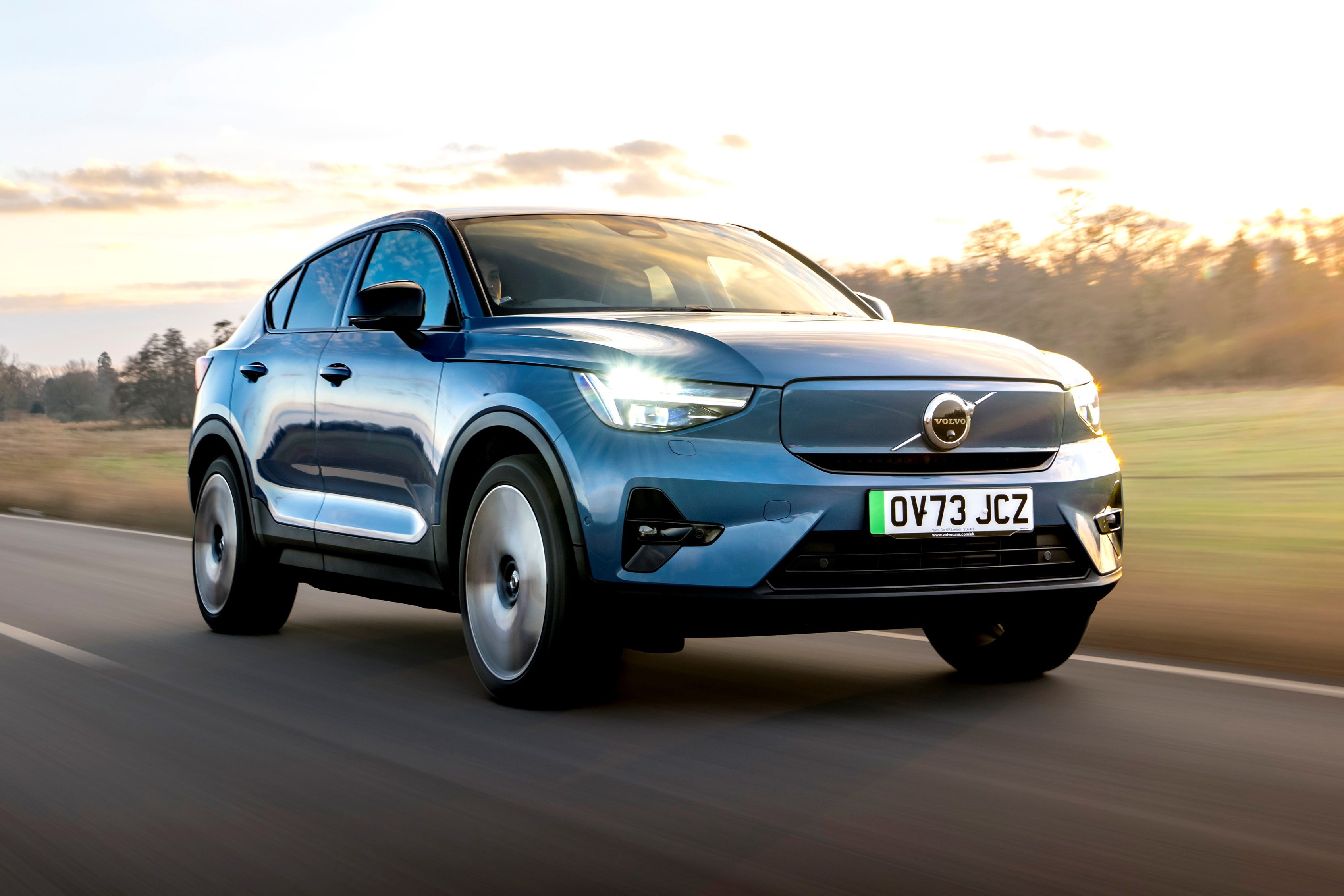
The Volvo EC40 is the car to choose if you like the EX40’s calm, premium character but want something with a bit more visual drama. It keeps the same basic mechanical package and much of the same cabin, but wraps it in a sleeker, coupe-like body that looks more distinctive and a little less conventional. That does cost you some practicality, especially in the rear and over your shoulder, and it remains a fairly expensive compact EV, but the EC40 still has a lot going for it. It is comfortable, refined, well equipped and available with enough battery and motor choice to suit very different buyers. As a style-led compact EV, it feels far more complete than some rivals that trade heavily on appearance but fall short on range, charging or cabin quality.
The Volvo Ec40 in more detail
Volvo’s naming strategy has taken a few turns in recent years, but the EC40 itself is easy enough to understand. This is the car previously known as the C40 Recharge, now renamed to sit more neatly alongside the EX40, EX30 and EX90. The badge may have changed, but the basic proposition has not. The EC40 is the style-led sister car to the EX40, offering the same compact premium EV brief with a more dramatic roofline and a slightly more fashion-conscious attitude.
That puts it in a fairly specific part of the market. Buyers who want a practical electric SUV without much fuss will often be better served by the EX40 or one of the increasingly strong mainstream alternatives. The EC40 is for people who still want an EV that feels sensible and premium, but who also care about design enough to accept a few compromises.
It helps that the underlying car is a good one. Volvo has steadily improved the platform with new rear-wheel-drive layouts, more efficient powertrains and stronger range figures, and the current UK line-up is easier to understand than it was in the earlier C40 days. Today, the range spans Single Motor, Single Motor Extended Range, Twin Motor and Twin Motor Performance versions, with a trim walk-up built around Core, Plus and Ultra. There is also a Black Edition for buyers who want a more overtly styled take on the car.
The result is a crossover that covers quite a lot of ground. The entry Single Motor is enough for plenty of drivers, the Extended Range version adds genuine longer-distance ability, and the Twin Motor cars bring very serious pace. All of them benefit from a cabin that feels more premium than many alternatives and a driving experience that is much more about calmness and comfort than showing off.
What stops the EC40 from being an automatic recommendation is that it asks you to pay a style premium over more practical alternatives. The EX40 is the obvious example from within Volvo’s own range. It is only slightly boxier on paper, but it feels more family-friendly in the rear and easier to see out of. The EC40’s rear window is tiny, its roofline does nibble at rear-seat usefulness, and the boot is only average for the class. That does not ruin the car, but it defines it. This is an electric crossover bought partly with the heart as well as the head.
What's the best Volvo Ec40 trim and battery option?
For most buyers, the Volvo EC40 Single Motor Extended Range in Plus trim is the version to home in on. It gives you the best official range in the line-up, keeps the simpler rear-wheel-drive set-up and should be more than quick enough for everyday use. It also avoids the extra price, weight and insurance burden of the Twin Motor models, while still feeling like a properly premium compact EV.
The basic Single Motor still has a place if your driving is mainly urban or local and you simply want the cheapest way into the EC40 range, but the Extended Range car is easier to recommend as a one-car household EV because it gives you more breathing room on longer runs.
The Twin Motor and Twin Motor Performance versions are undeniably impressive, and some buyers will enjoy the extra all-weather security of four-wheel drive, but the regular EC40 is already quick enough. The high-powered cars are indulgent rather than essential.
Trim-wise, Plus is the point where the EC40 starts to feel like the car many buyers will want. Core is not sparse, but Plus adds the kind of comfort, convenience and premium touches that fit the Volvo badge and the EC40’s price better. Ultra is more lavish still, but it also pushes the car harder into tax and ownership-cost territory that needs careful thought.
What’s the price of the Volvo Ec40?
The current Volvo EC40 range starts at £44,860 and rises to £50,360. That is a broad enough span to place the EC40 firmly in premium compact EV territory, but it is still not difficult to end up in expensive-car-supplement territory because the top version crosses the current threshold for electric cars.
That pricing means the EC40 is never going to be the rational bargain choice. Volvo is clearly pitching it as the more premium, more style-conscious alternative within its compact EV line-up, and it is priced accordingly. The consolation is that standard equipment is generous and the cabin quality is strong enough to support the asking price better than some badge-first rivals.
Alternatives to the Volvo Ec40
The Audi Q4 Sportback e-tron is one of the clearest alternatives if you like the coupe-SUV look but want something a little more conventional in the way it drives and lays out its cabin. It is also one of the most directly comparable cars in terms of badge, size and purpose.
The Cupra Tavascan is another natural rival if you want something with more visual drama and a sportier feel, while the Skoda Elroq makes a great deal of sense if you decide that style is less important than practicality and value. It is not a coupe-SUV, but it will appeal to the same sort of buyer who wants a premium-feeling compact EV without spending unnecessary money.
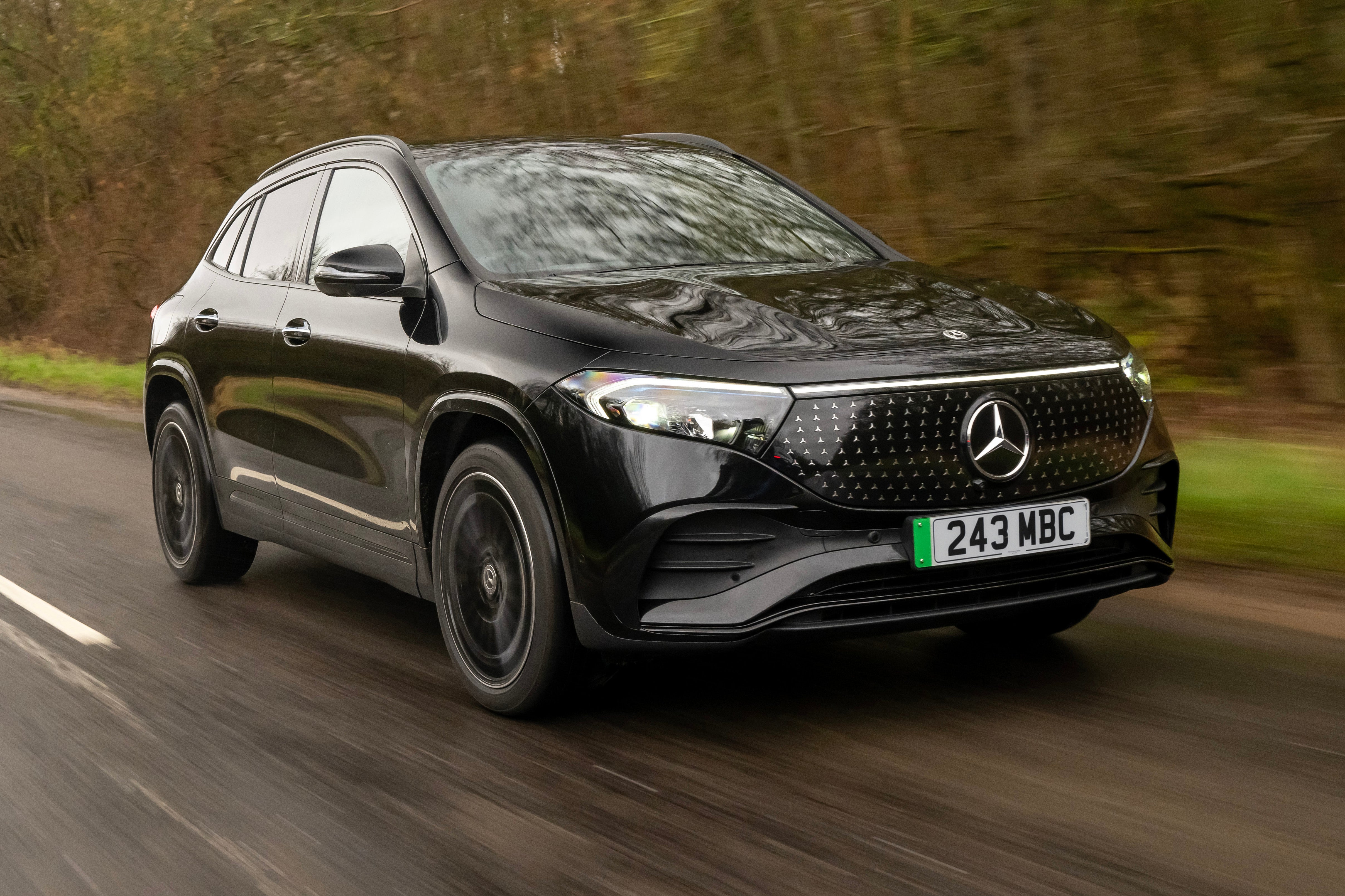
The BMW iX2 is also firmly in the EC40’s orbit if you want a more driver-led alternative with a similarly sloping roofline, while the Mercedes-Benz EQA remains a comfort-led premium option if outright rear-seat space is not the main concern. Volvo’s own EX40 is impossible to ignore as well. It is the smarter buy if you want the same engineering with fewer compromises, but the EC40 is the more visually distinctive thing to own.
What's the interior like in the Volvo Ec40?
The EC40’s interior is one of its strongest cards. It feels unmistakably Volvo, with a calm, minimalist design, good seats and a generally tasteful atmosphere that helps it stand out from more aggressively styled premium rivals.
Volvo Ec40 boot space and practicality
The EC40 is practical enough for everyday life, but this is the point where its sleeker body style asks for some compromises.
Front-seat space is generous, and the driving position is easy to get comfortable in. Volvo’s seats remain a major strength, offering excellent support without feeling over-bolstered, and the front of the cabin feels airy enough despite the coupe-crossover shape.
The rear is more mixed. Legroom is adequate rather than outstanding, and the sloping roofline makes headroom tighter than in the EX40. Taller adults will still fit, but they are less likely to feel especially relaxed in the back on a longer journey. The EC40 also feels more like a four-seater that can take a fifth person when needed than a car designed around regularly carrying three adults across the rear bench.
Boot space stands at 404 litres, with a 31-litre front boot under the bonnet for charging cables. That is not disastrous, but it is clearly less generous than many alternatives. The EX40 is very close mechanically yet offers a slightly larger boot and a more useful shape, while roomier rivals such as the Audi Q4 Sportback e-tron and Skoda Elroq make the EC40 feel style-first rather than class-leading on packaging.
What helps is that the boot you do get is easy enough to use. The opening is wide, the floor is flat and the frunk means the cables do not need to clutter the main luggage area. For a weekly shop, a pushchair or a couple of suitcases, the EC40 will cope perfectly well. It just does not offer the sort of cavernous carrying ability that some buyers now expect from an electric family SUV.
So the practical picture is fairly straightforward. The EC40 is usable enough for couples and small families, and it is not remotely cramped in the front. The compromise shows up more clearly in the rear-seat packaging and the boot, which are acceptable rather than class-leading. Buyers who regularly fill the back seats or who want the most flexible compact Volvo EV should still look first at the EX40.
Volvo Ec40 dimensions
The Volvo EC40 measures 4,440mm long, 1,873mm wide and 1,591mm high. That keeps it compact enough to feel manageable in town and easy to park, even if the rearward visibility is far from ideal.
It is not a particularly large car by modern SUV standards, and that shows in both good and bad ways. It is easier to place and less cumbersome than bigger electric SUVs, but it also does not offer the sort of rear-seat and boot space some buyers might expect from the lofty driving position and chunky stance.
Tech and infotainment in the Volvo Ec40
The EC40’s infotainment set-up is one of the better systems in this class. It uses Volvo’s Google-based platform, with Google Maps, Google Assistant and access to apps through Google Play. That makes it feel much more like a native system than the often-clumsy phone-mirroring solutions some rivals still rely on.
Google Maps is particularly effective here because it can work with the car’s battery status and charging needs rather than simply treating the EC40 like a normal petrol car. The voice assistant is also genuinely useful, which matters when so many functions sit within the central touchscreen.
Volvo’s newer Volvo Car UX and Snapdragon-based improvements have also made the system feel slicker and more responsive than earlier generations of the interface. Menus are cleaner, reactions are quicker and the whole thing feels closer to the standard buyers now expect from a modern premium EV.
The downside is that Volvo still relies too heavily on the screen for day-to-day functions. Climate controls and several regular-use functions would be easier to live with if there were more physical switches. So while the EC40’s infotainment is strong by touchscreen standards, it still asks more of your attention than an ideal system would.
Materials available on the Volvo Ec40
Material quality is another strong point. The EC40 does not need to shout about luxury to feel expensive. Instead, it leans on Volvo’s familiar combination of tasteful design, smart upholstery choices and a general sense that everything has been carefully considered.
Even where it uses sustainable or synthetic materials rather than traditional leather, the cabin still feels premium. There is also more warmth and character here than in some rival interiors, which can feel overly severe or aggressively tech-focused. The EC40’s cabin is not just smart to look at. It is an easy place to spend time.
What's the Volvo Ec40 like to drive?
If you expect the EC40’s sloping roofline to mean a sporty driving experience, you may be surprised. This is a very Volvo take on an electric crossover. It is much more interested in comfort and refinement than showing off.
Volvo Ec40 range and performance
The current EC40 range offers four powertrain choices.
The Single Motor makes more sense than you might expect from the entry-level position in the range. With 238hp and rear-wheel drive, it already has more than enough performance for normal use, and 300 miles of official range is a credible figure for buyers who are not constantly doing long motorway trips.
The Single Motor Extended Range is the one most buyers should focus on. It gives you the longest range in the line-up without asking for any meaningful sacrifice in performance, and it makes the EC40 feel much more like a true one-car household EV. It is still comfortably quick, but the bigger advantage is the extra breathing room on longer journeys and in colder weather.
The Twin Motor versions change the character slightly. They add serious pace and the security of four-wheel drive, and the 408hp version already feels more than sufficient. The Performance version is there for buyers who simply want the quickest EC40 possible, but it is hard to argue that it is necessary. Even the regular Twin Motor already gives the sort of acceleration that feels faintly absurd in a comfort-led family crossover.
A reassuring part of the range is that there is no obvious dud. The slower cars are still quick enough, and the faster cars are easy to recommend only if you genuinely want their extra pace. The powertrain walk-up therefore feels sensible rather than cynical.
Performance data
| Model | Engine/battery size | Power | 0-62mph | Range/MPG |
|---|---|---|---|---|
Volvo EC40 Single Motor | 69kWh | 238PS | 7.3 seconds | up to 300 miles |
Volvo EC40 Single Motor Extended Range | 82kWh | 252PS | 7.3 seconds | up to 358 miles |
Volvo EC40 Twin Motor | 82kWh | 408PS | 4.7 seconds | up to 340 miles |
Volvo EC40 Twin Motor Performance | 82kWh | 442PS | 4.6 seconds | up to 337 miles |
Volvo Ec40 driving and refinement
The EC40 is at its best when driven calmly. The suspension is soft enough to deal well with poor urban roads, patched surfaces and the general scruffiness of British tarmac. That gives it the kind of cushioned, relaxed gait that suits Volvo’s brand identity very well.
The trade-off is body control. If you drive the EC40 briskly along a twisting road, you will notice more lean and movement than you would in something like a BMW iX2. The steering is light, fairly remote and not especially involving, so there is little encouragement to drive the car hard. It feels secure, but not eager.
For many buyers, that will be entirely fine. In fact, it is likely to be one of the car’s biggest appeals. The EC40 is easy, comfortable and undemanding in daily use, and that matters more in this type of car than any attempt to chase hot-hatch responses.
Refinement is generally strong. There is the near-silent operation you would expect from an EV, while wind and road noise are also well contained. One weak point is that the suspension can sound a bit clattery over sharper impacts, which is more noticeable because the rest of the car is so quiet. Even so, the overall impression is still of a well-insulated, premium-feeling crossover.
Rear visibility is another factor to mention here, because it has a real effect in daily use. The tiny rear window and thick pillars mean the EC40 never feels as easy to see out of as the EX40, and this is one of the reasons the standard camera and parking aids matter so much.
How safe is the Volvo Ec40?
The EC40, back when it was still called the C40 Recharge, earned a five-star Euro NCAP rating in 2022. That keeps it firmly in line with Volvo’s broader safety reputation and gives buyers reassuring third-party backing for the car’s protective ability.
The safety package itself is generous, with autonomous emergency braking, lane-keeping systems, blind-spot support and adaptive cruise functions all part of the broader story. As you would expect from Volvo, safety is not treated as a trimming-up exercise. It is a central part of the car’s appeal.
Running costs: What it's like to live with a Volvo Ec40
The EC40 is not cheap to buy, but it does at least present a fairly straightforward ownership case once you understand the charging and tax implications.
Volvo Ec40 charging times and costs
Charging performance depends on the powertrain. The Single Motor supports up to 135kW DC charging, the Single Motor Extended Range up to 155kW, and the Twin Motor models up to 205kW. Volvo quotes 10 to 80 per cent charging times of around 33 minutes for the smaller-battery Single Motor and around 28 minutes for the higher-capacity cars.
That is competitive enough for the class and means the EC40 should be easy to live with on longer trips if you have access to appropriate rapid chargers. The official Volvo site now quotes around 26 minutes for a typical 10 to 80 per cent top-up on a 200kW fast charger, which underlines how much the car’s charging performance has improved from earlier electric Volvos.
Home charging is a slower but more important part of daily ownership. Expect around 11 hours for the smaller battery, 12 hours for the Extended Range version and 13 hours for the Twin Motor cars on a 7kW home wallbox. That makes overnight charging the natural fit for most owners.
As for efficiency, the Extended Range model is once again the easiest one to recommend. It gives the strongest range figure without leaning on extravagant power outputs, so it is the version most likely to satisfy buyers looking for the broadest mix of long-distance usability and manageable running costs.
Volvo Ec40 warranty and servicing
Volvo covers the EC40 with a three-year or 60,000-mile vehicle warranty. The battery is covered separately for eight years or 100,000 miles.
That is acceptable rather than outstanding. It is fine for a premium EV, but it does not give Volvo a major ownership advantage over key alternatives. Buyers are more likely to be drawn in by the EC40’s style and cabin than by any headline-grabbing warranty offer.
Volvo Ec40 insurance groups
Insurance groups run from 35 for the least powerful versions to 41 for the most potent Twin Motor cars. That means the EC40 is not a cheap small EV to insure, but it is not wildly out of step with other premium electric crossovers either.
The step up to the Twin Motor versions will matter here. Buyers drawn to the extra power need to factor in not just the list price, but also the likely increase in premiums.
How much does it cost to tax a Volvo Ec40?
From the second year onwards, an electric Volvo EC40 costs £200 a year in standard VED form.
The bigger cost issue is the Expensive Car Supplement for electric cars priced at more than £50,000 when new. In the EC40 range, that can be triggered if you choose a Twin Motor in the pricier trims, and it can also be triggered if you start with a lower-spec car but add enough factory options to push the list price over the threshold. The key detail is that the test is based on the official list price when new, including options and before any discounts.
In practical terms, a lower-spec Single Motor car can remain at £200 a year, while any EC40 priced above £50,000 when new costs £640 a year from years two to six before dropping back to the standard rate afterwards.
What trims are available with the Volvo Ec40?
The current Volvo EC40 range is built around Core, Plus and Ultra, with Black Edition models also available.
Core is the entry point, but Volvo’s idea of entry trim is still fairly generous. It already includes the panoramic roof, wireless phone charging, a powered tailgate, heated front seats, a heated steering wheel, the Google-based infotainment set-up and a strong spread of driver-assistance kit.
Plus is the trim many buyers should focus on because it adds the richer blend of convenience and premium touches that suit the EC40’s positioning better. Depending on version, that can include extras such as the 360-degree camera, pixel LED headlights and more upmarket interior detailing. This is the level where the EC40 starts to feel fully aligned with its premium billing.
Ultra tops the standard range and adds the sort of finishing touches you would expect at this price, including the Harman Kardon premium sound system and powered passenger-seat adjustment. It feels appropriately lavish, but it is also the trim most likely to push the car into expensive-car-supplement territory.
Black Edition models add a more style-led twist rather than changing the basic character of the car. They bring black paint, black wheels and black exterior detailing, and are best seen as a visual package rather than a fundamentally different version of the EC40.
Ask the Drive experts: common questions
How much does the Volvo EC40 cost?
Is the Volvo EC40 a good electric SUV?
Which Volvo EC40 is best?
Is the Volvo EC40 practical?
Get our latest advice, news and offers
Keep me updated by email with the latest advice, news and offers from Drive.
.jpg)