Mercedes-Benz EQA Review

Written By Phil Hall
- 2021
- SUV
- Electric
What we love
Quiet and effortless to drive
Attractive cabin and effective infotainment
EQA 250+ offers a useful official range
Things to consider
Small boot and awkward rear seating
100kW rapid charging is slow for the class
Newer rivals use space more efficiently
The DRIVE take on the Mercedes Benz Eqa, is it the right car for you?
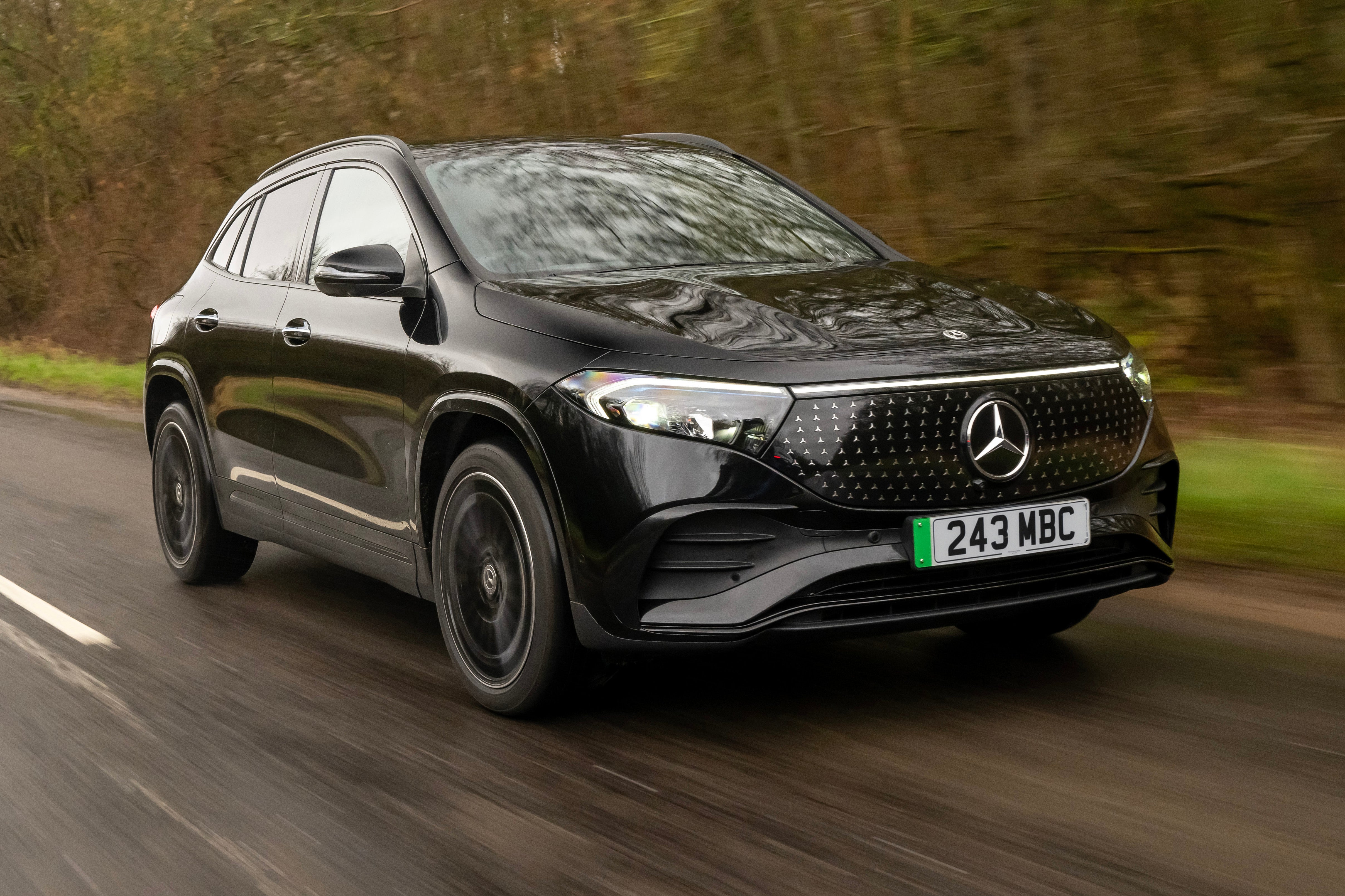
The Mercedes EQA is a stylish electric small SUV with a premium image, upmarket cabin and a decent range. It's not that brilliant to drive, though, with less performance and slightly inferior handling than rivals, while mediocre charging speeds and comfort also let it down. Buyers prioritising practicality or the latest EV technology will find stronger alternatives.
The Mercedes Benz Eqa in more detail
The Mercedes-Benz EQA is the smallest electric car in the firm's 'EQ' sub-brand, an alphabetised range which spans from EQA all the way up to EQV. It might be the cheapest and most compact EV Mercedes makes, but it still costs a pretty penny. In this Mercedes-Benz EQA review, we'll see if it can justify this premium price.
Even if the Mercedes EQA is a car that's not previously been on your radar, there's every chance that it'll still feel oddly familiar. This is one of the vast number of models (we've counted nine or thereabouts, not including sporty AMG variants) based on the A-Class hatchback, each with a slightly different, size, shape and body style, to serve a slightly different purpose and appeal to a slightly different buyer.
The EQA's closest relation is the GLA, essentially the jacked-up SUV-esque small crossover offering in the portfolio. Indeed, if you were to consider the EQA to be merely an all-electric version of that car, then you'd be pretty much spot-on.
All of that does mean, however, that the EQA is one of those electric cars that is built on a reworked combustion-engine platform, rather than a made-to-measure, ground-up EV platform. In that regard, it's very similar to rivals such as the Volvo EX40 and the Lexus UX 300 e. That said, however, it also has to deal with rivals that do have EV-specific architecture, cars such as the Audi Q4 e-tron, Genesis GV60, Hyundai Ioniq 5, Polestar 2 and Ford Mustang Mach-E.
Despite its origins, however, the EQA still manages to offer decent range figures, particularly in later examples, which benefit from a raft of near-constant improvements to battery tech and powertrain efficiency made over the car's life.
Granted, the performance on offer is sufficient rather than stupefying: that's in contrast to many electric SUV rivals out there, which are in many cases, needlessly fast in our opinion. The overall driving experience is also rather so-so: refinement is excellent, but the handling is underwhelming, and while the ride is soft, it isn't as composed as you'd hope.
Still, the EQA's best trait is how normal it feels: it's perfect if you want an electric car that doesn't feel totally alien compared to a petrol or diesel car. With the same classy, high-tech cabin as the GLA, plus a decent amount of space, it can slip into family life with ease. We just wish it was better to drive given how much it costs.
What's the best Mercedes Benz Eqa trim and battery option?
The EQA 250+ Sport Executive is the best pick. Its single-motor powertrain produces 190PS and offers up to 346 miles of official range. Performance is modest by electric-car standards, but more than adequate for ordinary commuting and motorway use.
Sport Executive also comes on 18-inch wheels. These provide the best combination of ride comfort, efficiency and low road noise.
The EQA 300 4Matic adds a second motor, four-wheel drive and stronger acceleration, but loses a significant amount of range. The EQA 350 4Matic is quicker again, although its extra performance adds little to the ownership experience of a comfort-focused family SUV.
AMG Line Executive is worth considering for its sharper bodywork and more distinctive cabin trim. Premium and Premium Plus add desirable convenience and luxury features, but their larger wheels reduce range and comfort while pushing the price further above £50,000.
What’s the price of the Mercedes Benz Eqa?
The EQA starts at £49,760 for the EQA 250+ Sport Executive.
Higher AMG Line specifications exceed £50,000, with the most expensive Premium Plus derivatives costing around £58,010.
That places the EQA against the BMW iX1, Audi Q4 e-tron and Volvo EX40, as well as high-specification versions of the Kia EV3, Skoda Enyaq and Volkswagen ID.4.
Used examples offer a stronger value case. Early EQA 250 models retain much of the same cabin quality and everyday refinement, although their official range is shorter than that of the latest EQA 250+.
Alternatives to the Mercedes Benz Eqa
The BMW iX1 is more spacious and sharper to drive, with a modern infotainment system. The EQA feels calmer and has the stronger maximum range in its most efficient version.
The Audi Q4 e-tron makes much better use of its electric-only platform. Its rear cabin is roomier and its 520-litre boot is substantially larger than the Mercedes’.
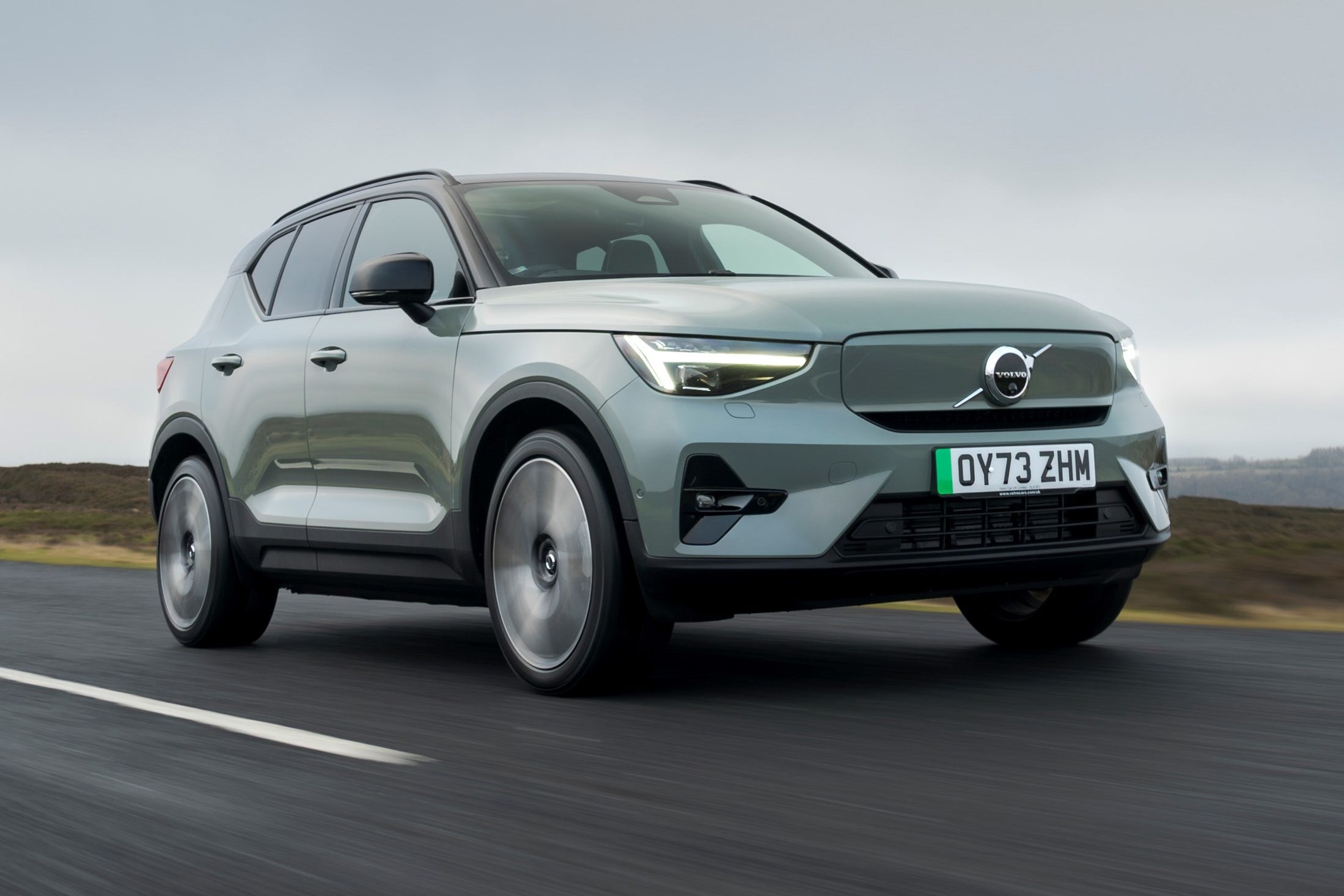
The Volvo EX40 offers strong performance and a distinctive cabin. It is not the most efficient alternative, but remains more practical than the EQA.
The Kia EV3 provides a longer range in its largest-battery form, quicker charging and more interior space for less money. It lacks the Mercedes badge but is the more advanced electric car.
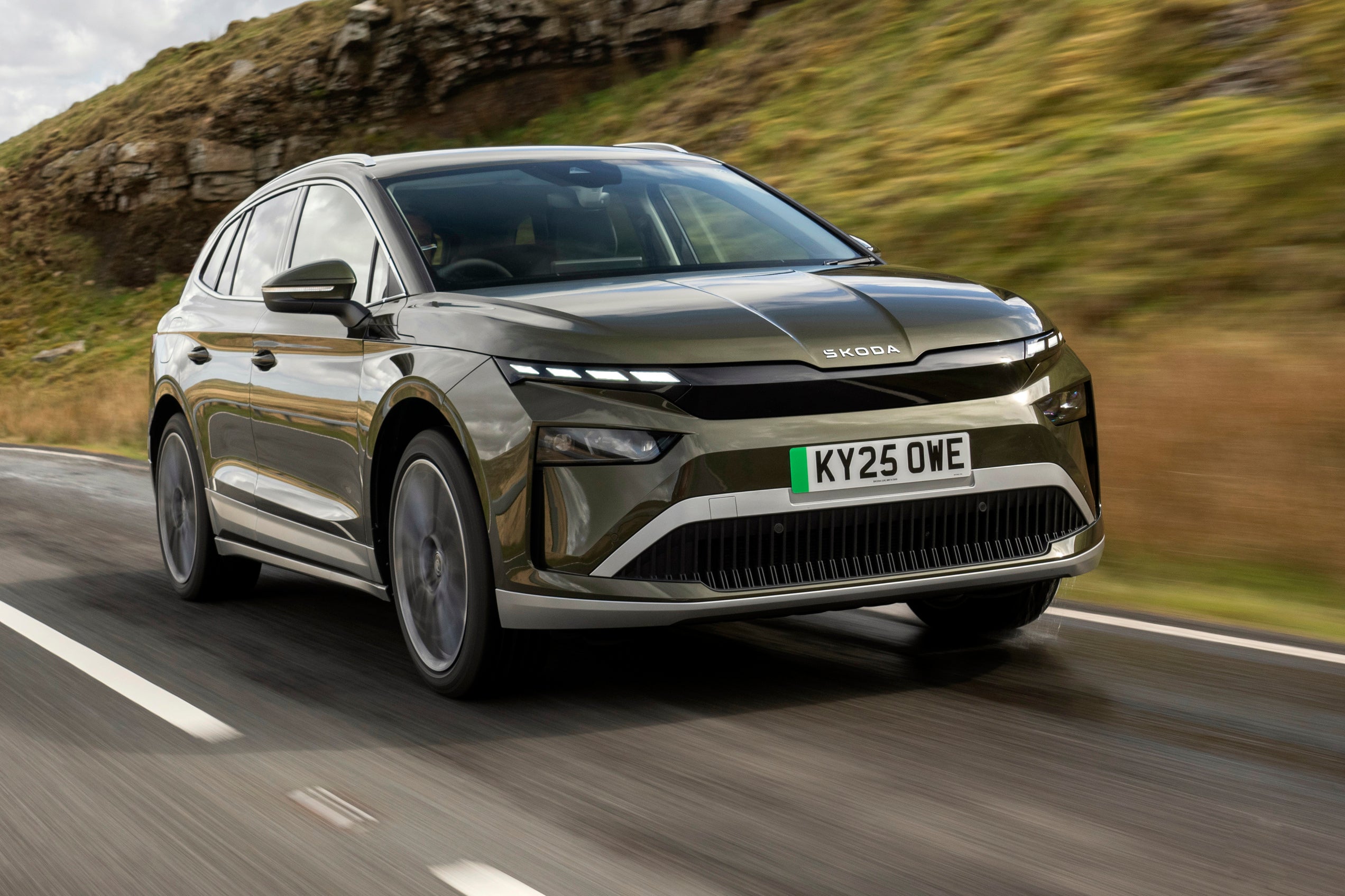
The Skoda Enyaq is larger, more practical and exceptionally comfortable. Its size makes it less convenient in town, but it is a better family vehicle.
The Volkswagen ID.4 shares much of the Enyaq’s engineering and also provides more passenger and luggage space. Its interior does not feel as upmarket as the EQA’s.
What's the interior like in the Mercedes Benz Eqa?
The EQA has an attractive, well-finished and highly digital cabin. Front-seat comfort is excellent, although rear passenger space is compromised by the battery beneath the floor.
Mercedes Benz Eqa boot space and practicality
There will be no complaints from those up front in the EQA, with a nicely raised driving position, plenty of adjustment in the seats and steering column, and leg- and (particularly) headroom to spare. Storage is pretty good, including a deep compartment under the centre armrest and a cupholder/phone storage compartment with a sliding lid.
First impressions of the rear aren't bad, either, as legroom and head space both feel fairly plentiful for six-footers. It's only when you climb inside that you realise there's quite a compromise to make: the height of the floor.
Sticking the big battery pack under the floorpan has raised the internal floor, forcing Mercedes to lower the rear bench down to maintain headroom. This means that you sit with your knees a lot higher than in the GLA, leaving taller adults in a less-than-comfortable squatting position. Many EVs suffer from this, but the EQA seems to be afflicted more than most
The boot, too, isn't all that competitive. At 340 litres, its 100 litres smaller than the GLA on which the EQA is based, and a full 180-litres less than a Q4 e-tron, with no proper cable storage area and no front boot to boost capacity. At least the rear seats split 40/20/40 and fold nice and flat.
Mercedes Benz Eqa dimensions
The EQA is 4,463mm long, making it compact enough for urban use but still large enough to require care in older car parks. Its 1,834mm body width increases to 2,020mm with the mirrors extended. Narrow entrances, roadside width restrictions and tight garages are therefore more likely to cause difficulty than the rounded styling suggests.
A height of 1,608mm creates an elevated driving position without making the EQA feel like a tall or cumbersome SUV.
The relatively long 2,729mm wheelbase provides good front-seat space, but the raised rear floor prevents it from delivering similarly generous accommodation in the back.
Visibility ahead is good through the large windscreen. The thick rear pillars and smaller back window restrict the view behind, making the reversing camera and parking sensors especially useful. The 11.4-metre turning circle is unexceptional, but light steering and clear parking graphics make the EQA easy enough to manoeuvre.
Tech and infotainment in the Mercedes Benz Eqa
We've few complaints with the infotainment in the Mercedes EQA, which pairs a 10.0-inch digital dial display with a 10.0-inch infotainment screen in a neatly integrated bezel. It's one of the smartest systems around, with lots of features and crisp, responsive displays.
You can also control it in different ways, via the central touchscreen, via a touchpad surrounded by shortcut buttons on the centre console, or via Mercedes' advanced voice control system (the latter of which is clever but not faultless). It's a bit of a shame the BMW iDrive-style rotary dial is no more, as that's a doddle to use on the move, but the touchpad is fairly slick.
We also like that Mercedes has kept a few physical buttons around, with rocker switches for the cabin temperature and proper volume rollers on the steering wheel.
Materials available on the Mercedes Benz Eqa
The Mercedes EQA borrows its interior largely wholesale from the GLA, even sharing the same 'engine' start/stop button and steering column-mounted drive selector.
That means you get a cabin that excels visually, with a really upmarket look and (for the most part) a decent quality feel, with impressive backlit air-vents and mostly nice materials. It's not all perfect, though, as we do have some gripes.
Some areas of the cabin feel cheaper than you'd expect at this price point. The column stalks feel brittle and hollow, for example, while the dashboard of our test car was surprisingly creaky over bumps. It feels like the cool design has taken priority over a feeling of solidity.
What's the Mercedes Benz Eqa like to drive?
The EQA is quiet, comfortable and straightforward to drive. It suits relaxed urban and motorway use better than faster driving on a twisting road.
Mercedes Benz Eqa range and performance
The entry-level Mercedes EQA - the 250 or 250+ depending on the age of the car - gets a single electric motor driving the front wheels with an output of 190PS. It managed a 0-62mph time of 8.9 seconds in 250 form, cutting that to 8.6 seconds in 250+ form, with both variants having a top speed of just 99mph.
This is at the slower end of of the spectrum of premium electric cars, but unless you're already going at a high speed, the entry-level EQA feels nippier than those figures suggest, and will deliver enough performance to not feel gutless. Those after kick-in-the-back performance from their electric car would be better off with cars like the Volvo EX40, AWD Kia EV6, or Tesla Model Y, but for everyone else, the EQA will be absolutely fine.
The EQA 300 4Matic is the more powerful option, with a second motor added for four-wheel drive and a maximum output of 228PS. This trims the 0-62mph time down to 7.7 seconds, while the top speed is still pegged at 99mph. We haven't tried it yet, so we can't tell you whether it feels much faster, but the figures are still fairly modest in the scheme of things.
Once upon a time, another all-wheel-drive option was offered in the shape of the EQA 350. This had 292PS and a 0-62mph time of 6.0 seconds, but we never got to drive it before it was discontinued.
Performance data
| Model | Engine/battery size | Power | 0-62mph | Range/MPG |
|---|---|---|---|---|
EQA 250+ | 70.5kWh | 190PS | 8.9 seconds | Up to 346 miles |
EQA 300 4Matic | 66.5kWh | 231PS | 7.7 seconds | Up to 280 miles |
EQA 350 4Matic | 66.5kWh | 292PS | 6.0 seconds | Up to 266 miles |
Mercedes Benz Eqa driving and refinement
The Mercedes GLA is known for offering a predictable handling and a comfortable ride, so the EQA should be pretty much identical, right? Not necessarily.
You see the EQA is around half a tonne heavier than the GLA due to that big battery. Again, all EVs have a considerable weight burden, but some are better than others at disguising it. The EQA is okay, but not the best.
It's great around town, with good all-round visibility, nippy performance even in entry-level form, and positive steering. The ride is generally pretty soft and quiet, too, but catch a big pothole or manhole cover, and it thumps and jolts more than you'd expect. There's also more whine from the electric motor than befits a Mercedes, while the brakes aren't all that progressive, making it difficult to come to a stop smoothly.
Out on the motorway, the EQA fares pretty well despite its modest pace, with low levels of road- and wind noise, and a ride that smooths out nicely. You can adjust the regenerative braking manually through two stages via the steering-wheel-mounted paddles, or leave it in auto mode, where it judges how much is required given the prevailing traffic conditions.
There are better electric cars for fun country road drives than the EQA, that's for sure. The steering isn't too light, but it's not hugely confidence-inspiring, while the body leans a fair bit in the bends and the car is unsettled by mid-corner bumps. It's just not as composed or as balanced as the rear-wheel drive Audi Q4 e-tron, and a fair way off the dynamic feel of a Kia EV6.
How safe is the Mercedes Benz Eqa?
The Mercedes EQA is one of the safest cars in its class, managing a five-star Euro NCAP crash test rating. More than that, an adult occupant protection score of 97% is extremely impressive, with a nearly-as-strong 90% child occupant rating, too. As that test was conducted in 2019 to less strict protocols, it's now considered expired.
All versions of the Mercedes EQA come with automatic emergency braking, a driver drowsiness detection system, blind spot monitoring and active speed limit assist. You'll need to pay extra for tech such as rear-cross traffic alert and adaptive cruise control, though, which is a shame.
Running costs: What it's like to live with a Mercedes Benz Eqa
The EQA can be inexpensive to charge at home, although insurance, public charging and depreciation may add substantially to the overall cost of ownership.
Mercedes Benz Eqa charging times and costs
The Mercedes-Benz EQA will charge from 10-80% in as little as 35 minutes using a 100kWh public charger, although cars like the Kia EV6 can do the same in less than 20 minutes. That's for the larger 70.5kWh battery. For the smaller 66.5kWh battery to can expect to shave a couple of minutes off this.
Using a fast public charger isn't cheap though, to get the best value electricity it pays to charge your EQA at home where using an 11kWh wall charger is enough to get the battery from 0-100% in 7hrs 15m (70.5kWh battery) or 6hrs 45mm (66.5kWh battery). The other option is a three-pronged plug although – as it'll take at least 30hrs to charge from flat – we don't recommend it as an everyday solution.
Mercedes Benz Eqa warranty and servicing
The EQA has a three-year manufacturer warranty with no mileage limit. Its high-voltage battery is covered for eight years or 100,000 miles, subject to Mercedes-Benz’s warranty terms and capacity conditions.
Electric cars have fewer routine mechanical service requirements than petrol or diesel models, but the EQA still needs scheduled checks of its brakes, suspension, tyres, cooling system and electrical components.
Mercedes Benz Eqa insurance groups
The Mercedes EQA ranges from insurance group 37 for the EQA 250 model to group 45 for the EQA 350 4Matic. That's pretty high when you consider the highest insurance group is 50, but the EQA is not alone. While electric cars can save you money in a lot of areas, insurance premiums are often a lot higher than petrol or diesel cars. The Audi Q4 e-tron starts a bit lower than the EQA, with the base model starting insurance group 26.
How much does it cost to tax a Mercedes Benz Eqa?
From the second licence, the standard annual rate is £200. However, zero-emission cars with an official list price above £50,000 attract the Expensive Car Supplement. The supplement is £440 a year for five years from the beginning of the second licence, taking the annual total to £640 at current rates.
The EQA 250+ Sport Executive is priced below the threshold in standard form. Higher trims exceed it. Optional equipment is included when calculating the official list price, so adding extras to an entry model may make it liable for the supplement.
What trims are available with the Mercedes Benz Eqa?
The EQA 250+ Sport Executive is the best choice for most buyers.
It includes 18-inch alloy wheels, LED headlights, heated front seats, automatic climate control, ambient lighting, twin 10.25-inch displays and a powered tailgate.
AMG Line Executive adds sportier bodywork, 19-inch wheels, upgraded upholstery and more distinctive cabin detailing. It is the trim to consider when appearance matters more than maximum efficiency.
AMG Line Premium adds 20-inch wheels, keyless entry, wireless smartphone charging, upgraded audio and a 360-degree camera.
AMG Line Premium Plus brings a panoramic glass roof, head-up display and Burmester surround-sound system.
The higher specifications look and feel more desirable, but their larger wheels reduce ride comfort and range. They also move the price beyond the £50,000 Expensive Car Supplement threshold.
Ask the Drive experts: common questions
Is the Mercedes-Benz EQA a good electric SUV?
Which Mercedes-Benz EQA is best?
How far can the Mercedes-Benz EQA travel on a charge?
How quickly can the Mercedes-Benz EQA charge?
How practical is the Mercedes-Benz EQA?
Is the Mercedes-Benz EQA four-wheel drive?
Is the Mercedes-Benz EQA safe?
What warranty does the Mercedes-Benz EQA have?
Get our latest advice, news and offers
Keep me updated by email with the latest advice, news and offers from Drive.
.jpg)
.jpg)
.jpg)