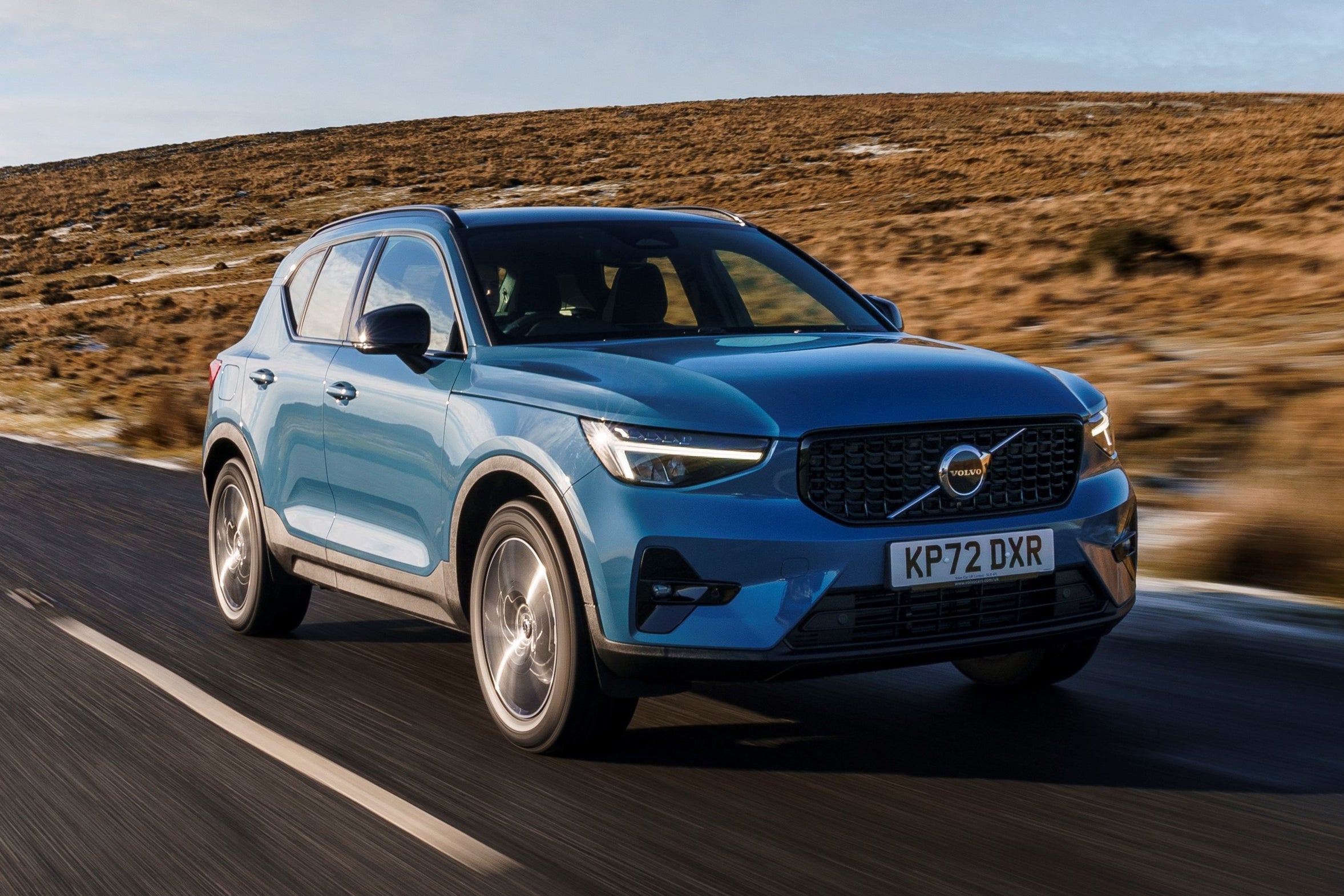
Lexus UX Review

Written By Phil Hall
- 2019
- SUV
- Hybrid
What we love
Very efficient in town
High-quality cabin
Strong reliability reputation
Things to consider
Tight rear-seat space
Small boot for an SUV
Infotainment still lags behind the best
The DRIVE take on the Lexus Ux, is it the right car for you?
The Lexus UX makes sense if you want a premium-badged compact crossover that majors on low running costs, easy urban manners and the kind of long-term dependability Lexus has built its reputation on. It is not the most practical SUV of its size, and it does not have the showroom pull of some German alternatives, but the Lexus UX has its own appeal. It feels solid, uses fuel sparingly and delivers a calmer ownership proposition than many obvious rivals. The compromise is that the Lexus UX asks you to accept tight rear accommodation and a boot that is noticeably smaller than many alternatives.
The Lexus Ux in more detail
The Lexus UX arrived at a time when the small premium SUV market was filling up fast. Buyers suddenly had no shortage of choices, from the Audi Q3 and Mercedes-Benz GLA to the BMW X2, Volvo XC40 and a growing number of left-field alternatives.
Rather than trying to beat those cars at their own game, the Lexus UX took a different tack. It leaned on hybrid efficiency, a strong reliability story and a cabin that felt more interestingly styled than many of the obvious German alternatives. That approach helped it carve out a niche, even if it never became the default choice in the class.
Browse used Lexus UX for sale →
In 2026, that basic argument still holds up. The Lexus UX is not an all-round class leader, but it remains relevant because it offers something a little different. Buyers who spend a lot of time in town, value refinement at lower speeds and want a car likely to feel robust long after the finance term ends will still find plenty to like.
The current UK story is also much simpler than older reviews suggest. The standard range is now centred on the Lexus UX 300h, which replaced the old UX 250h naming and uses Lexus’s later full-hybrid set-up. The all-electric UX 300e still exists, but it makes more sense as a separate proposition than as the centre of the regular Lexus UX story.
That leaves the Lexus UX 300h to do the heavy lifting, and in some respects it is well suited to that role. The 2.0-litre full hybrid system is smooth in town, efficient without being plugged in and easy to live with. The trim walk-up has also been revised for 2026, giving the range a cleaner structure than before.
The areas where the Lexus UX still struggles are packaging and infotainment. It is simply not very roomy for a car in this class, especially in the rear, and the boot remains a genuine weakness. Meanwhile, while the multimedia system has improved over time, it still does not feel as intuitive or polished as the best alternatives.
So the Lexus UX is not a car you buy because it does everything brilliantly. It is a car you buy because its particular mix of efficiency, quality and dependability matters more to you than class-leading space.
What's the best Lexus Ux trim and engine option?
For most buyers, the Lexus UX Premium is the best place to start. It adds the sort of comfort and convenience features many owners will want, including heated front seats, parking sensors and extra day-to-day usability kit, without pushing the Lexus UX too far up the price ladder.
The core mechanical recommendation is simpler, because the Lexus UX now effectively gives you one main choice: the UX 300h. That means the real decisions are trim level and whether you need all-wheel drive.
In truth, most buyers do not. The front-wheel-drive Lexus UX 300h is the version to choose unless you have a very specific reason for wanting extra traction. It is more efficient, keeps the range simpler and avoids the packaging and cost penalties that come with more complex drivetrains.
If you want the most luxurious Lexus UX, Takumi has obvious appeal thanks to its Mark Levinson audio system, larger media display and richer trim, but Premium feels like the sweet spot for sensible money.
What’s the price of the Lexus Ux?
The current Lexus UX range starts at £29,995 and rises to £45,345 in current UK form. There are also plenty of used Lexus UX for sale for considerably less.
That spread tells you quite a lot about the car. At the bottom end, the Lexus UX looks like a fairly accessible route into premium-badged hybrid motoring. At the top end, it becomes a much more indulgent purchase, especially given the car’s modest rear space and small boot.
This is where the Lexus UX can feel slightly awkward. It works best when treated as a stylish, efficient compact crossover rather than as a family SUV with broad practical talents. The further up the range you go, the more important that distinction becomes.
Alternatives to the Lexus Ux
The BMW X1 is one of the strongest alternatives if you want a more rounded premium SUV with much better rear-seat room and boot space. The Volvo XC40 is another obvious rival if comfort and design matter, while the Audi Q3 remains a safer, more conventional premium choice.
The Mercedes-Benz GLA also competes for the same buyers, but the Lexus UX makes more sense if efficiency and reliability sit higher on your priority list. The Mazda CX-30 is worth a look if you want something stylish and good to drive without leaning too heavily on badge prestige.
There is also a strong argument for looking at the Toyota C-HR, because it shares much of the Lexus UX’s hybrid thinking in a less expensive package. You would not get the same cabin atmosphere or badge appeal, but it is impossible to ignore as a value-led alternative.
What's the interior like in the Lexus Ux?
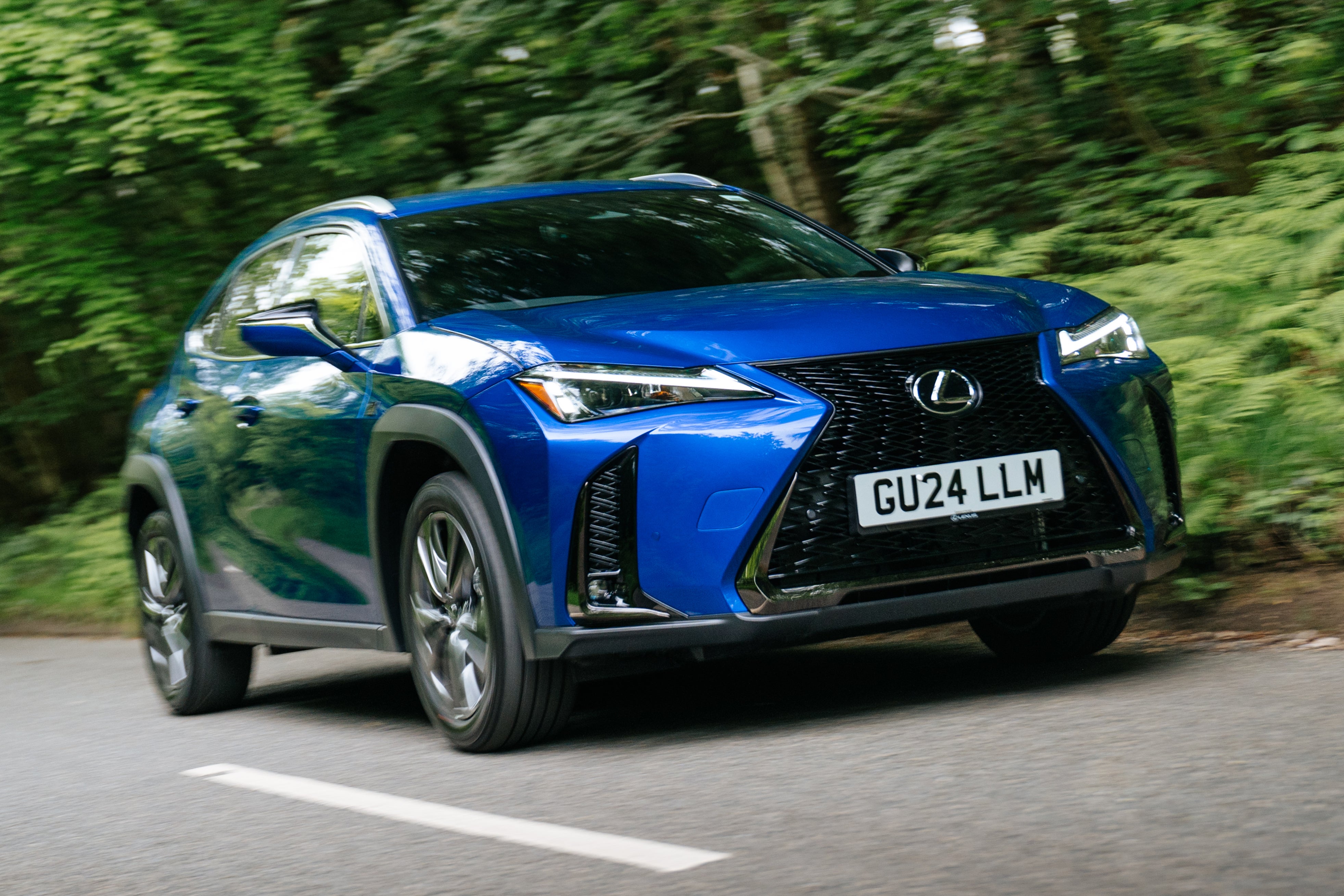
The Lexus UX cabin is one of the car’s more persuasive qualities. It feels solid, neatly detailed and more individual than many alternatives, even if the technology does not quite back up the premium first impression.
Lexus Ux boot space and practicality
The front of the cabin is absolutely fine for adults. The seats are comfortable, there is enough adjustment to settle in properly and the dashboard design gives the Lexus UX a more distinctive feel than many rivals.
The problem arrives when you move into the back. Rear legroom is tight, the rear doors are not especially generous and the relatively small side windows make the cabin feel darker than it needs to. That means the Lexus UX is much better suited to couples or families with younger children than to regularly carrying adults in the back.
The same issue applies in the boot. The Lexus UX offers 320 litres, which is simply not much for a small SUV. To put that in context, a BMW X1 offers far more room, and even many family hatchbacks can better it. The Audi Q3 and Volvo XC40 are both much more useful if luggage space matters.
It is not just the headline number, either. The boot is also fairly shallow, which limits its usefulness for bulkier items. That makes the Lexus UX harder to recommend if you often carry pushchairs, dogs or family holiday luggage.
So the practical picture is quite straightforward. The Lexus UX is fine for lighter everyday use, shopping bags, a couple of cabin cases or a modest weekly load, but it is not the right premium crossover if your priority is family space.
Lexus Ux dimensions
The Lexus UX measures 4,495mm long, 1,840mm wide and 1,540mm high.
That makes it neatly compact by SUV standards, which helps explain why it feels so manageable in town. It is easy to place, easy to park and never feels like a bulky crossover. The price you pay for that compact footprint is that the rear-seat and boot space are both tighter than many buyers now expect from an SUV.
Tech and infotainment in the Lexus Ux
The Lexus UX’s infotainment has improved over time, but it still is not a class strength.
Entry versions use an 8.0-inch display, while higher trims move to a larger set-up with built-in navigation. Apple CarPlay and Android Auto are standard, which matters because many owners will prefer to rely on smartphone integration rather than the native system.
The issue is usability. The menus and graphics still feel less polished than the best premium systems, and although Lexus has moved things on from the older touchpad-heavy set-up, the whole experience still lacks the crisp clarity you get in the best BMW, Audi or Volvo systems.
The Mark Levinson stereo in Takumi models is a genuine highlight, though, and helps make the top-spec Lexus UX feel meaningfully more special inside.
Materials available on the Lexus Ux
Material quality is a definite plus. The Lexus UX feels solidly put together, with a reassuring sense of durability and some interesting textures and finishes around the cabin.
It does not feel quite as consistently plush as the best premium rivals if you start prodding lower down, but the overall impression is still of a car built with care rather than with showroom gimmicks in mind.
What's the Lexus Ux like to drive?
The Lexus UX is at its best around town and on gentler mixed driving, where its hybrid system and compact footprint make the most sense.
Lexus Ux range and performance
The current Lexus UX range is centred on the UX 300h full hybrid.
The UX 300h gives the Lexus UX stronger performance than the older 250h, and the system works well enough in ordinary driving. Pulling away in electric mode and gliding through traffic suits the car perfectly.
The front-wheel-drive model is the one to go for because it delivers the strongest efficiency and fits the Lexus UX’s urban-focused brief best. The all-wheel-drive version offers extra traction and a tiny performance edge, but the real-world case for it is limited unless you regularly deal with slippery conditions.
Performance data
| Model | Engine/battery size | Power | 0-62mph | Range/MPG |
|---|---|---|---|---|
Lexus UX 300h FWD | 2.0-litre full hybrid auto | 196PS | 8.1 seconds | 54.3–56.4mpg |
Lexus UX 300h AWD | 2.0-litre full hybrid auto | 196PS | 7.9 seconds | 50.4–51.3mpg |
Lexus Ux driving and refinement
Around town, the Lexus UX is easy to like. The steering is light, the automatic gearbox removes effort in traffic and the hybrid system can shuffle along on electric power for short periods, which gives the car a very relaxed feel.
That urban friendliness is one of the Lexus UX’s strongest selling points. It makes daily driving feel calm and straightforward in a way some rivals do not quite manage.
Things are less convincing on faster roads. Under heavier acceleration, the e-CVT transmission brings the familiar drone that affects many hybrids of this type, and that dents the premium feel more than you might hope.
Ride comfort is decent around town, but the Lexus UX can feel a little fidgety on rougher roads and less settled at speed than the best rivals. It also never feels particularly engaging to drive. That is not a disaster given the car’s brief, but it does mean alternatives such as the BMW X1 or Mazda CX-30 are more satisfying if you enjoy driving.
How safe is the Lexus Ux?
The Lexus UX earned a five-star Euro NCAP rating in 2019, and that rating was later confirmed to apply to the electric UX 300e variant as well.
Standard safety equipment is generous, with adaptive cruise control, autonomous emergency braking, lane-keeping assistance and road-sign recognition all part of the story. Higher trims add extra features such as blind-spot monitoring and rear cross-traffic alert.
So while the Lexus UX is not especially spacious, it does at least come with the sort of strong safety foundation buyers will expect from a premium crossover.
Running costs: What it's like to live with a Lexus Ux
The Lexus UX’s biggest strength is that it should be cheap to run in exactly the sort of driving many buyers will do most.
Lexus Ux fuel economy
The front-wheel-drive Lexus UX 300h returns between 54.3mpg and 56.4mpg, which is excellent for a petrol SUV and one of the car’s strongest selling points.
Even the all-wheel-drive version remains pretty efficient, with between 50.4mpg and 51.3mpg. That is still respectable, but the front-wheel-drive model is the more convincing all-round choice.
The real strength comes in urban driving, where the hybrid system can make the Lexus UX feel far more economical than many petrol rivals. For buyers who spend most of their time in town or on shorter mixed journeys, that matters much more than some headline motorway figure.
Lexus Ux warranty and servicing
The UX gets Lexus’s standard three-year/60,000-mile warranty, but the more persuasive ownership benefit comes afterwards. Provided it is serviced through the Lexus dealer network, warranty cover can be renewed year by year up to 10 years or 100,000 miles. Servicing is due every 12 months or 10,000 miles, so the schedule is fairly routine, but it helps give the UX stronger long-term reassurance than many similarly priced premium rivals.
Lexus Ux insurance groups
Insurance groups run from 23 to 31 depending on trim, which is pretty reasonable for a premium-badged hybrid crossover.
That makes the Lexus UX a little less daunting to insure than some more powerful premium alternatives, and it helps reinforce the low-stress ownership case.
How much does it cost to tax a Lexus Ux?
From the second year onwards, the Lexus UX pays the standard VED rate for petrol and hybrid cars, which is now £200 a year.
The more important issue is the Expensive Car Supplement, because some higher-spec Lexus UX versions sit above the £40,000 list-price threshold for non-zero-emission cars. That means pricier trims can attract the extra annual charge from years two to six, so it is worth checking the list price carefully if you are buying high up the range.
What trims are available with the Lexus Ux?
The current Lexus UX 300h line-up is built around Urban, Premium, F Sport Design, F Sport Design Tech, Premium Plus, F Sport, Takumi and F Sport Takumi.
Urban already gives you a decent starting point, with 17-inch alloy wheels, the standard media system, LED headlights and two-zone climate control. It is not a stripped-out base model, but it does feel like the simplest route into the Lexus UX rather than the one that best shows off the car’s premium side.
Premium is likely to be the trim many buyers should focus on because it adds the comfort and convenience extras that make the Lexus UX feel more convincingly premium day to day. This is where the range starts to feel better aligned with the badge.
F Sport Design builds on that with a more visual emphasis, adding sportier styling touches and larger wheels to give the Lexus UX a sharper look. F Sport Design Tech takes that idea a step further with more equipment, and it is the better choice if you like the sportier flavour but do not want to feel short-changed on day-to-day kit.
Premium Plus is the trim to look at if technology matters most. It adds the larger infotainment display and electric front-seat adjustment, which makes the cabin feel more complete and easier to justify at this sort of price.
F Sport is where the Lexus UX starts to lean more heavily into its sportier persona, with the sharper styling and a richer standard specification than the design-led trims below it. It looks the part, but the firmer feel on larger wheels is worth bearing in mind if comfort is a priority.
Takumi is the luxury choice and the trim that gives the Lexus UX its most convincing premium-cabin experience. This is where you get the Mark Levinson audio system and richer trim finishes, and it is the version to choose if refinement and cabin ambience matter more than sporty styling.
F Sport Takumi sits right at the top and combines the highest equipment level with the more assertive F Sport visual treatment. It is the most indulgent way to buy a Lexus UX, but also the point where the car’s limited practicality and rising price become hardest to ignore.
Ask the Drive experts: common questions
How much does the Lexus UX cost?
Is the Lexus UX a hybrid?
Is the Lexus UX practical?
Which Lexus UX is best?
Get our latest advice, news and offers
Keep me updated by email with the latest advice, news and offers from Drive.


.jpg)