27/08/2026
How to learn to drive in 2026: Costs, instructors and passing your test

Written By David Ross

Learning to drive gives you freedom, but it's an expensive process which can feel slow and confusing when you first start. Before you can take your practical driving test, you need a provisional licence, to have had driving lessons or supervised practice, passed a theory test and gained enough experience to drive safely without help.
The costs of learning to drive can add up quickly. You will need to budget for the provisional licence, theory test, driving lessons, practical test and insurance if you practise in your own car or that of a family member.
You can apply for your first provisional licence from the DVLA when you're aged 15 years and nine months old at a cost of £34. The car driving theory test costs £23 and a weekday car practical test is £62, rising to £75 for evenings, weekends and bank holidays.
Driving lessons are usually the biggest cost involved with learning to drive. Prices vary depending on where you live, how long each lesson is and whether you book lessons individually or in blocks. A typical one-hour lesson is often around £35, but check with a number of driving schools in your area before committing.
How do you learn to drive in the UK?
The process of learning to drive in the UK is a simple one:
Apply for a provisional driving licence.
Find a driving instructor or arrange supervised practice.
Study for and pass the theory test.
Gain sufficient experience to drive safely and confidently.
Book and pass the practical driving test.
Arrange insurance as a newly qualified driver.
You can learn in a manual or automatic car, but if you pass your test in the latter, you can only legally drive cars with that type of transmission. If you pass your test in manual car, you can drive either.
Applying for your provisional driving licence
Before you can learn to drive a car on public roads, you need a provisional driving licence. Although you can apply for one three months before you turn 16, most people cannot start driving a car legally on the road until they are 17.
If you don't want to apply for a provisional driving licence online, you will need to visit a Post Office and obtain a D1 form, although it costs more doing it via mail.
You will need a document to prove your identity, such as a passport, together with details of where you have lived previously. Make sure the information is correct, as mistakes can delay your application.
How much does it cost to learn to drive in 2026?
The total cost of learning to drive depends mainly on how many lessons you need.
A typical learner needs:
Provisional driving licence: £34 online
Theory test: £23
Driving lessons: Often around £35 per hour
Practical driving test: £62 on weekdays, £75 evenings, weekends and bank holidays
Learning materials or apps: Varies
Learner driver insurance: Varies
The biggest variable is lesson cost. If you need 40 to 50 hours of professional tuition, lessons alone can cost well over £1000. Add private practice, insurance, tests and possible retests and the total can rise significantly.
The best way to keep costs under control is to learn consistently, practise between lessons where possible, prepare properly for the theory test and avoid taking the practical test before you are ready.
The theory test
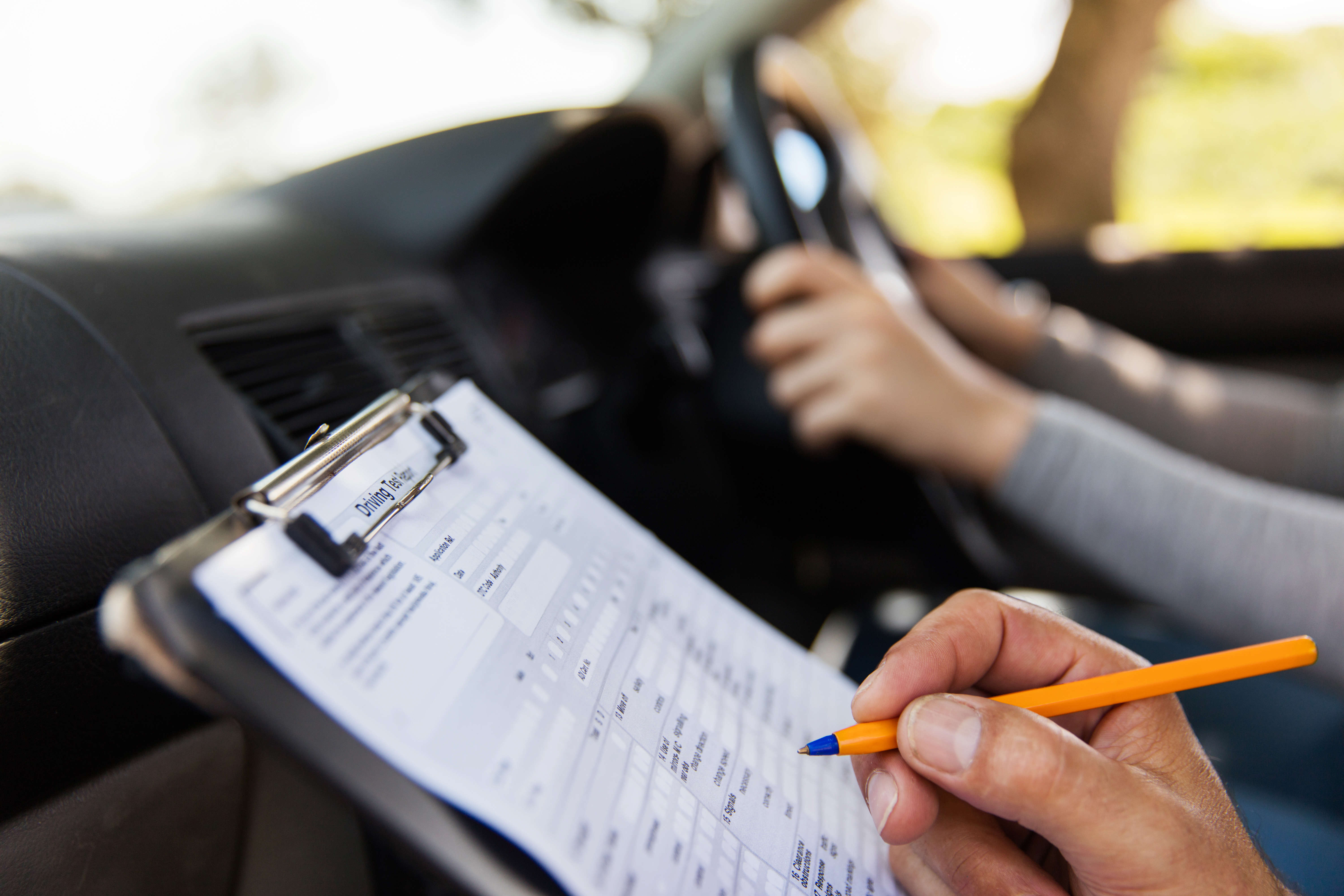
The car theory test has two parts — multiple-choice questions and hazard perception.
For the multiple-choice section, you need to answer at least 43 out of 50 questions correctly. For hazard perception, you need at least 44 out of 75. You must pass both parts to pass the theory test overall.
The hazard perception test uses video clips showing developing hazards. You score more points if you spot a developing hazard early, but you can score nothing if you click continuously or in a pattern.
If you fail either part, you have to retake the whole theory test. Once you pass, your theory test certificate is valid for two years, so you need to pass the practical driving test within that time to avoid retaking it.
Driving on L-plates
Once you have your provisional licence, you can drive on public roads as a learner if you follow the rules.
You must be supervised by a suitable qualified driver or an approved driving instructor. If you practise with a friend or family member, they must be at least 21 and have held a full driving licence for that category of vehicle for at least three years. Note that learner drivers can be fined and receive penalty points if they drive without the correct level of supervision.
The car you are learning to drive in must be:
Insured for you to drive
Taxed
Roadworthy
Fitted with legal L-plates or D-plates if you live in Wales
Covered by a valid MOT if it is old enough to need one
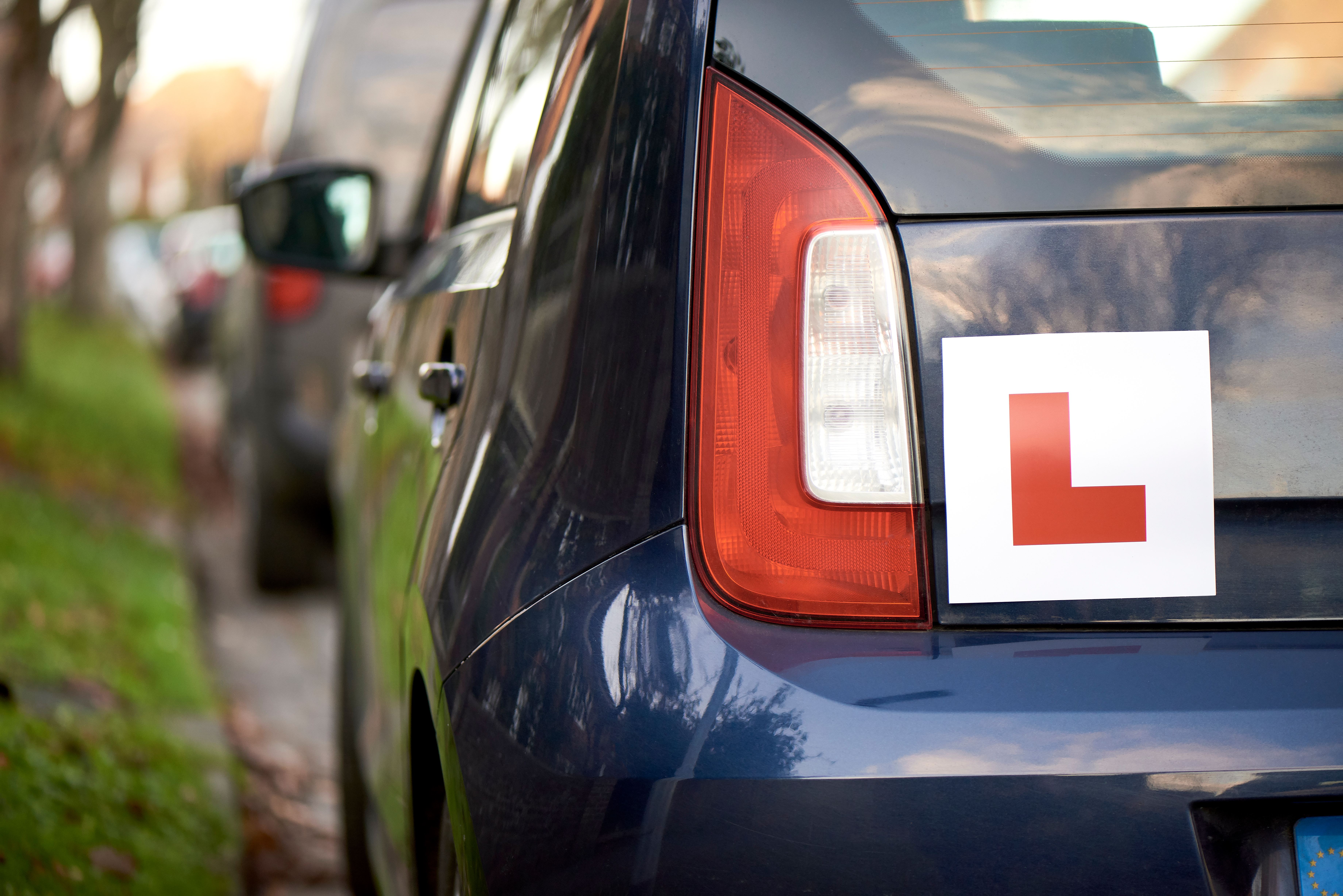
L-plates — or D-plates in Wales — must be clearly visible on the front and back of the vehicle. You can receive penalty points if they are not displayed correctly.
If you need glasses or contact lenses to meet the legal eyesight standard, you must wear them every time you drive. It's your responsibility to tell the DVLA if you have an eyesight problem affecting both eyes, or your remaining eye if you only have one.
Can learner drivers go on motorways?
Learner drivers can have motorway lessons in England, Scotland and Wales, but only with an approved driving instructor in a car fitted with dual controls. You cannot practise on a motorway with a parent, friend or other supervising driver.
Motorway lessons are voluntary and your instructor will decide when you are ready for them.
How long does it take to learn to drive?
There is no fixed number of lessons that guarantees a pass.
Estimates suggest around 45 hours of professional tuition plus around 22 hours of private lessons with a family member is typical for a learner driver to pass their test. Some learners need less, while others need more. What matters is whether you can drive safely and consistently, not just how many hours you have paid for.
You may learn faster if you:
Have regular lessons.
Practise privately between lessons.
Study the Highway Code.
Review mistakes after each lesson.
Drive in different traffic and weather conditions.
Do not rush to book a test just because you want to save money by having fewer lessons. Failing and rebooking can cost more in the long run, especially if test waiting times are long.
How do you find a driving instructor?
The best way to find a driving instructor is often through recommendations from friends, relatives, colleagues or local community groups.
A good instructor will be patient, reliable, clear and honest about your progress. You will spend many hours in the car with them, so it matters that you feel comfortable.
An approved driving instructor, known as an ADI, must display a green certificate in the car. A trainee instructor may display a pink certificate. Both can give lessons, but it is reasonable to ask whether the instructor is fully qualified, how much they charge and what car they use.
Ask before booking:
Are you a fully qualified ADI?
What is your hourly rate?
Do you offer block-booking discounts?
How long is each lesson?
Do you teach manual, automatic or both?
What car will I learn in?
Do you cover my local test centre?
How far ahead are lessons available?
Will I have the same instructor each time?
Do not choose only on price. A cheaper instructor is not good value if lessons are inconsistent or you do not feel you are making progress.
How much do driving lessons cost?
Driving lesson prices vary across the UK, but around £35 for a one-hour lesson is a useful guide. In practice, prices depend on location, demand, instructor availability, lesson length and whether you are learning in a manual or automatic car.
Block bookings can sometimes reduce the hourly cost, plus intensive courses may also work for some learners, but they are not always the best option. Learning to drive involves building judgement and confidence — some people benefit from spreading lessons over a longer period.
Before paying for a large block of lessons, try one or two sessions first to make sure the instructor suits you.
Can you get trial lessons?
Yes, many instructors offer an introductory or assessment lesson.
A trial lesson lets you see whether you get on with the instructor, whether their teaching style suits you and whether the car feels comfortable. You can also ask how many lessons they think you may need, although any estimate at the beginning is only a guide.
Make sure you can reach the pedals and controls comfortably, see clearly from the driving position and feel confident using the mirrors. Some learners prefer a smaller car, while others feel happier in something with better visibility.
For first cars after passing, models such as the Volkswagen Polo, Skoda Fabia, SEAT Ibiza and Volkswagen Up can make sense because they are compact, easy to place on the road and often available with modest engines that help keep insurance more manageable. Always check insurance quotes before buying.
Where is my nearest driving test centre?
Your nearest driving test centre can be found online via a government website when you book or manage a practical driving test.
Do not choose a test centre only because it has an earlier date. It is usually better to take your test in an area where you have practised and understand the roads, junctions and traffic patterns.
That does not mean you should only memorise routes. Examiners are assessing whether you can drive safely and independently, not whether you know a particular set of roads.
What to expect on your driving test
The practical car driving test is designed to check whether you can drive safely and make good decisions on the road.
There are four parts to the car driving test: an eyesight check, 'show me, tell me' vehicle safety questions, general driving ability including independent driving and reversing. The test is the same for manual and automatic cars.
You should only take the test when your instructor agrees you are ready. Being able to control the car is not enough — you need to show awareness, planning, judgement and safe decision-making.
What to take to your driving test
You must take your UK provisional driving licence and make sure the car you use for the test is suitable, taxed, insured, roadworthy and displaying L-plates (D-plates in Wales) if required. If you are using your instructor’s car, they will normally manage this. If you are using your own car, check the rules carefully before test day.
Arrive in good time — if you turn up late or without the correct documents, the test may be cancelled and you may not get your fee back.
How long does the driving test last?
Practical riving tests typically take around 40 minutes, of which around 35 minutes will involve you on the road.
At the start, you will be asked to read a number plate from a set distance as an eyesight check. If you cannot do this, the test will end there and then.
'Show me, tell me' questions
You will be asked two vehicle safety questions during the test. The examiner will ask one 'tell me' question at the start of the test before you start driving plus a further 'show me' question while you're driving. If you answer one or both incorrectly, you will receive one driving fault.
Examples include explaining how you would check the oil level, how you would know if there was a problem with the anti-lock braking system or showing how you would wash and clear the windscreen.
General driving ability
During the test, you will drive in different road and traffic conditions. You may be asked to pull over and pull away, including from behind a parked vehicle or on a hill. You may also be asked to carry out an emergency stop.
The examiner is looking for safe, confident and legal driving. Common problems include poor mirror use, late signalling, poor lane discipline, hesitation, inconsistent speed control, not responding properly to hazards and failing to make effective observations.
Independent driving
Independent driving is part of the practical test. You may be asked to follow directions from a navigation route, traffic signs or verbal directions. If you go the wrong way, you will not automatically fail. What matters is how safely you deal with the situation.
If you miss a turn, stay calm — the examiner will help you get back on route if needed. Do not make a sudden or unsafe manoeuvre just to follow the instruction.
Faults
There are three types of driving test fault:
Driving faults, often called minor faults
Serious faults
Dangerous faults
You can pass with up to 15 driving faults, provided you do not make a serious or dangerous fault. A serious or dangerous fault results in a fail.
A minor issue can become serious if it affects safety or other road users. For example, missing a mirror check once may be a driving fault, but changing lanes without proper observation and causing another driver to react could be serious or dangerous.
Reversing manoeuvres
You will be asked to complete one reversing manoeuvre during the test. This could include:
Parallel parking at the side of the road
Parking in a bay, either driving in and reversing out or reversing in and driving out
Pulling up on the right-hand side of the road, reversing for around two car lengths and rejoining traffic
The old reverse-around-a-corner and turn-in-the-road manoeuvres are no longer part of the test, but your instructor may still teach them because they help build low-speed control.
Top five myths about the driving test
Many learners hear rumours about the driving test. Most of them are unhelpful, while some are simply wrong.
If you stall during your test, it is an automatic fail
Not necessarily. If you stall once, deal with it safely and move away again under control, you may still pass. It becomes a problem if you repeatedly stall, panic, roll back, create danger or hold up traffic unnecessarily.
If you take a wrong turn, the examiner will fail you
Wrong. Taking the wrong route is not automatically a fault. Driving unsafely because you are worried about the wrong route is what causes problems. If you take a wrong turn safely, the examiner will help you continue.
Driving examiners are trying to fail candidates
They are not there to trick you. Their job is to assess whether you meet the required standard to drive safely on your own. You do not need to be perfect. You need to be safe, legal and consistent.
Older relatives passed after only a few lessons
They may have done, but roads and the driving test have changed. Modern traffic, larger junctions, busier town centres, complex lane layouts and today’s test standards mean many learners need more structured practice than previous generations did — the chances are they wouldn't pass anywhere near as easily nowadays.
You should check your mirrors every seven seconds
Mirror use should be timely and relevant. You need to check mirrors before signalling, changing speed, changing direction, changing lanes and responding to hazards. Staring at the mirrors just to meet a made-up time rule can distract you from the road ahead.
Learner driver insurance
If you are learning in an instructor’s car, you will normally be covered by the instructor’s insurance.
If you are practising in your own car or a family car, you need insurance that covers you as a learner driver. Do not assume you are covered just because the car is insured for someone else.
The minimum legal cover in the UK is third party insurance. It covers damage or injury you cause to others, but not damage to your own car. Third party, fire and theft adds cover for fire and theft. Comprehensive insurance gives the widest cover, although you should still check exclusions, excesses and who is allowed to supervise you.
Learner driver insurance can be arranged as an annual policy or as temporary cover on someone else’s car. Compare both options before deciding.
Can you be a named driver?
Yes, you can be added as a named driver on a parent’s or family member’s policy if you only use the car occasionally and the insurer agrees. This can be cheaper than having your own policy, but it may not help you build your own no-claims bonus.
Be careful about fronting — this is where the car is really yours or you are the main driver, but a parent is listed as the main driver to reduce the premium. This is insurance fraud and it could leave you uninsured if there is a claim.
Building up your no-claims bonus
A no-claims bonus, sometimes called a no-claims discount, is built by having insurance in your own name and not making a claim. It can reduce future premiums, which matters because insurance for new drivers can be expensive.
If you only drive as a named driver on someone else’s policy, you may not build your own no-claims bonus. Some insurers offer named-driver discounts or recognise driving experience, but this isn't always the case.
The cheapest policy is not always the best long-term choice. If having your own policy helps you build a no-claims bonus, it may be worth considering.
How to keep the cost of learning to drive down
Learning to drive is expensive, but there are ways to avoid wasting money:
Choose an instructor you trust, not just the cheapest one.
Take lessons regularly so you do not forget progress between sessions.
Practise privately if you can do so legally and safely.
Study properly for the theory test before booking it.
Use official practice material and hazard perception practice.
Do not book the practical test before you are ready.
Keep a record of what you practise between lessons.
Consider manual versus automatic carefully, as automatic lessons can be easier for some learners but may limit your licence.
Get insurance quotes before buying your first car.
Passing first time is not guaranteed, but good preparation reduces the chance of paying for repeated lessons, tests and rebooking fees.
What this means for you
Learning to drive in 2026 is a significant cost, but the process is manageable if you take it step by step.
Start with the provisional licence, then find a good instructor, practise consistently, pass the theory test and only book the practical test when you are genuinely ready. Budget for more than just lessons, because test fees, insurance and learning materials all add to the total.
The best learner drivers are not the ones who rush. They are the ones who build safe habits, understand the rules and arrive at the test prepared.
There's no hard and fast rule about how many it will take — a good instructor will advise you as you progress about when you should consider booking your practical test.
Reasearch by the Driving Standards Agency (DSA) suggests that typically 40 hours of professional training is required in order to pass a practical driving test.
Both types of test are booked by the learner themselves using the UK government's website.
Learning to drive a car is not without considerable costs, but the benefits and opportunities it opens up are worth the expense.
Driving and buying a car of your own gives you freedom to go wherever and whenever you wish without relying on public transport. Being able to drive is a skill valued by numerous employers as well as opening up career opportunities by broadening the scope of where you can travel to seek a job. Once you've passed your tests, providing you don't do anything which jeopardises your licence, you have a lifelong skill in your pocket.
No, it's not vital and more learner drivers are now choosing to go the automatic route. Learning to drive in a manual qualifies you to drive cars with manual and automatic gearboxes, while doing so in an automatic precludes you from driving manuals.
Manual transmission cars are slightly more complicated to operate due to having a clutch pedal and requiring you to change gears yourself, but ever growing numbers of new cars — and therefore those on the used market — are now only available as automatics. As the number of hybrids, plug-in hybrids and electric cars increases, manual transmissions will become a thing of the past.