16/07/2026
What is adaptive cruise control?

Written By Phil Hall
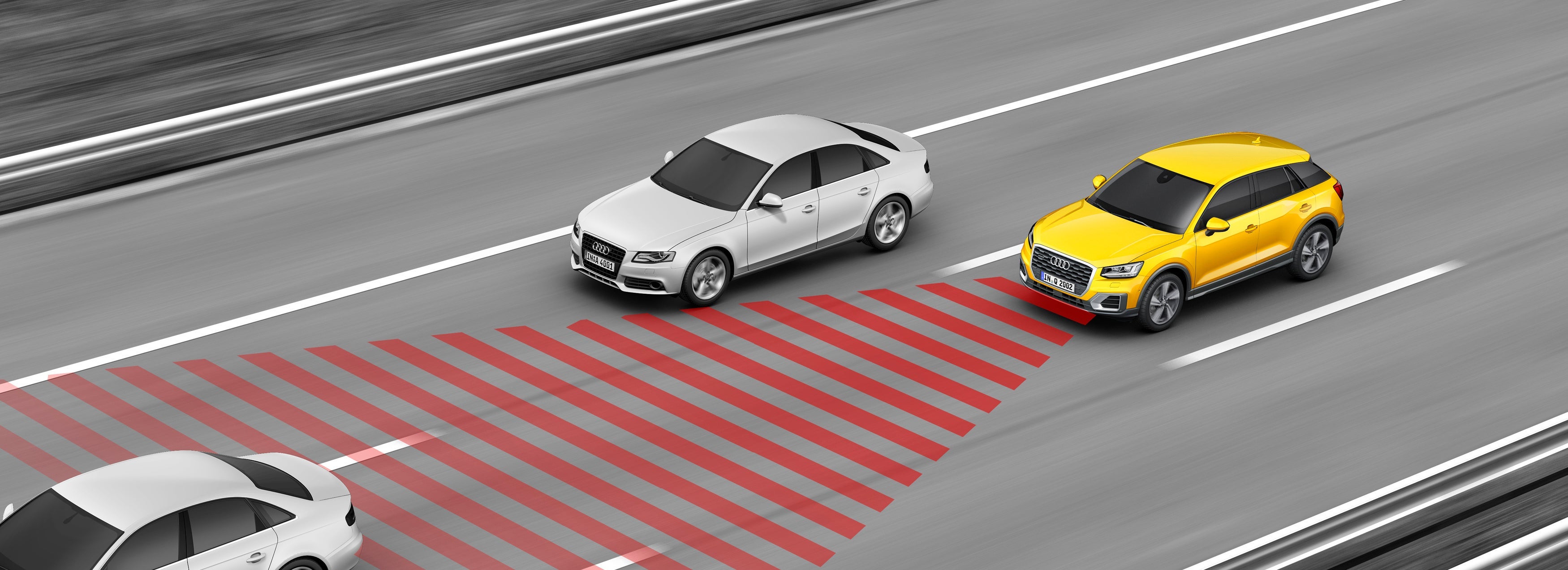
Adaptive Cruise Control is designed to take the strain out of driving, especially long motorway stretches, by automatically accelerating and braking for you.
Keep reading to find out what is adaptive cruise control, how it works and what other types of cruise control you can find on in cars.
What is Adaptive Cruise Control?
To understand how Adaptive Cruise Control (ACC) works, it's worth refreshing what ordinary, non-adaptive cruise control is – although many cars have had one or the other fitted for years, lots of drivers elect not to use it or have little understanding of what it does.
Ordinary cruise control is a method of keeping the car driving at a set speed without having your right foot on the accelerator. When you brake or – in older, manual cars – depress the clutch pedal, cruise control is disengaged, requiring your foot to again modulate the throttle until you press Resume to return to your previously selected speed.
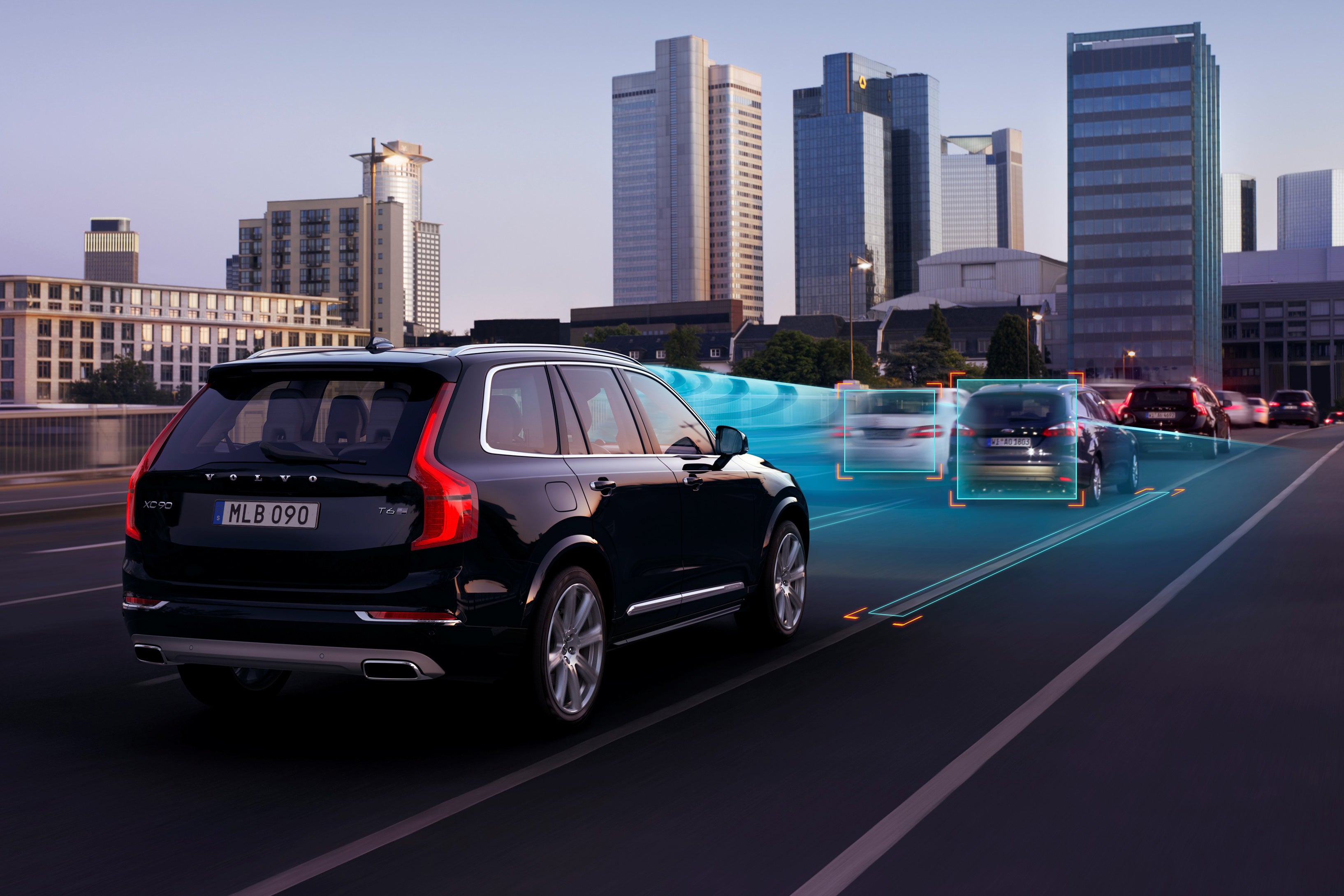
ACC largely mirrors those actions, except you are far less likely to press the brake pedal yourself. Instead, a radar mounted in the front grille or lower bumper, often supported by a camera at the top of the windscreen, monitor your distance to the vehicles ahead, with the desired gap pre-selected by the driver based on their preferences.
As the gap shrinks, due to approaching slower vehicles ahead or something darting into your lane in front of you, ACC will automatically slow your car down accordingly, either by reducing the throttle or braking. Automatic cars with ACC will usually come to a complete and safe stop if necessary, while those with manual gearboxes tend to disengage the system below 20mph, requiring the driver to take over completely.
When there's sufficient space ahead again either by the vehicle ahead changing lanes or turning off, or you've proactively overtaken it, the ACC will then automatically accelerate to its preset speed.
How is Adaptive Cruise Control operated?
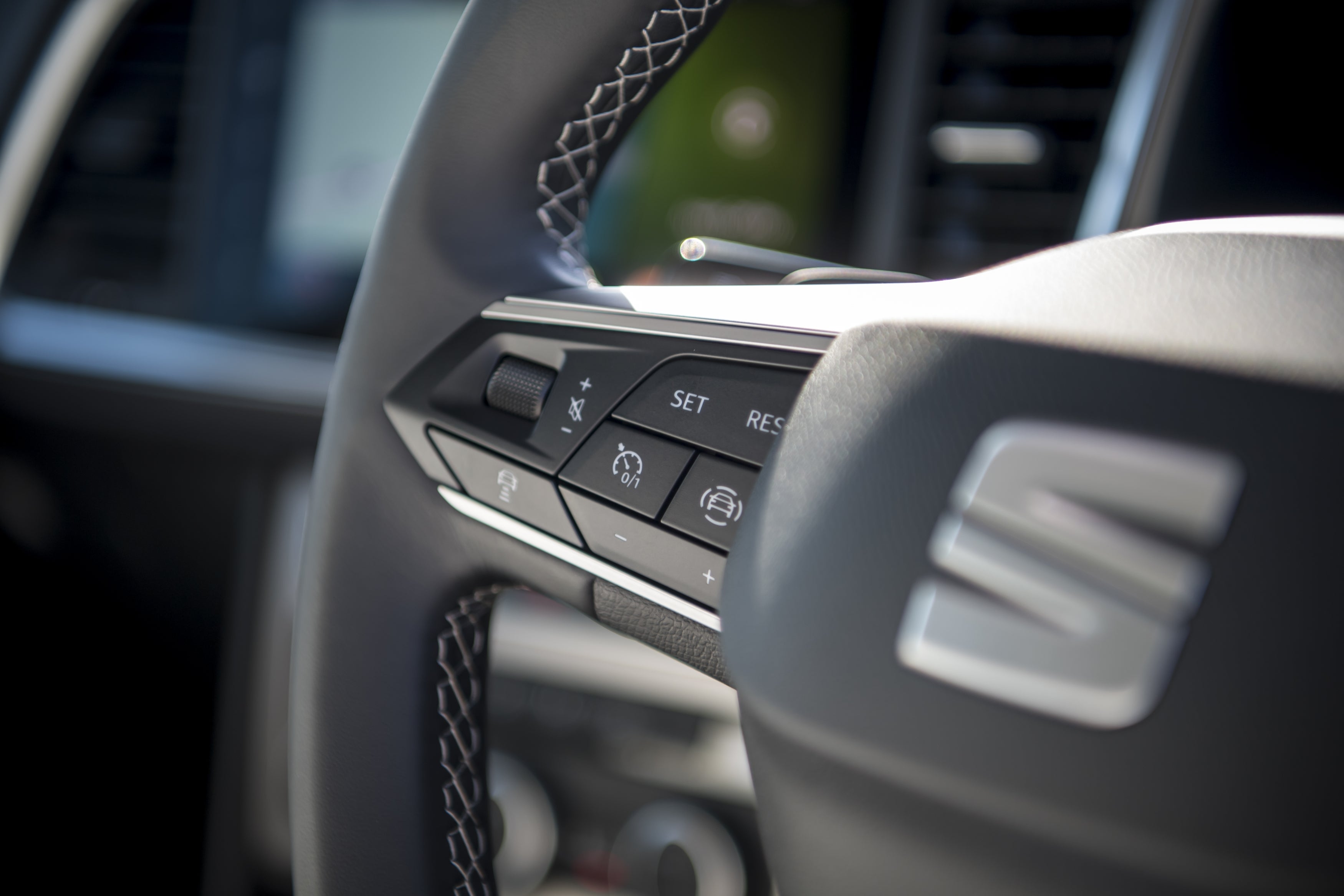
In most cars, ACC is operated via steering wheel-mounted buttons or an additional steering column stalk. As well as switching the system on and off, those controls typically also include manual overrides to pause and resume, as well as to raise or lower the set speed, just as you can with regular cruise control. Where ACC differs is through an additional function to vary that distance to the vehicle ahead, mostly with three to five pre-sets to choose between. Even on its shortest setting, you won't be so close as to make the driver ahead feel like you're tailgating them.
Many manual cars fitted with ACC allow you to operate the clutch and change gears without disengaging the system.
How has Adaptive Cruise Control changed since it was first introduced?
Like everything in cars, evolution has ensured today's ACC systems are far superior to those from 25-30 years ago. Try an early system out and you'll find its inputs are very clunky, accelerating you up to a cruise at break-neck speed, slamming on the brakes when it detects another vehicle half a mile up the road and clumsily modulating the throttle to maintain your set distance. In fact, not all of those early ACC packages used the brakes at all, merely lifting off the throttle and expecting the driver to do the necessaries with the brake pedal.
The latest ACC systems are rarely alarming. They'll saunter up to a cruise at a normal pace and – where possible – brake gently when another slower moving vehicle crosses your path.
ACC packages aren't solely for use on dual-carriageways and motorways, working well at all speeds right down to urban stop-start crawls – that's made all the easier if the car's got an automatic gearbox.
As well as becoming the kind of Smooth Operator worthy of a song, ACC increasingly makes use of your car's other systems as it's hardwired into the electronics. As a result, the latest systems can adjust their speed to match the speed limit using information from your car's traffic sign recognition camera and slow for bends using data from the navigation system. These generally still require a lot more finessing before they're wholly reliable.
Adaptive Cruise Control and autonomous driving
Perhaps the most notable change is that ACC forms a central part of your car's autonomous driving aids. It can accelerate and brake your car while the steering assist will also help it corner, ensuring you stay in your lane and follow the flow of the road.
Some cars can even change lane themselves when you indicate, using the blind-spot monitoring system to check the way is clear before using the steering assist to turn you into your lane. Bundle all these systems together and you have a car with Level 2 autonomous driving.
What types of cruise control are there?
Regular cruise control was first seen in 1958 with the Chrysler Imperial. It soon appeared on many other American cars, but it was deep into the 1980s before it became a regularly sought-after feature for European car buyers. Most modern cruise control systems include a speed limiter, which caps your speed at the chosen figure, although they can usually be overridden by pushing down hard on the accelerator.
While cruise control and latterly ACC used to be reserved for expensive cars, it's now much more widespread, with some of the least expensive cars featuring it as standard equipment.
Naturally, spend more and you get a more sophisticated system. The Mercedes-Benz S-Class – so often a barometer for what technology we can expect to see in family cars in a decade's time – has Level 3 autonomy, meaning it can drive itself independently under particular circumstances and where the law permits. It uses lidar – which has greater accuracy than radar – to detect other vehicles and road users.
What other names is Adaptive Cruise Control known by?
While ACC is the name of the generic adaptive cruise control technology, it's also another area in which car manufacturers' marketing departments flex their muscles and get creative.
Among those brand-specific names for ACC are BMW's Dynamic Cruise Control, Lexus's Dynamic Radar Cruise Control, Mercedes' Distronic, Subaru's EyeSight and Volvo's Pilot Assist.
ACC automatically controls the speed of your car relative to the vehicle ahead, taking car of most, if not all, of the braking and accelerating in its quest to maintain your chosen rate of progress.
ACC was pioneered in the early 1990s by Mitsubishi for a Japanese market luxury saloon.
It first appeared in the UK in 1999 when it was available in the Mercedes-Benz S-Class and CL-Class ranges, but it is much more widespread now – fitted as standard to some of the least expensive cars on sale.
Regular cruise control simply holds a set speed that you programme into the car. Adaptive cruise control goes a step further by using radar, lidar and cameras to detect vehicles in front of you and modifying your speed accordingly until it's able to return to your set degree of progress.