16/07/2026
ISOFIX vs seat belts: discover what's safest

Written By Phill Tromans
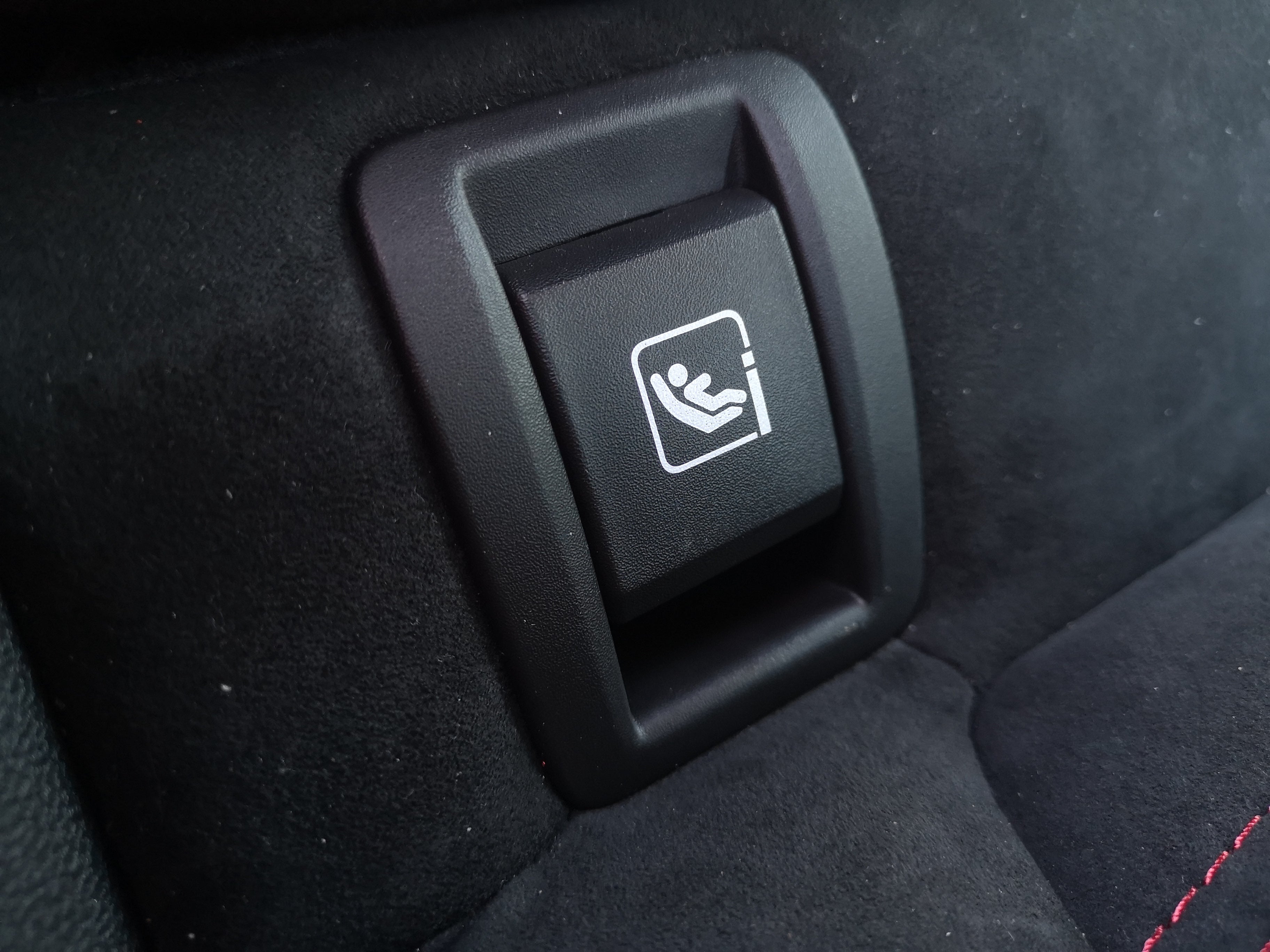
ISOFIX makes fitting child seats into cars both easier and safer by using standardised anchor points which integral parts of the vehicle's structure rather than relying purely on seat belts.
Properly securing a child seat can significantly reduce the risk of injury in the event of an accident. Two primary methods exist for installing child car seats: ISOFIX and seat belts alone. Understanding the differences between these systems can help you make an informed decision about which is best for your family.
What is ISOFIX?
ISOFIX – short for International Standards Organisation Fix – is a universal method of installing child car seats without using seat belts. It uses fixed anchor points built into the car's structure, allowing compatible child seats to be securely attached to them. This system aims to reduce the risk of incorrect installation, which is a common issue with seat belt-secured child seats.
Why were ISOFIX child seats invented?
ISOFIX was developed through a collaboration between seat manufacturer Britax-Romer and Volkswagen in the 1990s to address potential child safety issues in cars. Studies had indicated that a significant number of child seats were improperly installed when using seat belts alone, compromising safety.
ISOFIX aims to simplify the installation process, reducing the likelihood of user error and was later standardised by the International Organisation for Standardisation (ISO). A study carried out by the German Insurance Institute found that 95% of ISOFIX child seats were typically fitted correctly, compared with just 30% using only seat belts.
How do ISOFIX child seats work?
ISOFIX child seats have metal connectors that latch onto the car's mounting points. To install, you simply align the child seat's connectors with the car's anchor points and push it against them until you hear a click indicating a secure connection. Many ISOFIX seats also feature visual indicators that turn green from red when they're correctly installed.
To remove the child seat, an unlocking button is pressed which disconnects the latchings from the car's mounting points.
What ages are ISOFIX child seats suitable for?
ISOFIX seats are designed for children from birth up to approximately 12 years old, depending on the seat's specifications. Rear-facing ISOFIX seats are recommended for younger children, while high-back booster seats with ISOFIX connectors are available for older ones, providing additional stability by anchoring the seat to the car while the seat belt secures the child.
What type of ISOFIX child seats are there?
There are three main types of ISOFIX child seats:
Universal: These are compatible with most cars and usually have a top tether and/or a support leg to further prevent forward movement in a crash.
Semi-Universal: Similar to universal child seats but they might not fit every vehicle. It's vital to check the car compatibility list provided by the child seat manufacturer.
Vehicle-Specific: Designed for specific car models – again, always consult the manufacturer's guidelines to ensure your car is compatible.
When did ISOFIX mountings become mandatory?
In the UK and across Europe, ISOFIX has been included in many vehicles since the early 2000s. However, its mandatory fitment to new cars was introduced with two key regulations:
UNECE Regulation No 14: This required all newly launched vehicles from November 2012 to be fitted with ISOFIX mounting points. Additionally, from February 2013, all existing vehicles still in production also had to include ISOFIX as standard, although by this point the vast majority already had them.
UN Regulation No 129 (i-Size): Adopted in November 2012, this introduced enhanced child seat safety standards, including the requirement that they must connect to ISOFIX mountings to improve crash protection and reduce the risk of incorrect installation. It officially came into effect on 9 July 2013.
While these regulations made ISOFIX a legal requirement for new cars, many older vehicles may still have ISOFIX points. If you're looking to buy a used car, check for the ISOFIX logo on the seat fabric itself or plastic covers hiding the anchor points, usually found at the point where the seatbacks and cushions meet.
Some two-seater sports cars, such as the Porsche 718 Boxster and Mazda MX-5, feature ISOFIX mountings on the front passenger seat – just be sure to disable the airbag when fitting a child seat in the front of any car.
Why is ISOFIX better than only using seat belts?
When correctly installed, both ISOFIX and seat belt-secured child seats provide high levels of safety. However, ISOFIX significantly reduces the risk of incorrect installation thanks to its straightforward attachment system.
Is it illegal to only secure a child seat with a seat belt in ISOFIX-equipped cars?
No, it's not illegal, but if your car has ISOFIX mounting points and the child seat is able to connect to them, why would you not do so?
If the car or the child seat isn't ISOFIX-equipped then using only a seat belt remains your next-safest option as well as being the minimum legal requirement.
When installed correctly, seat belt-secured child seats are safe and protect children in the same way they do adults. But if the seat belts aren't fitted correctly to the child seats, children may not be fully protected in the event of a crash. With ISOFIX mounts, the connection between the seat and the car is more secure, so there’s less chance of making a mistake when fitting one.
ISOFIX mounting points were first seen on cars in 1997 and by 2001 most new models were available with them, although they weren't necessarily standard equipment.
By 2013 all new cars were legally required to have ISOFIX mounting points as standard.
ISOFIX is an internationally standardised child seat fitting system designed to make installing them both easier and safer.
It locks the child seat or booster seat base onto fixed mounting points that are part of the car's structure. In addition to keeping child seats in place during front and rear impacts as the seat belt-only method does, ISOFIX mountings hold them far more securely in side impacts.
Because ISOFIX mountings are always the same distance apart and have identical attachments in all cars, connecting child seats to them is far easier, which is particularly advantageous if it needs to be swapped regularly in different cars.
ISOFIX mounting points been standard on all new cars since 2013, with the vast majority from the decade previously also having them.
If you're not sure if your car is ISOFIX-equipped then look for their key telltales:
Labels and plastic covers: Most cars with ISOFIX mounting points have them on the outer rear seat positions where the seatback meets the cushion. These are usually marked by labels indicating where there's a slot in the seat to access the mountings or by rigid plastic covers which easily pop out to reveal them.
Top tether mounting points: Some ISOFIX child seats have an addition top tether strap which will be positioned up and over the car's seatback. Their mounting points are usually found on the boot-side of seats which fold over and on the parcel shelf below the rear windscreen where the rear seats are fixed in place.
Additional mounting points: Depending on the car, other ISOFIX and top tether mounting points may also be found in equivalent places on the front passenger seat, the central rear seat and – on six- and seven-seater models – the third row as well.
Consult the manual: If you still can't find them, check your car's owner manual – it will confirm whether it is ISOFIX-equipped and where the mounting points are.