15/09/2026
Volkswagen Mission Efficiency concept promises more than 500 miles of electric range

Written By Tom Phillips

Mission Efficiency is a prototype hyper-efficient hatchback but is just a concept
Technology test bed proves efficiency of VW’s MEB electric platform
Theoretical range of over 500 miles
Volkswagen has revealed an experimental electric car capable of travelling more than 500 miles on a charge using technology already found in its production EVs. Called Mission Efficiency, the four-seat prototype has been created to demonstrate how far Volkswagen can push its existing electric-car platform by dramatically reducing energy consumption.
Rather than relying on a huge battery, Mission Efficiency combines the electric motor and underlying MEB technology used by the ID.Polo with an exceptionally aerodynamic, lightweight body. Its drag coefficient of just 0.158 makes it one of the most aerodynamically efficient road-legal cars ever built.
On Volkswagen’s Ehra-Lessien test track, the prototype achieved energy consumption of just 6.48kWh/100km – equivalent to 9.59 miles per kWh. That gives it a theoretical range of more than 500 miles from a battery with 54.9kWh of usable capacity.
Volkswagen has also tested the car away from the controlled conditions of a proving ground, driving it 794 miles across Europe. Mission Efficiency averaged 8.27 miles per kWh during the journey and required just one charging stop, arriving at its destination with a further 102 miles of indicated range.
Mission Efficiency isn’t destined for production, but Volkswagen says the project is intended to demonstrate how improvements in aerodynamics, weight and efficiency could increase the range of future electric cars without simply fitting larger batteries.
Volkswagen Mission Efficiency price and release date
Unlike the plug-in hybrid diesel VW XL1, which had a small production run of 250 units, the Mission Efficiency is just a one-off concept built to prove the efficiency of VW’s existing electric-car tech. So while you can’t buy a slippery four-seat concept, you can snap up an ID.Polo on sale now from £23,945.
Volkswagen Mission Efficiency electric motor, battery and range
The Mission Efficiency project is all about using existing technology to prove how efficient it already is. To that end, the car uses the same 135PS front motor, suspension and front brakes as the VW ID.Polo, powered by the larger 52kWh battery, albeit with a software change to allow its full capacity of 54.9 kWh (net) to be used, at the expense of battery pack life.
VW ran the car at its Ehra-Lessien test track in ideal conditions, in this case at 42mph on a flat route with the air conditioning off, where it managed 6.48kWh/100km, or 9.59 miles per kWh – that’s over 500 miles on a charge. It’s also a record for ‘near-production four-seater electric vehicles suitable for everyday use,’ according to the Record Institute for Germany (RID).
For reference, in its most efficient form, the VW ID.Polo can achieve 281 miles from the larger 52kWh battery, coupled to a 211PS motor. That returns 13.3kWh/100km, or 4.67 miles per kWh.
New VW car design, interior and space
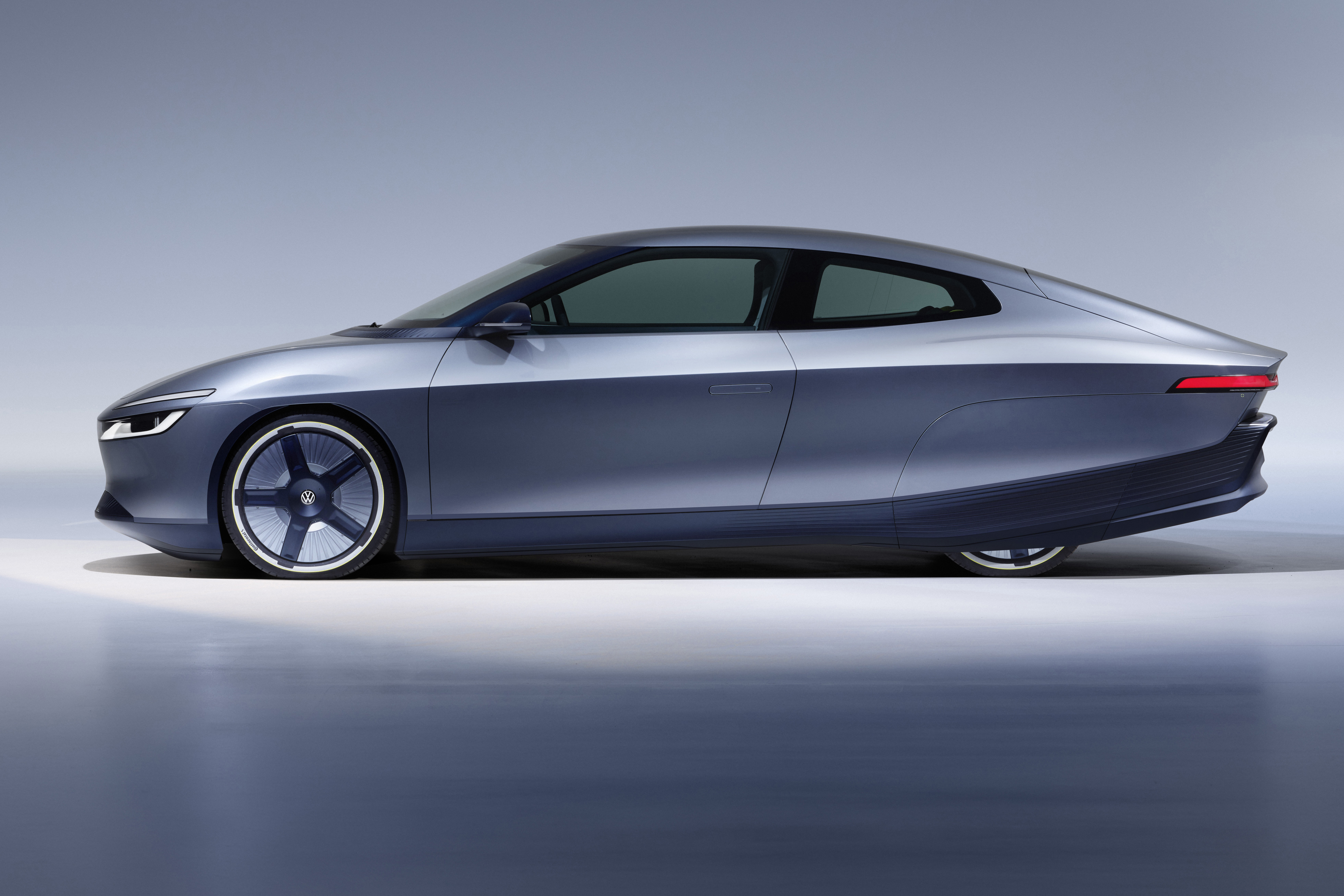
The Mission Efficiency's exterior is all about reducing drag. To that end it has a very small frontal area of 2.08 square metres, and features an aerodynamically efficient teardrop shape. There are active cooling air flaps, covered rear wheels and a fully clad underbody, while the front wheels have patented rim deflectors. The tyres are a special low rolling resistance collaboration between Continental and VW.
The doors feature frameless windows and integrated door handles, while the car's construction is a mix of aluminium, carbon fibre-reinforced polymer (CFRP) and aramid composite.
The upshot is at speeds above 50mph, the Mission Efficiency uses 30% less power than an ID.Polo, and consumes the same power at 87mph as the Polo does at 62mph.
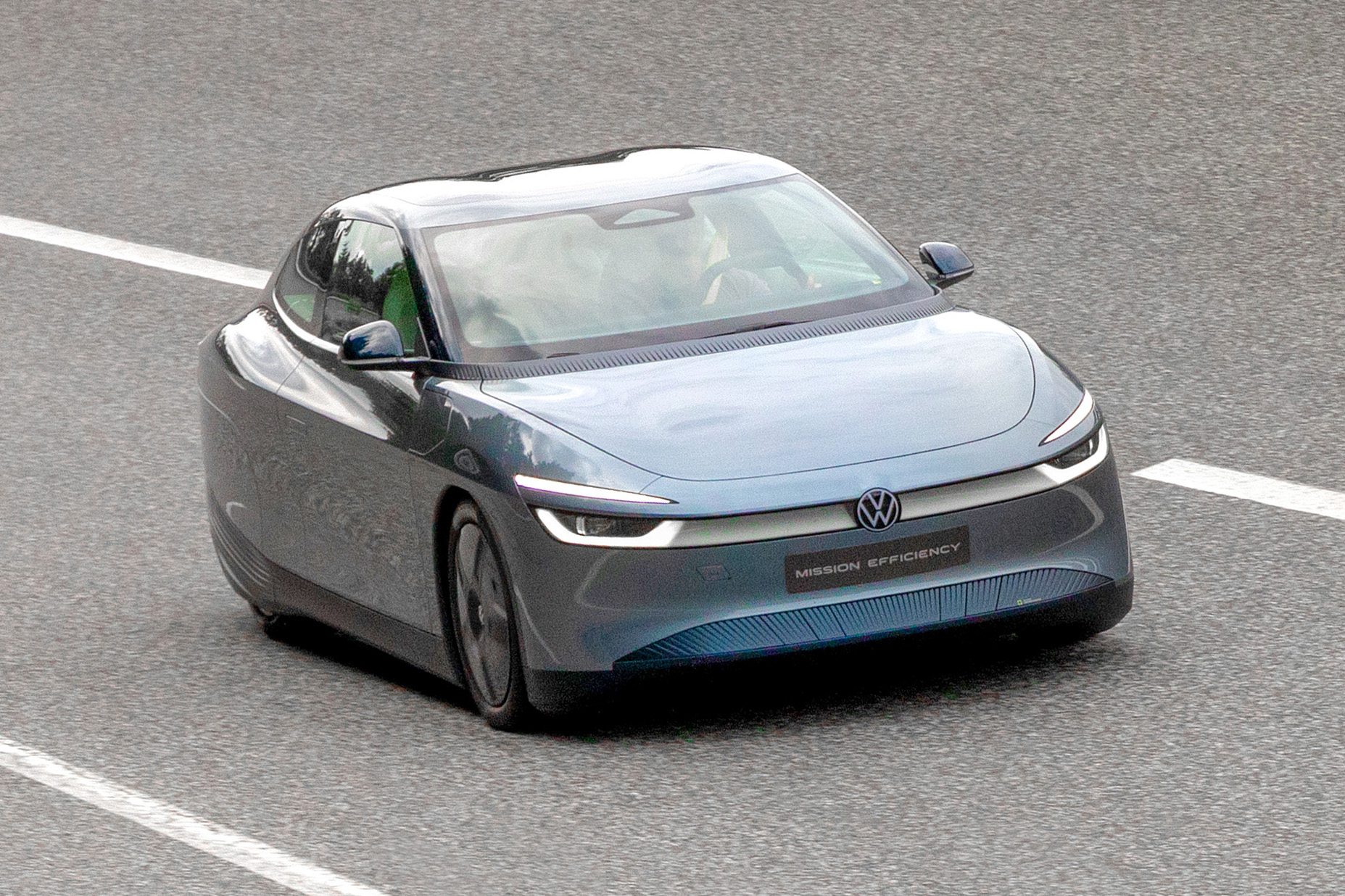
New VW car technology, equipment and infotainment
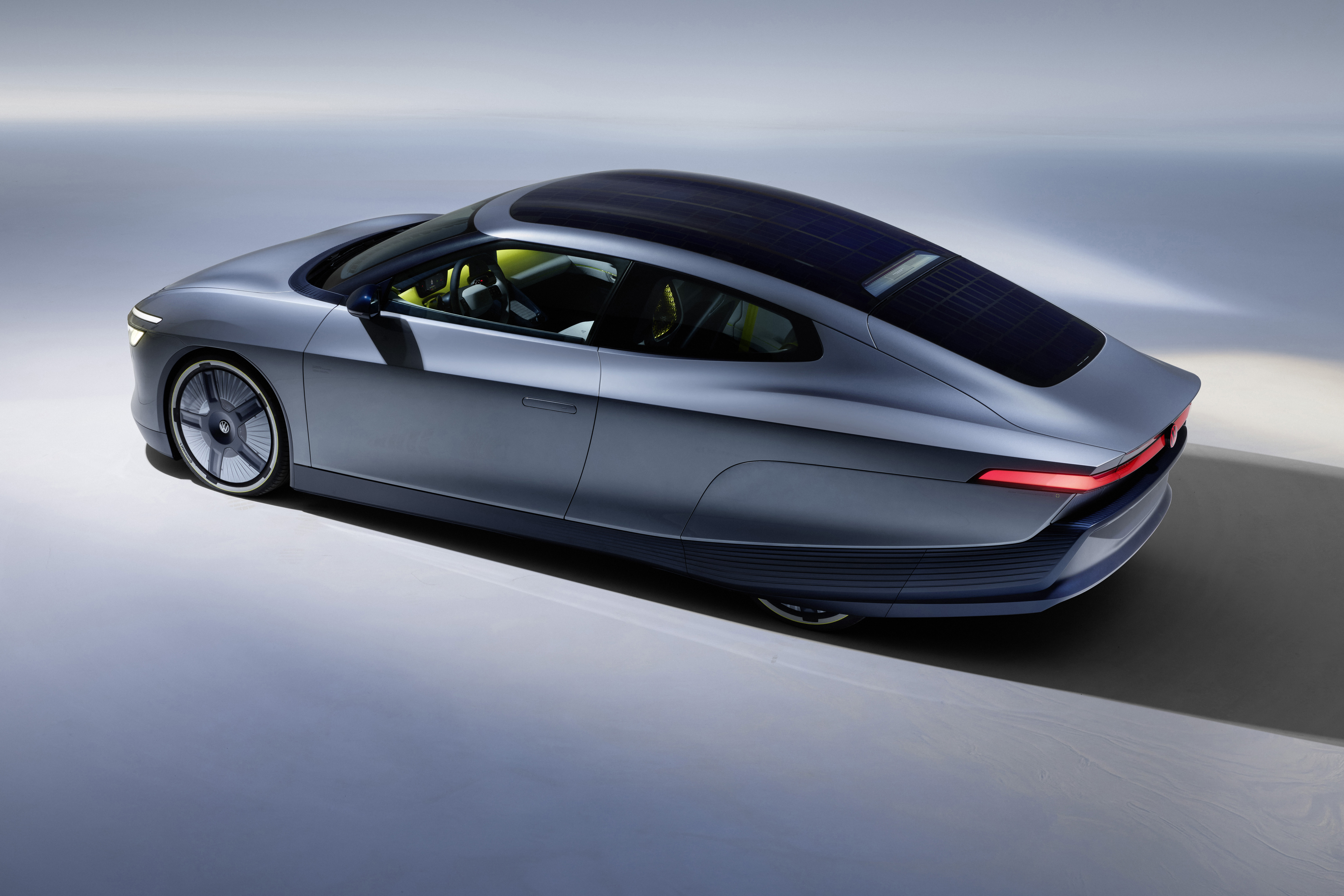
As for tech, the Mission Efficicent uses a photovoltaic system with a power output of 370W, which is built into the roof and boot lid. VW claims this can add up to 19 miles of range on a sunny day. A Bluetooth speaker replaces the built-in stereo, while the driver’s smartphone doubles as the infotainment system.
The car also ditches the standard ID.Polo’s hydraulic rear brakes for an electromechanical system that reduces friction losses and saves weight. This system has received EU road approval and meets safety, strength and crash requirements, so is likely to make production.