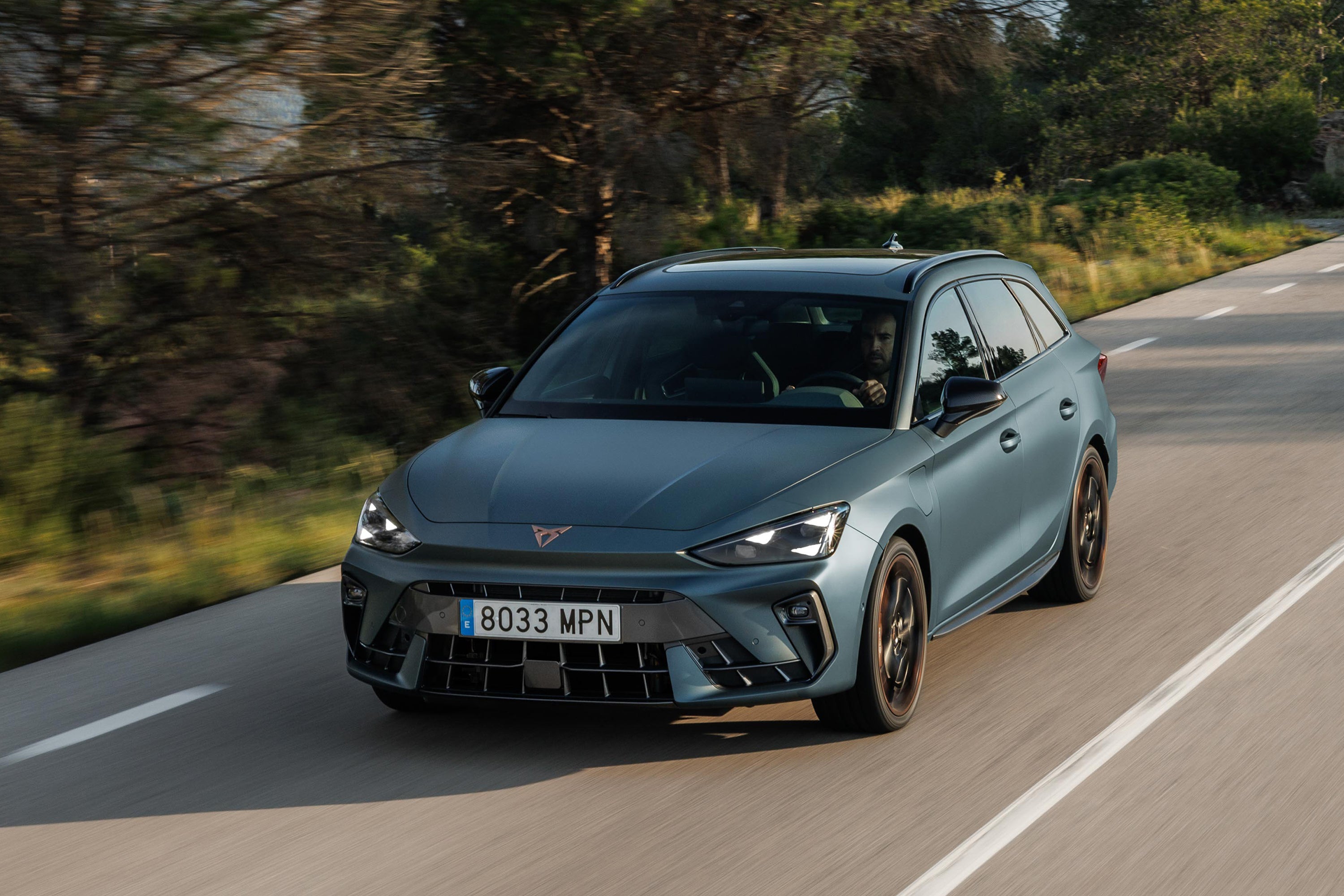
Audi RS 4 Avant (2018-2025) Review

Written By Andrew Brady
- 2018
- Estate
- Petrol
What we love
Huge real-world performance with immense all-weather traction
Exceptionally high-quality interior
Genuine family-estate practicality
Things to consider
Strong grip and stability shape the driving experience
The best options were expensive extras when new
Standard suspension has a sporty, taut set-up
The DRIVE take on the Audi Rs4, is it the right car for you?
The final Audi RS 4 Avant is a hugely convincing used performance car if you want serious pace without sacrificing everyday usability. It blends devastating cross-country speed, strong refinement and real estate-car usefulness in a way very few cars can match. It's not the most playful or charismatic fast estate of its era, but if you want a rapid all-weather all-rounder that can do almost everything, the RS 4 is up there with the very best.
The Audi Rs4 in more detail
Fast Audi estates have occupied a very specific corner of the performance-car world for decades, appealing to buyers who want sports-car pace without sports-car compromises, and the RS 4 has long been one of the defining cars in that niche.
This generation sharpened that formula further. It arrived lighter than the car before it, kept the classic RS 4 mix of swollen arches and understated menace, and paired it with a twin-turbo V6 that delivered huge pace with very little effort. That gave it a broad spread of ability that made it devastatingly effective in the real world.
That effectiveness is both its greatest strength and its clearest caveat. The RS 4 is astonishingly capable, especially on poor roads or in poor weather, and it turns huge pace into something you can exploit very easily. But that same polish means it doesn't always feel as alive or as mischievous as some of the more wayward alternatives.
That still leaves it as a remarkably desirable used car. Audi no longer builds new RS 4 Avants, and while the broader performance-estate role in the range has now shifted towards the new RS 5 Avant, there's no direct like-for-like RS 4 successor by name. That gives this car a slightly different place in the market now. It's not just a fast old Audi estate. It's the final RS 4.
What's the best Audi Rs4 trim and engine option?
There's really only one engine story here, because every RS 4 Avant uses the same 2.9-litre twin-turbo V6 and eight-speed automatic gearbox.
The bigger decision is specification. For most used buyers, the standard RS 4 Avant is actually the one to start with. It already has the substance you want, and it avoids some of the cost and complication that come with the richer trims and options.
Carbon Black models look tempting and Vorsprung throws almost everything at the car, but if you care most about the pure RS 4 brief rather than collecting every toy, a sensibly specified standard car is often the smartest buy.
What’s the price of the Audi Rs4?
Used Audi RS 4 Avant prices now start from around £50,000 for earlier cars, while later facelifted versions, Carbon Black models, Vorsprung cars and especially low-mileage examples sit higher.
There's enough choice on the used market to be selective, which matters because options make a real difference here. The RS Sports Exhaust is worth having, and wheel, suspension and steering choices all affect how convincing the car feels.
For many buyers, the best value sits with a clean, well-specced standard or Carbon Black car rather than the most expensive examples.
Alternatives to the Audi Rs4
The last-generation V8-powered Mercedes-AMG C63 Estate is the most obvious rival if you want more noise, more rear-drive attitude and a bigger sense of theatre, while the Alpina B3 Touring (based on the 3 Series) is the more subtle and arguably more rounded alternative.
The BMW M3 Touring arrived later and is another key car to consider if you want a more overtly driver-focused take on the fast-estate idea. Beyond that, plenty of high-performance SUVs can match the pace, but few deliver quite the same estate-car appeal.
The RS 4’s strength is that it still feels like one of the easiest fast estates to justify as an all-rounder. It's hugely capable, genuinely practical and deeply usable.
What's the interior like in the Audi Rs4?
Sports cars come with a certain expectation that there’ll some trade-off in comfort for the performance that they deliver, and that’s true here with the RS4.
Audi Rs4 boot space and practicality
One of the RS 4’s enduring appeals is that it never stops being a useful estate. Up front there's plenty of room, excellent sports seats and enough cabin storage to make everyday life easy.
Rear-seat space is good enough for family use, even if the middle rear seat is a clear compromise because of the shape and the transmission tunnel. For four-up use, though, the RS 4 works very well.
The boot is a major strength. At 495 litres, it offers the sort of carrying capacity that helps justify the car’s existence, and the 40:20:40 split rear bench makes it more flexible still.
This is what separates the RS 4 from more obviously focused performance cars. It can swallow luggage, family gear and longer loads without fuss, then cover ground at a serious rate once it's loaded.
Audi Rs4 dimensions
The Audi RS 4 Avant measures 4,781mm long, 1,866mm wide and 1,404mm high. That makes it broader and more purposeful than a regular A4 Avant, but it's still relatively tightly packaged by modern standards.
In practice, it feels much easier to manoeuvre than many performance SUVs and much less bulky than its visual attitude first suggests.
Tech and infotainment in the Audi Rs4
Facelifted cars brought the larger 10.1-inch touchscreen setup and fresher infotainment, but also lost some of the clarity and tactility of Audi’s older rotary-controlled systems.
The system itself is generally slick enough and the RS-specific displays in the Virtual Cockpit digital driver display are a real highlight, but this is one area where the RS 4’s age and its transition from old Audi ergonomics to newer touchscreen logic can be felt.
Even so, the overall cabin still feels more special than most rivals, and the quality of presentation remains a major selling point.
Materials available on the Audi Rs4
Material quality is excellent. The steering wheel, switchgear, trim and seat finishes all feel expensive, and Audi’s traditional strengths in fit and finish are very obvious here.
That matters in a car like this, because the RS 4 is not just selling speed. It's selling the idea that you can have performance-car pace with executive-car polish. The interior backs that up convincingly.
What's the Audi Rs4 like to drive?
The RS 4 is devastatingly effective from behind the wheel. It's not the most theatrical performance estate, but it's one of the easiest to drive quickly and one of the hardest to fault as a rapid all-weather machine.
Audi Rs4 range and performance
Every RS 4 Avant uses the same 2.9-litre twin-turbocharged V6 petrol engine, paired with an eight-speed automatic gearbox and quattro four-wheel drive.
It produces 450PS and 600Nm, which gives the RS 4 the sort of effortless pace that makes it feel genuinely rapid in almost any situation. The engine is flexible, muscular and strong in the mid-range, which suits the car’s broad-shouldered character very well.
It's also worth understanding what the RS 4 is not. If you’re expecting huge lag, old-school turbo drama or a soaring naturally aspirated top end, that's not what this car does. It's fast because it's relentlessly effective, not because it needs to work hard to build its performance.
Performance data
| Model | Engine/battery size | Power | 0-62mph | Range/MPG |
|---|---|---|---|---|
Audi RS 4 Avant quattro tiptronic | 2.9-litre twin-turbo V6 petrol automatic | 450PS | 4.1 seconds | Around 28mpg |
Audi Rs4 driving and refinement
The RS 4 has always been lauded as a surefooted, capable express, maximising traction from its quattro four-wheel drive system, making it quick in all conditions. That’s not always translated to the most engaging, exciting driving experiences, but it’s one that seems to have satisfied its previous customers, so there’s more of the same here.
Either that AMG or Alpina will deliver a more interesting drive, be it their steering weighting or precision, the way the suspension handles the bumps. Certainly in the case of the AMG with its rather wild rear wheels, spinning up its tyres at any opportunity and needing skill to exploit its ample power, particularly in damp or wet conditions.
The RS 4 is a polar opposite to its sometimes tricky German rival, point the Audi at a corner and it’ll just grip and go, the traction and grip it delivers is mind-bending at times.
What’s interesting is the differing suspension choices, the standard set-up being a passive spring and damper, it riding firmly at lower speed but giving the RS 4 fine roll control and a natural feel in bends, the RS Sports Suspension Plus with Dynamic Ride Control – with three drive modes - doing an incredible job with low speed ride, but lacking a bit of composure when you start leaning on it. It’s a variable damper system, the dampers linked, the benefit supposed to be that they can tauten up body control when needed, yet deliver a fine ride, too.
That variable suspension is standard on the Vorsprung, but we’d recommend the RS 4 without it, as for all the improved ride around town, it robs the car of some of its appeal on the sort of driving roads you really ought to be seeking out if you own a car like an RS 4. Likewise, we’d avoid dynamic steering, which robs the steering wheel of its linear ratio, and feels a little bit unnatural.
How safe is the Audi Rs4?
The RS 4 shares its core structure and much of its safety architecture with the A4 Avant, which scored the maximum five stars when tested by independent safety organisation Euro NCAP.
Safety kit levels are strong, and many cars will also have useful driver-assistance options fitted, but as ever it's worth checking the exact specification of any used example because some of the more advanced systems were optional.
Running costs: What it's like to live with a Audi Rs4
The RS 4 is never going to be a cheap car to run, but it's easier to justify than many performance cars because it does so much else on top of its impressive performance.
The biggest trap is drifting into the wrong specification. Expensive options, larger wheels and richer trims can push ownership costs up further, so the smartest used buys are not always the priciest ones.
Audi Rs4 fuel economy
Fuel economy is respectable rather than remarkable once you factor in the RS 4’s performance. On a longer run it can return a decent figure for what it's, but driven hard it will quickly remind you that this is still a 450PS petrol estate.
The official number of 29.1mpg looks reasonable on paper, but real-world use will vary hugely depending on how often you lean on the performance.
Audi Rs4 warranty and servicing
Any remaining manufacturer warranty will depend on the age of the car, but Audi Approved Used examples remain the most reassuring place to start.
Audi Approved Used currently includes a minimum of a one-year Audi Warranty, one year of roadside assistance and a 30-day exchange plan, which adds useful reassurance on a used high-performance Audi.
Audi servicing is generally straightforward, but on used examples it's still worth checking the history carefully, particularly on cars that may have seen repeated hard use or been fitted with expensive optional chassis upgrades. Servicing is due every year or 10,000 miles, whichever comes first.
Audi Rs4 insurance groups
The RS 4 will have a broad customer base, covering people who have it as their only car, to those buyers who’ll have it as a fast daily driver that gets parked up in a garage alongside a bunch of super and sports cars. What you pay for your insurance will vary wildly depending on your circumstances, driving record and where you park it, but it’s listed in group 42.
How much does it cost to tax a Audi Rs4?
The standard rate of annual Vehicle Excise Duty on the Audi RS 4 Avant is £200, or £17.50 a month by Direct Debit. But because the RS 4’s original list price was well over £40,000, you’ll also have to pay the Expensive Car Supplement for five years from the second year of registration. That takes the annual bill to £640, or £56 a month by Direct Debit during that period.
What trims are available with the Audi Rs4?
The RS4 might sit at the top of the A4 Avant range, but more realistically its better thought of as a model in its own right, as an Audi RS car.
Three different options are available, with a few special editions over the years mixing that up a bit.
The standard RS 4 Avant comes with a huge standard specification, indeed, all it really lacks is Audi’s Comfort and Sound Package for about £1,400 which brings advanced options on the keyless go system, a 360 degree parking camera, LED interior lighting and a Bang & Olufsen 3D sound system. If you want your RS 4 to sound as good outside as it does inside with that package then the RS Sport Exhaust is an absolute must, indeed, we’d be amazed if any are sold without it optioned.
The Carbon Black model adds a lot of carbon, and black. Vorsprung chucks absolutely everything at the RS 4 for those too time poor, but cash rich to buy it.
Ask the Drive experts: common questions
Is the Audi RS 4 Avant still on sale new in the UK?
Is there a direct replacement for the Audi RS 4 Avant?
Is the Audi RS 4 Avant still worth buying?
Which Audi RS 4 Avant is best?
Get our latest advice, news and offers
Keep me updated by email with the latest advice, news and offers from Drive.
.jpg)
.jpg)