BMW 1 Series Review

Written By Antony Ingram
- 2024
- Hatchback
- Petrol
What we love
One of the more engaging cars in this class to drive
Cabin design and quality are excellent
Keen pricing against premium-badged rivals
Things to consider
Too many key functions now live in the touchscreen
Rear-seat space is only average
No plug-in hybrid or diesel option
The DRIVE take on the BMW 1 Series, is it the right car for you?
The BMW 1 Series remains one of the most appealing premium hatchbacks if you care about how a car feels from behind the wheel. It looks sharp, the cabin now feels properly up to date and the core 120 is the sweet spot in the range. It is not as roomy in the back as some alternatives, and the lack of a plug-in hybrid limits its appeal for company-car users, but for private buyers after a premium family hatch with a bit of sparkle, the BMW 1 Series is very easy to shortlist.
The BMW 1 Series in more detail
The current BMW 1 Series is not an all-new car in the strictest sense, but it has been reworked enough to feel like a meaningful step on from its predecessor. Underneath, it still uses the same basic front-wheel-drive architecture introduced in 2019, yet BMW has sharpened the styling, refreshed the cabin and updated the technology to keep it competitive.
That matters because this class remains fiercely contested. The BMW 1 Series still goes head-to-head with the Audi A3 and Mercedes-Benz A-Class, but it also has to make sense next to strong all-rounders such as the Volkswagen Golf and Cupra Leon. The BMW’s advantage is that it still feels a bit more special than most family hatchbacks, without demanding the sort of money that pushes it into a different league altogether.
Browse used BMW 1 Series for sale →
The range is simple. There is the mild-hybrid 120, the all-wheel-drive mild-hybrid 123 xDrive and the range-topping M135 xDrive. All use petrol power and all are automatic. That makes the line-up easy enough to understand, though it also leaves a gap where a lower-tax plug-in hybrid or frugal diesel might once have sat.
Where the BMW 1 Series scores highly is in the way it blends image, quality and driver appeal. The new dashboard design is a clear step forward, the material quality feels properly premium and the 120 in particular has the kind of eager, tidy character that reminds you why BMW still carries weight in this part of the market.
The weak spots are familiar ones. Rear-seat space is only average, and the boot is less competitive than the headline figure first suggests in the 120 and 123 because the mild-hybrid hardware eats into the underfloor storage. BMW has also moved too many functions into the touchscreen, which is frustrating when several rivals now offer better shortcuts for everyday controls.
Even so, the BMW 1 Series remains a strong entry point into the brand. For buyers who want a premium hatchback that still feels like it has some driver focus, it continues to stand out.
What's the best BMW 1 Series trim and engine option?
The BMW 120 M Sport is the one to have. It gets the right engine, the right look and the best value-for-money balance in the range. The 170hp three-cylinder mild-hybrid petrol is quick enough for a family hatchback, with 0-62mph taking 7.8 seconds, and it combines that performance with genuinely respectable economy.
The 123 xDrive is a bit of an odd halfway house. It is noticeably quicker than the 120 and brings four-wheel drive, but it also costs enough more that it starts to overlap with better alternatives elsewhere. That leaves the 120 as the version that makes the strongest case in the main range.
Trim-wise, M Sport makes the most sense. Sport is not sparse, but M Sport adds the visual drama, sports seats and adaptive suspension that make the BMW 1 Series feel more in keeping with its badge. It is the version most buyers will want, and for good reason.
What’s the price of the BMW 1 Series?
The BMW 1 Series range starts at £32,640 for the 120 Sport. From there, the 120 M Sport comes in at around £34,640, while the 123 xDrive M Sport sits at about £37,840. At the top of the range, the M135 xDrive starts from £45,630. There are also plenty of used BMW 1 Series for sale for considerably less.
That leaves the BMW 1 Series priced very competitively for a premium hatchback. It broadly undercuts like-for-like Audi A3 and Mercedes-Benz A-Class versions, while still carrying the same sort of badge appeal. The danger is options. BMW still offers plenty of packs and standalone extras, so a sensible-looking 1 Series can become a much more expensive car quite quickly.
Alternatives to the BMW 1 Series
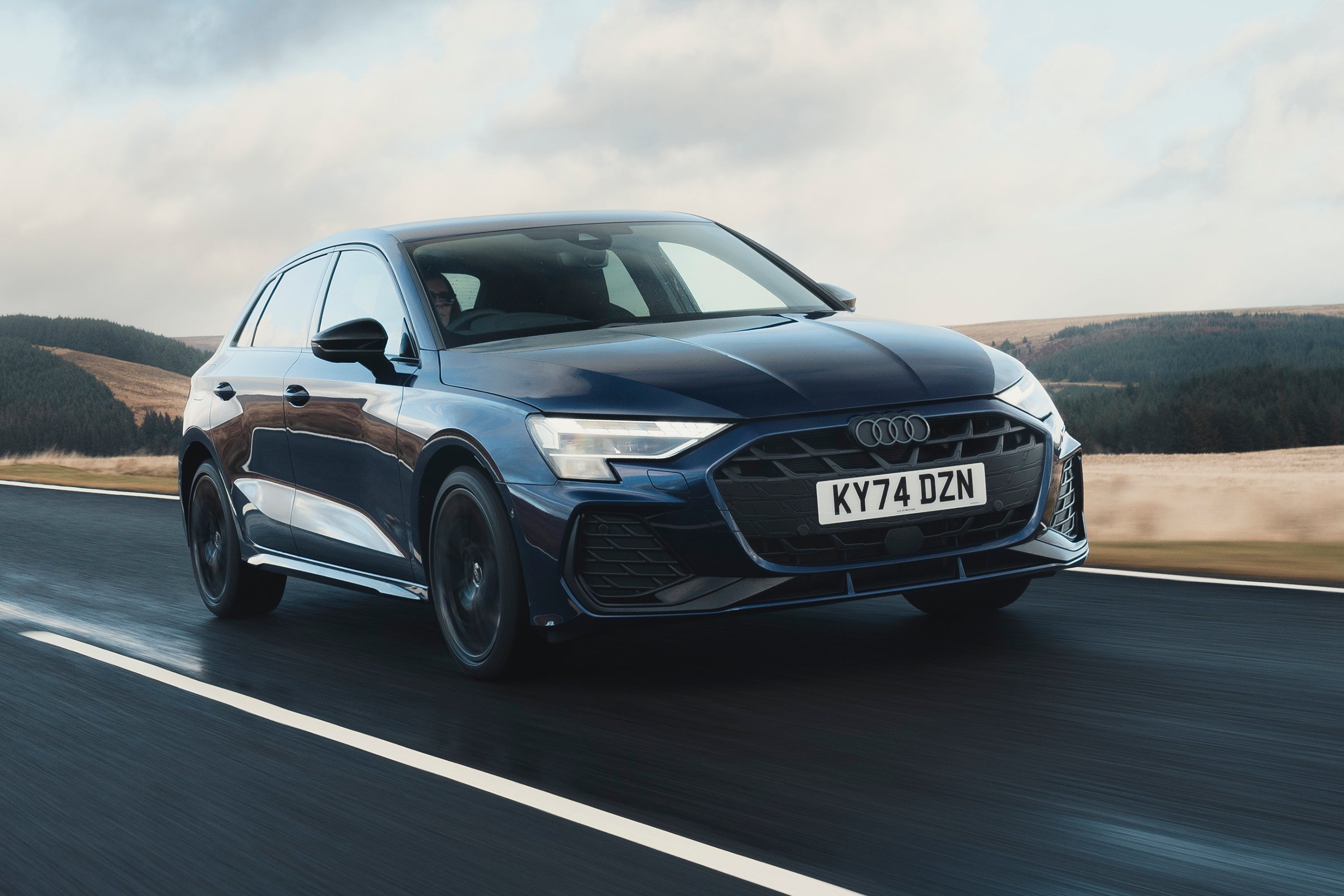
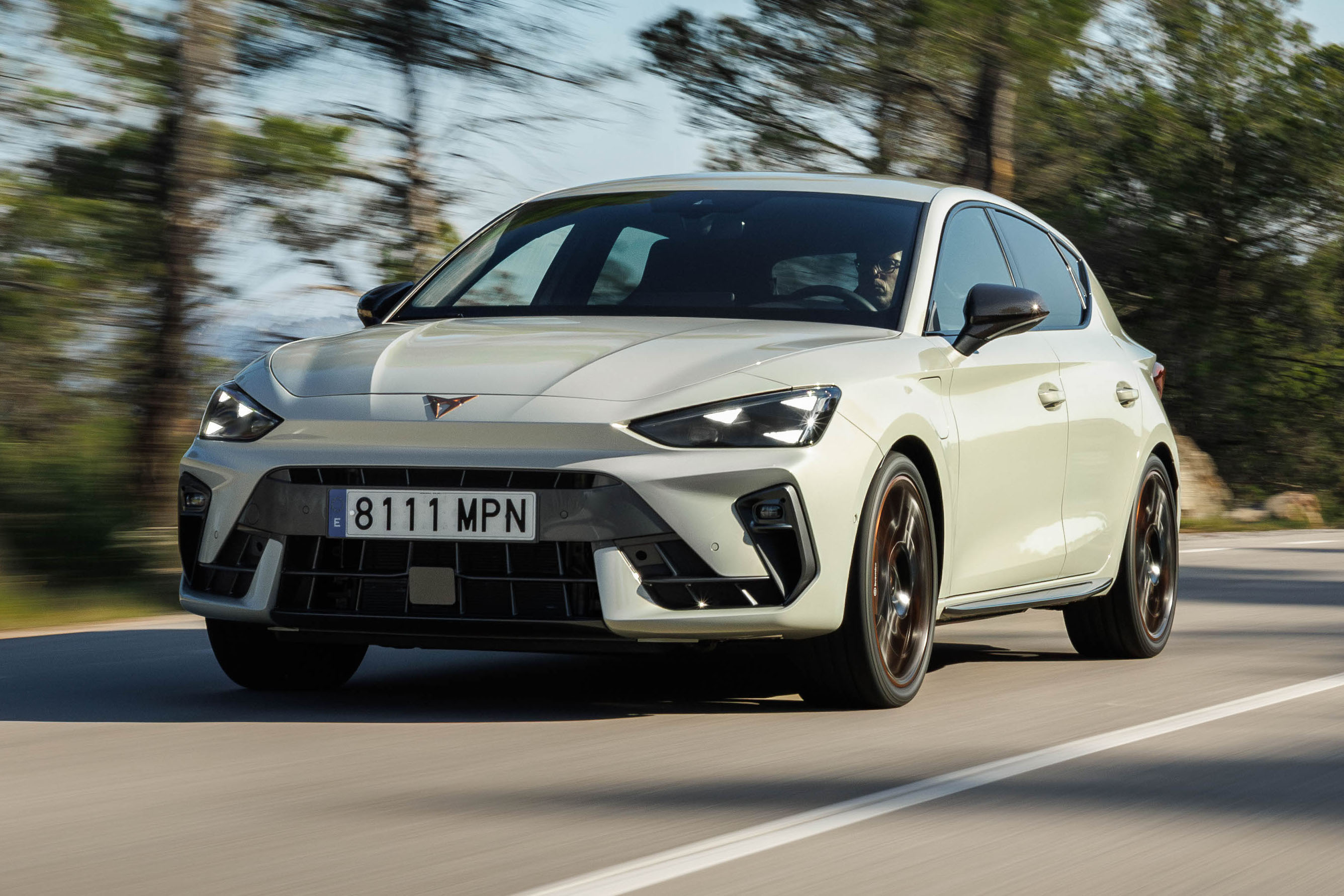
The Volkswagen Golf remains one of the most obvious alternatives because it is roomier, easier to use and still polished to drive, even if it does not have the same badge appeal. The Cupra Leon is worth a close look if you want something a little more distinctive, while the Audi A3 remains the most direct premium-badged rival.
The Mercedes-Benz A-Class is another natural comparison, especially if you value its image and digital-heavy cabin, though the BMW 1 Series feels more cohesive to drive. Buyers prepared to look beyond the usual premium names should also consider the Honda Civic and Mazda 3, both of which offer strong cabin quality and a more grown-up feel than many mainstream hatchbacks.
The BMW 1 Series fights back hardest on interior quality, brand appeal and the way the 120 drives. It is not the biggest or cheapest hatchback in this class, but it remains one of the most convincing.
What's the interior like in the BMW 1 Series?
The BMW 1 Series now has one of the strongest cabins in the class. It looks modern without feeling over-styled, material quality is excellent and the driving position is as good as you would hope from a BMW.
BMW 1 Series boot space and practicality
The BMW 1 Series is not short on front-seat space. There is plenty of adjustment in the driving position, the front seats are supportive and it is very easy to get comfortable. That helps make the car feel more substantial and expensive than its size might suggest.
Rear-seat space is less impressive. Adults can fit in the back, but they will not be stretching out, and six-foot passengers will quickly notice that headroom and legroom are only average for the class. A Volkswagen Golf or Skoda Octavia simply feels airier and more accommodating in the rear.
Boot space is where the details matter. BMW quotes 380 litres, but that figure only really applies to the M135, which has a larger underfloor storage area. In the mild-hybrid 120 and 123, that underfloor space is partly taken up by battery hardware, so usable capacity drops to 300 litres. That is a significant difference, and it means the BMW 1 Series no longer looks especially competitive against an Audi A3, Volkswagen Golf or Honda Civic.
The split-folding rear seats help when you need more room, and the 40:20:40 layout is useful, but the folded seatbacks lie at an angle rather than creating a flat extended floor. In short, the BMW 1 Series is practical enough, but it is not a class leader for family carrying duties.
BMW 1 Series dimensions
The BMW 1 Series measures 4,361mm long, 1,800mm wide and 1,459mm high, with a 2,670mm wheelbase. That puts it right in the heart of the family hatchback class.
It is compact enough to feel easy in town, but not especially generous in the rear, which explains why the BMW 1 Series feels more driver-focused than family-focused in the way it uses its footprint.
Tech and infotainment in the BMW 1 Series
The BMW 1 Series uses a curved display layout that combines a 10.25-inch driver screen with a 10.7-inch centre touchscreen. It runs BMW Operating System 9, and on first impression it is one of the slicker-looking set-ups in this class.
Wireless Apple CarPlay and Android Auto are standard, connected services are strong and the graphics are clear. The screen is also responsive enough that it generally feels easy to use.
The issue is that BMW has removed too many physical controls. The old iDrive rotary controller has gone, climate functions are now touchscreen-led and even some of the driver-assistance and drive-mode settings take too many presses to change. That makes the BMW 1 Series feel more modern, but not always easier to use on the move.
Materials available on the BMW 1 Series
Cabin quality is one of the BMW 1 Series’ big strengths. The soft-touch materials, metallic trim finishes and generally tight assembly all help it feel like a proper premium hatchback rather than just a mainstream car with a posh badge.
M Sport cars are especially effective inside, with Alcantara and Veganza upholstery, sports seats and more distinctive trim. Even the synthetic materials are convincing, and BMW has done a good job of avoiding the sort of glossy, fingerprint-heavy surfaces that make some rivals feel cheap over time.
What's the BMW 1 Series like to drive?
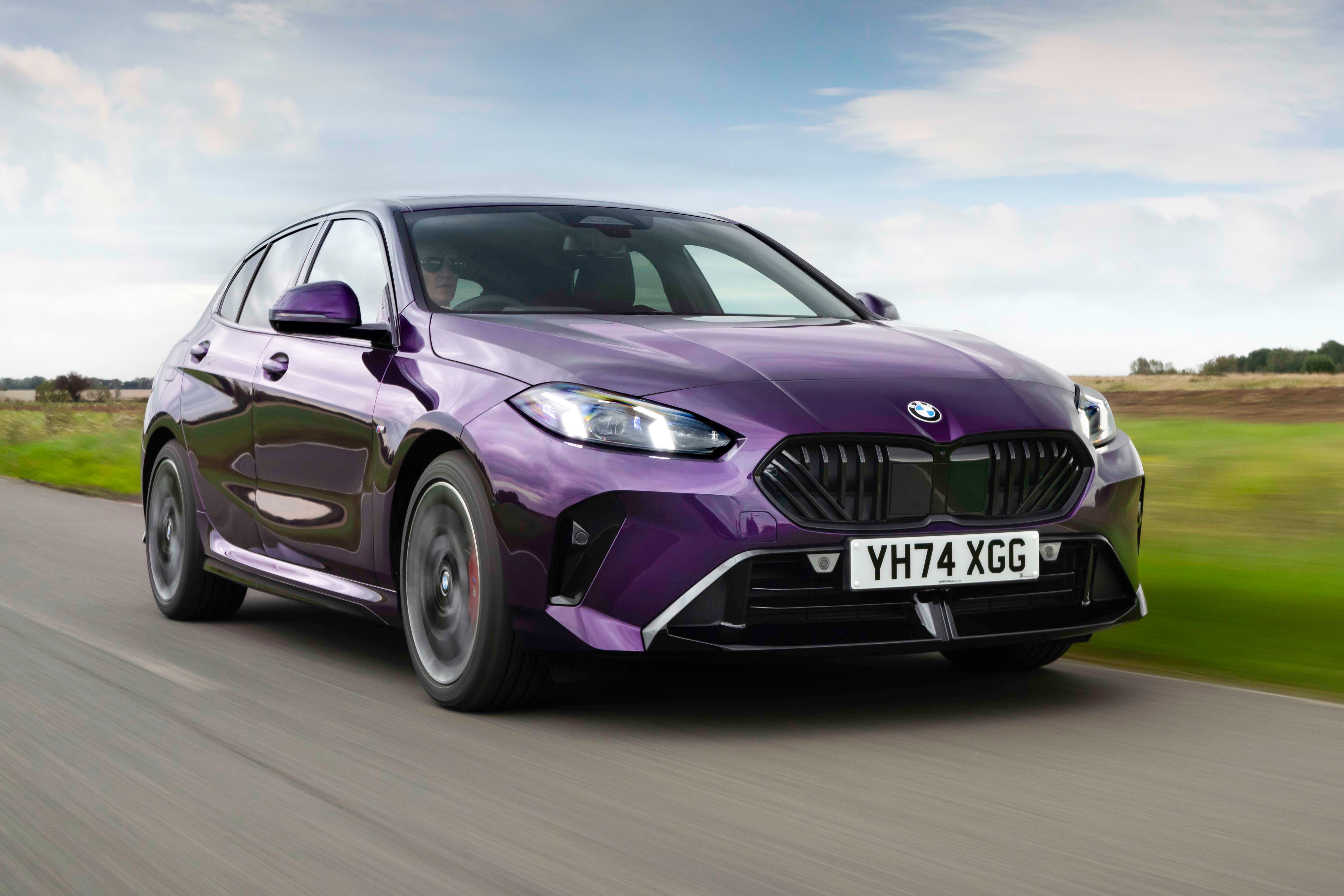
The BMW 1 Series remains one of the more rewarding hatchbacks in this class to drive. It no longer has the novelty of rear-wheel drive, but BMW has still managed to give it the sort of sharp, tidy feel that many rivals struggle to match.
BMW 1 Series range and performance
There are three BMW 1 Series powertrains in the current UK range.
The BMW 120 is the star of the range. Its three-cylinder engine sounds characterful without becoming intrusive, and the mild-hybrid assistance helps it feel eager from low speeds. It is quick enough to feel brisk in everyday use and efficient enough not to punish you for choosing the premium badge.
The 123 xDrive gives you a useful performance jump and the security of four-wheel drive, but it sits in slightly awkward territory. It is not cheap enough to feel like a simple step up from the 120, and not distinct enough to build a compelling case over it.
BMW also offers the M135 xDrive at the top of the wider line-up, but that sits slightly apart from the core versions covered here.
Performance data
| Model | Engine/battery size | Power | 0-62mph | Range/MPG |
|---|---|---|---|---|
BMW 120 | 1.5-litre petrol mild hybrid auto | 170PS | 7.8 seconds | 50.4–52.3mpg |
BMW 123 xDrive | 2.0-litre petrol mild hybrid auto | 218PS | 6.3 seconds | 45.6–47.9mpg |
BMW M135 xDrive | 2.0-litre petrol auto | 300PS | 4.9 seconds | 34.4–37.2mpg |
BMW 1 Series driving and refinement
The BMW 1 Series feels taut and alert in a way that suits the badge. Turn-in is sharp, body control is strong and the car feels balanced and secure even when you start pressing on. It is one of the more satisfying hatchbacks in this class to drive quickly.
M Sport models get adaptive-style suspension hardware as standard, and while the ride is on the firm side, it is well controlled rather than crashy. A Volkswagen Golf is a little more forgiving over poor surfaces, but the BMW 1 Series never feels uncomfortably stiff.
Refinement is strong too, especially in the 120. Wind noise is low, road noise is well contained and the little three-cylinder engine settles down nicely at a cruise.
How safe is the BMW 1 Series?
Safety body Euro NCAP hasn’t yet sent the new BMW 1 Series to its doom in crash testing, but with the outgoing model achieving a full five-star rating in 2019, we’d expect more of the same when the latest car meets a deformable barrier. The tweaks BMW has made to the body structure should contribute to its performance in crashes, and the brand has kept pace with developments in crash mitigation and driver assistance functions, so the latest car comes as standard with Driving Assistant with front collision warning, Lane Departure Warning, Exit Warning and Traffic Sign Recognition, among other features. It's a bit rubbish, though, that adaptive cruise control isn't provided as standard, and you have to pay extra for it.
The process for disabling some of the assistance features is a little more long-winded than the old model’s single button press and hold. Now you need to press the relevant button on the console near the gear selector to bring up a touchscreen menu, and then disable each function (such as lane departure warning and the speed limit bing-bong sounds) individually.
Running costs: What it's like to live with a BMW 1 Series
The BMW 1 Series is not a cheap hatchback to buy, but running costs are reasonably well contained in 120 form. The main drawbacks are BMW’s modest warranty and the lack of any low-tax plug-in hybrid option for business users.
BMW 1 Series fuel economy
The 120 is the sensible choice here, with official WLTP fuel economy of 50.4 to 52.3mpg. In real use, that should translate into genuinely respectable running costs for a petrol premium hatchback.
The 123 xDrive drops to 45.6 to 47.9mpg, which is still reasonable given the extra performance and all-wheel drive. The M135 xDrive is predictably thirstier, with an official range of 34.4 to 37.2mpg.
There is no plug-in hybrid or diesel option, which means the BMW 1 Series gives away some ground if your priority is outright running-cost efficiency or company-car tax.
BMW 1 Series warranty and servicing
BMW covers the 1 Series with a three-year, unlimited-mileage warranty. That is fine, but it is no better than the premium norm and noticeably less generous than the cover offered by some mainstream brands.
BMW Approved Used cars come with at least 12 months of BMW Insured Warranty, 12 months of roadside assistance and MOT cover, which helps if you are shopping nearly new.
BMW 1 Series insurance groups
Insurance groups are broadly reasonable for a premium hatchback. The 120 sits in group 21, the 123 xDrive in group 26 and the M135 xDrive in group 29.
That makes the BMW 1 Series more affordable to insure than some buyers might fear, particularly in 120 form.
How much does it cost to tax a BMW 1 Series?
The standard VED rate from the second year onwards is £200 a year for petrol cars registered on or after 1 April 2017. The more important issue here is the Expensive Car Supplement, which applies to cars with a list price above £40,000.
A heavily optioned 123 xDrive can get close enough to the £40,000 threshold for buyers to need to pay attention. In practice, most 120 models avoid the extra charge.
What trims are available with the BMW 1 Series?
The BMW 1 Series range starts with Sport in 120 form. Standard kit includes 17-inch alloy wheels, LED headlights, high-gloss exterior trim, heated front seats, a sports steering wheel, rear-view camera, ambient lighting and the curved twin-screen display with Apple CarPlay and Android Auto.
M Sport is the trim most buyers will want. It adds 18-inch alloy wheels, the M Sport body kit, Alcantara and Veganza upholstery, sports front seats, illuminated trim, the M steering wheel and M Adaptive Suspension. This is the trim that gives the BMW 1 Series the look and feel most buyers will expect.
The M135 xDrive then builds on that with its own grille, quad exhausts, rear spoiler and upgraded brakes, but it sits slightly apart from the core versions covered here. BMW also offers option packs such as Technology, Technology Plus and M Sport Pro, but the standard trim walk-up is easy enough to understand before you start layering extras on top.
Ask the Drive experts: common questions
How much does the BMW 1 Series cost?
What’s the best BMW 1 Series model to buy?
Is the BMW 1 Series a good family hatchback?
Does the BMW 1 Series come as a plug-in hybrid?
Get our latest advice, news and offers
Keep me updated by email with the latest advice, news and offers from Drive.
.jpg)
.jpg)
.jpg)