BMW M2 Review

Written By Ivan Aistrop
- 2023
- Coupe
- Petrol
What we love
Sensational engine and serious pace
Still offers a manual gearbox
More usable than most two-seat sports-car rivals
Things to consider
Rear seats are tight
Steering is not as rich in feedback as the best sports cars
Manual driving position is compromised by offset pedals
The DRIVE take on the Bmw M2, is it the right car for you?
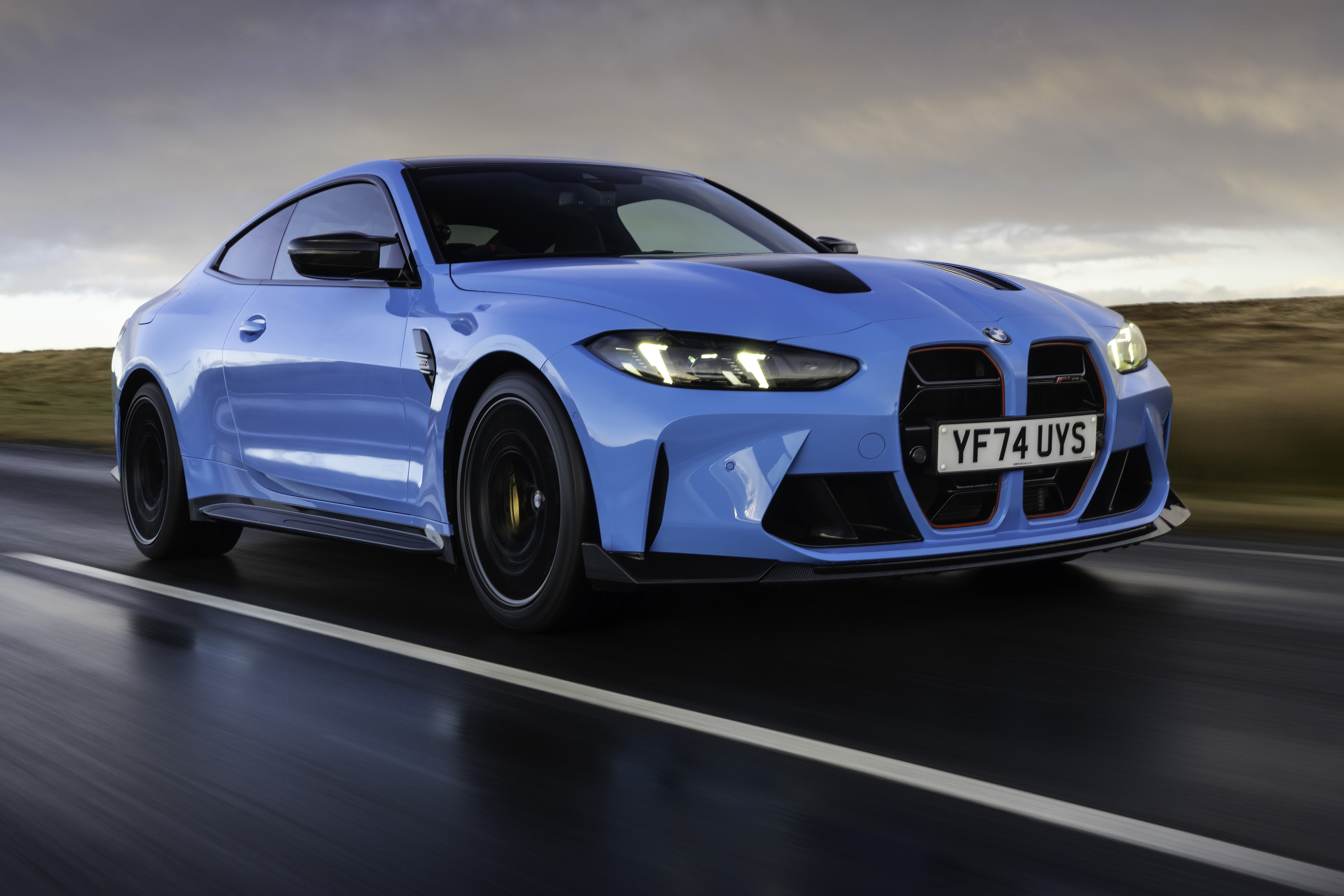
The BMW M2 is now one of the most distinctive cars BMW makes because it still feels gloriously committed to old-fashioned performance-car values. It is compact by modern M-car standards, rear-driven in its standard form, powered by a six-cylinder petrol engine and still available with a manual gearbox. That alone gives it a rare appeal. The new M2 with M xDrive broadens the range by adding all-wheel drive and even more traction, but the core character remains intact. This is a seriously quick, seriously capable sports coupe that is also more practical than most of its closest rivals. If you want something more delicate and purist, a Porsche 718 Cayman or Alpine A110 still has their own appeal. If you want something more rounded, more muscular and easier to live with day to day, the M2 makes an exceptionally strong case.
The Bmw M2 in more detail
The M2 has always played an important role in BMW’s performance-car line-up because it captures something many larger M cars have gradually moved away from. It is still compact enough to feel mischievous, aggressive enough to feel exciting at sensible speeds and simple enough in concept to appeal to enthusiasts who worry that modern performance cars are becoming too digital, too heavy and too sanitised.
That does not mean the latest M2 is some stripped-back throwback. It clearly is not. It is wider, heavier and much more sophisticated than an older-school compact coupe, and the styling is anything but subtle. Yet underneath the bluster is a very serious bit of engineering. The straight-six engine is superb, the chassis is hugely capable and the car is far more polished than its extrovert looks suggest.
The other thing that makes the current M2 especially interesting is that the UK range now covers two flavours of the same idea. The standard rear-wheel-drive M2 is the more traditional choice and the only one you can have with a manual gearbox. The new M2 with M xDrive takes the same basic formula and adds all-wheel drive and automatic-only transmission, turning it into a harder-launching, more all-weather proposition.
That gives the M2 a broader appeal than before. One version is clearly aimed at the buyer who still wants the more classic rear-drive, manual-sports-coupe experience. The other is there for those who want maximum traction and maximum pace with fewer compromises.
Either way, the M2 remains one of the few cars in this part of the market that feels genuinely characterful. It is quick enough to embarrass much more expensive machinery, compact enough to feel playful and practical enough to justify itself in a way many pure sports cars cannot.
What's the best Bmw M2 trim and engine option?
The answer depends almost entirely on what you want from the car, because the two current M2 versions have been drawn to appeal to slightly different buyers.
For many enthusiasts, the standard rear-wheel-drive M2 is still the one to have. It is the only version available with a six-speed manual gearbox, and that alone gives it a special appeal. Even if the manual is not perfect, the fact it exists at all in a car like this gives the M2 a more distinctive place in a market where manual performance cars are becoming increasingly rare.
The new M2 with M xDrive is the quicker, easier and more devastatingly effective option. If you want maximum traction, the fastest acceleration and something that feels more planted in mixed conditions, it is the obvious choice. It is also the version many buyers will end up choosing simply because it is such a complete performance tool.
The catch is that the xDrive car loses a little of the standard M2’s old-school charm. It is more capable, but also slightly less special in the way it presents itself. There is something very appealing about the simpler rear-drive car with a manual gearbox, even if it is not the faster option.
For most keen drivers, then, the sweet spot remains the standard M2 with the manual gearbox. For buyers who want the most complete and most usable version, the M2 with M xDrive makes a lot of sense.
What’s the price of the Bmw M2?
The BMW M2 range starts at £71,645 for the rear-wheel-drive car and rises to £74,255 for the M2 with M xDrive. That is not a huge gap, which makes the choice more about character than budget.
Neither car is cheap, and the M2 has moved a long way from the idea of being the more accessible junior M car. But context matters here. In performance terms, the M2 is offering the sort of pace that would once have belonged to much more expensive exotica, and it does so with a richly finished interior and a level of everyday useability that many rivals cannot match.
The value question really comes down to what you compare it with. Against a Porsche 718 Cayman with similar performance, the BMW makes a strong financial case. Against larger in-house alternatives such as the M4, it also feels relatively sensible. That helps explain why the M2 can still be justified even at this level.
Where you need to be careful is the options list. BMW gives you enough opportunity to dress the car up with carbon fibre, driver packs and cosmetic upgrades, and it is easy to push the final number higher than it really needs to be. The core car is already very strong.
Alternatives to the Bmw M2
The Porsche 718 Cayman remains the most obvious rival if what you care about above all else is sports-car precision. It is lighter on its feet, more delicately balanced and more naturally intimate to drive than the BMW. But it is also a strict two-seater and less useful in everyday life.
The Alpine A110 plays a similar card. It is lighter, more playful and more distinctive than the M2, but again it is much less practical and feels more like a second car than an all-rounder.
If you want something with rear seats and a premium badge, the Mercedes-AMG CLA 45 S is an alternative of sorts, though its four-door layout and four-wheel-drive character make it a rather different proposition. The BMW still feels more like a traditional performance coupe.
The other interesting rival is the BMW M4. It is bigger, more powerful in some forms and more expensive, but the M2 often feels like the more appealing car because it is the smaller, punchier and more mischievous option.
What's the interior like in the Bmw M2?
The M2’s cabin strikes a convincing balance between performance-car focus and everyday BMW polish. It feels expensive, modern and suitably special without becoming unusably compromised.
Bmw M2 boot space and practicality
This is one of the M2’s strongest cards against two-seat sports-car rivals. It may not be genuinely roomy in the back, but it does at least give you rear seats and a decent-sized boot, which makes it much easier to justify as an everyday performance car.
Front-seat space is strong. There is loads of room for driver and passenger, and the standard driving position is low and properly sporting. Seat adjustment is generous, and visibility is better than the aggressive bodywork might suggest. The long bonnet can still take a little judging, but the standard parking aids help.
The rear seats are where reality intrudes. Legroom is acceptable enough, but headroom is poor, and adults will only really tolerate them for shorter journeys. Small children are fine, and the back seats are useful for extra bags or occasional passengers, but this is not a car you buy because you need regular four-adult comfort.
Boot space stands at 390 litres, which is usefully generous for a compact coupe. The opening is not especially broad and the load lip is chunky, but the M2 still offers enough luggage room to be genuinely practical by class standards. The split-folding rear seats also add welcome flexibility when you need it.
Bmw M2 dimensions
The BMW M2 measures 4,580mm long, 1,887mm wide and 1,404mm high. That makes it compact enough to feel appropriately punchy and agile, but still substantial enough to have the road presence buyers expect from a modern M car.
It is not a tiny sports coupe in the Lotus sense, and you feel the width on tighter roads, but the dimensions still give it a more concentrated and more aggressive feel than larger M models.
Tech and infotainment in the Bmw M2
The M2 uses BMW’s curved-display setup, combining a 12.3-inch driver display with a 14.9-inch central touchscreen. It looks sleek, modern and expensive, and it gives the cabin a more high-tech feel than some of the M2’s more overtly analogue rivals.
The system itself is packed with functionality and generally works well. BMW still makes some of the better infotainment systems around, and the M2 benefits from that. Navigation, smartphone connectivity and the standard Harman Kardon stereo all do their jobs well.
There is still too much reliance on the touchscreen for some everyday functions, particularly climate control, but at least the menus are laid out well enough that it is not a complete faff to use. On balance, the M2’s digital setup feels like an asset rather than a burden.
Materials available on the Bmw M2
Interior quality is one of the reasons the M2 feels worth the money. The dashboard, trim finishes and switchgear all have the sort of tightly assembled, premium feel you expect from a BMW at this level.
The look is suitably sporty, too, with stitched trim, M detailing and plenty of visual cues reminding you this is not just a warmed-over 2 Series. Carbon fibre-effect trim, the thick-rimmed steering wheel and the strongly bolstered seats all contribute to the right atmosphere.
Optional M Carbon bucket seats add even more theatre, but they are also more awkward to live with. For some buyers they will be worth it. For others, the standard seats are the better-balanced choice.
What's the Bmw M2 like to drive?
This is where the M2 earns its reputation. It is devastatingly fast, hugely capable and full of personality, yet also more civilised than you might expect.
Bmw M2 range and performance
The current M2 range uses one engine in two drivetrain formats. Both versions are powered by a 3.0-litre twin-turbo straight-six petrol engine producing 480PS.
In the standard rear-wheel-drive M2, you can choose between a six-speed manual and an eight-speed automatic. The manual manages 0-62mph in 4.2 seconds, while the automatic cuts that to 4.0 seconds. The rear-drive car offers 550Nm in manual form and 600Nm in automatic form.
The new M2 with M xDrive is automatic only and uses all-wheel drive to trim 0-62mph to 3.7 seconds. It also brings the full 600Nm and a much more relentless feeling of traction.
The engine is the star in every version. It is tractable when you are taking it easy, then savage and full of character when you extend it.
Performance data
| Model | Engine/battery size | Power | 0-62mph | Range/MPG |
|---|---|---|---|---|
M2 manual | 3.0-litre | 480PS | 4.2 seconds | Up to 27.4mpg |
M2 automatic | 3.0-litre | 480PS | 4.0 seconds | Up to 28.8mpg |
M2 xDrive | 3.0-litre | 480PS | 3.7 seconds | Up to 28.0mpg |
Bmw M2 driving and refinement
The M2’s chassis is hugely impressive because it manages to be both very serious and surprisingly approachable. In its calmer settings it is much more civilised than the aggressive looks suggest, with enough compliance in the suspension to stop it feeling exhausting on ordinary roads.
Turn everything up and the car becomes ferociously capable. Grip is immense, body control is tight and the M2 feels beautifully balanced once you start to trust it. It is not as delicate as something like an Alpine A110, but it is far closer to that kind of car for agility and excitement than its size and weight would lead you to expect.
The standard adaptive suspension plays a big part in that breadth of ability, and BMW also gives you plenty of scope to configure the car exactly how you want it through the drive modes and steering-wheel shortcuts. Some buyers will relish that. Others may simply settle on one or two favourite settings and ignore the rest.
The one slight disappointment remains the steering. It is quick and accurate, but it does not always give you the rich, confidence-building feedback you want straight away. The grip is there, but you need to learn to trust the car.
Refinement is better than many buyers will expect. The engine is smooth and quiet when you are cruising, though tyre roar is more noticeable at motorway speeds than in a regular coupe. That is no great shock given the width of rubber involved.
How safe is the Bmw M2?
The BMW M2 is based on the 2 Series Coupe, which achieved a four-star Euro NCAP rating in 2022. That is not a disastrous result, but it is worth noting in a market where five stars has become the default shorthand many buyers expect.
Standard safety equipment is decent, including front-collision warning, lane-departure warning, lane-keep assist, driver-attention alert and parking assistance with a rear-view camera and front and rear sensors. Features such as active cruise control and some additional assistance systems remain optional rather than standard.
Running costs: What it's like to live with a Bmw M2
Nobody buys an M2 expecting bargain-basement ownership costs, but it is not wildly out of line with what this level of performance usually brings.
Bmw M2 fuel economy
Official economy sits between 26.9 and 28.8mpg depending on version. That is not disastrous considering the performance on offer, but it will only be achievable if you drive very gently.
Use the M2 the way its engine encourages you to, and the numbers will drop quickly. That is simply part of the deal with a car like this. Still, against the sort of pace it offers, the official figures are not outrageous.
Bmw M2 warranty and servicing
BMW covers the M2 with a three-year, unlimited-mileage warranty. That is about what you would expect in this part of the market.
Servicing and consumables will not be cheap, particularly if you use the car hard, but the M2 does not come across as something exotic or fragile. It feels like a robust, well-engineered machine, which matters in a performance car that many owners will actually use.
Bmw M2 insurance groups
The rear-wheel-drive M2 sits in insurance group 42, whether you choose the manual or the automatic. That is high, but not absurdly so given the power, price and badge. The M2 with M xDrive is unlikely to be any cheaper to insure, so whichever version you choose, premiums are best treated as firmly performance-car territory.
How much does it cost to tax a Bmw M2?
For 2026 to 2027, the standard annual VED rate after the first year is £200. Because every current M2 sits above the £40,000 threshold, all versions also attract the Expensive Car Supplement.
That means an extra £440 a year for five years from the start of the second licence, leaving most owners looking at £640 a year during that period.
What trims are available with the Bmw M2?
The M2 line-up is simple. There is the rear-wheel-drive BMW M2 and the BMW M2 with M xDrive.
That simplicity works in the car’s favour. You are not being asked to decode a sprawling trim ladder or endless sub-variants. The real choices are drivetrain, transmission and options.
The standard equipment list is already strong, including adaptive suspension, three-zone climate control, heated front seats, the curved-display cabin and the usual BMW M performance hardware. BMW then lets you spend more on option packs such as the M Driver’s Package or more aggressive carbon-heavy add-ons if that is your thing.
For many buyers, though, the standard car is enough. That is one of the M2’s strengths. It does not need endless embellishment to make its point.
Ask the Drive experts: common questions
Is the BMW M2 a good sports car?
Which BMW M2 is best?
Is the BMW M2 better than a Porsche 718 Cayman?
Does the BMW M2 have rear seats?
Get our latest advice, news and offers
Keep me updated by email with the latest advice, news and offers from Drive.
.jpg)
.jpg)