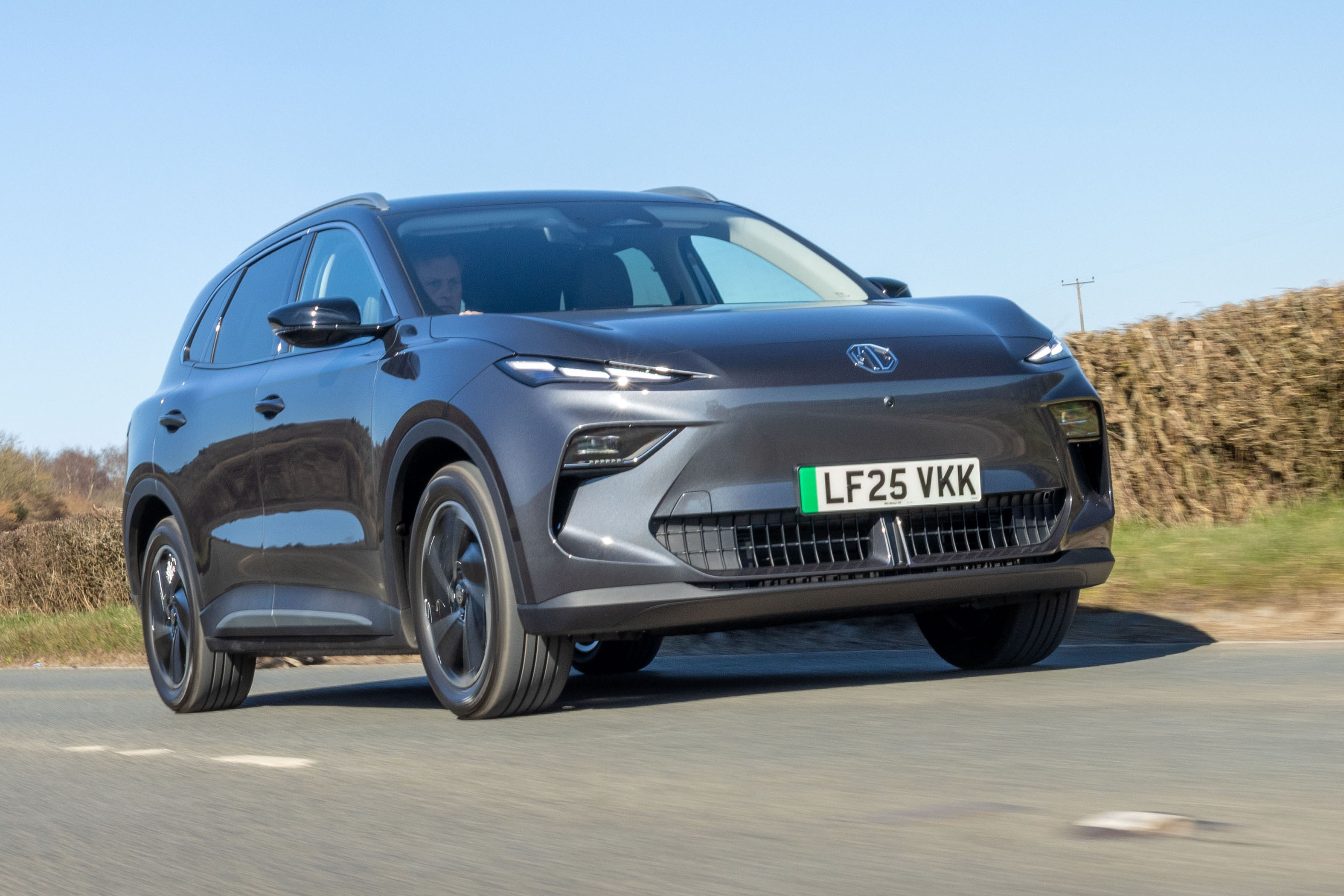
Citroen e-C3 Aircross Review

Written By Matt Robinson
- 2025
- Small electric SUV
- Electric
What we love
Excellent passenger space
Comfortable seats and ride
Very competitive pricing
Things to consider
Performance is fairly modest
Noticeable wind noise at speed
Electric version only has five seats
The DRIVE take on the Citroen C3 Aircross, is it the right car for you?
The Citroen e-C3 Aircross is a much more pleasant car to drive than its Hybrid sibling, switching a not especially refined three-cylinder engine for a smooth electric powertrain. It packs a lot of practicality into its small frame, but it's a shame you can't spec this one as a seven-seater.
The Citroen C3 Aircross in more detail
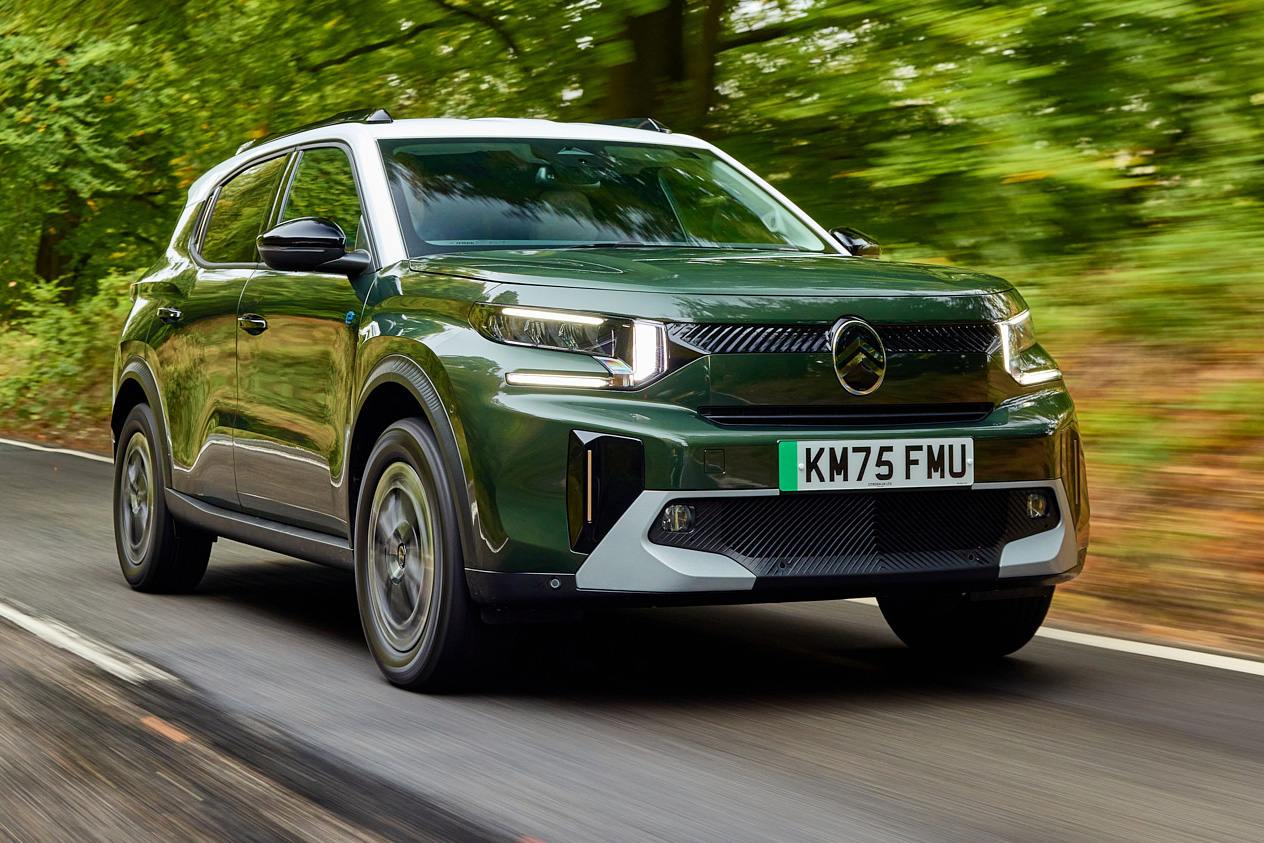
The Citroen e-C3 Aircross is the electric version of the second-generation C3 Aircross and represents a very different sort of small SUV from its predecessor.
The previous C3 Aircross was relatively compact, curvy and slightly unconventional. This one has grown considerably. At almost 4.4 metres long, it sits somewhere between a traditional small SUV and the increasingly large family SUV class, and Citroen has used that extra length primarily to create more space inside.
There is an important distinction between the electric Citroen e-C3 Aircross and its petrol and hybrid siblings. Combustion versions can be ordered with seven seats, but the electric model is strictly a five-seater. That sounds like a disadvantage, but there is a useful upside. Without the third row, the rear bench can sit further back and the boot remains a substantial 460 litres.
Underneath, the e-C3 Aircross uses Stellantis’s Smart Car platform and is very closely related to the Vauxhall Frontera Electric. It also shares plenty of its electric hardware with the smaller Citroen e-C3.
That approach helps explain the price. Rather than attempting to compete with the biggest batteries and most powerful motors in the class, Citroen has concentrated on keeping the e-C3 Aircross relatively simple and affordable.
Originally, UK cars were offered with a 44kWh Standard Range battery and an official range of around 190 miles. The 54kWh Extended Range joined later and increases the maximum official figure to 249 miles. Both versions use the same 113PS front-mounted electric motor.
The emphasis is firmly on comfort rather than performance. Citroen’s Advanced Comfort suspension is standard, along with its heavily padded Advanced Comfort seats. The result is generally relaxed progress over poor roads, although the Aircross does not quite have the pillowy softness of larger Citroens such as the C5 Aircross.
The electric drivetrain also suits the car noticeably better than a noisy petrol engine. Acceleration is not strong, particularly once you reach motorway speeds, but the smooth and quiet way it delivers its power fits the e-C3 Aircross’s laid-back character.
The cabin is equally straightforward. There is a 10.25-inch touchscreen on current versions, wireless Apple CarPlay and Android Auto, and a small information display positioned high on the dashboard rather than a conventional instrument binnacle.
Materials are not especially luxurious, but Citroen has been clever with colours, fabrics and small design details to stop the interior looking like a budget car.
That combination of space, comfort and price is what gives the e-C3 Aircross its appeal. A Kia EV3 has greater range available and an MG S5 EV feels more powerful, while the closely related Vauxhall Frontera Electric provides another value-focused alternative. But few electric SUVs deliver quite so much family-car usefulness at this price.
What's the best Citroen C3 Aircross trim and battery option?
The 54kWh Extended Range battery is the version we would choose. Its official range of up to 249 miles provides considerably more flexibility than the 44kWh Standard Range model’s roughly 190-mile figure, and that matters if the e-C3 Aircross is going to be your main family car.
As for which trim to go for, entry-level Collection is our pick, coming with 17-inch alloy wheels, Citroen Advanced Comfort seats, automatic air conditioning, keyless entry and start, the 10.25-inch touchscreen and wireless smartphone mirroring.
What’s the price of the Citroen C3 Aircross?
The Citroen e-C3 Aircross remains one of the more affordable electric family SUVs on sale. Current pricing starts from £24,315 for Collection once the applicable Electric Car Grant support is taken into account. Pretty impressive for a car measuring almost 4.4 metres long with a genuinely spacious cabin and 460-litre boot for similar money to some much smaller electric cars.
Alternatives to the Citroen C3 Aircross
The most obvious alternative is the Vauxhall Frontera Electric. The two cars share much of their engineering and have very similar dimensions, so the decision is likely to come down to price, styling, equipment and which interior you prefer.
The MG S5 EV is a more substantial alternative. It is quicker, feels more sophisticated to drive and its Long Range version can travel close to 300 miles officially. You will pay more for it, but it feels like the more complete car if you regularly cover longer distances.
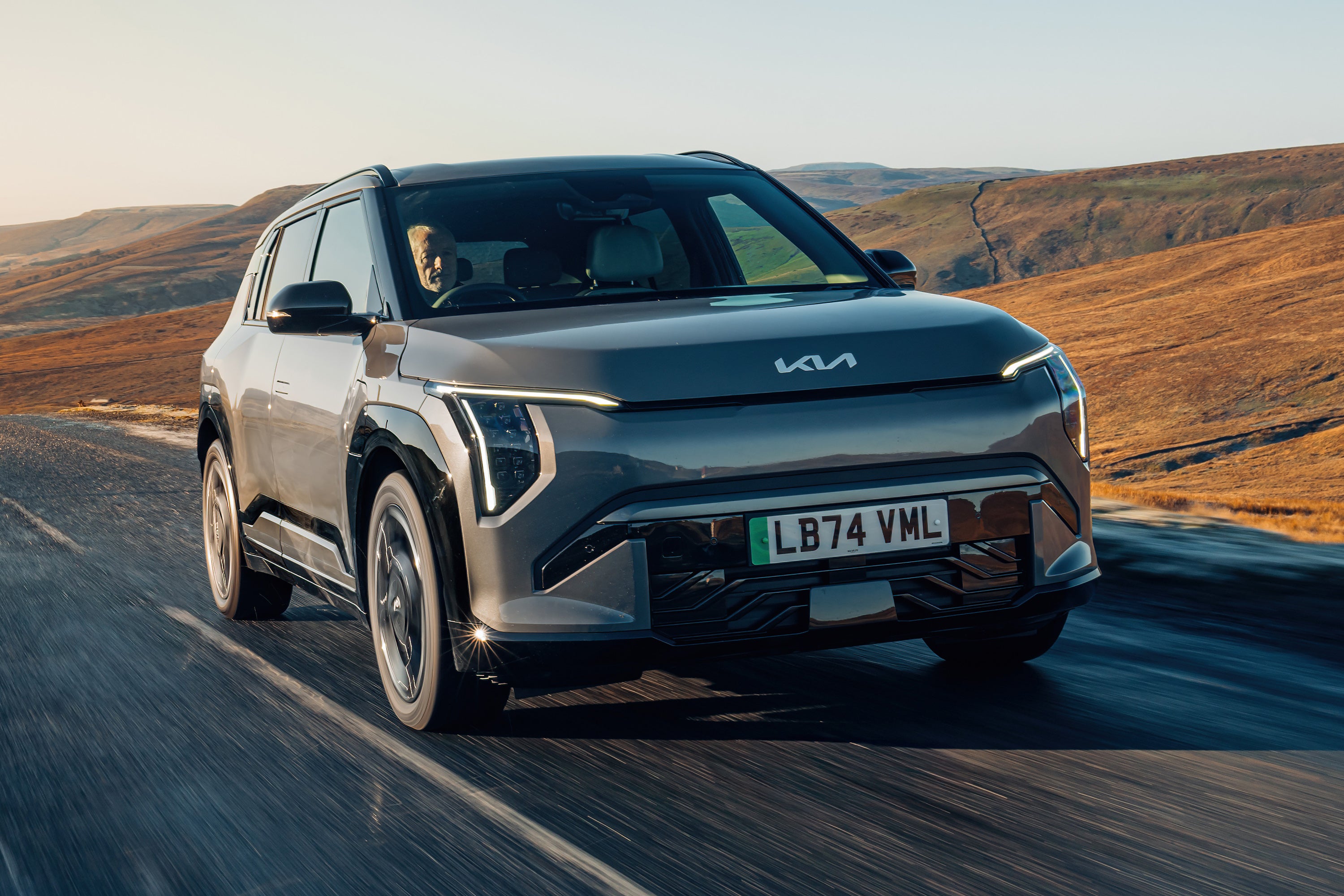
The Kia EV3 is another step up in price but offers significantly more range with its larger battery. Its cabin is also more contemporary and its technology stronger. For drivers using an EV as their only car and regularly travelling on motorways, it is worth considering.
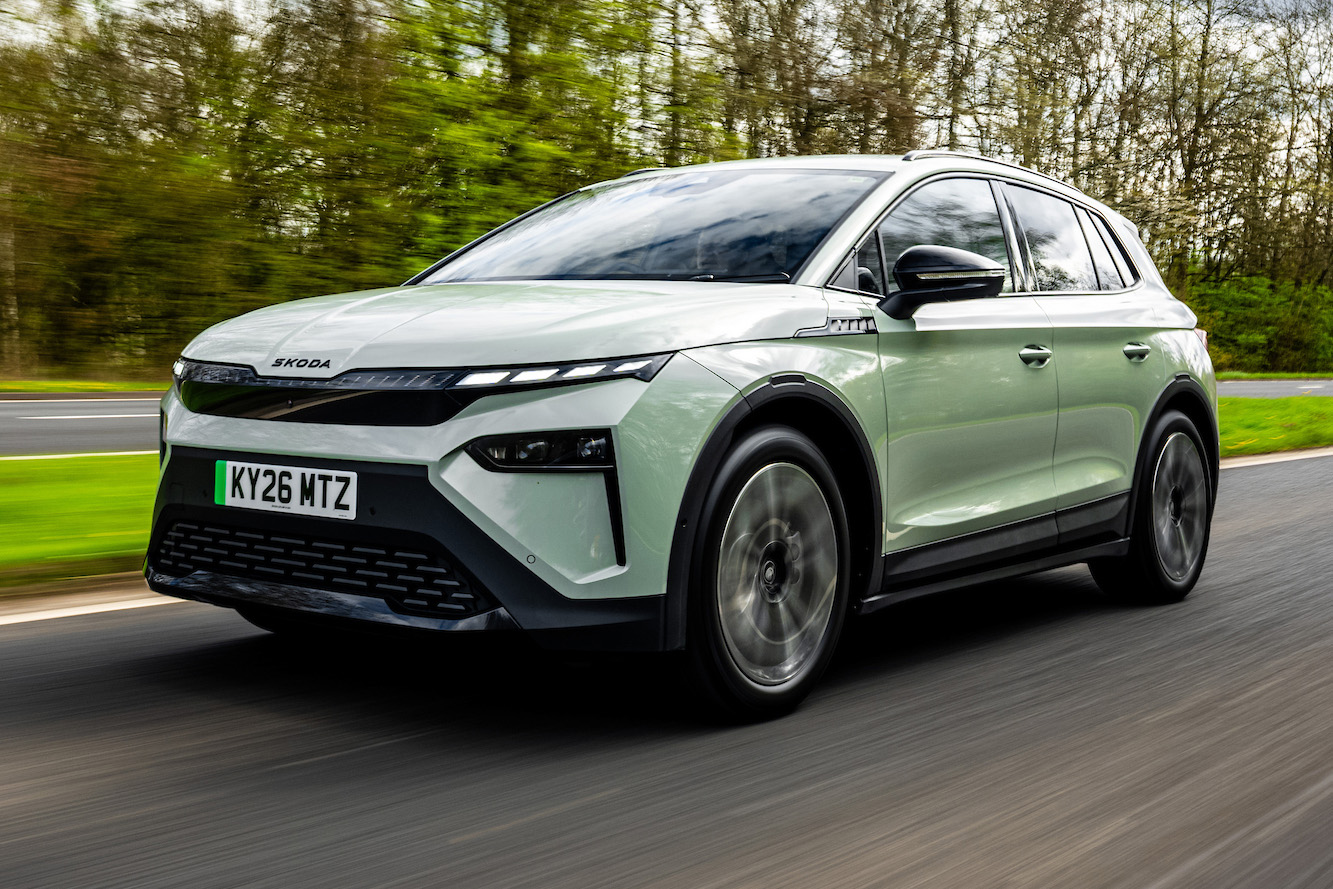
The Skoda Elroq is larger, more polished and available with considerably longer driving ranges. Its 470-litre boot is only slightly bigger than the Citroen’s, though, demonstrating just how well the e-C3 Aircross uses its footprint.
The Renault 4 E-Tech is smaller and less spacious but feels more polished to drive and offers a little more character. The Citroen is the more straightforward family choice if passenger and luggage room are the priorities.
What's the interior like in the Citroen C3 Aircross?
The e-C3 Aircross is much more spacious inside than its price suggests. Rear legroom is particularly impressive and the upright body means headroom is generous, too. The design is simple and some materials reveal the Citroen’s budget positioning, but thoughtful fabrics and comfortable seats lift the atmosphere. The 460-litre boot is another major strength, although electric buyers cannot specify the seven-seat arrangement available on petrol and hybrid versions.
Citroen C3 Aircross boot space and practicality
Practicality is one of the strongest reasons to choose an e-C3 Aircross. Citroen has stretched the wheelbase to 2,672mm, and the five-seat layout takes full advantage of it. The rear bench is mounted further back than it is in the seven-seat versions of the combustion-engined C3 Aircross, creating exceptional legroom for a car in this price bracket.
Two tall adults can comfortably sit one behind the other without knees pressing into the front seat. That also makes the Citroen useful if you regularly carry rear-facing child seats, which can consume an enormous amount of cabin length in smaller SUVs.
Headroom is good thanks to the relatively square roofline, while the wide-opening rear doors make loading children easier. Isofix mounting points are fitted to the outer rear seats.
The front of the cabin is similarly airy. You sit fairly high, which gives the e-C3 Aircross the elevated driving position buyers expect from an SUV, and the large windows help visibility.
Citroen’s Advanced Comfort seats are one of the cabin’s stronger features. They use extra foam to create a softer initial feel than many rivals and suit the relaxed nature of the car particularly well. They are not heavily bolstered, but this is not a car designed around hard cornering.
There is useful storage around the front of the cabin, including space beneath the centre console, cupholders and a shelf running across part of the dashboard. Collection cars also gain a raised centre console with an armrest and covered storage.
Boot capacity is 460 litres with the rear seats upright. That makes it marginally smaller than a Skoda Elroq’s 470-litre luggage compartment, but it remains very competitive for an SUV at this price. The tailgate opens onto a broad, square luggage area and the adjustable floor can be positioned to reduce the step created when the rear seats are folded. Drop the 60:40 split rear bench and capacity rises to 1,600 litres, giving the e-C3 Aircross enough room for bulky family luggage or occasional furniture-moving duties.
The only major practical limitation is the lack of seven seats. Petrol and hybrid C3 Aircross models can accommodate two additional passengers in a third row, but the electric drivetrain means those seats are not offered on the e-C3 Aircross. For most households that only need five seats, the trade-off is arguably worthwhile because the second row and boot are much more generous as a result.
Citroen C3 Aircross dimensions
The Citroen e-C3 Aircross measures 4,395mm x 1,850mm x 1,660mm in length, width and height. Including the door mirrors, it is around 2,020mm wide, while the wheelbase measures 2,672mm.
That makes it noticeably larger than the first-generation C3 Aircross and helps explain its impressive passenger room.
It is still reasonably easy to manage in town. A turning circle of around 10.9 metres is respectable, although its width means you will notice the size more in narrow parking spaces than you would in the smaller Citroen e-C3.
Tech and infotainment in the Citroen C3 Aircross
The Citroen e-C3 Aircross has a 10.25-inch infotainment touchscreen which works well. It's responsive enough and has a logical, almost disarmingly simple menu system, while Max trim level models include a smart-looking 3D navigation setup.
While the related Vauxhall Frontera Electric pairs the infotainment screen with a similarly sized digital instrument cluster, the e-C3 Aircross instead uses a much smaller, simpler display set high within the dashboard, above steering wheel height. It gives all the information you realistically need, and is easy enough to read quickly.
Materials available on the Citroen C3 Aircross
'have fun' and 'be cool' might be viewed as naff, they at least show considerable thought has gone into uplifting the cabin. You also get some neat little 'Easter eggs' in the form of the Eiffel Tower, Notre Dame Cathedral and the Gallic rooster (France's national symbol incorporated in the heating elements of the tiny rear side windows next to the tailgate
There is a sizeable helping of cheaper-feeling plastics in various parts of the interior, which is to be expected at this price. It's mostly kept below your eyeline, with nicer elements such as the fabric-coated dashboard dominating your view.
It all seems put together well — we didn't find any build quality issues with any of the cars we have driven.
What's the Citroen C3 Aircross like to drive?
Deleting the combustion-engined versions' noisy powerplant makes for a much more relaxing driving experience in the Citroen e-C3 Aircross. It doesn't ride as smoothly as some other current Citroen, though and it could be better in terms of refinement.
Citroen C3 Aircross range and performance
Whether you go for the Standard Range or Extended Range battery, all Citroen e-C3 Aircross models are powered by the same motor driving the front wheels through a single-speed automatic transmission.
Power and torque outputs are modest 113PS and 124Nm respectively, figures which don't exactly make for brisk performance. The Standard Range version takes 11.7 seconds to reach 62mph from rest, while the 29kg heavier Extended Range car requires 13.0 seconds to do the same. For comparison, the petrol-engined C3 Aircross Turbo 100 can do the 0-62mph in 10.6 seconds, while the Hybrid 136 manages it in 10.1 seconds.
The thing is, achieving those kinds of times or anywhere close to them requires thrashing that unrefined three-cylinder engine to within an inch of its life. No such drama with the e-C3 Aircross, which just quietly gets on with the job.
It's sprightly enough off the line and up to about 30mph — it's only when you're trying to get it up to and beyond 60mph that things feel a bit more laboured.
Performance data
| Model | Engine/battery size | Power | 0-62mph | Range/MPG |
|---|---|---|---|---|
Standard Range | 44kWh | 113PS | 11.7 seconds | Up to 190 miles |
Extended Range | 54kWh | 113PS | 13 seconds | Up to 249 miles |
Citroen C3 Aircross driving and refinement
A great deal is made about the Advanced Comfort suspension used on all versions of the Citroen e-C3 Aircross, which use patented components to help iron out imperfections in the road surface. While the car rides more smoothly than its rivals, it's not as wafty as the firm's larger models, including the Citroen C4.
We wonder if Citroen could have got away with softening the suspension a touch further, as the car remains reasonably flat even as cornering speeds rise, trading some extra roll in return for additional comfort. It's surprisingly capable on a twisty road and the steering feels pleasantly natural, with a nice weight to its power assistance.
The e-C3 Aircross is about 200kg heavier than its combustion-engined counterpart and when really pushed, you do start to notice this. Its tyres starting to make a bit of a racket sooner as the grip begins to run out, but most drivers are unlikely to notice much of a difference.
What's of more relevance for day-to-day driving is the refinement. Wind noise at higher speeds is very noticeable.
How safe is the Citroen C3 Aircross?
The Citroen e-C3 Aircross hasn't yet been tested by Euro NCAP, nor has any other car using the same Stellantis Smart Car underpinnings, such as the smaller Citroen e-C3 or the Fiat Grande Panda Electric.
All versions of the e-C3 Aircross come with six airbags and lots of safety technology, including blind spot detection, a driver attention monitor and lane-keeping assistance. It's also impressive to see a head-up display as standard on such a cheap car – this should help keep your eyes on the road for longer.
Running costs: What it's like to live with a Citroen C3 Aircross
The e-C3 Aircross should be inexpensive to run if you can charge at home. Its modest motor output helps keep insurance groups unusually low for an EV and none of the range comes remotely close to the Expensive Car Supplement threshold. The battery warranty is competitive, too. Public rapid charging remains much more expensive than charging at home, so access to a driveway or workplace charger strengthens the financial case considerably.
Citroen C3 Aircross charging times and costs
A 100kW DC charging capacity is about what to expect for an EV of this size and price, although the the Hyundai Inster does slightly better at 120kW. Providing you're using a powerful enough charger and conditions are optimal, a 20-80% charge will take 26 minutes for the Standard Range battery and 28 minutes for the Extended Range.
Doing the same with a 7.4kW domestic wallbox is going to take 4 hours 10 minutes for the Standard Range model and 5 hours 5 minutes for the Extended Range.
Citroen C3 Aircross warranty and servicing
Citroen provides a conventional three-year or 60,000-mile manufacturer warranty from new.
Cars ordered in the UK from June 2025 can also benefit from Citroen’s We Care programme. Servicing the car with a participating authorised Citroen repairer can reactivate additional cover up to a maximum of eight years or 100,000 miles, subject to the programme’s terms.
The high-voltage battery has separate cover for eight years or 100,000 miles, with Citroen providing capacity protection subject to its warranty conditions.
The e-C3 Aircross’s scheduled service interval is two years or 16,000 miles, whichever comes first.
Citroen C3 Aircross insurance groups
Insurance costs should be relatively manageable by electric-car standards. The Extended Range Collection sits in insurance group 14, while Extended Range Max is listed in group 15. Earlier Standard Range Max cars fall into group 16.
That is unusually low for an EV and reflects the Citroen’s relatively modest power output.
How much does it cost to tax a Citroen C3 Aircross?
Electric cars are no longer exempt from VED, so the Citroen e-C3 Aircross costs £200 a year to tax at the current standard Vehicle Excise Duty rate.
What trims are available with the Citroen C3 Aircross?
The current Citroen e-C3 Aircross range consists of Collection, Max and Outdoor, although battery availability differs depending on the version.
Collection is the version that makes the strongest value case. It gets 17-inch Aragonite aero alloy wheels, roof rails, a contrasting roof, dark-tinted rear windows and Citroen’s distinctive colour clips. Inside, there are blue cloth Advanced Comfort seats, automatic air conditioning, a leather-effect steering wheel and a two-position boot floor.
The 10.25-inch touchscreen includes wireless Apple CarPlay and Android Auto, while a six-speaker stereo and connected services are also standard. Keyless entry and start, automatic headlights, rain-sensing wipers and a broad selection of driver assistance systems are included, too.
Max adds equipment rather than fundamentally changing the character of the car. It gets different 17-inch diamond-cut alloy wheels, LED rear lights, front fog lights and a heated acoustic windscreen.
Inside, the colour scheme changes to Metropolitan Grey and you gain connected 3D navigation, wireless smartphone charging and an auto-dimming rear-view mirror. Front parking sensors, blind-spot detection and a heated steering wheel are also standard.
Outdoor sits at the top of the range. Its changes are primarily focused on appearance and comfort rather than extra off-road ability. Unique bumpers and skid-plate-style trim give it a tougher look, along with 17-inch Graphite diamond-cut alloy wheels, functional roof rails, distinctive graphics and contrasting detailing.
The cabin gets its own Advanced Comfort upholstery and dedicated trim, while heated front seats, a heated steering wheel, heated windscreen, connected navigation, wireless phone charging, LED fog lights, blind-spot monitoring and front parking sensors are also included
Ask the Drive experts: common questions
Can the Citroen e-C3 Aircross have seven seats?
Is the Citroen e-C3 Aircross the same as a Vauxhall Frontera Electric?
Is the Citroen e-C3 Aircross worth buying?
Get our latest advice, news and offers
Keep me updated by email with the latest advice, news and offers from Drive.