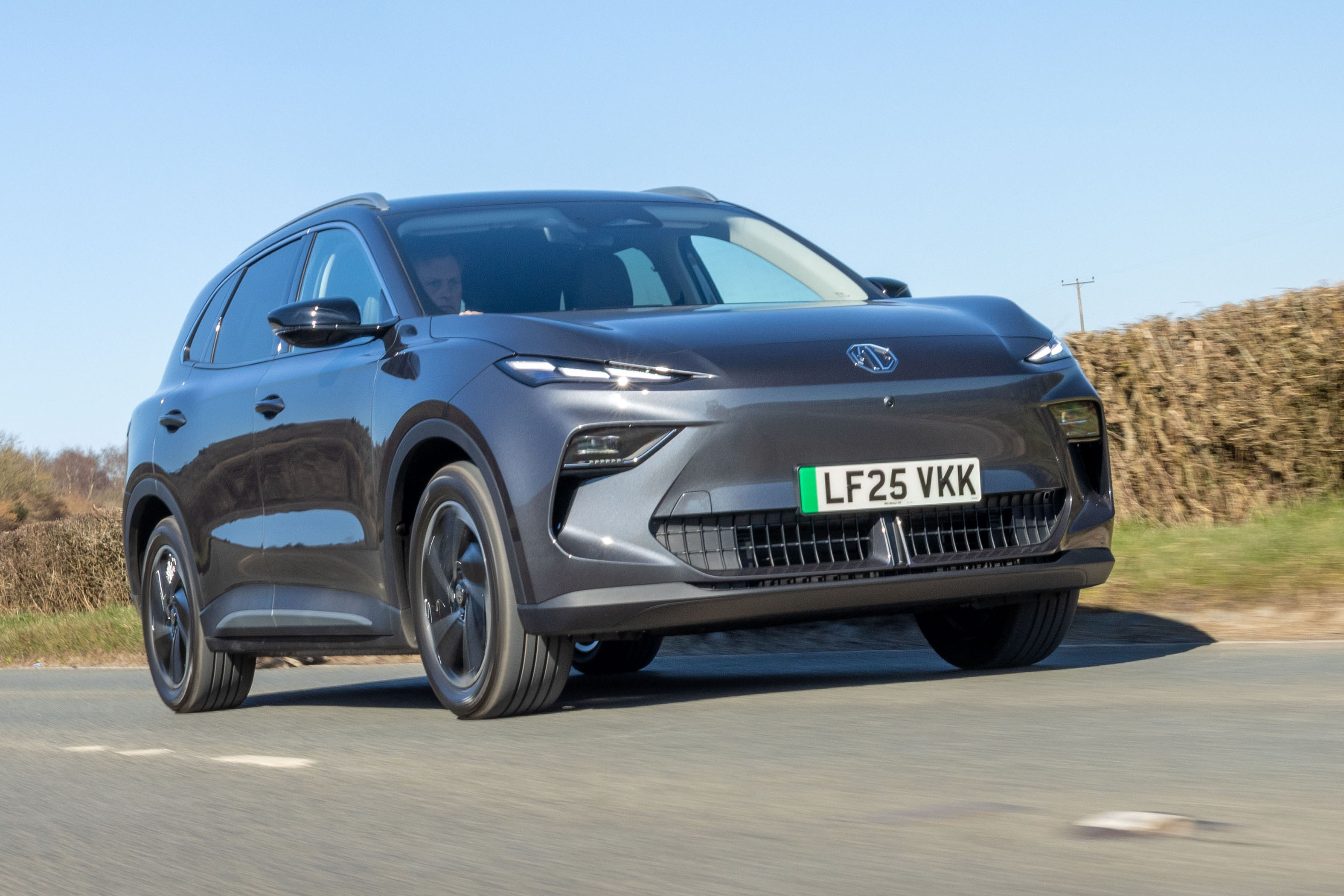
Vauxhall Frontera Electric Review

Written By Matt Robinson
- 2025
- Electric SUV
- Electric
What we love
Excellent passenger and boot space
Strong value for a family EV
Simple, easy-going driving experience
Things to consider
Performance is leisurely
Cabin materials feel cheap in places
No heat pump on current cars
The DRIVE take on the Vauxhall Frontera, is it the right car for you?
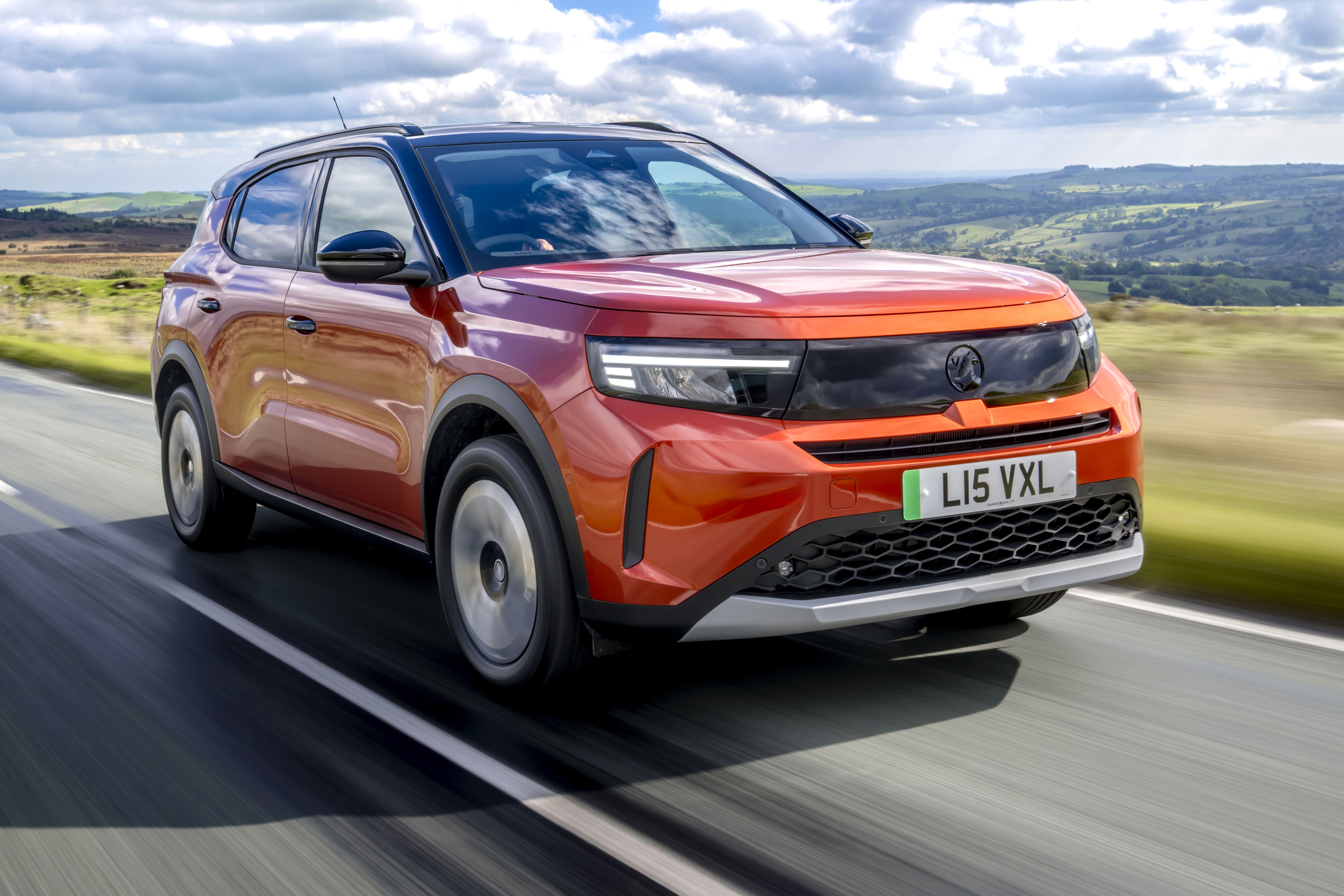
Competent across many areas that family SUV buyers demand, the Vauxhall Frontera Electric’s ace is its excellent value for money, proving to be even less costly than the combustion-engined versions.
The Vauxhall Frontera in more detail
One of the reasons many people with no experience of EVs cite for sticking with a combustion-engined alternative is their comparatively high price. While that price differential has been reducing year-on-year, for some it’s still too great. Aided and abetted by the government’s Electric Car Grant (ECG), that’s changing, with some now proving cheaper than petrol-powered equivalents. Find out if one such model is worthy of your attention with our full Vauxhall Frontera Electric review.
Yes, you did read that correctly — the Vauxhall Frontera Electric is a family-sized SUV that costs less than equivalent Vauxhall Frontera models propelled by a traditional engine, providing that you compare the least powerful mild hybrid versions with Frontera Electrics fitted with the smallest battery.
In fairness to its maker, orders for the Vauxhall Frontera Electric opened in January 2025 with price parity between those alternative drive systems but the Electric Car Grant’s introduction in summer — before customer deliveries began, ensured that the entry-level version dipped below £22,500, which isn’t much more than you would be charged for the cheapest Volkswagen Polo.
Yet the Frontera Electric, which resurrects a Vauxhall model name last used in the UK back in 2005, is much larger than a small hatchback. To help you get your bearings, compared with the omnipresent Nissan Qashqai, the Vauxhall is both 40mm shorter and narrower, so still a substantially proportioned SUV.
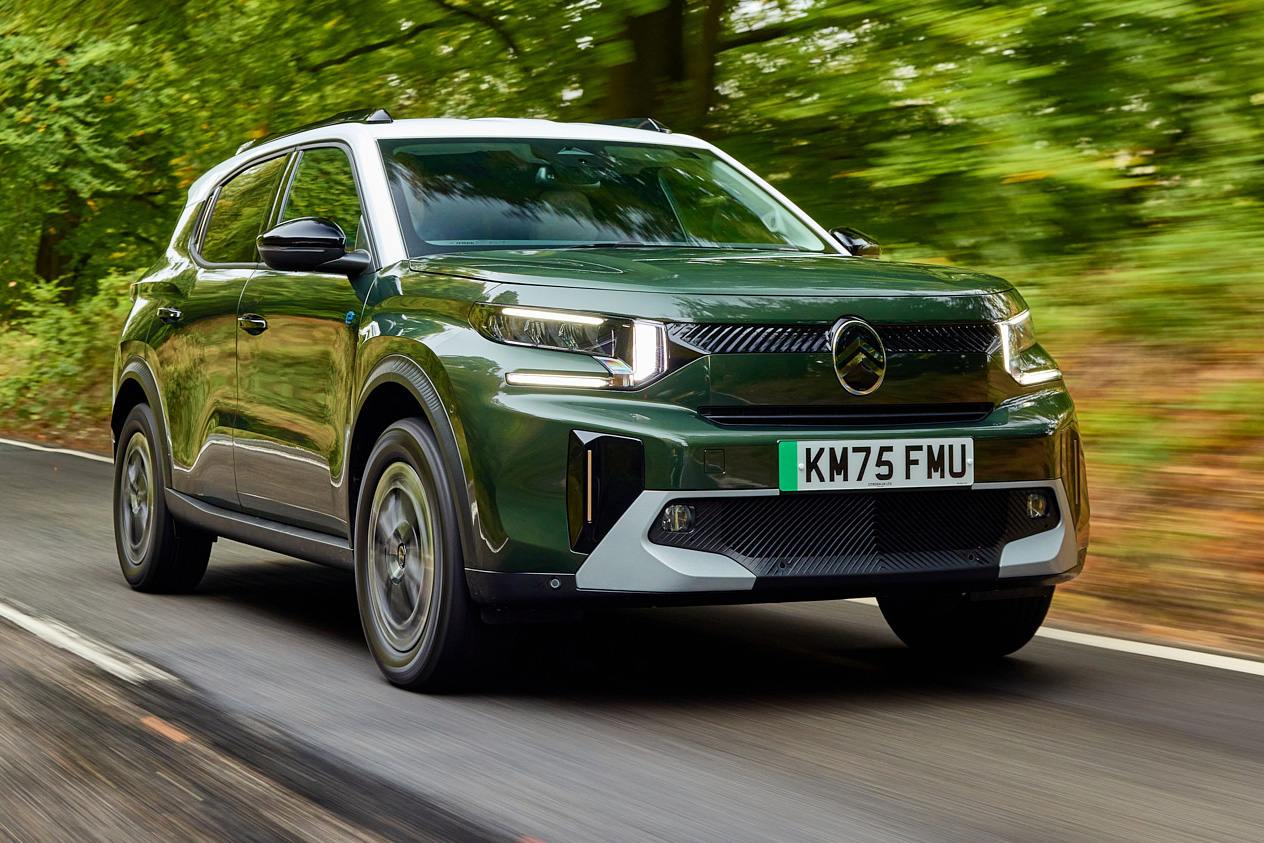
Beneath the Vauxhall Frontera Electric’s bodywork much is shared with the Citroen e-C3 Aircross, both brands being part of the enormous Stellantis manufacturing empire. That’s not unusual, although the fact that the two also have some common bodywork, most notably the rear wings, is a surprise. Whether most buyers notice — or even care — is indicative of why this cost saving measure received the go-ahead.
Once inside the similarities are less immediately obvious, as the Vauxhall Frontera Electric’s dashboard is straighter-edged and more soberly styled than the Citroen’s. Yet once you prod and poke around you will find plenty of switches and components such as the multimedia touchscreen which are common to both.
Four tall adults can easily set very comfortably inside the Vauxhall, with a fifth in the centre of the rear seat feeling a little pinched, but manageable for shorter journeys. Boot space at the back is generous at 460 litres with the rear seats in place, although unlike some EVs there’s no under-bonnet ‘frunk’ to provide additional carrying capacity.
Two battery sizes are available for the Vauxhall Frontera Electric, although there’s just the sole 113PS motor used with both versions delivering just about adequate performance for a car of this type — this is not an EV that accelerates in such a way that keeps chiropractors in business remedying whiplash injuries.
Both battery packs are each available in the trio of trim levels that are familiar from many of Vauxhall’s other models, starting with Design, progressing through the sweet spot of the mid-range GS and topping-out with the Frontera Electric Ultimate. All versions benefit from standardised LED headlights, a reversing camera, air-con, Android Auto and Apple CarPlay connectivity plus a wireless smartphone charging pad.
What's the best Vauxhall Frontera trim and battery option?
The Extended Range Design is our pick. Its 54kWh battery increases official range from around 190 to 253 miles, making it much better suited to longer journeys and colder weather.
Design is also well equipped, with 17-inch alloy wheels, twin 10-inch displays, navigation, wireless Apple CarPlay and Android Auto, automatic air conditioning, wireless phone charging and a reversing camera.
GS adds Vauxhall’s supportive Intelli-Seats, front parking sensors, blind-spot monitoring and privacy glass, while Ultimate brings heated front seats, a heated steering wheel and windscreen, roof rails and LED fog lights.
For most buyers, Extended Range Design offers the best balance of range, equipment and price. GS is worth considering if comfort and parking assistance matter more.
What’s the price of the Vauxhall Frontera?
The Vauxhall Frontera Electric starts at around £24,795 for a 44kWh Design, rising to roughly £31,495 for an Extended Range Ultimate. The larger 54kWh battery adds about £3,500.
Eligible versions also qualify for the £1,500 Electric Car Grant, so advertised prices can be lower than list. Even before offers, the Frontera remains competitively priced for an electric SUV of this size.
The best value is lower down the range. Higher-spec Extended Range models begin to overlap with quicker, more polished rivals.
Alternatives to the Vauxhall Frontera
The Citroen e-C3 Aircross is the closest rival, sharing much of the Vauxhall’s engineering and the same 460-litre boot. It rides more softly and has a brighter cabin.
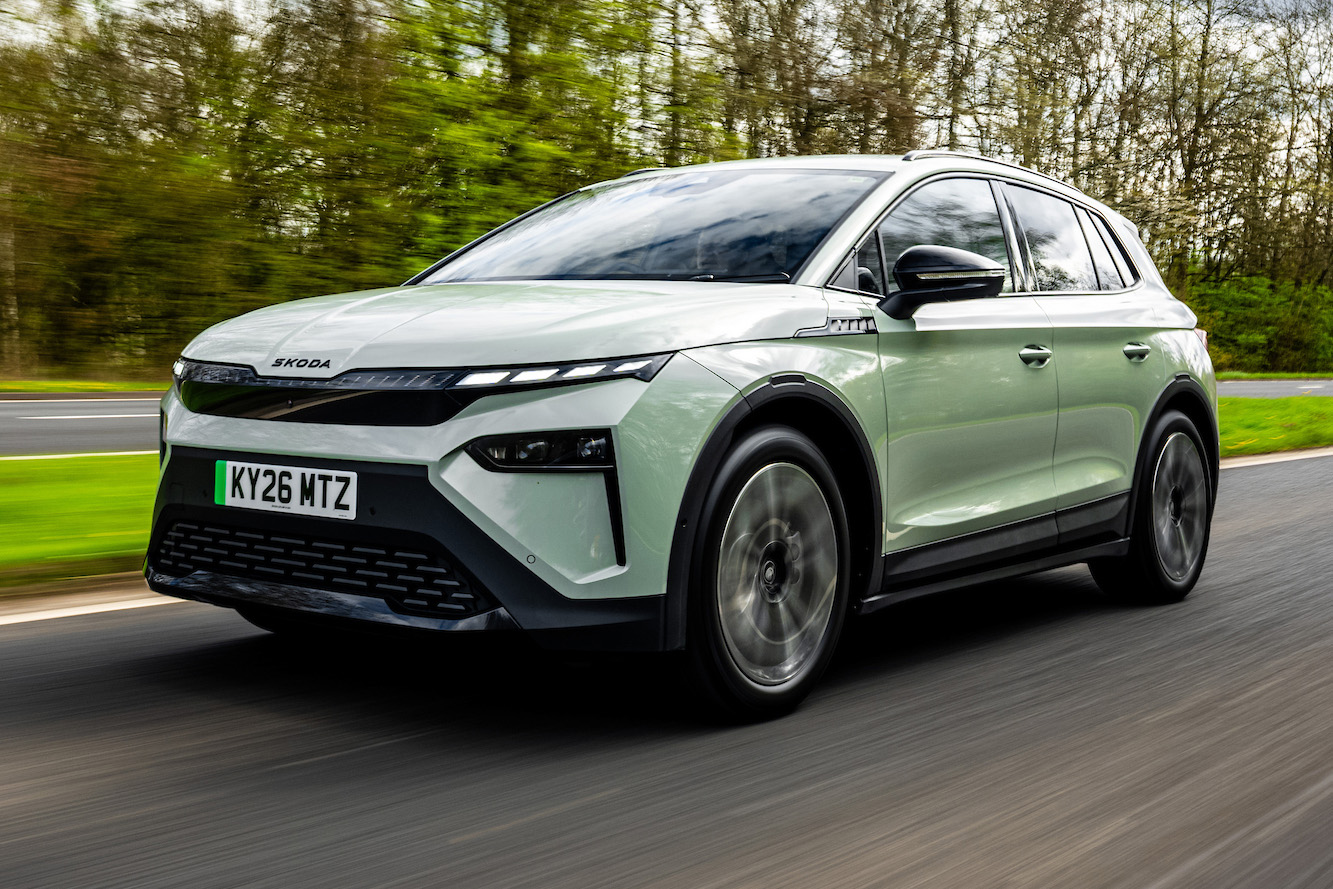
The Skoda Elroq costs more but feels considerably more polished, with longer-range versions and a slightly larger 470-litre boot.
The MG S5 EV is quicker, more sophisticated and offers close to 300 miles of range in Long Range form, while the Renault 4 E-Tech is smaller but more engaging to drive. The BYD Atto 2 is another well-equipped alternative.
For outright space and value, though, the Frontera remains one of the strongest choices.
What's the interior like in the Vauxhall Frontera?
There’s a generous amount of passenger and luggage space inside the Vauxhall Frontera Electric although the finish feels built to a price and lacks much in the way of visual pizzazz.
Vauxhall Frontera boot space and practicality
The Vauxhall Frontera Electric makes good use of its relatively compact footprint. There is plenty of space up front, with generous headroom and a wide range of adjustment for both the seat and steering wheel. Visibility is good, too, although the rear camera could be sharper.
GS and Ultimate models get Vauxhall’s supportive Intelli-Seats. They are firmer than the softer seats in the Citroen e-C3 Aircross, but proved comfortable over longer journeys.
Rear space is impressive. Two six-foot adults can sit comfortably behind similarly tall people in the front, while the wide-opening rear doors make fitting child seats straightforward. The middle seat is narrower, though, so carrying three adults in the back is best kept to shorter trips.
Every Frontera Electric is a five-seater. The seven-seat option available on combustion-engined versions cannot be fitted to the EV because of the battery packaging.
Boot capacity is 460 litres with the rear seats in place, matching the Citroen e-C3 Aircross and putting it close to rivals such as the MG S5 EV. Fold the 60:40 split rear seats and capacity rises to 1,600 litres. The standard Flex floor creates a flatter load area, while removing it unlocks the maximum capacity.
There is no front boot, but charging cables can be stored beneath the load floor. Cabin storage is also well judged, with decent door bins, a compartment beneath the centre armrest and useful dashboard shelves. GS and Ultimate add phone pockets to the front seatbacks.
The main irritation is the small glovebox on right-hand-drive cars, where the fusebox takes up much of the available space. More positively, Vauxhall retains physical climate controls below the touchscreen, making them much easier to use on the move.
Vauxhall Frontera dimensions
The Vauxhall Frontera Electric is 4,385mm long, 1,795mm wide & 1,655mm high, with a 2,670mm wheelbase. That makes it slightly shorter than a Nissan Qashqai and comfortably more compact than many traditional family SUVs.
Its boxy proportions and long wheelbase help free up an impressive amount of passenger and luggage room without making the car difficult to manage in town.
Tech and infotainment in the Vauxhall Frontera
Two 10.0-inch displays sit side by side on the upper plane of the Vauxhall Frontera Electric’s dashboard, both with acceptably clear graphics without setting new standards for visual effects and sharpness.
Immediately ahead of the driver is display screen that provides key data such as the current speed, the cruise control set speed and the level of charge held in the battery. Considering the size of the screen, there’s a lot of empty space within it, lending it an air of looking short of love — larger graphics that fill more of the available space, greater configurability and even a range of designs would help here.
That layout is mimicked on the multimedia touchscreen, which is a neat touch, but its responsiveness didn’t always prove to be immediate or accurate to the request of a single finger dab. Everything accessible within menus is logically ordered, though.
As is the norm these days, most people will simply take advantage of the standard-fit Android Auto and Apple CarPlay wireless connectivity and use their phone apps for navigation — Google Maps makes the Vauxhall integral navigation system look outdated.
We noticed on each version we drove that CarPlay didn’t consistently display cleanly, with various elements becoming broken-up and displayed in a low resolution at seemingly random points in a journey.
One especially thoughtful touch is the thin strip of a gently abrasive material along the plinth just below the touchscreen, perfect for resting supporting digits upon while operating the system with reduced risk of them slipping off the silvery plastic finish.
Six speakers are standard on all Vauxhall Frontera Electric models and do a decent sound reproduction job, if not exactly of a level that will have audiophiles begging you for a lift.
Materials available on the Vauxhall Frontera
Although the Vauxhall Frontera Electric’s dual-screen dashboard has a similar look to other models from the brand’s interior layout, the quality of the plastics used does feel on the cheaper side.
That’s somewhat inevitable given the low starting prices but cut-price doesn’t have to mean cheap-feeling as many of the more vibrant touches in its Citroen e-C3 Aircross cousin confirm.
Most of the plastics are hard to the touch, the silver-painted elements not remotely performing a convincing impression of metal surfaces and, together with other shiny surfaces, can be the source of reflections from direct sunlight.
While there’s no denying that it does feel built to a price, the Vauxhall Frontera Electric certainly felt well-assembled with no early signs of creaks or rattles developing in the early-build examples we tested. They would be obvious, too, given how much sound is transmitted into the car from its suspension and tyres as you drive along — again, more absorbent sound-deadening materials don’t come cheap.
It’s also worth noting that all of the physical controls work with a reassuring solidity even if their finish isn’t a tactile delight.
What's the Vauxhall Frontera like to drive?
There are no particularly weak points with regards to how the Vauxhall Frontera Electric drives, but neither is it impressive in any key area.
Vauxhall Frontera range and performance
It’s the 44kWh battery pack which gives the Vauxhall Frontera Electric its especially attractive starting price but it’s important to note that the official driving ranges for this choice are modest with a best of 189 miles. This could mean that during the wintery months when battery energy storage is less dense, you could be looking at a realistic range of below 150 miles.
Model-for-model it’s a £3500 jump to the larger 54kWh alternative with the peace of mind provided by an official range of up to 253 miles. Those aforementioned cold months are likely to still yield a real-world range above the 200-mile mark.
For reference, the same set-ups in the Citroen e-C3 Aircross deliver maximum official driving ranges of 188 miles for the smaller Standard Range battery and 249 miles for the for the larger Extended Range option.
Although there are two battery pack sizes available for the Vauxhall Frontera Electric they share the same single electric motor. All versions are front-wheel drive only and employ a single-speed transmission which is essentially used as you would a conventional automatic.
Producing 113PS and a maximum torque output of 124.5Nm, the Vauxhall’s no ball of fire when it comes to performance, with just about sufficient pace for it not to feel too slow.
Due to being 21kg lighter, the 44kWh version dispatches the 0-62mph acceleration benchmark in 12.8 seconds, the 54kWh alternative stretching it out to 13.0 seconds. Both models have an electronically capped top speed of 88mph.
Acceleration away from a standing start is smooth and immediate, just not remotely as swift as many other EVs prove to be.
It’s adequate for providing enough confidence to dart into a traffic gap on a roundabout but overtaking other traffic on a single-carriageway road will have your foot pressing on the accelerator harder in the forlorn hope of unlocking even more pace.
Performance data
| Model | Engine/battery size | Power | 0-62mph | Range/MPG |
|---|---|---|---|---|
Standard Range | 44kWh | 113PS | 12.8 seconds | Up to 190 miles |
Extended Range | 54kWh | 113PS | 13.0 seconds | Up to 253 miles |
Vauxhall Frontera driving and refinement
If you’ve had experience of driving older versions of its namesake and still shudder at the memory, then fear not — today’s Vauxhall Frontera Electric is competent in terms of how it behaves on the road, but no more than that.
For the most part that’s absolutely fine because the majority of family SUV buyers simply want a vehicle that provides unfussy transportation in relative comfort. But it provides little more than that, not excelling in any one area and certainly devoid of any characteristics sought by those who seek driving enjoyment.
Although comfy, the Vauxhall Frontera Electric’s suspension has been engineered so that its occupants are never unaware of changes in road surfaces and the variety of lumps and bumps they typically bring to the party. It’s not harsh as the damping rounds-off the sharper edges but you’re more aware of what’s going on beneath the car than you are in the equivalent Citroen e-C3 Aircross with its trick extra cushioning.
That relative firmness doesn’t translate to any kind of sporty sensation elsewhere in the Vauxhall’s driving experience, though, with the steering notably devoid of any meaningful degree of communication through the wheel to the driver’s hands.
Twirling the wheel left and right reveals its lightness, which is fine around town but when driving at speed some additional weighting wouldn’t go amiss. As the Vauxhall Frontera Electric has far more traction than its power can undo, it will neatly arc around bends exactly where you expected it to, only displaying a tendency to push wide when you attempt to carry an ambitious degree of momentum through corners.
There’s not a significant degree of body lean as you change direction through sweeping bends and that neatness is reflected by controlled movements under acceleration and harder braking. The brakes themselves feel reassuringly easy to gauge, even when the Frontera’s using its energy regenerative system — it all feels natural and ‘normal’.
Regardless of speed, the Frontera Electric’s front-mounted motor is hushed, with its whirr gaining volume as the speed increases. Far more intrusive are the noises from underneath the car as the suspension’s worked and the tyres deal with the changes in road surface.
How safe is the Vauxhall Frontera?
Those crash-testing gurus at Euro NCAP have yet to get their hands on the Vauxhall Frontera Electric — or its Citroen e-C3 Aircross cousin — so at present there’s no star rating reference point for it.
It does have a generous level of standardised safety equipment though, including automatic emergency braking, lane-keeping assistance, hill-start assist and a driver attention monitor.
Running costs: What it's like to live with a Vauxhall Frontera
The Frontera Electric should be inexpensive to run if you can charge at home. Insurance groups are low for an EV, the battery carries an eight-year warranty and none of the range comes close to the Expensive Car Supplement threshold.
Vauxhall Frontera charging times and costs
If you can, it’s preferable — and far cheaper — to recharge electric vehicles at home, especially with a range of dedicated tariffs available to choose between. Using your domestic wallbox at an AC energy flow rate of up to 7.4kW, the 44kWh battery requires 4 hours 10 minutes to complete a 20-80% recharge, with the 54kWh version needing 5 hours 5 minutes to do the same.
For times when you need to use rapid DC charging at a public facility, the Vauxhall Frontera Electric’s on-board charger is limited to 100kW, a modest rate by 2025’s standards. Using such a hook-up, the 44kWh battery will increase from a 20-80% charge in 26 minutes, the 54kWh alternative taking two minutes more.
Vauxhall Frontera warranty and servicing
Vauxhall covers the Frontera Electric for three years or 60,000 miles, with unlimited mileage in the first year. That is fairly standard, although Kia, MG and Hyundai offer longer cover.
The battery is protected for eight years or 100,000 miles, with at least 70% of its original capacity guaranteed during that period.
The first service is due after one year or 8,000 miles, then every two years or 16,000 miles. Three years of roadside assistance is included, with further cover available after authorised servicing.
Vauxhall Frontera insurance groups
The Frontera Electric sits in insurance groups 14 to 16, which is low for an electric family SUV.
Design Extended Range is group 14, while most other versions fall into groups 15 or 16. That should help keep premiums competitive, although your own quote will depend on factors such as age, postcode and driving history.
How much does it cost to tax a Vauxhall Frontera?
The Frontera Electric costs £200 a year to tax at the standard VED rate.
There is no Expensive Car Supplement because every version sits comfortably below the £50,000 threshold for zero-emission cars.
Company car drivers also benefit from the 4% Benefit in Kind rate for 2026/27, making the electric Frontera much more tax efficient than the Hybrid.
What trims are available with the Vauxhall Frontera?
The Frontera Electric comes in Design, GS and Ultimate, with both battery sizes available across the range.
Design is well equipped, with 17-inch alloy wheels, LED headlights, automatic air conditioning, twin 10-inch displays, navigation, wireless Apple CarPlay and Android Auto, wireless phone charging, a reversing camera and rear parking sensors.
GS adds diamond-cut 17-inch alloys, a contrast roof, privacy glass and Vauxhall’s supportive Intelli-Seats, along with front parking sensors, blind-spot monitoring and electrically folding heated mirrors.
Ultimate brings the strongest comfort specification, with heated front seats, a heated steering wheel and windscreen, roof rails, LED fog lights and keyless entry.
Design is the value choice, especially with the Extended Range battery. GS is the sweet spot if you value the better seats and extra driver assistance, while Ultimate mainly makes sense for its winter comfort kit.
Ask the Drive experts: common questions
Is the Vauxhall Frontera Electric a seven-seater?
Is the Vauxhall Frontera Electric the same as the Citroen e-C3 Aircross?
How big is the Vauxhall Frontera Electric boot?
Get our latest advice, news and offers
Keep me updated by email with the latest advice, news and offers from Drive.