Fiat 500 Electric Review

Written By David Ross
- 2021
- Hatchback
- Electric
What we love
Stylish and distinctive design
Much improved interior over the old petrol 500
Easy and relaxing to drive in town
Things to consider
Rear seats are still cramped
Entry-level versions have modest range
Noisy at higher speeds
The DRIVE take on the Fiat 500, is it the right car for you?
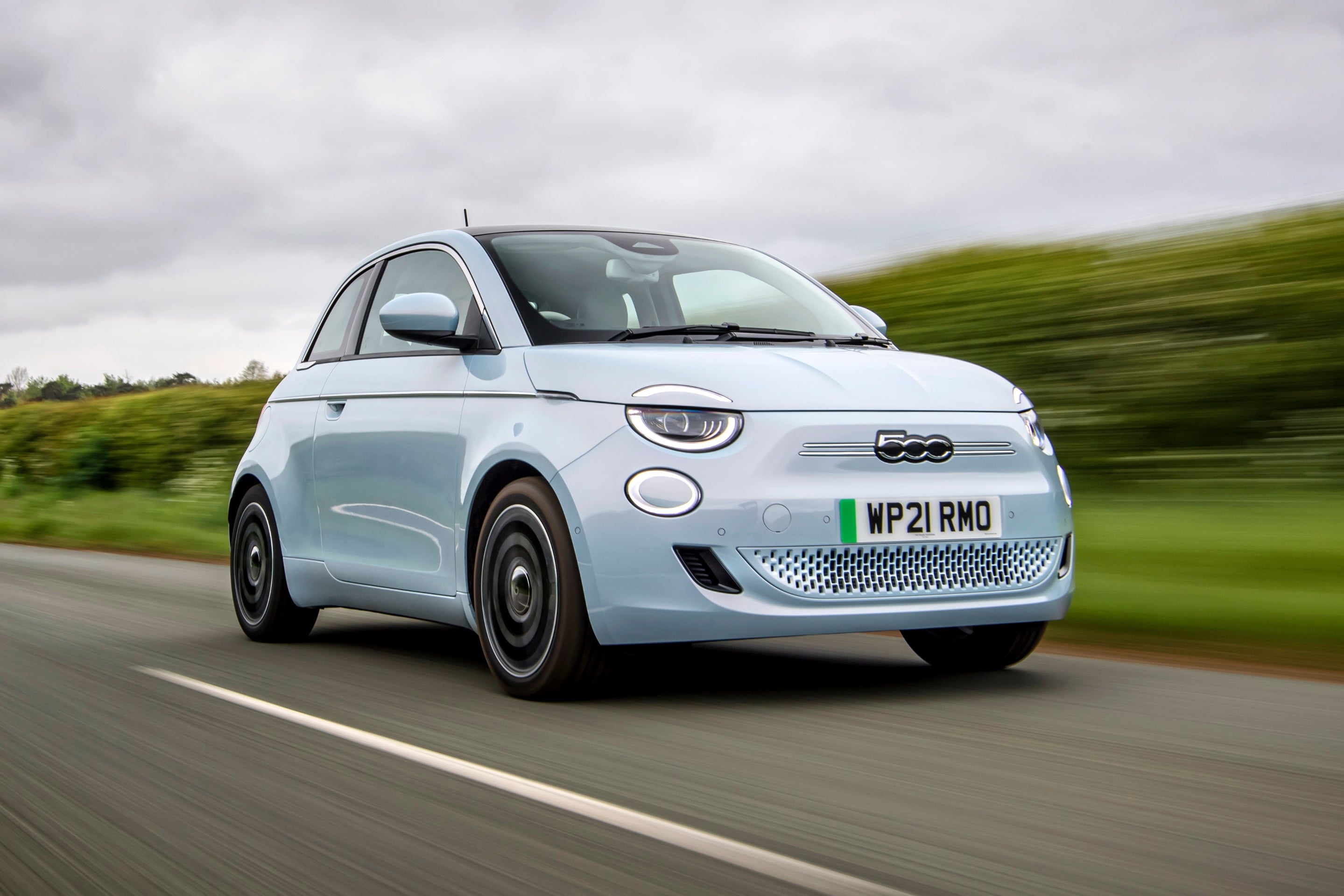
The Fiat 500e makes most sense if you want an electric city car with style and character rather than maximum practicality. It is one of the few small EVs that still feels special in the way it looks, the way it sits on the road and the way it turns a dull urban run into something a bit more interesting.
That appeal is not just skin-deep either. The 500e is a much more convincing car than the old petrol 500 in several key areas, with a far better cabin, smoother performance and a more modern feel overall. It still has obvious limitations, especially for rear-seat space and motorway use, but if your driving is mainly urban and suburban, the Fiat 500e remains one of the most appealing small EVs of its kind.
The Fiat 500 in more detail
The 500e always made sense in a way the old petrol 500 no longer really did. Small electric cars live or die on whether they suit the sort of journeys most people actually use them for, and the Fiat’s size, style and easy-going nature make it a natural fit for town and city driving.
More importantly, the switch to electric power gave Fiat the chance to reinvent the car rather than merely update it. The 500e is not just a petrol 500 with a battery stuffed underneath. It feels more mature, more modern and much better resolved inside, while still keeping the retro charm that made the original so easy to like.
That means the 500e is best understood not as a direct practical alternative to bigger EVs, but as a premium-feeling small electric runabout for people who value design and ease of use. It is at its strongest in town, where the light steering, compact footprint and instant electric response make it feel perfectly at home. Out on faster roads, the shine comes off more quickly, because refinement is only average and the car’s size starts to work against it.
There are two battery versions to think about. The smaller-battery 500e is the cheaper way in and makes a certain amount of sense as a second car, but the 42kWh version is the one that gives the car genuine breadth. That is the version that turns the Fiat from a neat urban EV into something that can more realistically handle broader day-to-day use.
What's the best Fiat 500 trim and battery option?
The Fiat 500e with the 42kWh battery in a mid-range trim is the version that makes the strongest case. The smaller-battery car is appealing on price and can work well as a second car, but its official 118-mile range leaves too little headroom once weather, traffic and real-world use start to chip away at it. The 42kWh version, with up to 199 miles WLTP, is much easier to recommend because it gives the Fiat 500e enough range to feel genuinely useful rather than narrowly specialised.
On trim, the answer depends slightly on how much you care about image. The entry-level car no longer feels as stripped out as the earliest Action did, because Fiat’s current base 500e now uses the 10.25-inch infotainment system as standard. That improves the starting point a lot. The plushest versions still look tempting, but they are expensive enough to weaken the 500e’s value case.
In simple terms, the larger battery is the one to have. After that, buy as much trim as your budget comfortably allows without straying into overpriced territory.
What’s the price of the Fiat 500?
The Fiat 500e starts at £20,995 OTR in the UK. At the other end of the range, the priciest cars reach £29,995 OTR.
That still leaves the Fiat in an interesting place. It is not cheap in absolute terms for a city car, but it does undercut some of the more style-led electric alternatives and looks much more justifiable now than it did when EV prices were peaking harder. The bigger issue is not the entry point so much as how quickly the price climbs once you start chasing the more desirable versions.
Used values also matter here. A two-year-old 500e can represent a far more convincing buy than a brand-new one if you want the style and charm without taking the full new-car hit.
Alternatives to the Fiat 500
The obvious rivals are the MINI Cooper Electric and Honda e, both of which share the 500e’s mix of style and compact dimensions. The MINI is sharper to drive, while the Honda leans even harder into design and tech, but the Fiat often makes the neatest overall urban case.
The Renault Zoe used to be a more practical alternative, while older EVs such as the Volkswagen e-Up, Skoda Citigo-e iV and SEAT Mii Electric still make sense as used buys if value matters more than showroom appeal. If you are willing to go a little bigger, cars such as the Vauxhall Corsa Electric and Peugeot E-208 also come into play.
What the Fiat has over all of them is charm. It looks expensive, feels fashionable and has a sense of personality that many small EVs still lack.
What's the interior like in the Fiat 500?
The 500e’s cabin is one of its biggest improvements over the old petrol 500. It feels more modern, more mature and more expensive, while still keeping enough Fiat character to stop it feeling generic.
Fiat 500 boot space and practicality
This is still not a practical car in the conventional sense. The rear seats are tight, access is awkward in the usual three-door-city-car way and the boot remains small at 185 litres. That is enough for a few shopping bags or a couple of cabin-sized cases, but not much more.
Even so, the 500e does improve on the old petrol 500 in the ways that matter most. It feels less cramped in the front, the higher seating position gives a better view out and the cabin layout is smarter and more usable. Storage is still only so-so, but there is enough everyday oddment space to stop it feeling silly.
As with the petrol 500 before it, the 500e only really works if you treat the rear seats as occasional-use chairs rather than vital family accommodation. It is fundamentally a car for one or two people first, everyone else second.
Fiat 500 dimensions
The Fiat 500e measures 3,632mm in length, 1,900mm wide including mirrors and 1,527mm high.
Those compact dimensions are a major part of the car’s appeal. They make it very easy to place in traffic and simple to park in spaces that would feel awkward in a larger EV.
Tech and infotainment in the Fiat 500
One of the 500e’s strongest upgrades over the old 500 is its infotainment. Fiat’s 10.25-inch touchscreen is now standard across the current range, and it gives the cabin a much more contemporary feel than the old petrol car ever managed. Navigation, Apple CarPlay and Android Auto are all included, and the system itself is easy enough to understand.
The digital instrument display and cleaner dashboard layout also help the Fiat feel more grown up inside. It still has some slightly odd details, but broadly speaking, this is a convincing modern small-car cabin rather than a nostalgia act hiding older underpinnings.
Materials available on the Fiat 500
The 500e’s interior quality is a big step on from the old 500. There are still some cheaper plastics if you go looking for them, but the overall finish is far more convincing, and the combination of gloss surfaces, metallic trim and cleaner design makes the cabin feel much more expensive than before.
That matters because it helps justify the Fiat’s price tag. This is not just a cute city car. It is trying to feel like a premium small EV, and in the cabin at least, it mostly succeeds.
What's the Fiat 500 like to drive?
The 500e is best understood as an urban specialist. Around town, it feels light, eager and extremely easy to drive. That suits the Fiat’s whole character perfectly.
Fiat 500 range and performance
There are two main powertrains. The smaller-battery version uses a 24kWh battery and a 95PS motor, while the larger-battery car uses 42kWh and 118PS. Official combined WLTP range is up to 118 miles for the smaller-battery version and up to 199 miles for the 42kWh car.
Both versions officially reach 0-62mph in 9.0 seconds, although what matters more is the way the Fiat responds at low speed. The more powerful version is particularly brisk away from rest and Fiat quotes 0-31mph in 3.1 seconds. That makes it feel punchy in exactly the sort of stop-start traffic it is built for.
The 42kWh car is the one that makes the strongest case because it gives the 500e enough range to feel broadly usable while keeping the car’s easy urban character intact.
Performance data
| Model | Engine/battery size | Power | 0-62mph | Range/MPG |
|---|---|---|---|---|
500e 24kWh | 24kWh | 95PS | 9.5 seconds | Up to 118 miles |
500e 42kWh | 42kWh | 118PS | 9.0 seconds | Up to 199 miles |
Fiat 500 driving and refinement
Around town, the 500e is very easy to enjoy. The steering is light, visibility is good enough and the small size makes it feel completely at home in narrow streets and tight parking spaces. The one-pedal-style regenerative modes also suit the stop-start nature of city driving once you get used to them.
The weaknesses show up as speeds rise. The steering remains light but does not offer much real connection, and above 50mph the Fiat gets noticeably noisier. Wind noise becomes more obvious, the motor can emit a high-pitched whine and the firmer ride does not do much to flatter rougher faster roads.
That does not make the 500e a bad car to drive. It just means its sweet spot is very clear. This is a city EV first and a broader all-rounder second.
How safe is the Fiat 500?
The Fiat 500e achieved a four-star Euro NCAP rating, which is decent rather than class-leading. Standard safety kit includes lane-keep assist, traffic sign recognition, tyre-pressure monitoring, autonomous emergency braking and airbags, while the top versions add the more advanced driver-assistance features.
That is a respectable enough showing for a small EV like this, even if some buyers may expect a stronger headline from a relatively modern design.
Running costs: What it's like to live with a Fiat 500
Running costs are one of the 500e’s main strengths. It is small, light and designed primarily for urban use, which keeps electricity use and everyday wear-and-tear in sensible territory. The larger-battery version is more expensive to buy, but it is also the one that feels least compromised in real life.
Used examples also make a strong case here. As with many small EVs, the early depreciation hit has done a lot of the heavy lifting for you if you buy nearly new rather than factory fresh.
Fiat 500 charging times and costs
The 42kWh version supports DC charging at up to 85kW. Fiat says that can add around 31 miles in five minutes and take the battery to 80% in around 35 minutes. The 24kWh version supports DC charging at up to 50kW and reaches 80% in around 30 minutes.
The smaller-battery car is cheaper to fill simply because there is less battery to fill, but the larger-battery car is the more convincing ownership proposition overall. Public charging costs will depend heavily on tariff, while home charging remains the way to make the 500e add up properly.
Fiat 500 warranty and servicing
The Fiat 500e comes with a 3-year warranty consisting of a 24-month manufacturer warranty with unlimited mileage, plus an additional 12-month retailer warranty limited to 60,000 miles. On top of that, Fiat covers the 500e battery for eight years or 100,000 miles, which is the headline reassurance most EV buyers will care about.
More broadly, the 500e should benefit from the usual EV simplicity, with fewer moving parts than a combustion-engined small car. That does not guarantee trouble-free motoring, but it does at least give the Fiat a cleaner ownership case than the old petrol 500.
Fiat 500 insurance groups
Insurance groups run from 14 for the more basic hatchbacks up to 21 for the pricier convertible versions. That makes the 500e more expensive to insure than the old petrol 500, but still manageable enough in the context of small EVs.
How much does it cost to tax a Fiat 500?
The 500e now pays the standard annual VED rate, currently £200.
The more relevant point is that the 500e sits well below the Expensive Car Supplement threshold for EVs, so there is no extra annual charge to worry about.
What trims are available with the Fiat 500?
The Fiat 500e range starts with the Action trim level that includes 15-inch steel wheels, rear parking sensors, smartphone cradle, automatic halogen headlights, LED daytime running lights, LED tail lights, air conditioning, keyless start, attention assist (drowsiness detection), lane keeping assist, traffic sign recognition and 4-way manually adjustable driver’s seat.
Icon adds 16-inch alloy wheels, 10.2-inch touchscreen infotainment with navigation and DAB audio, wireless CarPlay/Android Auto, eco-leather steering wheel with audio controls, traffic sign information, automatic windscreen wipers, cruise control, wearable key and 50/50 split folding rear seats.
La Prima is the highest spec for the 500e and adds 17-inch alloy wheels, LED headlights with auto high/low beam, wireless mobile charging, fixed panoramic sunroof, eco-leather seats, front armrest, blind spot warning, Fiat Co-Driver, rear view parking camera and six-way driver’s seat with height adjustment.
Ask the Drive experts: common questions
How much does the Fiat 500e cost?
What’s the maximum range of the Fiat 500e?
Is the Fiat 500e practical?
What is the best Fiat 500e version?
Get our latest advice, news and offers
Keep me updated by email with the latest advice, news and offers from Drive.
.jpg)