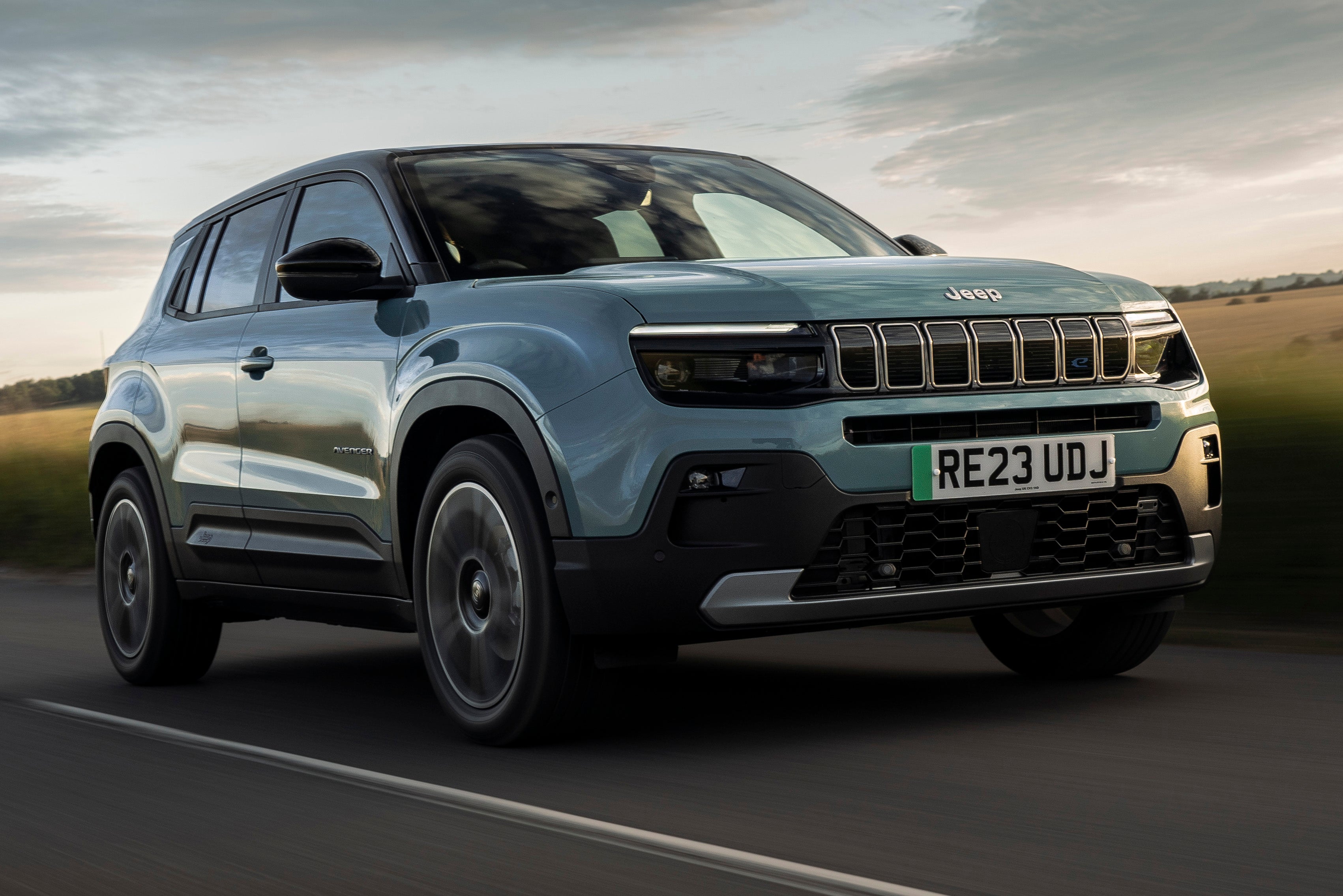
Jeep Avenger Electric Review

Written By Ivan Aistrop
- 2023
- Small SUV
- Electric
What we love
Funky styling and cheerful attitude
Really good to drive
Decent value for money
Things to consider
Limited rear-seat practicality
Some cheap-feeling cabin plastics
Only a three-star safety rating
The DRIVE take on the Jeep Avenger, is it the right car for you?
The Jeep Avenger Electric is one of the more likeable small electric SUVs on sale. Its chunky styling gives it plenty of character, while compact dimensions, light controls and tidy handling make it particularly well suited to urban driving.
The 2026 facelift hasn't transformed the car, but revised styling, better cabin materials and upgraded technology address some of its previous weaknesses. Its 248-mile maximum range and 100kW charging remain competitive rather than exceptional.
Downsides? Rear-seat space remains tight and the three-star Euro NCAP rating is disappointing, but the £1,500 Government Electric Car Grant strengthens its appeal from a value perspective. If you want a small EV with more personality than most, there's plenty to like.
The Jeep Avenger in more detail
It might seem odd that Jeep has given such an aggressive name to a car as small, charming and likeable as the Avenger. Just look at it – it’s too cute to avenge anything, bless it. But the name makes more sense when you consider the character Jeep is trying to give it. Despite its diminutive size, the Avenger sees itself as rugged, plucky and ready for adventure. Think Scrappy-Doo from the old Scooby-Doo cartoons shouting “Lemmie at ’em!” at much larger adversaries and you’re somewhere close.
The Avenger arrived in the UK in 2023 as Jeep’s first all-electric production car, and it received a mid-life update in 2026. The changes aren't dramatic, but there are redesigned bumpers and wheels, additional protection around vulnerable exterior components and an illuminated version of Jeep's seven-slot grille on higher specifications.
Inside, Jeep has addressed one of the original car's weaknesses by introducing softer material on the door panels and a padded section lower down on the dashboard. There's still plenty of hard plastic, but the cabin no longer feels quite as basic as it did before.
The basic electric hardware hasn't changed. There's a 54kWh battery, of which around 51kWh is usable, feeding a 156PS front-mounted electric motor. Official range reaches 248 miles, with Jeep currently quoting 241–248 miles depending on specification. Charging isn't class-leading, but it's perfectly respectable. The Avenger can accept up to 100kW from a DC rapid charger, allowing a 20–80% top-up in 27 minutes under ideal conditions.
What might surprise you most is how enjoyable the Avenger is to drive. It's quick enough around town, light and nimble through corners and rides comfortably enough for something this small.
Practicality is less impressive. Rear legroom is tight and the electric model's 355-litre boot isn't especially generous, although that's partly the price you pay for the Avenger's very compact dimensions.
The current electric range is also rather different from the pre-facelift line-up. It's now offered in 85th Anniversary, Summit and Skyview forms, with all three eligible for the Government Electric Car Grant.
Overall, the Avenger remains a charming little electric SUV that's easy to live with and just different enough to stand out. Check out our Jeep Avenger review if you're after the hybrid version.
What's the best Jeep Avenger trim and battery option?
For pre=-facelift buyers, the Jeep Avenger Electric Altitude was the one to go for, but with that now dropped from the lineup, the Summit makes the strongest case for most buyers.
The limited-run 85th Anniversary actually starts slightly cheaper, but its appeal is heavily based around styling. You get gold-finished 18-inch alloys, gold exterior detailing, tartan-pattern upholstery, Matrix LED headlights and an illuminated grille. It's distinctive, but some buyers may find the anniversary treatment a little too specific.
For another £500, Summit gives you a more conventional specification and useful extra driver-assistance equipment. It has 18-inch alloys, Matrix LED headlights, adaptive cruise control, lane centring, traffic-jam assistance, blind-spot monitoring, 360-degree parking sensors and a front camera providing a surround view.
Skyview adds genuine luxury touches including an opening panoramic sunroof, leather upholstery, electrically adjustable and massaging driver's seat, hands-free tailgate and navigation. It's appealing but considerably more expensive.
What’s the price of the Jeep Avenger?
The facelifted Jeep Avenger Electric currently starts at £33,599 for the 85th Anniversary version. Summit costs £34,099, while the range-topping Skyview is £36,299.
All three versions qualify for the UK Government's £1,500 Electric Car Grant, which effectively brings the prices down to £32,099 for 85th Anniversary, £32,599 for Summit and £34,799 for Skyview.
At today's prices, the Avenger sits competitively among small electric SUVs. Closely related alternatives such as the Peugeot E-2008 and the Vauxhall Mokka Electric occupy similar territory, while the Renault 4, the Ford Puma Gen-E and the MINI Aceman provide increasingly strong opposition.
Alternatives to the Jeep Avenger
The Skoda Epiq is another genuinely compact electric SUV, but offers considerably more boot space and starts at a lower price, making it particularly appealing if practicality and value matter more than the Jeep’s styling.
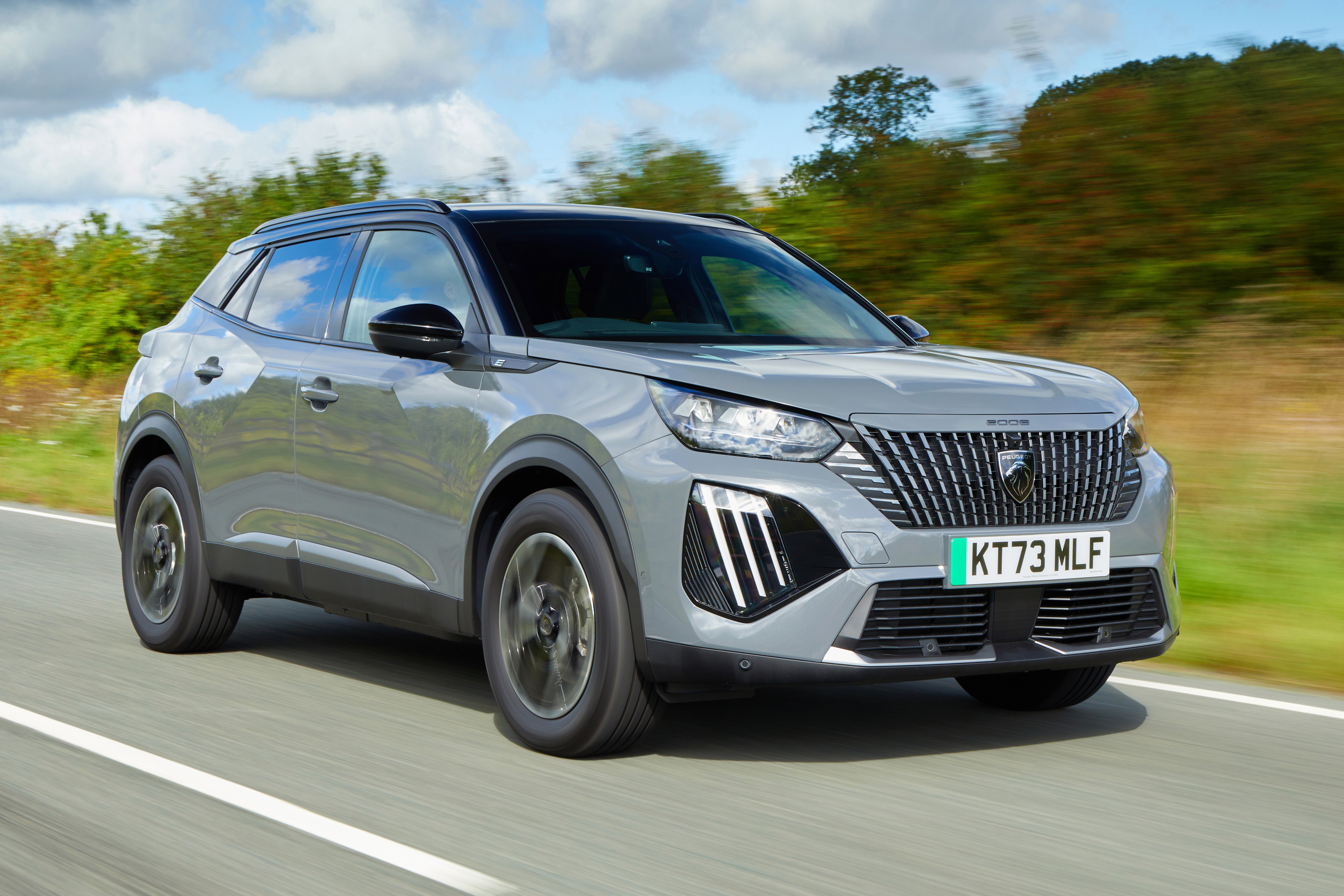
The Peugeot E-2008 shares much of the Avenger’s underlying electric hardware but is roomier and has a more dramatic cabin. Its unusual driving position won’t suit everyone, though. The Ford Puma Gen-E is another strong choice if practicality matters, with a particularly useful luggage area and impressive efficiency. The Renault 4 E-Tech matches the Jeep for character but gives you a roomier, more versatile cabin and a distinctive retro-inspired design.
The MINI Aceman feels more premium inside and has plenty of personality, although prices can rise quickly, while the Hyundai Kona Electric is larger than the Avenger, but offers much more passenger and luggage space as well as substantially greater range in long-range form.
The Avenger’s main advantage is its combination of compact dimensions, cheerful styling and genuinely distinctive character.
What's the interior like in the Jeep Avenger?
The Jeep Avenger Electric's cabin is cheerful, straightforward and easy to use. The 2026 facelift brings softer materials to the doors and dashboard, although plenty of harder plastics remain.
The 10.25-inch touchscreen supports wireless Apple CarPlay and Android Auto, while physical climate controls help usability. There's useful storage up front and the large windows make the cabin feel airy. The driving position is comfortable, although rear-seat space is tight for taller adults.
Jeep Avenger boot space and practicality
The Avenger Electric isn't the SUV to choose if maximum practicality is your priority. Its compact exterior dimensions are a big part of its appeal around town, but they inevitably restrict passenger and luggage space.
There's plenty of room in the front for taller adults and the upright driving position feels suitably SUV-like without putting you excessively high above the road. The large windows also help visibility. But rear accommodation is tighter. Headroom is reasonable, but legroom quickly becomes limited if the front occupants are tall. Two adults can fit, but longer journeys won't be particularly relaxing and the centre rear seat is best considered an occasional perch.
The electric Avenger's boot holds 355 litres with the rear seats up. Despite Jeep quoting up to 380 litres for the wider Avenger range following the facelift, the electric model remains at 355 litres because of its battery packaging. Fold the rear seats and maximum capacity rises to around 1,252 litres. The load area itself is a useful shape and there's an adjustable floor, so the available space is relatively easy to use.
A MINI Aceman has less outright boot capacity, while cars such as the Hyundai Kona Electric and the Ford Puma Gen-E provide substantially more. The Avenger therefore works well as an urban or small-family EV, but it isn't the strongest choice if you regularly carry adults in the back or large amounts of luggage.
Jeep Avenger dimensions
The Jeep Avenger Electric measures approximately 4,084mm long, 1,776mm wide and 1,528mm high, with a wheelbase of 2,562mm. Width rises to around 1,981mm with the mirrors extended.
It's noticeably shorter than cars such as the Hyundai Kona Electric and the Peugeot E-2008, which helps explain why it's so easy to manoeuvre around town. The downside is that you sacrifice some cabin and boot space for that compact footprint.
A turning circle of around 10.5 metres further helps its urban credentials, while the short overhangs also give the Avenger unusually useful approach and departure angles for a front-wheel-drive small crossover.
Tech and infotainment in the Jeep Avenger
Every current Avenger Electric gets a 10.25-inch Uconnect touchscreen with wireless Apple CarPlay and Android Auto. The screen sits high on the dashboard, where it's easy to see, and the system is reasonably straightforward to navigate. It isn't as slick or sophisticated as the Google-based infotainment fitted to some Renault and Volvo products, but the main menus are logical and responses are quick enough.
More importantly, Jeep hasn't moved every function into the screen. A row of physical switches remains beneath it for frequently used climate functions, which makes adjustments much easier while driving.
Current higher-spec cars also use a 10.25-inch configurable digital instrument display. Summit additionally includes wireless phone charging and a comprehensive suite of driver-assistance systems.
The 2026 facelift brings a new front camera capable of producing a surround-view image, while Matrix LED headlights are standard on current 85th Anniversary and Summit models. Skyview is the most technology-heavy version, adding built-in navigation, traffic-sign information, a hands-free tailgate and additional comfort features.
The overall approach works well because the Avenger mixes modern connectivity with enough conventional controls to avoid becoming frustrating.
Materials available on the Jeep Avenger
The original Avenger used a lot of hard, scratchy plastic, and there's still plenty of it in the facelifted car. However, the 2026 update adds softer door-panel material and a padded section on the lower dashboard, improving the cabin's perceived quality.
The design remains more cheerful than luxurious, with a broad horizontal dashboard panel helping add colour and visual interest. The 85th Anniversary gets distinctive cloth and vinyl seats with tartan-pattern inserts, gold stitching and anniversary branding. Summit takes a more conventional approach, while Skyview adds leather upholstery, together with an electrically adjustable driver's seat with lumbar adjustment and massage function.
It still doesn't have the richly finished cabin of the best premium small SUVs, but the facelift means the materials no longer undermine the otherwise appealing design quite as much.
What's the Jeep Avenger like to drive?
The Avenger Electric isn't especially fast, but it's light-footed and enjoyable to drive. Its compact size, light steering and immediate electric response make it particularly good around town. The suspension controls body movement well without making the ride too firm, while there's enough grip to feel secure on faster roads. The steering doesn't offer much feedback, though. All versions use the same 156PS motor, giving a 0–62mph time of 9.0 seconds.
Jeep Avenger range and performance
Every current Avenger Electric uses the same basic drivetrain. There's a 54kWh lithium-ion battery, with approximately 51kWh of usable capacity, driving a single electric motor on the front axle. Maximum output is 156PS and 260Nm.
The 0–62mph sprint takes 9.0 seconds with a 93mph maximum speed. The Avenger isn't intended to deliver the brutal acceleration associated with much more powerful EVs. Instead, its immediate electric response makes it feel lively around town, particularly when pulling into gaps or leaving junctions.
There are several selectable driving modes. Normal provides enough performance for everyday use, while Sport sharpens the response. Eco deliberately restrains performance to conserve energy.
Official combined range varies with specification between 241 and 248 miles, with the best-equipped versions typically sitting towards the lower end of that range. Those figures are competitive for a compact EV but no longer exceptional. Rivals with larger batteries can travel substantially further, although the Jeep compensates with its smaller size and relatively modest weight.
Performance data
| Model | Engine/battery size | Power | 0-62mph | Range/MPG |
|---|---|---|---|---|
Jeep Avenger Electric | 54kWh | 156PS | 9.0 seconds | Up to 248 miles |
Jeep Avenger driving and refinement
The Avenger is at its best in town, where its compact footprint, immediate electric response and light steering make it extremely easy to thread through narrow or congested streets. The relatively tight turning circle also helps with parking and U-turns, while the upright body gives you a good view of your surroundings.
Despite that city-friendly character, the suspension isn't excessively soft. Body control is good, helping the Avenger change direction cleanly without lots of lean, while the relatively low-mounted battery keeps its centre of gravity under control.
The steering becomes the limiting factor on faster roads. It's accurate and predictable, but very light, so there's little feedback to involve the driver. Grip is plentiful, though, and the Avenger always feels stable.
Ride comfort remains good overall. The car can become a little busy over particularly poor surfaces, especially on the 18-inch wheels fitted to the current electric range, but it generally deals with bumps well.
Motorway refinement is respectable for such a small EV. There's no engine noise, naturally, although wind and tyre noise become more noticeable as speeds rise.
Jeep also gives the front-wheel-drive Avenger more off-road pretence than most rivals. Selec-Terrain offers settings for different surfaces and hill-descent control is standard, while short overhangs and useful ground clearance make it more capable on rough tracks than its front-wheel-drive layout might suggest.
How safe is the Jeep Avenger?
Independent safety organisation Euro NCAP awarded the Jeep Avenger three stars in 2024. That's disappointing for a modern small SUV and remains one of the car's clearest weaknesses. It scored 79% for adult occupant protection, 70% for child protection, 59% for vulnerable road users and 53% for safety assistance.
Current cars include autonomous emergency braking, lane-keeping assistance and traffic-sign recognition, while higher trims add features such as adaptive cruise control, lane centring, blind-spot monitoring and more comprehensive parking assistance. The 2026 facelift also moves some of the front camera and assistance hardware to a better-protected position and introduces Matrix LED headlights on higher specifications.
Running costs: What it's like to live with a Jeep Avenger
The Avenger Electric should be relatively inexpensive to run. Its 51kWh usable battery means a full home charge costs less than filling many larger EVs.
Routine servicing is infrequent, at every two years or 16,000 miles, although Jeep's three-year/60,000-mile vehicle warranty is relatively unremarkable. The battery itself gets much stronger protection, with eight years or 100,000 miles of cover.
Jeep Avenger charging times and costs
The Avenger Electric supports DC rapid charging at up to 100kW. Jeep quotes 27 minutes for a 20% to 80% charge, or around 30 minutes from 10% to 80%, under ideal conditions.
AC charging reaches 11kW, allowing a full zero to 100% charge in around five hours 45 minutes from a suitable three-phase charger. A more typical 7.4kW domestic wallbox takes roughly eight hours 15 minutes.
The battery has around 51kWh of usable capacity. At the average capped electricity rate of 26.32p/kWh (late 2026), that equates to around £13.40 for 51kWh before charging losses, although an EV-specific overnight tariff could make home charging considerably cheaper.
Public rapid charging is normally much more expensive, so it's best viewed as a convenience for longer journeys rather than the cheapest way to run the car.% to
Jeep Avenger warranty and servicing
The Jeep Avenger Electric gets a three-year/60,000-mile vehicle warranty, which is fairly typical for a European manufacturer but less generous than the cover offered by brands such as Hyundai and Kia. The traction battery is covered separately for eight years or 100,000 miles. Jeep also provides protection against excessive battery-capacity degradation during that period, subject to its warranty conditions.
Routine servicing is required every two years or 16,000 miles, whichever comes first. Electric cars don't require oil changes, spark plugs or exhaust-system maintenance, so routine workshop requirements are generally lighter than on combustion-engined Avengers. That said, tyres, brakes, suspension components, air conditioning and the high-voltage electrical system still require regular checks.
Jeep Avenger insurance groups
Insurance classifications for the facelifted Avenger Electric sit at groups 25 to 26 (of 50). That's broadly mid-pack for a small electric SUV rather than especially cheap.
EV insurance can still be relatively expensive because battery and electrical-system repairs can increase accident costs, so it's worth checking a real quote rather than relying purely on the group number.
How much does it cost to tax a Jeep Avenger?
Electric cars now pay the standard VED rate from year two onwards, and the Jeep Avenger Electric is no exception. That means £200 a year from the second year of registration.
The good news is that even the most expensive Jeep Avenger Electric versions sit well below the more than £50,000 threshold now used for the Expensive Car Supplement on zero-emission cars, so there's no extra charge to worry about there.
What trims are available with the Jeep Avenger?
The facelifted Jeep Avenger Electric is offered in 85th Anniversary, Summit and Skyview trims. The old Longitude and Altitude versions belong to the pre-facelift line-up.
85th Anniversary opens the electric range and is deliberately distinctive, with 18-inch diamond-cut alloy wheels featuring gold detailing, gold accents on the front bumper, an illuminated seven-slot grille, Matrix LED headlights and LED foglights. Inside, there are cloth and vinyl seats with tartan-pattern inserts, anniversary logos and additional gold detailing. A front camera providing a surround view is also standard.
Summit is the more conventional choice. It retains the 18-inch diamond-cut wheels, Matrix LED headlights, illuminated grille and foglights, but adds more useful driver-assistance technology. There's blind-spot monitoring, power-folding mirrors with puddle lights, 360-degree parking sensors, adaptive cruise control, lane centring, traffic-jam assistance and the surround-view camera. It's the trim I'd choose for most buyers.
Skyview sits at the top of the range. As its name suggests, its main addition is an electrically opening panoramic sunroof. It also gets leather upholstery, an electrically adjustable driver's seat with lumbar adjustment and massage function, a hands-free powered tailgate and built-in navigation.
Ask the Drive experts: common questions
How much does the Jeep Avenger Electric cost?
Is the Jeep Avenger Electric a good small EV?
What range does the Jeep Avenger Electric have?
Is the Jeep Avenger Electric practical?
Get our latest advice, news and offers
Keep me updated by email with the latest advice, news and offers from Drive.
.jpg)
.jpg)