Jeep Avenger Review

Written By Phill Tromans
- 2024
- SUV
- Petrol mild hybrid
What we love
Efficient and easy to drive around town
Distinctive styling gives it genuine character
Competitively priced beside full-hybrid rivals
Things to consider
Rear passenger space is limited
Interior plastics feel inexpensive
Disappointing three-star Euro NCAP rating
The DRIVE take on the Jeep Avenger, is it the right car for you?
The Jeep Avenger e-Hybrid is arguably the sweet spot in the small SUV’s range. Its 48V hybrid system can move the car on electric power for short periods, making it smoother and more economical in urban traffic than the manual petrol model. It also costs substantially less than the fully electric Avenger and never needs to be plugged in.
Compact dimensions make it easy to manoeuvre, while its chunky styling gives it more personality than many small crossovers. Rear space is tight, some cabin materials feel cheap and the three-star Euro NCAP result is disappointing, but the Avenger remains an appealing choice for buyers seeking an efficient and distinctive urban SUV.
The Jeep Avenger in more detail
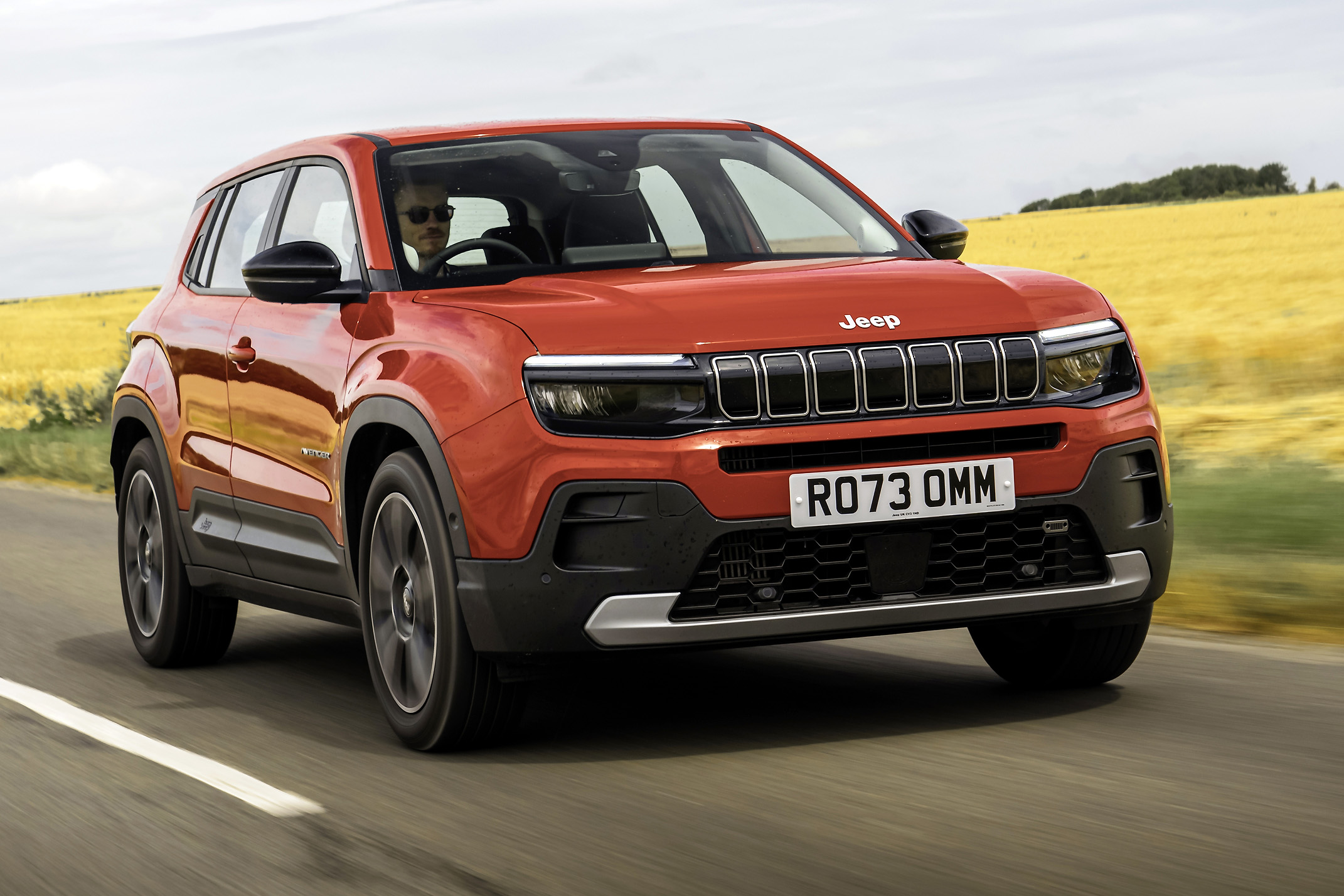
The Avenger is the smallest car that Jeep makes. The brand long famous for its big, go-anywhere machines has diversified in recent years, and while the Avenger retains some signature Jeep features (such as the famous seven-bar grille), it’s a long way from some of its rufty-tufty relatives, such as the mighty Wrangler. First introduced as the all-electric Jeep Avenger, it’s since spawned a petrol version and now this half-way house – a petrol-electric hybrid.
To get slightly technical, this is actually a mild-hybrid system, utilising a 48V electrical system and an electric motor integrated into the automatic transmission. But unlike most mild-hybrid systems, which only provide a boost to the petrol engine, this one lets you do small distances – just over half a mile – on pure electric power alone.
On paper, it offers some of the advantages of both the petrol-powered and electric Avengers. Price-wise, it’s not that much more than the petrol model – less than £2000 when new – but it represents a considerable saving over the electric version, starting at nearly £10,000 less as of early 2024. It also promises very decent fuel savings, with official fuel economy figures of up to 57.6mpg compared to up to 50.4mpg in the petrol model, thanks to its ability to run for short distances on electric power alone.
As it turns out, the paper promises translate very well into reality. We tested the Avenger e-Hybrid over a range a different roads (and even off-road), and found that the combination of its 1.2-litre petrol engine and its electric motor works almost seamlessly to claw back efficiency whenever possible, especially at lower speeds around town or in traffic. At the same time it’s got enough oomph to suit most situations.
Combine that efficiency with the same pluses that you get from other versions of the Avenger – stylish looks, a decent infotainment system and a solid driving experience – and you’ve got a really decent little car.
It’s not perfect, however. As one of the smallest compact SUVs on the market, it’s nippy and easy to park in tight spaces, but its dimensions limit its practicality – the boot is rather small and space in the back is tight too. It should be fine for kids, but adults will crave a bit of extra space. Some of the interior materials feel rather hard and cheap, too, but that’s forgivable for the price point and it doesn’t detract from a pleasant environment in which to sit.
All versions of the Jeep Avenger come recommended by us, but the hybrid model is the sweet spot.
What's the best Jeep Avenger trim and engine option?
The Jeep Avenger e-Hybrid Altitude is the best all-round version.
Longitude includes the essentials, but Altitude adds equipment that improves everyday use without reaching the Summit’s price.
Its specification includes larger digital instruments, adaptive cruise control, automatic climate control, an adjustable boot floor and smarter interior trim.
Those additions make the Avenger more pleasant on longer journeys and give the cabin a slightly more polished appearance.
Summit adds heated front seats, larger alloy wheels and further assistance equipment. It looks more expensive, but the 18-inch wheels may make the ride firmer and increase replacement tyre costs.
Longitude remains the sensible value choice. Altitude provides the strongest balance of price, equipment and comfort.
What’s the price of the Jeep Avenger?
The Jeep Avenger e-Hybrid starts at approximately £28,410 in Longitude trim.
Altitude remains below £31,000, while the range-topping Summit costs around £31,895.
That places the e-Hybrid above the entry-level manual petrol Avenger but comfortably below the fully electric version.
It is also competitive with small full-hybrid SUVs such as the Toyota Yaris Cross and Renault Captur E-Tech, although those cars use different hybrid systems and may spend more time running electrically.
Used supply is still developing because the e-Hybrid joined the range in 2024. Nearly new examples may offer useful savings, but buyers should compare the transaction price with current new-car finance offers rather than relying on list prices alone.
Alternatives to the Jeep Avenger
The Toyota Yaris Cross Hybrid is more economical in many urban situations and has a well-established full-hybrid system. Its cabin is similarly functional rather than luxurious, while the Jeep has more distinctive styling.
The Renault Captur E-Tech is roomier and more versatile, with a sliding rear bench and a refined hybrid drivetrain. It lacks the Avenger’s compact dimensions and rugged character.
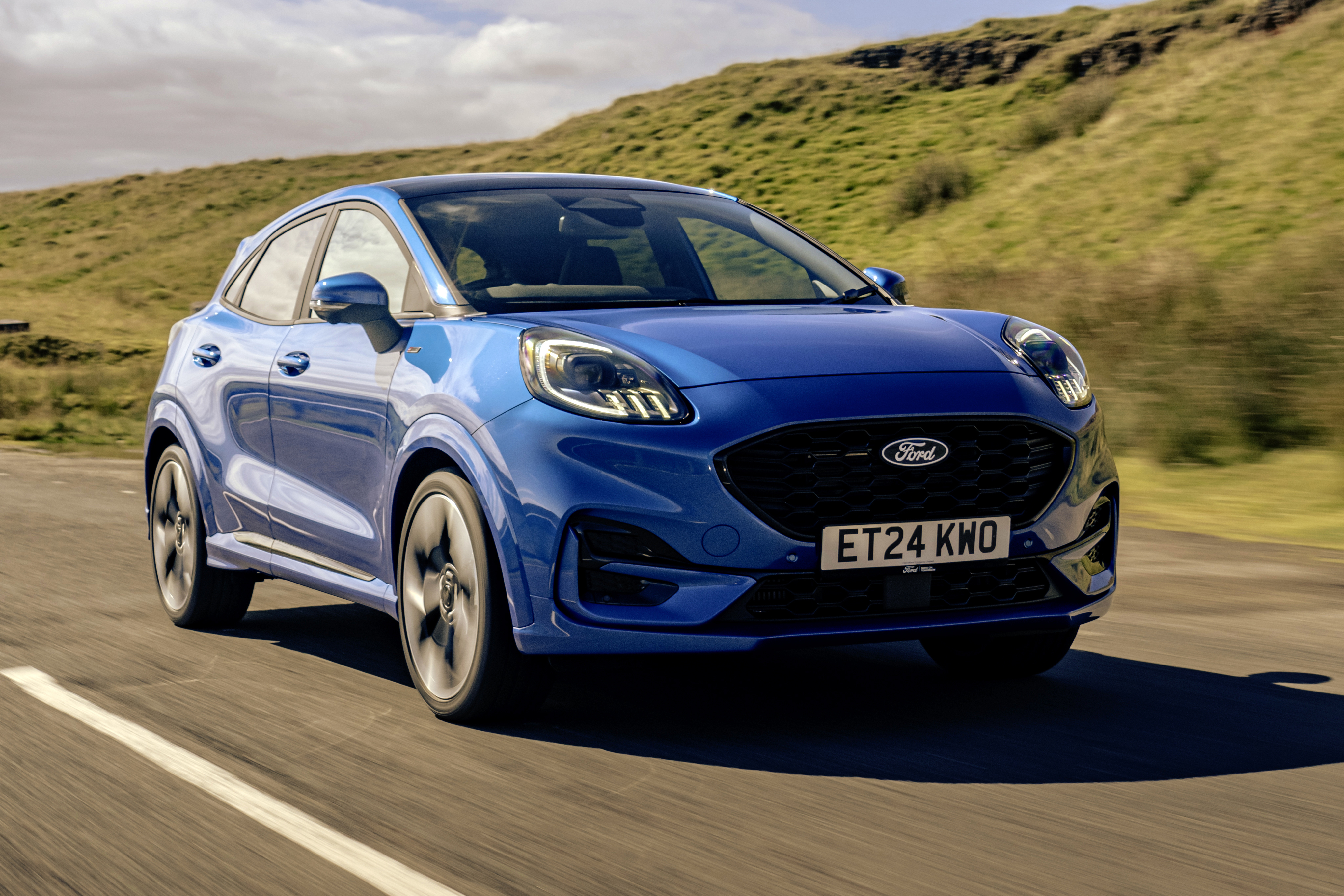
The Ford Puma is better to drive and has a more useful boot. Its mild-hybrid system cannot move the car independently on electric power.
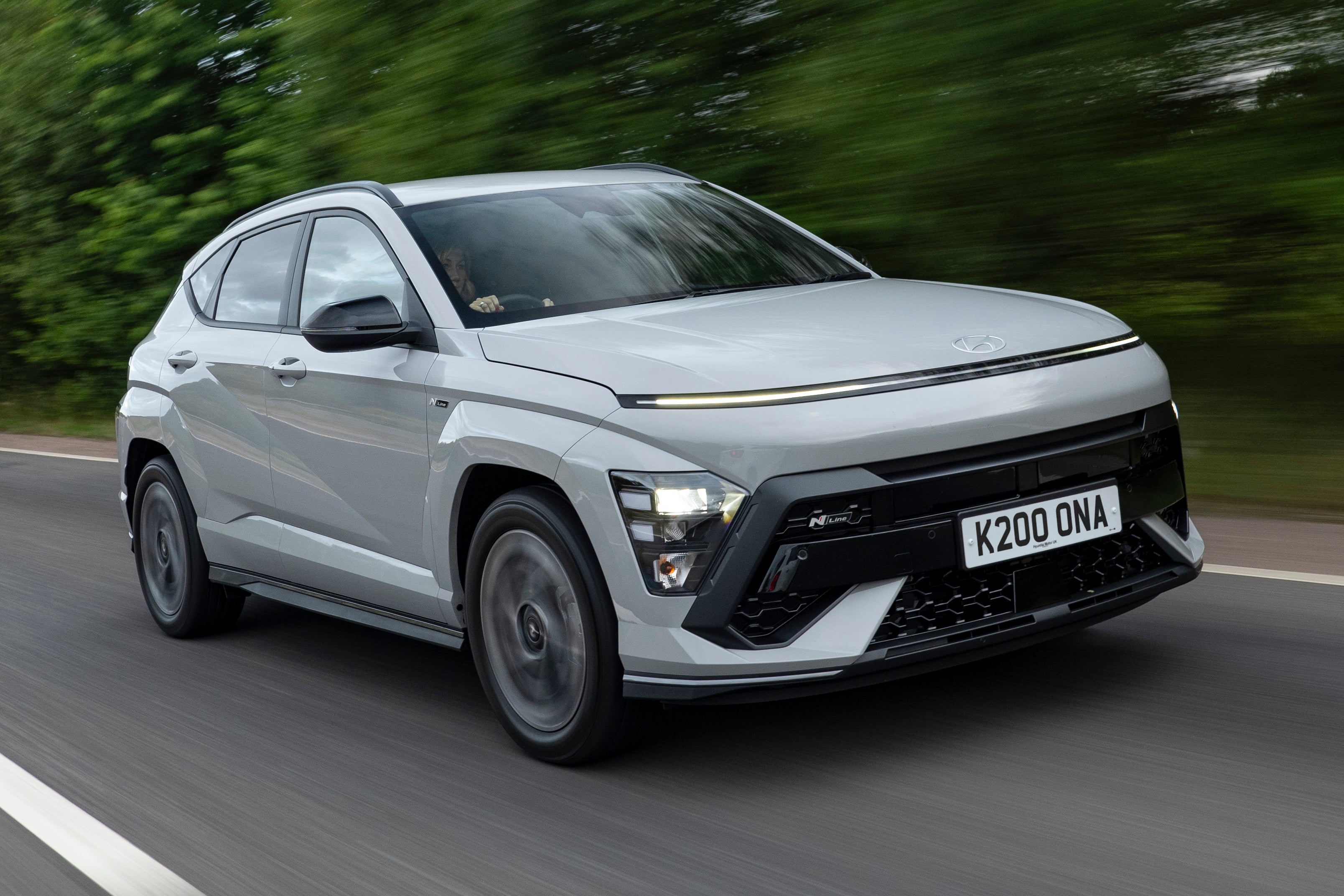
The Hyundai Kona Hybrid offers more passenger space, a longer warranty and an efficient full-hybrid engine. It is larger and generally more expensive.
What's the interior like in the Jeep Avenger?
The Avenger’s cabin is attractively designed and easy to understand, although its hard plastics and limited rear space reveal where costs have been controlled.
Jeep Avenger boot space and practicality
The Avenger makes good use of its compact footprint, but it is one of the smaller SUVs in its class and cannot provide the passenger space of a Hyundai Kona or Renault Captur.
Space is not the Avenger’s USP – its diminutive size will be great for those nipping around town, but not so good if you need to carry a lot of stuff.
That says, it uses what space it has rather well. The boot has a 355-litre capacity, which is the same as a Seat Ibiza hatchback, and from mid-spec Altitude trim comes with an adjustable floor. This means you can raise the floor up to eliminate any lip to lug stuff over. The back seats fold down in a 60/40 split if you need to load larger items.
Most adults will be fine up for space front thanks to the range of adjustment in the seats, but a word of warning – taller front-seat occupants in Avengers equipped with a sunroof may find themselves low on headspace, particularly if they have a voluminous hairstyle. Space is tighter in the back. It’s just about OK for adults if the front-seat passengers aren’t stretched out, but it’s far from roomy. There’s also no storage at all in the back of the Avenger – no cup holders, no door pockets – nothing.
Luckily, there’s much more space up front – a shelf in front of the passenger that will hold several phones or pens, a decent-sized glove box, a big storage box under the dashboard and more space under the centre armrest, as well as reasonable size door pockets that will hold a drinks bottle.
Jeep Avenger dimensions
The Avenger measures 4,084mm long, 1,776mm wide and 1,528mm high.
Its compact dimensions and 10.5-metre turning circle make it easy to thread through traffic and park in confined spaces. Rear sensors are standard, while higher trims add more extensive camera assistance.
Tech and infotainment in the Jeep Avenger
The Avenger e-Hybrid comes as standard with a 10.25-inch central touchscreen running Jeep’s infotainment system, which is called Uconnect. The latest version is a huge improvement on earlier Jeep models – it looks slick, is easy to use and is quick to respond. Having the screen perched atop the dashboard makes a quick glance across very simple. Navigation is an optional extra across the range, but Apple CarPlay and Android Auto are included as standard – we’d recommend you just use a navigation app from your phone.
All cars get a digital driver’s display instead of traditional analogue dials. Entry-level Longitude cars get a 7-inch unit, while the other models get a 10.25-inch version. There are both USB-A and USB-C charging points in the front, and a USB-C port in the back, but only one – the kids will have to fight over who gets to use it.
Materials available on the Jeep Avenger
Let’s get the bad bits out of the way – the quality of materials used in various parts of the cabin of the Avenger isn’t great. The plastics are hard and feel cheap, particularly on the door cards.
Soft-touch materials are a scarcity here, but… does that matter? This is a Jeep after all, and it has a robust, wipe-clean utility feel built into its heritage, even if the Avenger isn’t a car in which you’ll want to wade through rivers and climb mountains. And besides, it doesn’t really detract from the interior’s appeal, which is comfortable and air to sit in. It isn’t posh, but it doesn’t really need to be, and in fairness the bits you touch the most – the steering wheel, buttons and gear shifter – all feel solid enough.
What's the Jeep Avenger like to drive?
The Avenger e-Hybrid is at its best in town, where its compact dimensions, light steering and ability to move on electric power make it easy and economical to use.
Jeep Avenger range and performance
Although you can get an Avenger in pure petrol and full-electric models, the e-Hybrid has just the one – a 1.2-litre three-cylinder petrol engine, mated to a 48V electrical system and a 0.9kWh battery mounted under the left-hand seat, powering a 28PS electric motor that’s integrated into the six-speed, dual-clutch automatic gearbox. While technically a mild-hybrid system, it’s unusual in that it allows full-electric driving for 1km, which is around 0.6 of a mile.
It’s in town where this electric-only running is really useful and can make a big impact on your fuel economy. Jeep reckons around 20 percent pure-electric running is easily manageable, and based on our varied test route, which encompassed town, country and motorway driving, that seems conservative – according to the in-car readout, we managed to run on electric power alone for 27 percent of the time.
That can dramatically reduce your fuel costs compared to a pure petrol Avenger, and at purchase premium of only around £1700 when new. Obviously an all-electric Avenger would cut running costs further, but the purchase price is considerably higher.
The petrol engine cuts in and out seamlessly, and the automatic transmission, while not the quickest shifting gearbox of its type, is unobtrusive in its operation. While the 100PS petrol engine doesn’t have huge amounts of power, the electric boost takes things up to 128PS, making acceleration sprightly enough for most uses, even with a car full of people. It can be a touch noisy, but never intrusively so.
Performance data
| Model | Engine/battery size | Power | 0-62mph | Range/MPG |
|---|---|---|---|---|
Avenger e-Hybrid | 1.2-litre | 110PS | 10.9 seconds | Up to 57.6mpg |
Jeep Avenger driving and refinement
Think of the Avenger as ostensibly a city car with the ability to do longer journeys too. Light steering and an impressively tight turning circle – as well as its compact dimensions – make it a breeze to thread through tight gaps and park in relatively small spaces. Rougher road surfaces can make the ride a little choppy
At higher speeds there’s a modicum of wind noise, and we experienced a bit of rumble through the floor, although this could be due to the winter tyres that were fitted to our test car. It’s nowhere near as agile and enjoyable to drive as the Ford Puma – the light steering is great in town but lacks feel at higher speeds – but the Avenger is generally stable and composed through corners, and more than happy to cruise at motorway speeds.
Being a Jeep, the Avenger is contractually obligated to have at least some capability off-road. Although it’s front-wheel drive (a plug-in hybrid, four-wheel drive version, called the 4xe, is in the works), it’s actually more capable in the rough stuff than just about any rival. As well as hill descent control, Jeep’s Selec-Terrain system is standard on all models, letting you configure various settings to best tackle mud, snow and sand via a dial between the front seats. (It also has Normal, Sport and Eco settings for more conventional models.) The Avenger is no Suzuki Jimny when it comes to clambering over terrain, but with a reasonably high ground clearance and the ability to haul itself efficiently over mildly challenging surfaces, it should be able to cope with a field or a muddy track.
How safe is the Jeep Avenger?
The Avenger has yet to be tested by safety organisation EuroNCAP. However, it shares much of its engineering with the Citroen C4, Peugeot 2008 and the Vauxhall Mokka, all of which were given four-star ratings out of five. We’d expect a similar result for the Avenger if and when it’s tested.
For now, we can go from the amount of standard safety features included, which is considerable. Automatic emergency braking, lane-keep assist and traffic-sign recognition are all bundled in, as is Driver Attention Assist (which warns you if you get distracted from the road). The top-spec Summit model adds a blind-spot monitor, rear-view camera and 360-degree sensors for manoeuvring, and these are available as options on the mid-spec Altitude trim.
Running costs: What it's like to live with a Jeep Avenger
The e-Hybrid costs little more than the manual petrol Avenger while using less fuel, particularly in urban driving.
Jeep Avenger fuel economy
Official combined economy ranges from 56.5 to 57.6mpg, depending on trim and equipment. That represents a useful improvement over the non-hybrid petrol model.
Urban drivers are most likely to approach the official figure because the hybrid system can recover energy frequently and spend more time with the engine switched off. Motorway journeys provide fewer opportunities for electric running, so economy is likely to fall.
The system rewards smooth braking and gradual acceleration. Heavy throttle inputs cause the petrol engine to work harder and reduce the benefit of the small battery. Unlike a plug-in hybrid, the Avenger e-Hybrid never needs external charging.
Jeep Avenger warranty and servicing
The Avenger has a three-year or 60,000-mile manufacturer warranty, whichever comes first. That is typical rather than generous. Hyundai offers five years of cover, while Kia provides seven.
Jeep Avenger insurance groups
Confirmed insurance groups for every current e-Hybrid derivative were not available at the time of publication. Its modest performance should keep premiums manageable, although the hybrid system, cameras and assistance sensors may increase repair costs.
How much does it cost to tax a Jeep Avenger?
From the second licence, annual Vehicle Excise Duty is £200. Every current Avenger e-Hybrid costs less than the £40,000 Expensive Car Supplement threshold, so the additional five-year charge does not apply.
What trims are available with the Jeep Avenger?
The entry-level Avenger trim is the Longitude model, which comes pretty well kitted out. As standard, you’ll get 16-inch alloy wheels and full LED headlights, as well as heated and electrically adjustable side mirrors, air conditioning and cruise control. Keyless entry and engine start is also included.
Upgrade to the Altitude trim and the wheels grow to 17 inches in size, and the seats get a fancier cloth and vinyl upholstery. The steering wheel is trimmed in synthetic leather, which is considerably nicer to hold than the urethane wheel in the Longitude model. There’s also a height adjustable boot floor for extra flexibility, adaptive cruise control and a larger digital instrument cluster. The air-con is upgraded to an automatic system, rather than a manual one.
The top-spec Avenger is the Summit. It rides on big 18-inch alloys, which look good but could negatively impact the ride quality (and wear more expensive tyres). Tinted glass and fog lamps are also added, as are heated front seats, along with a wireless phone charger, foldable side mirrors and an electric boot lid.
Ask the Drive experts: common questions
Is the Jeep Avenger e-Hybrid a full hybrid?
What fuel economy does the Jeep Avenger e-Hybrid achieve?
How big is the Jeep Avenger e-Hybrid’s boot?
Which Jeep Avenger e-Hybrid trim is best?
Get our latest advice, news and offers
Keep me updated by email with the latest advice, news and offers from Drive.
.jpg)
.jpg)
.jpg)