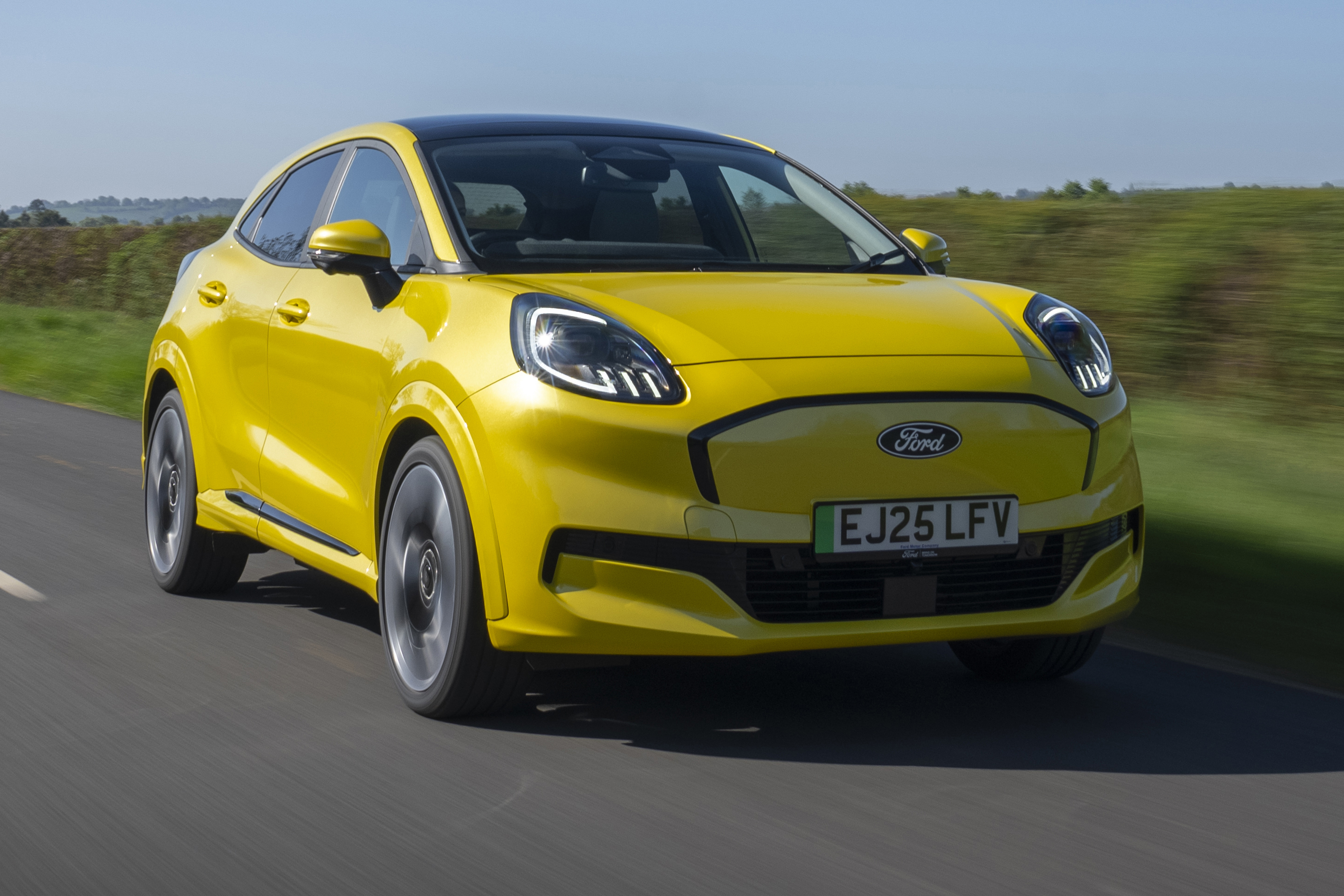
Ford Puma Gen-E Review

Written By Keith WR Jones
- 2024
- Small SUV
- Electric
What we love
Fun to drive for a small EV
Huge boot for its size
Strong standard equipment
Things to consider
Range trails some key rivals
Firm ride on poor roads
Some cheap-feeling cabin materials
The DRIVE take on the Ford Puma, is it the right car for you?
The Ford Puma Gen-E is one of the more convincing electric conversions of an existing petrol car. It keeps much of the regular Puma’s entertaining handling and clever practicality, while the latest version stretches official range to 259 miles. It is not the roomiest small electric SUV and the ride can be firm, but competitive pricing, a huge boot and impressive efficiency make it well worth considering.
The Ford Puma in more detail
Small electric SUVs have become one of the busiest areas of the new car market, but Ford has taken a slightly different route with the Puma Gen-E. Rather than creating a clean-sheet EV, it has adapted the hugely successful Ford Puma to run entirely on electricity.
Underneath, the Gen-E therefore has close links to the petrol Puma, which itself evolved from the platform originally used by the final Ford Fiesta. That puts it at odds with cars such as the Kia EV3, Volvo EX30 and Smart #1, which were designed around electric power from the outset.
Browse used Ford Pumas for sale →
There are compromises to doing things Ford’s way. In particular, there is less physical space beneath the floor for batteries than you would find in some purpose-built EVs. Early Puma Gen-E models demonstrated that with a relatively modest 43kWh usable battery and an official range of up to 233 miles.
Ford has since improved the package considerably. Current cars have a 53kWh installed battery with 46.8kWh of usable capacity, increasing official WLTP range to as much as 259 miles in Select trim. Premium, Black Edition and BlueCruise Edition models manage up to 251 miles.
That still does not turn the Puma Gen-E into a long-distance range champion. The Kia EV3, for example, can travel considerably further between charges in its larger-battery forms. What the update does is make the Puma’s range much more useful for everyday driving and remove one of the biggest reservations we had about earlier cars.
There are benefits to retaining so much of the petrol Puma’s engineering, too. Chief among them is the way the Gen-E drives. Adding an electric motor and battery has increased the weight, but the Puma remains unusually agile by small electric SUV standards. There is useful weight through the steering, good body control and a sense that Ford’s engineers have genuinely tried to make the car enjoyable rather than simply competent.
Practicality is arguably an even bigger strength. Removing the petrol car’s fuel tank and exhaust has allowed Ford to create an exceptionally deep storage area beneath the boot floor. Called the GigaBox, it helps give the Puma one of the most useful luggage compartments in this part of the market. There is also a separate compartment beneath the bonnet for charging cables and other smaller items.
The weaker areas are found mainly inside. Rear passenger room is adequate rather than exceptional, some of the cabin plastics look and feel inexpensive, and the revised dashboard relies too heavily on its touchscreen for everyday functions.
The Puma Gen-E is therefore not the obvious choice if maximum electric range, rear-seat space or cabin quality are your priorities. If you want an affordable, practical EV that is compact enough for town and much more entertaining to drive than most of its rivals, however, it has a lot going for it.
What's the best Ford Puma trim and battery option?
Battery choice is refreshingly simple because all current Puma Gen-E models use the same 53kWh battery, of which 46.8kWh is usable. They also share the same 168PS front-mounted electric motor, so your main decision is which trim makes the most sense.
Select is difficult to argue against if value is the priority. Its smaller 17-inch wheels help it deliver the longest official range at 259 miles and should also give it the best chance of taking the edge off the Puma’s relatively firm ride. Standard equipment is generous enough that it never feels like an entry-level special.
Premium is our preferred all-round choice if the price difference works for your budget. It costs £2,000 more than Select but adds equipment you are likely to appreciate regularly, including a reversing camera, ten-speaker B&O audio system, wireless phone charging, keyless entry and an electrically operated tailgate.
Black Edition costs the same as Premium but places more emphasis on appearance, adding a contrasting black roof, darker exterior details and matrix LED headlights. Its equipment mix is different from Premium, so it is worth checking exactly what you are getting rather than assuming it is simply Premium with black trim.
BlueCruise Edition sits at the top of the range and makes the most sense for drivers who regularly cover motorway miles and specifically want Ford’s hands-free BlueCruise driver assistance technology.
For most people, Premium hits the sweet spot. Select remains the better value choice and has the longest official range.
What’s the price of the Ford Puma?
The Ford Puma Gen-E range starts at £29,995 for the Select. Premium costs £31,995, while the Black Edition is also priced at £31,995. The BlueCruise Edition tops the line-up at £34,295. There are also plenty of used Ford Pumas for sale for considerably less.
That gives the Puma an attractive starting position in a class where many electric SUVs move beyond £30,000 very quickly once useful equipment is added.
The Select is particularly persuasive because it does not feel stripped out to achieve its sub-£30,000 list price. Premium is still reasonably priced given the extra comfort and convenience equipment included.
Ford has also offered government-supported and manufacturer incentives on the Puma Gen-E, so the transactional price can be lower than the official list price. Those offers change regularly, however, so they are best checked separately when you are ready to buy or lease rather than used as the basis for a long-term value comparison.
Alternatives to the Ford Puma
The Kia EV3 is one of the strongest alternatives if electric range matters more than driving enjoyment. It offers a choice of batteries and the longest-range versions comfortably outperform the Ford between charges. It also makes very good use of its dedicated electric-car platform.
The Volvo EX30 is another compact EV worth considering. It has a much more minimalist cabin and offers considerably more performance in its quickest versions, although the Ford has the more useful luggage area and its conventional driving controls will feel more natural to some buyers.
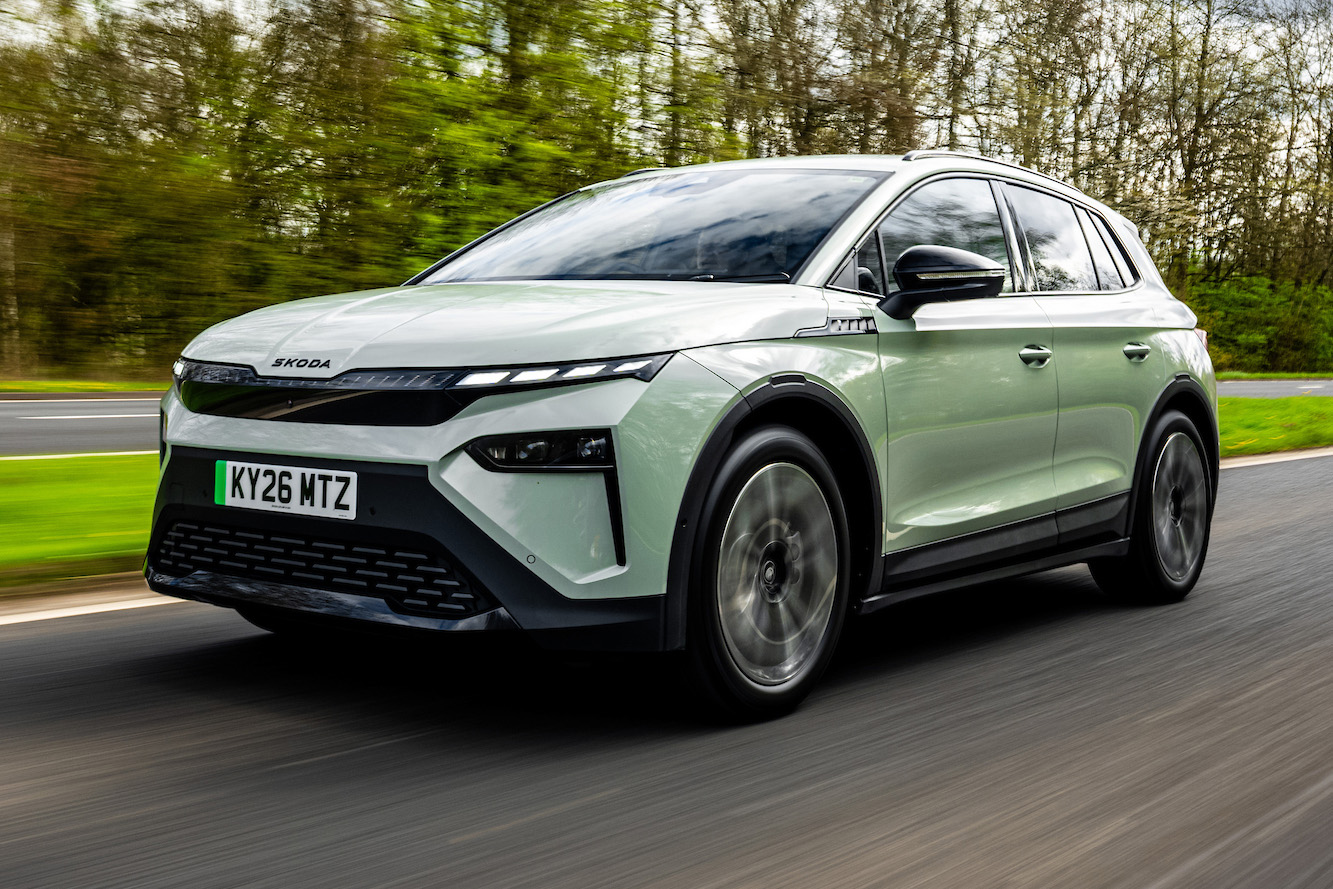
Within the Volkswagen Group, the Skoda Elroq is worth considering if you can accommodate a slightly larger car. It offers substantially more battery capacity and driving range, along with excellent passenger space and a more family-friendly cabin. It costs more, but it is the stronger choice for regular long journeys.
The Jeep Avenger Electric and Vauxhall Mokka Electric are closer to the Puma in overall dimensions. Neither feels quite as entertaining on a twisting road, while the Ford’s boot is another significant advantage.
What's the interior like in the Ford Puma?
The Puma Gen-E has a functional, easy-to-understand driving position and plenty of technology, but it does not feel as sophisticated inside as the best electric SUVs. Front-seat space is good, rear accommodation is tighter and some materials feel inexpensive. The outstanding feature is the boot, which is enormous for a car with such compact exterior dimensions.
Ford Puma boot space and practicality
The Ford Puma Gen-E is a good example of why judging practicality on exterior dimensions alone can be misleading.
Space around the driver and front passenger is generally good. The battery raises the floor slightly compared with the petrol Puma, which in turn means the front seats are positioned relatively high. That makes getting in and out straightforward, but taller drivers may find themselves sitting closer to the roof than expected.
There is four-way manual adjustment for the front seats, along with lumbar adjustment for the driver, and the steering wheel has enough movement for most people to find a comfortable position. We would still like the driver’s seat to drop a little lower.
Storage for everyday odds and ends is decent. Moving the transmission selector onto the steering column frees up space around the centre console, where you will find cupholders, open storage areas and USB connections. Rear passengers also get charging points.
Space in the back is less impressive. The combination of the raised floor and Puma’s sloping roofline makes the rear bench feel more enclosed than in something such as a Skoda Elroq. Two adults will fit reasonably comfortably, but taller passengers may find headroom and legroom tight on longer journeys.
Three seatbelts are provided, although three adults across the rear bench would be a squeeze. The outer rear seats have Isofix mounting points, but once two bulky child seats are installed there is very little useful room left in the centre.
The boot is a different story. Ford quotes up to 523 litres of rear luggage space, which is excellent for such a small electric SUV. The key feature is the GigaBox beneath the main luggage floor, a deep storage compartment that makes it possible to carry tall or awkward objects without sacrificing the rest of the boot.
It is also washable and incorporates a drain, so muddy walking boots, sports equipment or anything else you would rather keep separate from the main luggage area can be stored underneath.
Fold the rear seats and there is up to 1,283 litres available.
Ford has also found another 43 litres beneath the bonnet. The compartment is best suited to charging cables, tools and the tyre inflation kit rather than weekend luggage, but keeping wet or dirty charging cables away from the main boot is genuinely useful.
For families who need luggage space more often than they carry three adults in the back, the Puma Gen-E’s packaging works particularly well.
Ford Puma dimensions
The Ford Puma Gen-E measures 4,186mm x 1,805mm x 1,536mm in length, width and height. Width increases to around 1,930mm when the door mirrors are included, while the wheelbase measures 2,588mm.
That makes the Puma Gen-E genuinely compact by modern SUV standards. It is easy to place on narrow urban streets and does not feel oversized in a typical UK parking space.
The clever part is that those relatively modest dimensions do not result in a correspondingly small boot. The Puma sacrifices some rear passenger space compared with larger electric SUVs, but its luggage capacity is exceptional for a car only a little over 4.1 metres long.
Tech and infotainment in the Ford Puma
The Puma Gen-E uses a twin-screen dashboard. A 12.8-inch digital display sits directly in front of the driver, while a 12-inch landscape touchscreen in the centre of the dashboard handles infotainment and many of the car’s settings.
Both displays are clear and responsive. The graphics are sharp and there is plenty of information available, but Ford does not always make the best use of the screen space.
Some menus contain more layers than they need to and the text can appear relatively small when you are trying to take in information quickly. More frustratingly, several everyday functions have been moved onto the touchscreen.
We would prefer dedicated physical controls for things such as the climate system, heated seats when fitted and rear window demister. That feels particularly odd because Ford has retained a healthy collection of proper switches elsewhere, including on the steering wheel.
Wireless Apple CarPlay and Android Auto are standard, which means most drivers can bypass a significant amount of the built-in media interface for everyday use. Ford SYNC also provides connected navigation and FordPass connectivity.
Select gets a six-speaker audio system. Premium upgrades this to a ten-speaker B&O setup and also adds wireless smartphone charging. The B&O system has noticeably more depth and clarity, although whether that alone justifies moving up a trim level is another question.
BlueCruise is the headline technology on the top version. In approved sections of motorway known as Blue Zones, it allows the driver to take their hands off the steering wheel while the car controls its speed and position in the lane. A driver-facing camera continues to monitor where you are looking, so this is hands-free driving rather than autonomous driving.
The system can also be made available on other compatible versions through the relevant driver assistance package.
Materials available on the Ford Puma
The Puma Gen-E shares much of its dashboard architecture with the facelifted petrol Puma introduced in 2024.
Select uses black and grey fabric upholstery with grey stitching. Premium moves to a mixture of cloth and Ford’s Sensico synthetic upholstery, while Black Edition gets a combination of black Sensico and Neo Suede with contrasting blue stitching.
BlueCruise Edition has its own interior treatment, combining dark synthetic upholstery with distinctive blue cloth inserts and contrasting stitching.
There is no shortage of different textures across the dashboard and door trims, although much of the cabin is finished in hard plastic. The rear door panels in particular feel noticeably more utilitarian than those in the front.
That does not mean the Puma feels poorly made. The cabin in the cars we have tried has felt solidly assembled, with no obvious squeaks or rattles. The issue is more about material richness than construction quality.
Multicolour ambient lighting helps brighten the cabin after dark, while the special-edition trims add more visual interest if the regular black and grey interior feels too plain.
What's the Ford Puma like to drive?
The way the Puma Gen-E drives is one of its strongest selling points. It feels more agile and involving than most compact electric SUVs, with accurate steering and impressive body control. The trade-off is a firmer ride than many rivals, particularly on poor urban roads. Performance is brisk rather than genuinely fast, which suits the Puma’s character well.
Ford Puma range and performance
There is just one motor and battery combination across the current Ford Puma Gen-E range.
All versions use a 53kWh installed battery with 46.8kWh of usable capacity. A single electric motor drives the front wheels and produces 168PS and 290Nm of torque.
That is enough for the Puma Gen-E to accelerate from 0 to 62mph in 8.0 seconds, with a top speed of 99mph.
Performance feels stronger from behind the wheel than the 8.0-second acceleration figure might suggest. Electric motors provide their torque immediately, so there is plenty of response when leaving junctions or pulling into a gap at a busy roundabout.
Ford has resisted making the accelerator excessively sharp. Small pedal movements result in smooth progress rather than a sudden surge, which makes the Puma easy to drive gently around town.
The official range is now perfectly respectable for a small EV, particularly if most of your journeys are relatively short. The limitation becomes more obvious on motorways, where sustained high speeds consume energy much more quickly.
Ford quotes an official motorway range of 192 miles for Select and 187 miles for the other current versions. That is a more useful number to keep in mind if you regularly cover long distances.
As with any electric car, weather, speed, heating use, wheel choice and driving style can all have a significant effect on the distance you actually travel between charges.
Performance data
| Model | Engine/battery size | Power | 0-62mph | Range/MPG |
|---|---|---|---|---|
Ford Puma Gen-E | 53kWh | 168PS | 8.0 seconds | Up to 259 miles |
Ford Puma driving and refinement
One of the reasons the petrol Puma became such a success is that it manages to be practical without feeling dull to drive. The Gen-E carries more of that character across than you might expect.
The battery adds considerable weight, but the basic balance of the car remains good. On a flowing country road the Puma changes direction willingly, with well-judged steering that becomes heavier as you build speed.
There is very little need to make constant corrections through a corner and the body remains well controlled. That gives the Ford a more natural and engaging feel than many small electric SUVs, some of which can feel heavy and remote when the road becomes more interesting.
It is sporty without trying to impersonate a hot hatch. The 168PS motor has enough performance for everyday driving, but there is no violent acceleration or sense that Ford has sacrificed comfort and efficiency in pursuit of headline numbers.
Select Sport mode and the Puma can even play a synthetic performance sound through the speakers as you accelerate. It is undeniably a bit of a gimmick, but it adds some character to a car that would otherwise make very little noise.
Ride quality is the greater compromise.
The Puma is firmer than many small electric SUVs, particularly at low speeds. On smoother roads that firmness is a positive because it keeps the body settled and avoids the gentle floating sensation that can affect softer electric cars.
Poorly surfaced urban streets are more challenging. Potholes, drain covers, cracks and repeated bumps can make the Puma feel busy, with the suspension communicating more of the road surface into the cabin than we would ideally like.
A car we drove with 19-inch wheels highlighted this particularly clearly. The ride never became genuinely harsh, but the suspension struggled to settle after repeated imperfections. Unless you particularly want the appearance of the larger wheels, the standard 17-inch or 18-inch alternatives make more sense.
Refinement is otherwise good. There is little wind noise around the windscreen and mirrors at motorway speeds. Tyre and suspension noise are more noticeable, partly because there is no combustion engine masking them.
The brakes also feel reassuringly conventional by electric-car standards. Regenerative braking is relatively mild in its normal setting, while stronger regeneration can be selected when required.
There is also a one-pedal mode, although it takes some acclimatisation because relatively small accelerator movements can produce a noticeable change in deceleration.
Overall, this is one of the few small electric SUVs where the way it drives could genuinely be a reason to choose it over a rival.
How safe is the Ford Puma?
Euro NCAP lists the Ford Puma Gen-E under the existing Puma assessment, which carries a four-star rating based on the tougher 2022 test protocol.
That is a respectable result, although plenty of newer electric SUVs have achieved five stars under more recent assessments.
Standard safety equipment includes autonomous emergency braking, lane keeping assistance, a driver impairment monitor, cruise control with an intelligent speed limiter and front and rear parking sensors. Higher-specification driver assistance packages add features such as adaptive cruise control, lane centring, blind-spot monitoring, front parking assistance, reverse brake assistance and a 360-degree camera.
The BlueCruise Edition provides the most comprehensive package, including Ford’s hands-free motorway assistance system.
Running costs: What it's like to live with a Ford Puma
The Puma Gen-E should be inexpensive to run if you can charge at home. Its efficient electric drivetrain and relatively modest battery mean charging costs can be low, while its list price keeps every version comfortably below the threshold for the Expensive Car Supplement. Rely heavily on public rapid charging, however, and the financial advantage over a petrol car becomes considerably smaller.
Ford Puma charging times and costs
The Puma Gen-E can accept up to 100kW from a compatible DC rapid charger.
Ford quotes around 26 minutes to charge the latest version from 10 to 80 per cent in suitable conditions. That is competitive enough for the battery size, even if the peak charging speed looks modest beside EVs capable of accepting 150kW or more.
The important point is that a smaller battery needs less energy to reach the same percentage. Huge charging numbers therefore do not necessarily translate into dramatically shorter stops.
At home, a typical 7kW wallbox should be able to replenish the battery overnight. Ford quotes roughly seven hours for a full charge.
Using the July to September 2026 average electricity price cap of 26.11p per kWh as a simple guide, putting 46.8kWh of usable energy into the battery would cost around £12.20 before charging losses. Owners on a cheap overnight EV tariff could pay considerably less.
Public rapid charging costs considerably more and vary substantially between networks, subscriptions and individual locations. If most of your charging is done away from home, it is worth comparing the cost per kWh rather than assuming an electric car will automatically be cheap to run.
The Puma’s navigation can help locate public chargers, while battery preconditioning helps prepare the battery for faster charging when a suitable charger is entered as the destination.
Ford Puma warranty and servicing
The Ford Puma Gen-E comes with a three-year or 60,000-mile manufacturer warranty, whichever comes first. Its high-voltage battery and associated electric components receive separate cover for eight years or 100,000 miles.
The standard vehicle warranty is acceptable but not class-leading. Kia, for example, provides a significantly longer new-car warranty, which may be worth considering if you plan to keep your EV well beyond a typical finance or leasing term. Ford offers extended warranty packages for buyers wanting longer cover, including options stretching as far as five years or 100,000 miles.
Routine servicing is required every two years, which helps reduce workshop visits compared with many petrol cars. There are fewer routine service items in an EV because there is no engine oil, spark plugs or exhaust system to maintain, although tyres, brakes, suspension components and air-conditioning still require attention.
Ford Puma insurance groups
The Puma Gen-E sits towards the more affordable end of the electric SUV market when it comes to insurance classifications. Published ratings put Select in group 18 and Premium in group 19, while BlueCruise Edition has been listed in group 20.
That is relatively modest for an EV and is another reason why the entry-level Select could make sense for buyers trying to keep overall monthly running costs under control.
Insurance groups are only a guide in any case. Premiums depend heavily on the driver, address, annual mileage and insurer, so obtaining a quote before committing to any new car remains worthwhile.
How much does it cost to tax a Ford Puma?
The Ford Puma Gen-E costs £200 a year to tax at the current standard Vehicle Excise Duty rate.
Electric cars are no longer exempt from road tax, so once the initial registration period has passed they pay the same standard annual rate as other recent cars.
The Expensive Car Supplement for zero-emission cars applies only to models with an original list price of more than £50,000.
Every current Puma Gen-E sits comfortably below that threshold, so there is no additional annual premium-car charge to worry about.
What trims are available with the Ford Puma?
There are four versions of the current Ford Puma Gen-E: Select, Premium, Black Edition and BlueCruise Edition.
Select starts at £29,995 and is probably all the Puma Gen-E many buyers will need. It comes with 17-inch alloy wheels, LED headlights, automatic climate control, a Quickclear heated windscreen, front and rear parking sensors and selectable drive modes. Inside there is a 12.8-inch digital instrument display and a 12-inch touchscreen with wireless Apple CarPlay and Android Auto, connected navigation and a six-speaker audio system. You also get the GigaBox and separate front storage compartment. Select has the longest official range in the line-up at 259 miles.
Premium costs £31,995 and is our preferred all-round specification. It moves to 18-inch alloy wheels and adds partial Sensico upholstery, the upgraded ten-speaker B&O audio system and wireless phone charging. Keyless entry, power-folding mirrors, a reversing camera and an electrically operated tailgate are also standard. These are all useful everyday upgrades, and the £2,000 increase over Select is easier to justify than paying simply for cosmetic changes.
Black Edition is also £31,995 but takes a more style-led approach. It gets 18-inch alloy wheels with a dark finish, a contrasting black roof and mirror caps, matrix LED headlights and a darker interior combining Sensico and Neo Suede with blue stitching. It is not simply Premium with black exterior trim, though, because the standard equipment mix differs. The manual tailgate and six-speaker stereo, for example, mean Premium remains the more rounded choice if convenience matters more than appearance.
BlueCruise Edition tops the range at £34,295. It has its own 18-inch wheels, contrasting black exterior details and distinctive blue interior upholstery. More importantly, it includes Ford’s BlueCruise technology with the one-time purchase activated, plus adaptive cruise control, blind-spot monitoring, a 360-degree camera and reverse brake assistance. B&O audio, wireless charging, keyless entry and the powered tailgate are also included.
For value, Select is very difficult to fault and its smaller wheels help it achieve the best official range. Premium is the trim we would choose because its additional equipment improves the car every day. Black Edition is the more distinctive option, while BlueCruise Edition is aimed at drivers who specifically want the most comprehensive motorway assistance package.
Ask the Drive experts: common questions
What is the range of the Ford Puma Gen-E?
How big is the Ford Puma Gen-E boot?
Is the Ford Puma Gen-E better than the petrol Ford Puma?
Get our latest advice, news and offers
Keep me updated by email with the latest advice, news and offers from Drive.
.jpg)