Jeep Compass Review

Written By Matt Robinson
- 2025
- SUV
- Petrol mild hybrid and plug-in hybrid
What we love
Roomy cabin and generous boot
Distinctive Jeep styling inside and out
Strong equipment for the price
Things to consider
e-Hybrid engine feels underpowered
Ride has a persistent firm edge
Cabin material quality is inconsistent
The DRIVE take on the Jeep Compass, is it the right car for you?
The Jeep Compass is a practical family SUV with a roomy cabin, a 550-litre boot and more visual character than its closely related Stellantis alternatives. Its generous equipment and rugged styling make a strong first impression, but the firm ride, mixed cabin materials and underpowered 145PS e-Hybrid prevent it from matching the best rivals. The forthcoming plug-in hybrid should suit buyers seeking stronger performance, provided they can charge regularly.
The Jeep Compass in more detail
This is the third generation of the Jeep Compass and a complete replacement for the model sold in the UK from 2018. The outgoing car had become dated beneath the surface, with engineering that could trace its roots back many years, so the move to Stellantis’s newer STLA Medium platform represents a significant step forward.
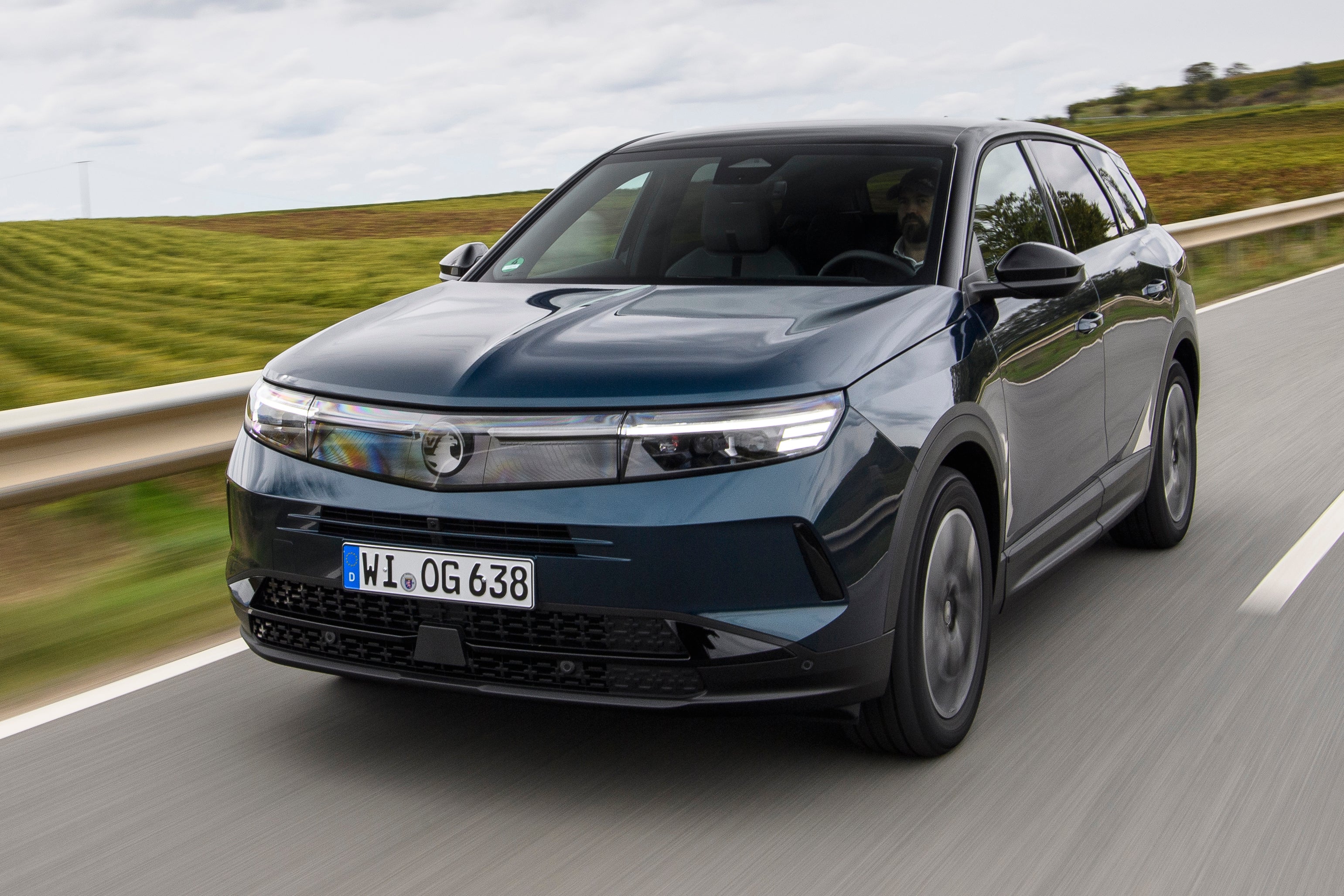
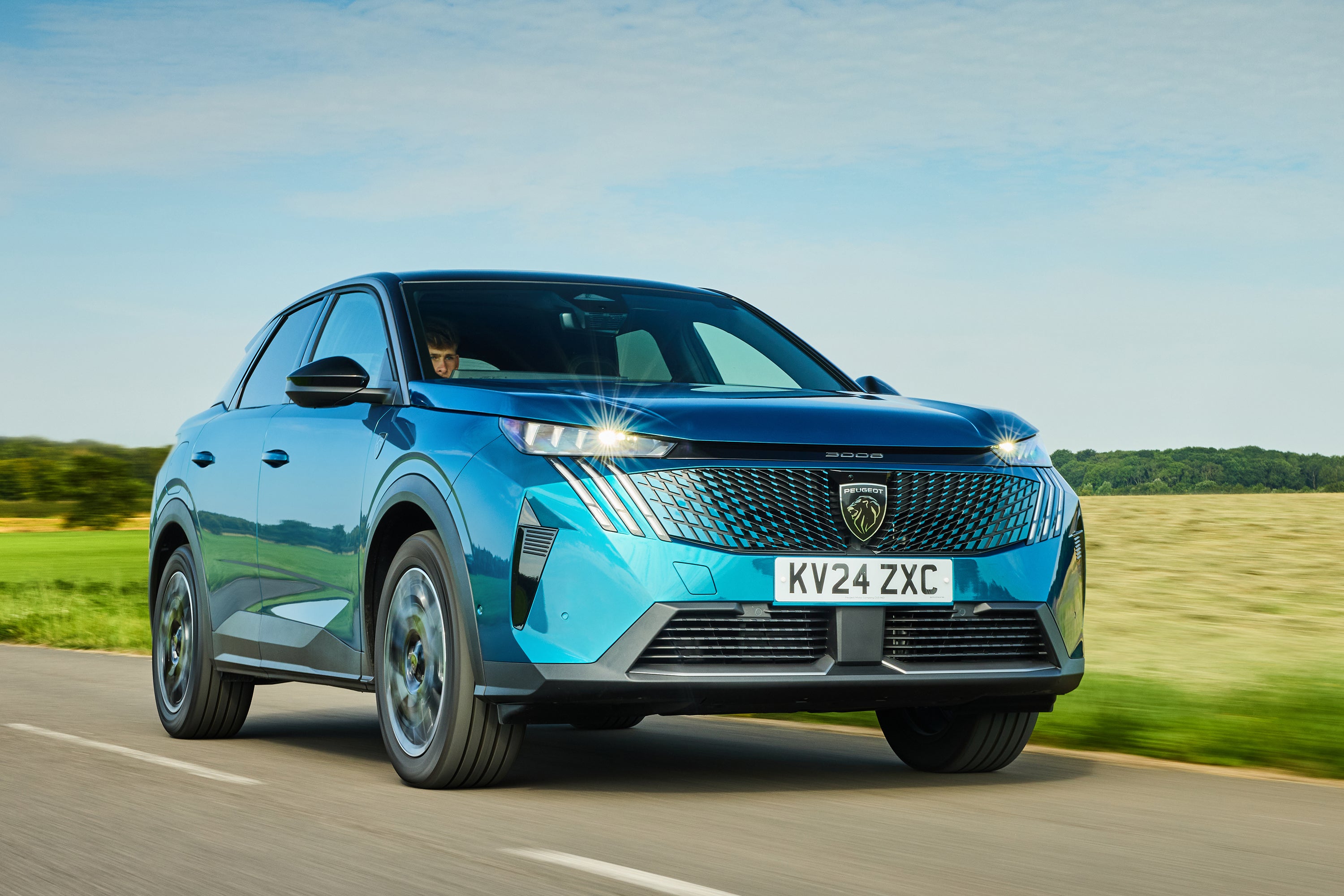
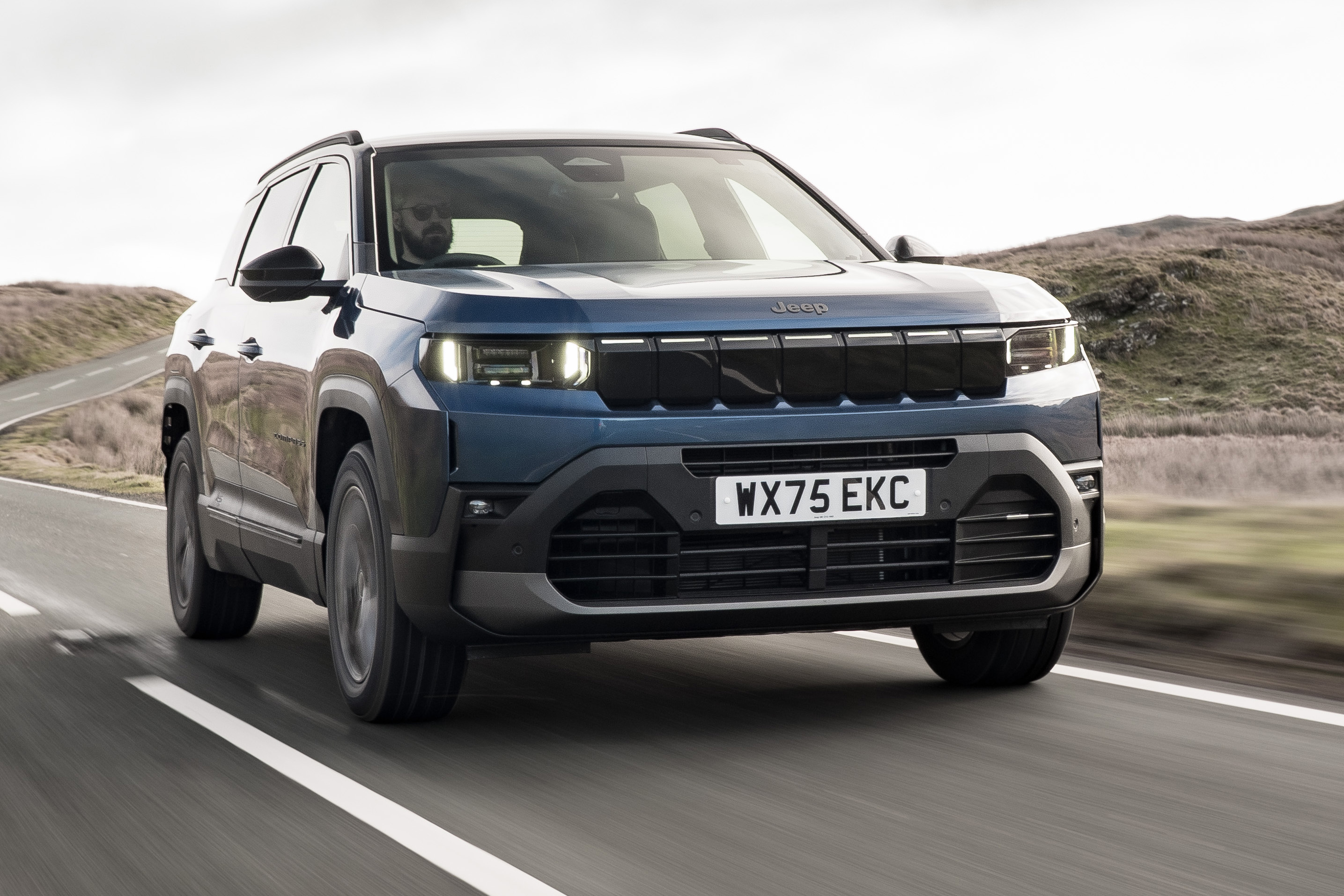
That platform also underpins the Peugeot 3008, Vauxhall Grandland and Citroen C5 Aircross, but the Compass does not look like a lightly rebadged version of any of them. Jeep has given it a more upright stance, squared-off wheelarches, substantial lower-body cladding and the familiar seven-slot grille, creating a more rugged visual identity than its smoother and more road-focused relatives.
The new Compass is larger than its predecessor, measuring 4,552mm long and sitting firmly in the heart of the family SUV class. That growth brings clear benefits inside, particularly in the back, where rear legroom has improved by 55mm. The 550-litre boot is also much more competitive than before and gives the Jeep enough carrying capacity for ordinary family use.
The initial UK range is centred on the 145PS e-Hybrid. Despite the name, this is a mild hybrid rather than a conventional full hybrid. It can move briefly using electrical power at low speeds and recovers energy during braking, but the 1.2-litre petrol engine remains the main source of propulsion.
A more powerful 195PS plug-in hybrid is due to broaden the range. It uses a smoother four-cylinder petrol engine, a larger rechargeable battery and a stronger electric motor, giving it more convincing performance and the potential to complete many shorter journeys without using petrol.
The full-electric Compass is covered in a separate review.
Front-wheel drive is standard on the regular e-Hybrid and plug-in hybrid versions. More capable 4xe derivatives are also planned, although final UK availability and specifications should be checked when ordering.
Even the front-wheel-drive Compass has 200mm of ground clearance and selectable terrain modes, which gives it slightly more confidence on muddy tracks or loose surfaces than an ordinary family hatchback. It is not a serious off-roader in this form, but it offers more substance behind the rugged styling than some rivals.
What's the best Jeep Compass trim and engine option?
The Jeep Compass e-Hybrid First Edition is the best version available at launch because it combines a generous standard specification with a relatively modest increase over the basic starting price.
First Edition includes 18-inch alloy wheels, LED matrix headlights, an illuminated grille, privacy glass and extensive protective body trim. Inside, it adds heated front seats, a heated steering wheel, dual-zone climate control, navigation and a hands-free powered tailgate.
The technology package is also strong, with a 16-inch touchscreen, a 10.25-inch digital instrument display, wireless Apple CarPlay and Android Auto, adaptive cruise control, lane-positioning assistance and autonomous emergency braking all included.
The e-Hybrid drivetrain is adequate for gentle everyday use, but buyers who regularly carry passengers, tow or cover long motorway journeys may find its performance underwhelming. In that case, it may be worth waiting for the 195PS plug-in hybrid, provided home or workplace charging is available.
Altitude is expected to become the regular entry trim and should retain most of the important comfort and technology features. Summit will sit above it, although final UK equipment and pricing were not confirmed at the time of writing.
What’s the price of the Jeep Compass?
The Jeep Compass e-Hybrid range starts at £34,635, while the launch-specification First Edition is priced at £35,720.
That places it broadly alongside entry versions of the Peugeot 3008 and below some equivalent Volkswagen Tiguan models. First Edition is also well equipped enough that most buyers should not need to add many options.
Available upgrades include a 360-degree camera package, an expanded driver-assistance pack, electrically adjustable seats, premium audio and a panoramic roof. Adding several of these features can push the final price much higher, so buyers should compare the total against better-equipped regular trims once the full range becomes available.
Pricing for the plug-in hybrid starts at £37,330.
Alternatives to the Jeep Compass
The Peugeot 3008 shares the Compass’s platform and engines but has a more dramatic cabin and sleeker exterior. It feels more upmarket inside, although its unusual driving position will not suit everyone.
The Vauxhall Grandland offers similar passenger and luggage space with a calmer design and straightforward controls. It lacks the Jeep’s visual character but is easier to understand at a glance.
The Citroen C5 Aircross places greater emphasis on comfort and has a softer, more settled ride. Its styling is less rugged and it does not feel as closely tied to an adventurous brand image.
The Skoda Karoq is easy to drive, practical and intelligently packaged. It feels less modern than the Compass but remains one of the most user-friendly choices in the class.
The Volkswagen Tiguan is refined, spacious and composed on the road. It costs more in a comparable specification and relies more heavily on touchscreen controls.
What's the interior like in the Jeep Compass?
The Compass has a roomy and distinctive cabin with strong technology, although the quality of the materials varies noticeably between different parts of the dashboard and centre console.
Jeep Compass boot space and practicality
The new Compass provides substantially more passenger room than the model it replaces. Front occupants have generous headroom and shoulder room, while the broad range of seat and steering-wheel adjustment should allow most drivers to find a comfortable position.
The upright dashboard and relatively square windscreen contribute to a commanding view of the road. Thick rear pillars and the rising window line restrict visibility over the shoulder, however, which makes the standard parking sensors and reversing camera particularly useful.
Storage is generous, with Jeep claiming 34 litres across the front of the cabin. The door pockets, cupholders and covered compartments are all useful, while a wide shelf on the passenger side of the dashboard adds further space. Anything placed there may slide around during enthusiastic cornering, but it is handy for phones, wallets or smaller items when the car is stationary.
Rear legroom has increased by 55mm compared with the previous Compass. Tall adults should have enough knee space behind similarly sized front occupants, while the gently sloping roofline still leaves useful headroom.
The rear bench is wide enough for three passengers over shorter journeys, although the centre position remains less comfortable than the outer seats. Isofix mounting points are fitted to the two outer rear positions, and the broad door openings make it straightforward to install most child seats.
The boot holds 550 litres with the rear seats upright. That is less than the 588 litres available in the Peugeot 3008 but matches the Vauxhall Grandland and exceeds the capacity of a Nissan Qashqai.
Its shape is broad, square and easy to load through the powered tailgate fitted to First Edition. The rear bench folds in a useful 40:20:40 split, allowing longer items to be carried between two rear passengers.
Jeep Compass dimensions
The Jeep Compass measures 4,552mm long, 1,900mm wide & 1,700mm high.
It is a substantial family SUV, but the square bonnet, light steering and standard parking sensors make its size relatively easy to judge. First Edition also includes a reversing camera, while a 360-degree camera is available for drivers who regularly use tighter parking spaces.
Ground clearance of 200mm helps on rough tracks and uneven access roads, although the front-wheel-drive e-Hybrid is not intended for serious off-road use.
Tech and infotainment in the Jeep Compass
The centre of the dashboard is dominated by an ultra-wide 16-inch touchscreen, which gives the interior a modern appearance and provides a large area for navigation, media and vehicle settings.
Some of that width is occupied permanently by climate-control information, so the amount of usable display space is less generous than the headline figure suggests. Jeep has at least retained physical buttons for fan speed, air conditioning, recirculation and the windscreen demisters, which makes the system easier to operate than a fully touchscreen-based setup.
The display responds quickly to direct inputs, but some functions take a moment to load. Expanding the built-in navigation can be noticeably slow, while the mapping sometimes lags behind the car’s actual position and can become unclear at complicated junctions.
Wireless Apple CarPlay and Android Auto are standard and provide a better route to navigation and entertainment for most drivers.
A 10.25-inch digital instrument display sits behind the steering wheel. Its graphics are clear, and the key information is easy to understand without excessive menu navigation.
Selected versions also have a head-up display, which places speed, navigation and assistance information closer to the driver’s line of sight.
Wireless phone charging, USB-A and USB-C ports and connected services are available, while First Edition includes navigation and a hands-free powered tailgate.
Materials available on the Jeep Compass
The Compass has a suitably chunky interior design, with a broad dashboard, squared-off shapes and Jeep-specific details including a Willys-inspired motif on the steering wheel.
Build quality feels solid, but the materials are inconsistent. The upper surfaces are presentable, while harder plastics around the lower dashboard and USB ports look cheaper and may scratch easily.
The cabin feels more utilitarian than the Peugeot 3008 but also more distinctive than the Vauxhall Grandland. It is robust enough for family use, although it does not deliver a consistently premium finish.
What's the Jeep Compass like to drive?
The Compass is secure and predictable, but the firm ride and underpowered e-Hybrid engine prevent it from feeling as polished as the best family SUVs.
Jeep Compass range and performance
The Jeep Compass has an engine lineup that's identical to that of the Citroen C5 Aircross and Peugeot 3008, comprising two petrols.
The entry point is the 1.2-litre three-cylinder e-Hybrid. That's a bit of a fib because that makes it sound like a self-charging hybrid rather than what it is — a mild hybrid which only allows for very limited electric-only running.
It develops 145PS and 230Nm, which is modest for a car of the Jeep's size. It needs to be noisily thrashed should you want to make decent progress, and the six-speed dual-clutch gearbox's changes are rather leisurely and occasionally quite clunky. If you can cope with the less-than-refined engine noise enough to go full throttle, the 0-62mph dash takes 10.3 seconds, and the top speed is 117mph.
A more powerful option is the plug-in hybrid, which makes a much more acceptable 195PS and 300Nm of torque. Crucially, the three-cylinder engine is swapped out for a smoother four-cylinder here, joined by an electric motor supplied by a 17.8kWh battery pack. Thanks to the extra power, we'd anticipate 0-62mph in just over 8.0 seconds.
Performance data
| Model | Engine/battery size | Power | 0-62mph | Range/MPG |
|---|---|---|---|---|
e-Hybrid | 1.2-litre petrol hybrid | 145PS | 10.3 seconds | Up to 40mpg |
Plug-in hybrid | 1.6-litre PHEV | 195PS | 8.0 seconds | Up to 50 mile EV range |
Jeep Compass driving and refinement
The Compass handles tidily enough for a family SUV, with predictable steering, useful grip and restrained body roll.
It does not feel especially agile, but it changes direction without becoming cumbersome and remains stable during ordinary cross-country driving. There is enough grip to inspire confidence, even if the steering offers little detailed feedback.
Ride comfort is less impressive. A persistent firm, jiggling quality remains over minor road imperfections, even when the surface does not look particularly poor.
The suspension deals more effectively with larger potholes and speed humps, but the underlying restlessness never disappears completely. The Citroen C5 Aircross offers a softer and more settled ride, while a Skoda Karoq feels more controlled and natural through bends.
Wind and road noise are kept to sensible levels at speed. The main refinement issue comes from the e-Hybrid engine, which becomes intrusive when asked to deliver stronger performance.
The Compass has more off-road technology than most related models. Standard ground clearance is 200mm, while the quoted wading depth is 408mm.
Approach, breakover and departure angles are 20, 15 and 26 degrees respectively. Those figures are adequate for muddy tracks and uneven access roads but do not make the regular front-wheel-drive model suitable for serious off-roading.
Selec-Terrain includes a setting for sand and mud, adjusting the stability control to allow enough wheel movement for progress on loose surfaces. More capable 4xe derivatives are expected to gain additional ground clearance, improved body angles and stronger all-wheel-drive traction.
How safe is the Jeep Compass?
The Jeep Compass received four stars from Euro NCAP when tested in 2025.
It scored 80 per cent for adult occupant protection, 85 per cent for child occupant protection, 74 per cent for vulnerable road-user protection and 66 per cent for safety assistance.
The passenger compartment remained stable in the frontal-offset test, while protection was good or adequate across most critical body areas. Child protection was a particular strength, with maximum points awarded for the six and ten-year-old dummies in the main impact tests.
The Compass lost marks because it lacks a centre airbag to reduce contact between front occupants during a side impact, while its driver-monitoring system detects fatigue but not distraction.
Its autonomous emergency braking performed well when responding to other vehicles and cyclists, but pedestrian detection was only marginal.
Standard safety equipment includes autonomous emergency braking, lane-departure warning, lane-positioning assistance, traffic-sign recognition, adaptive cruise control and driver-attention monitoring.
Additional technology including blind-spot monitoring, rear cross-traffic alert and semi-automated lane changing is available through option packs.
Running costs: What it's like to live with a Jeep Compass
The e-Hybrid should be reasonably affordable to fuel and insure for a family SUV, although its real-world economy is unlikely to match a full hybrid.
Jeep Compass fuel economy
The e-Hybrid has a provisional combined economy figure of around 40mpg.
That is acceptable for a petrol family SUV but less impressive than the results available from a Toyota RAV4, Hyundai Tucson Hybrid or Nissan Qashqai e-Power.
The mild-hybrid system should provide its greatest benefit in town, where the electric motor can assist the engine and recover energy during braking. Faster motorway use will rely more heavily on the petrol engine, reducing the potential economy benefit.
The plug-in hybrid could be much cheaper to run for owners who charge at home and complete most journeys within its electric range.
Its official combined MPG figure will be less useful because plug-in hybrid test results assume regular charging and significant electric use. Drivers who allow the battery to remain empty are likely to see substantially worse fuel economy because the petrol engine must move the additional battery and motor hardware.
Jeep Compass warranty and servicing
The Jeep Compass is covered for three years or 60,000 miles from first registration.
The first 24 months have no mileage limit, with the third year applying until the odometer reaches 60,000 miles.
Hybrid traction batteries receive separate eight-year cover, subject to Jeep’s warranty conditions, while Jeep Assistance is included for 36 months.
Service intervals and maintenance requirements vary by powertrain, so owners should follow the schedule provided for the individual e-Hybrid or plug-in hybrid model.
Jeep Compass insurance groups
Insurance groups had not been confirmed across the complete Compass range at the time of writing.
The e-Hybrid’s moderate performance should keep it broadly competitive with similarly powered family SUVs, although the vehicle’s price, advanced lighting and large infotainment screen may increase repair costs.
The plug-in hybrid is likely to sit in a higher group because of its additional power, battery and more complex drivetrain.
How much does it cost to tax a Jeep Compass?
The Jeep Compass pays the standard annual Vehicle Excise Duty rate of £200 from the second year.
A Compass with an original list price above £40,000 is also subject to the £440 annual Expensive Car Supplement for five years, again starting in the second year. This increases the annual tax bill to £640 during that period.
The regular e-Hybrid starts below the threshold, but factory options may push some versions above it. The plug-in hybrid can exceed £40,000 even before options.
The calculation is based on the original list price, including factory-fitted options, rather than the amount eventually paid after discounts. Buyers should therefore confirm the taxable price before ordering.
What trims are available with the Jeep Compass?
Altitude is expected to form the regular entry point to the range and includes 18-inch alloy wheels, LED headlights, front and rear parking sensors, keyless entry and heated, power-folding door mirrors.
Inside, it has dual-zone climate control, the 16-inch touchscreen, a 10.25-inch digital instrument display and wireless Apple CarPlay and Android Auto. Adaptive cruise control and a powered tailgate are also included.
First Edition builds on that specification with LED matrix headlights, an illuminated grille, privacy glass and additional gloss-black exterior trim.
The cabin gains heated front seats, a heated steering wheel, navigation, ambient lighting and a wireless phone charger, while the assistance package adds lane-positioning support, autonomous emergency braking and Selec-Terrain.
Available option packs add a 360-degree camera, lateral parking sensors, blind-spot monitoring, rear cross-traffic alert and a head-up display.
A Premium Pack includes electrically adjustable, ventilated and massaging front seats, upgraded upholstery and a premium audio system.
Summit is expected to sit at the top of the regular range, although final UK equipment had not been confirmed at the time of writing.
Ask the Drive experts: common questions
Is the Jeep Compass a full hybrid?
How big is the Jeep Compass’s boot?
Is the Jeep Compass four-wheel drive?
Get our latest advice, news and offers
Keep me updated by email with the latest advice, news and offers from Drive.
.jpg)
.jpg)