Volkswagen Tiguan Review

Written By Ivan Aistrop
- 2024
- SUV
- Petrol, diesel and plug-in hybrid
What we love
Has one of the biggest and most flexible boots in the class
The cabin feels more polished and more spacious than most rivals
Very easy to drive and very easy to live with
Things to consider
eHybrid gives up some luggage space
Four-wheel drive is limited to selected versions
The touchscreen handles many everyday functions
The DRIVE take on the Volkswagen Tiguan, is it the right car for you?
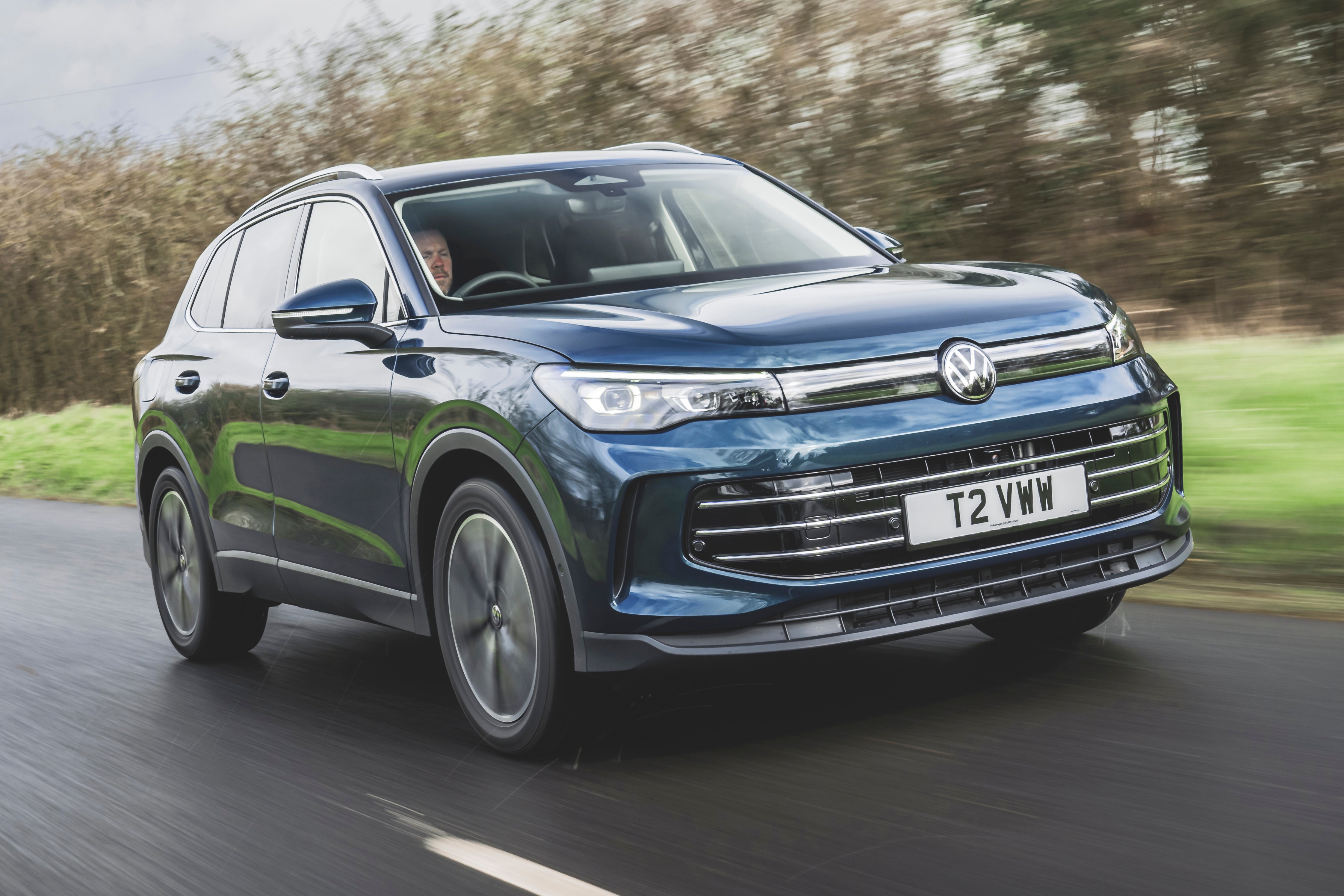
The Volkswagen Tiguan is a strong choice if you want a family SUV that majors on comfort, space and everyday usability rather than trying too hard to feel rugged or sporty. That has traditionally been the Tiguan’s strongest selling point, and the current car continues that appeal. It feels roomy enough for family life, refined enough for spending hours on the motorway, and swanky enough inside to justify the price premium over many mainstream alternatives. It’s certainly not the cheapest SUV in the class, and some rivals are undeniably better value, but the Tiguan remains one of the easiest family SUVs to recommend if you want something mature, practical and easy to live with.
The Volkswagen Tiguan in more detail
The Tiguan is a very big deal for Volkswagen. Sure, it’s not the brand’s most iconic model, nor its most stylish, nor its most exciting. It is, however, the company’s best-selling model worldwide, so it’s essential that it gets the latest version right.
Over recent years, Volkswagen has become a master of not messing too much with a winning formula, and that’s very much the case with the latest third-generation Tiguan: the theme is certainly evolution rather than revolution. Indeed, it’s built on a development of its predecessor’s underpinnings, which allows for more advanced tech to be brought in.
It’s only a smidgen bigger than the previous Tiguan - just 3cm longer - so it occupies a very similar amount of space on the road. However, it’ll be music to the ears of families that the cabin still provides generous space for four lanky occupants, and five will fit at a push. The large boot and clever rear seating arrangement add even more practicality and versatility.
Browse used Volkswagen Tiguans for sale →
The cabin isn’t without an element of wow-factor, with smart, modern design and impressively plush materials. There’s a very decent amount of luxury kit provided throughout the range, too. Large digital screens dominate the interior, giving a high-tech feel, helped in no small part by sharp, crisp, and modern graphics. It’s fair to say the system presents some rather fundamental ergonomic challenges, but more on those later.
Engine options include a pair of 1.5-litre mild-hybrid petrols with either 130PS or 150PS, and, unusually, a 150PS 2.0-litre diesel. At the top of the range sits the same 265PS 2.0-litre turbo petrol engine found in the closely related Skoda Octavia vRS, and it’s reserved exclusively for sporty R-Line trim.
Arguably the most interesting powertrain options are a pair of plug-in hybrids that combine the 1.5 petrol engine with an electric motor and a 19.7kWh battery to produce either 204PS or 272PS. Volkswagen claims an electric-only range of up to 77 miles, which results in some very competitive tax bills for company car drivers.
Driving the Tiguan is a similar firm-but-fair experience that Tiguan drivers will be used to, but there’s a very decent amount of polish to the way the car goes about its business. And while it’s certainly not the most affordable car of its type, it feels well-rounded and convincing enough to justify its price.
What's the best Volkswagen Tiguan trim and engine option?
The best engine choice will depend on your driving habits. As usual, the diesel is still the best option for high-mileage drivers who spend most of their days on motorways, but those doing lower mileages in more mixed conditions will be better served by one of the mild hybrid petrols. The 150PS eTSI mild hybrid is fine, but we weren’t blown away by it, so we’d probably settle for the cheaper 130PS version to save yourself a few pennies (it’s not much slower on paper). Or, if you can plug in at home and your regular journeys are less than 50-odd miles, then the 204PS plug-in hybrid version could save you a bundle in running costs, especially if you’re a company car driver.
Mid-spec Life or Match are probably the pick of the trim levels. They come with all the essentials while keeping prices reasonable, and they also come with smaller wheels than higher spec cars, which could well benefit the ride.
What’s the price of the Volkswagen Tiguan?
The current Tiguan range starts at £38,920 and rises to £53,140. The line-up runs through Life, Match, Style, R-Line and Black Edition trims, with petrol, diesel and plug-in hybrid powertrains available.
That means the Tiguan sits at the pricier end of the mainstream family SUV spectrum, and the upper end of the range pushes firmly into premium territory. The practicality and quality on show help justify that positioning to an extent, but it is worth going in with clear expectations on price. There are also plenty of used Volkswagen Tiguans for sale for considerably less.
Alternatives to the Volkswagen Tiguan
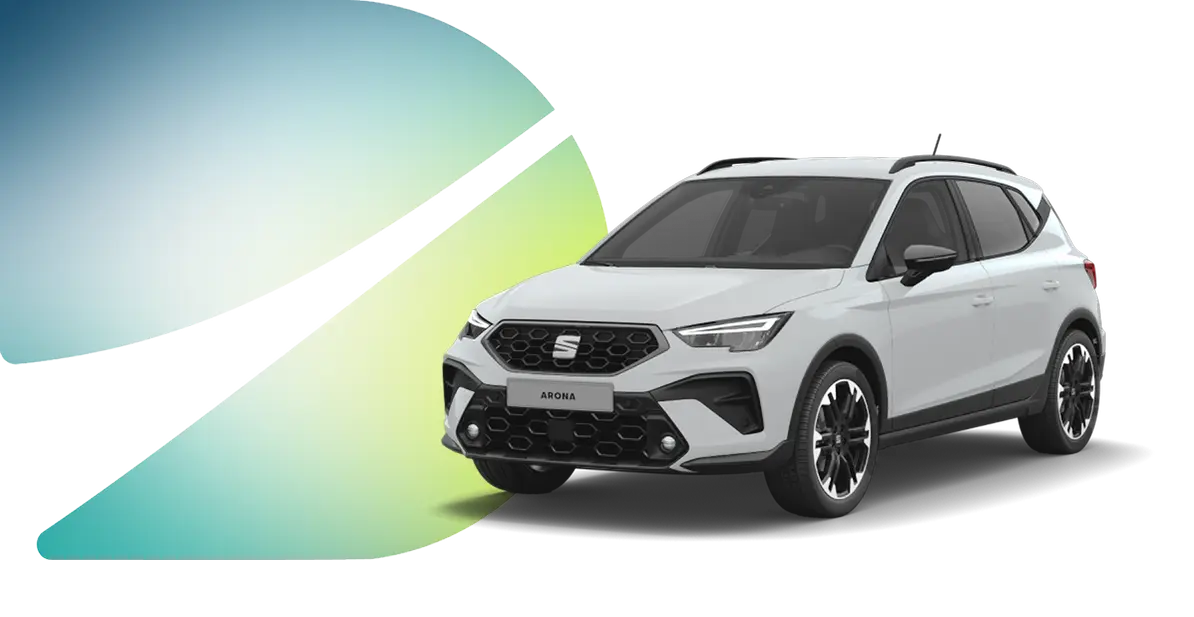
The closest rivals are the Audi Q3, Cupra Terramar and Skoda Karoq, because they’re all related to an extent. The first two share the same MQB Evo platform as the current Tiguan, while the Skoda still makes do with the previous iteration. The Audi Q3 is the more premium-badged alternative with a slightly more upmarket image, while the Cupra Terramar is the sportier, more stylish option, and the Skoda has more of a focus on value and practicality.
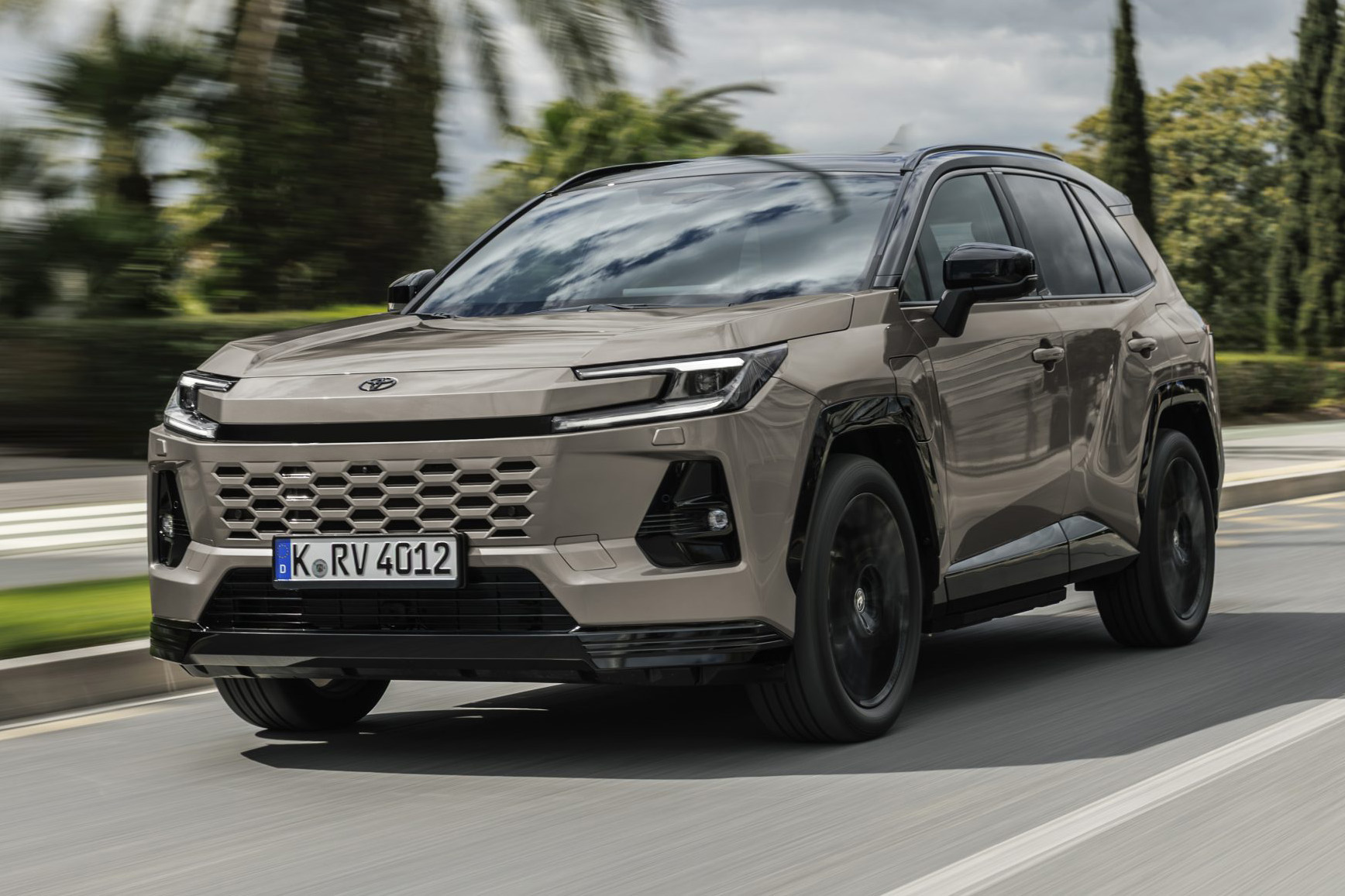
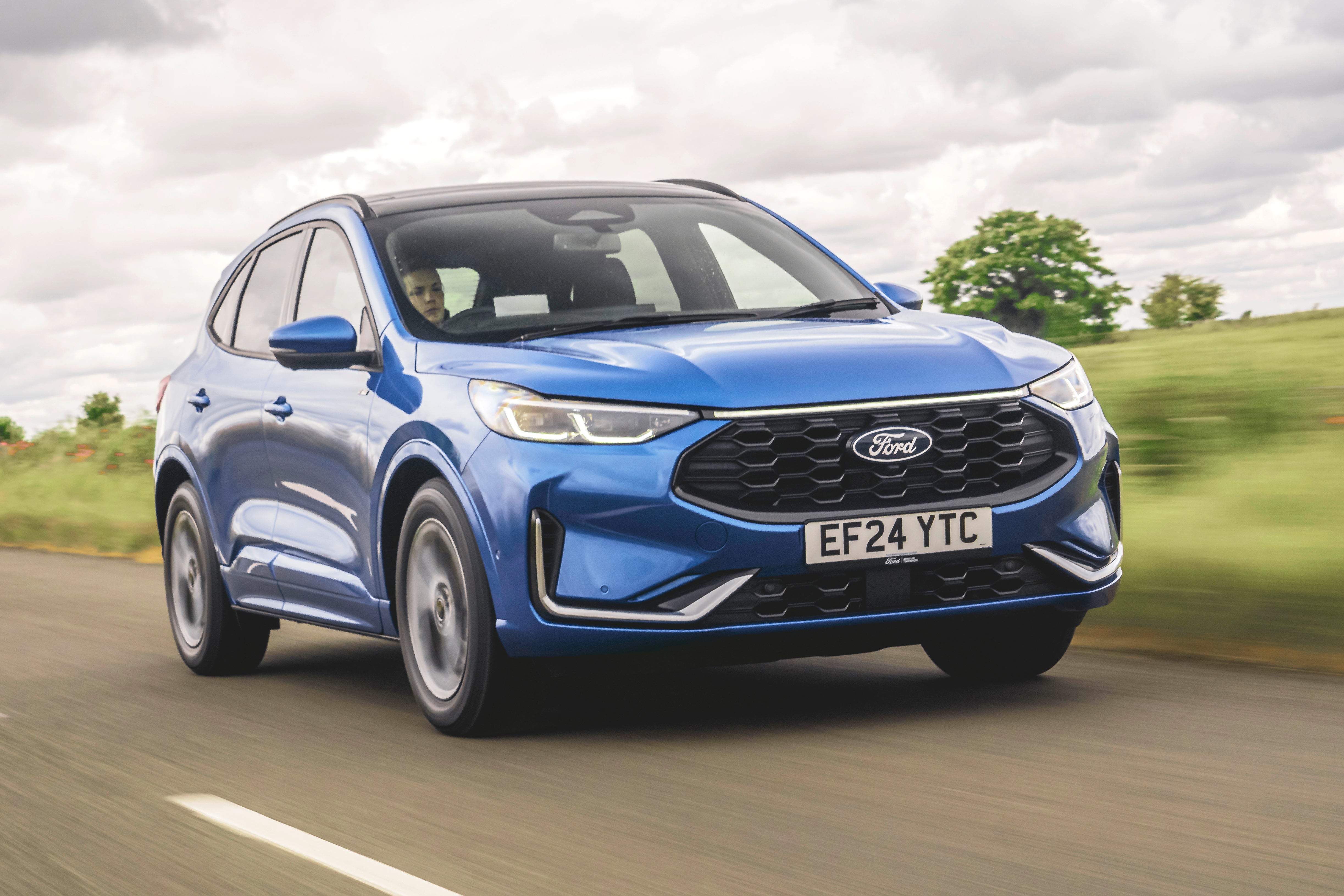
Other rivals include popular family SUVs such as the Nissan Qashqai, Ford Kuga, Toyota RAV4, Kia Sportage and Hyundai Tucson. All have their strengths, but the Volkswagen stands out for being both a fantastic all-rounder and slightly posher than most.
What's the interior like in the Volkswagen Tiguan?
The Tiguan's interior is spacious, cleanly designed and feels more expensive than many family SUVs. A highlight is the impressive boot volume, although this decreases dramatically if you opt for the plug-in hybrid.
Volkswagen Tiguan boot space and practicality
SUVs of this size and type are usually used as family cars, and happily, the Tiguan has easily enough space to cope with such use. Set up the front seats up for occupants of six-foot-plus, and there’s still easily enough room behind for folk of a similar size to sit in the rear seats with no danger of their knees touching the seat in front. Headroom is very generous, too, so a pair of tall adults will be very comfortable in the back, and the rear-seat backrests can be reclined, too.
Things will be a bit more cramped if you try to squeeze in a third passenger, but importantly, everyone will fit. Whoever winds up in the middle has a reasonably wide pew to sit on, too, although they will have to straddle a very bulky transmission tunnel.
Getting in and out of the rear seats is slightly annoying, however. The rearmost edges of the rear door openings have a small strip of protruding bodywork that gets in your way when climbing in and out. You’ll either have to curve yourself awkwardly around it, or else you’ll bash your hip on it.
Space is very generous in the boot. Most versions provide a whopping 652 litres of load space, although that drops to 490 litres in the plug-in hybrid versions. There's a false floor with a huge storage area underneath, and this panel reduces the severity of the lip at the entrance of the boot. And, when you fold down the 40-20-40 split-folding rear seats down - which can be done by either pulling catches in the boot or pulling tapes in the seat itself - the false floor also levels off the step up to the folded rear seatbacks. These don’t lie quite flat, though, so there is a gentle slope in the extended load area.
Volkswagen Tiguan dimensions
The latest iteration of the Volkswagen Tiguan is an ever so slightly bigger car than the one it replaced. It’s 4,539mm long, 1,660mm tall and 1,842mm wide (without door mirrors).
Tech and infotainment in the Volkswagen Tiguan
Most versions of the Tiguan get the same basic infotainment system as standard, and this comprises a large 12.9-inch central infotainment touchscreen, plus a 10.25-inch digital instrument panel behind the steering wheel that Volkswagen calls Digital Cockpit Pro. You also get two USB-C charging ports up front, eight speakers, Bluetooth, DAB, and wireless app connect, which basically amounts to Apple CarPlay and Android Auto.
On the old base-level Tiguan, you did without navigation, wireless smartphone charging and AI-powered voice control, but now that base trim has been discontinued and Life trim is now the entry point, that stuff comes as standard across the range.
If you want an even glitzier system, a massive 15.0-inch central screen is available on the options list or comes as standard with Black Edition trim. Whatever the size of your screen, the system looks pretty snazzy. The graphics look sharp and modern, while the screen transitions and animations are slick. The screen has good sensitivity, too.
However, that doesn’t stop the system from being ergonomically challenging, unfortunately. As is the fashion these days, Volkswagen has sought to purge physical switchgear from the Tiguan’s cabin as far as possible, and the result is that there’s hardly any left. That means almost every function - other than changing the media volume, selecting a driving mode or operating the hazard lights (having a physical button for that last one is a legal requirement, which we suspect is the only reason it survived the cull) - must be operated through the touchscreen.
Inevitably, this is way more distracting to operate on the move than physical buttons and dials would be, and because the system is so complex, the screen looks cluttered and confusing despite its generous size. The seemingly endless menus and submenus are illogically laid out, and many are signified by ambiguously designed icons. All in all, it’s too easy to get lost, even when trying to perform the most basic of functions.
Materials available on the Volkswagen Tiguan
Across the dashboard and doors, you’ll find gloss-effect panels, metallic-look accents and, depending on trim, ambient lighting elements that help add a bit more visual depth once the screens are lit up.
There are also stitched leatherette sections around some of the main contact points, along with different decorative inlays depending on the version. Seat materials and interior detailing vary across the range, so higher-spec cars tend to bring more contrast stitching, plusher upholstery finishes and extra illuminated trim features.
Lower down, the cabin switches to tougher moulded plastics around areas such as the centre tunnel, storage spaces and lower door sections, which makes sense in a family SUV that’s likely to see plenty of everyday use.
What's the Volkswagen Tiguan like to drive?
The Tiguan is an easy car to drive, and it feels very grown-up on the road. You might be surprised that the ride isn’t a little more cosseting, though.
Volkswagen Tiguan range and performance
The Tiguan is offered with a variety of powertrains, all equipped with an automatic gearbox. The range starts with two 1.5-litre mild-hybrid four-cylinder turbo petrol engines, badged as eTSI. These come with either 130PS or 150PS, with the former performing the 0-62mph dash in 10.2 seconds, and the latter cutting that to 9.1 seconds.
A 2.0-litre turbodiesel is also offered, which gives 150PS and does the 0-62mph sprint in 9.4 seconds. In the summer of 2024, a more powerful 2.0-litre TSI petrol model was added to the range exclusively for the R-Line trim, with 265PS and 4MOTION all-wheel drive, giving it a 0-62mph sprint time of 5.9 seconds.
The range is rounded off by a pair of plug-in hybrids - badged eHybrid - that combine the 1.5-litre petrol engine with an electric motor and a six-speed automatic gearbox (it’s a seven-speeder in the others) to develop either 204PS or 272PS. The former has a 0-62mph time of 8.2 seconds, the latter a time of 7.2 seconds.
So far, we’ve only driven the more powerful of the two eTSI mild hybrids, and it doesn’t feel as punchy as you might expect. The level of performance you get is just about adequate, provided you’re not in too much of a hurry, but you often feel the engine has to work surprisingly hard to haul the car along at even a moderate rate. And when you ask for stronger acceleration, the revs climb even further, but there’s a disproportionately small increase in the rate of forward motion.
We suspect that the diesel’s inherent low-end torque would suit the Tiguan better and be a cost-effective solution for high-mileage drivers, or alternatively, the added electrical assistance of the plug-in hybrids could well have a similar effect, and result in very low running costs if you can plug in regularly at home.
Performance data
| Model | Engine/battery size | Power | 0-62mph | Range/MPG |
|---|---|---|---|---|
Tiguan 1.5 eTSI 130 | 1.5-litre petrol automatic | 130PS | 10.2 seconds | Up to 47.7mpg |
Tiguan 1.5 eTSI 150 | 1.5-litre petrol automatic | 150PS | 9.1 seconds | Up to 46.4mpg |
Tiguan 2.0 TDI | 2.0-litre diesel automatic | 150PS | 9.4 seconds | Up to 52.3mpg |
Tiguan 2.0 TSI 4MOTION | 2.0-litre petrol automatic | 265PS | 5.9 seconds | Up to 33.5mpg |
Tiguan eHybrid 204 | 1.5-litre petrol plug-in hybrid | 204PS | 8.2 seconds | Up to 188.1mpg |
Tiguan eHybrid 272 | 1.5-litre petrol plug-in hybrid | 272PS | 7.2 seconds | Up to 173.9mpg |
Volkswagen Tiguan driving and refinement
We’ve driven the Tiguan in a couple of different forms, and there are some interesting variations in their behaviour. The first we drove was a high-spec car, which had large 19-inch alloy wheels. And on those, the right felt decidedly firm: there was a slightly jittery and unsettled feeling, and larger cracks and potholes in the road surface resulted in rather large thuds making their way through to the cabin. Comfort levels weren’t unacceptable by any stretch, but we could name several rival cars that ride more comfortably. We later tried a car in a lower trim level, on smaller 18-inch wheels, and it did feel a fraction more forgiving, but the Tiguan certainly still sits on the firmer side of fair.
The other car we drove was an R-Line, which comes on potentially even more problematic 20-inch wheels. However, this car was fitted with the optional Dynamic Chassis Control adaptive suspension system. This alters the firmness of its dampers according to which of the various driving modes you select. In truth, switching between Sport and Comfort modes reveals only a very small variation in ride stiffness - you’ll have to really concentrate to detect it at all - but regardless of the mode, the more sophisticated suspension does take a little of the edge off the ride compared to the standard passive suspension. We’re not sure it’s enough of an improvement to justify the four-figure sum you pay for the optional suspension, though.
Regardless of the suspension fitted, the Tiguan’s handling is pretty good, with plenty of grip and traction despite the fact that most versions are front-wheel drive rather than four-wheel drive. The 4Motion four-wheel drive is more about added on-road traction than any genuine off-road ability. Body movements are kept in check reasonably well, and the steering is quick and responsive, but without feeling too twitchy, so the car changes direction eagerly and tidily.
How safe is the Volkswagen Tiguan?
All versions of the Tiguan get an impressive roster of standard safety equipment. That includes a collection of airbags, plus driver assistance features including adaptive cruise control, driver drowsiness/attention monitor, autonomous emergency braking with pedestrian and cyclist monitoring, lane keep assist, a lane-change system, front- and rear cross traffic assist, dynamic road sign display, front and rear parking sensors, and a reversing camera.
This roster of kit helped the Tiguan do well in Euro NCAP crash tests and score a full five-star rating. It achieved a 83% score on Adult Occupant protection, 88% on Child Occupant protection, 84% on protection of Vulnerable Road Users, and 78% in the Safety Assist area.
Running costs: What it's like to live with a Volkswagen Tiguan
Running costs depend heavily on which version you choose. The petrol mild hybrids are probably best for mixed-use drivers, while the diesel will be better for long-distance drivers. The plug-in hybrids will be good for more urban-based drivers, provided you remember to keep the battery topped up.
Volkswagen Tiguan fuel economy
As you’d expect with such a large and varied engine range, there’s also lots of variation when it comes to fuel economy.
The eTSI petrol mild hybrids are the cheapest engine options to buy, and thanks to that modest electrical assistance, they still manage to return very decent fuel economy figures: up to 47.7mpg for the 130PS version and up to 46.4mpg for the 150PS version, although the precise figure varies according to trim level. Do remember, though, that these engines have to work pretty hard to haul the Tiguan’s heavy body around, so getting close to those figures in the real world might be even more of a struggle than it normally is.
The diesel engine does even better on the official figures with a return of up to 52.3mpg, and we’d predict that getting closer to that figure in the real world would be a sight easier, especially on a long run. Diesel isn’t exactly fashionable these days, but for high-mileage drivers who spend their days pounding up and down motorways, it’s still a very cost-effective solution.
If you’re considering the 2.0-litre petrol engine, you’re probably more interested in its 265PS than you are in its fuel economy. You probably won’t care that its official figure is a predictably poor 33.5mpg, then, but even so, that’s pretty juicy.
And then there are the plug-in hybrids. Again, the precise figures for these depend on trim level, and they’ve also changed quite a bit over time due to ongoing approval processes. However, the precise figures are fairly useless anyway because the official tests are unrealistically flattering to plug-in hybrids. Currently, the 204PS version has an official figure of up to 188.1mpg, while the 272PS version stands at up to 173.9mpg (once upon a time, these figures stood at around 700mpg apiece: see, we told you they’d changed!)
Although you’re extremely unlikely to ever see returns like that in real life, the plug-in hybrids will still be very cheap to run if you use them in the right way. And what is the right way? Well, make sure you can charge them at home, fastidiously keep the battery topped up daily, and keep your regular everyday journeys short enough that they can be done on the car’s electric-only range. The official figures put this at between 72 and 75 miles depending on trim level, but again, it’s wise to view those official figures with a healthy amount of scepticism, so bank on more like 55- or 60 miles on a full charge.
Do all that, and it’s conceivable that you could go weeks without using a single drop of fuel. Do be aware, though, that once that battery runs dry and the petrol engine kicks in, your car will instantly become much pricier to run, and will likely be less efficient than the mild hybrid engines due to the extra weight of the PHEV’s batteries. Fail to do any of the above on a regular basis, and the PHEVs will probably be quite pricey to run.
Charging up the PHEV’s 19.7kWh battery at home will cost around £5 if you pay for your domestic energy at the UK’s national average rate, or less than half that if you get yourself on a variable tariff that allows you to charge your car overnight on heavily discounted off-peak power. A full charge will take around 8.5 hours on a regular three-pin domestic socket, or around 3.5 hours on a 7kW home wallbox charger. The Tiguan also accepts DC rapid charging at up to 40kW, making it capable of taking on a 5% to 80% top-up in 26 minutes. However, charging this way will likely cost you three times as much as charging at home, and you have the petrol engine in reserve for when your battery runs dry anyway, so we really wouldn’t bother.
Volkswagen Tiguan warranty and servicing
The Tiguan comes with Volkswagen’s standard three-year warranty, consisting of two years with unlimited mileage, plus a third year capped at 60,000 miles. For the first three years, services usually occur every year or 9,300 miles, and then after that, intervals are extended to a year or 10,000 miles, alternating between minor and major services. Some drivers who fit the right driving profile can alternatively opt for a variable servicing regime, where the car lets you know when it needs attention.
Volkswagen Tiguan insurance groups
During its time on sale, insurance groupings for the Volkswagen Tiguan have ranged between 15 and 32, but the versions at either end of that spectrum have been outliers. The vast majority of the versions that most people will actually buy sit in the early-to-mid-20s bracket, so insurance costs shouldn’t be prohibitively expensive for most.
How much does it cost to tax a Volkswagen Tiguan?
Only a handful of lower-spec Tiguans have a list price of less than £40,000 when brand new, and so those are the only ones that have a chance of avoiding liability for higher-rate VED road tax. We say ‘have a chance’, because that list price must include any optional extras fitted: those Tiguans that cost less than £40k only do so by a smidgen, so ticking a couple of boxes when ordering - either by you, or by the original owner if you’re buying used - can easily take your car over.
What does higher-rate tax mean? Well, on top of the basic flat rate of tax (£200 per year) for cars priced below that £40,000 threshold, you also have to pay a hefty additional sum on top for a five-year period between years two and six of the car’s life. That sum is currently charged at £440 per year, making your total annual bill during that period a lot more painful.
What trims are available with the Volkswagen Tiguan?
The trim levels available within the Tiguan range have chopped and changed a wee bit over time, and currently, the versions on offer include Life, Match Style, R-Line and Black Edition.
Life is the entry point to the range (although it wasn’t always), and it comes with standard kit including 18-inch alloy wheels, three-zone climate control, 10-colour ambient lighting, fabric upholstery, adaptive cruise control, front- and rear parking sensors, reversing camera, power folding door mirrors, keyless entry, and the full infotainment package with 12.9-inch screen.
Match adds to this with a powered tailgate, LED dynamic cornering headlights, illuminated exterior styling, heated front seats, a leather steering wheel, and a more sophisticated adaptive cruise control system.
The Style sits at a similar level to the Match, but swaps out some of that car’s kit for 19-inch alloys, enhanced exterior styling, 30-colour interior ambient lighting, heated and massaging front seats, and leatherette upholstery. This trim is currently only offered with the lower-powered PHEV powertrain.
The R-Line is the sporty one of the bunch, with extra exterior and interior styling touches, 20-inch alloys, part-leatherette upholstery, as well as all the kit you get with Style trim. The Black Edition gets a styling treatment of its own, but it doesn’t really add much in the way of extra kit.
Ask the Drive experts: common questions
Is the Volkswagen Tiguan a good family SUV?
How big is the Volkswagen Tiguan boot?
Is the Volkswagen Tiguan available as a plug-in hybrid?
What is the best Volkswagen Tiguan version?
Get our latest advice, news and offers
Keep me updated by email with the latest advice, news and offers from Drive.
.jpg)
.jpg)