Skoda Karoq Review

Written By Andrew Brady
- 2018
- SUV
- Petrol, diesel
What we love
Composed, comfortable ride
Spacious cabin with excellent day-to-day practicality
Strong value in the middle of the range
Things to consider
No hybrid version
The DSG automatic is not the smoothest at low speeds
Some versions miss the latest infotainment technology
The DRIVE take on the Skoda Karoq, is it the right car for you?
The Skoda Karoq remains one of the easiest family SUVs to recommend if your priorities are comfort, visibility, sensible running costs and a cabin that works properly every day. It’s not the freshest-looking option in this class, and the lack of any hybrid powertrain now stands out more than it did a few years ago, but the Skoda Karoq still gets the fundamentals right. It rides well, makes light work of family duties and offers a broader range of engines than some rivals.
The Skoda Karoq in more detail
The appeal of the Skoda Karoq is its honesty. There are certainly glitzier, more glamorous, and more stylish cars in the family SUV class, but what the Skoda Karoq brings to the party is the stuff that matters to families every day: space, practicality, comfort, and quality, all at a reasonable price. If ever a car was ‘sensible on wheels’, this is it.
While the straight-laced Skoda Karoq initially took a bit of criticism for being less characterful than its predecessor, the quirky Yeti, it looks more upmarket than you'd expect from a relatively cheap SUV. It's also more comfortable and refined than the Yeti, not to mention most present-day rivals, and it has an interior that could put more expensive rivals to shame with its high-quality finish, practical 'Simply Clever' touches and logical layout.
Browse used Škoda Karoqs for sale →
The Skoda Karoq has plenty of passenger space, whether you're sat in the front or the back, and there’s also a deceptively large 521-litre boot: we reckon that’ll be enough to easily handle most family exploits.
Having said all of that, it’s not as versatile as it used to be, because the Skoda Karoq is no longer available with clever 'VarioFlex' rear seats. These could slide and recline individually, fold down in a flexible 40/20/40 configuration, and could even be totally removed to free up a van-like 1810-litre load capacity. These were initially optional on lower trims and standard on higher ones, and later on, they were cheekily made optional on higher trims as well. However, they’ve since been discontinued altogether, which is a real shame as they were one of the best bits of the car. On their own, these Varioflex seats make a strong argument for buying a used Karoq rather than a new one.
And if you do plan on buying a used Karoq, it’s handy to know that the car was given an extensive mid-life refresh early in 2022, bringing updated styling, additional tech and changes to the engines and trim levels. There was another refresh in late 2024 that piled on more features, and since that refresh, the trim levels on offer have been known as SE Edition, SE L Edition and SportLine Edition.
Every Skoda Karoq model comes with a generous amount of equipment, including a central touchscreen that's up there with the best in the class in terms of ease-of-use, while things like climate control and rear parking sensors as standard as well. Entry-level SE Edition trim is the best value, but even if you do feel like splashing out, the luxurious SE L Edition trim won't break the bank, adding navigation and a bigger screen, heated seats and bright LED headlights. Go any higher up the range than SEL Edition, though, and you’ll notice that top-spec cars do start to get expensive.
Most versions of the Skoda Karoq are front-wheel drive with a six-speed manual gearbox or seven-speed automatic, but you can buy the most powerful diesel and petrol variants with four-wheel drive. We like the manual, which is light and precise. While the twin-clutch auto (optional on cheaper models) does a decent enough job, it can be a bit slow to kick down.
As for engines, kicking the range off is the modestly powerful 1.0-litre three-cylinder TSI petrol with 116PS, but there’s also a 1.5-litre that feels a lot perkier, but is just as efficient, and a range-topping 2.0-litre with 190PS. We think most buyers will be best off with the 1.5 TSI. It's a smooth and quiet engine, with enough urge to overtake and make relaxed progress.
On the diesel side, buyers could once-upon-a-time pick between a 1.6-litre or 2.0-litre TDI with 150PS or 190PS, but the only diesel now available has 150PS and four-wheel drive and a DSG automatic gearbox. It’s still a good option if you tow or regularly do long distances, but most drivers will be better off with the 150PS petrol engine.
On the road, the Skoda Karoq is a really comfortable car, with soft suspension and a really forgiving ride. The handling is neat, too, with accurate, confidence-inspiring steering, lots of grip and decent body control, but it’s certainly true that it’s not as sporty as some cars. That’ll be of precisely no consequence to many family car buyers, though, and if you’re simply after an honest, likeable car that generally makes life easier, it really doesn't get much better.
What's the best Skoda Karoq trim and engine option?
For most buyers, we reckon the best choice is a Karoq SE L Edition with the 1.5 TSI 150PS petrol engine. That combination gets the strongest balance of performance, refinement, equipment and price. Whether you have it with a manual gearbox or a DSG automatic will depend on your preference, but we’d stick with the manual.
The 1.0 TSI 116PS entry engine is okay most of the time, but it can feel stretched when the car is fully loaded or when you need to overtake quickly. The extra punch of the 1.5 TSI just makes life a bit easier, and it’s smooth, and quiet, while still returning respectable economy.
As for trim, the current SE Edition is now better equipped than older entry-level Karoqs ever were, with heated front seats, a heated steering wheel, rear-view camera, front- and rear parking sensors, keyless entry and an 8.0-inch Amundsen navigation system.
SE L Edition is where the Karoq starts to feel properly plush, though. It adds a larger 9.2-inch screen, adaptive cruise control, a hands-free electric boot lid and a more upmarket cabin trim. SportLine Edition looks sharper and we wouldn't blame you for choosing it, but it doesn’t bring much extra equipment, so it is harder to justify cost-wise.
What’s the price of the Skoda Karoq?
The current Skoda Karoq range starts at £30,960 for the SE Edition 1.0 TSI 116PS and rises to £44,250 for the SportLine Edition 2.0 TDI 150PS DSG 4x4. In between those two sit the versions that will suit most buyers best.
A 1.5 TSI 150PS SE Edition costs £32,135 in manual form, while the equivalent SE L Edition is £34,310. If you want the DSG automatic, prices rise to £33,585 and £35,760 respectively. There are also plenty of used Škoda Karoqs for sale for considerably less.
The diesel and four-wheel-drive versions are much pricier, with the most affordable diesel, the SE L Edition 2.0 TDI 150PS DSG 4x4, costing £40,335. Unless you cover big motorway miles or tow regularly, those versions are difficult to justify.
Compared with newer rivals, the Karoq’s pricing is still competitive. It undercuts larger, more premium-feeling alternatives such as the latest Volkswagen Tiguan and Kia Sportage for instance.
Alternatives to the Skoda Karoq
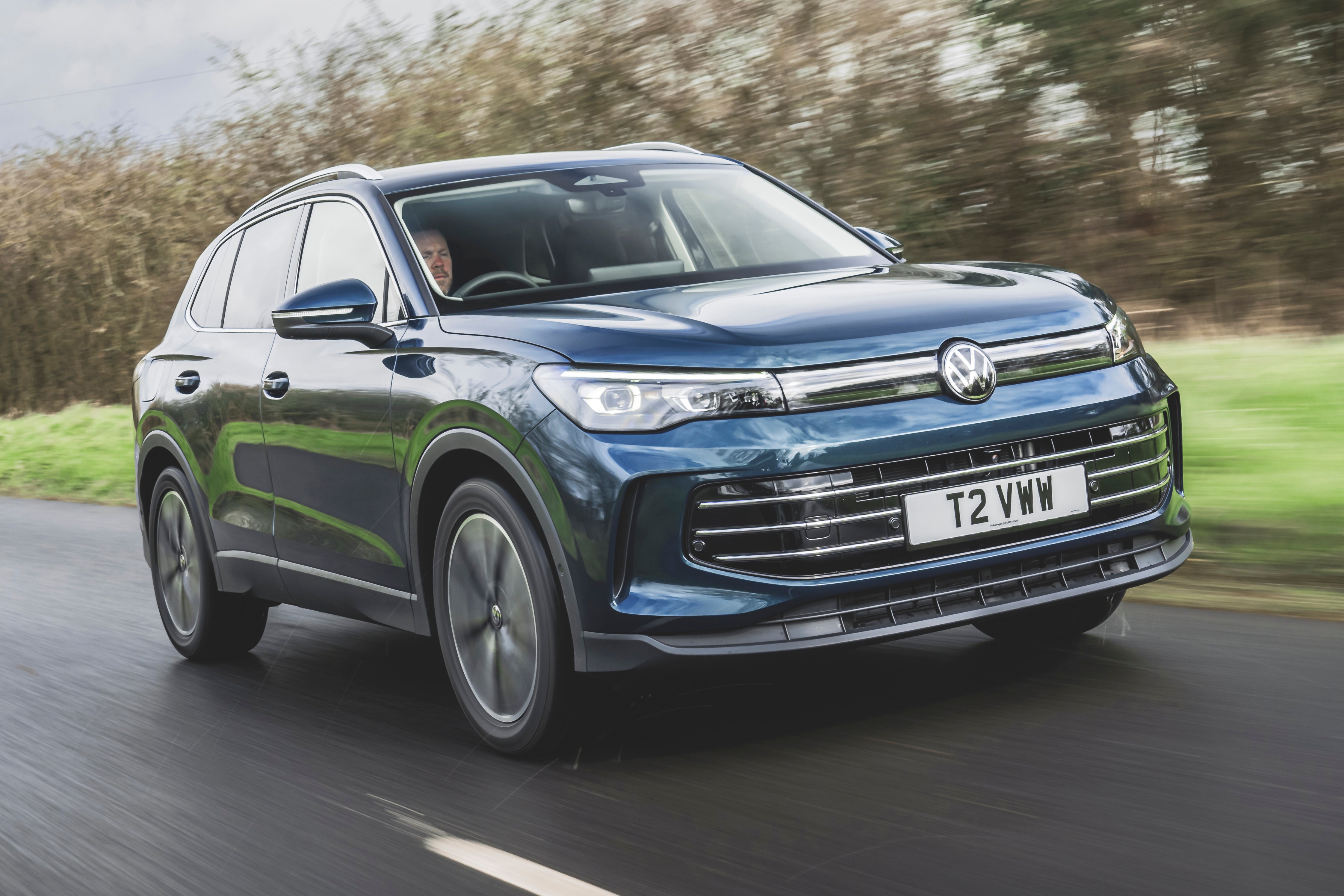
There are a few obvious alternatives to the Skoda Karoq. Once upon a time, it shared its underpinnings and tech with the SEAT Ateca and Volkswagen Tiguan. In the case of the SEAT, it still does, but the Tiguan has since been replaced by a new version on an upgraded platform. In any case, it's best to think of the SEAT Ateca as a slightly sportier alternative and the Volkswagen Tiguan is a little bit more upmarket, though the lines are getting more blurred here.
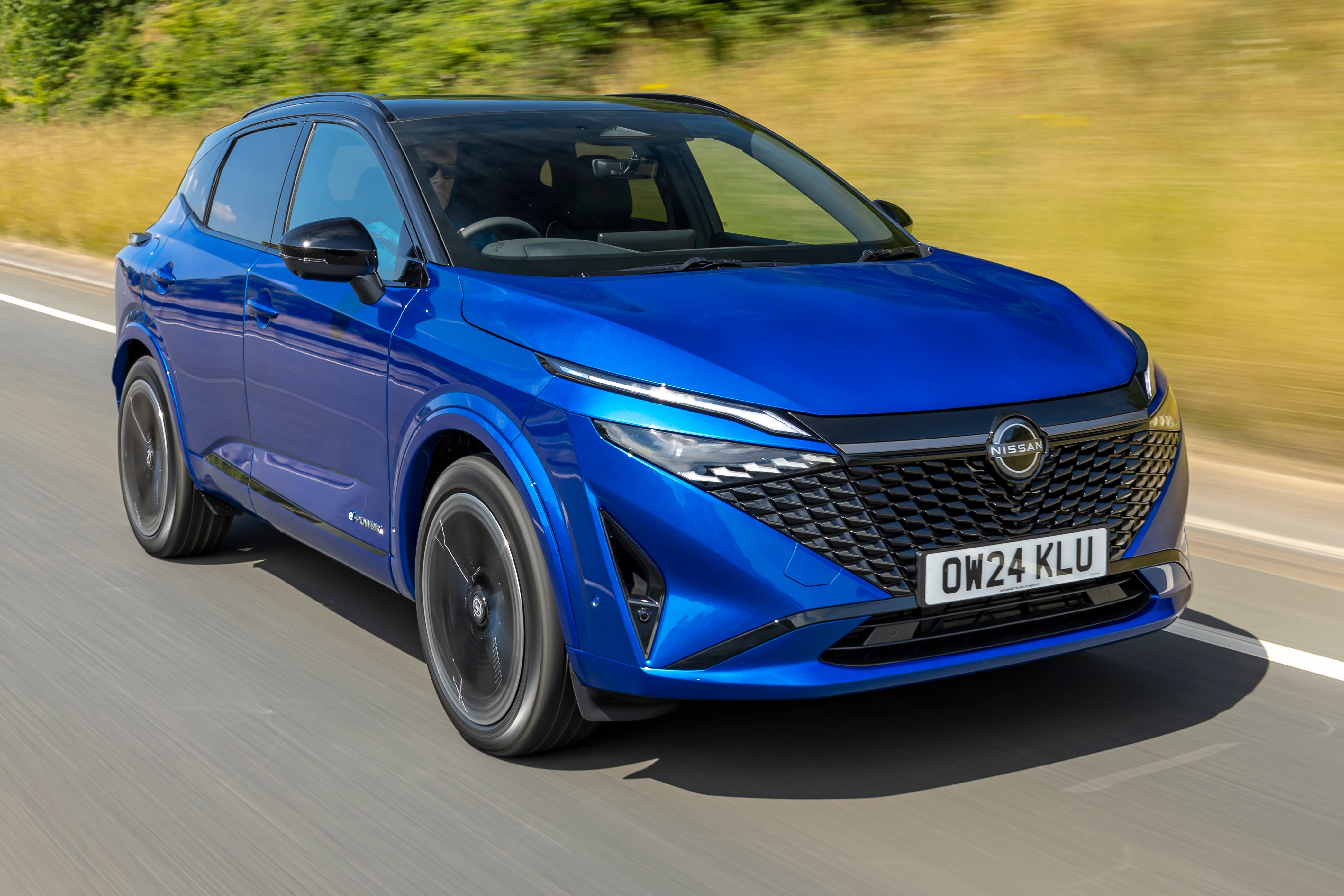
The Nissan Qashqai is a more modern-feeling rival that offers electrified powertrains. That makes it a strong choice if hybrid efficiency is appealing to you, but the Skoda Karoq counters with a more straightforward cabin and better overall practicality. The Hyundai Tucson and Kia Sportage are also good alternatives, with both offering longer warranties and hybrid powertrain options.
What's the interior like in the Skoda Karoq?
This is a cabin built around ease-of-use rather than theatre. The Skoda Karoq gives you a high driving position, excellent visibility, and a user interface that’s as intuitive to use as a knife and fork.
Skoda Karoq boot space and practicality
The Skoda Karoq’s interior is a reminder that good family-car design is often about restraint. It doesn’t try to wow you with giant screens or flashy design. Instead, it gives you a dashboard that features physical buttons and dials to operate a wide variety of functions (a rarity these days), all of which are logically placed, clearly marked and an absolute doddle to use. Yes, there’s a central touchscreen, but it’s confined mostly to audio and navigation duties, so you won’t have to faff about with it every time you want to perform a basic everyday function, such as tweaking the climate control, like you do in many rivals.
You also have a highly adjustable driving position that suits a wide range of people, and outward visibility that makes the car easy to place in town or on narrow roads. The front seats are comfortable, and there’s plenty of space around them to allow drivers of all shapes and sizes to settle.
Rear-seat space is also strong for this class, especially given the Skoda Karoq’s comparatively compact footprint. It’s one of the smaller cars amongst rivals, yet also one of the most spacious. There’s enough headroom and legroom in the back for adults to travel in genuine comfort, and three will fit across the rear bench when you need to maximise the passenger count.
Boot space is one of the Skoda Karoq’s main selling points, too. The current figures stand at 521 litres with the seats up and 1630 litres with them folded, which is strong for a car of this size. The shape of the boot is useful, as well: square, wide and easy to load.
Skoda’s traditional practical touches are present and correct, with large door bins, useful cubbies, hooks and clever storage ideas. Rear-seat passengers also have folding tables built into the backrests of the front seats.
As we’ve mentioned already, though, the Varioflex seating system, arguably the Skoda Karoq’s most useful feature, is no longer offered on brand new Karoqs. These were seats that slid, fold and reclined individually, and could also be removed entirely to maximise loadspace. So useful is this feature, in fact, that we’d seriously consider buying a used Karoq rather than a new one in order to get it.
Skoda Karoq dimensions
The Skoda Karoq is 4,390mm long in standard front-wheel-drive form, with a wheelbase of 2,638mm. The height is 1,603mm for 4x2 models, rising slightly for four-wheel-drive versions. These versions are a fraction longer, too, with a fractionally shorter wheelbase, but the differences are so minuscule that you’ll never notice them. Either way, the Karoq is 1,841mm wide without door mirrors, and 2,025mm wide with them included.
That gives the car a footprint that is manageable in town and in tight car parks, while also delivering more cabin and boot space than many rivals.
Tech and infotainment in the Skoda Karoq
You know that phrase about keeping things simple? Well, that’s precisely what’s so great about the Karoq’s infotainment. This is an old car now, having been originally released in 2018. It comes from a time before the car world went nuts for touchscreens, and the car still has the same basic user interface that it had all those moons ago. That means buttons, knobs and switches for operating a vast variety of functions, which as the very phrase dictates, allows the infotainment touchscreen to concentrate mainly on information and entertainment (well, navigation and audio), without being cluttered-up by the need to also operate myriad other functions.
The infotainment system in all cars includes DAB radio, Bluetooth, navigation, wireless Apple CarPlay and Android Auto, and wireless smartphone charging. Entry-level SE Edition cars have an 8.0-inch central screen, while SE L Edition and SportLine Edition cars have a larger 9.2-inch screen, but both have the same basic operating system. Either way, it’s refreshingly easy and intuitive to use, with simple, logically arranged menus and not an ounce of frippery to the way it works. Of course, it doesn’t look the glitziest, but in terms of user-friendliness, it’s got pretty much every other newer rival soundly beaten.
As of the 2022 facelift all versions also get a 10.25-inch ‘Virtual Cockpit’, which is a digital instrument panel behind the steering wheel that’s clear and easy to read.
Materials available on the Skoda Karoq
Your Karoq’s interior treatment will depend on which trim level you go for. SE Edition uses the Loft interior with fabric upholstery, while SE L Edition moves to a Lounge interior with microsuede trim and feels plusher as a result. SportLine Edition gets darker, sportier detailing and a more assertive look inside to match the exterior styling.
The design could be accused of looking a little old-fashioned these days, but as we’ve already observed, this has big benefits when it comes to ease-of-use. Importantly, the main touchpoints feel both tactile and plush, and even the panels that you don’t come into contact with so often have a smart and substantial look and feel. It feels like a high-quality environment despite the car’s relatively affordable price.
It’s also worth noting that post-facelift Karoqs introduced more sustainable material options and broader upholstery choices than earlier cars, so if buying used, the interior finish of your car might be a bit different depending on its age and grade.
What's the Skoda Karoq like to drive?
Comfort is the Karoq’s biggest strength, with a soft, forgiving suspension that absorbs bad road surfaces while keeping the body from becoming bouncy, which will suit most families down to the ground. It’seasy to drive, easy to place and generally keeps journeys calm.
Skoda Karoq range and performance
Petrol buyers can choose a 1.0 TSI 116PS, a 1.5 TSI 150PS with cylinder deactivation, or a 2.0 TSI 190PS DSG 4x4. Diesel buyers get a 2.0 TDI 150PS DSG 4x4.
The entry 1.0-litre turbocharged petrol is the cheapest choice. It covers 0-62mph in 10.3 seconds, which isn’t unreasonably slow, but while it’s adequate for urban low-speed work, it can quickly begin to feel out of its depth when you need to go faster or load the car up with people and luggage.
The 150PS 1.5-litre turbo is much more like it. It still isn’t desperately fast, taking 8.9 seconds to go from 0-62mph in manual form, or 9.0 seconds when combined with the DSG dual-clutch automatic, but its more muscular low- and mid-range urge makes it a lot more flexible, allowing you to build speed in an easier, more relaxed way. It’s only a fraction behind the smaller engine for fuel economy, too, so there’s hardly any penalty to pay there.
The same can’t be said of the 2.0-litre turbo petrol option. With 190PS and four-wheel drive, fuel economy takes a substantial hit, and it’s expensive to buy in the first place, too. It’s pretty quick, covering 0-62mph in 7.0 seconds, but how fast do you really want to go in a car like the Karoq?
The 2.0-litre diesel remains the choice for high-mileage drivers and those who tow (its braked trailer weight of 2,100kg is the best in the range by some distance). It reaches 62mph in 8.7 seconds, and feels generally muscular and settled, and will provide excellent fuel economy on a long motorway run.
Performance data
| Model | Engine/battery size | Power | 0-62mph | Range/MPG |
|---|---|---|---|---|
1.0 TSI 116 | 1.0-litre | 116PS | 10.3 seconds | Up to 48.7mpg |
1.5 TSI 150PS | 1.5-litre | 150PS | 8.9 seconds | Up to 47.9mpg |
1.5 TSI 150PS DSG | 1.5-litre | 150PS | 9.0 seconds | Up to 47.1mpg |
2.0 TSI 190PS 4x4 | 2.0-litre | 190PS | 7.0 seconds | Up to 35.8mpg |
2.0 TDI 150PS DSG 4x4 | 2.0-litre | 150PS | 8.7 seconds | Up to 50.4mpg |
Skoda Karoq driving and refinement
In a market where so many cars are trying to be the sportiest, edgiest, most performance-focused cars of their type, the Skoda Karoq is refreshingly different. Instead, the Skoda focuses on being the calmest, quietest, most comfortable car it can be, and that’s what makes it such a good family car.
It’s that last bit - comfort - where it truly excels. The soft suspension does a fabulous job of isolating the car’s occupants from the effects of a craggy or cracked road surface at all speeds, yet there’s enough control in the suspension to prevent the body from bouncing up and down untidily, making kids feel queasy. It really does strike an exceptionally good balance between comfort and control.
And while that means it’s not the most exciting or engaging car of its type in terms of handling, it’s still very capable, with strong grip, decent suppression of body lean and responsive, accurate steering. For most family car buyers, the Karoq will be plenty involving enough, and even if it isn’t, they’ll likely prefer to have the comfort it delivers anyway.
Refinement is generally good. The 1.5 TSI is the quietest and smoothest all-rounder in everyday use. The 1.0 TSI becomes more vocal when pushed, and the diesel can sound gruffer around town, although it settles down well at cruising speeds. The DSG automatic is fine on the move, but can be hesitant or abrupt at low speeds, particularly during parking manoeuvres.
Some Skoda Karoq SportLine Edition versions also get Dynamic Chassis Control and progressive steering as standard. Those features bring a slightly broader spread of responses, but they do not fundamentally change the Karoq’s character, so only choose the SportLine if you really like the looks.
How safe is the Skoda Karoq?
The Skoda Karoq received a five-star Euro NCAP rating, with adult occupant protection scored at 93%, child occupant protection at 79%, vulnerable road user protection at 73% and safety assist at 58%. However, that test happened way back in 2017, and these ratings only last for six years to reflect ever-improving safety standards, so the Karoq’s rating is now considered to be expired.
In current trim, even SE Edition cars come with a decent spread of safety equipment, including autonomous emergency braking, lane assist, an advanced driver attention and drowsiness monitor, and seven airbags, with more airbags available from the options list. You also get front- and rear parking sensors, and a rear-view camera, to help avoid parking scrapes. SE Edition cars also have regular cruise control, while higher-spec cars swap this for an adaptive system. However, if you want blind spot detection, this has to be added as an optional extra, and can only be had on the SportLine.
Running costs: What it's like to live with a Skoda Karoq
The fuel efficiency of the Skoda Karoq is reasonably good with most of the engine choices, but the lack of hybrid powertrains - mild, self-charging or plug-in - means that quite a few rivals have an edge there. At least the Karoq is affordable to buy.
Skoda Karoq fuel economy
According to official WLTP combined fuel economy figures, the diesel is the most economical choice with up to 50.4mpg achievable. Bear in mind, though, that it still won’t be suitable for you if you do mainly short journeys because such use causes problems with your car’s Diesel Particulate Filter (DPF), possibly resulting in an expensive fix.
After that, it’s the entry-level 1.0-litre that’s next-best, with a figure of up to 48.7mpg. However, our favoured 1.5-litre engine is only fractionally behind, with a figure of up to 47.9mpg when fitted with the manual gearbox, or up to 47.1mpg when fitted with the DSG automatic. With the more relaxed performance the larger engine gives you, that’s definitely a hit worth taking.
Don’t get tempted by the stronger performance of the 190PS 2.0-litre petrol engine, because that’ll absolutely decimate your fuel returns: a maximum of 35.8mpg is the best it’ll do.
It’s true that many rivals that offer hybrid technology - be it mild hybrid, self-charging hybrid, or plug-in hybrid technology - have superior figures for fuel economy, but on the flipside, the Karoq does avoid the extra cost and complexity that usually come with electrified drivetrains.
Skoda Karoq warranty and servicing
Skoda’s standard new-car warranty runs for three years, with the first two years unlimited mileage and the third year capped at 60,000 miles. Skoda buyers can optionally extend their warranty cover (at extra cost) to four years and 80,000 miles, four years and 100,000 miles, or five years and 100,000 miles.
Like all combustion-engined Skodas, you can opt for one of two different servicing arrangements on the Karoq. Low-mileage drivers who do mainly short journeys in urban areas, and those who tow, are advised to keep to a fixed regime of a service every year or 10,000 miles. Higher-mileage drivers who do more constant-speed motorway work can opt for a flexible regime where the car will tell you when it needs attention. This can allow anything between 9,000- and 24,000 miles - or a maximum of 24 months - between services.
Skoda Karoq insurance groups
Current Skoda Karoq insurance groups run from 14 to 26. The entry 1.0 TSI SE Edition sits at the lower end, while the 2.0 TSI 190PS SportLine Edition tops the range. The vast majority of Karoqs sit in a very sensible place for the class as a result, in the mid-to-high teens or very early twenties.
How much does it cost to tax a Skoda Karoq?
Only a couple of the very highest-end versions of the Skoda Karoq cost more than £40,000 when brand new, so they’ll be the only ones automatically affected by the higher rate of VED road tax. That adds an additional £440 to your annual tax bill, on top of the flat rate of £200 per year, for a five-year period between years two and six of the car’s life. Karoqs that cost less than that £40,000 threshold will be liable for just the £200 flat rate.
That’s not the full story, though, because to avoid the higher rate, the price of your car when brand new has to be below that £40,000 barrier once you’ve included any optional extras fitted. And there are a lot of optional extras available. Lower-end cars should still avoid the extra charge easily, but a higher-end version could be easily taken over the threshold with the addition of a few extras. If you’re buying brand new, keep your box-ticking in check, and if buying used, search online the registration of any potential purchase so that you know whether the original owner did the same.
What trims are available with the Skoda Karoq?
The Skoda Karoq’s three trim levels have chopped and changed a bit during the many, many years it’s been on sale, and it’s currently offered in three of them: SE Edition, SE L Edition and SportLine Edition.
Karoq SE Edition is the entry point and, crucially, no longer feels basic (older base-level cars did, to be honest). It gets 17-inch alloy wheels, heated front seats, a heated steering wheel, privacy glass, front- and rear parking sensors, a rear-view camera, cruise control, keyless entry, dual-zone climate control, wireless phone charging and the 8.0-inch Amundsen navigation system. For many buyers, this will be enough.
Karoq SE L Edition is a more luxurious choice, and feels it, with the microsuede upholstery and larger 9.2-inch Columbus navigation screen giving the interior a real lift. It also comes with some handy extra kit including adaptive cruise control, headlight washers, and a handsfree electric boot lid, along with some nice-to-haves including smart 18-inch alloys and chrome roof rails.
Karoq SportLine Edition is the flagship. It gets sportier detailing inside and out, sports seats, larger 19-inch wheels and, depending on engine, extra dynamic hardware including Dynamic Chassis Control and progressive steering. Besides that, though, you don’t actually get much in the way of extra features, so it makes the extra cost very difficult to justify.
Ask the Drive experts: common questions
How much does the Skoda Karoq cost?
What is the best Skoda Karoq engine?
Is the Skoda Karoq available as a hybrid?
How much boot space does the Skoda Karoq have?
Is the Skoda Karoq a seven-seater?
Get our latest advice, news and offers
Keep me updated by email with the latest advice, news and offers from Drive.
.jpg)
.jpg)