Kia EV2 Review

Written By Phill Tromans
- 2026
- Small SUV
- Electric
What we love
Comfortable and easy to drive
Airy and cleverly designed cabin
Strong range and standard equipment
Things to consider
Boot space is rather tight
Performance is adequate rather than exciting
A little noisy at motorway speeds
The DRIVE take on the Kia Ev2, is it the right car for you?
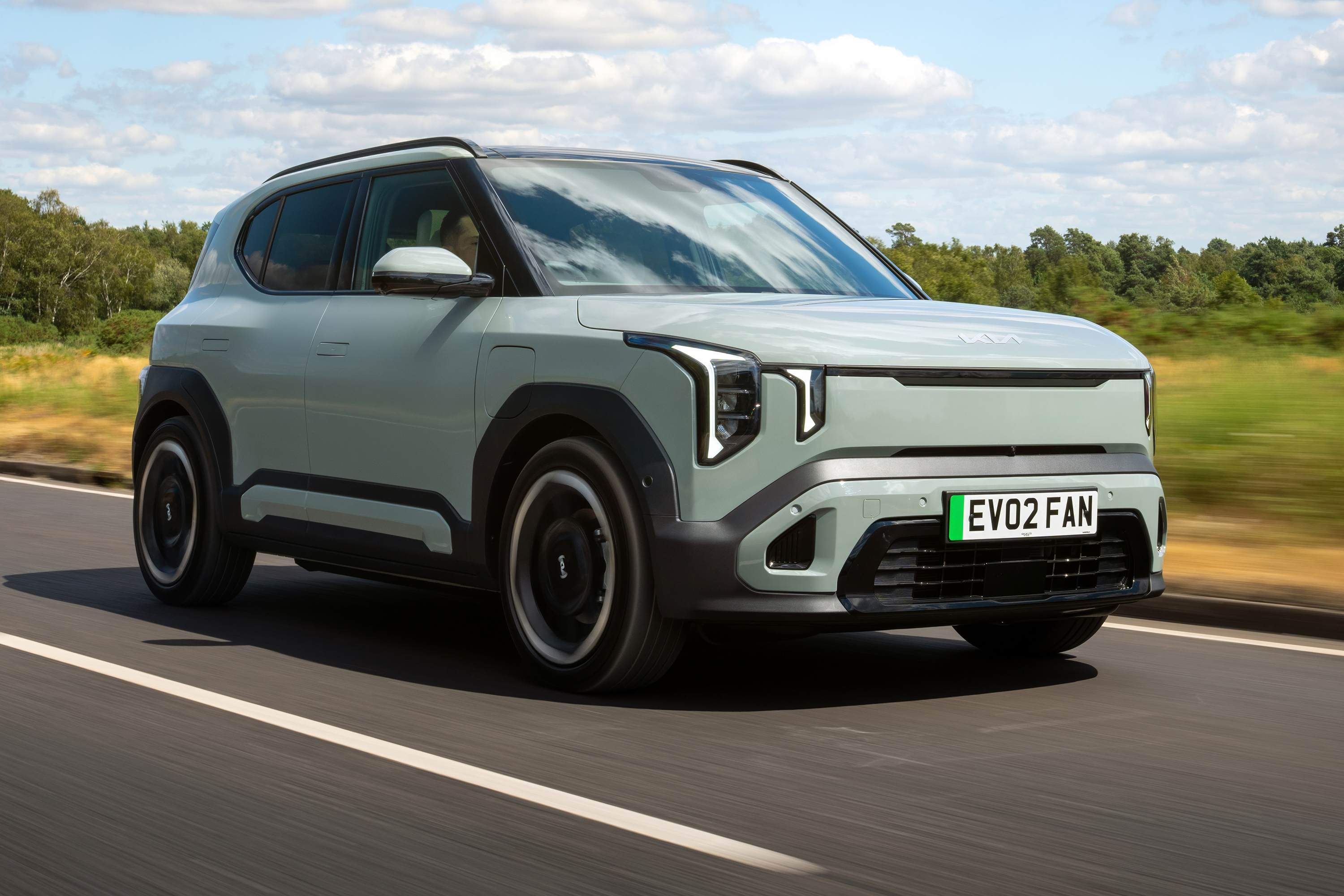
The Kia EV2 is a small electric SUV that feels particularly well suited to town, but it’s capable of much more than just short urban journeys. It’s easy to drive, comfortable even on poor-quality roads and, with up to 275 miles of official range, entirely capable of longer motorway trips.
Space inevitably has its limits in a car barely more than four metres long. The rear seats are better suited to children than three adults and the 362-litre boot won’t swallow a family’s holiday luggage, but there’s enough practicality for everyday life or a weekend away.
Air is impressively well equipped and represents excellent value once the Electric Car Grant is applied. GT-Line feels that bit nicer inside and out, though, and would be our choice of the range. It isn’t especially sporty, though, so buyers wanting sharper handling should look at the Volkswagen ID.3 or Cupra Born instead.
The Kia Ev2 in more detail
The Kia EV2 is the smallest model in Kia’s electric-car line-up, sitting beneath the EV3 as a compact alternative to cars such as the Renault 5 E-Tech Electric, Hyundai Inster and forthcoming Skoda Epiq. Kia calls it a B-segment SUV, although its low driving position and compact footprint mean it feels just as much like a chunky electric hatchback.
That’s no bad thing, though. At just over four metres long, the EV2 is easy to manoeuvre in town and to park, but it still has a surprisingly airy cabin inside its upright body. There’s useful storage, a low centre console and a sensible mix of touchscreen functions and physical controls, so it feels thoughtfully designed rather than stripped back for space.
The model line-up is slightly unusual. The entry-level Air uses the larger 61kWh battery and has the longest official range, at up to 275 miles. The First Edition costs a little more but uses a smaller 42.2kWh battery, reducing its range to 195 miles. GT-Line and GT-Line S return to the larger battery, although their standard 19-inch wheels cut their official range to 261 and 257 miles respectively.
First Edition is also the most powerful version, with 144PS, while the 61kWh models produce 133PS. None are especially quick, but the instant response of the electric motor makes the EV2 feel lively enough around town and perfectly capable of joining faster traffic.
What's the best Kia Ev2 trim and battery option?
The sweet spot in the Kia EV2 range is GT-Line with the 61kWh battery. It isn’t the cheapest version, but it gives you the combination that makes most sense: more than 260 miles of official range, a nicer interior and plenty of useful equipment.
Air is the clever value choice. It costs less, uses the same 61kWh battery and actually has the longest official range at 275 miles, thanks to its smaller 16-inch wheels. It also comes with heated seats, a heated steering wheel, automatic climate control, twin 12.3-inch displays, wireless smartphone connectivity, parking sensors, a reversing camera, adaptive cruise control and Highway Driving Assist 2.0. There’s very little you genuinely need to add.
GT-Line feels more special inside, though. Its two-tone upholstery, woven dashboard and door trim, electrically adjustable driver’s seat, wireless phone charger and adaptive LED headlights make the extra cost easier to justify. At £28,995 after the current Electric Car Grant, it remains competitive for an EV with more than 260 miles of range.
The First Edition has plenty of kit but only 195 miles of range, while GT-Line S adds luxuries that, while nice to have, push the price up more than necessary
What’s the price of the Kia Ev2?
The Kia EV2 starts at £27,995 for Air with the 61kWh battery, or £24,245 after the current £3,750 Electric Car Grant. First Edition costs £28,495 before its £1,500 grant, reducing to £26,995, but uses the smaller 42.2kWh battery and has only 195 miles of range.
GT-Line costs £32,745 before the grant and £28,995 afterwards. It’s the version we’d choose, adding nicer trim and useful equipment without the price of the range-topping model. GT-Line S costs £36,345, or £32,595 after the grant, while a heat pump adds £700.
That makes the EV2 competitive with rivals such as the Renault 5 E-Tech Electric and Škoda Epiq, although the cheapest Citroën ë-C3 undercuts it. Air is particularly strong value, offering the biggest battery and longest range for less than First Edition after grants.
Alternatives to the Kia Ev2
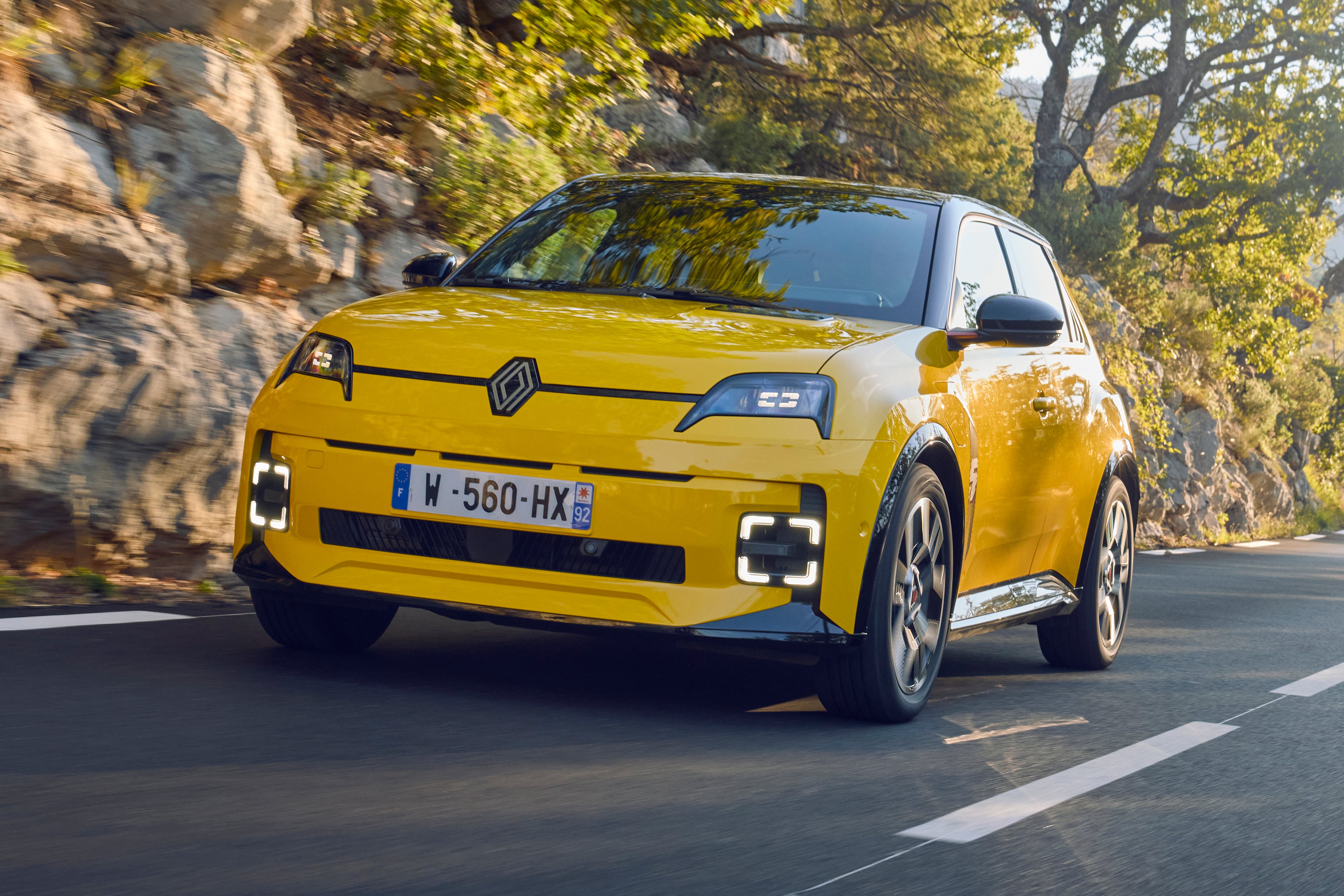
The Renault 5 E-Tech Electric is probably the most obvious alternative if you want something with more visual character. It feels more obviously like a stylish electric supermini than a small SUV and its 150PS version offers up to around 252 miles of range. It’s also cheaper in several specifications after the Electric Car Grant.
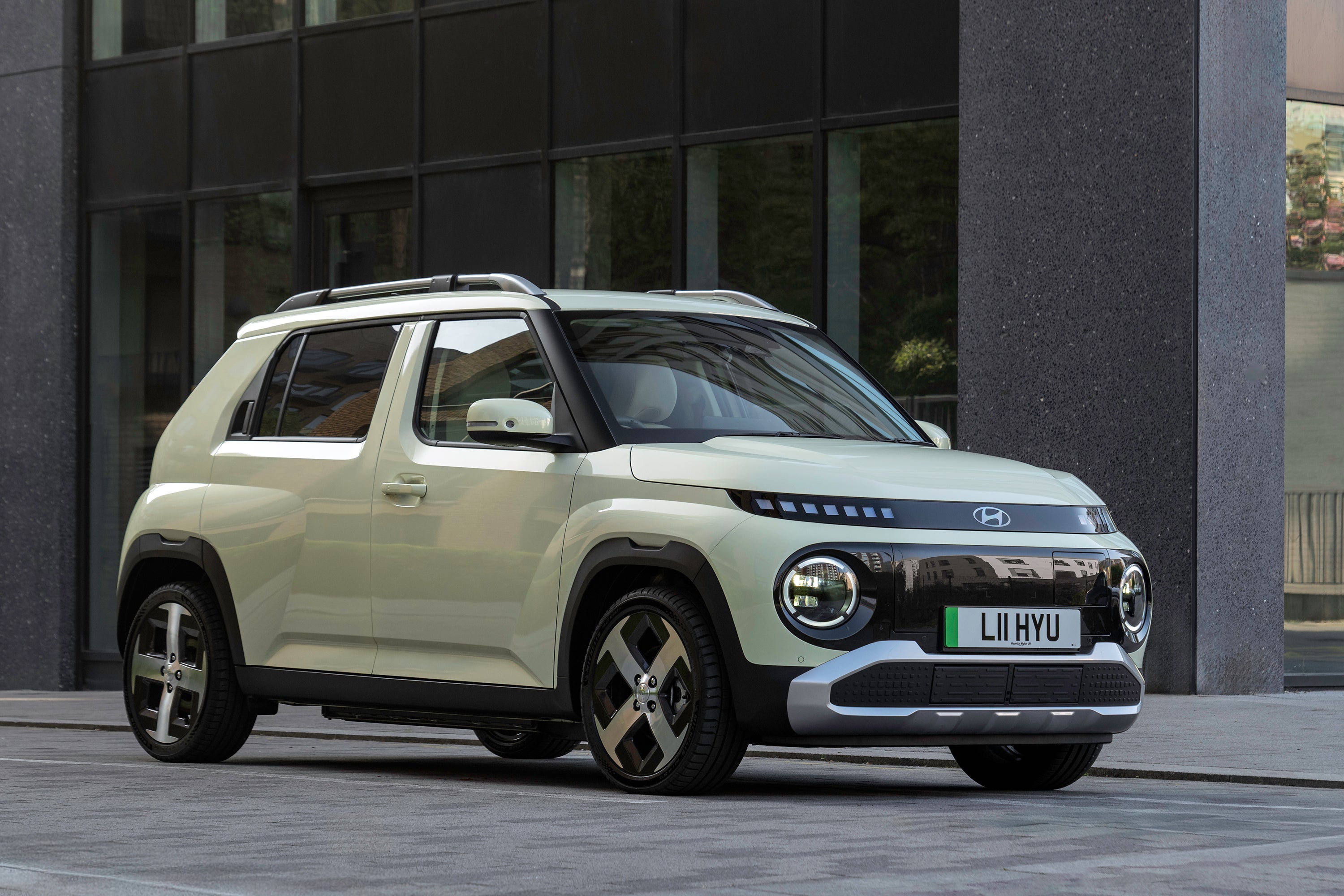
The Hyundai Inster takes the opposite approach. It’s smaller and less conventional-looking than the EV2, but its clever sliding rear seats make excellent use of the available space. Long-range versions manage up to 229 miles and even the entry model gets a heat pump as standard, something Kia restricts to an option on the EV2 GT-Line S.
The Citroën ë-C3 is worth considering if price is the most important factor, because it can substantially undercut the Kia. That said, the lower-priced versions also have much shorter ranges and it doesn’t feel as sophisticated.
The Skoda Epiq is perhaps the most interesting direct rival. It’s another compact electric SUV, with the larger 52kWh version offering up to 272 miles, strong interior practicality and considerably more power than the Kia. Prices for the Epiq 55 start at £27,700 before its £1,500 grant. If you're looking for something a bit sportier and dynamic, check out the excellent CUPRA Raval.
The EV2 isn’t the cheapest, fastest or most characterful car here, but it combines useful range, a mature driving experience, plenty of equipment and Kia’s long warranty in a very convincing way.
What's the interior like in the Kia Ev2?
The Kia EV2’s cabin is better than you might expect from the smallest and cheapest car in the brand’s electric range. It feels airy in the front, with a low centre console that leaves plenty of open space between the driver and passenger. Storage is well considered, while Kia has mixed large displays with enough physical controls to stop the dashboard becoming frustrating.
Material quality reflects the price, with plenty of hard plastics, but they’re textured and deliberately finished rather than feeling obviously cheap. GT-Line adds nicer upholstery and woven trim across the dashboard and doors, which lifts the ambience noticeably. Small details help, too – even the interior door pull has a little ‘have a nice day’ message moulded into it.
Kia Ev2 boot space and practicality
The EV2 is impressively roomy for its size, but there are limits to what you can squeeze into a car just over four metres long.
Up front, space is excellent. The relatively upright body gives plenty of headroom and the low centre console contributes to the sense of openness. There’s a useful storage tray low down in the centre, cupholders, another tray and an armrest with further storage. The door bins will take a bottle and other small items, while the glovebox is a genuinely useful size rather than the token compartment fitted to some modern EVs.
The GT-Line models also have several USB-C charging connections up front, a wireless charging pad and a 12V socket rated at 180W. Rear passengers get another two USB-C charging ports.
Rear space is more mixed. Taller rear-seat passengers will have adequate, though not generous legroom. Headroom is tighter, which makes the outer rear seats perfectly usable for adults on shorter journeys but better suited to children for regular family use. The centre seat is much less accommodating for an adult with a higher seating position, although the completely flat rear floor at least means there isn’t a transmission tunnel stealing foot space.
There are two Isofix points, a fold-down centre armrest with two cupholders on GT-Lines and a seatback pocket behind the front passenger seat. It’s slightly odd that the driver’s seat doesn’t get a matching pocket, however.
The boot holds 362 litres with the seats upright. That’s enough for the weekly shop, a couple of overnight bags or everyday family kit, but this isn’t a car you’d choose for carrying a week’s holiday luggage for four people.
The adjustable boot floor can sit level with the loading lip and provides useful storage underneath, including somewhere to hide charging cables. Put it in its upper position and fold the 60:40 rear seats and the resulting load area is close to flat, with up to 1,201 litres of space.
There aren’t any particularly useful shopping-bag hooks in the boot, but overall the EV2 makes sensible use of the space available. GT-Line and higher specifications also get a 15-litre storage compartment beneath the bonnet.
Kia Ev2 dimensions
The Kia EV2 measures 4,060mm long in Air and First Edition form, or 4,065mm as a GT-Line or GT-Line S. Every version is 1,800mm wide and has a 2,565mm wheelbase. Air and First Edition are 1,575mm high, while GT-Line versions rise slightly to 1,585mm.
That makes it substantially smaller than a Kia EV3 and easy to manoeuvre in town. The clever bit is that it doesn’t feel tiny from the front seats. Its upright proportions and efficient packaging make the cabin seem larger than the dimensions suggest.
Tech and infotainment in the Kia Ev2
Every Kia EV2 gets the same basic three-screen dashboard arrangement. There’s a 12.3-inch digital instrument display ahead of the driver, a 5.3-inch climate-control screen in the centre and a 12.3-inch touchscreen for infotainment and navigation. Wireless Apple CarPlay and Android Auto are standard across the range.
The driver display is clear and easy to read. It isn’t hugely configurable, but you can switch between information such as navigation and trip data, while speed, remaining range and the power or regeneration display are always easy to understand. We spent most of our time using Apple CarPlay rather than Kia’s native infotainment system, but there are some sensible usability touches around it.
The central climate screen is partly obscured by the steering wheel from our preferred driving position. In practice, that wasn’t a major annoyance because you don’t need to stare at it while driving, but it’s worth considering before you buy. More importantly, Kia has provided separate physical toggles for temperature adjustment and shortcut switches for climate functions. Beneath the infotainment screen there are also shortcuts for Home, Map, Search, Media and Setup, along with a customisable button. That’s an improvement over some other recent Kia interiors, where frequently used functions have relied more heavily on the screen.
There’s another configurable star button on the steering wheel. On our test cars this had been set up to jump directly to the driver-assistance menu, which makes it much quicker to disable any warnings you find intrusive.
Air-spec cars gets a six-speaker stereo but no wireless phone charger. GT-Line adds wireless charging, while First Edition and GT-Line S upgrade to an eight-speaker Harman Kardon system.
Materials available on the Kia Ev2
The Kia EV2’s interior finishes vary by trim. The entry-level Air uses grey cloth upholstery, with subtle green accents in the cabin and textured or sculpted hard-plastic surfaces across the dashboard, doors and centre console.
The First Edition adds a more distinctive specification, including artificial-leather upholstery, ambient lighting and additional trim detailing. Its seats and interior surfaces are designed to give the cabin a more individual appearance than the standard Air.
GT-Line uses two-tone artificial-leather upholstery, a different steering wheel and GT-Line-specific interior treatment. It also features woven material across sections of the dashboard and door cards, while the seats use perforated and stitched upholstery. The headrests have a separate textured fabric finish.
GT-Line S builds on the GT-Line interior with further equipment and configurable ambient lighting. Across the range, Kia combines cloth, artificial leather, woven trim, textured fabrics and hard plastics, with the exact colour and material combinations dependent on your chosen spec.
What's the Kia Ev2 like to drive?
The Kia EV2 is easy to drive and comfortable without any pretensions of sportiness. Light steering makes town driving and parking effortless, while the suspension smooths out poor surfaces reasonably well, even on the GT-Line’s larger 19-inch wheels. The performance is modest, but the EV2’s instant electric response gives you enough urgency for urban traffic and motorway slip roads. It feels stable and composed at higher speeds, although you do get some tyre and road noise. Overall, the EV2 feels comfortable, refined and easy to use both around town and on longer journeys.
Kia Ev2 range and performance
The Kia EV2 is available with two battery and motor combinations, although the choice is tied to the trim level rather than offered independently.
First Edition uses the smaller 42.2kWh battery and the more powerful 144PS motor, producing 250Nm of torque. It reaches 62mph in 8.7 seconds, has a 100mph top speed and offers up to 195 miles of official WLTP range.
The larger 61kWh battery is fitted to Air, GT-Line and GT-Line S. These versions use a 133PS motor, again producing 250Nm. Air is the quickest of the three, reaching 62mph in 9.5 seconds, while GT-Line and GT-Line S take 9.7 seconds.
The Air model will give you the longest range in the EV2 line-up. Its smaller 16-inch wheels help it achieve up to 275 miles according to official figures. The GT-Line and GT-Line S trims use larger 19-inch wheels, which reduce their official ranges to 261 and 257 miles respectively.
In everyday driving, the 133PS versions feel adequately brisk rather than genuinely fast. The instant response of the electric motor makes them nippy around town, and there’s enough performance for joining motorways without difficulty. We’ve yet to try the First Edition with its extra power, but while it might have nippier acceleration you’ll lose out on range.
We drove the EV2 with only the driver aboard and no meaningful luggage load, and in those conditions it pulled away smartly, felt suitably nippy around town and had no difficulty reaching motorway speeds. We didn’t get the opportunity to attempt any meaningful high-speed overtakes and haven’t yet driven one fully loaded, so that’s something we’d want to revisit before making firm claims about performance. Our impression so far is that 133PS is about as much as the EV2 needs rather than more than it needs.
At one point, Kia were planning a future GT version with extra power, but that seems to have been abandoned. Still, most buyers are unlikely to feel short-changed by the standard car.
Performance data
| Model | Engine/battery size | Power | 0-62mph | Range/MPG |
|---|---|---|---|---|
Kia EV2 First Edition | 42.2kWh | 144PS | 8.7 sec | Up to 195 miles |
Kia EV2 Air | 61kWh | 133PS | 9.5 sec | Up to 275 miles |
Kia EV2 GT-Line | 61kWh | 133PS | 9.7 sec | Up to 261 miles |
Kia EV2 GT-Line S | 61kWh | 133PS | 9.7 sec | Up to 257 miles |
Kia Ev2 driving and refinement
The Kia EV2 is at its best around town, with its light steering making parking and threading through narrow streets a cinch. It’s simple to drive smoothly and the instant response from the electric motor makes it feel nippy away from junctions.
There’s a button at the bottom of the steering wheel to switch between driving modes – Eco, Normal, Sport and Snow. Sport gives a bit more urgency to the throttle but the EV2 always feels like a relaxed small SUV rather than a hot hatch.
The comfort remains on country roads. There’s a limited amount of fun to be had for enthusiasts, thanks to its compact size and ease of direction change, although the light steering – great for around town – reduces engagement, and there’s not a huge amount of communication from the front wheels. It’s fine, but it’s not really involving.
Ride quality is decent on just about every surface. We tried the 16-inch wheels on the Air and the 19s available on the GT-Line and GT-Line S, and noticed remarkably little difference between them. Broken surfaces and sharp imperfections are still apparent, but the suspension takes the harsh edge off rather than crashing through them.
On the motorway, the EV2 feels stable and refined for a car of this size. There’s enough performance to join fast-moving traffic without difficulty, although overtaking requires a little more planning than it would in a more powerful electric car. At around 70mph, moderate road and tyre noise reaches the cabin, but it isn’t excessive.
Regenerative braking can be adjusted using paddles behind the steering wheel. There are four conventional settings, from level zero to level three.
How safe is the Kia Ev2?
The Kia EV2 hasn’t yet received a rating from independent safety organisation Euro NCAP, but standard safety equipment is extensive. Every EV2 gets Forward Collision-Avoidance Assist 2.0 with pedestrian and cyclist detection, lane-keeping assistance, Lane Follow Assist, Intelligent Speed Limit Assist, rear cross-traffic collision avoidance, Safe Exit Warning and driver-attention monitoring. Smart Cruise Control 2.0 with stop-and-go functionality and Highway Driving Assist 2.0 are also standard, which is unusually generous at the Air’s price point. Front and rear parking sensors and a reversing camera are fitted throughout the range.
First Edition and GT-Line S add blind-spot collision avoidance, a Blind-Spot View Monitor and a 360-degree camera, while GT-Line gets additional parking collision-avoidance technology.
Like most modern cars, the EV2 produces plenty of warning chimes and assistance notifications. However, Kia makes the relevant settings relatively quick to reach. Our test cars had their customisable steering-wheel button set to open the assistance menu directly, making it easy to deal with anything that becomes irritating.
Running costs: What it's like to live with a Kia Ev2
The EV2 should be relatively inexpensive to run if you can charge at home. The Air model is the efficiency champion, combining the larger battery with smaller 16-inch wheels for up to 275 miles of official range. GT-Line sacrifices 14 miles for its larger wheels, while GT-Line S gives away a further four.
Kia’s long seven-year warranty and relatively generous 20,000-mile service interval are useful ownership advantages, too.
The main oddity is the heat pump. You can’t specify one on Air, First Edition or GT-Line – it’s a £700 option reserved for GT-Line S.
Kia Ev2 charging times and costs
Both Kia EV2 battery packs support 11kW AC charging and DC rapid charging at up to 118kW. The 42.2kWh First Edition can go from 10% to 80% charge in 29 minutes on a sufficiently powerful DC charger. The 61kWh versions need around 30 to 31 minutes.
That doesn’t give the EV2 the huge headline charging rate of Kia’s larger 800V models, but the battery is much smaller and the resulting charging time is competitive.
At an 11kW AC charger, Kia quotes four hours and five minutes to go from 10% to 100% charge with the 42.2kWh battery and five hours and 35 minutes with the 61kWh version. A conventional home wallbox will comfortably recharge either version overnight.
GT-Line S also adds vehicle-to-load (V2L) functionality and a three-pin household socket, allowing the battery to power external devices.
Charging cost will depend heavily on your tariff. Owners with access to a cheap overnight EV rate should be able to cover everyday mileage for very little money, but relying on expensive motorway rapid chargers will reduce the financial advantage over a petrol car.
Kia Ev2 warranty and servicing
The EV2 comes with Kia’s seven-year or 100,000-mile new-car warranty, whichever comes first. The cover transfers with the car, which should help its appeal as a used car.
The high-voltage battery gets additional capacity protection. For current model-year electric cars, the battery state of health is covered to at least 80% for five years or 60,000 miles and at least 70% for eight years or 100,000 miles, whichever limit is reached first.
Servicing is required every two years or 20,000 miles, whichever comes first. That combination gives the Kia particularly strong cover. Many rivals offer similar battery cover, but relatively few match the seven-year general vehicle warranty.
Kia Ev2 insurance groups
Kia’s current UK data only confirms an insurance rating for the 42.2kWh First Edition, which sits in group 21A of 50. Insurance groups for Air, GT-Line and GT-Line S remain officially listed as TBC at the time of writing. That means it’s too early to give a reliable overall insurance-group range for the EV2, but we don’t expect other models to stray too far from the First Edition, which is pretty typical for a car of this type.
How much does it cost to tax a Kia Ev2?
A new Kia EV2 costs £10 in Vehicle Excise Duty (VED or road tax) during its first year, but that’s included in the purchase price. From the second year onwards, it moves to the current standard rate of £200.
Electric cars with an original list price of more than £50,000 can also attract the £440 Expensive Car Supplement during years two to six, but that isn’t a concern with the EV2. Even the GT-Line S with the optional heat pump costs only £37,045 before other options, so every version sits comfortably below the threshold.
What trims are available with the Kia Ev2?
The Kia EV2 is available in four trims: Air, First Edition, GT-Line and GT-Line S. Air is the best-value choice, while GT-Line is likely to be the sweet spot if you want a more upmarket look and extra equipment without stretching to the top of the range.
Standard equipment on the Kia EV2 Air includes 16-inch alloy wheels, LED headlights, heated and electrically folding door mirrors, grey cloth upholstery, heated front seats and steering wheel, automatic climate control and smart key entry. You also get a 12.3-inch navigation touchscreen, matching 12.3-inch driver display, 5.3-inch climate-control screen, wireless Apple CarPlay and Android Auto, front and rear parking sensors, a reversing camera, adaptive cruise control and Highway Driving Assist 2.0.
First Edition kit includes 18-inch alloy wheels, adaptive LED headlights, an electrically adjustable driver’s seat, ambient lighting, wireless phone charging, an eight-speaker Harman Kardon sound system, blind-spot cameras, a 360-degree camera and Remote Smart Parking Assist.
GT-Line adds 19-inch alloy wheels, GT-Line exterior styling, two-tone artificial-leather upholstery, an electrically adjustable driver’s seat, wireless phone charging, privacy glass and GT-Line interior trim. It gives the EV2 a more distinctive look without pushing the price as high as GT-Line S.
GT-Line S brings the fullest specification, including a sunroof, ventilated front seats, driver’s seat memory, configurable ambient lighting, an eight-speaker Harman Kardon sound system, Digital Key 2.0, a 360-degree camera, blind-spot cameras, Remote Smart Parking Assist, a three-pin interior socket and vehicle-to-load functionality.
It is the most luxurious EV2, but GT-Line remains the better-balanced choice if you want strong equipment without paying for every available feature.
Ask the Drive experts: common questions
How much does the Kia EV2 cost?
What’s the maximum range of the Kia EV2?
Is the Kia EV2 practical?
Which Kia EV2 is best?
Get our latest advice, news and offers
Keep me updated by email with the latest advice, news and offers from Drive.