Mercedes-Benz GLC Coupe Review

Written By Andrew Brady
- 2023
- SUV
- Petrol mild hybrid, diesel mild hybrid and plug-in hybrid
What we love
Striking exterior design
Comfortable front seats and stylish cabin
Long electric range from the plug-in hybrids
Things to consider
Firm ride on standard sports suspension
Less spacious and practical than the GLC SUV
Expensive beside both the standard GLC and key rivals
The DRIVE take on the Mercedes Benz Glc, is it the right car for you?
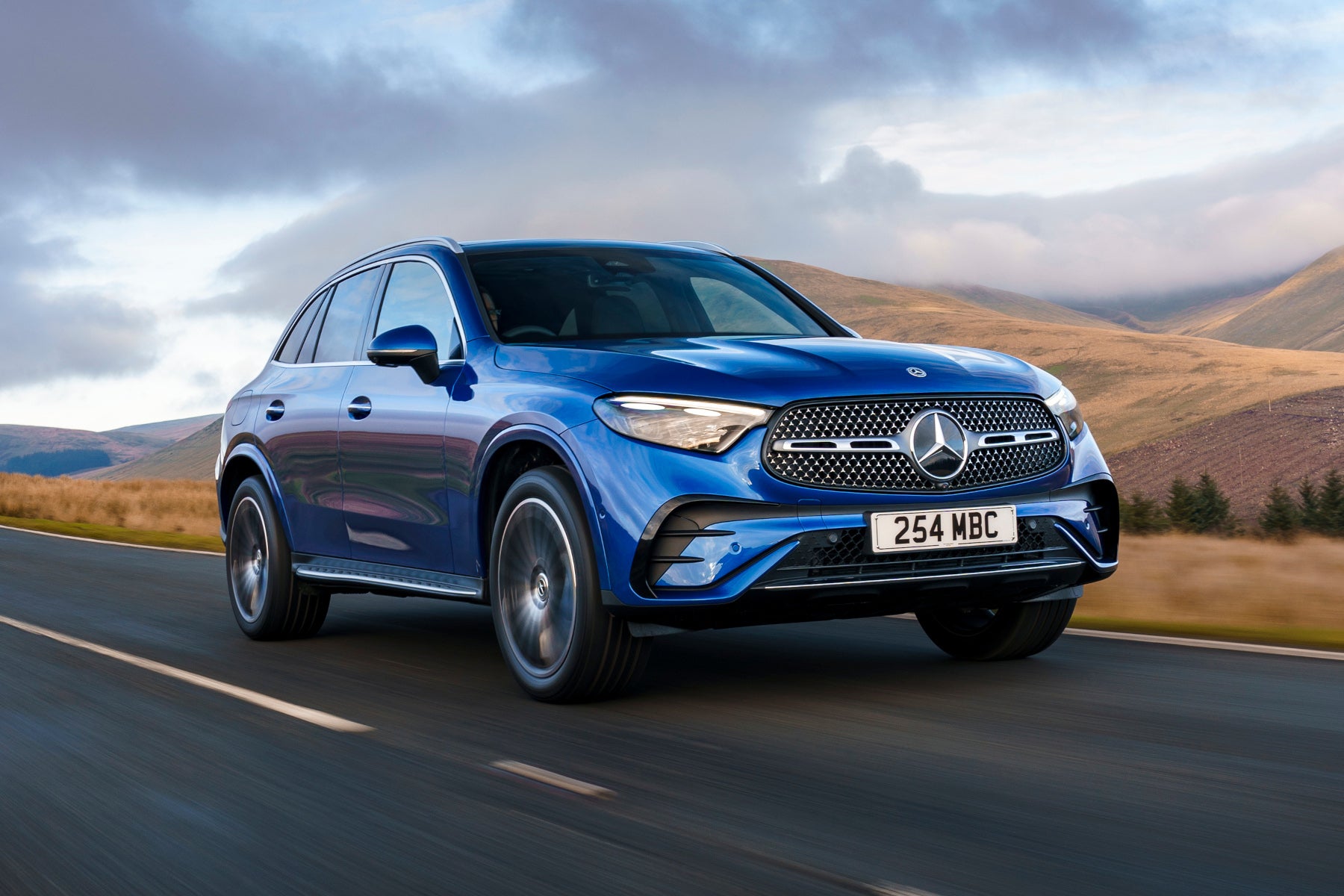
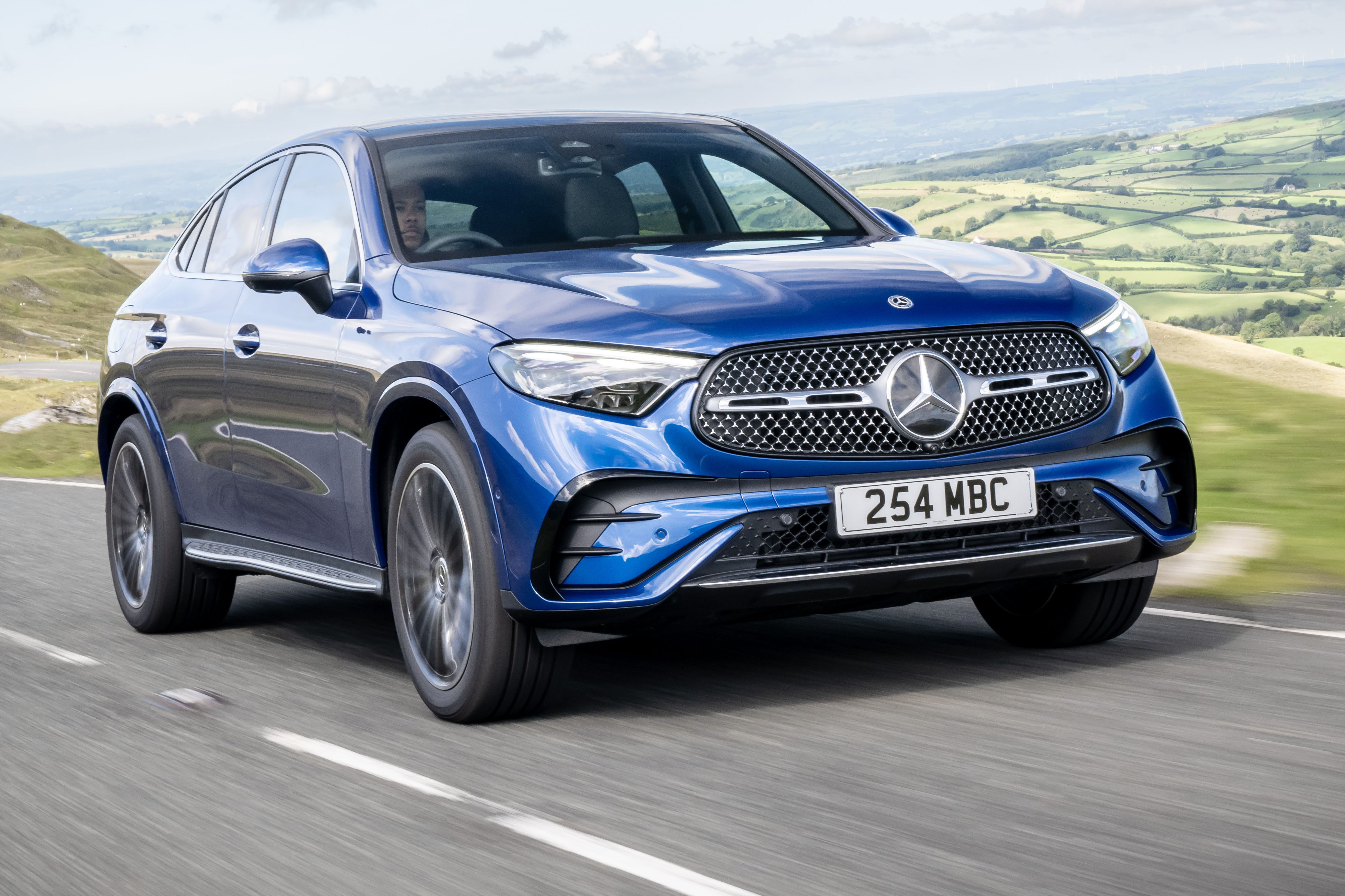
The Mercedes GLC Coupe is essentially a rakish version of Mercedes’ best-selling GLC SUV. It offers the same posh-looking, comfortable interior with a much sleeker exterior package and a headache for larger dogs. From a family perspective, the Coupe is less practical and more expensive than the SUV version but many will doubtless be seduced by the svelte styling.
The Mercedes Benz Glc in more detail
One of the chief reasons why SUVs became popular with families was their increased practicality — perceived or otherwise — over family hatchbacks and MPVs. Yet with SUV coupes much of that advantage disappears, so is there an appeal beyond slinkier aesthetics? Read our full Mercedes GLC Coupe review to find out.
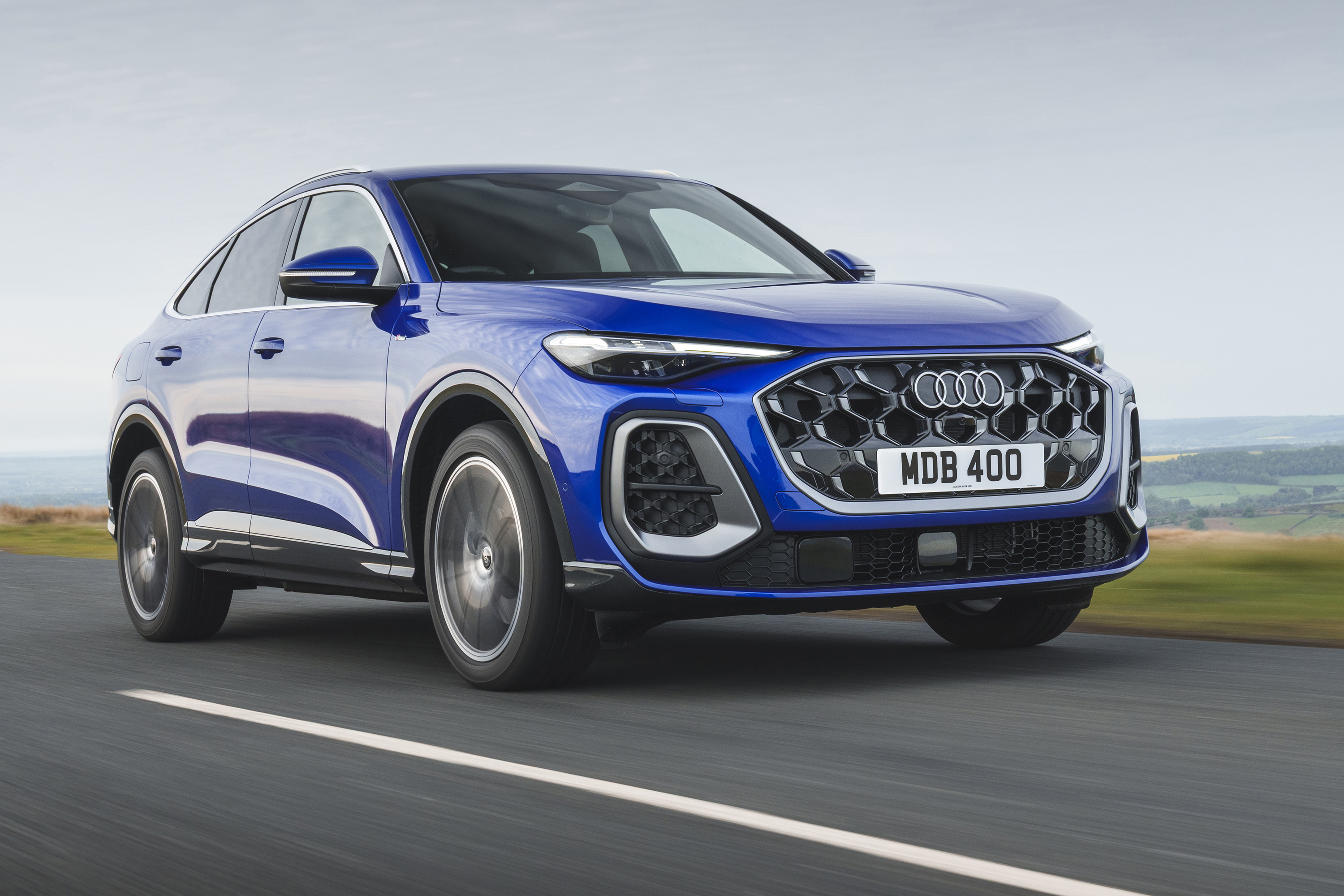
Melting an SUV’s estate car-like roofline to become more coupe-esque has grown from niche to norm in recent years, meaning the Mercedes GLC Coupe faces stiff competition from the likes of the Audi Q5 Sportback and the BMW X4, in particular.
Browse used Mercedes GLCs for sale →
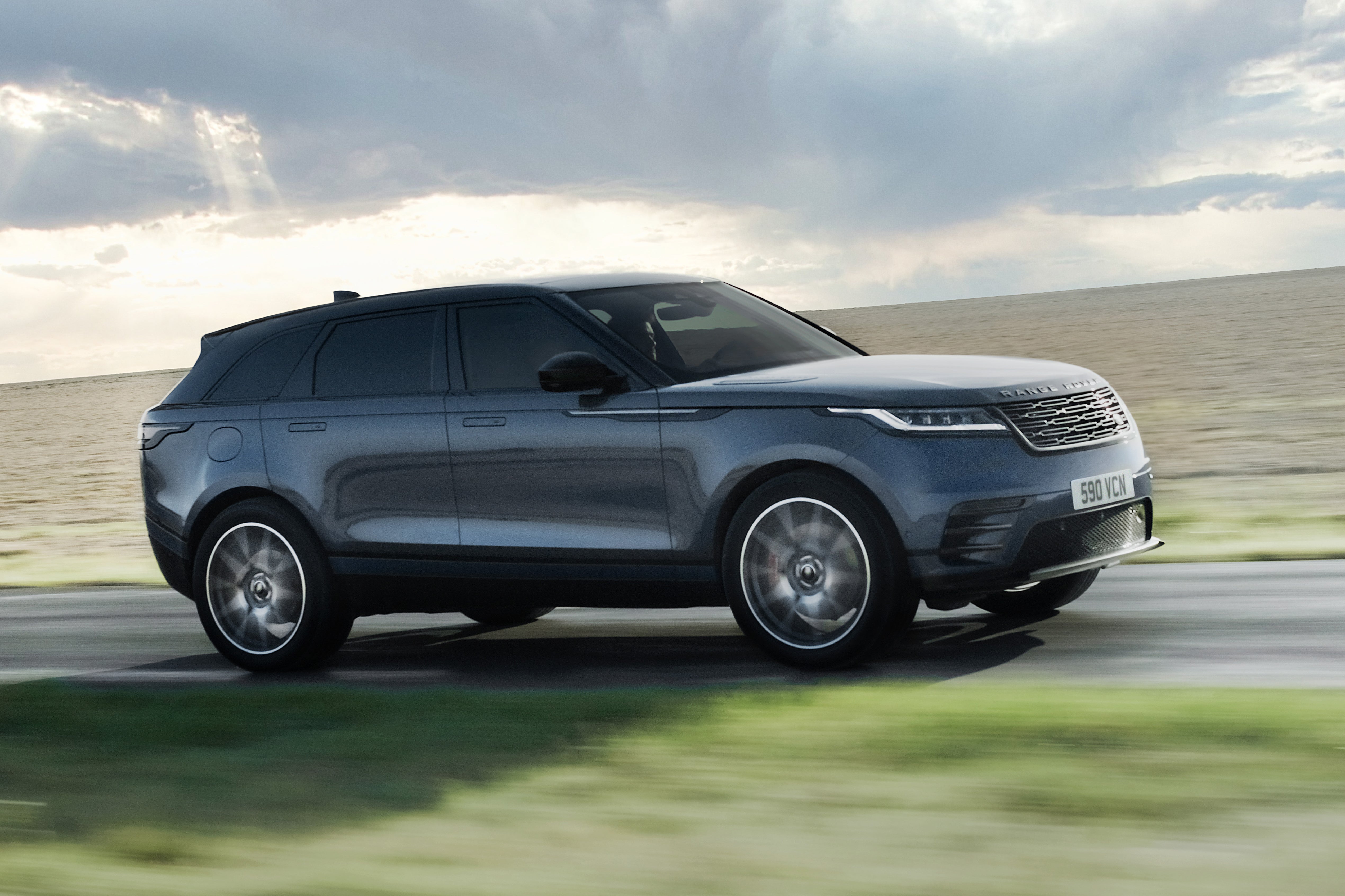
Others in this premium world abound, such as the combustion-engined original Porsche Macan and the Range Rover Velar, plus more affordable alternatives in the shape of the Renault Rafale.
There’s little to differentiate the Coupe from the regular Mercedes GLC SUV up front but astern it’s distinguished by that sloping tailgate, more aggressive stance and a tail light treatment that more closely imitates the Wallace-being-unhappy-at-the-lack-of-Wensleydale front bumper styling. No amount of aerodynamic artifice at the rear can disguise that it looks heavy.
Once inside you’ll spot that GLC Coupe’s cabin is pretty much identical to that of its more practically shaped twin, with the same dashboard and trim finishes but significantly less headroom, especially for those sat in the back. Boot space is also reduced by its sportier silhouette and rearward visibility is dire without the standard-fit camera and parking sensors out back to assist.
There are seven trim levels to choose from within the Mercedes GLC Coupe range, although not all can be paired with each of the six engines on offer — that’s one fewer than with the GLC SUV as that’s the only bodystyle available with the diesel-fuelled plug-in hybrid GLC300de.
For the Coupe that leaves the mild hybrid-assisted GLC300 petrol plus GLC220d and GLC300d diesels, the petrol-powered GLC300e PHEV and two high-performance Mercedes-AMG versions — the mild hybrid GLC43 and the PHEV GLC63S E Performance. Despite the variety of numbers, all engines have 2.0-litre capacities, nine-speed automatic gearboxes and 4Matic all-wheel drive.
Also note that model-for-model most GLC Coupes are around £6000 more than their SUV-bodied siblings, although that difference drops closer to £2000 for the Mercedes-AMG versions.
Marring the driving experience of all barring the GLC300e Coupe is the overly ride quality. Mild hybrid versions of the Mercedes GLC Coupe are fitted as standard with sports suspension and no matter which drive mode you select, it’s just too hard. Certainly, it’s admirable that a car this heavy should be able to cling on through corners with a certain tenacity but not when you’re sacrificing so much ride comfort just to crash through potholes in town and make the kids sick on sweeping A-roads.
Overall the Mercedes GLC Coupe proves to be a machine we want to like more than we actually do. With its electric-only driving range of up to 77 miles, the PHEV-equipped GLC300e Coupe makes a tempting company car choice as well as for private buyers who don’t frequently drive long distances. For most others buyers, the GLC220d Coupe is a sensible real-world choice if you can live with its firmer ride.
As for those considering a Mercedes-AMG version, we’d urge careful consideration over what advantages you believe a GLC Coupe gives you over the equivalent Mercedes C-Class Saloon and Estate models.
What's the best Mercedes Benz Glc trim and engine option?
The GLC 220d 4Matic AMG Line is the best all-round choice.
Its 197PS diesel engine provides adequate performance and the strongest conventional fuel economy in the range. It also retains the full 545-litre boot and avoids the additional weight of the plug-in hybrids.
AMG Line includes the equipment most buyers need, including heated front seats, memory adjustment, smartphone integration, parking assistance and Mercedes’ twin-screen dashboard.
The GLC 300e is the better option for company-car drivers and private buyers who can charge regularly. Its long electric range can cover many daily journeys without petrol, although the battery reduces boot capacity to 390 litres.
The GLC 300de suits a narrower audience. It is a compelling long-distance PHEV, but its higher price and additional mechanical complexity will be difficult to justify for many private buyers.
What’s the price of the Mercedes Benz Glc?
The GLC 220 d AMG Line starts at approximately £60,195. That pricing places the GLC Coupe at the expensive end of the premium SUV market and generally costs around £5,000 to £6,000 more than the equivalent standard GLC, despite offering less rear headroom and a smaller boot. The BMW X4 and Audi Q5 Sportback can also undercut it, depending on engine and specification. There are also plenty of used Mercedes GLCs for sale for considerably less.
Alternatives to the Mercedes Benz Glc
The BMW X4 is more rewarding to drive and feels better controlled on demanding roads. Its interior is less theatrical, but its controls are easier to use.
The Audi Q5 Sportback has a solid cabin, a comfortable driving position and a more restrained design. It does not offer the Mercedes’ long plug-in hybrid electric range.
The Range Rover Velar feels more spacious and has greater visual presence. Its ownership costs and reliability record require careful consideration.
The Porsche Macan is the best choice for keen drivers. Used petrol versions offer far more steering precision and balance, although they are expensive to run.
The standard Mercedes-Benz GLC is the most logical alternative. It provides more space, better visibility and a larger boot for less money.
What's the interior like in the Mercedes Benz Glc?
The GLC Coupe has a dramatic and technology-heavy cabin shared almost entirely with the standard GLC. It looks expensive and feels comfortable, although closer inspection reveals some disappointing plastics and awkward controls.
Mercedes Benz Glc boot space and practicality
The front seats are particularly comfortable and the driving position fine, though lower than you might expect for an SUV of this heft. As a result, forward visibility isn’t great but — though largely intended for off-roading — the Transparent Bonnet feature on higher spec versions proved handy for parking. Rear visibility is dreadful courtesy of the shallow rear screen — thank Heaven for rear parking sensors and a reversing camera.
Rear seat accommodation is just about okay for two adults but the central perch requires a third occupant to straddle a significant transmission tunnel in the floor. Those over six feet tall may fear for their toupees.
Accessed via an electrically operated tailgate, standard across the model range, loadspace for most GLC Coupe variants is a generous 545 litres with the rear seats in position, and 1490 litres with them folded away. Those numbers represent reductions of 75 litres and 190 litres respectively from the GLC SUV.
There’s less space in the GLC300e and the Mercedes-AMG GLC63S E Performance PHEV versions due to the location of their high-voltage battery packs — down to 390 litres with the seats up and 1335 with them folded.
The design of that sweeping centre console somewhat shackles storage options in the front of the cabin. There’s a box under the armrest at the rear and a lid cut into the swathe of curved plastic in front of that, accessing two cup-holders, plus a hard-to-reach wireless phone charging pad. At least the door cubbies each hold a large bottle of water.
Mercedes Benz Glc dimensions
The Mercedes GLC Coupe is 4764mm long, 2075mm wide and 1605mm tall. It’s a large car with a long 2888mm wheelbase, yet a lack of both headroom and daylight makes the rear seat accommodation feel somewhat pokey. Compared with the Mercedes GLC SUV headroom in the back is reduced by 35mm, while those up front have to make do with 3mm less.
Tech and infotainment in the Mercedes Benz Glc
Infotainment access within the Mercedes GLC Coupe takes the form of a 12.3-inch driver’s instrument screen, an 11.9-inch portrait-oriented central multimedia touchscreen and — on more expensive versions — a head-up display.
The dashboard is dominated by that central infotainment touchscreen which flows smoothly out of the centre console. It’s the most recent version of Mercedes’ MBUX infotainment system and it looks great, with pin-sharp resolution, tidy graphics and a row of air-con control tabs permanently on display along the bottom. It also works very well, though its rather shallow angle on the dash allows enough reflective light onto the surface to highlight fingerprints in all their glory.
The driver’s 12.3-inch digital instrument display is fine but the touch sensitive switchgear pads occupying all four spokes of the steering wheel are a vague, fiddlesome nightmare, even trying to adjust or mute the radio volume is a nightmare of fumbling inconsistency — a giant stride in the wrong direction for a firm with an enviable automotive safety record.
The head-up display also needs a mention for the fact that we got so fed up with trying to work out how to adjust it that we gave up and had to ask the Hey Mercedes voice assistant to shut it down. Switching it off also has the benefit of reducing the number of flashing speed limit warning lights in front of you to just one — you can turn off the audible warning, just not the visual reminder.
Only later did we discover that one of the tab buttons below the infotainment screen with a drawing of the front of a car on it accesses a menu which includes control of the HUD system. Better late than never.
That Hey Mercedes voice assistant works well but be warned, she warms to her task to the point that she’ll interrupt your conversation unprompted to ask if she can help, sometimes to an annoying degree.
Materials available on the Mercedes Benz Glc
As long as you can live with unfortunately shaped dashboard air vents then perceived quality in the Mercedes GLC Coupe cabin is high. Its dashboard design is shared with the GLC SUV, both being near-facsimiles of that fitted to the Mercedes C-Class which in turn was heavily influenced by the Mercedes S-Class’s interior.
Unfortunately it turns out on closer inspection that material quality isn’t all it’s cracked-up to be. We get the perception that Mercedes may be cutting corners in interior fittings these days, because once you start opening cubbies and suchlike, creaky plastic and unpleasant finishes hold sway.
The flimsy lid cut into the curved centre console accesses a sharp-edged plastic aperture housing two clumsily designed cup-holders and an awkwardly positioned wireless phone charging pad, while the storage box under the padded armrest is also a symphony of unlined plastic.
Genuine hide only upholsters the seats in the sportier Mercedes-AMG models with all other GLC Coupes clad in the firm’s own Artico faux leather. It’s been a mainstay for years already, so shouldn’t crack or split like vinyl seats from the 1970s.
What's the Mercedes Benz Glc like to drive?
The GLC Coupe has accurate steering and strong grip, but its standard sports suspension is too firm for a luxury family SUV. Despite the styling, it is not especially engaging to drive.
Mercedes Benz Glc range and performance
Engine choice for the Mercedes GLC Coupe consists of six options, all with hybridisation, 4Matic all-wheel drive and a nine-speed automatic transmission.
Least powerful is the mild hybrid-assisted diesel GLC220d which produces 197PS and 440Nm of torque from its turbocharged 2.0-litre four-cylinder engine. It’s the slowest in the range although hardly pedestrian in the grand scheme of things — 8.1 seconds are required for the 0-62mph sprint, running on to a top speed of 140mph.
Using the same fundamental mechanical arrangement with no increase in engine size or cylinder count is the GLC300d, uprated to 269PS and 550Nm of torque. Its top speed is electronically capped at 155mph but the unrestrained 0-62mph dash is shaved to 6.4 seconds.
Also a 2.0-litre, four-cylinder turbocharged engine, albeit petrol-powered with a mild hybrid supplement, is the GLC300. It produced 258PS and 400Nm for a slightly quicker 6.3-second 0-62mph time and a 153mph top speed.
That same basic engine finds its way into the GLC300e but in detuned form, producing 204PS and 320Nm of torque. Plug-in hybrid tech means its electric motor shoulders more responsibility than with its siblings, it alone outputting 156PS and 440Nm of torque for overall combined outputs of 313PS and 550Nm. Just 6.7 seconds are required for the 0-62mph benchmark, with a top speed of 137mph in hybrid mode and 87mph using only electric power.
Life with the GLC300e PHEV is largely quiet, effortless and gently slushy. The gearbox isn’t the quickest at responding to demands for oomph but when you are finally awarded the go you asked for, the car hitches up its considerable petticoats and thumps off down the road with pleasing enthusiasm.
For those seeking yet more performance then head the way of the Mercedes-AMG GLC Coupe models, both also featuring a turbocharged, 2.0-litre, four-cylinder petrol engine.
Mild hybrid-assistance gives a boost to the GLC43 which delivers 421PS and 500Nm of torque for a 4.5-second standstill-to-62mph time and on top an electronically limited 155mph top speed.
Also a PHEV but with a brief to elevate performance rather than deliver comically high fuel efficiency figures, the GLC63S E Performance’s electric motor serves-up 204PS and 320Nm, while its engine produces 476PS and 545Nm. As a combined system, those outputs are rated at 680PS and 1020Nm of torque, resulting in a top speed of 171mph and a 3.5-second 0-62mph time. Not shabby for a car weighing 2620kg.
Performance data
| Model | Engine/battery size | Power | 0-62mph | Range/MPG |
|---|---|---|---|---|
GLC 220 d 4Matic | 2.0-litre | 197PS | 8.1 seconds | Up to 54.4mpg |
GLC 300 4Matic | 2.0-litre | 258PS | 6.3 seconds | Up to 39.3mpg |
GLC 300 d 4Matic | 2.0-litre | 269PS | 6.4 seconds | Up to 49mpg |
GLC 300 e 4Matic | 2.0-litre | 313PS | 6.7 seconds | Up to 74 electric miles |
GLC 300 de 4Matic | 2.0-litre diesel plug-in hybrid | 333PS | 6.4 seconds | Up to 74 electric miles |
Mercedes-AMG GLC 53 | 3.0-litre | 449PS | 4.2 seconds | Up to 30.1mpg |
Mercedes Benz Glc driving and refinement
Ride quality is the Mercedes GLC Coupe’s Achilles heel. It need not be — we understand that the four-link front and multi-link rear suspension with air suspension at the back works well, so we’d encourage Mercedes to look again at the springing choices for UK models and make its Refinement Package standard on non-PHEV versions rather than a £2495 option on mild hybrid AMG Line Premium and Premium Plus models.
As things stand, the Mercedes GLC Coupe never really settles into the imperious gait you’d expect from a big bruiser like this, even at motorway pace. It thumps and clumps over potholes and other more innocuous road surface disruptions, jostling its passengers on all but the smoothest byways. This is a huge shame because occasional smooth passages let you know just how stately a progress you’re missing out on.
The steering’s accurate and there’s plenty of grip through the bends, being sharp enough and nicely weighted. Being allied to 4Matic all-wheel drive allows for accurate, if unengaging, placement of the car through corners. This isn’t really a machine for chucking around and it doesn’t reward the driver when you give that a go. The brakes feel desperately woolly, with no initial bite at all, requiring considerable pedal travel before any actual slowing down begins.
When cruising the GLC Coupe displays a very strange propensity to either brake when you lift-off or allow you to coast in the normal manner — there seems no rhyme or reason for it choosing which to do. Sometimes a little green car symbol illuminates at the bottom of the driver’s screen suggesting something within the car’s radar-supported electronics has decided you’re getting too close to the car ahead and applies the brakes — you can feel the pedal moving away from your foot.
This probably explains why Mercedes drivers on motorways seem incapable of driving at a constant speed in traffic without constantly applying the brakes — the car is doing it for them. At other times, when the road is absolutely clear ahead, the car will either coast or brake in an entirely random fashion. It’s odd and not in a good way.
How safe is the Mercedes Benz Glc?
Euro NCAP hasn’t specifically crash-tested the Mercedes GLC Coupe, instead it will share its conventionally SUV-shaped sibling’s five-star rating from when it was put through its paces in 2022. Because both cars are mechanically and technologically identical, the Coupe should perform as well in a crash.
Standard safety equipment includes active lane-keeping assist, autonomous emergency braking, a tyre pressure monitoring system, two Isofix points for the rear seats and an active bonnet that will pop up on its hinges in the event of an impact with a pedestrian.
Running costs: What it's like to live with a Mercedes Benz Glc
The GLC Coupe is expensive to buy and insure, but the diesels are economical and the plug-in hybrids can reduce fuel costs substantially when charged regularly.
Mercedes Benz Glc fuel economy
The GLC 220d returns an official 54.4mpg, making it the most economical version without plug-in charging. That is a strong result for a heavy four-wheel-drive SUV. Regular motorway drivers should be able to achieve figures close to 50mpg with restrained driving.
The GLC 300d returns approximately 49mpg, while the GLC 300 petrol manages 39.3mpg.
Both plug-in hybrids have a 25.28kWh usable battery and an official electric range of 74 miles. Mercedes quotes an equivalent all-electric range of 76 miles for the GLC 300e and 73 miles for the GLC 300de. Real-world range will depend on temperature, speed, wheel size and use of the climate control. Around 55 to 65 miles should be achievable in mixed driving.
Both models support AC charging at up to 11kW. A full charge takes approximately two hours and 45 minutes with a suitable wallbox. DC rapid charging peaks at 60kW, with a quoted 10 to 80 per cent time of 29 minutes.
Mercedes Benz Glc warranty and servicing
Mercedes provides a three-year, unlimited-mileage manufacturer warranty. There is also three-year paint cover and long-term anti-corrosion protection, subject to Mercedes’ servicing and inspection requirements.
Separate warranty conditions apply to the high-voltage batteries in the plug-in hybrids. Buyers should confirm the precise duration and mileage limit for the individual car.ic gearbox.
Mercedes Benz Glc insurance groups
The GLC Coupe sits in insurance groups 41 to 50. The GLC 220d occupies the lower end of the range, while more powerful diesels, plug-in hybrids and highly specified models cost more to cover.
The Mercedes-AMG versions sit at or close to group 50.
How much does it cost to tax a Mercedes Benz Glc?
All versions are north of the £40,000 minimum to attract the annual Expensive Car Supplement — also known as premium car tax — of £440 which is payable from the second through to the sixth anniversary of the car’s first registration.
What trims are available with the Mercedes Benz Glc?
Urban Edition is offered with selected plug-in hybrid versions.
It includes 20-inch wheels, AMG exterior styling, heated sports seats, Artico and Microcut upholstery, ambient lighting, MBUX navigation, smartphone integration and a reversing camera.
AMG Line is the starting point for the GLC 220 d and GLC 300.
It includes 19-inch wheels, running boards, electrically adjustable memory seats, Artico upholstery, heated front seats and the full twin-screen dashboard.
AMG Line Premium adds 20-inch wheels, upgraded Digital Light headlights, acoustic glass, a panoramic roof, keyless entry, augmented-reality navigation and a 360-degree camera.
AMG Line Premium Plus adds ventilated multi-contour seats, Burmester audio, a head-up display and additional interior trim.
The Mercedes-AMG GLC 53 receives AMG-specific styling, larger brakes, rear-wheel steering, sports seats and adaptive performance suspension.
AMG Line provides the best balance of cost and equipment. Premium is worthwhile for its camera system and panoramic roof, while Premium Plus is difficult to justify on value.
Ask the Drive experts: common questions
Which is better: the BMW X4 or the Mercedes-Benz GLC Coupe?
Is the Mercedes GLC Coupe worth buying?
What's the difference between a Mercedes-Benz GLC and GLC Coupe?
Get our latest advice, news and offers
Keep me updated by email with the latest advice, news and offers from Drive.
.jpg)
.jpg)