Skoda Octavia Estate Review

Written By Andrew Brady
- 2020
- Estate
- Petrol, mild hybrid petrol, diesel
What we love
The Octavia Estate has one of the biggest boots in this class
It is comfortable, quiet and very easy to live with
Current prices and standard kit still make it one of the smartest family estate buys
Things to consider
Many everyday functions are accessed via the touchscreen
Driving experience has a strong comfort focus
Higher specifications carry a noticeable price premium
The DRIVE take on the Skoda Octavia, is it the right car for you?
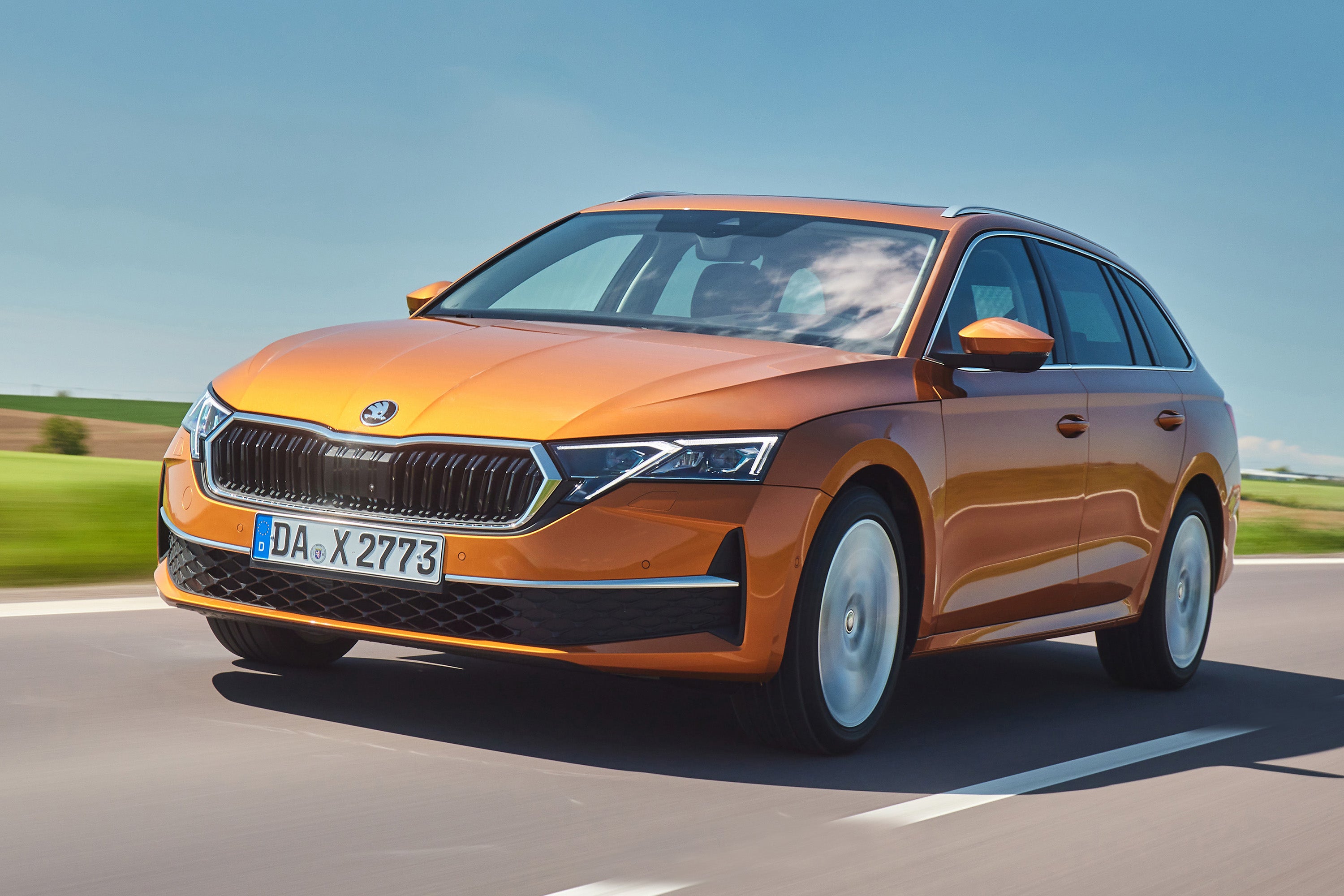
The Skoda Octavia Estate remains one of the easiest family cars to recommend if you want maximum usefulness without moving up to a larger, pricier car. It gives you vast boot space, generous passenger space, sensible running costs and a cabin that feels more polished than those of many rivals. It is not the sharpest estate to drive, and it’s a little too reliant on its touchscreen interface, but those are relatively small irritations in a car that gets so much else right. If your priorities are space, comfort and value, it is one of the best cars of its type.
The Skoda Octavia in more detail
Since the last-generation Octavia Estate arrived in 2013, there's been an addition to the Skoda line-up in the form of the Skoda Scala. While this isn't available as an estate car, the VW Golf-sized hatchback has pushed the Octavia up towards the bigger Superb in terms of dimensions and price. That means it's slightly bigger than estate versions of the Volkswagen Golf and SEAT Leon – two cars with which it shares a platform and engine range.
But that's not reflected in the Octavia Estate's price tag. Prices of a new Octavia Estate start in the region of £29,000 – undercutting many rivals and offering good value for money compared to budget alternatives.
Whether it's lugging a labrador or shifting your kid's steel drums, the Skoda Octavia Estate is more capable of moving stuff than crossover SUVs like the Skoda Karoq. It's got a huge boot, capable of carrying an impressive 640-litres of luggage, while there's plenty of space for passengers, too. Kids in the back will enjoy all that space , while parents in the front will find the seats ultra-comfortable and supportive on the longest of journeys. It's an attractive and classy cabin, too, with lots of plush materials and feel-good fabrics.
A standard-fit infotainment system can be used for accessing everything from the climate control to your Spotify playlists, leaving a dashboard relatively button-free. All new models now come with the fancy Virtual Cockpit digital instrument cluster, too – a system that, with its large screen and clear graphics, looks like it belongs in a much more expensive car.
The current car arrived in 2020 and was updated in 2024. For 2026, the UK range is leaner and easier to understand than before. New car buyers now get a choice of petrol, mild hybrid petrol and diesel powertrains, with trims running from SE Technology to SE L, SportLine and vRS. Older powertrains, including the 1.0-litre turbo petrol and the plug-in hybrid iV, have now been discontinued as new cars, but are still appealing used-car propositions. There's also a hot vRS model for buyers who want their estate with sports car performance. Take a look at our Skoda Octavia vRS review for more on that.
If you're a high-mileage driver or spend a lot of time on the motorway, go for the 2.0-litre TDI. This is available with 116PS or 150PS – we'd recommend the more powerful model unless fuel economy really does override every other consideration.
Talking of which, no Octavia will cost a fortune to run. Diesel models are capable of more than 60mpg, while you should be able to see close to 50mpg from the 1.5-litre petrol. Insurance costs are likely to be minimal, and Skoda servicing won't break the bank.
There's very much to dislike about the Skoda Octavia Estate. It's the biggest and best value of the SEAT Leon/Volkswagen Golf/Skoda Octavia trio, and its interior feels like a much pricier car. The only thing that will go against it for a lot of buyers is the fact it's an estate rather than an on-trend SUV – and it'd be a shame to overlook it for that reason.
What's the best Skoda Octavia trim and engine option?
For most buyers, the sweet spot in the current range is the mid-range SE L car with the 1.5 TSI 150PS e-TEC mild hybrid petrol engine and DSG twin-clutch automatic gearbox. That version gives you a useful step up in performance over the 116PS entry cars, and yet improves fuel economy at the same time, all without elevating the price to a point where the Octavia loses its high-value appeal. SE L trim is key, because it adds a posher cabin feel, along with the sort of equipment that genuinely improves daily life, including adaptive cruise control, a powered tailgate, a heated windscreen and a variable boot floor.
But of course, it all depends on how you use your car. If you do mostly shorter trips and want the cheapest Octavia, the regular 1.5 petrol makes a lot of sense. If you spend more time in traffic or do more mixed driving, the e-TEC mild-hybrid DSG is the more relaxed choice. High-mileage drivers should still look very hard at the 2.0 TDI. Diesel is no longer the automatic answer for everyone, but in a car that spends its days pounding up and down motorways, it remains a strong choice.
What’s the price of the Skoda Octavia?
At the time of writing, the Octavia Estate range starts at £29,485 on the road for the SE Technology 1.5 TSI 116PS manual, and rises up to £41,715 for the vRS Estate. Our favoured SE L trim level starts at £34,265 for the 1.5 petrol with a manual gearbox, but for the best balance of abilities, we’d advise spending the extra on the version with mild-hybrid technology and a DSG automatic gearbox, which costs £36,405.
If you’re a high-mileage driver and you want the pick of the diesel range, the 150PS 2.0 TDI DSG can be had for as little as £34,430, or for £37,785 in our favoured SEL trim. Sportline cars can be had for between £35,125 and £38,645 depending on powertrain.
That pricing is very competitive because it gives you more usable space than a SEAT Leon Estate without forcing a huge premium, and it undercuts larger estates and prestige-badged estates by a wide margin.
Alternatives to the Skoda Octavia
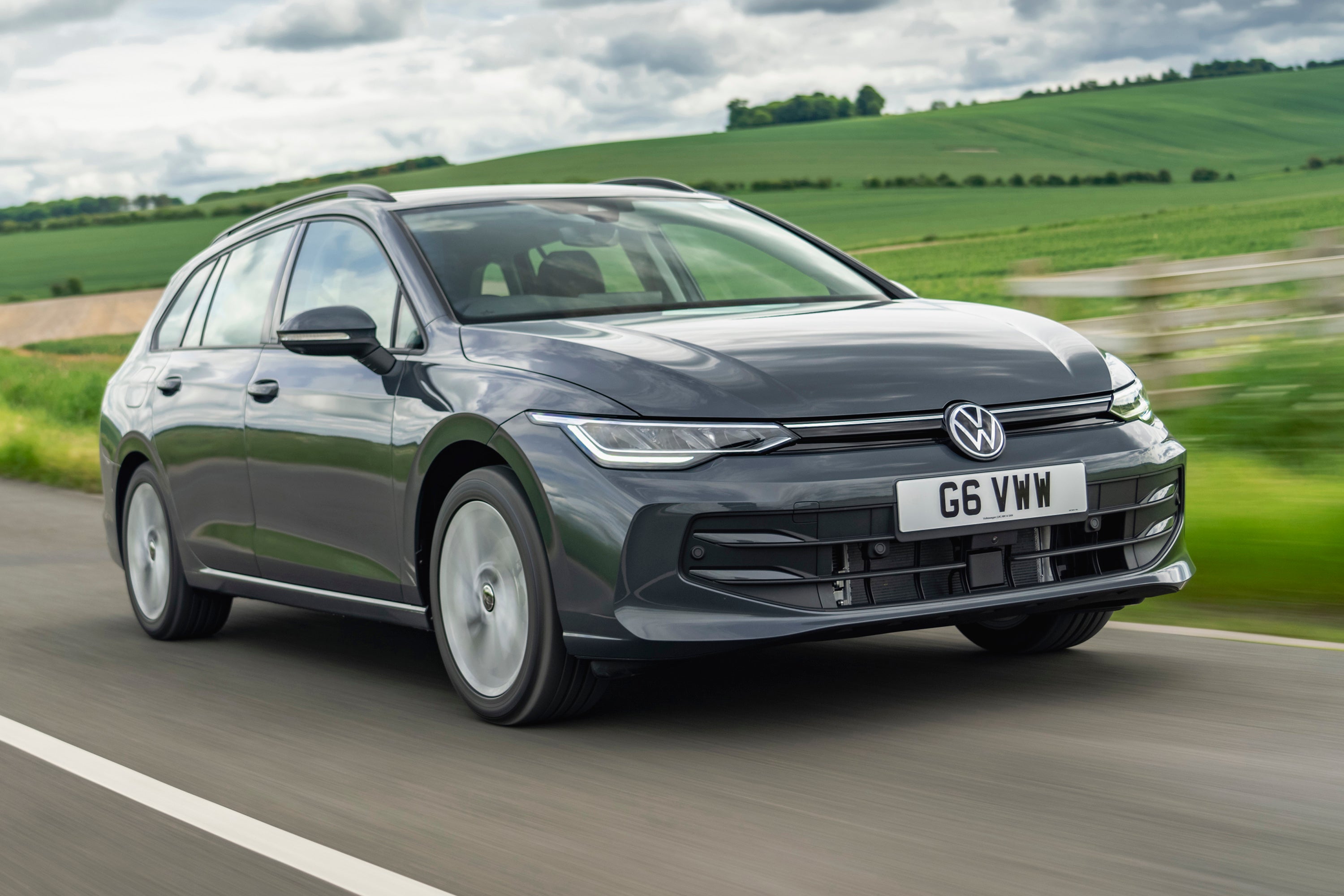
The most obvious alternative is the SEAT Leon Estate because the two cars share much of the same underlying hardware. The Leon Estate is the more style-led and slightly sportier option. The Volkswagen Golf Estate would have, until recently, been considered another closely-related alternative, but that’s now been withdrawn from sale as a new car. Neither car matches the Octavia Estate for outright boot space.
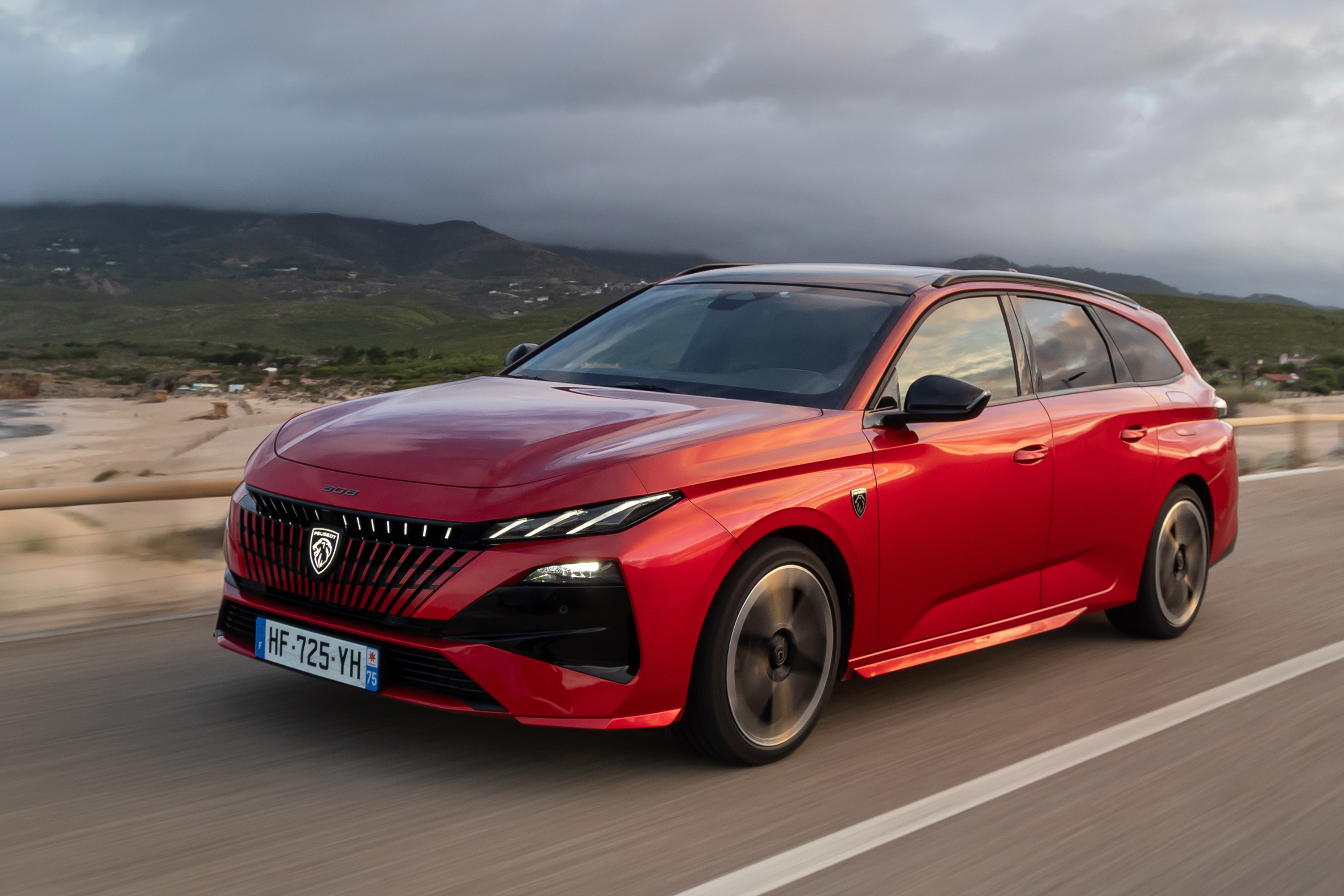
The Toyota Corolla Touring Sports is worth a look if you want a full hybrid and mostly drive in town, while the Peugeot 308 SW is a more design-led choice. If you’re looking to buy used and you fancy a bit of fun with your functionality, the now-defunct Ford Focus Estate is still a great choice for keen drivers, although it can't match the Skoda’s blend of rear-seat room and luggage space. If you want even more room and a bigger-car feel, the Skoda Superb Estate is the natural step up.
What's the interior like in the Skoda Octavia?
The Octavia Estate’s cabin is one of the reasons it feels more grown up than older Octavias. It is roomy, comfortable and much smarter than the car’s high-value appeal might suggest. There’s too much reliance on the touchscreen for too many frequently used functions, but otherwise there’s very little to complain about.
Skoda Octavia boot space and practicality
Practicality is the Octavia Estate’s headline act. Boot space is 640 litres with the rear seats up and 1700 litres with them folded, which is excellent by class standards and one of the main reasons this car keeps such a loyal following. The opening is square, access is easy and the load area is genuinely useful rather than just big on paper.
A weekly shop is no test at all, while pushchairs, flat pack furniture and luggage for a proper family holiday are all much easier to deal with here than in many compact SUVs. The rear seats also fold down quickly, and all but the entry-level SE Technology trim have handy touches such as a variable boot floor and a powered tailgate.
There is enough adjustment in the driving position to suit a wide range of drivers, and front seat comfort is one of the car’s understated strengths. But rear passenger space is one of the Octavia’s specialities. Two gangly teenagers in the back will be much happier here than in most hatchbacks, or for that matter, many SUVs and crossovers, too. The middle rear seat is less inviting, but that’s the norm in this class, and folk will squeeze up when they need to.
Storage around the cabin is good, too, with large door bins, accessible cupholders and plenty of the small practical touches that Skoda is known for. This is not just a big boot attached to an average cabin. It is a genuinely useful family car throughout.
Skoda Octavia dimensions
The Octavia Estate measures 4,698mm long, 1,829mm wide excluding mirrors and 2,003mm wide including mirrors. The height is 1,468mm, while the wheelbase is 2,686mm. SportLine and vRS versions sit 15mm lower. Those figures help explain why the car feels notably roomier than smaller family estates without becoming awkwardly large to place on the road.
Tech and infotainment in the Skoda Octavia
All current Octavia Estate models get a 13.0-inch touchscreen with navigation, a 10.25 inch Virtual Cockpit digital instrument display, wireless Apple CarPlay and Android Auto, wireless phone charging, voice control and four USB C ports plus another USB C in the rear view mirror for powering a dashcam. That means the standard spec is very good across the board, even on the entry-level SE Technology.
In use, the system is reasonably quick, the graphics are crisp and the menu layout is something you come to learn over time. The main criticism is common to a lot of cars these days: too many functions - including climate-related ones - are operated through the screen rather than having dedicated physical controls, which is both more of a faff and more distracting. It also means a large number of icons on the screen, making it difficult to pick out the one you want at a glance, and some of them are also ambiguously designed, so it’s not immediately clear what they’re for. Again, you learn over time, but things could be more intuitive.
Materials available on the Skoda Octavia
The Octavia Estate feels more mature inside than its high-value appeal might suggest. Many of the materials on show are cushioned and tactile, and even those that aren’t are nicely textured and smart-looking. You’ll be hunting around for a long time to find a single panel that feels disappointing in its quality, and the solid way everything is assembled adds to the car’s substantial and sophisticated feel. Not only is it a match for most rivals, it also has the beating of a lot of them.
SE Technology uses the Loft design selection with fabric upholstery, while SE L upgrades to the Lounge design selection with microsuede and artificial leather, and it’s an upgrade that lifts the ambience of the cabin significantly. There are also optional interior themes, including the Suite trims, with leather and artificial leather in black and deep brown colours. SportLine and vRS trims bring more overtly sporty finishes and darker detailing.
What's the Skoda Octavia like to drive?
The Octavia Estate majors on comfort and effortlessness, a job it does extremely well. It is quiet, settled and easy to drive, which is precisely what a family estate car should be. Some rivals are more fun on the road, but you’ll struggle to find a competitor that combines this much comfort with this much space at a similar price.
Skoda Octavia range and performance
For 2026, the Octavia Estate line-up has an offering of five petrol powertrains and two diesels. The mainstream petrol powertrains are all 1.5s and come in two states of tune, and are offered either with a manual gearbox, or with a DSG dual-clutch automatic gearbox and mild-hybrid technology, dubbed ‘e-TEC’ by Skoda.
First up is the 116PS 1.5 TSI petrol manual, and above that sits the 1.5 TSI e-TEC mild hybrid DSG, again with 116PS. These are offered exclusively with SE Technology trim. Then you have the more powerful 150PS 1.5 TSI petrol manual, above which sits the 1.5 TSI e-TEC 150PS DSG mild hybrid. These are offered in SE L and SportLine trims.
The two 116PS units are fine if you mainly bimble around town in your car, but when going faster or when loaded up with people and possessions, they can start to feel a little out of their depth. And as you can probably guess, with exactly the same power output, there’s very little discernible difference between them for performance.
The same is true with the two 150PS units, although there's a much bigger difference between these and the 116PS engines. These have the extra punch that the lower-output engines are missing, making them not only faster, but more flexible, more relaxed and generally more easy-going, which means they suit the Octavia’s nature very well. These are definitely the ones you want if you regularly venture outside the city limits.
Both diesels are 2.0-litre units, but otherwise it’s a similar story to before: the entry-level one has 116PS and a manual gearbox, while the higher-powered one has 150hp and a DSG automatic gearbox, although no mild-hybrid tech this time. The former is offered in both SE Technology and SE L trims, while the latter can be had in all trims except vRS.
And again, it’s a rather familiar story. The lower-powered unit feels leisurely but adequate, although loading the car up can dent performance to the point where you’ll wish you upgraded to the higher-powered unit. That higher-powered unit feels generally more muscular and easy, so it’s the one to have, not least because it’s a far more relaxed motorway car, which is where diesels really make sense.
The manual gearboxes are all pretty smooth, and the DSG automatics also do a good job of slushing through the ratios in a smooth and timely manner, keeping life relaxed and sophisticated as they do so.
We won’t dwell too much on the performance of the vRS, because we’ve written a separate review for that version, such is the difference in its appeal to the rest of the Octavia range. Suffice it to say here that its 265PS 2.0-litre turbo petrol engine makes it feel more rapid family car than rabid hot hatch.
It’s also interesting to note the engines that are no longer offered in the Octavia. Until not too long ago, you could choose a 110PS turbocharged 1.0-litre petrol or a plug-in hybrid that combined a 1.4-litre petrol engine with a large battery to give 245PS and an electric-only range of around 40 miles. Both have now been discontinued, but they're available on the used car market. Similarly, the vRS used to be offered with a choice of petrol, diesel, or plug-in hybrid power, all with upwards of 200PS, but the 2024 facelift saw that pared back to just the offering we have today.
Performance data
| Model | Engine/battery size | Power | 0-62mph | Range/MPG |
|---|---|---|---|---|
1.5 TSI 116PS | 1.5-litre | 115PS | 10.5 seconds | Up to 52.5mpg |
1.5 TSI e-TEC 116PS DSG | 1.5-litre | 116PS | 10.7 seconds | Up to 55.1mpg |
1.5 TSI 150PS | 1.5-litre | 150PS | 8.6 seconds | Up to 51.6mpg |
1.5 TSI e-TEC 150PS DSG | 1.5-litre | 150PS | 8.6 seconds | Up to 56.1mpg |
2.0 TDI 116PS | 2.0-litre | 116PS | 10.5 seconds | Up to 64.3mpg |
2.0 TDI 150PS DSG | 2.0-litre | 150PS | 8.6 seconds | Up to 61.6mpg |
2.0 TSI vRS | 2.0-litre | 265PS | 6.5 seconds | Up to 40.4mpg |
Skoda Octavia driving and refinement
Even compared to the SEAT Leon – with which it shares an engine and other oily bits – the Octavia Estate has a wafty ride that's happy on a wide range of roads, from smooth motorways to deteriorating country lanes. Most of the range comes with 16- or 17-inch alloy wheels and chunky tyres as standard, which is a good thing for ride quality.
The flip side of that is it's not as fun to throw down a twisty road as estate versions of the SEAT Leon or Ford Focus, but it's hardly boat-like when it comes to handling. There's plenty of grip available and it doesn't lean as much as you might expect with the soft suspension. Ultimately, it feels safe and secure, which is exactly what most estate buyers want.
If you want the ability to firm or soften the suspension depending on your mood, look for an Octavia Estate with the optional Dynamic Chassis Control. This will change the characteristics of the dampers (as well as the steering) depending on the drive mode. While this might make sense on the sporty Octavia vRS, it's a bit unnecessary on standard models and is not an option for the SE Technology trim.
Despite its relatively large dimensions, the Octavia Estate is very good around town. The steering is usefully light (but not devoid of feedback), while there's plenty of technology available to keep your car (and pride) dent-free. Unfortunately, not all of this is standard even on high-spec models, so if a multi-storey car park is enough to get your palms sweaty, look out for cars with the optional Assisted Drive Package Plus, while the top level SportLine trim has a reversing camera as standard.
Refinement is another strength. Wind- and road noise are well suppressed, and the engines stay muted and distant on the motorway, although you have to work the weaker ones a little hard to keep pace with traffic. The diesels are a little gruffer than the petrols when cold, as you would expect, but they settle well once warmed up.
How safe is the Skoda Octavia?
This generation of Octavia has been crash-tested by Euro NCAP on no fewer than three occasions over the years to ensure it keeps pace with the latest safety standards. The last of these tests took place in 2025, and happily, it matched the full five-star rating achieved in both its previous tests.
The standard roster of safety kit has been enhanced over the years. The SE Technology car includes lane assist, front assist, turn assist, traffic sign recognition, driver fatigue alert, tyre pressure monitoring, cruise control with a speed limiter, and eight airbags. A further two airbags are available from the options list.
The SE L version adds a slightly more sophisticated lane assist system, plus adaptive cruise control. The latter feature is removed from SportLine cars for reasons that aren’t clear to us, but it’s reinstated on the vRS, and it’s also joined by blind spot monitoring.
Running costs: What it's like to live with a Skoda Octavia
The Octavia Estate has very sensible running costs, especially if you pick the right engine for your needs. Diesel versions are still the best choice as high-mileage motorway-munchers, while the petrol mild hybrids will be best for those with more mixed driving habits.
Skoda Octavia fuel economy
The official WLTP figures are impressive right across the Octavia line-up. The entry-level 1.5 TSI 116PS hatch manages up to 52.5mpg, while the mild hybrid 116PS DSG improves that to as much as 55.1mpg. The more powerful 150PS mild hybrid hatch achieves up to 56.1mpg in SE L trim, which is yet another reason why that version is our pick of the range. The extra muscle of the stronger engine means you’re more likely to get close to that official figure in real life, too. If you settle for the 150PS petrol without the mild hybrid tech, the official figures say you’ll get up to 51.6mpg
The official figures on the regular petrols are all strong, then, but they’re even better on the diesels. The 2.0 TDI 116PS hatch manages up to 64.3mpg officially, while the 150PS DSG diesel still returns up to 61.6mpg.
Predictably, the vRS is the thirstiest Octavia Estate, with an official return of up to 40.4mpg
As always, real-life returns with a diesel will be best if most of your driving is done on the motorway, and that type of high-speed long-distance use is also better for the health of your engine, too. If your driving habits are more mixed, then the petrols are the way to go, particularly the mild-hybrids.
Skoda Octavia warranty and servicing
Skoda offers a three-year warranty, made up of two years with unlimited mileage and a third year capped at 60,000 miles. If you want more cover on your Skoda, optional extended warranty packages can be had at extra cost.
Servicing is dealt with in one of two ways. Low-mileage drivers who do mainly short journeys in urban areas, plus those who tow, are advised to keep to a fixed regime, meaning a service every year or 10,000 miles. Higher-mileage drivers who do more motorway work can opt for a flexible regime, where sensors in the car decide when it needs attention. With this arrangement, you can go anything between 9,000 miles and 24,000 miles - or a maximum of 24 months - between services.
Skoda Octavia insurance groups
Insurance groups for the current Octavia Estate run from group 14 for entry-level variants up to group 27 on the vRS. The vast majority of variants sit in the high teens or very low twenties, which should make them reasonably affordable to cover. Even the rating on the vRS isn’t too outrageous.
How much does it cost to tax a Skoda Octavia?
Under the current tax rules, cars with a list price when brand new - including optional extras - of below £40,000 pay a flat rate of tax, that flat rate being £200 per year. Cars that cost above that threshold are additionally slapped with a ‘luxury car surcharge’, meaning that on top of that flat rate, you also pay an additional charge of £440 per year for a five-year period between years two and six of the car’s life.
At present, most versions of the Octavia Estate have a retail price under £40,000 (excluding the vRS mode). However, several versions get pretty close to that threshold, and remember that the price threshold includes options, of which there are lots available. As a result, a higher-end Octavia can be taken over the threshold pretty easily if the buyer isn’t careful, saddling them with the increased tax liability. Keep an eye on this when speccing your new Octavia, or if buying used, be sure to check the specification of any potential purchase to be sure of what you’ll be liable for.
What trims are available with the Skoda Octavia?
The Octavia hatch line-up currently consists of SE Technology, SE L, SportLine and vRS. The good news is that even the entry-level Octavia SE Technology is pretty comprehensively equipped as standard. You get alloy wheels, LED exterior lights, power adjusting and folding door mirrors, front- and rear parking sensors, heated front seats, dual-zone climate control, cruise control, keyless start, the 13.0-inch touchscreen with navigation, a 10.25-inch digital driver display, wireless Apple CarPlay and Android Auto, wireless charging, and a solid suite of safety kit. For most value-focused buyers, that’ll be plenty on its own.
However, we still prefer the Octavia SE L, which is the point at which the Octavia starts to feel more premium, with a more luxurious interior treatment and ambient lighting. It also builds on the SE Technology’s equipment levels, with larger alloy wheels, rear privacy glass, a handsfree powered bootlid, keyless entry and start, a heated windscreen and adaptive cruise control. The result of all this is a good bit more opulence, but without taking the price too high, making the SE L our favourite trim of the lot.
Octavia SportLine is aimed at buyers who want a slightly more sporting feel. It brings gloss black exterior detailing, sportier styling cues, metallic paint, lowered sports suspension, plus a few more toys including selectable driving modes and a reversing camera. It certainly looks the part, but it also looks pricey next to the SE L.
The Octavia vRS tops the range as the performance flagship. It’s offered only with the 265PS petrol engine and DSG gearbox, and you get the expected mix of sports styling and a more focused chassis setup. However, you don’t get all that much in the way of extra kit, and again, it looks expensive.
Ask the Drive experts: common questions
How big is the boot on a Skoda Octavia Estate?
What is the best Skoda Octavia Estate engine?
Is the Skoda Octavia Estate better than an SUV?
Does the Skoda Octavia Estate still make sense in 2026?
Get our latest advice, news and offers
Keep me updated by email with the latest advice, news and offers from Drive.
.jpg)
.jpg)
.jpg)