Peugeot 308 SW Review

Written By Lawrence Allan
- 2022
- Estate
- Hybrid, diesel, plug-in hybrid
What we love
Distinctive design inside and out
Plenty of kit and improved technology
Comfortable and refined
Things to consider
Boot space prioritised over passenger room
Driving position will not suit everyone
Plug-in hybrids can feel hesitant when you ask for full power
The DRIVE take on the Peugeot 308, is it the right car for you?
The Peugeot 308 SW is one of the more stylish family estates on sale, and that alone gives it a clear identity in a market full of sensible but slightly anonymous load-luggers. It combines a smart, high-quality cabin with good refinement, a strong boot and a broader sense of desirability than most mainstream estate cars manage. The compromise is that rear-seat space is only average and the i-Cockpit driving position still will not suit everybody. Even so, if you want a practical estate that feels more special than the norm, the Peugeot 308 SW is easy to shortlist.
The Peugeot 308 in more detail
It's great to see Peugeot persevere with estate cars in these SUV-obsessed times, even though it's now only with its refreshed 308 SW. With a declining number of alternatives vying for your consideration, has the French brand's mid-life update ensured its contender stands out? Find out in our full Peugeot 308 SW review.
It says a lot about the current car market that new and updated estate cars are a novelty, but that's how things are. Yet the Peugeot 308 SW is still very much here, offering a practical choice for those who want to sit closer to the ground than you would in other models from its SUV-heavy line-up.
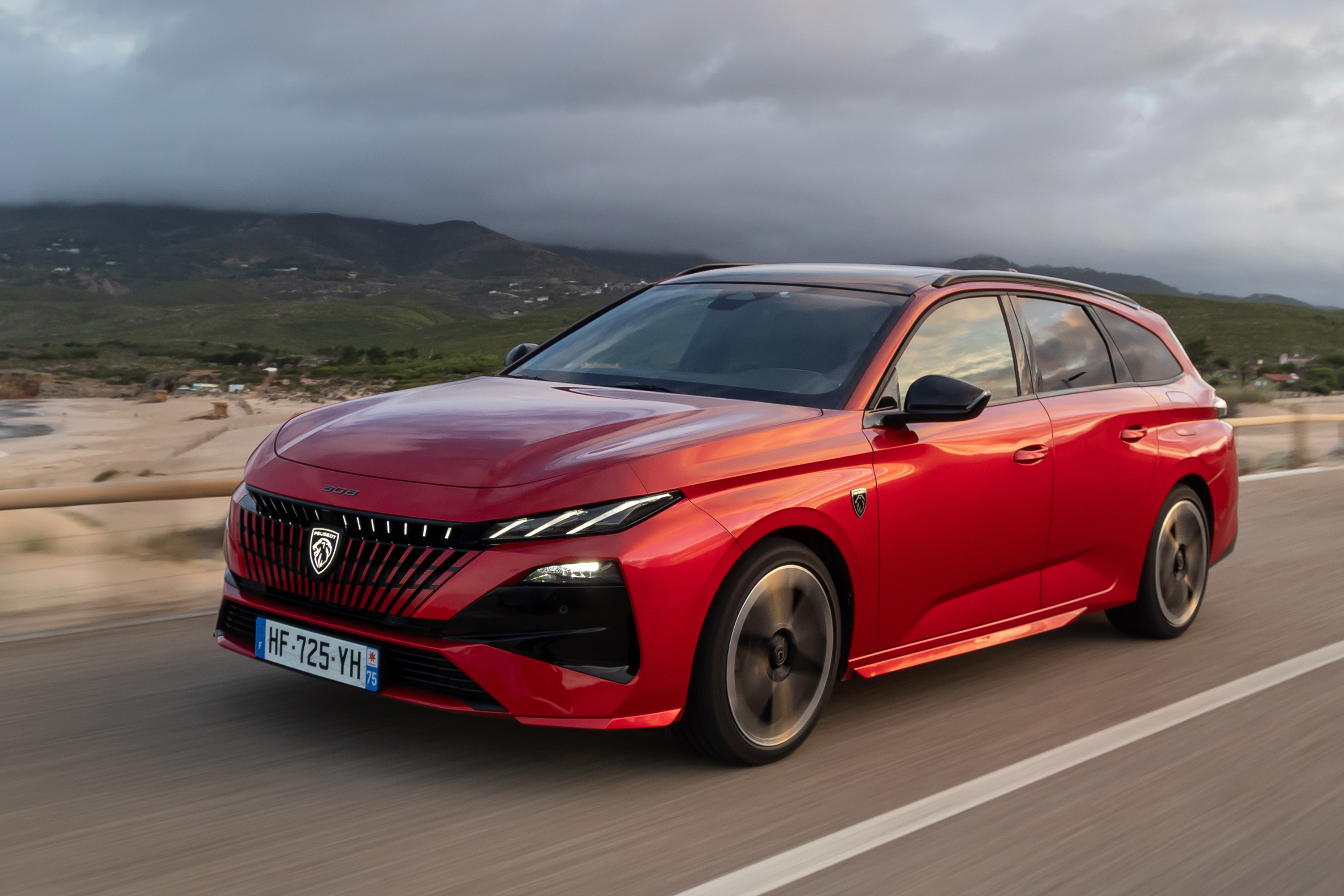
It's a classy choice among estates of this size, with striking looks which have been refined further via a mid-life update. Visually, the Peugeot has changed quite a lot, with those massive 'claw' daytime-running lights replaced by a subtler motif that sits within the headlights, stretching across the top of the grille with a series of light-up elements.
The latter aren't as gaudy as you might imagine, but the light-up grille..? That may prove a step too far for some. Overall, the result is that the facelifted 308 SW is more distinctive. Less has changed inside its stylish cabin, contrasting massively with the dour interiors Peugeot favoured not that long ago.
Speaking of the cabin the quirky i-Cockpit layout, which comprises a small wheel mounted below a high-set instrument cluster, is very much still present. We recommend thoroughly trying out the 308 SW's driving position before signing on the dotted line, as it won't suit everyone.
An identical makeover has also been applied to the fully electric Peugeot E-308 SW.
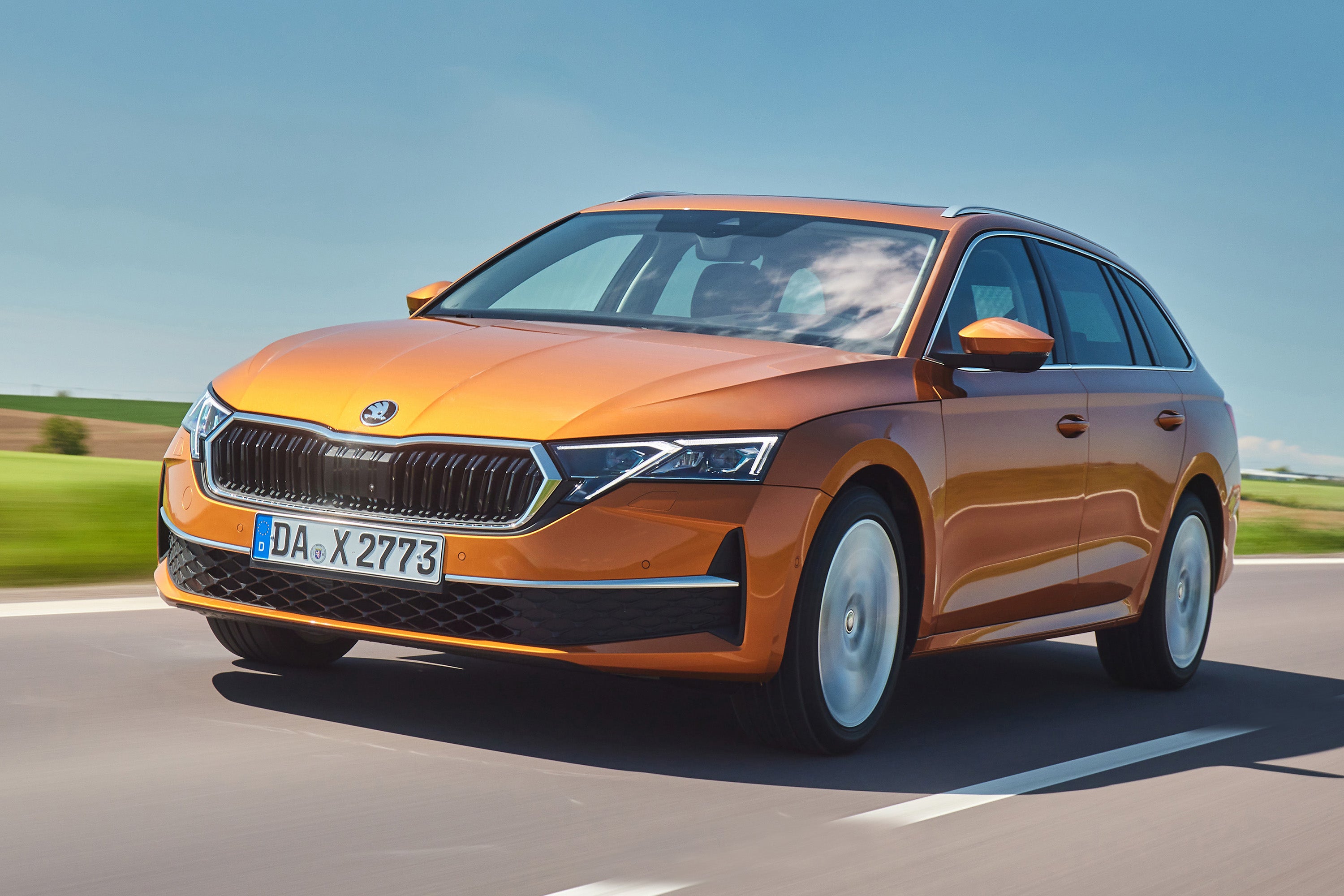
The boot space is decent at 599 litres but you'll take a 132-litre hit if you opt for the Plug-in Hybrid version. That figure is also a fair bit behind what you get in the back of a Skoda Octavia Estate, although the no longer sold PHEV versions lost more boot volume, so we'll call that one a draw.
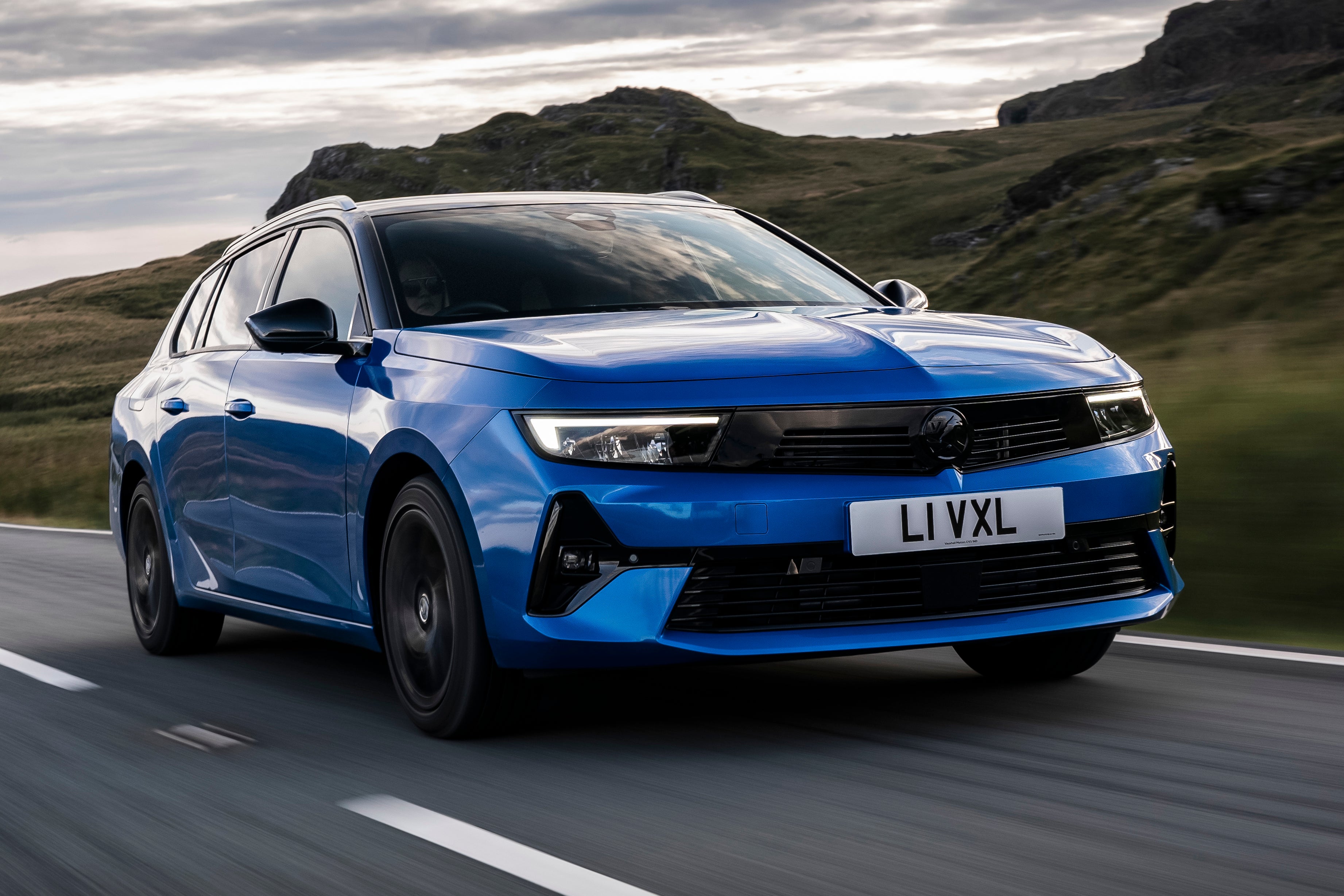
While we're on the subject of other hatchback-based estates, the 308 SW no longer has to worry about the Ford Focus Estate, which has been discontinued. It does have a rival that's very close to home in the form of the Vauxhall Astra Sports Tourer, which is built from much of the same components, although it doesn't ride as comfortably.
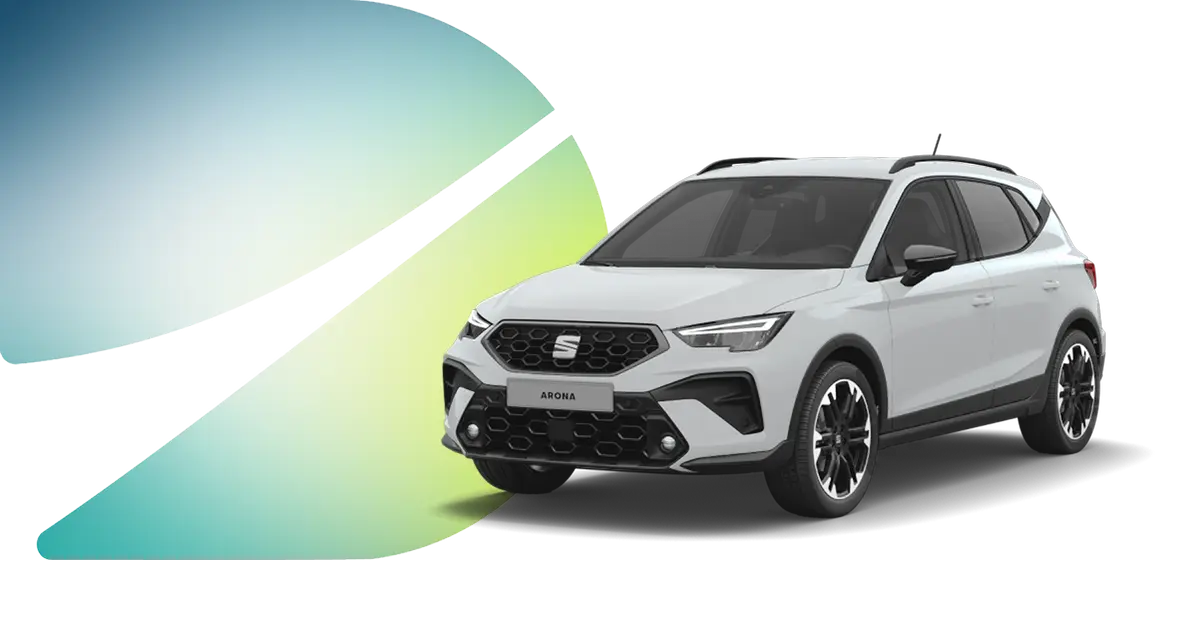
Further afield, there's the SEAT Leon Estate and its sportier twin the Cupra Leon Estate, while throwing an extra rival into the mix, the hybrid-only Toyota Corolla Touring Sports is also well worth a look.
The 308 SW does well against that competition, partly because the Peugeot 308 hatchback is such a good starting point, with a driving experience that prioritises comfort without adversely affecting handling composure.
As for downsides, the Peugeot 308 SW's engine line-up is nothing special and along with its divisive i-Cockpit arrangement, room for adults in the rear seats is lacking. On the whole, though, it's a strong choice which has been made more appealing thanks to its 2025 mid-life updates.
What's the best Peugeot 308 trim and engine option?
For most buyers, the best Peugeot 308 SW is the Hybrid 145 in Allure trim. It gives you the best balance of efficiency, performance and value without pushing the car into the more expensive end of the range.
The diesel still has a case if you do big motorway mileage, because it should remain the strongest real-world long-distance option. But for many buyers, the Hybrid 145 will be easier to justify because it offers the sort of economy and ease of use that suit a modern family estate.
The Plug-in Hybrid 195 is the more premium-feeling option on paper and brings the possibility of low day-to-day running costs if you charge regularly. The issue is that it also brings a much higher purchase price, and unless your use case really suits a PHEV, it is hard to make the numbers work.
As for trim, Allure already gives you most of what you really need. GT adds extra visual punch and richer cabin presentation, but Allure is the one that makes the strongest all-round case.
In simple terms, Allure is the smartest buy, GT is the style-led choice and the Hybrid 145 is the engine most buyers should start with.
What’s the price of the Peugeot 308?
The Peugeot 308 SW currently starts from £29,995 in Hybrid 145 Allure form. The diesel sits slightly above that, while Plug-in Hybrid 195 versions begin from £35,100 and rise to £38,695 in GT trim.
That makes the 308 SW more expensive than some conventional estate alternatives, but it also feels more special than many of them. Peugeot is clearly pitching it as an upmarket mainstream choice rather than a bargain load-lugger.
Used prices should help its case in time, because the 308 SW’s design and cabin appeal ought to make it a tempting nearly new option once early examples become more affordable.
Alternatives to the Peugeot 308
The Skoda Octavia Estate is the rational benchmark. It is bigger inside, offers more rear-seat space and makes an even stronger practical case than the Peugeot 308 SW. If usability matters more than style, it is very hard to ignore.
The SEAT Leon Estate is another key alternative if you want something with a little more visual energy than the average estate without sacrificing day-to-day practicality. It remains one of the most balanced cars in this class.
The Toyota Corolla Touring Sports is well worth a close look if efficiency matters most, because its hybrid system is still a strong selling point and it makes a very convincing case as a low-stress family estate.
Beyond those three, the Vauxhall Astra Sports Tourer deserves a look if you like the Peugeot’s basic recipe but want a more restrained design, while the Kia Proceed remains the style-led outsider. The Peugeot 308 SW makes most sense if you want your family estate to feel a little more special than the norm without giving up the boot space you came for.
What's the interior like in the Peugeot 308?
The Peugeot 308 SW has one of the most distinctive cabins in the estate-car class. It feels smart, well finished and much more interesting than many mainstream rivals, even if the unusual layout still needs trying for size.
Peugeot 308 boot space and practicality
There's a 57mm longer wheelbase for the 308 SW over the hatchback which ought to translate into more generous rear legroom, although according to Peugeot's quoted figures there is no improvement. There is 3mm more shoulder room and 16mm of extra headroom, although such small differences deliver little benefit. Those who are six feet tall or over won't feel as comfortable as they would in the Octavia.
Smaller adults and children won't complain and for the latter there are two Isofix child seat mountings on the outer rear bench positions. Space up front is plentiful.
One bone of contention is Peugeot's unique i-Cockpit driving position, which sees a shrunken steering wheel sitting below the height of the dials rather than in line with them. As the wheel is mounted lower than it is in rivals, despite its small size it results in compromises for taller adults.
That could mean tall drivers block their view of the lower portion of the instrument screen with the top of the wheel to ensure enough clearance between it and their knees. Still, that only applies to some people with the layout working well for most.
There's a good abount of in-car storage with generous door bins, a central armrest cubby and a glovebox that, finally, doesn't have the fuse box taking up half the space. That's something that has been an annoyance in right-hand drive Peugeots for years.
The rear seats of the 308 SW split 40/20/40 and do so easily via boot-mounted levers. With those seats up the boot has a 599-litre capacity and has two separate underfloor storage compartments. That's not true of the Plug-in Hybrid 195 as its battery eats into the boot space, resulting in a seats-up capacity of 467 litres.
Peugeot 308 dimensions
The Peugeot 308 SW measures 4,636mm long, 1,852mm wide & 1,450mm high. That makes it around 270mm longer than the 308 hatchback and puts it right in the thick of the family-estate class.
In practical terms, it is still compact enough to manage easily around town and in car parks, while offering the sort of luggage space buyers expect from an estate. That balance is part of its appeal.
Tech and infotainment in the Peugeot 308
The multimedia system in the Peugeot 308 SW is mostly better than that fitted to its predecessor, but there's still room for improvement.
Every version comes with a 10.0-inch central touchscreen combined with a smart 10.0-inch digital dial display within a separate cowling. The touchscreen is responsive but the software behind it can be laggy in performing various tasks.
Beneath the multimedia display is a smaller touch-sensitive panel that Peugeot calls i-Toggle. It's a configurable series of virtual shortcuts, allowing you to pick six functions you use often, including a phone number you frequently ring, prodding a larger icon rather than scrolling the sometimes over-complex menus.
It works well, while there are some proper physical switches underneath for various key functions. Still, we would happily ditch those i-Toggles for a row of physical climate control adjusters.
Wireless Apple CarPlay and Android Auto is now standard across the board, while an upgraded Focal sound system remains optional, although we don't find it to be particularly impressive compared with other bougie in-car audio setups.
Materials available on the Peugeot 308
The Peugeot 308 SW’s materials help it feel a cut above many mainstream rivals. Soft-touch surfaces, interesting trim pieces and the option of richer upholstery all contribute to a cabin that feels more upmarket than the class average.
It is not flawless, because harder plastics still appear lower down in the cabin, but the overall impression is strong. Peugeot has done a good job of making the 308 SW feel more special than its badge might suggest.
What's the Peugeot 308 like to drive?
The Peugeot 308 SW is composed, comfortable and refined enough to make it a very pleasant estate to live with. It is not the sharpest or softest car in the class, but it strikes a good middle ground.
Peugeot 308 range and performance
While it wasn't especially broad before the 2025 facelift, the engine choices for the Peugeot 308 SW were reduced further at that point.
As of the facelift, the entry-level choice is the Hybrid 145, which is confusingly a mild hybrid arrangement that produces a total of 147PS, with torque quoted at 230Nm. Fast it is not, giving a 0-62mph time of 9.3 seconds and a top speed of 130mph. But hey, at least that's no slower than the hatchback equivalent.
Being a 1.2-litre, three-cylinder engine, it can sound loud and strained when you're extracting its full potential but you are better insulated from the noise here than you are in some other Stellantis products that use the same setup.
Drive to the front wheels is via six-speed dual-clutch automatic gearbox, which is smooth for the most part, but can be clunky at times and takes ages to kick down.
The Plug-in Hybrid 195 uses a smoother 1.6-litre, four-cylinder engine combined with a larger electric motor. It's fitted with a seven-speed dual-clutch transmission switching out the eight-speed auto used in earlier 308 SW PHEVs.
Previously, there were two different power levels, but now there's just one, producing 197PS and 360Nm. The 0-62mph time is 7.9 seconds, and the top speed is 140mph, or 84mph if running in electric-only mode. It doesn't feel massively quick, but it does cover ground in a more effortless manner than the Hybrid 145.
The fake engine noise that comes through the speakers in Sport mode is naff, although of more concern are sometimes abrupt transitions between electric-only running and hybrid power. This happens more often when you're putting your foot down, with the system operating reasonably smoothly most of the time.
Arriving later will be the diesel BlueHDi 130 which is expected to perform the same as it did prior to the facelift. That means it should offer reasonable refinement for a four-cylinder oil burner and feel fairly punchy, with 300Nm of torque making up for its modest 131PS power output.
Performance data
| Model | Engine/battery size | Power | 0-62mph | Range/MPG |
|---|---|---|---|---|
308 SW Hybrid 145 | 1.2-litre | 145PS | 9.4 seconds | Up to 62.6mpg |
308 SW BlueHDi 130 | 1.5-litre | 130PS | 10.8 seconds | Up to 59.6mpg |
308 SW Plug-in Hybrid 195 | 1.6-litre | 195PS | 7.9 seconds | Up to 59 miles EV range |
Peugeot 308 driving and refinement
The extra weight that the Peugeot 308 SW carries over the hatch really doesn't make a discernible difference to its ride or handling.
The small steering wheel helps the 308 SW feel a bit more agile than it would otherwise, with keen turn-in, decent grip levels and confidence-inspiring body control. Granted, the Cupra Leon Estate is more entertaining still but the Peugeot is still engaging.
The Plug-in Hybrid 195 is 248kg heavier than the Hybrid 145 making it feel that bit more leaden.
The 308 SW is noticeably less firm-riding than the Leon Estate, doing a good job of ironing out the worst potholes even on the bigger wheel sizes, although there's a touch of suspension noise as it does its job. An appealing dynamic balance overall
Despite that increase in length, parking isn't too much of an issue. The 308 SW has a slightly better view out the back than the hatch, but it's not brilliant. Happily, you get rear parking sensors even on entry-level versions, front sensors and a reversing camera on mid-range cars and a full 360-degree camera system with a self-parking aid on GT Premium models.
How safe is the Peugeot 308?
The Peugeot 308 SW should be no less safe than the hatchback, and it comes with a healthy spread of standard driver-assistance kit, including automatic emergency braking, lane assistance, speed-limit recognition and driver attention monitoring.
When Euro NCAP tested the hatchback, it achieved a four-star rating rather than the full five, which was a little disappointing for a car in this class. That does not make the 308 SW unsafe, but it is worth knowing if you prioritise top crash-test scores.
Running costs: What it's like to live with a Peugeot 308
The Peugeot 308 SW should be relatively affordable to run, especially in Hybrid 145 or diesel form, but the exact picture depends heavily on how well your usage suits the chosen powertrain.
Peugeot 308 fuel economy
The Hybrid 145 is officially rated at up to 62.6mpg, which makes it the obvious all-round economy choice for many buyers. It should be a strong fit for mixed real-world driving.
The BlueHDi 130 is rated at up to 59.6mpg and still makes a lot of sense for motorway-heavy use, where diesel efficiency remains difficult to beat.
The Plug-in Hybrid 195 offers a headline electric-only range of up to 59 miles and very flattering official economy figures, but those numbers only really stack up if you charge it regularly and make use of that electric running.
Peugeot 308 warranty and servicing
Peugeot’s standard warranty is three years from first registration. In the first two years it is unlimited mileage, while the third year is capped at 60,000 miles.
Servicing intervals are more precise than the old generic wording suggested. The Hybrid 145 and Plug-in Hybrid 195 are both due every 12 months or 20,000 miles, whichever comes first. The BlueHDi 130 diesel follows the same 12-month or 20,000-mile schedule. That is competitive enough on paper, though it still does not make the Peugeot 308 SW a standout for long warranty or maintenance cover.
Peugeot 308 insurance groups
Insurance groups for the current Peugeot 308 SW are tighter than the older broad estimate suggested. The Hybrid 145 sits in groups 26 to 27 depending on trim, with Allure and GT generally at 26 and GT Premium at 27. The Plug-in Hybrid 195 currently sits in groups 27 to 29 depending on version, with Allure lower down the spread and GT or GT Premium higher up.
Peugeot’s current materials do not publish a fresh group for the BlueHDi 130 diesel in the facelifted range, but class positioning and earlier 308 SW data suggest it should land broadly in line with the lower-to-middle end of the current spread rather than dramatically above it.
In practical terms, the 308 SW is not unusually cheap to insure for a family estate, but nor does it look out of step with rivals once you compare like-for-like power and trim.
How much does it cost to tax a Peugeot 308?
The Peugeot 308 SW now costs £200 a year in VED after year one, which is the current standard annual rate.
For combustion-engined versions, the Expensive Car Supplement applies if the list price is more than £40,000. If a Peugeot 308 SW crosses that threshold, you pay an extra £440 a year for five years from the second year of registration, on top of the standard £200 annual VED rate. That means a qualifying car costs £640 a year for those five years.
Most regular Hybrid 145 and diesel versions sit below that threshold, but some plug-in hybrid cars can cross it, especially in higher trims or when optioned up. That makes it worth checking carefully before you order.
What trims are available with the Peugeot 308?
The Peugeot 308 SW line-up is now centred on Allure, GT and GT Premium.
Allure is the sensible starting point and already gives you a strong amount of kit. Standard highlights include 17-inch alloy wheels, the 10.0-inch infotainment screen, heated front seats, a heated steering wheel, rear privacy glass and a reversing camera. It does not feel like a sparse base model.
GT is the more design-led choice. It adds larger wheels, adaptive cruise control, Matrix LED headlights, upgraded trim details and the extra visual flourishes that make the 308 SW feel more premium and more distinctive.
GT Premium sits at the top and adds the richest spread of comfort, convenience and tech features in the range. It is the indulgent choice, and it is also the version most likely to push you into expensive-car-supplement territory.
In simple terms, Allure covers everything most buyers really need, GT is the style-led choice and GT Premium is the indulgent one.
Ask the Drive experts: common questions
Is the Peugeot 308 SW a good family estate?
Which Peugeot 308 SW is best?
Is the Peugeot 308 SW practical enough for a family?
Is the Peugeot 308 SW better than a Skoda Octavia Estate?
Get our latest advice, news and offers
Keep me updated by email with the latest advice, news and offers from Drive.
.jpg)
.jpg)