Volkswagen Golf Estate Review

Written By David Ross
- 2020
- Estate
- Petrol, diesel, mild hybrid petrol
What we love
Big, square and very usable boot
Excellent comfort and refinement
Easy to drive and easy to live with
Things to consider
R-Line models ride a little more firmly
Rear-seat room is good rather than class-leading
Infotainment takes some familiarisation
The DRIVE take on the Volkswagen Golf, is it the right car for you?
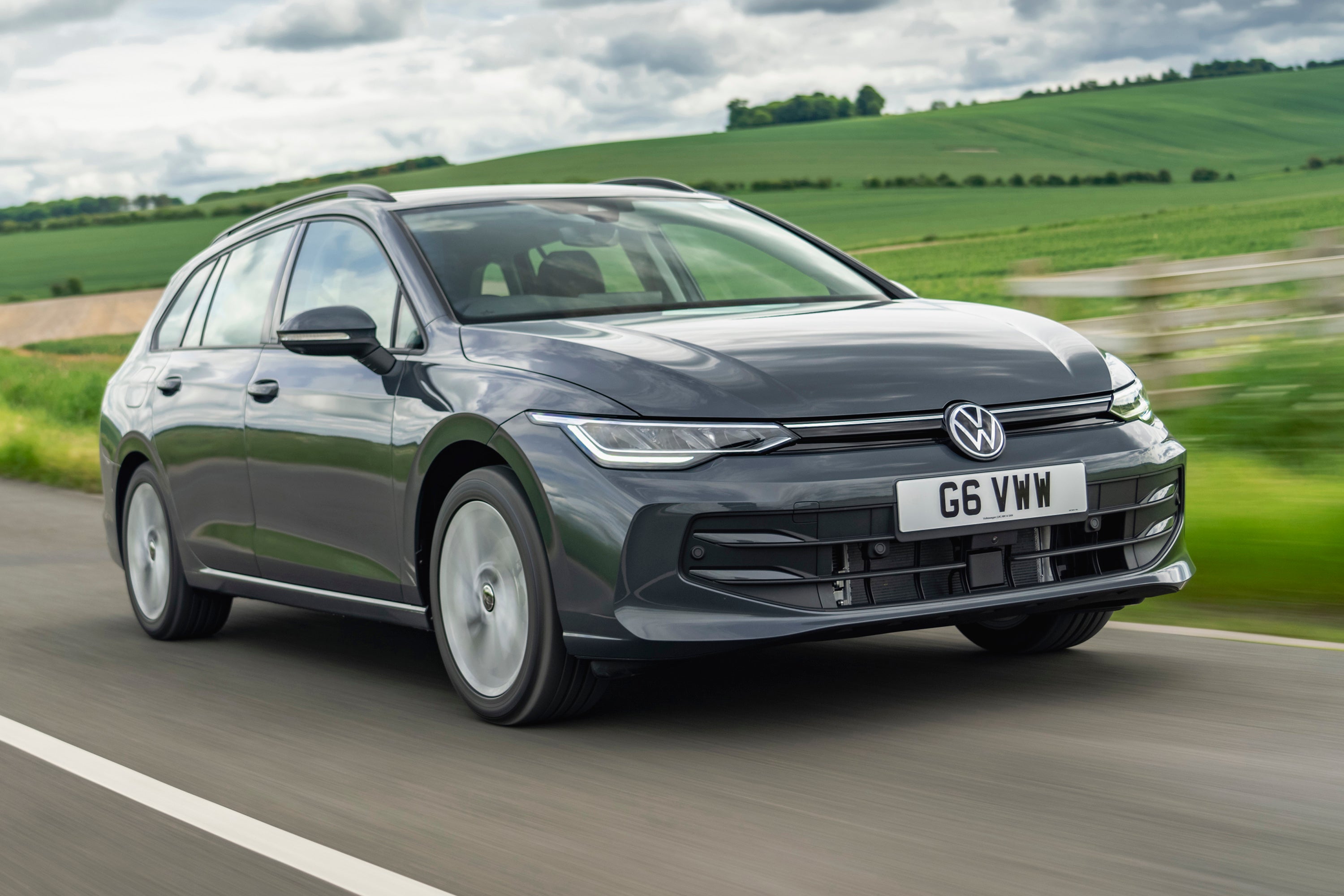
The Volkswagen Golf Estate remains a very smart family estate if you want comfort, refinement and a big boot without stepping up into something much larger. It is easy to drive, easy to live with and still feels more polished than many rivals, which is why it continues to make such a strong case. It is not the cheapest car of its kind, and the infotainment remains more fiddly than it should be, but as a used or nearly-new buy the Golf Estate still has plenty going for it.
The Volkswagen Golf in more detail
With everyone and their uncle wanting an SUV these days, you may think that the humble estate car is on its ear. But that's not the case. For many people, the practicality of an estate car - they still offer more usable boot space than an equivalent SUV - is a key reason for buying one. When you've got kids, pushchairs, bikes and the dog to move, that extra space makes all the difference.
The good news is that choosing an estate car doesn't mean having to compromise. As the Volkswagen Golf Estate proves. It's just as comfortable and as quiet as the Volkswagen Golf it's based on, with the same engines available.
Volkswagen hasn't introduced a basic version of the Golf Estate, so the 'entry-level' version is the Life, which comes with plenty of equipment, including alloy wheels, a virtual instrument cluster, a 10-inch touchscreen with navigation plus climate control. That does go some way to justifying the high list prices, but you'll find the competition, even from within Volkswagen Group, cheaper.
So aside from equipment, what does the Golf Estate do to justify its price tag? Well, few cars this size can match the comfort and refinement it offers. It's an easy car to drive with effortless controls, but it's the impeccable ride which really stands out. It's wonderfully smooth on the motorway and irons out rough surfaces while still coping with lumps and bumps. The steering could be better, but the Golf is nonetheless very capable in corners.
It's certainly still a high-quality car, too, especially inside, with lots of top-notch materials used. But that said, the competition has never been stronger, and the Golf Estate doesn't especially stand out - in fact, we'd say the cheaper Skoda Octavia actually has a better interior. Shocker.
Our main gripe is with the infotainment system. Volkswagen has gone for an uncluttered dash design, getting rid of most physical buttons - instead, you use the touchscreen to control most functions. The problem? It's not very intuitive at all. Sometimes it's like a robot rather than a human designed it, and so it proves not only frustrating but also distracting.
On the plus side, the boot of the Golf Estate is huge - bigger than a Focus Estate and beaten only by the Skoda Octavia Estate. There's loads of room for pushchairs plus a double-level boot floor. This Golf Estate also has more rear legroom than before, although it's still a bit tight with the front seats slid all the way back - a trait of most estates this size.
It's cheap to run with all the engines proving very economical. The 1.0 TSI is our pick of the bunch as it provides a lot more get up and go than you'd expect, but will still return more than 50mpg. There are no hybrid or PHEV versions, but Volkswagen has launched a mild hybrid, badged eTSI, that comes with a seven-speed DSG. If you want big economy, there's still the 2.0 TDI, while the 1.5 TSI has enough performance if you want a bit sportier.
TThe VW Golf Estate still stands out as one of the best compact estate cars around. Its closest rival comes in the form of the Skoda Octavia Estate, which we think is better value for money. But that doesn't detract from how good the Golf Estate is. It still sets the benchmark in this class thanks to its excellent engines, large boot space and sheer comfort.
It's worth noting that Volkswagen is no longer taking new orders for Golf Estates; these are offered from available stock only.
What's the best Volkswagen Golf trim and engine option?
The entry-level Life models come with things like alloy wheels, a touchscreen with navigation, climate control and Volkswagen's Digital Cockpit Pro. This does go some way to justifying the high list price.
What that does mean is that you don't have to go for a mid-level Style model just to get some half-decent kit in your car. Indeed, we think the Life model with the 1.0 TSI engine and manual gearbox has plenty of appeal, plus it's cheap to run.
If you do want a bit more oomph, the 1.5 TSI engine is the one to go for, and the R Line trim gives you the sporty looks to go with it.
What’s the price of the Volkswagen Golf?
As a used buy, the Volkswagen Golf Estate now starts from around £13,500, with lower-mileage, later and better-specced examples climbing from there.
That is where the car becomes much easier to justify. When new, the Golf Estate could feel expensive next to a Skoda Octavia Estate or SEAT Leon Estate. As a used car, though, the gap narrows, while the Golf’s blend of polish, comfort and retained desirability starts to look more convincing.
Alternatives to the Volkswagen Golf
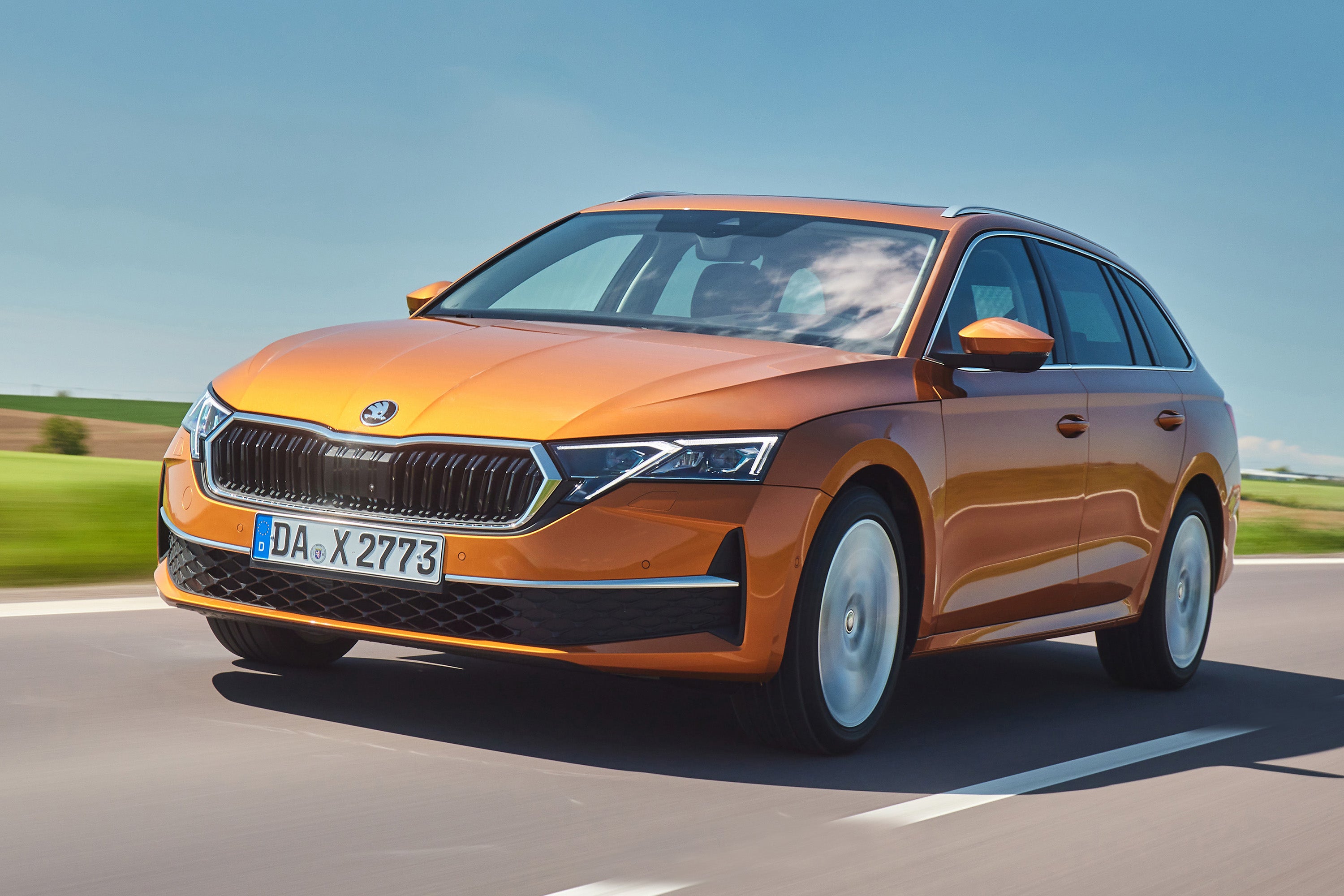
The Skoda Octavia Estate is the most obvious rival and, for many buyers, the hardest one to ignore. It offers even more space, often costs less and remains one of the most sensible estates on the market. The Volkswagen counters with a slightly tidier feel and a more premium image.
The SEAT Leon Estate is another close relation and a good alternative if you want something that feels a touch sharper to drive. It gives away little in substance, but the Golf still feels a bit more rounded and refined.
The Ford Focus Estate is worth a look if driving enjoyment matters more, while the Toyota Corolla Touring Sports is a strong option if hybrid running costs are the priority. The Golf Estate’s strength is that it sits in the middle of all these, doing very little badly and most things well.
What's the interior like in the Volkswagen Golf?
Volkswagen Golf boot space and practicality
All Golf Estates get adjustable lumbar support as standard, but the seats fitted to Life models are a little lacking in support. Those on the Style and R Line are better with more side support. There's certainly plenty of room up front, and you won't be smacking elbows with your passenger.
One thing that helps give the interior that modern feel is the Digital Cockpit Pro - a 10.25-inch high-resolution display that replaces the conventional instrument dials. It's customisable too, so you can pick the info you want on show or display the navigation map. It's something we first saw on Audi models and really works well.
If you're choosing a Golf Estate over a standard VW Golf, the boot really is the money shot. On paper, it's very competitive. The Golf can carry 611 litres of stuff, which is seven litres more than the old model and ahead of the Ford Focus Estate with 575 litres. That said, neither can compete with the huge Skoda Octavia Estate boot with 640 litres.
Still, this isn't always about numbers. Just as important is how usable that space is, and the Golf Estate has a wide opening tailgate and a deep, square boot space, which is ideal for pushchairs, kids' scooters and lots of shopping. There is a bit of a boot lip, but you can reduce that thanks to the adjustable boot floor. However, we find the extra depth more useful, while the low height of the rear bumper means it's ideal for dogs to jump in (and out) of.
Those sitting in the back will find more space than the old model - a longer wheelbase means more than 4cm extra legroom for those in the back. It doesn't sound much, but it makes a big difference, especially if you have things like rear-facing child seats. That said, slide the front seats back and there's very limited space for those behind.
At least ISOFIX is the standard fit, of course, and is I-size compatible. There's also plenty of headroom, so growing teenagers needn't be concerned about their quiffs. The rear seats don't do anything fancy like recline, but they do at least split 60/40 and fold down via handles in the boot.
Up front, there's plenty of storage with big door pockets, those funny Volkswagen cupholders in the centre, a cubbyhole under the centre armrest and a usefully air-conditioned glovebox so your Kit Kat won't melt. The VW Golf doesn't have any of the clever features of the Skoda Octavia, but you aren't left short of storage space for phones, wallets and of course your face mask...
Volkswagen Golf dimensions
The Volkswagen Golf Estate measures 4,633mm long, 1,789mm wide and 1,498mm high. That makes it longer than the hatchback, obviously, but still neatly sized by estate-car standards.
That is a big part of the appeal. It feels usefully roomier than a hatch, but it does not become cumbersome in the way larger estates sometimes can.
Tech and infotainment in the Volkswagen Golf
The Golf Estate’s infotainment is probably the biggest weak spot in the package. The touchscreen-based setup looks modern enough, but it can be more frustrating to use than it should be, especially for quick climate or media adjustments on the move.
That is a shame, because the rest of the technology package is pretty strong. Digital instruments, navigation and smartphone connectivity all help the Golf Estate feel up to date enough, even now.
In used-buy terms, this is more an irritation than a deal-breaker. You will get used to it, but it is still not the clean, intuitive experience the rest of the car suggests it ought to be.
Materials available on the Volkswagen Golf
Material quality is generally good, and the Golf Estate still feels like a well-engineered car. Some rivals have caught up or even moved ahead in perceived quality, but the Volkswagen remains solid, neatly finished and mature in its design.
It does not feel as plush as some buyers may expect from the badge and price, but it also does not feel cheap. It is a case of quietly good rather than obviously special.
What's the Volkswagen Golf like to drive?
Volkswagen Golf range and performance
Volkswagen introduced mild-hybrid models. Badged eTSI, these are petrol engines with an added 48V battery that powers the car's electrics and recharges through braking energy. It can't power the car alone, but it does give a boost at low speeds. As you'd expect, emissions are lower and the economy is better.
If you want a petrol automatic, it will be an eTSI, the technology available exclusively with the seven-speed DSG. The standard TSI engines are all six-speed manuals.
The DSG models are certainly smooth, but we think the six-speed manual gearbox is so slick (and cheaper) that we'd save the money and stick with the manual. Indeed, the 1.0 TSI is the sweet spot in the range. It may be a small capacity engine, but it has plenty of get-up-and-go, while the 110PS is more than enough on the motorway. It certainly never feels underpowered.
That's not to say the 1.5-litre engine doesn't have its merits. It's a superb engine and the 150PS version (there's also a 130PS model) feels very quick when you want it to be. If you want a sportier Golf Estate, this is the one to go for.
Volkswagen offered diesel power in the Golf Estate with the trusty 2.0 TDI available in two versions, a low-powered 115PS model and the popular 150PS, both available with either a manual or seven-speed DSG. Fortunately, the dull-as-dishwater 1.6 TDI has been dropped.
The TDI engine is ideal for long motorway trips and quieten down at cruising speeds while the strong economy - the official figures show around 62mpg for both versions - makes it cheap to run.
Performance data
| Model | Engine/battery size | Power | 0-62mph | Range/MPG |
|---|---|---|---|---|
1.0 TSI manual | 1.0-litre petrol manual | 110PS | 10.5 seconds | 52.0mpg |
1.0 eTSI DSG | 1.0-litre mild-hybrid petrol automatic | 110PS | 10.6 seconds | 53.3mpg |
1.5 TSI manual | 1.5-litre petrol manual | 150PS | 8.8 seconds | 45.0mpg |
1.5 eTSI DSG | 1.5-litre mild-hybrid petrol automatic | 150PS | 8.7 seconds | 51.4mpg |
2.0 TDI manual | 2.0-litre diesel manual | 115PS | 10.5 seconds | 62.0mpg |
2.0 TDI DSG | 2.0-litre diesel automatic | 150PS | 8.8 seconds | 60.0mpg |
Volkswagen Golf driving and refinement
What the Golf Estate may lack in sparkle, it makes up for in the way it's such an effortless car to drive. It's what we'd call a sensible and safe choice, a bit like Eamonn Holmes. Relaxed is the order of the day here, and like many Volkswagen models, the Golf Estate's real strength is its refinement.
It doesn't handle corners with the same zest as a Ford Focus Estate or the similar SEAT Leon Estate, but it's capable and reassuring nonetheless, despite the rather light steering. If you want a car that feels more responsive, go for the Leon, but the Golf Estate wins when it comes to comfort.
The ride is impeccably good, and we'd say this is the most comfortable compact estate car on the market, perhaps only the Skoda Octavia Estate can better it, but the Golf bounces less over the ups and downs than the Skoda.
If you want to mix things up, the Golf Estate is available with Dynamic Chassis Control (or DCC as Volkswagen calls it) as an option. This alters the suspension through different settings. The softest setting is incredibly forgiving, while you can stiffen things up in sports mode (although it's not that sporty). It's a clever system, but it's also expensive, and we think the standard suspension setup is good enough.
R Line models get sports suspension, which, although it makes the ride firmer, is still comfortable enough. All models get 17-inch alloy wheels as standard, and they help with that ride comfort. We'd avoid the optional 18-inch wheels, which only detract from that ride quality.
Parking the Golf Estate is easy thanks to the vertical rear end and lots of glass. All models come with front and rear parking sensors, while there's a rearview camera as an option.
The Golf really excels when it comes to refinement and suppressing noise, which makes it an ideal long-distance car. The refined ride means it's great on the motorway, where we think the Golf Estate really excels. The supportive seats, excellent ride and quiet cabin make it a restful way to cover those big journeys.
Even on the motorway, there's little in the way of wind noise, although you will notice a touch of road noise from the tyres. That said, this feels as smooth as a Passat Estate at a cruise while the engines, both the petrols and even the diesels, are unintrusive at 70mph thanks to good sound insulation.
The 1.0-litre unit has the usual three-cylinder character, but it's quiet compared to rival engines and there's no vibration through the pedals or gear lever. The 1.5 TSI is smoother still being a four-cylinder, although it can get a little noisy at high revs, which is the same story for the 2.0 TDI. That said, the TDI is still a lot quieter than other 2.0-litre diesels.
How safe is the Volkswagen Golf?
While the estate version of the Golf hasn't specifically been tested by Euro NCAP, the standard Volkswagen Golf was awarded five stars. This included an 89% rating for child occupants and 95% for adult safety.
The good news is that this rating also applies to the estate, and the tests showed good protection against whiplash injuries in the event of a rear-end collision for both those in the front and back. All models get a curtain airbag system for front and rear passengers, including side airbags, and ISOFIX mounts in the back and the front passenger seat, all compatible with I-size.
Running costs: What it's like to live with a Volkswagen Golf
The Volkswagen Golf Estate should be a straightforward car to run if you buy the right version for your mileage. The engines are efficient, servicing is predictable and insurance is reasonable enough on mainstream models.
Volkswagen Golf fuel economy
With no plug-in hybrid versions of the Golf Estate, Volkswagen untroduced a mild hybrid. Badged eTSI, this is a normal petrol engine with a 48V mild-hybrid system, which supplies energy to all the important systems. So while the eTSI can't move under electric power alone, the battery, which is charged by braking energy, powers the electrics, the starter motor and also works as an electric motor that instantly adds boosts when moving off.
So what this means in the real world is better fuel economy. According to the latest WLTP figures, the 1.0 eTSI returns an average of just under 54mpg. That said, the standard 1.0 TSI with the six-speed manual will still see close to 52mpg.
Of course, the diesels still reign supreme for fuel economy, and the 2.0 TDI 115PS will return 62mpg according to the official figures.
Volkswagen Golf warranty and servicing
Warranty cover on a used Volkswagen will vary according to the car’s age and mileage, so not every Golf Estate will have any manufacturer protection left. That makes the Approved Used programme more appealing, because it adds a 12-month unlimited-mileage warranty, roadside assistance, a multi-point inspection and the usual history checks.
When new, the Golf Estate was covered by Volkswagen’s three-year warranty, with unlimited mileage for the first two years and 60,000 miles in the third. It is also worth checking whether the car has been maintained on the fixed or flexible servicing regime. High-mileage cars in particular need a service record that shows maintenance has been carried out at the right intervals, rather than simply relying on the fact it comes with warranty cover.
Volkswagen Golf insurance groups
The cheapest Golf Estate model to insure is the Life version with either the 1.0 TSI or 2.0 TDI engine - both sitting in group 14. That's competitive with a similarly powered Ford Focus Estate and means that for most owners, insurance premiums should be very reasonable, especially if you have several years no no-claims discount.
Move up to the 1.5 TSI, and insurance ratings go up to group 17 while the sporty-looking R Line models start at group 20.
How much does it cost to tax a Volkswagen Golf?
For most Volkswagen Golf Estate examples registered on or after 1 April 2017, the ongoing standard VED rate is now £200 a year. If the car’s original list price was more than £40,000, it would also have been liable for the Expensive Car Supplement in years two to six, taking the annual total to £640 during that period.
That is less of an issue on mainstream Golf Estate versions than it is on pricier models elsewhere in the Volkswagen range, but some better-specced or more specialist versions could still have crossed the threshold when new. As ever with a used car, it is worth checking the exact registration date and original list price.
What trims are available with the Volkswagen Golf?
The entry-level Life gets automatic LED headlamps with separate LED daytime running lights, dynamic headlight range control, tail lights incorporating LED technology, a body-coloured rear spoiler, ‘Norfolk’ 16-inch alloy wheels, interior ambient lighting with 10-colour adjustment, leather trimmed gear knob and multifunction steering wheel, Discover Navigation system with 10-inch colour touchscreen, FM and DAB digital radio receiver with six speakers, Bluetooth connectivity, App-Connect and the Volkswagen eCall emergency SOS call service.
Life also gets the Active Info Display Digital Cockpit Pro - a 10.25-inch high resolution TFT dash display screen with customisable menus, Dynamic Road Sign Display, Front Assist and Adaptive Cruise Control, plus Lane Assist and parking sensors front and rear.
Style models have ‘Belmont’ 17-inch alloy wheels, LED ‘Plus’ headlights, High Beam Assist, front sports seats, 30-colour interior ambient lighting, 3-Zone climate control air conditioning, Side Assist and Traffic Jam Assist, plus Lane Change Assist.
The R-Line adds 17-inch Valencia grey metallic alloy wheels, R-Line body-coloured bumpers, tinted glass from the B pillar backwards, R-Line door and side trim panels, an R-Line three-spoke heated leather steering wheel, sports suspension, Driving Profile Selection and progressive steering.
Ask the Drive experts: common questions
Where is the VW Golf estate built?
Is the Volkswagen Golf Estate better than a Skoda Octavia Estate?
Which Volkswagen Golf Estate engine is best?
Get our latest advice, news and offers
Keep me updated by email with the latest advice, news and offers from Drive.
.jpg)
.jpg)